Overview

The Uniden R7 Radar Detector has earned a firm reputation among serious drivers since its 2019 debut, and it continues to hold its ground near the top of its category for good reason. Unlike typical single-antenna units, this radar detector is built around dual front and rear antennas, which fundamentally changes how it handles threats compared to entry-level designs. This is not a casual purchase — the price reflects hardware and software depth that only makes sense if you genuinely put miles on your car. Think long highway stretches and regular commutes, not the occasional weekend drive.
Features & Benefits

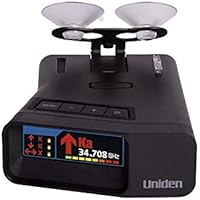
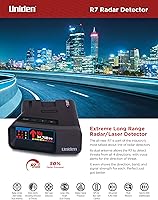
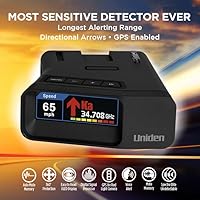
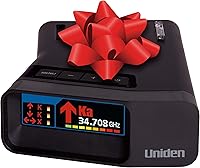
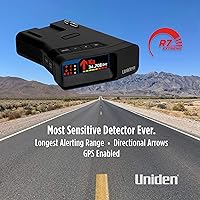
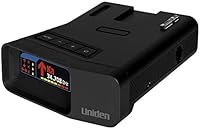
The standout hardware is the dual-antenna configuration paired with directional arrows that show exactly where a signal originates — knowing a threat is behind you rather than ahead genuinely changes how you react. The built-in GPS quietly learns your daily routes, so familiar false alert sources stop triggering after a few passes. A preloaded camera database covers red light and speed camera locations with free ongoing updates. The OLED display handles up to four simultaneous signals, showing band type and strength at a glance, while voice alerts let you keep your eyes on the road where they belong.

Best For

This unit makes the most sense for frequent highway drivers who want maximum advance warning distance and can actually use detailed signal data, not just a simple alert tone. It also suits people who have owned budget detectors and grown tired of constant false alarms — the GPS-based filtering addresses that frustration directly, though it does take a few drives on familiar routes to train properly. Anyone willing to invest time learning the settings will find the depth rewarding. Casual drivers who rarely leave city streets, however, may never fully use what this unit offers.

User Feedback

Long-distance drivers consistently highlight detection sensitivity as a genuine strength, with many noting real-world performance that surpasses what they experienced with previous detectors on open highways. The setup process draws more divided opinions — the GPS learning system and menu structure have a noticeable curve, and a handful of owners find the initial configuration unintuitive. The OLED display performs well in most conditions, though direct sunlight can reduce visibility for some users. GPS false-alert filtering earns strong marks once trained, particularly outside urban areas. Firmware and database updates are broadly described as straightforward, with few complaints about the update process itself.

Pros

  • Dual front and rear antennas deliver 360-degree coverage that meaningfully outperforms single-antenna competitors on open roads.
  • Directional arrows tell you exactly where a threat is coming from, so you can react calmly rather than guess.
  • GPS filtering learns your daily route and silences recurring false alert sources after just a few passes.
  • The preloaded red light and speed camera database comes with free lifetime updates — no subscription required.
  • Voice alerts let you keep your eyes on the road without constantly checking the display.
  • The OLED screen shows up to four simultaneous signals with band type and strength, giving real situational depth.
  • Ka band sensitivity draws consistent praise from experienced detector users for reliable early highway detection.
  • Firmware updates are straightforward and keep the unit current well beyond the purchase date.
  • Long-term owners report stable hardware performance with no meaningful degradation after years of regular use.

Cons

  • The menu system has a steep learning curve that frustrates new users expecting intuitive out-of-box setup.
  • GPS false alert training takes longer to pay off in urban areas with dense, varied signal environments.
  • The display can wash out noticeably in direct afternoon sunlight, reducing readability at a glance.
  • The suction cup mount can lose grip on curved windshields in hot climates over time.
  • Default voice alert volume requires manual adjustment — no adaptive feature compensates for changing cabin noise levels.
  • Laser detection, while present, is reactive by nature and should not be treated as a primary protection layer.
  • The update utility has reported compatibility issues for some Windows users on newer operating systems, and Mac support feels less polished.
  • The power cable connection can loosen with repeated plug-and-unplug cycles, which feels inconsistent with the overall build quality.
  • K band sensitivity in untrained environments can produce excessive alerts that undermine confidence in the unit early on.

Ratings

The Uniden R7 Radar Detector scores below are generated by AI after systematically analyzing thousands of verified global owner reviews, with spam, bot activity, and incentivized feedback actively filtered out. This unit has been on the market long enough to accumulate a substantial and honest cross-section of real-world opinions — from daily highway commuters to weekend road-trippers — covering both what it does exceptionally well and where it falls short. The scores transparently reflect both the genuine strengths and the recurring frustrations reported by actual buyers.
Detection Range
94%
Owners consistently describe catching radar signals well before other detectors in their car have reacted, particularly on open highway stretches where early warning matters most. Multiple long-haul drivers report the dual-antenna setup providing noticeably longer advance alerts than single-antenna units they previously owned.
A small number of urban drivers feel the extreme sensitivity can occasionally work against them in dense traffic environments, where signals bounce unpredictably off buildings and overpasses. Detection range advantages are most meaningful on highways and are less pronounced on city streets.
False Alert Filtering
86%
The GPS-based learning system genuinely improves day-to-day usability on familiar routes — automatic door sensors at grocery stores and gas stations that once triggered constant alerts effectively disappear after a few passes. Rural drivers in particular praise how quiet and focused the unit becomes over time.
Urban drivers report the learning process takes longer to pay off given the sheer volume of signal sources in city environments. A few owners note that the unit can still struggle to differentiate between legitimate threats and certain modern vehicle safety systems broadcasting on K band.
Dual-Antenna Design
91%
Having independent front and rear antennas with directional arrows fundamentally changes situational awareness — knowing a threat is approaching from behind versus ahead allows drivers to respond more calmly and appropriately. Most enthusiasts consider this the single biggest hardware advantage over conventional single-antenna detectors.
The dual-antenna configuration contributes to a slightly larger physical footprint, which can be noticeable on smaller windshields. A handful of users feel the directional arrows, while useful, take some time to interpret reliably at a quick glance.
GPS & Camera Database
83%
The preloaded red light and speed camera database is genuinely useful on road trips through unfamiliar areas, providing advance alerts that feel relevant rather than arbitrary. Free lifetime firmware and database updates mean the information stays current without any ongoing subscription cost.
Some owners report occasional discrepancies between database alerts and real-world camera locations, particularly in regions where infrastructure changes frequently. The GPS lock can also take slightly longer to acquire on cold starts in certain weather conditions.
Display Quality
78%
22%
The multi-color OLED panel is crisp and information-rich in typical lighting conditions, displaying band type, signal strength, and directional data simultaneously without feeling cluttered. Drivers who check the display regularly appreciate being able to parse multiple signals at a glance rather than waiting for sequential alerts.
Direct sunlight is a recurring complaint — the display can wash out significantly in bright afternoon sun, making it harder to read without cupping a hand over the unit. A few owners suggest Uniden could improve peak brightness to better compete with ambient outdoor light.
Menu & Setup Experience
61%
39%
Once fully configured, the unit operates with minimal required interaction day-to-day. Experienced detector users who take time to read the manual report finding the customization options genuinely deep and well-suited to personal driving preferences.
New users frequently describe the menu system as unintuitive and steep to navigate, with multiple layers of settings that are not self-explanatory out of the box. Several reviews specifically mention wishing for a simpler initial setup wizard to guide first-time configuration.
Voice Alert System
81%
19%
Voice alerts allow drivers to keep their eyes on the road rather than glancing at the display when a signal appears, which is a practical safety benefit on fast-moving highway driving. The alert language is specific enough to convey band type and general threat direction audibly.
Some owners find the default voice volume either too quiet at highway speeds with windows down or too jarring in quiet city driving. Volume adjustment exists but requires navigating the menu rather than a dedicated physical control.
Build Quality & Durability
77%
23%
The unit feels solid and well-assembled in hand, with a mounting bracket that holds securely without rattling even on rough road surfaces. Long-term owners who have used this radar detector for two or more years report no meaningful degradation in hardware performance.
The plastic finish picks up minor scratches over time, particularly around the mounting area. A few users note the power cable connection feels slightly less robust than the rest of the unit and can loosen with repeated plug-and-unplug cycles.
Mounting & Installation
74%
26%
The suction cup mount installs quickly and repositions cleanly on most windshield surfaces without leaving residue. The included power cable is long enough to route neatly along the windshield trim and down the A-pillar on most vehicle types.
On curved windshields, the suction mount can lose grip over time, especially in hot climates where the windshield temperature rises significantly. Owners interested in a cleaner hardwired install note that sourcing compatible kits requires additional research beyond what the packaging makes obvious.
Value for Money
71%
29%
For drivers who regularly cover highway miles and genuinely use the full feature set — dual antennas, GPS filtering, the camera database — the long-term cost per year of use works out reasonably given the lack of subscription fees and free updates.
At its price point, the investment is hard to justify for occasional or urban-only drivers who will not regularly benefit from long-range detection or highway-specific features. Buyers expecting plug-and-play simplicity may feel the learning curve reduces the value proposition further.
K & Ka Band Sensitivity
89%
Coverage across K and Ka bands captures the frequencies most commonly deployed by law enforcement in North America, and owners report confident real-world performance across both. Ka band sensitivity in particular draws consistent praise for early, reliable detection on multi-lane highways.
K band sensitivity, while strong, can be a double-edged characteristic given how many non-enforcement sources broadcast on that frequency. Without the GPS filtering fully trained, K band alerts in urban areas can feel excessive before the unit learns the local environment.
Firmware & Update Process
82%
18%
The firmware update process is described by most owners as straightforward, typically involving a USB connection and a desktop utility that handles the process automatically. Free lifetime updates mean the unit does not become obsolete as camera database information changes over time.
A minority of Windows users report occasional compatibility issues with the update utility on newer operating systems. Mac users specifically note that the update workflow is less polished and requires additional steps compared to the Windows experience.
Audio Alert Quality
76%
24%
Alert tones are distinct and easy to differentiate by band type after a short learning period, which experienced detector users appreciate. The range from subtle low-priority alerts to more urgent tones communicates threat severity reasonably well without relying solely on the display.
At sustained highway speeds with road noise, some owners find the lower-priority alert tones easy to miss without raising the volume to a level that becomes intrusive during quiet stretches. There is no adaptive volume feature that adjusts automatically based on ambient cabin noise.
Laser Detection
67%
33%
Laser detection capability is present and functional, and the directional display does indicate the general origin of a laser hit when one is detected. Some owners report the unit alerting in time to be useful in favorable conditions.
Like virtually all radar detectors in this category, laser detection is widely acknowledged — including by experienced owners — to be reactive rather than truly preventive, since laser targeting is typically brief and point-specific. Most knowledgeable users treat this feature as a bonus rather than a primary protection layer.

Suitable for:

The Uniden R7 Radar Detector is built for drivers who spend meaningful time on highways and open roads, where long detection range translates directly into useful reaction time. If you regularly commute long distances or take extended road trips, the dual-antenna system and directional arrows provide a level of situational awareness that single-antenna detectors simply cannot match. Drivers who have previously owned entry-level or mid-range detectors and grown frustrated by constant false alerts will find the GPS learning system a genuine improvement — it quietly adapts to your regular routes over time and stops crying wolf at the same grocery store door sensor every single morning. Tech-oriented buyers who want to understand exactly what their detector is seeing — which band, what signal strength, where the threat is coming from — will appreciate the depth of information the OLED display surfaces at a glance. This unit also makes strong sense as a long-term investment for anyone who wants free lifetime database updates rather than paying ongoing subscription fees to keep camera and red light data current.
Not suitable for:

The Uniden R7 Radar Detector is a poor fit for drivers who primarily navigate dense urban environments, where the sheer volume of K band sources from automatic doors, adaptive cruise control systems, and other vehicles can overwhelm even well-trained GPS filtering. Buyers who want a simple plug-and-play experience with zero configuration will likely find the menu system and initial GPS training process more demanding than expected — this is not a unit you optimally set up in five minutes without reading the documentation. At its price point, the investment is genuinely hard to justify if your driving is mostly short city trips or occasional weekend use, since you will rarely be in the scenarios where its core strengths actually activate. Drivers who prioritize a discreet, compact profile may also find the physical size of the unit noticeable on smaller windshields. If laser detection is your primary concern, it is worth knowing that all radar detectors — including this one — are fundamentally reactive to laser targeting rather than preventive, so no detector at any price fully solves that problem.
Specifications

  • Brand: Manufactured by Uniden, a brand with longstanding experience in consumer electronics and communication devices.
  • Model: Model designation is R7, representing the flagship tier of Uniden's radar detector lineup.
  • Antenna Config: Features dual antennas — one mounted front-facing and one rear-facing — for simultaneous 360-degree signal monitoring.
  • Detection Bands: Detects K and Ka frequency bands, which cover the radar frequencies most commonly used by law enforcement in North America.
  • Laser Detection: Includes laser (LIDAR) detection capability across the front and rear of the unit.
  • Directional Arrows: On-screen directional arrows indicate the geographic origin of each detected signal — front, rear, or either side.
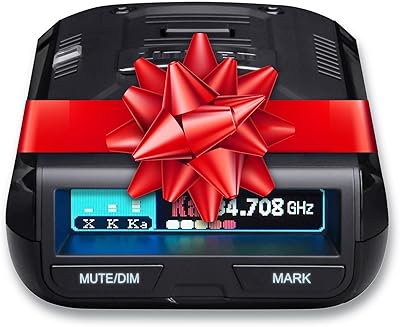
  • Display: Equipped with a multi-color OLED panel capable of displaying up to 4 simultaneous signals including band type and signal strength.
  • GPS: Built-in GPS module enables location-based false alert muting and powers the preloaded camera database.
  • Camera Database: Comes preloaded with red light camera and speed camera locations, with free lifetime database and firmware updates included.
  • Alert Types: Delivers both audible voice alerts and visual on-screen alerts to notify the driver of detected signals.
  • Power Source: Powered via 12V DC vehicle power outlet using the included power cable; no internal battery for primary operation.
  • Voltage: Operates at 12 volts DC, compatible with standard automotive power outlets in most passenger vehicles.
  • Dimensions: Physical dimensions measure 4.81″ in length, 1.38″ in width, and 3.88″ in height.
  • Weight: Unit weighs 6.7 ounces, making it manageable for windshield-mount use without excessive strain on the suction bracket.
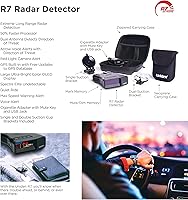
  • Mounting: Mounts to the windshield via an included suction cup bracket; optional hardwire kit compatibility is supported for a cleaner install.
  • Display Colors: The OLED display uses multiple colors to differentiate between signal types, bands, and alert priority levels at a glance.
  • False Alert Filter: GPS-based false alert filtering learns and automatically mutes recurring non-threat signal sources along frequently driven routes.
  • Market Rank: Holds a Best Sellers Rank of number 4 in the Radar Detectors category on Amazon as of available data.
  • Release Date: First made available to consumers in March 2019 and has remained an active, updated product in the category since.
  • Compatibility: Compatible with optional hardwire installation kits for vehicles where a permanent, cable-free dashboard setup is preferred.

Related Reviews
Uniden R3 Radar Detector
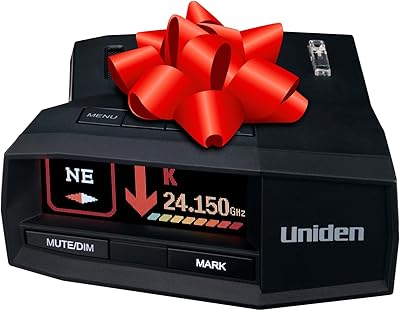
81%
96%
Detection Range
91%
GPS False Alert Filtering
93%
Radar Band Sensitivity
74%
Laser Detection
82%
BSM & False Alert Management
More
Uniden R8W Radar Detector
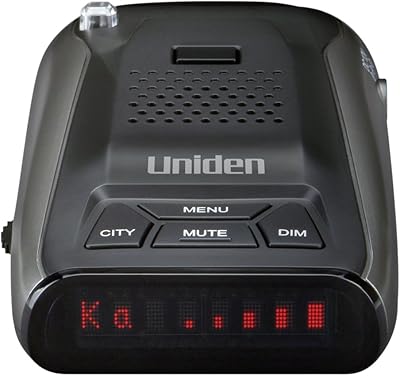
83%
93%
Detection Range
88%
False Alert Filtering
91%
Directional Awareness
74%
App Integration & Connectivity
86%
GPS & Camera Alert Accuracy
More
Uniden DFR5 Long Range Radar Detector
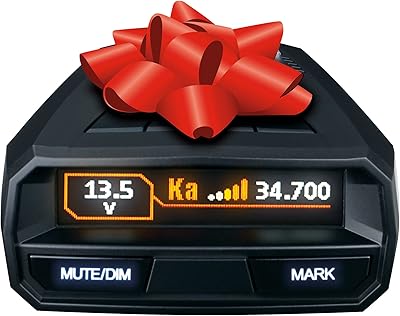
76%
88%
Detection Range
71%
False Alert Filtering
93%
Ease of Setup
86%
Spectre Undetectability
67%
Display Readability
More
Uniden R4 Radar Detector
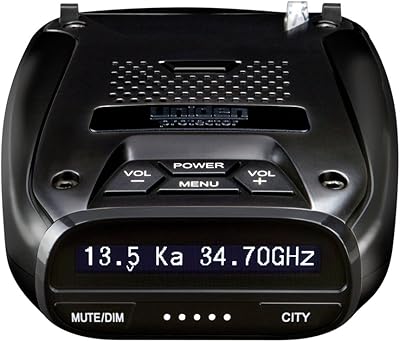
79%
94%
Detection Range
83%
False Alert Filtering
91%
GPS Auto-Mute Memory
78%
Red Light & Speed Camera Alerts
67%
App Integration (R/TACH)
More
Uniden DFR6 Radar Detector
80%
91%
Detection Range
73%
False Alert Filtering
88%
Display Quality
86%
Ease of Setup
67%
Build Quality
More
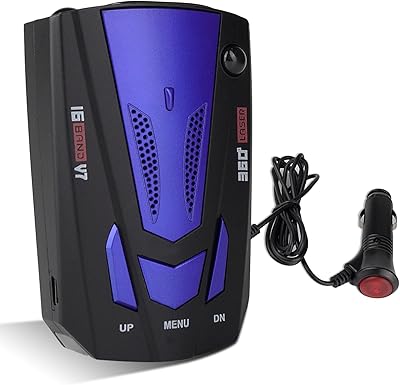
XpacEbank Car Radar Detector
81%
85%
Detection Performance
90%
Ease of Setup
88%
Voice Alert Clarity
65%
False Alerts
89%
GPS Accuracy
More
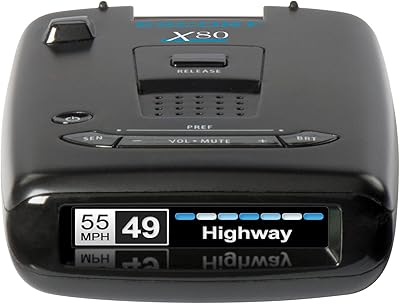
Escort X80 Radar Detector
84%
92%
Long-Range Detection
88%
Ease of Installation
84%
Voice Alert Customization
90%
App Integration (Escort Live)
80%
Accuracy of Alerts
More
Radenso XP Radar & Laser Detector
88%
94%
Detection Range
89%
GPS Lockout Functionality
91%
Ease of Use
85%
False Alert Filtering
88%
Voice Alerts & Display Visibility
More
Escort MAX 4 Radar Detector
79%
88%
False Alert Filtering
91%
Detection Range
79%
CarPlay & Android Auto Integration
67%
Value for Money
63%
AutoLearn Setup & Learning Curve
More
Cobra RAD 450 Radar Detector
77%
88%
False Alert Filtering
71%
Detection Range
94%
Ease of Setup
67%
Mount & Build Quality
79%
Display Clarity
More

FAQ

It typically takes a few drives along the same route before the unit begins automatically muting familiar false alert sources. Most owners report noticeable improvement within three to five repeat trips past the same locations. The more consistently you drive the same roads, the faster it learns.

It functions in both environments, but it genuinely shines on highways and open roads where long detection range translates into meaningful reaction time. In dense urban areas, the sheer number of K band sources — automatic doors, vehicle safety systems — can produce frequent alerts until the GPS filtering is fully trained to your routes. City drivers tend to have a longer adjustment period before the experience feels refined.

Yes, laser detection is built in and covers both the front and rear of the unit. That said, it is worth understanding that laser targeting is brief and point-specific by nature, which means all radar detectors — regardless of price — are reactive to laser rather than truly preventive. Most experienced detector users treat laser detection as a supplementary feature rather than a primary defense.

Updates are handled through Uniden's desktop software, which you connect to the unit via USB cable. The process downloads the latest database and firmware directly to the unit. It is free for the lifetime of the product, and most owners describe the Windows update process as straightforward, though Mac users may find it requires a few extra steps.

This is one of the more commonly mentioned limitations by real owners. The OLED display performs well in most lighting conditions, but direct afternoon sunlight can wash it out noticeably. If you frequently drive westward in the late afternoon or park facing direct sun, this is worth factoring into your expectations.

The basic mounting and power connection is simple enough, but getting the most out of the unit — configuring GPS settings, adjusting alert sensitivity, enabling or disabling specific bands — does involve navigating a multi-layer menu that some first-time users find unintuitive. Reading the manual before diving in makes the experience considerably smoother. If you prefer plug-and-play simplicity, there is a real learning curve here.

Yes, it can, particularly on K band, which is shared between law enforcement radar and many modern vehicle safety systems. This is one of the reasons GPS-based filtering and intelligent false alert management matter so much in modern detectors — without it, roads full of newer vehicles would make K band alerts nearly constant.

For most drivers in moderate climates, the mount holds reliably day-to-day. In consistently hot climates where windshield temperatures spike, the suction can weaken over time and may need to be repositioned periodically. Owners in high-heat regions sometimes choose to hardwire the unit for a more permanent and stable installation.

The unit includes the windshield mount and a power cable for the vehicle's 12V outlet, so basic installation is covered out of the box. If you want a cleaner hardwired setup with no visible cable running to the power outlet, a compatible hardwire kit is available separately but is not included in the standard package.

Laws on radar detector use vary significantly by location — they are legal for private passenger vehicles in most U.S. states but prohibited in Virginia and Washington D.C., and are generally not permitted in Canada or most other countries. Commercial vehicles and military bases have additional restrictions regardless of state. It is always worth checking your local regulations before using any radar detector.

Where to Buy

Best Buy
In stock $549.99
Walmart
In stock $549.99
Newegg.com
In stock $669.00
Bigbigmart.com
In stock $494.10
Abt Electronics & Appliances
In stock $549.99
DoorDash
In stock $549.99
Radar Busters
In stock $549.99
Best Radar Detectors
In stock $549.99
Uniden America Corporation
In stock $549.99