Overview

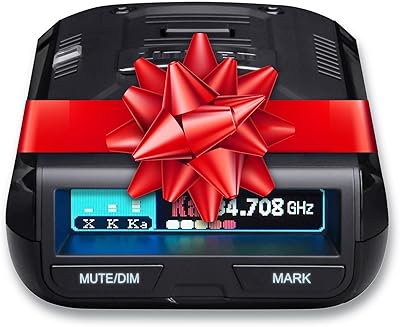
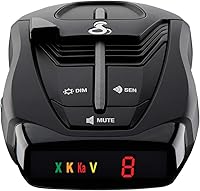
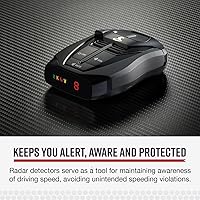
The Cobra RAD 380 Radar Detector has held the #1 Best Seller spot in its category for good reason — it's a mid-range unit that punches above its weight without asking you to spend a fortune or read a manual. Since its release in 2020, it has built a reliable reputation among everyday drivers who want genuine protection on the road. The standout at this price tier is front-and-rear laser detection, a feature you'd normally find on more expensive hardware. Small enough to tuck neatly behind your rearview mirror, it's the kind of device you mount once and forget.
Features & Benefits

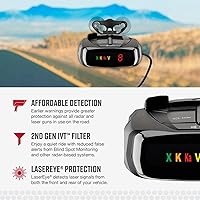
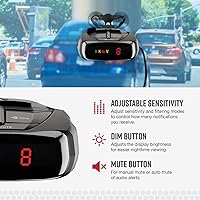
The RAD 380's most practical advantage is its LaserEye technology, which watches for threats from both the front and rear of your vehicle. On the interstate, this matters more than most people expect — enforcement doesn't always come from ahead. The IVT filtering system tackles a problem that plagues cheaper detectors: false alerts triggered by the blind-spot monitors and collision-avoidance systems common on modern cars. Digital Signal Processing helps the unit react faster to incoming signals, giving you a few extra seconds to respond. Adjustable sensitivity modes let you dial things back in city traffic, cutting down on unnecessary noise. No app required — just plug it in.

Best For

This radar unit suits drivers who want solid protection on longer drives without getting tangled up in apps, subscriptions, or complicated setups. If you've dealt with a budget detector that cried wolf every time a grocery store door sensor flickered, the improved filtering here will feel like a genuine upgrade. Long-haul commuters and road-trip regulars will appreciate rear coverage especially — being caught by an officer who's already behind you is where front-only detectors fall short. It's also a strong pick for anyone who values a simple, standalone setup over feature-heavy units that require constant pairing and updating to function properly.

User Feedback

With a 4.2-star average across more than 14,000 ratings, this Cobra detector has earned its standing through a genuine volume of real-world experience. Most owners call out easy installation and a noticeable jump in range compared to older, cheaper units — out of the box, it works. The criticism is consistent and worth noting: no GPS learning, no OLED screen, no companion app. Drivers in busy urban areas occasionally find the IVT filter isn't foolproof, with some false alerts still getting through. Stack it against premium options from Escort or Uniden and the trade-offs are real. For straightforward highway protection, though, the RAD 380 reliably delivers what it promises.

Pros

  • Front-and-rear laser detection is genuinely rare at this price point and adds meaningful all-around protection.
  • The IVT filtering system dramatically cuts false alerts caused by blind-spot and collision-avoidance systems on modern vehicles.
  • Setup takes under two minutes — no app, no account, no configuration required before your first drive.
  • Compact enough to tuck behind the rearview mirror without obstructing any sightlines.
  • Adjustable sensitivity modes make it practical for both congested city driving and open highway runs.
  • The Cobra RAD 380 Radar Detector holds the top Best Seller rank in its category, backed by over 14,000 real buyer ratings.
  • Moves between vehicles in seconds — great for drivers who share or frequently switch cars.
  • Digital Signal Processing delivers faster alert response compared to older-generation units in the same brand lineup.
  • Includes both a suction cup and hook-and-loop mount, so you have a workable option for most vehicle types.
  • No subscription fees or recurring costs — what you buy is what you get, permanently.

Cons

  • No GPS memory means the same false alert locations will repeat indefinitely on familiar routes.
  • The LCD display washes out in direct sunlight, making it harder to read during bright midday driving.
  • Zero app integration cuts off access to crowd-sourced alerts and shared speed trap databases entirely.
  • Laser detection, by its nature, often alerts after a speed reading has already been taken — a structural limitation worth understanding before buying.
  • The suction cup mount can lose grip on curved or treated windshields, particularly during hot weather.
  • No OLED display and no connected features leave this radar unit feeling dated alongside similarly priced competitors.
  • Detection range is standard-grade, not class-leading — drivers in wide-open terrain may wish for more early warning distance.
  • City commuters may still experience occasional false alerts even with the IVT filter running at full strength.
  • The power cord length is slightly short for certain dashboard layouts, making clean cable routing a minor headache.
  • No automatic city-to-highway sensitivity switching means manual mode adjustments when your driving environment changes.

Ratings

The Cobra RAD 380 Radar Detector scores below are generated by AI after systematically analyzing thousands of verified global buyer reviews, actively filtering out incentivized, bot-generated, and outlier feedback to surface what real drivers genuinely experience. Drawing on a pool of over 14,000 ratings, these scores reflect honest patterns across everyday commuters, road-trippers, and long-haul drivers alike. Both the strengths that keep this radar unit at the top of its category and the limitations that frustrated buyers openly flagged are transparently represented here.
Detection Range
74%
26%
On open highway stretches, the RAD 380 gives drivers a workable heads-up window — enough to ease off the throttle without panic braking. Buyers upgrading from entry-level detectors consistently noted a meaningful range improvement, particularly on X and K band signals encountered during longer interstate drives.
Measured against premium units from Escort or Uniden in the same real-world conditions, the range advantage shrinks noticeably. Drivers on rural two-lane roads with quick-trigger enforcement reported that the alert sometimes came later than they would have liked, leaving less reaction time than advertised.
False Alert Filtering
78%
22%
The IVT filtering system handles a genuinely modern problem well — most drivers reported a dramatic drop in nuisance alerts triggered by adaptive cruise control and blind-spot sensors on nearby vehicles. On busy interstates surrounded by late-model SUVs and trucks, this makes a real difference in day-to-day usability.
In dense urban stop-and-go traffic, the filtering is not foolproof. A meaningful subset of city commuters reported that automatic doors, parking sensors, and certain traffic monitoring systems still slipped through the IVT filter often enough to remain a mild but persistent annoyance.
Ease of Setup
93%
Buyers almost universally praised how quickly the RAD 380 gets up and running — plug the 12V cord in, mount it with the included suction cup, and it is ready to go. There is no app to configure, no account to create, and no firmware ritual before the first drive, which non-technical buyers genuinely appreciated.
The suction cup mount drew occasional complaints about staying firmly attached in extreme heat or on textured windshields, requiring repositioning after a few weeks. A small number of users also wished the cord routing options were tidier for a cleaner in-cabin look.
Laser Detection Coverage
81%
19%
Front-and-rear laser detection is a genuine differentiator at this price level, and drivers on long road trips especially noted the value of knowing threats from behind are also being tracked. The LaserEye system picked up rear-aimed laser guns in testing scenarios where front-only competitors stayed silent.
As with all passive laser detectors, by the time the unit alerts, the speed reading has often already been taken — laser detection is inherently reactive rather than preventive. A handful of experienced users pointed this out as a structural limitation of the technology rather than a Cobra-specific flaw.
Value for Money
88%
For a unit sitting comfortably in the mid-range price bracket, the combination of front-and-rear laser coverage, decent K-band range, and solid false-alert filtering represents strong bang-for-buck. Most buyers felt they were getting a feature set that would have cost significantly more just a few years ago.
Buyers who push past the base use case — wanting GPS-based speed trap alerts, cloud-connected updates, or a companion app — quickly find the value calculation less compelling. At that point, spending more on a connected detector starts to make sense, and the RAD 380 begins to feel limited.
Build Quality & Durability
72%
28%
The unit feels solid for its weight class — at under five ounces, it is genuinely compact without feeling flimsy in hand. Most buyers reported no issues with buttons, display, or housing integrity over months of daily use in varying temperatures.
The plastic casing and LCD display do not inspire premium confidence, and a handful of long-term owners reported display dimming or button responsiveness issues after a year or more of regular use. It is durable enough, but clearly engineered to a price rather than for longevity.
Display Clarity
63%
37%
The LCD display is readable in moderate lighting and conveys the essential signal information without clutter. For drivers who just need to know what band is being detected and the alert strength, it does the job without distraction.
In direct sunlight, the LCD can wash out to the point of being difficult to read while driving. Buyers who have used detectors with OLED screens found the RAD 380's display noticeably inferior in contrast and brightness, which is a fair criticism at this tier.
Alert Speed & Accuracy
76%
24%
Digital Signal Processing does contribute to quicker alert times compared to older-generation Cobra models, and buyers noticed the difference. On K-band heavy corridors, alerts came in early enough to be genuinely useful rather than confirming what the driver already suspected.
A subset of users flagged that signal strength readings occasionally fluctuated in ways that felt inconsistent — a strong alert one pass, a weaker one the next in the same location. This inconsistency made it harder to fully trust the unit during critical moments.
Sensitivity Mode Flexibility
77%
23%
The ability to switch between city and highway sensitivity modes is practical and well-implemented. Commuters who split their driving between suburban errands and freeway runs appreciated being able to dial sensitivity down during congested local driving without turning the device off entirely.
The mode options are functional but basic — there is no automatic city-to-highway switching based on speed, which more sophisticated detectors offer. Drivers who frequently transition between environments found themselves manually adjusting more often than they would prefer.
Mounting & Placement Options
71%
29%
Having both a suction cup windshield mount and a hook-and-loop dash fastener included in the box means drivers can choose the setup that works for their specific vehicle without buying accessories separately. The low-profile size fits behind most rearview mirrors without blocking sightlines.
The suction cup lost adhesion for several buyers in vehicles with curved or treated windshields, and in high-heat climates the mount reportedly needed regular re-seating. Some users wished for a more robust or adjustable mounting arm for better viewing angles.
GPS & Smart Features
31%
69%
The absence of GPS keeps the hardware simple and the unit lightweight — there are no databases to update or subscription fees to manage. For drivers who want a completely self-contained device with zero ongoing maintenance, this is actually a functional design choice.
The lack of GPS-based AutoLearn, fixed speed camera alerts, or red-light camera warnings is a real gap that becomes obvious on regular routes where persistent false alert locations never get memorized. Competing detectors at similar or slightly higher prices include GPS as a standard feature, making this omission harder to overlook.
App & Connectivity
28%
72%
There is a genuine subset of drivers who simply do not want a detector tethered to their phone, and the RAD 380 serves them cleanly. No Bluetooth pairing failures, no app updates that break functionality, no battery drain on a connected smartphone.
The complete absence of app integration, shared alert networks, or crowd-sourced threat updates is a significant disadvantage in 2024. Connected platforms like Waze integration or Cobra's own Drive Smarter app — available on higher-end models — offer a meaningful layer of intelligence this unit simply cannot access.
Noise & Alert Management
75%
25%
The audio alerts are clear and graded in urgency, which helps drivers distinguish between a distant signal worth monitoring and an immediate threat requiring action. Volume control is straightforward, and most users found a comfortable daily setting within the first few drives.
In city environments, even with the IVT filter engaged, the alert frequency can still feel high enough to cause mild fatigue on long urban commutes. A small number of buyers ultimately kept the volume low enough that alerts became easy to miss — defeating the purpose of running the unit at all.
Portability & Vehicle Compatibility
86%
At 4.8 ounces and powered by a standard 12V socket, this radar unit moves between vehicles in under a minute. Families with multiple cars or drivers who frequently use rental vehicles appreciated being able to transfer the detector without any reconfiguration.
The 12V power cord length was flagged as slightly short for certain vehicle layouts, requiring awkward routing along the A-pillar or dashboard. Hardwire installation is possible but requires a separately purchased adapter, adding cost and complexity for buyers who want a fully clean look.

Suitable for:

The Cobra RAD 380 Radar Detector is a strong fit for everyday drivers who want dependable, low-hassle protection on the road without wading through complex settings or paying a premium price. If your driving is split between highway commutes and occasional road trips, the front-and-rear laser coverage addresses a real blind spot that front-only units at this price simply cannot. Drivers upgrading from a basic, budget detector will likely notice an immediate improvement in both range and false alert management — particularly on stretches of interstate where modern vehicles with collision-avoidance systems constantly set off cheaper units. It suits people who want a device that works the moment it is plugged in, requires no smartphone pairing, no account setup, and no ongoing subscription to stay functional. Frequent travelers who shuttle the device between multiple vehicles will also appreciate how effortlessly it moves from car to car with nothing more than a 12V socket.
Not suitable for:

The Cobra RAD 380 Radar Detector is not the right choice for drivers who want their detector to learn and adapt intelligently over time. Without GPS-based AutoLearn technology, the unit cannot memorize recurring false alert locations on your daily route, meaning the same parking lot sensor or automatic door that triggered a false alert on Monday will trigger one again on Friday. Tech-forward buyers who rely on app-connected platforms — crowd-sourced threat alerts, red-light camera databases, or real-time speed trap updates — will find this radar unit frustratingly silent in that regard. Urban commuters navigating dense city traffic may also find that even the improved IVT filtering is not aggressive enough to keep false alerts fully in check during stop-and-go conditions. And for drivers who benchmark against premium detectors from Escort or Uniden, the detection range and display quality differences are real enough to matter, especially if you frequently drive through areas with aggressive or varied enforcement tactics.
Specifications

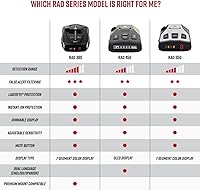
  • Brand: Manufactured by Cobra Electronics, a longstanding name in the radar detector market with decades of product history.
  • Model: The RAD 380 is the specific model designation within Cobra's mid-range radar detector lineup.
  • Dimensions: The unit measures 4.25″ in length, 2.75″ in width, and 1.25″ in height, making it compact enough to sit discreetly behind a rearview mirror.
  • Weight: At 4.8 ounces, the detector is light enough to hold firmly on a windshield mount without straining the suction cup over time.
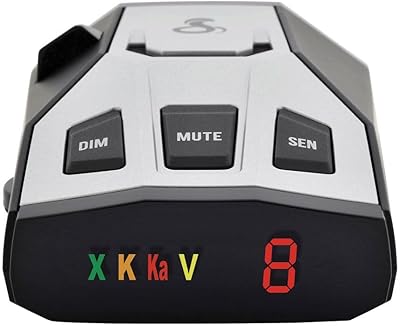
  • Display Type: Features an LCD screen that shows band type, signal strength, and alert information during operation.
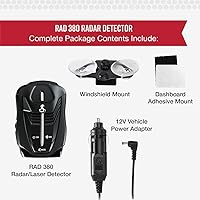
  • Power Source: Powered via a 12V DC vehicle power cord that plugs into a standard automotive cigarette lighter or accessory socket.
  • Laser Coverage: LaserEye technology provides both front and rear laser signal detection, offering all-around coverage in a single unit.
  • Radar Bands: Detects signals across multiple radar frequency bands including X, K, and Ka bands commonly used by law enforcement.
  • False Alert Filter: An updateable IVT Filter combined with anti-falsing circuitry works to suppress alerts generated by blind-spot monitors and collision-avoidance systems on modern vehicles.
  • Signal Processing: Digital Signal Processing (DSP) is built in to accelerate threat identification and deliver faster, more accurate alerts compared to non-DSP units.
  • Sensitivity Modes: Offers adjustable sensitivity settings that allow drivers to reduce alert frequency in urban environments or maximize detection range on open highways.
  • Mounting Options: Includes both a suction cup windshield mount and a hook-and-loop fastener for dash-top placement, giving drivers flexibility depending on their vehicle setup.
  • App Connectivity: This unit has no Bluetooth or Wi-Fi connectivity and does not pair with any companion smartphone application.
  • GPS Features: The RAD 380 does not include GPS hardware, meaning it cannot learn recurring false alert locations or provide speed camera database alerts.
  • Detection Purpose: This is strictly a radar and laser signal detection device; it does not transmit or jam any signals, in compliance with federal law.
  • Customer Rating: Holds a 4.2 out of 5 star average rating based on over 14,000 verified customer reviews on Amazon.
  • Best Sellers Rank: Ranked #1 in the Radar Detectors category on Amazon at the time of this review, reflecting sustained and broad buyer demand.
  • Release Date: The RAD 380 was first made available in March 2020 and has remained in active production without discontinuation.
  • ASIN: The Amazon Standard Identification Number for this product is B0869RMYZ3, useful for locating the exact listing without confusion from similarly named models.
  • Voltage: Operates at 12 volts DC, compatible with virtually all standard passenger vehicles, trucks, and SUVs sold in North America.

Related Reviews
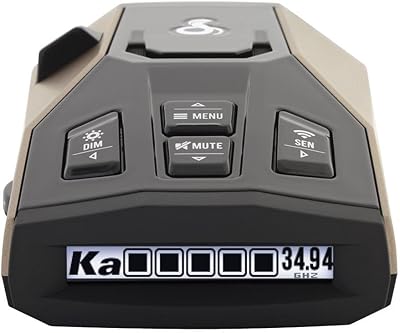
Cobra RAD 450 Radar Detector
77%
88%
False Alert Filtering
71%
Detection Range
94%
Ease of Setup
67%
Mount & Build Quality
79%
Display Clarity
More
Cobra RAD 480i
Cobra RAD 480i
83%
83%
Detection Range
88%
False Alert Filtering
92%
Ease of Setup
79%
App Integration
86%
CarPlay and Android Auto Support
More
Cobra RAD 350
Cobra RAD 350
75%
83%
False Alert Filtering
67%
Detection Range
88%
Display Quality
91%
Ease of Use
82%
Audio Alerts
More
Cobra ESD7400 Radar/Laser Detector
87%
90%
Performance
93%
Ease of Installation
88%
Detection Range
70%
False Alerts
92%
Display Visibility
More
XpacEbank Car Radar Detector
81%
85%
Detection Performance
90%
Ease of Setup
88%
Voice Alert Clarity
65%
False Alerts
89%
GPS Accuracy
More
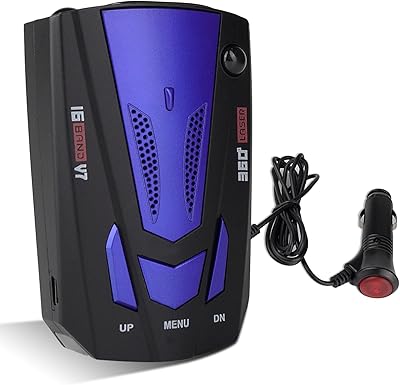
Uniden R3 Radar Detector
81%
96%
Detection Range
91%
GPS False Alert Filtering
93%
Radar Band Sensitivity
74%
Laser Detection
82%
BSM & False Alert Management
More
Escort X80 Radar Detector
84%
92%
Long-Range Detection
88%
Ease of Installation
84%
Voice Alert Customization
90%
App Integration (Escort Live)
80%
Accuracy of Alerts
More
Radenso XP Radar & Laser Detector
88%
94%
Detection Range
89%
GPS Lockout Functionality
91%
Ease of Use
85%
False Alert Filtering
88%
Voice Alerts & Display Visibility
More
Escort MAX 4 Radar Detector
79%
88%
False Alert Filtering
91%
Detection Range
79%
CarPlay & Android Auto Integration
67%
Value for Money
63%
AutoLearn Setup & Learning Curve
More
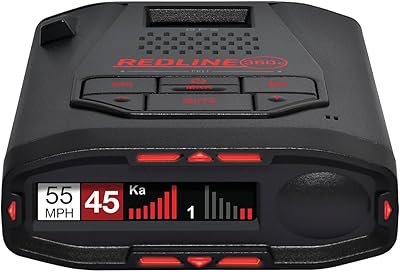
Uniden R8W Radar Detector
83%
93%
Detection Range
88%
False Alert Filtering
91%
Directional Awareness
74%
App Integration & Connectivity
86%
GPS & Camera Alert Accuracy
More

FAQ

It works right out of the box with no configuration required. Plug the 12V cord into your accessory socket, mount it on the windshield or dash using the included hardware, and it begins detecting immediately. There is no app to install, no account to create, and no pairing process of any kind.

It handles this better than most units at this price, thanks to the IVT filtering system designed to suppress signals from blind-spot monitors and collision-avoidance systems on modern vehicles. That said, no filter is perfect — some drivers in heavy urban traffic do report occasional false alerts slipping through, particularly near large parking structures or shopping centers. Switching to city sensitivity mode helps reduce these significantly.

Both directions are covered. The LaserEye system includes front and rear laser sensors, which is a meaningful advantage on highways where enforcement can come from patrol cars positioned behind traffic. Most detectors at this price tier only cover the front, so this is one of the RAD 380's genuine standout features.

No, and it is important to understand this clearly — the RAD 380 is a detection-only device. It alerts you when it receives a laser or radar signal, but it does not transmit or interfere with any signals. Laser jammers are a separate category of device, and their legality varies widely by state and country.

No, this radar unit has no Bluetooth, Wi-Fi, or any form of smartphone connectivity. It operates as a fully standalone device. If app integration, crowd-sourced alerts, or connected features are important to you, you would need to look at a higher-tier model in Cobra's lineup or from another brand entirely.

It works reliably for most drivers, but some users in hot climates or vehicles with treated or curved windshields report that the cup loses its grip after a few weeks and needs re-seating occasionally. The included hook-and-loop dash mount is a practical backup if the windshield placement becomes unreliable in your specific vehicle.

It is a solid performer on the highway for a mid-range detector — most users notice a genuine improvement coming from entry-level units. That said, its range is rated standard rather than premium class, so if you regularly drive fast-moving rural interstates where you want the maximum possible early warning distance, higher-end detectors from Escort or Uniden do offer a measurable advantage in range.

You can adjust the sensitivity mode while driving — the controls are straightforward enough to operate with minimal distraction. Most drivers settle into a routine of using city mode for local errands and switching to highway mode before getting on the interstate, which takes only a button press or two.

The IVT filter is described as updateable, which gives it some longevity as vehicle technology evolves. However, without GPS or app connectivity, it cannot receive real-time database updates for new speed camera locations or enforcement patterns the way connected detectors can. For basic radar and laser detection purposes, though, the core hardware does not age the way software-dependent devices do.

Radar detectors are legal for use in private passenger vehicles in most U.S. states, but there are exceptions — Virginia and Washington D.C. historically had restrictions, and rules do change. They are generally prohibited in commercial vehicles over a certain weight. If you are driving internationally, regulations vary significantly by country. It is always worth checking the specific laws for your state or region before using any detector.

Where to Buy