Overview

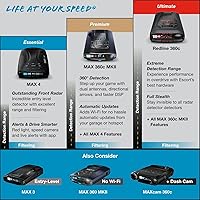
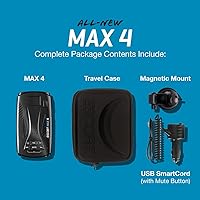
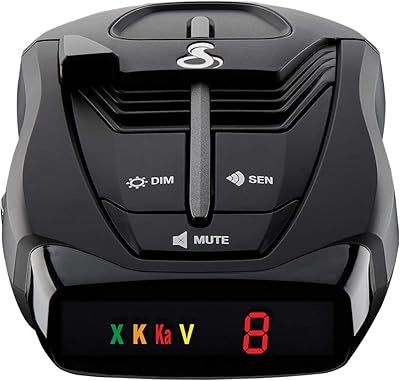
The Escort MAX 4 Radar Detector arrived in April 2024 as one of the more serious upgrades Escort has released in years, built on a company history stretching back over five decades in driver awareness technology. Powering it is a new dual-core processor that noticeably improves response speed and filtering sharpness compared to previous-generation models. The physical unit is slim, corded, and designed to mount cleanly on a windshield — this is not a portable or battery-run device. One thing to clarify upfront: it is a detection-only device. It does not record video or function as a dash cam, so set your expectations accordingly before purchase.

Features & Benefits

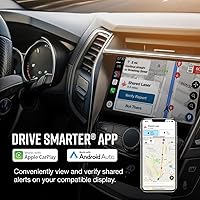
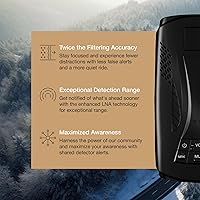
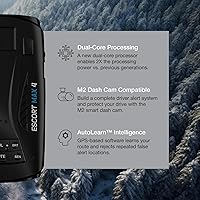
The feature that makes the biggest day-to-day difference is AutoLearn GPS Intelligence, which quietly memorizes your regular routes and, over time, stops flagging the same automatic door or adaptive cruise system that set it off every morning. That kind of intelligent suppression is what separates a genuinely useful detector from one that just cries wolf. The Low Noise Amplifier extends detection range meaningfully on K, Ka, and X radar bands, giving drivers extra seconds to assess their speed and surroundings. Bluetooth and built-in GPS round things out, enabling Apple CarPlay and Android Auto integration so alerts surface directly on your car's display without extra hardware or phone mounts.

Best For

The MAX 4 is a stronger fit for highway commuters and frequent long-distance drivers than for people navigating dense city traffic, where radar-emitting sources are everywhere and even solid filtering gets tested constantly. On open roads, the extended detection range genuinely matters — more warning distance translates to calmer, more informed decisions. Drivers already using Escort hardware will find the optional M2 dash cam pairing an appealing addition, though it is sold separately and entirely optional. Anyone stepping up from a basic or aging detector who wants CarPlay integration built in will find this radar detector a well-considered, capable upgrade rather than an incremental one.

User Feedback

Around 79 ratings and a 4.4-star average make for an encouraging debut, but it is a modest sample for a product launched in 2024, so treat early patterns as directional rather than definitive. The most consistent praise centers on filtering accuracy — buyers who upgraded from older models report noticeably fewer nuisance alerts during daily drives. Where criticism surfaces, it tends to land in two spots: some users find that AutoLearn needs several weeks of repeated drives before it starts performing reliably, and a portion of reviewers question the value when stacked against competing premium detectors at lower price points. CarPlay setup, by most accounts, works cleanly once configured.

Pros

  • AutoLearn GPS progressively eliminates recurring false alerts on regular commute routes over time.
  • Extended detection range on K, Ka, and X bands gives highway drivers meaningful early warning distance.
  • Dual-core processing delivers noticeably faster response and filtering compared to previous Escort generations.
  • Native Apple CarPlay and Android Auto support keeps alerts on the main display without extra mounts.
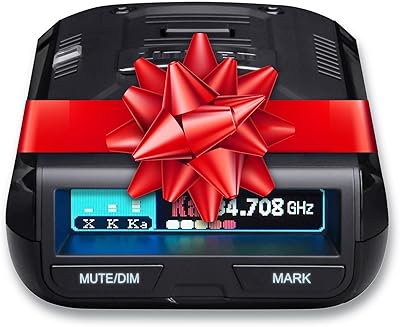
  • Slim OLED design sits low on the windshield without cluttering the driver's sightline.
  • Drive Smarter community alerts add a live, crowd-sourced data layer that hardware alone cannot replicate.
  • Built-in GPS contributes to both location-based filtering and speed-sensitive alert adjustments simultaneously.
  • Optional Escort M2 dash cam pairing offers a clean, integrated two-device setup for ecosystem users.
  • 50-plus years of brand experience translates into well-tuned default band sensitivity settings out of the box.

Cons

  • AutoLearn requires several weeks of repeated drives before false alert suppression becomes reliable.
  • Bluetooth connectivity can drop intermittently, particularly with certain Android device configurations.
  • The companion app feels noticeably less polished than the physical hardware it controls.
  • Community alert quality drops sharply in rural or low-traffic regions with sparse user coverage.
  • CarPlay integration setup trips up a portion of buyers and occasionally requires multiple pairing attempts.
  • Urban driving largely neutralizes the long detection range advantage that defines the MAX 4's strongest use case.
  • At this price point, several competing detectors offer comparable detection performance with less friction.
  • No wireless or battery-powered option limits mounting flexibility compared to portable alternatives.
  • Review sample size is still relatively small for a 2024 product, making long-term reliability harder to assess.

Ratings

The Escort MAX 4 Radar Detector earned its scores through AI-driven analysis of verified buyer reviews collected globally, with spam, bot-generated, and incentivized submissions actively filtered out before any scoring was applied. Ratings reflect the full picture — where the MAX 4 genuinely delivers and where real users have hit frustration points. Both strengths and recurring complaints are weighted honestly in every category below.
False Alert Filtering
88%
This is the category where buyers most consistently report satisfaction. On familiar daily routes, AutoLearn GPS progressively silences the automatic door openers and adaptive cruise systems that used to interrupt every commute. Drivers upgrading from older or budget detectors describe the difference as immediately noticeable.
The filtering is route-dependent — it requires multiple drives along the same path before it starts suppressing known false sources, so new or infrequent routes still generate plenty of noise. A handful of reviewers note that early in ownership, the alert frequency felt no better than cheaper alternatives.
Detection Range
91%
On open highways, the Low Noise Amplifier technology gives drivers a meaningful head start compared to mid-tier detectors. Users frequently mention being alerted well before other tools would have registered anything, which is precisely the kind of early-warning performance that justifies the premium tier.
Urban performance is a more mixed story — dense environments with numerous radar-emitting sources compress the practical advantage of long range. A few buyers noted that in stop-and-go city driving, the detection distance advantage felt largely irrelevant compared to the highway experience.
CarPlay & Android Auto Integration
79%
21%
Being able to view alerts directly on the car's native display — without a separate phone mount or secondary screen cluttering the dash — is a real quality-of-life upgrade for connected drivers. Those who got the setup working cleanly describe it as one of the most practical features the MAX 4 offers.
Initial configuration trips up a noticeable segment of buyers, particularly those less familiar with Bluetooth pairing through CarPlay environments. A few reviewers reported inconsistent connectivity on the first few uses, requiring restarts or app reinstalls before the integration stabilized.
Value for Money
67%
33%
For buyers who drive long distances regularly or who have been burned by constant false alerts from cheaper units, the investment starts to justify itself fairly quickly. The combination of GPS intelligence, dual-core processing, and CarPlay support in a single device does represent a tangible feature density at this price tier.
The most common friction point in reviews is cost versus competition. Several buyers point out that rival premium detectors offer comparable or better detection performance at lower prices, and for casual or occasional drivers, the advanced features may rarely be fully utilized.
AutoLearn Setup & Learning Curve
63%
37%
Once AutoLearn has had enough time to map a regular route, it operates quietly in the background without any manual input needed. Drivers who commute the same roads daily and gave it two to four weeks consistently reported a cleaner, less distracting experience over time.
The learning period itself frustrates a meaningful portion of buyers. There is no shortcut — the system needs repeated real-world drives before it adapts, and in the meantime the alert volume can feel overwhelming. The manual does not set clear expectations on how long this process takes, which amplifies early disappointment.
Build Quality & Design
84%
The slim OLED housing feels premium in hand and sits low on the windshield without dominating the driver's sightline. Buyers frequently mention that it looks appropriately high-end compared to bulkier competitors, and the corded 12V setup feels secure and stable during daily use.
Being corded-only is a deliberate design choice, but it does limit mounting flexibility compared to wireless or battery-operated alternatives. A small number of users noted the suction mount could be more robust, particularly in extreme temperature shifts between seasons.
OLED Display Clarity
86%
The OLED readout is sharp and easy to parse at a glance, which matters when you need to register a band and signal strength in under a second. Reviewers note it remains clearly visible in direct sunlight, which is a genuine advantage over LCD alternatives in the same category.
For buyers who rely primarily on CarPlay for alert display, the onboard screen becomes secondary — and at that point, the quality of the OLED panel is largely a moot point. A couple of users also mentioned the display brightness adjustment was not as intuitive to configure as expected.
GPS Accuracy
83%
Built-in GPS locks on quickly and contributes to both AutoLearn filtering and speed-based sensitivity adjustments. Drivers who travel the same corridors regularly find that location-tagged filtering becomes one of the quietly reliable background features of the unit over time.
GPS-dependent features are naturally weaker in areas with poor satellite acquisition, such as densely built urban canyons or parking structures. A few reviewers reported minor location lag when first powering the unit in a new area, though this resolved once the signal stabilized.
Drive Smarter Community Alerts
74%
26%
When traveling in populated areas with an active user base, the crowdsourced alert layer adds a useful supplemental data stream that hardware alone cannot provide. Long-distance drivers passing through well-covered regions mention it as a genuine bonus rather than a gimmick.
Alert quality is entirely dependent on community density in a given region — in rural or less-populated corridors, the network contribution is sparse to nonexistent. Buyers who travel primarily off the beaten path may find this feature rarely activates in practice.
Bluetooth Connectivity Stability
71%
29%
When the Bluetooth pairing holds, it works cleanly with the Escort app and feeds into the broader CarPlay experience without requiring manual reconnection. Most buyers who set it up correctly and kept the app updated reported reliable day-to-day performance.
A recurring thread in negative reviews involves Bluetooth dropping or failing to reconnect automatically after the car restarts. This appears more pronounced on certain Android device combinations, and while not universal, it is consistent enough to be worth flagging for Android Auto users specifically.
Radar Band Coverage
89%
Coverage across X, K, and Ka bands covers the full range of radar sources drivers are likely to encounter in North American driving conditions. Buyers appreciate not having to configure band sensitivity manually out of the box, as the defaults are well-tuned for most real-world environments.
Some experienced users note that X-band sensitivity, while included, generates more environmental noise than K and Ka coverage. Advanced users who prefer granular band-by-band control may find the configuration options less flexible than competing units at a similar price point.
App & Software Experience
72%
28%
The companion app adds meaningful functionality — firmware updates, route logging, and alert history are all accessible without needing to dig into the unit itself. For tech-oriented drivers, having software control over hardware behavior is a welcome layer of customization.
App reviews across platforms reflect a patchier experience than the hardware itself, with some users reporting lag, occasional crashes, and UI choices that feel less polished than the detector. It works adequately but does not match the quality impression the physical device creates.
Ease of Installation
81%
19%
The windshield mount system is straightforward and most buyers report being road-ready within minutes of opening the box. The corded power setup is familiar and requires no special tools or professional installation, which lowers the barrier for first-time radar detector owners.
Cable management is the most commonly cited minor annoyance — routing the 12V cord cleanly through the cabin without visible slack takes some extra effort, particularly in vehicles with limited visor or A-pillar routing options. It is a minor point but does come up with some regularity.
M2 Dash Cam Ecosystem Compatibility
76%
24%
For buyers already invested in the Escort ecosystem or actively considering the M2 dash cam, having a hardware-level pairing option is a practical advantage that keeps the dash setup clean and unified. It avoids the clutter of running two completely separate, unrelated devices.
The M2 is sold separately at additional cost, so the ecosystem benefit only applies to a subset of buyers. Those who use or prefer third-party dash cam brands get no equivalent integration benefit, and the pairing is locked within the Escort hardware family.

Suitable for:

The Escort MAX 4 Radar Detector is built for drivers who spend serious time on the highway and want a device that gets smarter the more they use it. Daily commuters who have grown tired of constant false alerts from store entrances and parking garage sensors will find AutoLearn GPS genuinely useful — though it does require patience during the first few weeks of ownership while the system maps familiar routes. Tech-oriented drivers who want alerts surfaced directly on their CarPlay or Android Auto display, rather than glancing at a separate device, will get real value from the built-in connectivity features. Long-distance travelers benefit most from the extended detection range, where having extra seconds of advance awareness on open roads makes the most practical difference. Drivers already using or considering the Escort M2 dash cam will also find the optional pairing a tidy way to consolidate their in-car tech setup without running two completely independent systems.
Not suitable for:

The Escort MAX 4 Radar Detector is a harder sell for drivers who primarily navigate busy urban environments, where dense radar sources and constant signal noise limit how much even excellent filtering software can help. Casual drivers who only occasionally take longer trips are unlikely to extract full value from the AutoLearn system, since it depends on repetitive route data to work as intended. Buyers on a tighter budget should also think carefully — competing premium detectors in the market offer solid detection performance at meaningfully lower price points, and if features like CarPlay integration are not a priority, the cost gap is difficult to justify on detection capability alone. Anyone expecting a plug-and-play experience with immediate, fully tuned filtering from day one may find the initial weeks frustrating before AutoLearn settles in. Finally, this is a detection-only device, so buyers hoping for integrated video recording will need to budget separately for the Escort M2 or another dash cam solution.
Specifications

  • Brand: Manufactured by Escort Radar, a USA-based company with over 50 years of experience in vehicle awareness technology.
  • Model Number: Official model identifier is 0100056-1, sold under the MAX 4 product line.
  • Dimensions: The unit measures 5.63″ in length, 3.25″ in width, and 0.75″ in height — a slim, low-profile form factor.
  • Weight: The device weighs 1.43 pounds, keeping windshield mount load light during extended use.
  • Display Type: Features an OLED screen that delivers sharp contrast and remains clearly readable in direct sunlight.
  • Radar Bands: Detects X, K, and Ka radar frequency bands, covering the full range of standard law enforcement radar sources used in North America.
  • Power Source: Operates via corded 12V electric connection — no internal battery; requires a powered vehicle outlet or hardwire kit.
  • Processor: Equipped with a dual-core processor that provides approximately double the processing throughput compared to previous Escort generations.
  • GPS: Built-in GPS module supports AutoLearn route mapping and enables location-based false alert filtering without relying on a smartphone.
  • Connectivity: Bluetooth connectivity pairs the unit with the Escort app on compatible iOS and Android smartphones for configuration and updates.
  • CarPlay & Auto: Fully compatible with Apple CarPlay and Android Auto, allowing radar alerts to display directly on a vehicle's integrated infotainment screen.
  • AutoLearn: GPS-based AutoLearn Intelligence records repeated false alert locations along driven routes and progressively suppresses them over time.
  • LNA Technology: Low Noise Amplifier technology extends detection range by improving signal clarity on all supported radar bands.
  • Community Alerts: Integrates with the Drive Smarter network to receive real-time, crowd-sourced hazard and enforcement alerts from other drivers.
  • Dash Cam Pairing: Compatible with the Escort M2 smart dash cam for optional paired use; the M2 is sold separately and is not included.
  • Color: Available in black with a matte finish that blends unobtrusively into most vehicle interiors.
  • Launch Date: First made available in April 2024, positioning it as one of Escort's most current production models.
  • Origin: Engineered and supported in the United States by the Escort Radar team.
  • UPC: Universal Product Code is 737795005612, confirming the retail unit identity for this specific variant.
  • Device Function: This is a dedicated detection-only device; it does not record video, capture images, or function as a speed camera system.

Related Reviews
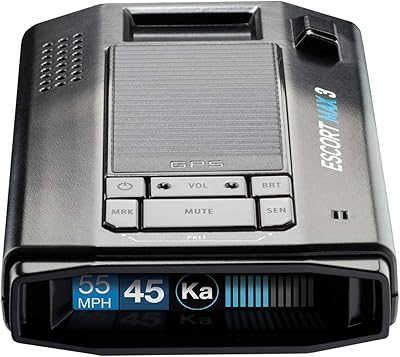
Escort MAX 3 Radar Detector
81%
91%
Radar Detection Range
88%
False Alert Filtering
61%
Laser Detection
74%
App Connectivity
72%
Value for Money
More
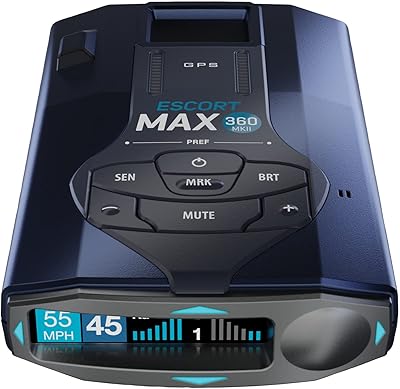
Escort MAX 360 MKII Radar Detector
81%
91%
Detection Range
88%
False Alert Filtering
93%
Directional Awareness
86%
GPS AutoLearn Intelligence
67%
Value for Money
More
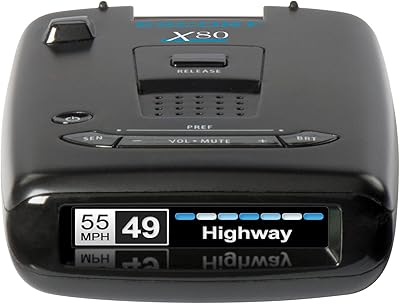
Escort X80 Radar Detector
84%
92%
Long-Range Detection
88%
Ease of Installation
84%
Voice Alert Customization
90%
App Integration (Escort Live)
80%
Accuracy of Alerts
More
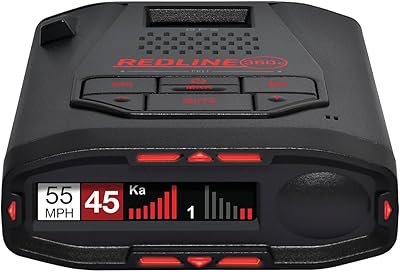
Escort Redline 360c Radar Detector
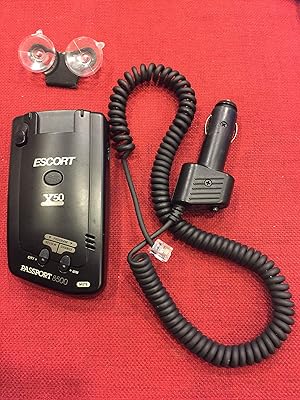
81%
93%
Detection Range
88%
False Alert Filtering
91%
360-Degree Coverage
89%
Stealth & RDD Invisibility
84%
CarPlay & Android Auto Integration
More
Escort Passport 8500 X50 Radar Detector
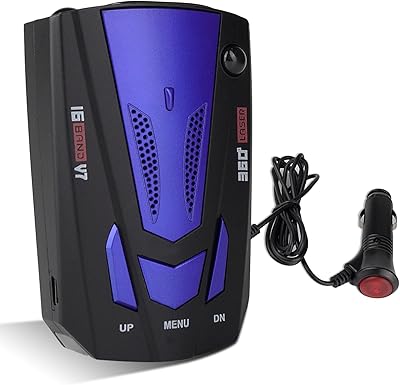
70%
91%
Highway Detection Range
67%
False Alert Filtering
88%
Instant-On Radar Response
86%
Build Quality & Durability
74%
Display Readability
More
XpacEbank Car Radar Detector
81%
85%
Detection Performance
90%
Ease of Setup
88%
Voice Alert Clarity
65%
False Alerts
89%
GPS Accuracy
More
Uniden R3 Radar Detector
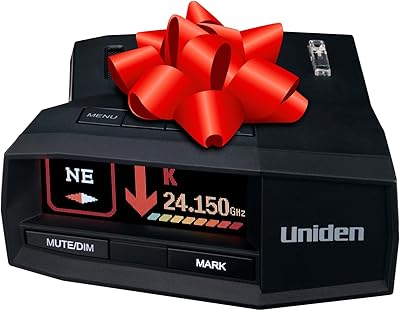
81%
96%
Detection Range
91%
GPS False Alert Filtering
93%
Radar Band Sensitivity
74%
Laser Detection
82%
BSM & False Alert Management
More
Uniden R8W Radar Detector
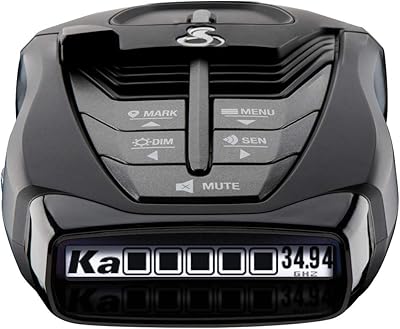
83%
93%
Detection Range
88%
False Alert Filtering
91%
Directional Awareness
74%
App Integration & Connectivity
86%
GPS & Camera Alert Accuracy
More
Cobra ESD7400 Radar/Laser Detector
87%
90%
Performance
93%
Ease of Installation
88%
Detection Range
70%
False Alerts
92%
Display Visibility
More
Cobra RAD 480i
Cobra RAD 480i
83%
83%
Detection Range
88%
False Alert Filtering
92%
Ease of Setup
79%
App Integration
86%
CarPlay and Android Auto Support
More

FAQ

It varies by route, but most users find the filtering noticeably improves after two to four weeks of regular driving along the same roads. AutoLearn needs to log a location multiple times before it confidently marks it as a false source, so the first week or two can still feel noisy. Sticking with it pays off — drivers who commute the same corridors daily tend to see the biggest improvement.

Yes, the MAX 4 operates fully as a standalone unit without a phone paired. Built-in GPS handles AutoLearn filtering and location-based sensitivity adjustments independently. The Bluetooth and app connection unlocks extras like firmware updates, Drive Smarter community alerts, and CarPlay integration, but none of those are required for core radar detection to function.

Yes — it supports Apple CarPlay and Android Auto, and the companion Escort app is available on both iOS and Android. CarPlay and Android Auto compatibility does depend on your vehicle's infotainment system supporting those platforms, so if your car does not natively support them, you would rely on the onboard OLED display for alerts instead.

The MAX 4 detects laser signals in addition to X, K, and Ka radar bands. That said, laser detection across all detectors — not just this one — is inherently reactive rather than advance warning, since laser is a targeted, narrow beam. Radar detection is where the long-range advantage really matters; laser detection is more of a confirmation that a reading has already been taken.

Yes, the MAX 4 is compatible with Escort's direct-wire power cord accessory, which lets you run a cleaner, hidden cable connection rather than occupying your 12V outlet. The hardwire kit is sold separately, but it is a popular upgrade for anyone who wants a permanent, tidy install without cable clutter across the dash.

When connected via Bluetooth to the Escort app, the MAX 4 taps into a shared network of users who report hazards, speed monitoring locations, and other road events in real time. Those crowd-sourced alerts are pushed to your device as you approach flagged locations. The catch is that alert density depends heavily on how many other users are active in your area — it works well in populated regions and thins out considerably on rural or low-traffic routes.

The standard suction cup mount works reliably for most drivers in everyday conditions. A few users have reported the mount loosening in vehicles that experience significant temperature swings — very hot summers or cold winters can affect suction cup adhesion over time. If you live in an extreme climate or plan a permanent install, an aftermarket mount or the hardwire kit is worth considering.

Core radar and laser detection work without any subscription. Drive Smarter community alerts and certain app-connected features may require a free account or an active app connection, but there is no mandatory paid subscription required to use the hardware itself. It is worth checking Escort's current app terms since connected service features can change over time.

The most meaningful upgrade from previous Escort generations is the dual-core processor, which translates to faster signal processing and improved filtering accuracy rather than just raw detection power. AutoLearn GPS was present in earlier models but benefits from the faster hardware here. If you are coming from a model that is three or more years old, the reduction in false alerts during daily driving is likely to be the most immediately noticeable difference.

The MAX 4 detects the same X, K, and Ka radar bands used by law enforcement in both the United States and Canada, so it functions in both countries. Drive Smarter community coverage may be denser in US markets simply due to a larger user base, but the hardware detection capabilities themselves are not region-locked. Always verify local laws regarding radar detector use before traveling, as regulations vary by province and state.

Where to Buy

Bigbigmart.com
In stock $345.60
Wirelessaircard
In stock $399.00
Verdi.com
In stock $399.95
Best Radar Detectors
In stock $399.95
Installations Unlimited
In stock $399.95
Radar Busters
In stock $399.95