Overview

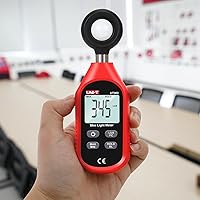
The UNI-T UT383 Digital Lux Light Meter is a compact, no-fuss tool that takes the guesswork out of measuring light intensity — something that matters more than most people realize until they actually need it. Whether you're figuring out why your houseplants are struggling or verifying that a studio setup hits a workable exposure baseline, having a real number beats eyeballing it every time. UNI-T has been producing affordable test and measurement instruments for years, and this handheld light meter sits squarely in their practical lineup. It reads up to 199,900 lux — a ceiling wide enough for most real-world applications. Just don't expect laboratory precision; the tolerance spec puts this firmly in the practical, everyday category.

Features & Benefits

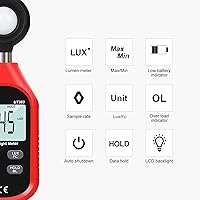
One of the more useful touches on the UT383 is the ability to switch between Lux and Foot Candles at the press of a button — handy when working across industries where conventions differ. The 0.5-second sampling rate is quick enough to catch shifting light in real time, and the Max/Min hold function lets you track a room's light range without fumbling for a notepad. The backlit LCD screen is genuinely readable in low-light conditions, which is exactly when you need it most. Auto power-off keeps battery drain in check, and at just 4.6 ounces, this lux meter slips easily into a camera bag or jacket pocket without a second thought.

Best For

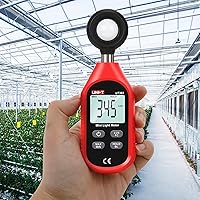
This handheld light meter earns its keep across a surprisingly wide range of situations. Indoor plant growers probably represent its biggest audience right now — knowing exact lux values at canopy level removes the guesswork from positioning grow lights for succulents, tropicals, or vegetables. Photographers and videographers use it to cross-check ambient readings before committing to exposure settings. Facility managers find it useful for verifying that desk lighting meets recommended ergonomic standards. It also works well in greenhouse and agricultural settings where daily light monitoring directly affects crop outcomes. Students and hobbyists who want a reliable first meter without overspending will find this a sensible starting point.

User Feedback

With a 4.7-star average across nearly 200 ratings, the UT383 has clearly built a genuine following. Most buyers highlight ease of use straight out of the box and report readings that track closely with pricier reference meters — reassuring for anyone who needs dependable numbers without a large investment. Plant growers, in particular, mention relying on it daily for grow-light positioning. That said, the feedback is not universally glowing. The included manual is thin, and anyone wanting to log or export data will find no USB connectivity or wireless option on board. A few reviewers note the sensor cap is easy to misplace. Buyers who go in with realistic expectations tend to come away satisfied; those hoping for professional-grade features at this price point are more likely to feel the gaps.

Pros

  • Reads up to 199,900 lux, covering everything from dim indoor rooms to bright outdoor conditions.
  • Switching between Lux and Foot Candles takes one button press — useful when working across different industry standards.
  • The 0.5-second sampling rate keeps up with real-time changes in light without noticeable lag.
  • Max and Min hold functions let you capture a reading range without writing anything down mid-measurement.
  • The backlit LCD is genuinely easy to read in dim studio or grow-room environments.
  • At 4.6 ounces, this handheld light meter disappears into a camera bag or coat pocket without adding bulk.
  • Auto power-off prevents accidental battery drain — practical for anyone who forgets to switch off gear.
  • Buyers consistently report readings that align closely with pricier reference meters, validating its everyday accuracy.
  • Setup is truly immediate — insert batteries, point at a light source, and you have a reading within seconds.
  • Strong seller track record and a high average rating across a meaningful number of real-world buyers.

Cons

  • No USB port, Bluetooth, or any data export option — every reading has to be recorded manually.
  • The included paper manual is thin and offers minimal guidance for first-time lux meter users.
  • The sensor cover has no tether or secure attachment point, making it easy to lose in a bag or on a workbench.
  • Accuracy tolerance of plus or minus 4% plus 8 digits rules this out for any scientifically rigorous application.
  • No PC software or companion app means there is zero support for logging trends or generating reports over time.
  • The UT383 lacks a tripod mount or stand, so hands-free, consistent placement requires an improvised solution.
  • Battery life feedback comes only from a low-battery indicator — no percentage readout or advance warning system.
  • The display size is functional but small, which can be a strain in fast-paced environments with frequent readings.
  • No carrying case is included, leaving users to source their own protection for field transport.

Ratings

The scores below for the UNI-T UT383 Digital Lux Light Meter were generated by our AI engine after analyzing verified global buyer reviews, actively filtering out incentivized, bot, and duplicate submissions to surface what real users actually experience. Each category reflects a synthesis of both praise and recurring frustrations — nothing has been smoothed over to make the product look better than it is.
Measurement Accuracy
83%
For a meter in this price tier, buyers are consistently impressed by how closely the UT383 tracks alongside reference instruments when cross-checked side by side. Plant growers dialing in grow-light positions and photographers verifying ambient levels report readings that feel trustworthy for everyday decisions.
The stated tolerance of plus or minus 4% plus 8 digits means readings can drift slightly, particularly at the higher end of the range. Buyers who have tested it against calibrated laboratory meters note small but real discrepancies that matter in precision-critical contexts.
Ease of Use
92%
Almost every reviewer mentions how quickly the UT383 gets you from unboxing to first reading — insert batteries, press power, point the sensor, done. The button layout is minimal and intuitive, and even users with zero experience handling test instruments pick it up without any confusion.
The paper manual bundled in the box is thin and lacks depth on edge cases or troubleshooting scenarios. Buyers who wanted to understand the Max/Min hold functions or the auto-off timing had to search online rather than rely on the printed guide.
Build Quality
74%
26%
The housing feels solid enough for regular fieldwork — it does not flex or creak under normal handling, and the button clicks have a reassuring tactile response. Several users report using it weekly over a year or more without any functional degradation.
The plastic finish shows scuffs and handling marks fairly quickly, and the overall construction does not inspire confidence if dropped. The sensor cap has no tether, which is an oversight that becomes a real frustration during active use in a workshop or grow room.
Value for Money
91%
Buyers across plant care, photography, and facility management communities consistently flag this as one of the most cost-effective lux meters on the market for practical use. Getting a readable, reasonably accurate illuminance reading across such a wide range for this outlay is hard to argue with.
A small segment of buyers who needed data logging or connectivity felt the price was only fair, not exceptional, since slightly more investment would unlock far more capable tools. For those users, the value proposition drops considerably.
Display Readability
86%
The backlit LCD is a genuine asset in dim studio settings, grow tents, and poorly lit server rooms where you need to glance at a reading without tilting the device toward a light source. The 4-digit display gives enough resolution for practical decision-making.
The screen itself is on the smaller side physically, and in bright outdoor conditions the display can wash out somewhat, requiring a slight angle adjustment to read clearly. There is no adjustable brightness setting for the backlight.
Sampling Speed
88%
The 0.5-second update rate is fast enough that the display feels live rather than sluggish when you are sweeping a light source or moving the sensor around a plant canopy to find the brightest spot. Photographers appreciate this during quick pre-shoot ambient checks.
In very rapidly fluctuating light environments — such as spaces with flickering LEDs or strobing sources — the sampling speed can miss transient peaks. The Max hold function helps, but it is not a substitute for a true peak-capture mode.
Portability
93%
At 4.6 ounces and roughly the length of a TV remote, the UT383 genuinely disappears into a camera bag side pocket or a coat pocket. Reviewers who carry it on site visits or between grow rooms consistently mention that the size never becomes an issue.
No carrying case or pouch is included, which means the sensor and the easily lost cap are loose in whatever bag you use. A basic sleeve would have made portability close to perfect for field professionals.
Battery Life
77%
23%
The auto power-off feature meaningfully extends the life of the three AAA batteries by shutting down during idle periods, which plant growers who leave the meter on a shelf between checks genuinely appreciate. Most users report batteries lasting several months under moderate use.
The low battery indicator only appears when power is already quite depleted, giving little advance warning before the device stops working mid-session. There is no battery percentage display or early warning threshold, which can catch users off guard.
Data Management
41%
59%
The Max, Min, and Data hold functions do cover the basic need to capture and freeze a peak or minimum reading without fumbling for pen and paper. For casual single-session use, this is functional enough.
There is no USB output, no Bluetooth, and no companion software — every measurement beyond what the display shows has to be written down manually. Users who need to track lighting trends over days or weeks find this a significant and genuine limitation that the device simply cannot address.
Range Versatility
89%
Covering 0 to 199,900 lux in a single range without manual range switching is a practical advantage over older multi-range meters. Whether you are measuring a dim bedroom corner or a sun-drenched greenhouse, the UT383 handles the full span without any mode changes.
The single auto-range design, while convenient, means resolution at the very low end of the scale is less granular than a dedicated low-lux meter would offer. For applications requiring precise differentiation between very dim light levels, this can feel coarse.
Setup & First Use
94%
Reviewers across all experience levels emphasize how genuinely plug-and-play the device is — even those who have never used a lux meter before report being confident in their first reading within minutes. The button layout is sparse enough that there is almost nothing to learn.
Because setup is so simple, users occasionally assume all functions are immediately obvious, then get stuck on how to clear a Max hold reading or reset the display. The manual's brevity makes these small operational questions harder to resolve independently.
Lux / FC Unit Switching
87%
The ability to toggle between Lux and Foot Candles with a dedicated button is a practical convenience that photographers working in American production contexts and agricultural users referencing metric standards both appreciate. It removes any need for manual conversion math.
The meter does not remember your preferred unit between power cycles, defaulting back to Lux each time the device is turned on. Users who work exclusively in Foot Candles find the extra button press mildly repetitive across a workday.
Sensor Protection
58%
42%
The removable sensor cap does its job of protecting the light sensor during transport, and the cap fits snugly enough that it does not fall off on its own during normal handling.
The cap has no cord, clip, or attachment point, making it one of the most frequently cited frustrations in user reviews — it is easy to set down and lose in a grow room or on a cluttered workbench. Several buyers mention having to improvise their own solution to keep track of it.
Documentation & Support
62%
38%
UNI-T advertises around-the-clock email support, and some buyers report receiving useful responses when they reached out with specific questions. A downloadable digital manual is available, which is more complete than the printed insert.
The in-box paper manual is universally described as sparse and insufficient for anything beyond basic operation. Users who run into nuanced questions about accuracy interpretation or function behavior often have to rely on forums and community knowledge rather than official resources.
Overall Reliability
81%
19%
The UT383 has a track record of consistent performance over months of regular use in grow rooms, studios, and office environments. Buyers who use it as a daily practical tool rather than a precision instrument tend to report no degradation in readings or hardware failures over time.
A subset of reviewers reports occasional inconsistent readings, particularly when testing near certain LED grow light spectra, which can interact with the sensor in ways that produce slightly inflated values. This is not universal but is noted often enough to flag as a real consideration.

Suitable for:

The UNI-T UT383 Digital Lux Light Meter is a strong fit for anyone who needs reliable, real-world light readings without investing in professional-grade equipment. Indoor plant enthusiasts — especially those running grow lights for succulents, tropical foliage, or vegetable starts — will get immediate practical value from knowing exact lux levels at canopy height rather than guessing. Photographers and videographers who want a quick ambient light check before a shoot, or facility managers confirming that desk and workspace lighting meets standard ergonomic thresholds, will find the UT383 covers their needs with minimal learning curve. Greenhouse growers monitoring daily light exposure for crop health, and students or hobbyists picking up their first serious measurement tool, are also well served here. If your goal is practical, repeatable readings for everyday decisions, this handheld light meter punches well above its modest price.
Not suitable for:

Buyers who need lab-grade precision or traceable calibration data should look elsewhere — the UNI-T UT383 Digital Lux Light Meter carries a stated accuracy of plus or minus 4% plus 8 digits, which is more than acceptable for practical tasks but falls short of what scientific or compliance-critical applications demand. Professionals who need to log light data over time, export readings to a computer, or connect via Bluetooth to a smartphone app will find this lux meter frustratingly basic — there is no data output port of any kind. Researchers, industrial lighting engineers, or cinematographers working on high-stakes productions where lighting must be documented with precision will likely outgrow this tool quickly. If you are comparing multiple fixtures side by side and need to track dozens of readings simultaneously, the manual data hold approach gets tedious fast. This is a field tool built for quick, informed decisions — not a data collection instrument.
Specifications

  • Brand: Manufactured by UNI-T, a Chinese instrumentation company with a broad catalog of affordable test and measurement tools.
  • Model Number: The device carries the model designation UT383, with a full item model number of UT38321.
  • Measurement Range: Reads illuminance from 0 to 199,900 lux or 0 to 18,500 foot candles, covering a wide span of indoor and outdoor lighting conditions.
  • Accuracy: Rated accuracy is plus or minus 4% of reading plus 8 digits, suitable for practical field use but not for calibration-critical or scientific applications.
  • Sampling Rate: Updates readings every 0.5 seconds, allowing near-real-time monitoring of changing light levels.
  • Display: Features a 4-digit LCD panel measuring 32mm x 26mm with a built-in backlight for visibility in low-light environments.
  • Measurement Units: Supports two selectable units of illuminance: Lux (SI standard) and Foot Candles (FC), switchable via a dedicated button.
  • Key Functions: Includes Max hold, Min hold, Data hold, overload indication (OL), auto power-off, and a low battery indicator.
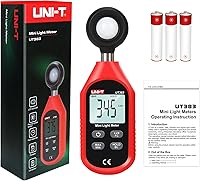
  • Power Source: Runs on three 1.5V AAA batteries, which are not included in the retail package.
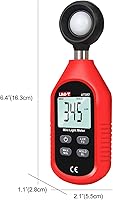
  • Dimensions: The unit measures 6.69 x 2.48 x 1.54 inches, making it compact enough to carry in a pocket or small equipment bag.
  • Weight: Weighs 4.6 ounces including the housing, keeping it light enough for extended handheld use.
  • Color: Finished in a two-tone red and grey color scheme typical of UNI-T's consumer instrument lineup.
  • Overload Indicator: Displays an OL symbol on screen when the measured light level exceeds the instrument's maximum readable range.
  • Auto Power-Off: Automatically shuts down after a period of inactivity to conserve battery life during fieldwork or when the device is set down between readings.
  • In the Box: Package includes the UT383 unit, retail packaging box, a printed paper manual, and access to a downloadable digital manual via UNI-T's website.
  • Connectivity: Has no USB, Bluetooth, or wireless output of any kind; all readings must be recorded manually.
  • Seller Rank: Holds a Best Sellers Rank of number 5 in the Photographic Light Meters category on Amazon as of its listing data.
  • Customer Rating: Carries an average rating of 4.7 out of 5 stars based on 192 customer ratings at the time of review.
  • Availability Date: First became available for purchase on July 7, 2021.
  • Support: UNI-T offers direct customer support via email, marketed as a 24-hour, 7-day-a-week one-to-one service channel.

Related Reviews

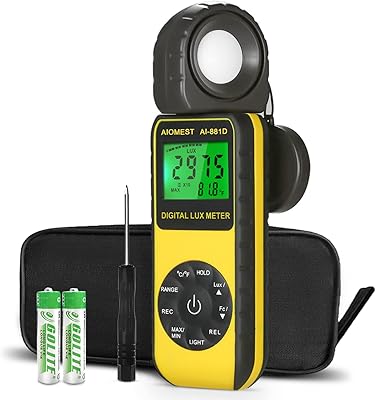
AIOMEST AI-881D Light Meter
81%
93%
Measurement Range
74%
Measurement Accuracy
91%
Rotatable Sensor Design
78%
Data Logging
88%
Display Readability
More
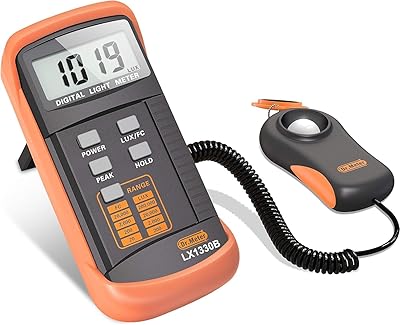
Dr.meter LX1330B Digital Lux Meter
82%
83%
Measurement Accuracy
91%
Ease of Use
67%
Build Quality
74%
Display Readability
92%
Measurement Range
More
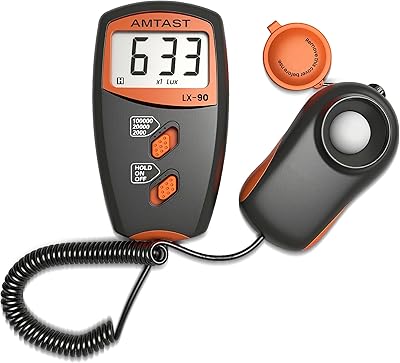
AMTAST LX-90 Digital Lux Meter
76%
88%
Sensor Design
74%
Measurement Accuracy
91%
Ease of Use
83%
Display & Readability
58%
Build Quality
More
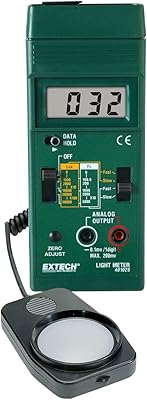
Extech 401025 Lux Light Meter
80%
93%
Display Readability
74%
Measurement Accuracy
91%
Ease of Use
78%
Build Quality
88%
Dual-Unit Display
More
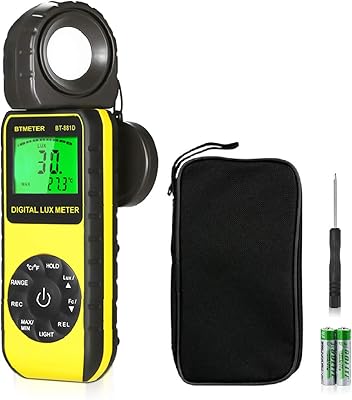
BTMETER BT-881D Digital Lux Meter
82%
83%
Measurement Accuracy
91%
Measurement Range
88%
Sensor Design
89%
Ease of Use
74%
Build Quality
More
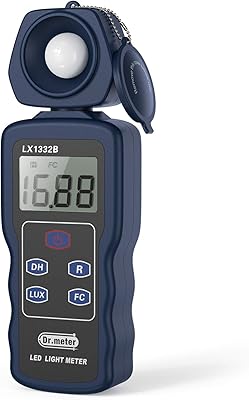
Dr.meter 1332B Digital Light Meter
81%
91%
Ease of Use
78%
Measurement Accuracy
93%
Rotating Sensor
89%
Measuring Range
67%
Build Quality
More
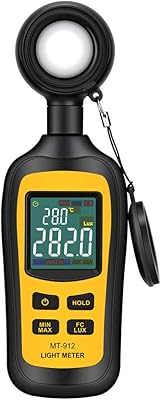
URCERI SMT912 Digital Lux Light Meter
77%
82%
Measurement Accuracy
91%
Value for Money
88%
Display & Readability
67%
Build Quality
93%
Ease of Use
More
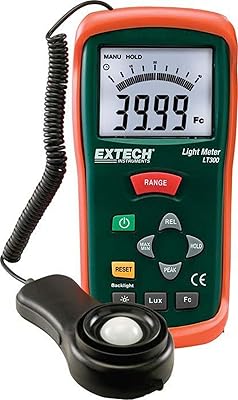
Extech LT300 Light Meter
75%
88%
Measurement Accuracy
91%
Sensor Design
86%
Display Readability
83%
Build Quality
74%
Ease of Use
More
AquaHorti AH-300 Light Meter
75%
76%
Measurement Accuracy
68%
App Experience
83%
LUX Range & Versatility
58%
Spectrum Test Capability
79%
CSV Export & Data Logging
More
TopTes TS-710 Lux Light Meter
78%
88%
Ease of Use
74%
Measurement Accuracy
91%
Rotating Sensor Design
86%
Display Readability
63%
Build Quality
More

FAQ

No, the UT383 does not include batteries. You will need three standard 1.5V AAA batteries to get it running. They are easy to find at any grocery or hardware store, so it is a minor inconvenience but worth knowing before your order arrives.

For plant care purposes, the accuracy is more than adequate. The stated tolerance is plus or minus 4% of reading plus 8 digits, which in practice means your reading will be very close to the true value for everyday grow-light decisions. Multiple buyers have cross-checked it against higher-end meters and found the results consistent. Just don't rely on it for anything requiring certified calibration.

Unfortunately, no. The UNI-T UT383 Digital Lux Light Meter has no USB port, no Bluetooth, and no companion app. Every reading has to be noted down manually. If data logging is important to your workflow, you would need to look at a higher-tier meter with PC connectivity.
Lux is the metric unit for illuminance, while Foot Candles (FC) are used primarily in the United States, particularly in film and architectural lighting. The UT383 lets you toggle between both units with a single button press, so you can use whichever convention your project or industry calls for.

The sensor is reasonably robust for a consumer-grade instrument. If the light level exceeds the meter's maximum range of 199,900 lux, the display will simply show an OL indicator rather than giving a bad reading or damaging the device. Sustained exposure to extremely intense sources like direct sunlight through a magnifying lens is best avoided, but normal bright environments — including powerful grow lights and studio strobes — are well within its intended use.

The LCD backlight can be toggled manually, and the auto power-off feature will eventually shut the whole device down after inactivity. This keeps battery usage in check during longer work sessions where you set the meter down between measurements.

Yes, it works well for this. Most workplace ergonomic guidelines specify recommended lux ranges for desk and task lighting — typically 300 to 500 lux for general office work. The UT383 can comfortably measure and confirm whether your workspace meets those thresholds. It is not a calibrated compliance instrument, but for general workplace assessments it is a practical and cost-effective choice.

It is genuinely compact — about the size of a TV remote, measuring just under 6.7 inches long and weighing 4.6 ounces. It slides easily into a camera bag side pocket, a jacket pocket, or a small gear pouch without any fuss.

Honestly, it is fairly thin. The paper manual covers the basics but does not go deep on troubleshooting or advanced use cases. UNI-T does offer a downloadable digital manual via their website, which is slightly more detailed. For most users, the device is straightforward enough that the included instructions are sufficient, but expect to supplement with online resources if you have specific questions.

The sensor cap is one of the most commonly mentioned frustrations in user feedback. It is a small plastic cover with no attached tether, so it can easily roll off a table or get lost in a bag. A practical fix several users recommend is keeping it in a small zipper pouch alongside the meter, or securing it with a short piece of cord. It is a minor design oversight on an otherwise well-thought-out tool.

Where to Buy