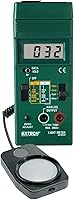
Overview

The Extech 401025 Lux Light Meter has been a steady presence in the professional measurement space since 2007 — a longevity that speaks to its reliability as a design, not just its age. It reads in both foot-candles and lux simultaneously, which immediately separates it from single-unit meters. The built-in dual display and environmental sensors for humidity and temperature give it more contextual awareness than most handheld tools at this tier. That said, be clear-eyed going in: this is a field-grade instrument, not a calibrated laboratory photometer. Expect solid, dependable readings for practical work — not scientific-paper precision.

Features & Benefits

The large dual display is one of those features you don't fully appreciate until you're crouching in a dim storage room trying to log readings one-handed. Having foot-candles and lux visible simultaneously removes the back-and-forth of unit conversion — practical when you're moving between a client briefing and the actual floor walk. The Min/Max function is quietly one of the most useful tools here; set it and walk a space without watching the screen every second. Weighing just over half a pound, it tucks easily into a kit bag, and the wall-mount option lets you leave it installed for ongoing environmental monitoring.

Best For

This light meter earns its place across a few distinct professional scenarios. Photographers and videographers doing location scouting benefit from the instant dual-unit readout, skipping mental math between lux and foot-candles. Facility managers running lighting compliance audits will appreciate the Min/Max capture across large spaces. Indoor growers dialing in LED or HID setups use lux meters like this to estimate usable light intensity for their plants. Lighting designers and electricians also lean on it during fixture calibration, where a quick, reliable number on a new install matters far more than lab-grade precision. Most real-world professional scenarios fall comfortably within its wheelhouse.

User Feedback

Buyers consistently highlight display readability as a standout — many note they can take readings without squinting, even in challenging conditions. The out-of-box experience also draws praise; no complicated setup, just insert the included batteries and start measuring. Where criticism surfaces, it tends to center on accuracy comparisons with higher-end calibrated photometers — a fair observation, though that is not the Extech 401025's intended competition. Some users note that battery life holds up well under normal use but drains faster during continuous monitoring sessions. Against cheaper lux meters in the same category, most reviewers feel the build quality and dual environmental sensing justify the step-up in investment.

Pros

  • Displays foot-candles and lux simultaneously, eliminating unit conversion during fieldwork.
  • The large 1-inch digit display is genuinely easy to read in low-light or high-glare conditions.
  • Min/Max capture with manual reset makes auditing large spaces fast and practical.
  • Built-in humidity and temperature sensors add useful environmental context at no extra cost.
  • Lightweight at just over half a pound — easy to carry through multi-room walkthroughs.
  • Wall-mount capability allows semi-permanent installation for continuous environmental monitoring.
  • Batteries are included out of the box, so it is ready to use immediately.
  • Over 15 years on the market with consistent availability signals a dependable, mature design.
  • Ranked among the top sellers in its category, reflecting sustained buyer confidence.

Cons

  • Not factory-calibrated to traceable standards, which limits use in regulated or scientific contexts.
  • No data logging or digital output means all readings must be recorded manually.
  • Continuous monitoring sessions drain batteries noticeably faster than intermittent use.
  • No Bluetooth, USB, or app connectivity for integration with modern reporting workflows.
  • The measurement range ceiling may be insufficient for very high-intensity industrial lighting environments.
  • No spectral analysis or color temperature measurement — light quality assessment is not supported.
  • The physical design has not meaningfully evolved since launch, lacking modern ergonomic refinements.
  • Buyers stepping up from budget lux meters may find the accuracy improvement modest relative to the price difference.

Ratings

The scores below reflect AI-driven analysis of verified buyer reviews for the Extech 401025 Lux Light Meter, sourced globally and filtered to remove incentivized, spam, and bot-generated feedback. Both the strengths that keep professionals coming back and the friction points that give some buyers pause are represented transparently. The result is an honest, balanced picture of how this dual-display meter actually performs across real working environments.

Display Readability
93%
The large 1-inch digits on the dual display consistently earn top marks from users working in challenging conditions — dim server rooms, low-lit warehouses, and bright outdoor locations alike. Facility managers doing multi-room walkthroughs specifically call out being able to read the screen without pausing or squinting, even when holding the meter at an angle.
A small number of users working in direct sunlight report occasional glare on the display surface, which can make readings momentarily harder to confirm. This is a relatively minor complaint and does not appear to affect the majority of use cases.
Measurement Accuracy
74%
26%
For field-grade work — lighting audits, location scouting, grow light calibration — readings are consistently described as reliable and repeatable across multiple measurement sessions. Users who cross-referenced this light meter against known reference conditions generally found it within acceptable tolerance for professional non-laboratory applications.
When compared directly to higher-end calibrated photometers, some users note measurable discrepancies, particularly at the low and high ends of the lux range. This is not a factory-calibrated instrument, and buyers with regulatory or scientific accuracy requirements will likely find it falls short of their standards.
Ease of Use
91%
Out-of-box usability is a recurring highlight — batteries are included, there is no complex setup procedure, and the controls are intuitive enough that most users are taking readings within minutes of opening the box. Electricians and safety inspectors especially appreciate that it does not require a manual to operate effectively in the field.
A handful of users found the Min/Max reset button placement slightly awkward during one-handed operation, requiring a grip adjustment mid-walkthrough. It is a minor ergonomic issue rather than a functional flaw, but worth noting for users who prioritize single-hand usability.
Build Quality
78%
22%
The overall construction feels solid for a handheld instrument in this category, and many long-term buyers report no physical degradation after years of regular field use. The housing handles the casual drops and bumps typical of a tool kit environment without obvious damage.
The design has not been meaningfully updated since its 2007 launch, and compared to newer competitors the materials and finish feel dated. Some users wish the casing offered more grip texture, particularly when using the meter with gloves on during inspections.
Dual-Unit Display
88%
Showing foot-candles and lux simultaneously is genuinely useful in real-world scenarios — photographers cross-referencing camera settings and facility managers checking against standards that use different units both cite this as a time-saver. The elimination of mental unit conversion mid-walkthrough is a practical advantage that adds up across a full audit.
Users who only ever work in one unit system find the dual display redundant rather than beneficial, and a few note that the screen feels visually busy as a result. There is no option to simplify the display to a single unit for those who prefer a cleaner readout.
Min/Max Function
83%
The ability to walk an entire floor and capture the lighting range without watching the screen constantly is one of the most practically valued features among facility and safety professionals. Users auditing large commercial spaces report that this function alone saves significant time compared to manually logging peak readings.
The reset mechanism is manual only, with no timed or automatic reset option, which can slow down workflows when covering many zones in sequence. A few users also noted that the function lacks any form of data memory, meaning readings must be manually transcribed before resetting.
Environmental Sensors
71%
29%
Having humidity and temperature readouts alongside light levels is a genuine differentiator for users in environments where those variables interact — greenhouse operators and cold storage facility managers in particular find it useful for correlating conditions without carrying a separate hygrometer.
The environmental sensors are functional but not precision-grade, and users with dedicated hygrometers sometimes note slight discrepancies. For buyers who primarily need accurate humidity and temperature data, a specialized instrument would serve them better than relying on these supplementary readings.
Battery Life
66%
34%
Under typical intermittent use — powering on for a walkthrough and shutting down afterward — the included batteries provide a reasonable operational life that satisfies most field professionals. The included Lithium Ion batteries are a welcome convenience that removes the need for an immediate first purchase.
Continuous monitoring sessions drain the batteries noticeably faster, and users who leave the unit running for extended periods report shorter-than-expected battery spans. There is no low-battery indicator prominent enough to prevent an unexpected mid-task shutdown for some users.
Portability
86%
At just over half a pound and compact enough to slide into a tool bag or jacket pocket, this dual-display meter travels easily between job sites without adding meaningful weight to a kit. Photographers doing location scouting across multiple venues in a single day particularly appreciate the low carry burden.
The form factor, while light, is slightly longer than some competing handheld meters, which can make it feel slightly awkward in a crowded tool pouch. No carrying case or holster is included, which is a noticeable omission at this price tier.
Mounting Versatility
69%
31%
The wall-mount capability adds genuine utility for users who want to monitor a fixed location over time without holding the meter — useful in server rooms, grow tents, or museum galleries where consistent light conditions need periodic checking.
The wall-mount functionality is basic, and there are no included mounting accessories, meaning users need to source their own hardware. For buyers expecting a more refined semi-permanent installation solution, the implementation feels like an afterthought rather than a designed feature.
Value for Money
72%
28%
Compared to budget lux meters that struggle with consistency and lack environmental sensors, the step-up in reliability and multi-function capability justifies the higher investment for professionals who depend on their readings. Long-term buyers who have used the meter for several years tend to view it as a cost-effective tool given its durability.
Casual or infrequent users often feel the price is difficult to justify when simpler, cheaper options exist for basic lux checking. The lack of modern features like data logging or connectivity — standard on newer competitors at similar price points — makes the value proposition feel less compelling than it once did.
Setup & Onboarding
94%
Almost universally praised for its zero-friction startup experience — batteries included, no calibration required, no app to install. Users across all technical backgrounds report being fully operational within minutes, which is exactly what field professionals need from a handheld instrument.
The included documentation is minimal, and users who want to understand the environmental sensor methodology or measurement methodology in depth will need to seek out the full manual independently. For advanced users, the lack of detail on sensor tolerances is a gap.
Longevity & Durability
81%
19%
The product's 15-plus years of continuous market availability without discontinuation is a meaningful signal, and many buyers report units functioning reliably after years of regular professional use. Extech's reputation in the test equipment space adds a layer of confidence in long-term support.
Some users who have owned the meter for many years note that sensor drift becomes noticeable over time, particularly with the humidity readings. Without factory recalibration service readily available to most buyers, aging units may gradually lose the accuracy that made them useful.

Suitable for:

The Extech 401025 Lux Light Meter is a strong fit for professionals who need fast, reliable light readings in real-world field conditions without the overhead of laboratory-grade equipment. Facility and building managers will find it particularly useful during lighting compliance walkthroughs, where the ability to capture Min and Max readings across a large floor plan saves significant time. Photographers and videographers doing location scouting benefit directly from the simultaneous foot-candle and lux display, since different clients and cameras reference different units. Indoor growers managing LED or HID lighting setups can use this dual-display meter to dial in coverage zones without guesswork. Safety inspectors verifying workplace illumination against OSHA or local standards will appreciate having both temperature and humidity context alongside their light readings. For anyone who needs a dependable, easy-to-deploy handheld meter that goes beyond a single measurement function, this tool punches well above its category.

Not suitable for:

Buyers expecting laboratory-calibrated accuracy should look elsewhere — the Extech 401025 Lux Light Meter is a field instrument, and its readings, while consistent and practical, are not a substitute for traceable photometric measurements required in scientific research or regulatory submissions. Hobbyists or casual users who only occasionally need a rough lux estimate may find the investment difficult to justify when far simpler and cheaper options exist. Professionals working in very high-lux environments, such as industrial facilities with extremely intense artificial lighting, should verify the meter's measurement ceiling against their specific requirements before purchasing. If your workflow demands data logging, Bluetooth connectivity, or integration with building management software, this light meter offers none of that — it is entirely analog in its output. Those who need spectral analysis or color temperature readings will also need to look at a different class of instrument entirely.

Specifications

  • Model Number: This unit is manufactured by Extech under model number 401025.
  • Display: Features a super large dual display with 1-inch digits for clear visibility in varied lighting conditions.
  • Measurement Units: Reads in both foot-candles and lux simultaneously, eliminating the need for manual unit conversion.
  • Min/Max Function: Includes a Min/Max capture mode with a manual reset button for logging lighting range across a space.
  • Humidity Range: The built-in humidity sensor measures relative humidity from 10% to 99% RH.
  • Temperature Range: Onboard temperature sensing covers 14°F to 140°F (-10°C to 60°C).
  • Dimensions: The unit measures 4.1 x 2.5 x 8.4 inches, making it compact enough for one-handed field use.
  • Weight: Weighs 8.11 ounces, light enough for extended handheld use during walkthroughs.
  • Power Source: Runs on 2 Lithium Ion batteries, which are included in the box at purchase.
  • Mounting Options: Compatible with both desktop placement and wall-mount installation for semi-permanent monitoring setups.
  • Instrument Class: This is a field-grade handheld photometer, not a laboratory-calibrated measurement instrument.
  • Market Debut: Has been continuously available since February 2007, reflecting a long-standing and stable product design.
  • Category Rank: Holds a Best Sellers Rank of #21 in the Photographic Light Meters category on Amazon.
  • Manufacturer: Designed and sold by Extech Instruments, a recognized brand in professional handheld test equipment.
  • Discontinuation: The product is not discontinued and remains actively available through major retail channels.

Related Reviews
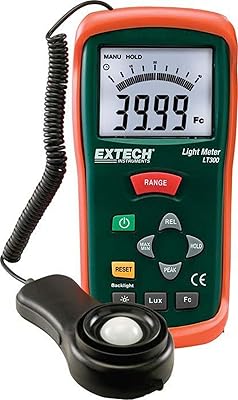
Extech LT300 Light Meter
75%
88%
Measurement Accuracy
91%
Sensor Design
86%
Display Readability
83%
Build Quality
74%
Ease of Use
More
Extech LT505 Pocket Light Meter
79%
88%
Measurement Accuracy
93%
Portability
86%
Ease of Use
67%
Build Quality
74%
Display Legibility
More
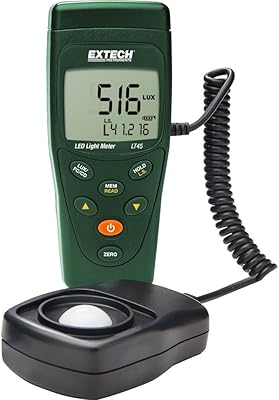
Extech LT45 LED Light Meter
82%
93%
Measurement Accuracy
96%
Source Compatibility
91%
Remote Sensor Design
88%
Build Quality
74%
Data Logging & Recall
More
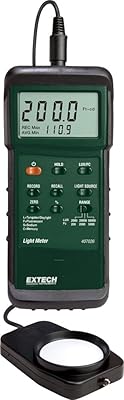
Extech 407026 Light Meter
78%
88%
Measurement Accuracy
86%
Sensor Performance
59%
PC Connectivity
83%
Build Quality
84%
Ease of Use
More
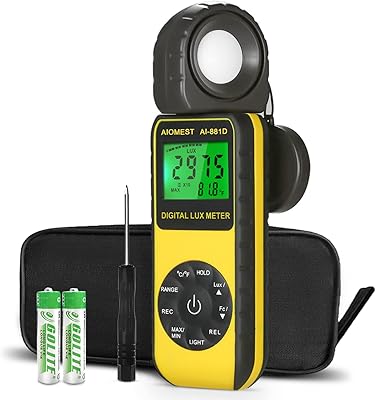
AIOMEST AI-881D Light Meter
81%
93%
Measurement Range
74%
Measurement Accuracy
91%
Rotatable Sensor Design
78%
Data Logging
88%
Display Readability
More
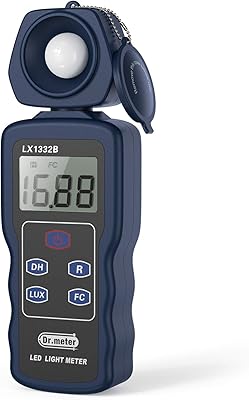
Dr.meter 1332B Digital Light Meter
81%
91%
Ease of Use
78%
Measurement Accuracy
93%
Rotating Sensor
89%
Measuring Range
67%
Build Quality
More
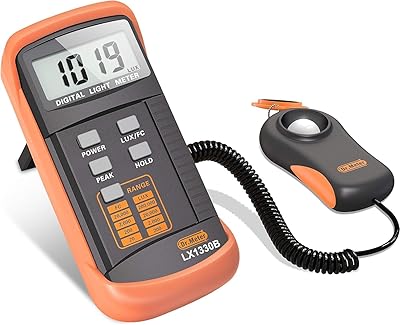
Dr.meter LX1330B Digital Lux Meter
82%
83%
Measurement Accuracy
91%
Ease of Use
67%
Build Quality
74%
Display Readability
92%
Measurement Range
More
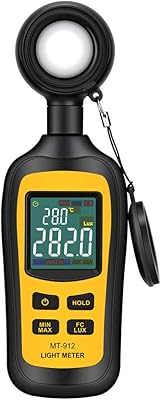
URCERI SMT912 Digital Lux Light Meter
77%
82%
Measurement Accuracy
91%
Value for Money
88%
Display & Readability
67%
Build Quality
93%
Ease of Use
More
UNI-T UT383 Digital Lux Light Meter
80%
83%
Measurement Accuracy
92%
Ease of Use
74%
Build Quality
91%
Value for Money
86%
Display Readability
More
LATNEX LM-50KL Digital Lux Light Meter
77%
78%
Measurement Accuracy
72%
Build Quality
88%
Sensor Cable Utility
69%
Display Readability
91%
Battery Life
More

FAQ

Both units are shown simultaneously on the dual display — no switching needed. That is one of the more practical design choices here, especially if you are moving between clients or specifications that reference different units.

For the majority of professional field audits — OSHA workplace standards, energy efficiency reviews, or general facility assessments — this light meter performs reliably. That said, it is a field-grade tool, not a traceable laboratory instrument, so if your audit requires certified calibration documentation, you will need a different class of device.

The Min/Max mode logs the lowest and highest readings the sensor captures over a period, and you reset it manually when ready to start a new measurement window. In practice, it is very useful for auditing large spaces — you can walk a room and let the meter track the lighting range without staring at the screen the whole time.

It is not standard on most lux meters, which is what makes the Extech 401025 Lux Light Meter a bit more versatile. Having humidity and temperature context alongside your light reading is useful in environments like greenhouses, cold storage facilities, or any space where environmental conditions and lighting are being evaluated together.

It supports both desktop and wall-mount use, so you can install it in a fixed location if needed. Keep in mind that battery life will be a consideration for continuous monitoring — it is not designed as a 24/7 hardwired sensor, but for periodic or short-duration fixed monitoring it works well.

Under normal intermittent use — taking readings during a walkthrough and then powering down — the included batteries last a reasonable amount of time. Users doing extended continuous monitoring report faster drain, which is expected for any battery-powered field instrument running the display constantly.

Yes, it is commonly used for exactly that purpose. Lux is not a perfect proxy for PAR (photosynthetically active radiation), but for dialing in coverage areas under LED or HID fixtures and comparing zones, this dual-display meter gives growers practical, actionable data without needing a dedicated PAR meter.

The primary advantages over budget options are the simultaneous dual-unit display, the built-in environmental sensors, and the overall build consistency from an established test equipment brand. Budget meters often struggle with consistency across multiple readings or in very low or very high light conditions — areas where this light meter tends to perform more reliably.

It comes with batteries included and requires no calibration on the user's end — power it on and start measuring. There is no complex setup procedure, which is one of the things buyers consistently appreciate about this meter.

It works well for that use case, particularly for checking whether a space meets a minimum ambient light threshold or for comparing light levels between different areas of a set. It is not a camera-style incident light meter with exposure value readout, so it will not replace a dedicated photographic exposure meter, but for general location light assessment it is a practical tool.

Where to Buy

B&H Photo Video Audio
In stock $179.00
Cole-Parmer
In stock $152.15
Southern Electronics
In stock $166.99
Test Equipment Depot
In stock $168.95
Calright Instruments
In stock $169.00
Mitchell Instrument Company
In stock $170.05
Forestry Suppliers
In stock $178.95