Overview

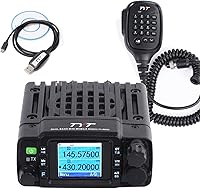
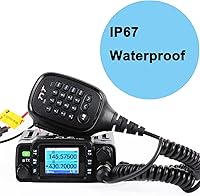
The TYT TH-8600 Dual Band Mobile Transceiver enters a crowded market with one feature that genuinely sets it apart: IP67 waterproofing. Most mobile ham radios at this price point carry no moisture rating at all, so having a rig that can handle rain-soaked installs or dusty off-road environments is a real practical advantage. TYT has built a solid reputation in the budget-to-mid amateur radio space, offering capable hardware without the premium price tag of brands like Yaesu or Kenwood. This mobile transceiver covers both the 2-meter and 70-centimeter bands, giving operators access to the two most active repeater networks across North America — solid everyday coverage for the commuter or weekend adventurer alike.

Features & Benefits

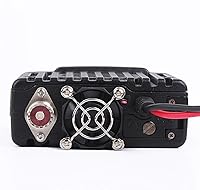
The IP67 waterproof rating means this waterproof ham radio can survive brief submersion up to one meter for roughly 30 minutes — enough for a downpour or a boat deck splash, though it is not rated for continuous underwater exposure. On the RF side, the TH-8600 delivers up to 25 watts across both bands, with tri-power settings that let you dial back output when full power is unnecessary. Programming 200 channels sounds daunting, but keypad entry keeps basic setup accessible without a computer, and free software is available from TYT’s website for deeper configuration. The compact body mounts cleanly under a dash or on a center console, and the thoughtful port layout — mic connector up front, speaker and programming ports at the rear — keeps cable runs tidy.

Best For

This mobile transceiver is squarely aimed at licensed ham operators — at minimum a Technician class license is required to transmit legally on these frequencies, so it is not a general-purpose two-way radio. That said, it is a strong pick for Technicians and General class hams who want dependable 2m and 70cm repeater access without stretching the budget toward a flagship rig. Operators in wet climates, or those installing radios in boats, UTVs, or overlanding builds, will genuinely appreciate the weather resistance. It also makes a sensible step up from a handheld for anyone who wants better audio projection and more consistent output power in a dedicated mobile setup. Beginners tend to find the learning curve manageable with a bit of patience.

User Feedback

Sitting at a 4.4-star average across roughly 130 ratings, the TH-8600 earns cautiously positive marks — though that sample size is modest enough that individual experiences carry more weight than usual. Buyers frequently highlight clear received audio and express genuine surprise at the build quality relative to what they paid. The IP67 durability draws praise from operators who have run the radio in genuinely tough conditions. On the downside, a recurring complaint points to the included DTMF microphone feeling cheap, with some users replacing it fairly quickly. A few buyers also flag a steeper programming curve than anticipated, especially those new to channel-based radios. The narrow transmit frequency range draws occasional criticism from operators wanting broader coverage, but for everyday repeater use, most find it more than adequate.

Pros

  • IP67 waterproofing is rare at this price point and genuinely useful for outdoor or vehicle installs.
  • Dual-band 2m and 70cm coverage handles the vast majority of North American repeater activity.
  • 25-watt output with tri-power settings gives flexibility for both local and longer-range contacts.
  • The compact body fits easily in vehicles where a full-size mobile rig simply would not.
  • Two hundred programmable channels is more than enough for most regional operators.
  • Keypad programming means basic setup is possible without a computer on day one.
  • The front-facing mic connector and rear programming port make cable routing noticeably cleaner.
  • Free PC programming software from TYT reduces the friction of bulk channel entry.
  • Build quality earns consistent praise from buyers relative to what they paid.
  • The included accessory kit — mounting bracket, power cable, programming cable — covers the essentials out of the box.

Cons

  • Transmit frequencies are limited strictly to the 2m and 70cm amateur bands, with no wideband flexibility.
  • The included DTMF microphone feels cheap and is frequently one of the first things buyers replace.
  • Programming can be confusing for newcomers, and the stock manual does not always clarify things well.
  • The review sample size of roughly 130 ratings makes it harder to draw firm conclusions about long-term reliability.
  • IP67 protection covers rain and splashes but should not be mistaken for full marine-grade waterproofing.
  • TYT’s customer support and warranty experience can be inconsistent depending on the reseller.
  • The receive audio, while acceptable, does not match the clarity of more established premium brands.
  • No cross-band repeat function limits usefulness for operators wanting to link a handheld to a base antenna.
  • Power cable connectors and accessory build quality lag behind the radio unit itself in perceived durability.

Ratings

The scores below were generated by our AI rating engine after systematically analyzing verified buyer reviews for the TYT TH-8600 Dual Band Mobile Transceiver from multiple global sources, with spam, incentivized, and bot-flagged submissions actively filtered out. Each category reflects an honest synthesis of real operator experiences — the wins and the frustrations alike — so you can make a genuinely informed decision before buying.

Waterproof Protection
88%
The IP67 rating is the single most talked-about advantage among buyers who mount this waterproof ham radio in boats, UTVs, or open truck beds. Operators in the Pacific Northwest and coastal regions specifically call out surviving sustained rain exposure without any degradation in performance — something almost no competitor at this price delivers.
A handful of buyers have raised reasonable concerns about connector ports and whether gaskets hold up after repeated cable insertions over months of use. IP67 is also frequently misunderstood as full marine-grade protection, which it is not — submersion tolerance is limited to about one meter for 30 minutes.
RF Performance
79%
21%
For everyday repeater work on 2m and 70cm, the TH-8600 performs solidly. Operators running it through a quality roof-mounted dual-band antenna report clean, consistent hits on local repeaters during commutes, and 25 watts is more than adequate for most suburban and rural coverage scenarios.
Receive sensitivity is competent but not exceptional — operators accustomed to higher-end Yaesu or Kenwood rigs sometimes notice the TH-8600 pulling in weaker signals less reliably. The transmit range is also hard-limited to the two amateur bands, which frustrates operators who occasionally need broader monitoring capability.
Build Quality
83%
The radio body itself consistently surprises buyers who expect something flimsy at this price point. The chassis feels solid, buttons have a satisfying tactile click, and the overall assembly does not rattle or creak even when mounted in a vehicle that takes rough roads regularly.
The gap in quality between the radio body and the included accessories is noticeable. The mounting bracket and DC cable connectors feel like afterthoughts, and the microphone housing in particular draws repeated criticism for feeling out of step with the more premium feel of the main unit.
Audio Clarity
81%
19%
Received audio through the internal speaker is clear and sufficiently loud for in-vehicle use without an external speaker. Multiple reviewers note that voice intelligibility on active repeaters is good even with road noise present, which is a practical day-to-day win for commuters.
Transmitted audio quality is rated more variably — some contacts report that the stock microphone makes the operator sound slightly muffled or thin compared to aftermarket alternatives. Swapping in a better mic tends to resolve this, but it is an added cost the buyer should anticipate.
Ease of Programming
61%
39%
Once the PC software is installed and a channel list is imported via the included programming cable, the setup process becomes manageable for most operators. The software is free and functional, and the ham radio community has produced enough video guides to help beginners work through the initial configuration.
Out-of-the-box keypad programming is genuinely tedious, and the printed manual does not do enough to bridge the gap for newcomers. Buyers who expected a plug-and-play experience are the most vocal critics — setting up repeater offsets, tones, and channel names manually is not intuitive and creates real friction in the first few hours of ownership.
Value for Money
84%
For operators who want IP67 protection and 25 watts of dual-band output without stretching into premium brand territory, the value proposition here is genuinely hard to argue with. Most buyers feel they received more radio than they expected for what they paid, particularly when comparing against non-waterproof alternatives at similar prices.
The value calculation shifts slightly once you factor in likely accessory upgrades — a better microphone and possibly a sturdier power cable connector are realistic near-term additions for many buyers. Those hidden follow-on costs narrow the price gap with slightly pricier but more complete packages from established brands.
Display & Interface
74%
26%
The dual display with dual-watch functionality is practical for operators monitoring two frequencies simultaneously, such as a local repeater on one side and a simplex calling frequency on the other. Brightness is generally reported as adequate for daytime use in a vehicle.
The display font and icon labeling can be hard to read at a glance while driving, and night-mode contrast drew a few complaints about being either too dim or too harsh depending on individual preference. Menu navigation logic also trips up some users who are accustomed to other radio interfaces.
Compact Form Factor
89%
The small footprint is a genuine practical asset, especially for operators working with limited dash space in compact cars, motorcycles with trunk-mounted setups, or side-by-side UTVs. Several buyers specifically chose this radio over larger alternatives precisely because of how little space it demands.
The compact size does mean the front panel controls are somewhat densely packed, and operators with larger hands occasionally mention that button presses require more deliberate targeting than they would like, particularly when reaching for controls while driving.
Included Accessories
57%
43%
The package is reasonably complete for getting up and running — the mounting bracket, power cable, and programming cable are all included, which saves an extra order for most buyers. Having the programming cable in the box is a detail that budget competitors often skip.
Quality across the included accessories is inconsistent. The DTMF microphone is the most common complaint, with buyers describing it as cheap-feeling and prone to audio issues. The DC power cable connector also attracts criticism for not feeling as secure as it should at full output power draw.
Frequency Coverage
53%
47%
For operators who exclusively work the 2m and 70cm amateur bands — which covers the vast majority of everyday ham activity in North America — the transmit coverage is entirely adequate. Both bands are well-supported with proper tone and offset options for repeater access.
The narrow transmit window is a recurring pain point for operators who want a single rig that can also cover 10m, 6m, or extended receive ranges for aircraft or public safety monitoring. Competing radios at similar or slightly higher prices offer substantially wider coverage, making this a meaningful limitation for more advanced operators.
Installation Experience
76%
24%
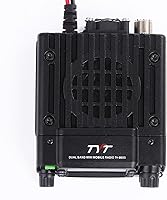
The port layout — mic connector at the front, speaker and programming ports at the rear — makes for a cleaner install than radios that cluster everything on one side. The compact body also accepts standard SO-239 antenna connections, so compatibility with existing vehicle antenna mounts is rarely an issue.
The included mounting bracket, while functional, is described as basic and not particularly flexible in terms of adjustment angles. Buyers who want a tilt-adjustable or quick-detach mount typically need to source a third-party alternative, adding minor extra effort to the install.
Repeater Compatibility
86%
Support for CTCSS, DCS, 2-Tone, and 5-Tone access methods covers essentially every repeater tone system an operator is likely to encounter across North America. Buyers who travel regularly report consistent access to new repeaters without running into unsupported tone formats.
Setting up repeater entries correctly — with proper offsets, tones, and memory naming — requires careful attention during programming, and errors are easy to make via keypad entry. A few buyers have reported accidentally overwriting programmed repeaters when exploring menu functions without the manual nearby.
Long-Term Reliability
71%
29%
A number of buyers report using this mobile transceiver daily for over a year without hardware failures, which is a reasonable signal of durability for a radio in this price class. The IP67 build appears to hold up under continued exposure to weather without seal degradation in most reported cases.
The sample size of around 130 reviews makes it difficult to draw firm long-term conclusions. There are isolated reports of intermittent display issues and connector wear developing after extended use, and TYT’s after-sales support experience is inconsistent enough that it remains a real risk factor for buyers who may need warranty service.

Suitable for:

The TYT TH-8600 Dual Band Mobile Transceiver is a strong fit for licensed amateur radio operators — Technician class or above — who want a capable, weather-resistant mobile rig without spending serious money on a flagship brand. If you drive regularly and want reliable access to local 2-meter and 70-centimeter repeater networks, this waterproof ham radio handles that job well. It particularly shines for operators in rainy climates, or those installing a radio in environments where moisture and dust are real concerns — think boat consoles, UTV roll cages, or truck beds. The compact body is genuinely practical for smaller vehicles where dashboard real estate is tight. Hams upgrading from a handheld transceiver will notice an immediate improvement in transmitted audio quality and output consistency, making this a sensible next step without overcommitting on budget.

Not suitable for:

The TYT TH-8600 Dual Band Mobile Transceiver is not the right choice for operators who need broader frequency coverage beyond the standard 2m and 70cm amateur allocations. If you are chasing HF, 6-meter, or wideband receive capability, you will need to look at more expensive multi-band rigs. This is also not a good option for anyone expecting a plug-and-play experience — programming 200 channels properly requires patience, and buyers who dislike reading manuals or using third-party software may find the setup frustrating. It should go without saying, but this radio cannot be used for transmission legally without a valid FCC amateur license; it is not a general-purpose or GMRS radio. Finally, operators who prioritize long-term brand support, extensive accessory ecosystems, or proven resale value may find TYT’s position in the market less reassuring than established Japanese brands.

Specifications

  • Brand & Model: Manufactured by TYT Electronics Co., Ltd. and distributed under the FONGHOO brand as model TH-8600.
  • TX Frequencies: Transmits on VHF 144–148 MHz (2m) and UHF 420–450 MHz (70cm) amateur bands only.
  • Output Power: Offers three selectable power levels: high (25W on VHF, 20W on UHF), mid, and low, adjustable via the front panel.
  • Waterproof Rating: Rated IP67, meaning the unit is protected against dust ingress and can withstand submersion in up to 1 meter of water for up to 30 minutes.
  • Channels: Supports up to 200 programmable memory channels for storing repeater offsets, tones, and frequency pairs.
  • Squelch Modes: Compatible with CTCSS, DCS, 2-Tone, and 5-Tone squelch systems, covering the access tone formats used by most North American repeaters.
  • Dimensions: The radio body measures 107 x 125 x 45 mm, making it noticeably smaller than most full-size mobile transceivers in this power class.
  • Weight: The unit weighs 3.48 lbs (approximately 1.58 kg), which is typical for a compact mobile rig of this output rating.
  • Operating Voltage: Designed to run on 13.8V DC, compatible with standard 12V vehicle electrical systems when connected via the included power cable.
  • Display: Features a dual display with dual-watch capability, allowing simultaneous monitoring of two frequencies without switching modes.
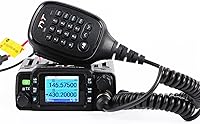
  • Microphone: Ships with a DTMF-capable microphone connected via a front-facing port, supporting tone-based repeater access and remote functions.
  • Programming: Channels can be programmed directly from the keypad or via free PC software available for download from the TYT official website.
  • Tone Support: Supports 1750 Hz, 2100 Hz, 1000 Hz, and 1450 Hz burst tones in addition to standard CTCSS and DCS encode and decode.
  • FCC Authorization: Holds FCC ID POD25W-WP, confirming it has passed required RF emissions testing for sale and use in the United States.
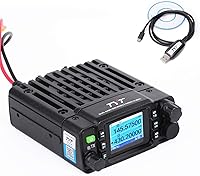
  • In-Box Contents: Package includes the radio unit, DTMF microphone, mount bracket, DC power cable, programming cable, mounting screws, and a printed user manual.
  • Noise Level: The unit is rated at a 45 dB noise figure, which reflects the sensitivity floor of the receiver circuit.
  • Function Keys: Includes 5 user-programmable function keys on the front panel for quick access to frequently used features or channel groups.
  • Availability: The TH-8600 was first listed in September 2018 and is confirmed as still in active production by the manufacturer.

Related Reviews
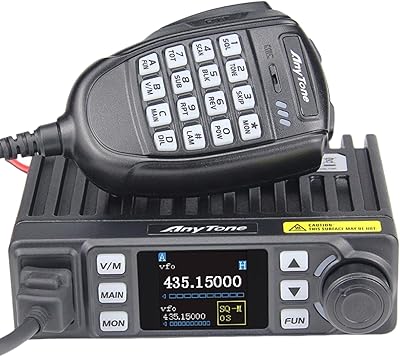
AnyTone AT-5888UV Dual Band Mobile Radio
69%
83%
RF Performance
78%
Build Quality
86%
Value for Money
81%
Cross-Band Repeat
74%
Display & Interface
More
AnyTone AT-778UV Dual Band Mobile Radio
79%
83%
Build Quality
88%
Audio Clarity
86%
Dual-Band Coverage
79%
Display & Interface
51%
Programming Software
More
Radioddity DB50 Dual Band Mobile Radio Transceiver
79%
88%
Transmit Power & Range
91%
Receiver Coverage
86%
Audio Clarity
84%
Channel Management
89%
Chirp Compatibility
More
AnyTone AT-779UV Mini Size Dual Band Transceiver Mobile Radio
85%
88%
Performance
85%
Build Quality
90%
Ease of Setup
65%
Software Compatibility
87%
Power Output
More
Yaesu FT-65R Dual-Band Handheld Transceiver
81%
91%
Build Quality
88%
Audio Clarity
86%
Battery Life
58%
Ease of Programming
61%
Antenna Performance
More
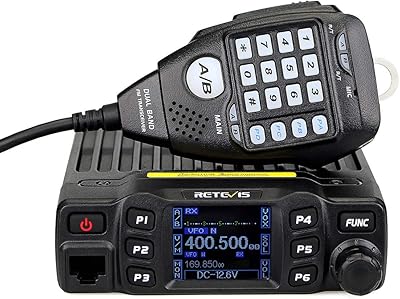
Retevis RT95 Dual Band Mobile Ham Radio
77%
88%
Audio Clarity
67%
Ease of Programming
91%
Display & Readability
86%
Value for Money
74%
Build Quality
More
Asus T-Mobile AC-1900 Dual-Band Router
85%
88%
Performance
94%
Ease of Setup
91%
Security Features
65%
Compatibility with Non-T-Mobile Devices
86%
Wi-Fi Speed and Range
More
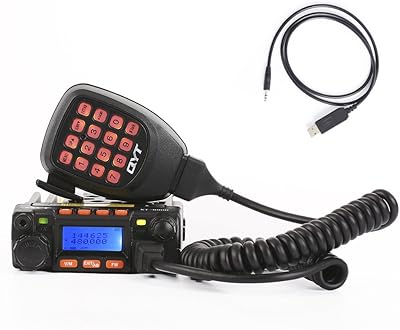
QYT KT-8900 Dual Band Mobile Radio
74%
91%
Value for Money
83%
Audio Clarity
78%
Ease of Programming
63%
Build Quality
74%
RF Performance
More
BTECH UV-50X2 Second Gen Mobile Radio
73%
88%
Transmission Performance
84%
Audio Clarity
79%
Build Quality
51%
Ease of Setup
47%
User Interface & Menu
More
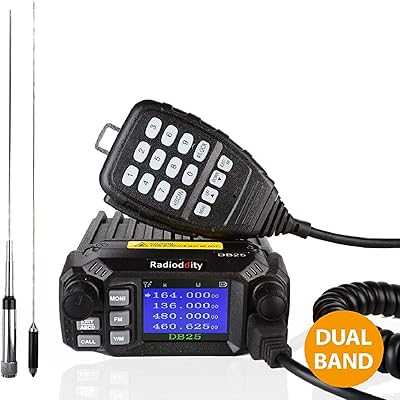
Radioddity DB25 Pro Dual Band Mini Mobile Radio
88%
91%
Value for Money
87%
Signal Reception
89%
Ease of Use
92%
Display Quality
84%
Durability
More

FAQ

Yes, absolutely. The TYT TH-8600 Dual Band Mobile Transceiver is designed exclusively for licensed amateur radio operators. You will need at minimum a Technician class FCC license to legally transmit on the 2-meter and 70-centimeter bands. Using it to transmit without a license is a federal violation.

The IP67 rating means it can handle rain, splashes, and brief submersion up to about a meter deep for 30 minutes. That covers most real-world outdoor and marine-adjacent installs comfortably. That said, it is not rated for continuous underwater use, so do not treat it as a full marine-grade radio for a vessel that takes on significant water regularly.

It has a bit of a learning curve, especially if you have never set up a channel-based radio before. Basic programming via the keypad is doable with the manual in hand, but most users find it much easier to use the free PC software from TYT’s website. There are also several YouTube walkthroughs made by the ham radio community that make the process significantly less frustrating.

Not automatically — you will need to program in each repeater’s input and output frequencies, offset direction, and any required CTCSS or DCS access tone. Once that is set up, it works reliably. The TH-8600 supports all the common squelch and tone formats used by repeaters across North America, so compatibility is generally not an issue.

It works, but it is probably the weakest part of the package. Quite a few buyers end up replacing it with a third-party aftermarket mic within a few months. The DTMF keypad on it is functional for accessing tone-controlled repeaters, but the overall build feels noticeably cheaper than the radio body itself.

The included bracket handles the physical mounting, and the compact dimensions make it flexible — dashboard, center console, or under-dash installs all work. The DC power cable connects to your vehicle’s 12V system, ideally running directly to the battery with an inline fuse rather than through a cigarette lighter adapter for stable power at full output.

No. The transmit range is limited strictly to VHF 144–148 MHz and UHF 420–450 MHz. If you need broader transmit coverage — such as 10 meters, 6 meters, or GMRS frequencies — you will need a different radio. The receive range may be slightly wider depending on firmware, but the TX limits are fixed.

The TH-8600 uses a standard SO-239 (UHF female) antenna connector, which is the most common type on mobile ham radios. This makes it straightforward to connect to the vast majority of mobile antennas and adapters on the market without needing specialty cables.

No, cross-band repeat is not a feature on this radio. If you want to use a handheld radio through a higher-gain mobile antenna by linking the two bands together, you will need a rig that explicitly supports that function, such as certain Kenwood or Yaesu models.

This is genuinely a mixed area. TYT does have official contact channels and the listing mentions direct support availability, but experiences vary quite a bit depending on where the radio was purchased and which distributor is involved. For peace of mind, buying from a seller who offers their own return or exchange policy is worth considering alongside any manufacturer support.

Where to Buy