Overview

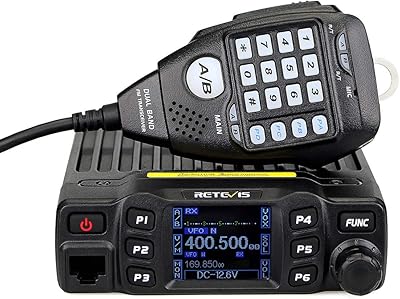
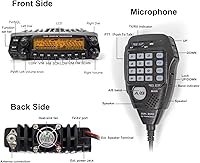
The AnyTone AT-5888UV Dual Band Mobile Radio sits in an interesting spot in the amateur radio market — capable enough to satisfy experienced operators, yet priced to attract those stepping up from entry-level handhelds. Built by Qixiang under the AnyTone brand, this dual-band mobile radio covers VHF and UHF simultaneously, with cross-band repeat functionality that genuinely sets it apart from single-band alternatives at this price tier. The vehicle-mount form factor is well thought out, with a remote-mountable faceplate and a lighted keypad microphone that makes nighttime operation practical. Fair warning: if you are new to mobile rigs, expect a real learning curve before you are getting full value from everything packed in here.
Features & Benefits

The AT-5888UV pushes out 50 watts on VHF and 40 watts on UHF — solid output for a mobile rig in this class — with four selectable power levels so you are not always running at full blast when a lower setting covers the distance fine. Its 758 memory channels can be named alphanumerically and configured with individual squelch tones per channel, which is genuinely useful when managing multiple nets or frequencies. The cross-band repeat mode lets the radio act as a mobile repeater, extending handheld coverage in areas where your portable alone would not reach. A built-in cooling fan and direct-flow heat sink handle sustained high-power transmissions, and the compander noise reduction keeps audio noticeably cleaner on busy channels.

Best For

This AnyTone transceiver is a strong fit for licensed amateur radio operators who regularly work both VHF and UHF — think public service events, emergency communications nets, or everyday commute monitoring across two bands at once. The cross-band repeat capability makes it particularly appealing to anyone wanting mobile repeater functionality without the significant cost of dedicated repeater hardware. That said, it is not the right pick for complete beginners or anyone unwilling to spend time with programming software. Hand-keying hundreds of channels via the front panel is tedious; a PC cable and compatible software are essentially required. And naturally, a valid amateur radio license is necessary before transmitting — this is not a plug-and-play scanner.

User Feedback

The community consensus lands around 4.2 stars, and the reasons are fairly consistent. Most owners praise the audio output clarity and RF receive sensitivity, with several noting it holds its own respectably against pricier Japanese-branded alternatives. Build quality earns positive comments too — the chassis feels solid rather than hollow, which addresses a common skepticism around Chinese-manufactured radios. On the downside, the bundled programming software has compatibility issues on newer Windows versions, and the English manual leaves certain functions frustratingly vague. The cooling fan is audible during extended high-power transmissions, which may bother operators in quieter environments. The complete absence of any water resistance rating is also worth factoring in if the installation location sees any moisture exposure.

Pros

  • Solid 50W VHF and 40W UHF output competes well with rigs that cost considerably more.
  • Cross-band repeat works reliably and meaningfully extends handheld radio range from a vehicle.
  • 758 named, individually configurable memory channels cover nearly any operational scenario you can imagine.
  • The dual independent displays let you monitor two bands at once without any menu-diving.
  • Build quality feels noticeably more substantial than the price point would lead most people to expect.
  • The lighted keypad microphone makes nighttime or low-light operation genuinely practical.
  • Compander noise reduction provides cleaner audio on crowded or noisy channels.
  • Four selectable power levels give you meaningful control over battery draw and RF footprint.
  • Operates across a wide temperature range, making it reliable in both hot and cold climates.
  • The remote-mountable faceplate adds real flexibility for tight or unconventional vehicle installations.

Cons

  • The included programming software has known compatibility issues with current Windows versions, requiring workarounds.
  • The English user manual is a rough translation and leaves several functions poorly explained.
  • The cooling fan is clearly audible during sustained high-power transmissions, which can be distracting.
  • No water resistance rating at all — even light moisture exposure in the installation environment is a concern.
  • Hand-programming channels without a PC is tedious to the point of being practically unfeasible for large channel banks.
  • The AnyTone brand still carries skepticism in some amateur radio communities, which can affect resale value.
  • Customer support and warranty service can be slow or difficult to navigate for buyers outside major markets.
  • Air-band and marine-band reception is receive-only; buyers sometimes expect transmit capability that is not there.
  • The radio draws 13.8V DC and requires a stable power source — a weak or fluctuating vehicle electrical system can cause issues.
  • Replacement parts and accessories are harder to source locally compared to established Japanese-brand alternatives.

Ratings

Our AI scoring system analyzed verified owner reviews of the AnyTone AT-5888UV Dual Band Mobile Radio from buyers worldwide, actively filtering out incentivized, bot-generated, and low-credibility submissions to surface what real operators actually experience day to day. The scores below reflect a transparent balance of genuine strengths and documented frustrations — nothing is inflated to flatter the product, and nothing is buried to protect the brand. Where this dual-band mobile radio earns high marks, it genuinely earns them; where it falls short, the scores say so plainly.
RF Performance
83%
Owners consistently report that receive sensitivity is strong enough to pull in distant repeaters cleanly, and the 50W VHF output gives the radio a confident signal presence on local nets and during public service events. Several operators running this rig alongside higher-priced Japanese alternatives noted the receive quality held up surprisingly well in direct comparison.
A handful of users found UHF receive sensitivity slightly below what they expected from a 40W-output radio, particularly in fringe coverage areas. Adjacent channel rejection, while technically adequate per spec, occasionally lets strong nearby signals bleed through in congested urban RF environments.
Build Quality
78%
22%
The chassis feels solid and dense in hand — not the hollow, lightweight feel that some Chinese-manufactured radios carry. Operators who have mounted this transceiver in work trucks and emergency vehicles report it holds up well through daily vibration and the occasional rough handling that field use brings.
The plastic faceplate trim and some of the button surrounds show wear faster than the chassis itself suggests, particularly with frequent gloved-hand use. A few long-term owners noted that connector tolerances on the mic port became slightly loose after a year or more of regular plug-and-unplug cycling.
Value for Money
86%
For operators who need full-power dual-band coverage and cross-band repeat in a single mobile unit, the AT-5888UV delivers a feature set that would cost significantly more from established Japanese brands. Buyers comparing it directly to Yaesu and Kenwood equivalents consistently cite the price difference as a decisive factor that the performance largely justifies.
The value calculation changes if you factor in the time cost of troubleshooting programming software, sourcing a reliable USB cable, and working around documentation gaps. For buyers who value a smooth out-of-box experience, some of that savings is effectively spent in setup hours.
Cross-Band Repeat
81%
19%
This is the feature that converts fence-sitters into buyers, and for good reason — the cross-band repeat function works reliably when configured correctly, extending handheld range from the vehicle without needing a dedicated portable repeater. ARES and CERT operators in particular find this capability genuinely useful during field deployments.
Setting up cross-band repeat for the first time without a clear manual is more trial-and-error than it should be, and the translated documentation does not walk through the process intuitively. Users who skip the learning curve sometimes report accidental key-ups or misconfigured squelch causing the function to behave erratically.
Display & Interface
74%
26%
The dual LCD panels are bright enough for daylight readability and adjustable enough for comfortable nighttime use, which matters when you are navigating to an event or handling communications in a darkened vehicle. Having independent display readouts for both bands simultaneously is a genuine daily-use convenience that single-display radios cannot match.
The menu navigation is layered and non-intuitive, and operators switching from simpler handhelds often feel overwhelmed during the first few weeks. Button labeling is cramped, and some functions require multi-step key combinations that are easy to forget without regular use or a well-marked reference card.
Programming Experience
47%
53%
CHIRP, the widely used open-source programming tool, supports the AT-5888UV and provides a much more reliable and user-friendly programming path than the stock AnyTone software. Operators already familiar with CHIRP from other radios will find the transition relatively straightforward once the correct driver is installed.
The bundled proprietary software has genuine compatibility problems on Windows 10 and 11, and the required USB driver often needs manual installation from a third-party source. This is arguably the single most complained-about aspect of ownership, with multiple reviews describing hours lost to driver conflicts before a single channel was programmed.
Audio Quality
82%
18%
Received audio through the internal speaker is loud and clear enough to cut through vehicle cabin noise during highway driving, which is a practical daily-use requirement that this AnyTone transceiver handles confidently. The compander noise reduction noticeably cleans up weaker incoming signals, reducing listener fatigue on long monitoring sessions.
Transmitted audio quality receives more mixed feedback — some contacts report a slightly processed or compressed sound compared to reference radios on the same channel. The microphone included with the unit is functional but not exceptional, and some operators opt to replace it with an aftermarket mic for cleaner audio.
Thermal Management
71%
29%
The combination of an active cooling fan and a direct-flow heat sink keeps the radio stable during extended transmissions at full power, which matters for operators running long net sessions or monitoring traffic for hours at a time. No significant thermal throttling or heat-related shutdowns appear in the owner feedback record.
The fan is audible — clearly so in a quiet vehicle or home base-station setup — and it spins up even during moderate-length transmissions at high power. For operators who use this radio in net-control roles where background noise is a concern, the fan hum is a consistent minor annoyance rather than a dealbreaker.
Documentation Quality
39%
61%
The manual does cover the core functions and provides a reasonable overview of the channel programming structure for users willing to read carefully and experiment. Experienced operators who have worked with similar Chinese-manufactured radios tend to find the manual adequate as a reference supplement rather than a standalone guide.
The English translation is rough enough that several functions are described ambiguously or incompletely, leaving new users to rely on YouTube videos and community forums to fill the gaps. This is one of the more consistent criticisms across the review base and represents a real friction point for buyers who expect professional documentation.
Channel Management
79%
21%
758 individually named and configured channels is a genuinely large capacity that suits operators managing complex frequency plans across multiple organizations, districts, or event types. Per-channel squelch tone assignment means you can store nets with different CTCSS requirements side by side without any manual reconfiguration between uses.
That channel capacity is largely inaccessible without a programming cable and software, which creates a hard dependency on third-party tools just to use a core feature of the radio. Manually entering even a modest subset of channels via the keypad is slow enough that most users simply leave large portions of the memory bank empty.
Installation Flexibility
76%
24%
The remote-mountable faceplate is a practical advantage for vehicles with tight dashboard space, allowing the main unit to be tucked out of sight while keeping the controls and display accessible. The lighted keypad microphone adds an additional hands-near-wheel control option that works well for operators who prefer not to reach across the console.
Separation cables for the remote faceplate are not included and need to be sourced separately, which adds to the total installation cost and complexity. Mounting hardware is minimal in the box, and operators doing a clean permanent install in a vehicle typically need to source additional brackets or fabricate their own solution.
Durability Over Time
68%
32%
Several owners report years of reliable daily use from their AT-5888UV without significant component failures, which is reassuring for a radio in this price tier. The steel chassis and heat-managed internals appear to hold up reasonably well through the temperature cycling that vehicle installations experience across seasons.
There is a meaningful tail of reviews describing failures — display issues, intermittent power problems, and mic connector degradation — appearing in the one-to-three year range. Getting warranty or repair support from outside major markets can be slow and frustrating, which raises the effective risk of long-term ownership compared to brands with established service networks.
Weather Resistance
29%
71%
The sealed main unit body provides basic incidental protection against dust in typical vehicle environments, and operators in dry climates who mount the radio inside the cab report no moisture-related issues over extended ownership periods.
There is no water resistance or ingress protection rating of any kind, which is a real limitation for operators in wet climates, those who mount in open or partially exposed vehicle spaces, or anyone using this radio during outdoor events in unpredictable weather. A single heavy condensation event or splash can cause irreversible damage, and this is a documented failure mode in the review record.
Scanning Functions
72%
28%
The radio supports a range of scan modes including CTCSS and DCS scan, which allows operators to identify the correct tone for an unknown repeater or net — a genuinely useful field capability. Priority channel scanning and band-specific scanning both function reliably according to the majority of owner feedback.
Scan speed is adequate but not fast by current standards, and some users note that the radio occasionally pauses on carrier noise rather than squelching through it cleanly. Configuring scan lists is another area where the manual's ambiguity creates setup friction, particularly for operators new to this level of channel management.
Emergency Features
73%
27%
The inclusion of 5-Tone emergency alarm, remote kill, and remote wake functions gives this radio a legitimate role in organized emergency communications deployments, which is a meaningful differentiator from simpler mobile transceivers at this price point. Operators in ARES nets appreciate having these functions available without needing a more expensive commercial-grade radio.
Configuring these advanced functions — particularly 5-Tone encoding and remote kill parameters — is poorly documented and essentially requires community forum research to accomplish correctly. Users who need these features reliably in the field should thoroughly test and verify the configuration well before any actual emergency deployment.

Suitable for:

The AnyTone AT-5888UV Dual Band Mobile Radio is a genuinely strong choice for licensed amateur radio operators who want a capable, full-power mobile rig without paying a premium for a Japanese nameplate. It shines in scenarios that demand simultaneous VHF and UHF operation — public service events, ARES/RACES activations, search-and-rescue support, or simply monitoring two busy nets during a long commute. The cross-band repeat function is a real differentiator for operators who want to extend their handheld coverage from a vehicle without carrying dedicated repeater equipment. Professionals and semi-professionals who rely on 5-Tone signaling, emergency alarm functions, or DTMF-based identification for organized group communications will also find the feature set legitimately useful rather than just impressive on paper. If you are comfortable spending an evening with programming software to set up your channel banks properly, the payoff in day-to-day usability is substantial.

Not suitable for:

The AnyTone AT-5888UV Dual Band Mobile Radio is a poor fit for anyone who expects to unbox it, press a few buttons, and be on the air within minutes. New hobbyists without an amateur radio license cannot legally transmit on any of its frequencies, and even licensed beginners may find the menu system and programming workflow genuinely frustrating without prior mobile rig experience. The complete absence of water resistance means it should not be installed anywhere it could see moisture, which rules out open truck beds, certain marine environments, or poorly sealed vehicle cabins in wet climates. Users who need their radio to work quietly in the background — think net-control operators in a calm setting — may find the audible cooling fan distracting during extended high-power transmissions. Finally, anyone hoping to manage 758 channels entirely by hand entry should reconsider; without a PC programming cable and compatible software, the setup process becomes impractically time-consuming.
Specifications

  • VHF Output: Transmits at up to 50W on the VHF band, with selectable power levels of 50W, 25W, 10W, and 5W to suit different range and interference requirements.
  • UHF Output: Delivers up to 40W on the UHF band across the same four selectable power levels, balancing coverage and thermal load during extended operation.
  • VHF Frequency: Covers a receive and transmit range of 136–174 MHz on the VHF band, with a standard operating range of 144–146 MHz.
  • UHF Frequency: Covers 400–512 MHz on the UHF band for transmit, with extended receive capability across the 400–490 MHz range.
  • Memory Channels: Stores up to 758 individually programmable channels, each supporting alphanumeric naming and dedicated squelch tone assignments.
  • Channel Spacing: Supports wide-band (25 kHz), middle-band (20 kHz), and narrow-band (12.5 kHz) channel spacing, configurable on a per-channel basis.
  • Squelch Types: Offers six squelch modes — Carrier, CTCSS, DCS, 2-Tone, 5-Tone, and DTMF — allowing precise control over which signals open the receive audio.
  • Operating Voltage: Requires a 13.8V DC power supply with a tolerance of ±15%, making it compatible with standard vehicle electrical systems and regulated bench power supplies.
  • Dimensions: The radio body measures 139 mm wide, 40 mm tall, and 212 mm deep, with a remote-mountable faceplate for flexible vehicle installation.
  • Weight: The main unit weighs approximately 1.14 kg (around 4.11 lbs), which is a typical weight for a full-power dual-band mobile transceiver in this class.
  • Display: Features dual LCD panels with independently adjustable backlight brightness, allowing both bands to be monitored simultaneously without menu navigation.
  • Temperature Range: Rated for operation between -20°C and +60°C, covering most real-world vehicle and fixed-station environments including cold climates and hot summer conditions.
  • Frequency Stability: Maintains a frequency stability of ±2.5 ppm, which is adequate for reliable repeater access and net operations across both bands.
  • Audio Output: Provides over 2W of audio power output at 10% distortion through the built-in speaker in both the radio body and the included keypad microphone.
  • Special Functions: Includes cross-band repeat, remote kill, remote wake, emergency alarm, compander noise reduction, and multi-group scrambling as standard operational features.
  • Cooling System: Uses a combination of a built-in active cooling fan and a direct-flow heat sink to manage thermal load during sustained high-power transmission sessions.
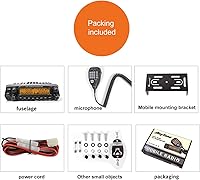
  • Included Accessories: Ships with a lighted full-keypad microphone; a compatible dual-band antenna is listed as optional and is not included in the standard box.
  • Water Resistance: Carries no water resistance or ingress protection rating, meaning the unit should be protected from moisture, condensation, and direct liquid exposure at all times.
  • Connectivity: Supports PC programming via USB connection, enabling channel and configuration data to be written using compatible third-party programming software.
  • Manufacturer: Designed and produced by Qixiang, a Chinese radio manufacturer, and sold under the AnyTone brand name with a first availability date of January 2013.

Related Reviews
AnyTone AT-778UV Dual Band Mobile Radio
79%
83%
Build Quality
88%
Audio Clarity
86%
Dual-Band Coverage
79%
Display & Interface
51%
Programming Software
More
AnyTone AT-779UV Mini Size Dual Band Transceiver Mobile Radio
85%
88%
Performance
85%
Build Quality
90%
Ease of Setup
65%
Software Compatibility
87%
Power Output
More
Retevis RT95 Dual Band Mobile Ham Radio
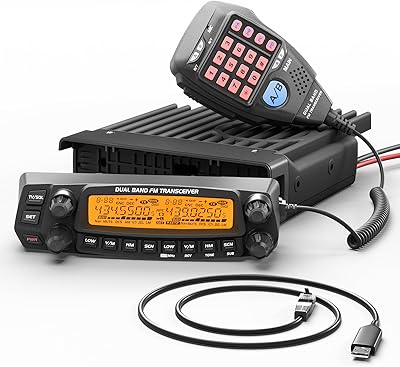
77%
88%
Audio Clarity
67%
Ease of Programming
91%
Display & Readability
86%
Value for Money
74%
Build Quality
More
Radioddity DB50 Dual Band Mobile Radio Transceiver
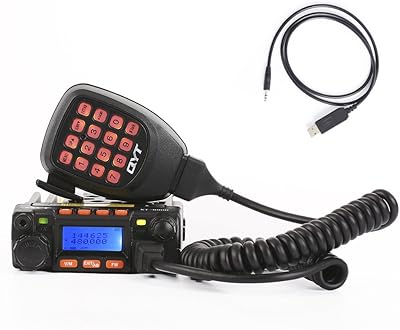
79%
88%
Transmit Power & Range
91%
Receiver Coverage
86%
Audio Clarity
84%
Channel Management
89%
Chirp Compatibility
More
Radioddity DB25 Pro Dual Band Mini Mobile Radio
88%
91%
Value for Money
87%
Signal Reception
89%
Ease of Use
92%
Display Quality
84%
Durability
More
QYT KT-8900 Dual Band Mobile Radio
74%
91%
Value for Money
83%
Audio Clarity
78%
Ease of Programming
63%
Build Quality
74%
RF Performance
More
BTECH UV-50X2 Second Gen Mobile Radio
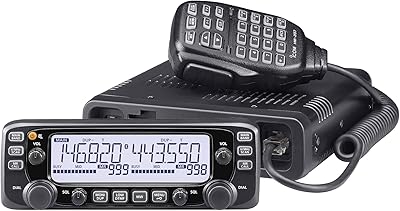
73%
88%
Transmission Performance
84%
Audio Clarity
79%
Build Quality
51%
Ease of Setup
47%
User Interface & Menu
More
Icom IC-2730A Dual Band VHF/UHF Mobile Radio
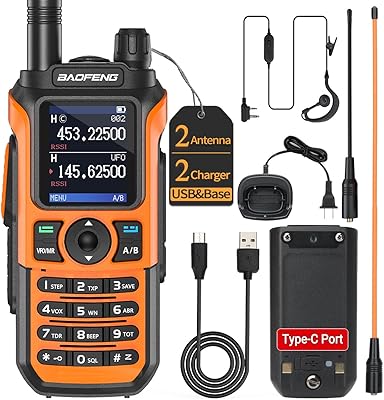
78%
93%
Transmit Power
91%
Dual-Band Receive
88%
Build Quality
89%
Audio Clarity
54%
Menu Navigation
More
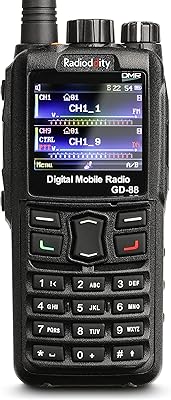
Radioddity GD-88 DMR Dual Band Ham Radio
75%
93%
Feature Depth
88%
GPS and APRS Performance
51%
Programming Experience
82%
Build Quality
63%
Audio Quality
More
Baofeng UV-21R Dual Band Ham Radio
75%
91%
Value for Money
68%
Build Quality
54%
Transmission Range
83%
Display & Interface
88%
Charging Convenience
More

FAQ

Yes, absolutely. The AnyTone AT-5888UV Dual Band Mobile Radio operates on amateur radio frequencies, and transmitting on those frequencies without a valid amateur radio license is illegal in most countries. In the United States, you need at least a Technician class license from the FCC before you key up. The radio can receive without a license, but that is about as far as unlicensed use goes legally.

Technically yes, but it is genuinely painful. The front panel and keypad allow manual channel entry, but working through 758 channels that way is a tedious process that most users abandon quickly. Practically speaking, you will want a USB programming cable and compatible software — CHIRP works with this radio and is free — to make the setup process manageable.

This is one of the more common frustrations owners report. The official AnyTone software was written for older Windows environments and can have driver or compatibility issues on Windows 10 and 11. Many users find success by running CHIRP instead, using a quality USB-to-serial cable with a genuine FTDI chip rather than a cheap clone, and installing the correct driver manually. It usually works once you get that combination right, but expect to spend some time troubleshooting.

Noticeable, but not overwhelmingly loud. At full 50W power, the fan spins up and produces a moderate hum that you can clearly hear in a quiet car or room. In a typical vehicle with road noise and music, most people would not give it a second thought. If you are using this as a base station in a quiet room and plan long transmission sessions, the fan noise might become a mild annoyance over time.

Cross-band repeat lets the radio receive a signal on one band and simultaneously retransmit it on the other. For example, a handheld on UHF can trigger the mobile radio, which then retransmits the signal on VHF to reach a distant repeater. It effectively extends your handheld's range when you are away from the vehicle. Setup involves designating each band's frequency and making sure transmit power and squelch are configured correctly for the scenario.

Yes, receive-only. The AT-5888UV can pick up AM aviation band signals and FM marine band traffic within its receive frequency coverage, but it cannot transmit on those frequencies. This is a useful monitoring feature but should not be confused with actual aviation or marine communications capability.

It is a solid option for that use case. The 5-Tone emergency alarm, cross-band repeat functionality, and extensive memory channel capacity make it practical for coordinated emergency communications work. Many ARES and CERT volunteers use vehicles equipped with this class of radio. Just make sure your channel programming is done well in advance, and that you have tested the radio thoroughly before you actually need it in the field.

The radio runs on 13.8V DC, which is the standard voltage for most amateur radio mobile equipment. For base station use, you need a regulated DC power supply rated for at least 20 amps to handle sustained full-power transmission comfortably. A 30-amp supply gives you a safer overhead margin and is a common recommendation in the ham radio community for any 50W mobile rig used at a fixed station.

The Japanese-branded alternatives generally have a slight edge in receiver sensitivity, ergonomics, and long-term brand support, but they also cost noticeably more for comparable output power. The AT-5888UV closes much of that gap on raw RF performance and feature count. Where it falls short is in software polish, documentation quality, and the depth of the support ecosystem. For operators prioritizing value and features over brand prestige, the gap is often acceptable.

Yes, and this is one of the more practical design aspects of this AnyTone transceiver. The faceplate is designed to be remotely mounted, which is useful when dashboard space is limited but you still need easy access to the controls and display. A separation cable is typically used for this, though you should confirm cable availability and length before committing to a specific installation layout in your vehicle.

Where to Buy