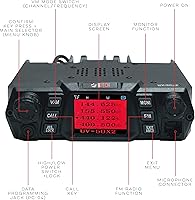
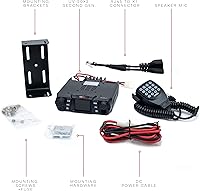
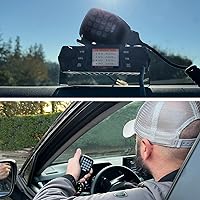
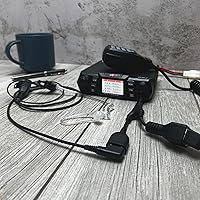
Overview

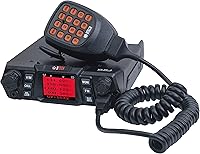
The BTECH UV-50X2 Second Gen Mobile Radio sits squarely in the mid-range of the amateur radio market — capable enough for serious operators, priced accessibly enough to not intimidate those newly licensed. The second-generation upgrade matters in practice: BTECH added Audio I/O support via the front RJ45 microphone port and bundled a K1 audio adaptor, which opens the door to a wide range of aftermarket accessories rather than locking you into proprietary hardware. It mounts cleanly in a vehicle or pulls duty as a home base station paired with an external power supply. With a 4.1-star average across over 600 real-world ratings, it has earned a respectable track record without needing inflated praise.
Features & Benefits

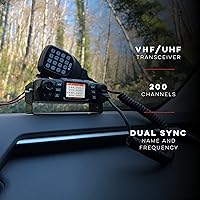
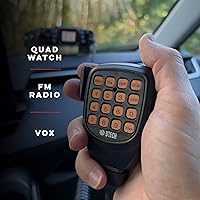
At 50 watts output on both VHF (144 MHz) and UHF (430 MHz), the UV-50X2 gives you real headroom for hitting distant repeaters or working simplex across meaningful distances. The Quad Watch mode is genuinely useful — it keeps your main transmit and receive band active while simultaneously monitoring up to three additional frequencies, so you are not missing traffic on secondary channels. All 200 memory channels support CTCSS, DCS, 5-TONE, 2-TONE, and DTMF tone formats, which matters on linked repeater systems or coordinated nets. Worth noting: this BTECH rig also supports VHF-VHF or UHF-UHF simultaneous operation, not just cross-band — a distinction that actually changes how you configure and deploy the radio for specific scenarios.

Best For

This dual-band mobile radio is a natural fit for Technician and General class operators who want a station-grade rig without stepping into commercial-equipment pricing. If you regularly check into club nets, the 200-channel memory and comprehensive tone support will handle a full repeater lineup without workarounds. Operators needing one radio to serve dual roles — mounted in the truck during the week, running off a 13.8V DC supply at home on weekends — will find the hardware ready for it; just budget for the optional power supply separately. Anyone who prefers software programming over front-panel menu diving will also want to pick up a compatible cable, which makes the entire initial setup process considerably more straightforward.

User Feedback

The feedback picture for the UV-50X2 is fairly consistent across the rating spread. Most owners point to audio clarity as a genuine strength — received audio is clean, and the included speaker mic is serviceable for everyday use. Build quality earns positive marks given the price tier. Where things get more mixed is on the user-experience side: the menu system carries a real learning curve, and the printed manual does not do much to ease new users through it. A notable share of reviewers treat the programming cable as effectively required rather than optional — not a flaw, just the honest reality of setup. Long-term reliability appears solid for most, though some users have noted limited firmware update activity from BTECH over time.

Pros

  • 50W output on both VHF and UHF bands gives reliable repeater access across meaningful distances.
  • Quad Watch mode lets you monitor up to three additional frequencies without leaving your main channel.
  • 200 memory channels with comprehensive tone support handles even complex, multi-repeater club setups.
  • The second-gen RJ45 audio port and K1 adaptor open up a wide range of standard aftermarket accessories.
  • Dual-role capability — mobile vehicle rig and home base station — makes it genuinely versatile hardware.
  • VHF-VHF and UHF-UHF simultaneous operation goes beyond basic cross-band, offering real operational flexibility.
  • NOAA weather monitoring and SOS alarm add practical safety utility for mobile and field use.
  • Comes with mounting brackets, DC cable, and a speaker mic, so basic installation does not require extra purchases.
  • Computer programmability via a standard FTDI cable makes channel management fast and organized.
  • Build quality is consistently praised by owners as solid relative to the price tier.

Cons

  • The front-panel menu system has a steep learning curve that trips up even experienced operators initially.
  • The printed user manual is widely considered vague and unhelpful for first-time setup.
  • A programming cable is effectively required for practical use but is not included in the box.
  • No water or weather resistance rating makes it unsuitable for exposed outdoor or marine installations.
  • Strictly analog FM — no DMR, D-STAR, Fusion, or APRS support for operators needing digital modes.
  • BTECH’s firmware update history for the UV-50X2 has been sparse, which concerns some long-term owners.
  • A 13.8V DC power supply for base station use is sold separately, adding to the real ownership cost.
  • The included speaker mic is functional but basic — serious operators will likely want to upgrade it.
  • Display and control layout can feel cluttered for operators accustomed to more premium mobile radios.

Ratings

The scores below were generated by AI after analyzing verified buyer reviews for the BTECH UV-50X2 Second Gen Mobile Radio from across multiple global platforms, with spam, bot activity, and incentivized feedback actively filtered out. Each category reflects the honest distribution of real operator experiences — from daily commuters running their local repeater to base station builders setting up a home shack. Both the genuine strengths and the recurring friction points are represented transparently, without rounding up or glossing over where this BTECH rig falls short.
Transmission Performance
88%
Operators consistently report that the 50W output delivers reliable repeater access even in fringe coverage areas where lower-powered handhelds drop out. In mobile use on highways and in hilly terrain, the signal holds noticeably better than budget HTs, and audio on the receive end is described as clean and intelligible under typical band conditions.
A small number of users note that the radio runs warm during extended high-power transmissions, particularly in summer vehicle installs with limited ventilation. A handful of reviews mention that the 50W rating feels slightly optimistic compared to wattmeter readings, though discrepancies are minor and within normal manufacturing tolerance.
Audio Clarity
84%
Received audio quality earns consistent praise across the rating spectrum — even mid-tier reviewers who had gripes elsewhere often single out the speaker output as a strong point. In vehicle use with road noise present, the audio holds up well without needing to max the volume, which reduces fatigue on longer drives.
The bundled speaker mic receives mixed marks — it is functional for everyday use but lacks the audio fidelity that more experienced operators expect, and a few users report it feeling plasticky and prone to muffled transmit audio if not held correctly. Upgrading to an aftermarket mic is a common recommendation in the owner community.
Build Quality
79%
21%
At this price tier, most owners are pleasantly surprised by how solid the chassis feels in hand and mounted in a vehicle. The radio does not rattle, the knobs and buttons have reasonable tactile feedback, and the overall construction feels more like a mid-range unit than a budget one.
It is not a commercial-grade radio, and that shows up in the smaller details — the front panel finish scratches more easily than expected, and the mounting brackets, while functional, feel thin compared to what you might find on a Yaesu or Kenwood mobile at a higher price point. Long-term durability data beyond two to three years is limited.
Ease of Setup
51%
49%
For operators who go straight to computer programming with a compatible FTDI cable and CHIRP software, the initial channel loading process is actually quite efficient — you can populate all 200 channels in a reasonable session, and the software workflow is well-documented by the community.
Manual front-panel setup is genuinely painful, and this is the most common complaint across all rating levels. The menu structure is non-intuitive, the steps for entering repeater offsets and tones are buried, and the included user guide is widely described as unhelpful. New operators have reported spending hours on basic configuration that should take minutes.
User Interface & Menu
47%
53%
Operators who have invested time learning the menu system report that daily use becomes second nature after a while. Key functions like volume, squelch, and channel selection are accessible from the front panel without diving into menus, which covers most of the routine in-vehicle interactions.
The deeper menu system is a consistent pain point — it is non-linear, uses abbreviated labels that are not self-explanatory, and the flow for programming tones or setting repeater splits manually is unnecessarily complex. The display is functional but compact, and several users wish the font size were larger for quick glances while driving.
Channel Memory & Tones
91%
Two hundred memory channels is more than enough for most active operators, and the full tone suite — CTCSS, DCS, 5-TONE, 2-TONE, and DTMF — covers essentially every repeater and linked system configuration you are likely to encounter in normal amateur radio operation. Club members and net participants in particular appreciate not having to make compromises.
Channel naming is limited in character length, which can make it harder to label memories descriptively when you have a dense repeater directory loaded. A few users also note that the channel scan speed is not as fast as they would prefer when working through a large memory bank.
Dual-Band Flexibility
86%
The ability to operate VHF-VHF or UHF-UHF simultaneously — not just in cross-band configuration — is a feature that experienced operators specifically call out as more versatile than competing units in this price range. Quad Watch mode adds a real operational layer for anyone monitoring multiple active frequencies.
Cross-band repeat, which some buyers assume is included given the dual-band design, is not supported — and this catches a meaningful number of buyers off guard. The product listing does not make this absence obvious, and a handful of reviews reflect genuine disappointment once they discover the limitation post-purchase.
Accessory Compatibility
83%
The second-gen RJ45-to-K1 adaptor bundled in the box is a practical upgrade that opens the UV-50X2 to the widest standard accessory ecosystem in the market. Users who run headsets, desk mics, or audio recording interfaces appreciate not being dependent on proprietary connectors or hard-to-find adaptors.
While the K1 standard is widely supported, a few users note that some cheaper third-party accessories produce audio quality issues through the adaptor. The adaptor cable itself is relatively short, which can create routing challenges depending on how and where the radio is mounted in a vehicle.
Mobile Installation
77%
23%
The included mounting hardware covers the basics — radio bracket, mic bracket, and DC cable — so most standard vehicle installs can be completed without a separate hardware run. The compact form factor fits cleanly in typical console or dash mounting positions without dominating the cabin.
The DC power cable included in the box is functional but on the shorter side for clean routing in larger vehicles like trucks or vans. A few installers also note that the bracket mounting points could use more adjustability, particularly for angled dash placements where the display needs to be readable from the driver seat.
Base Station Usability
72%
28%
Operators who run the UV-50X2 as a home base station paired with a regulated 13.8V supply report that it performs the role capably — stable receive, reliable transmit, and the channel memory makes it easy to work a regular net schedule without hunting for frequencies manually.
The external power supply is not included, and while this is standard practice for mobile radios used as base stations, it still represents a meaningful additional expense that some buyers do not anticipate. The radio also lacks a built-in speaker of any significant volume for desktop use — an external speaker is practically necessary in a home shack context.
Value for Money
82%
18%
The feature-to-price ratio is widely acknowledged as one of the UV-50X2’s strongest selling points — 50W output, 200 channels, full tone support, and dual-band flexibility at a price point significantly below comparable Japanese-branded alternatives. For newly licensed operators equipping their first mobile install, it is a defensible choice.
Factor in the programming cable, an upgraded external speaker, and potentially a better microphone, and the effective ownership cost climbs noticeably. Buyers who do the math after the fact sometimes feel the total spend edges uncomfortably close to the lower end of name-brand alternatives.
Documentation & Support
43%
57%
BTECH maintains a YouTube channel with tutorial content, and there is a reasonably active online community around the UV-50X2 where operators share programming files, CHIRP tips, and configuration guides. For buyers willing to do some self-directed learning, the third-party resources partly compensate for the official documentation gaps.
The included user manual is one of the most consistently criticized aspects of ownership — it is thin, often unclear on edge cases, and not updated to reflect second-gen specifics. Official firmware updates have been sparse, and BTECH’s direct customer support response times receive negative marks in a meaningful portion of reviews.
NOAA & Safety Features
76%
24%
NOAA weather channel monitoring is a practical addition for mobile operators who travel through changing conditions, and the SOS alarm feature provides a basic safety net in emergency situations. Busy channel lockout and transmit time-out function reliably in everyday operation.
The NOAA implementation is monitoring-only — there is no automated weather alert function that wakes the radio when a SAME alert is broadcast. Operators expecting an active weather alert system similar to dedicated weather radios will find this capability more limited than anticipated.
Long-Term Reliability
68%
32%
A solid share of long-term owners report units running without issue after two or more years of regular mobile use, which speaks reasonably well to the hardware construction at this price tier. No widespread failure patterns around specific components have emerged prominently in the review data.
There is a meaningful tail of reviews reporting issues that emerged after the first year — intermittent display problems, connector wear on the front RJ45 port, and occasional transmit anomalies. The limited firmware update cadence from BTECH also means software-level bugs that surface over time are unlikely to be patched.

Suitable for:

The BTECH UV-50X2 Second Gen Mobile Radio is a strong match for licensed amateur operators — Technician class and above — who want a dual-band rig that punches above its price point without requiring a commercial-grade budget. If you regularly access repeaters on both VHF and UHF, the 200-channel memory and full tone suite (CTCSS, DCS, 5-TONE, 2-TONE, DTMF) mean you can load your entire local repeater directory and work linked systems without compromise. Operators who split time between vehicle and home operation will find the hardware genuinely flexible — it mounts cleanly in a cab and transitions to a base station setup with an appropriate 13.8V DC supply. The second-gen RJ45 audio port and bundled K1 adaptor also make this rig a practical choice for anyone who uses headsets, recording interfaces, or other aftermarket audio gear, since you are not locked into a proprietary accessory chain. Quad Watch support adds real situational awareness for those monitoring club nets or emergency traffic alongside their primary channel.
Not suitable for:

Buyers who are new to amateur radio and expecting a plug-and-play experience should think carefully before purchasing the UV-50X2 — the front-panel menu system has a legitimate learning curve, and the included manual is widely considered inadequate for walking a first-timer through initial configuration. If computer programming is not something you are willing to take on, setup will be a frustrating process; a compatible FTDI cable is practically a necessity rather than a convenience. The radio carries no water resistance rating whatsoever, so anyone planning to use it in open-air, maritime, or field environments where exposure to the elements is a real possibility should look at purpose-built weatherproof alternatives. Operators who need APRS capability, DMR, or any digital voice mode will also find this rig limited, as it is strictly an analog FM radio. Finally, if you are looking for a handheld or portable solution, the UV-50X2 is a fixed-mount mobile unit and is not designed for that role.

Specifications

  • Output Power: Transmits at 50W on high power and 5W on low power across both supported bands.
  • Frequency Bands: Operates on VHF (144 MHz) and UHF (430 MHz) dual-band simultaneously.
  • Memory Channels: Stores up to 200 programmable memory channels for quick frequency access.
  • Tone Support: Compatible with CTCSS, DCS, 5-TONE, 2-TONE, and DTMF signaling formats for repeater and net integration.
  • Antenna Jack: Uses a standard SO-239 (UHF-type) connector for the antenna connection at the rear of the unit.
  • Front Audio: Features an RJ45 microphone port with a bundled K1 audio adaptor for broad aftermarket accessory compatibility.
  • Rear Audio: Includes a mono speaker output jack at the rear for connection to an external speaker.
  • Input Voltage: Requires 13.8V DC power, suitable for direct vehicle wiring or a regulated desktop power supply.
  • Dimensions: The radio unit measures 7.5″ deep by 5.7″ wide by 1.85″ high, not including the microphone or cables.
  • Weight: The radio unit weighs 2.65 lb, making it manageable for standard mobile mounting hardware.
  • Water Resistance: Carries no official water or weather resistance rating and should not be exposed to moisture or outdoor elements.
  • Watch Mode: Quad Watch mode allows the radio to monitor the active TX/RX band plus up to 3 additional frequencies simultaneously.
  • Special Modes: Supports both cross-band and same-band (VHF-VHF or UHF-UHF) simultaneous dual operation.
  • Extra Features: Includes NOAA weather channel monitoring, SOS alarm, busy channel lockout, display sync, nuisance channel scan skip, and adjustable squelch.
  • In-Box Contents: Package includes the radio unit, RJ45 to K1 audio adaptor, speaker mic, DC power cable, radio and mic mounting brackets, hardware, and a user guide.
  • Modulation: Operates exclusively on analog FM; no digital voice modes such as DMR, D-STAR, or Fusion are supported.
  • DTMF Keypad: Front-panel DTMF keypad allows manual tone transmission for repeater control and autopatching without an external device.
  • Programming: Supports computer-based channel programming via a compatible FTDI USB cable, sold separately.

Related Reviews
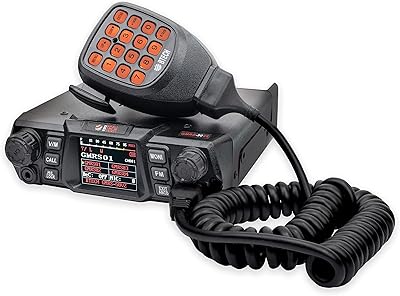
BTECH GMRS-50V2 50W Mobile GMRS Radio
80%
91%
Transmit Power & Signal Consistency
88%
Channel Customization & Flexibility
57%
Programming Software & Setup Experience
86%
Audio Clarity & Receiver Quality
89%
Repeater Compatibility
More
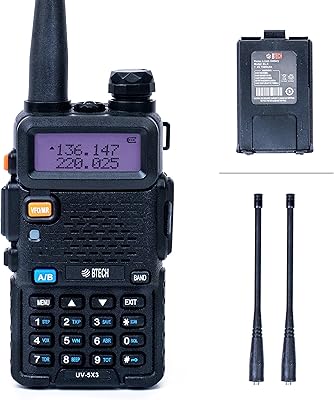
BTECH UV-5X3 Tri-Band Handheld Ham Radio
77%
91%
Value for Money
93%
Tri-Band Frequency Coverage
54%
Ease of Programming
88%
USB-C Charging Convenience
78%
Build Quality & Durability
More
BTECH GMRS-20V2 20W Mobile Two-Way Radio
83%
91%
Performance & Range
93%
Durability & Waterproofing
74%
Ease of Use
70%
Setup & Programming
82%
Battery Life
More
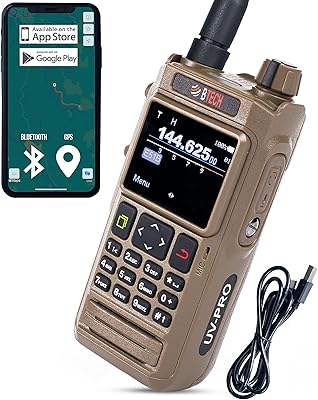
BTECH UV-PRO Dual Band Two-Way Radio
79%
86%
Build Quality
88%
Waterproofing & Durability
78%
Bluetooth App Integration
81%
APRS & GPS Performance
67%
Range & Signal Clarity
More
BAOFENG UV-17R Dual Band Ham Radio
73%
91%
Value for Money
63%
Ease of Setup
54%
Real-World Range
67%
Build Quality
61%
Audio Quality
More
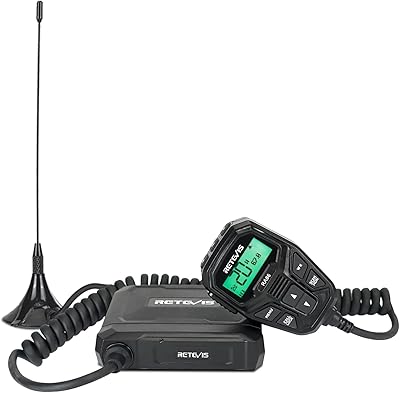
Retevis RA87 GMRS Mobile Radio
78%
88%
Transmit Power
84%
Repeater Channel Support
86%
Audio Clarity
83%
Ease of Installation
81%
CHIRP Compatibility
More
Retevis RA86 GMRS Mobile Radio
85%
88%
Performance
91%
Audio Clarity
85%
Ease of Use
93%
NOAA Weather Alerts
65%
Installation Complexity
More
Retevis RA25 GMRS Mobile Radio
82%
91%
Audio Clarity
89%
Transmission Range
87%
Channel Versatility
84%
Ease of Installation
79%
Build Quality
More
Quansheng UV-K6 5W Airband Radio
85%
86%
Overall Performance
94%
Portability
88%
Ease of Use
81%
Battery Life
93%
Charging Convenience (USB-C)
More
BTECH MPR-AF1 AM/FM Pocket Radio
74%
81%
AM Reception
63%
FM Reception
88%
Battery Convenience
91%
Ease of Use
59%
Build Quality
More

FAQ

Yes, transmitting on amateur radio frequencies requires a valid FCC amateur radio license (Technician class or higher in the US). The UV-50X2 is designed and sold specifically for licensed amateur operators — it is not a GMRS, FRS, or CB radio.

No, the programming cable is not included. BTECH recommends their PC04 FTDI cable for computer programming. While you can configure channels manually through the front panel, most operators find software programming via CHIRP or the BTECH software considerably faster and less error-prone, so factoring in the cable purchase from the start is practical.

It works well in both roles. For home or office use, you will need a regulated 13.8V DC power supply rated for at least 20A — BTECH’s RPS-30M is a common pairing, though any quality regulated supply at that voltage and amperage will do. The radio itself does not care where it gets its 13.8V from.

Quad Watch lets the radio scan and monitor your main transmit/receive channel alongside up to three additional stored frequencies. In everyday use, this means you can stay active on your primary repeater while keeping an ear on a club calling frequency, a simplex channel, and an emergency net — all without manually switching back and forth.

No, cross-band repeat is not a supported function on this radio. It does support simultaneous dual-band monitoring and can operate VHF-VHF or UHF-UHF at the same time, but it will not retransmit a signal received on one band out the other, which is what cross-band repeat requires.

The radio uses a standard SO-239 connector, which is one of the most common antenna jacks in the mobile radio world. No antenna is included in the box — BTECH recommends the Nagoya UT-72 magnetic mount antenna as a convenient vehicle option, and any quality VHF/UHF dual-band mobile antenna with a PL-259 connector will work.

Honest answer: it is not trivial, especially if you try to program it entirely by hand through the menus. The front-panel interface has a fair number of steps and the included manual leaves gaps that frustrate new users. If you use CHIRP or the BTECH software with a programming cable, the setup experience is much more manageable and takes most of the pain out of channel entry.

Yes, and this is one of the areas where the second-gen update helps. The front RJ45 port with the included K1 adaptor gives you access to the most widely supported accessory jack standard in the amateur radio market. Most K1-compatible headsets, headphone adapters, and audio interfaces will work without needing proprietary hardware.

No. The UV-50X2 carries no water or weather resistance rating of any kind. It is designed for in-vehicle and indoor base station use. If you need a radio that can handle rain, humidity, or outdoor exposure, you should look at units with an IP-rated enclosure instead.

No, this is a strictly analog FM radio. DMR, D-STAR, C4FM (Fusion), and other digital voice modes are not supported. If digital operation is on your roadmap, this rig will not grow with you in that direction — it is purpose-built for analog VHF/UHF use.

Where to Buy