Overview

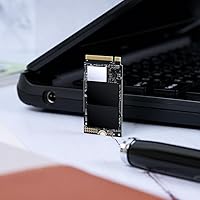
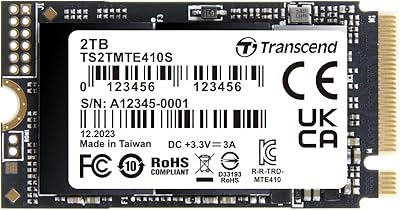
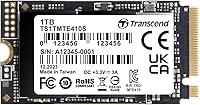
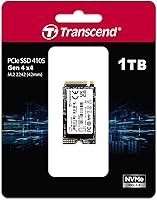
The Transcend MTE410S 1TB M.2 NVMe SSD occupies a specific and underserved niche in the storage market — it's built for devices that physically cannot accommodate the standard 80mm-long M.2 2280 drives most buyers are familiar with. The 2242 form factor, just 42mm long, is required by a handful of thin-and-light laptops and mini PCs, and finding a Gen 4 drive in this size used to mean settling for mediocre options. Transcend, a Taiwanese brand with a solid reliability track record, steps in with something genuinely useful here. Worth noting upfront: this is a DRAM-less design, which keeps power draw low but can produce slower speeds under heavy, sustained write loads. Compatibility and efficiency are the point, not benchmark supremacy.
Features & Benefits

Running on a PCIe Gen 4x4 interface, the MTE410S can hit sequential read speeds around 5,000 MB/s — well ahead of SATA and most Gen 3 NVMe drives still found in aging ultrabooks. The single-sided 42mm PCB is what makes this drive physically possible in slot-constrained machines; there is simply no room for a 2280 stick in those chassis. The DRAM-less build is not just a cost decision — it genuinely reduces idle power consumption, which matters for portable, battery-dependent devices. SLC caching handles burst write demands of typical daily use well: copying files, installing apps, booting an OS. LDPC error correction works quietly in the background protecting data integrity over the long term. A five-year limited warranty rounds out a compelling package.

Best For

This compact M.2 2242 SSD is essentially purpose-built for a short list of devices — and that is exactly who should buy it. Lenovo ThinkPad and Yoga Gen 6 owners are the prime audience, since those machines use the shorter 2242 slot by design. ASUS ExpertBook and ZenBook users stuck with a sluggish OEM drive will find the upgrade straightforward and worthwhile. Mini PC builders and handheld gaming PC enthusiasts also benefit, given how little physical space those builds allow. If you are still running a SATA SSD and your machine supports this form factor, the jump to Gen 4 NVMe speeds is noticeable in practice — boot times and app launches both improve. Power-sensitive users who want performance without sacrificing battery longevity will also find this a practical fit.

User Feedback

With over 300 ratings averaging 4.5 stars, buyer sentiment leans clearly positive. Fit and compatibility come up repeatedly — ThinkPad and mini PC owners in particular note how rare it is to find a Gen 4 drive in this form factor, and many describe installation as straightforward. Speed improvements over OEM SATA drives are frequently praised. Where things get more nuanced: a handful of reviewers mention that sustained write performance drops once the SLC cache fills, which is expected behavior for DRAM-less drives under heavy workloads like large video transfers. Thermal behavior in ultra-compact chassis is rarely flagged as a concern. Compared to the limited competition in the 2242 Gen 4 space, most buyers regard this Transcend NVMe drive as a clear step up in both reliability and real-world responsiveness.

Pros

  • One of very few Gen 4 NVMe options available in the compact 2242 form factor — a rare find.
  • Sequential reads up to 5,000 MB/s deliver a dramatic improvement over SATA and older Gen 3 drives.
  • Single-sided PCB design fits devices where double-sided drives physically cannot be installed.
  • DRAM-less architecture keeps idle power consumption low, which helps extend battery life in thin-and-light laptops.
  • SLC caching handles everyday burst writes — file copies, app installs, OS boots — without any noticeable slowdown.
  • LDPC error correction quietly protects data integrity over the long lifespan of the drive.
  • A five-year limited warranty is unusually generous for a drive in this niche category.
  • Reported installation experience is straightforward, with ThinkPad and mini PC users consistently praising the fit.
  • Backward compatible with PCIe Gen 3 slots, giving it some future-proofing across device generations.
  • Transcend has a solid long-term reputation for reliability in storage products, adding confidence to the purchase.

Cons

  • Sustained write speeds drop noticeably once the SLC cache is exhausted — a real limitation for heavy file movers.
  • DRAM-less design means it cannot compete with cache-equipped drives in demanding, continuous workloads.
  • The 2242 niche limits its audience significantly — most buyers will never need this specific form factor.
  • Fewer third-party benchmark comparisons are available for 2242 Gen 4 drives, making pre-purchase research harder.
  • No onboard DRAM means the controller leans on host memory, which can increase CPU overhead on some systems.
  • Limited availability of competing 2242 Gen 4 options makes it harder to comparison-shop on price.
  • Thermal behavior in ultra-compact chassis under sustained load is not well-documented in user feedback.
  • At 1TB, there is no smaller or larger capacity variant readily available, leaving buyers with fewer options if storage needs differ.

Ratings

The Transcend MTE410S 1TB M.2 NVMe SSD was evaluated by our AI rating system after analyzing hundreds of verified global buyer reviews, with spam, incentivized, and bot-generated feedback actively filtered out before scoring. The scores below reflect a balanced synthesis of real-world satisfaction across performance, compatibility, reliability, and value — strengths and frustrations alike are transparently represented. Buyers in highly specific use-case scenarios will find the category breakdowns especially useful for making a confident, informed decision.
Form Factor Compatibility
96%
This is arguably the single strongest reason to buy this drive: it physically fits where almost nothing else at this speed tier does. ThinkPad and mini PC owners consistently report that the 2242 length slots in without any modification, which is exactly the reassurance buyers in this niche need before committing.
The same specificity that makes it so useful also limits its appeal — if your device uses a 2280 slot, this drive simply is not for you, and that rules out the vast majority of potential buyers before they even look at performance.
Sequential Read Speed
83%
Hitting close to 5,000 MB/s in sequential reads is genuinely impressive for a 2242-length drive, and users upgrading from SATA or Gen 3 NVMe consistently notice faster boot times and quicker large-file access in real daily use.
Raw benchmark numbers tell only part of the story — the DRAM-less design means peak speeds are harder to sustain under back-to-back operations, and users running storage-intensive benchmarks will see the gap between advertised and real-world performance widen.
Sustained Write Performance
61%
39%
For typical everyday writes — saving documents, installing software, transferring a few gigabytes of photos — the SLC cache absorbs the load smoothly, and most users will never encounter a slowdown during normal sessions.
Once the SLC cache saturates during sustained large writes, throughput drops considerably, and this is a recurring complaint among users who tried to clone drives or transfer sizable media collections in a single session. It is the most consistent technical criticism across the user base.
Power Efficiency
88%
The DRAM-less architecture pays real dividends in battery-powered devices — users running thin-and-light laptops on the go report that idle and light-load power draw is noticeably lower than with cache-equipped alternatives, which adds up meaningfully over a full workday.
Under heavier workloads, the power efficiency advantage narrows, and users who regularly push the drive hard may find that the battery savings are less pronounced than they expected during sustained read-write cycles.
Installation Experience
91%
Buyers across a range of devices — ThinkPads, ZenBooks, mini PCs — consistently describe installation as smooth and intuitive, with the drive seating correctly on the first attempt and the system recognizing it immediately without any driver intervention.
A small number of users flagged that locating the correct M.2 standoff position on less common motherboards required checking the manual, which is a minor friction point but not unique to this drive.
Build Quality
79%
21%
The single-sided PCB construction is clean and well-executed, and the drive feels solid for its minimal size. Transcend's manufacturing reputation for consistent quality control comes through here — there are very few reports of DOA units or early failures.
Without a heatspreader or any thermal padding, the bare PCB design may concern users installing the drive into devices with very limited airflow, even if thermal throttling has not been widely reported in practice.
Thermal Behavior
74%
26%
In typical daily use scenarios — web browsing, productivity apps, light media work — the MTE410S runs at comfortable temperatures, and the DRAM-less design contributes to lower heat generation compared to DRAM-equipped drives under similar loads.
Under sustained workloads in thermally sealed compact chassis, temperatures can creep up, and the absence of any onboard heatsink means the drive relies entirely on case airflow for cooling, which is not always adequate in the thinnest ultrabooks.
Value for Money
82%
18%
Given how few Gen 4 NVMe options exist in the 2242 form factor, the MTE410S delivers strong value for buyers who genuinely need this specific size — there is simply not much competition at this performance level, which makes the pricing reasonable in context.
Buyers who do not strictly need the 2242 form factor will find faster, DRAM-equipped 2280 drives available at comparable prices, making the value proposition entirely dependent on whether the form factor is a hard requirement.
Long-Term Reliability
84%
LDPC error correction and Transcend's established track record in storage reliability both contribute to solid confidence here, and the five-year warranty means buyers have meaningful protection if something does go wrong over time.
3D TLC NAND without DRAM has lower endurance headroom than MLC or DRAM-backed TLC alternatives, so users planning to write extremely large volumes of data repeatedly over years should keep total drive write ratings in mind.
Warranty & Support
87%
A five-year limited warranty is a strong commitment for a consumer-tier SSD, and Transcend's support channels are generally regarded as responsive and fair by buyers who have needed to make claims in other product lines.
Warranty service speed and experience can vary depending on region, and international buyers outside Transcend's primary markets have occasionally reported slower resolution timelines when submitting claims.
OS & Driver Compatibility
93%
The drive works out of the box with Windows 10, Windows 11, and most modern Linux distributions, with no additional driver installation needed — buyers doing clean installs report the OS detecting the drive immediately during setup.
Compatibility with older operating systems or niche platforms is less documented, and users running legacy enterprise configurations may want to verify support before assuming it works identically to mainstream consumer setups.
Competitive Positioning
78%
22%
Within the narrow 2242 Gen 4 NVMe category, the MTE410S is one of the strongest available options, combining a known brand, solid warranty, and real Gen 4 read speeds in a form factor where alternatives are genuinely limited.
Broadening the comparison to include 2280 Gen 4 drives exposes the MTE410S as a mid-tier performer — it is excellent for what it is, but buyers who can use a 2280 drive have access to faster, DRAM-equipped alternatives at similar price points.
Random Read/Write Speed
67%
33%
For light multitasking and OS responsiveness — launching several apps at once, swapping between browser tabs and productivity tools — random read performance feels snappy and noticeably better than SATA drives in the same chassis.
Random write IOPS are where DRAM-less designs tend to underperform relative to their DRAM-equipped counterparts, and users running database applications or workloads with many small simultaneous writes may encounter inconsistent latency.
Backward Compatibility
89%
TRIM support and PCIe Gen 3 backward compatibility mean the drive functions correctly across a wider range of host systems, which is a practical benefit for users who may upgrade their laptop over the drive's lifespan.
Running the drive in a Gen 3 slot cuts sequential read performance roughly in half compared to Gen 4 conditions, which is expected behavior but worth flagging for buyers who assume they will get Gen 4 speeds on older hardware.

Suitable for:

The Transcend MTE410S 1TB M.2 NVMe SSD is the right call for a specific but meaningful group of buyers: anyone whose laptop or mini PC physically requires a 2242-length M.2 drive and wants a real performance upgrade over whatever slow OEM storage came pre-installed. Lenovo ThinkPad and Yoga Gen 6 owners are the clearest fit, as these machines are designed around the shorter 2242 slot and have very few quality Gen 4 options to choose from. ASUS ExpertBook and ZenBook users in the same situation will find the MTE410S slots in without drama and delivers a noticeable jump in responsiveness over aging SATA drives. Mini PC builders working within tight internal clearances also benefit directly, especially when thermal headroom and board real estate are both limited. If your workload is typical daily computing — web browsing, document editing, light creative work, app launches — the DRAM-less architecture will not hold you back at all, and the battery savings in portable use are a genuine bonus worth having.

Not suitable for:

The Transcend MTE410S 1TB M.2 NVMe SSD is not a good match for buyers whose machines use the standard M.2 2280 slot, since those users have access to faster, DRAM-equipped drives at comparable or lower prices and should take advantage of that. Anyone who regularly moves large files in bulk — video editors working with raw footage, photographers doing mass library transfers, or developers syncing large repositories — will hit the limits of the DRAM-less design under sustained write loads, where throughput can drop significantly once the SLC cache fills. It is also not the right pick for desktop builders or anyone prioritizing peak benchmark performance, since the 2242 form factor and power-first architecture both impose ceilings that more capable 2280 drives simply do not have. If your device supports a 2280 drive and raw speed is your priority, look elsewhere.

Specifications

  • Form Factor: M.2 2242 format with a single-sided PCB measuring 42mm in length, designed for space-constrained devices that cannot fit a standard 2280 drive.
  • Interface: PCIe Gen 4x4 NVMe, offering full backward compatibility with PCIe Gen 3 slots at reduced speeds.
  • Capacity: 1TB of usable NAND flash storage, formatted and ready for internal installation.
  • Read Speed: Sequential read speeds reach up to 5,000 MB/s under optimal conditions using the PCIe Gen 4x4 interface.
  • NAND Type: 3D TLC (Triple-Level Cell) NAND flash is used, balancing storage density with acceptable endurance for everyday consumer workloads.
  • Cache Design: DRAM-less architecture with SLC (Single-Level Cell) caching, which buffers burst writes but can see throughput drops during sustained large-file operations.
  • Error Correction: LDPC (Low-Density Parity-Check) error correction is built in to protect data integrity and extend the functional lifespan of the NAND cells.
  • Dimensions: The drive measures 1.65 x 0.87 x 0.09 inches (approximately 42 x 22 x 2.3mm), making it one of the most compact NVMe options available.
  • Weight: At just 0.176 ounces (approximately 5 grams), the drive adds virtually no measurable weight to any host device.
  • Power Design: The DRAM-less design reduces idle and active power consumption compared to cache-equipped NVMe drives, supporting better battery efficiency in portable devices.
  • Special Features: Supports TRIM for long-term performance maintenance and is backward compatible with earlier PCIe generations.
  • Installation: Designed for internal installation into M.2 2242 slots; no external tools beyond a small Phillips screwdriver are typically required.
  • Compatible Devices: Officially compatible with select Lenovo ThinkPad and Yoga Gen 6 laptops, ASUS ExpertBook and ZenBook models, mini PCs, and handheld gaming devices using the 2242 slot.
  • Warranty: Covered by a five-year limited warranty from Transcend, reflecting the manufacturer's confidence in long-term drive reliability.
  • Brand Origin: Designed and produced by Transcend Information, a Taiwanese storage specialist founded in 1988 with a broad enterprise and consumer product portfolio.

Related Reviews
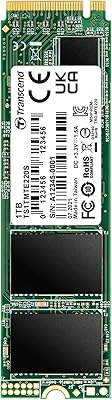
Transcend TS1TMTE220S 1TB M.2 NVMe PCIe Gen3x4 SSD
87%
89%
Performance
91%
Value for Money
94%
Read Speed
88%
Write Speed
85%
Reliability
More
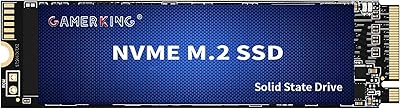
GAMERKING 1TB M.2 2280 NVMe SSD
75%
88%
Value for Money
83%
Read Performance
76%
Write Performance
71%
Thermal Management
73%
Build Quality
More
Transcend MTE410S 2TB M.2 NVMe SSD
80%
93%
Device Compatibility
88%
Sequential Read Speed
61%
Sustained Write Performance
86%
Power Efficiency & Battery Impact
91%
Form Factor & Physical Design
More
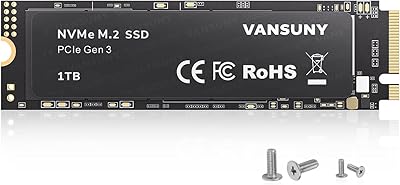
Vansuny X15 1TB NVMe M.2 SSD
77%
82%
Read & Write Performance
89%
Value for Money
91%
Installation Ease
58%
Brand Reliability
86%
Capacity Utility
More
ORICO J10-2242 256GB NVMe M.2 SSD
78%
83%
Read Speed Performance
61%
Write Speed & Sustained Performance
78%
Thermal Management
88%
Value for Money
81%
Build Quality & Packaging
More
fanxiang S770 1TB NVMe M.2 SSD
79%
88%
Read Speed Performance
91%
PS5 Compatibility
86%
Value for Money
83%
Thermal Management
67%
Write Speed Consistency
More
Fikwot FN970 1TB M.2 NVMe SSD
87%
93%
Performance
88%
Ease of Installation
91%
Compatibility with PS5
85%
Thermal Management (Heatsink)
86%
Write Speed
More
INLAND TN320 1TB NVMe M.2 SSD
77%
91%
Value for Money
88%
Sequential Read Speed
64%
Sustained Write Performance
93%
Installation Ease
94%
Warranty & Support
More
WD_BLACK SN850P 1TB NVMe SSD for PS5
84%
93%
Installation Experience
89%
Load Time Performance
67%
Value for Money
88%
Thermal Management
91%
Build Quality
More
iDsonix D7450 1TB M.2 NVMe SSD
85%
94%
Performance
89%
Thermal Management
92%
Read/Write Speed
85%
Compatibility with PS5
88%
Build Quality
More

FAQ

The safest approach is to check your laptop's official service manual or the manufacturer's support page, as they typically list the exact M.2 slot size. If your device is a Lenovo ThinkPad E or L series, Yoga Gen 6, or certain ASUS ExpertBook models, there is a good chance a 2242 slot is involved, but always verify before purchasing. You can also open the bottom panel and measure the physical length of the existing drive if one is already installed.

The MTE410S is backward compatible with PCIe Gen 3 slots, so it will work in older systems — you just will not get the full Gen 4 speeds. In a Gen 3 environment, sequential reads are typically capped around 3,500 MB/s, which is still a solid performance level and a meaningful improvement over SATA drives.

In practice, most users will not notice the difference during typical tasks like booting, launching apps, browsing, or working with documents. Where it becomes relevant is during sustained large writes — think transferring a 50GB video folder or cloning a drive. In those scenarios, once the SLC cache fills, write speeds can drop noticeably. For everyday computing, it is essentially a non-issue.

Technically yes, if your motherboard has an M.2 slot that physically supports the 2242 length — most desktop boards only accommodate the longer 2280 size. Check your motherboard manual to confirm whether the M.2 slot has a standoff position at the 42mm mark. If it does not, the drive will not be securely mountable.

Yes, particularly if your device is limited to the 2242 form factor. Jumping from SATA to Gen 4 NVMe delivers a real-world improvement in sequential read performance — often three to five times faster. Boot times and large application loads are where you will feel it most. It is not as dramatic a leap as going from a spinning hard drive, but it is clearly noticeable.

The DRAM-less design does tend to run cooler than DRAM-equipped drives under light to moderate workloads, which helps in thermally constrained chassis. Under sustained loads, some heat is generated, but user feedback has not flagged throttling as a significant issue in compact builds. Still, if your device has very limited airflow, monitoring temperatures after installation is a reasonable precaution.

No dedicated drivers are required. The drive communicates over the standard NVMe protocol, which is natively supported by Windows 10 and 11, recent versions of macOS (where compatible), and most Linux distributions. If you are doing a fresh OS install, you may need NVMe drivers on a USB stick for older versions of Windows, but modern systems handle this automatically.

Transcend backs this compact M.2 2242 SSD with a five-year limited warranty, which is competitive with most mainstream consumer SSD brands. Claims are typically handled through Transcend's regional support portals, and the company has a reasonable reputation for honoring warranty requests without excessive friction. Keep your purchase receipt as proof of the purchase date.

For most users — including students, professionals, and light creative workers — 1TB is comfortably sufficient for an OS drive, applications, and a reasonable media library. The challenge is that options in the 2242 form factor are still limited, and higher-capacity variants in Gen 4 NVMe at this length are harder to come by. If 1TB feels tight for your use case, factor in cloud storage or an external drive to supplement.

The 2242 Gen 4 space is still relatively sparse, so the MTE410S does not face heavy competition at this specific combination of form factor, speed tier, and warranty length. A few other brands offer 2242 drives, but many top out at Gen 3 speeds or lower capacities. On that basis, this drive sits near the top of the available options for buyers who genuinely need this niche form factor.

Where to Buy