Overview

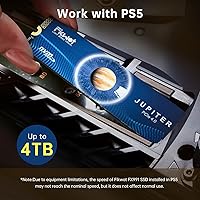
The Fikwot FX991 1TB M.2 NVMe SSD entered a crowded market in mid-2024, positioned squarely between budget no-names and established brands like Samsung and Western Digital. Fikwot isn't a household name yet, but that's partly the point — this Gen 4 NVMe drive exists to deliver real PCIe 4.0 performance without the premium price tag. It uses the standard M.2 2280 form factor, so compatibility across laptops, desktops, and the PS5 is broad. One thing worth knowing upfront: it runs 3D QLC NAND, which is how the cost stays low, though it does mean slightly lower write endurance over time compared to TLC-based alternatives. The 5-year warranty and 600TBW rating help offset that concern reasonably well.
Features & Benefits

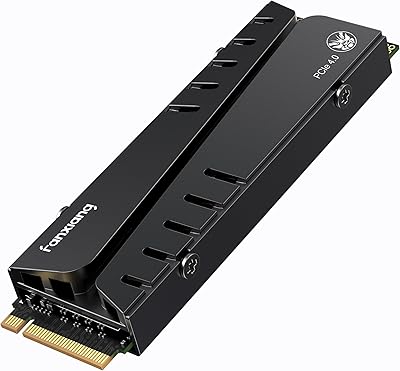
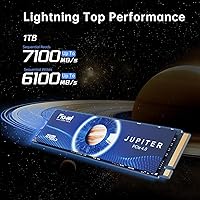
On paper, the FX991 hits 7100MB/s sequential read and 6100MB/s write — numbers that genuinely compete with pricier Gen 4 options, provided your system has a PCIe 4.0 slot. Pair it with a Gen 3 machine and those figures drop noticeably, so check your motherboard specs before buying. There's no dedicated DRAM onboard; instead, it uses Host Memory Buffer technology, borrowing RAM from the host system to handle read and write caching. That's not the same as a true DRAM cache, but it works well enough for typical workloads. An SLC caching layer handles burst writes efficiently, and the included graphite heatsink provides passive thermal control during extended sessions.

Best For

This Fikwot SSD makes the most sense for a specific kind of buyer — someone upgrading a PS5 who wants Gen 4 speeds without overspending, or a laptop user jumping from a slow SATA drive who will notice the difference immediately. Casual gamers and everyday users are the sweet spot here. If your workload involves copying massive video files continuously for hours, QLC NAND's sustained write limitations will eventually show. But for gaming, web browsing, booting Windows, and typical office work, the real-world experience is fast and responsive. Those building or refreshing a mid-range desktop will find the cost-per-gigabyte particularly attractive compared to name-brand alternatives.

User Feedback

With over 2,000 ratings and a strong average score, the FX991 has earned its reputation through volume as well as sentiment. Most positive reviews highlight easy installation and noticeable speed improvements over older drives — particularly from PS5 users and laptop upgraders. The heatsink receives some appreciation, though a handful of users have flagged thermal throttling during heavy sustained transfers, suggesting the passive cooling has limits. Longer-term QLC reliability is still an open question given the drive's relatively recent release, but no widespread failure patterns have emerged yet. A few PS5 users mention needing to format the drive manually, which is standard but worth knowing going in.

Pros

  • PCIe Gen 4x4 interface delivers genuine top-tier read speeds that most budget drives cannot match.
  • Compatible with PS5, laptops, and desktops out of the box with no adapter required.
  • Graphite heatsink is included — no need to buy one separately for PS5 installations.
  • Five-year limited warranty and 600TBW endurance rating provide solid peace of mind for typical users.
  • SLC cache layer ensures burst write tasks like game installs and file copies feel fast and responsive.
  • AES-256 hardware encryption adds meaningful security without any performance penalty.
  • Standard M.2 2280 form factor fits virtually every modern motherboard and laptop slot.
  • Real-world boot times and application launch speeds are noticeably faster than SATA alternatives.
  • Competitive cost-per-gigabyte makes 1TB of Gen 4 NVMe storage accessible without a premium price.

Cons

  • No dedicated DRAM cache means random I/O consistency falls behind true DRAM-equipped competitors under mixed workloads.
  • Sustained write speeds drop sharply once the SLC cache fills, exposing QLC NAND's native speed limitations.
  • No manufacturer software for drive health monitoring, firmware updates, or data migration — buyers must source their own tools.
  • Peak advertised speeds are only achievable in PCIe 4.0 systems; Gen 3 slots reduce performance considerably.
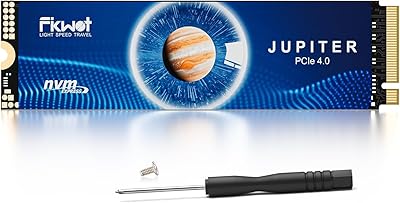
  • No mounting screw is included in the box, which can catch first-time builders off guard.
  • Long-term endurance data is still limited given the drive only launched in mid-2024.
  • Passive graphite heatsink shows thermal limits under prolonged heavy workloads in poorly ventilated cases.
  • Brand recognition and established support reputation lag well behind major SSD manufacturers.

Ratings

The scores below were generated by AI after analyzing thousands of verified buyer reviews for the Fikwot FX991 1TB M.2 NVMe SSD worldwide, with spam, bot activity, and incentivized feedback actively filtered out. Both the genuine strengths and the real frustrations buyers have encountered are reflected transparently in every category. This is not a marketing summary — it is an honest synthesis of what people actually experience after installing and using this drive.
Sequential Read Speed
88%
Users upgrading from SATA or older NVMe drives consistently report striking benchmark improvements, with real-world boot times and large file transfers noticeably faster. PS5 owners in particular appreciated hitting Gen 4 speed thresholds required for Sony's expanded storage.
Peak speeds require a PCIe 4.0 host slot — buyers who installed this in Gen 3 systems were sometimes surprised to see significantly lower-than-advertised numbers, which created some confusion and disappointment in reviews.
Sequential Write Speed
79%
21%
Burst write performance is strong thanks to the SLC cache layer, making typical tasks like installing large game files or moving folders feel genuinely quick. For everyday workloads, most users never noticed a bottleneck.
Once the SLC cache fills — which happens faster on QLC NAND under sustained writes — speeds drop to native QLC rates, which are considerably slower. Users transferring large video libraries or doing prolonged file operations hit this ceiling noticeably.
Value for Money
91%
This is where the FX991 earns the most consistent praise. Buyers repeatedly note that getting PCIe Gen 4 performance at this price tier feels like a genuine win, especially compared to equivalent-spec drives from bigger brands.
A small segment of buyers felt the QLC NAND undercuts the long-term value argument — if the drive needs replacing sooner than a TLC alternative, the upfront savings narrow. It is a fair concern for heavy users.
PS5 Compatibility
83%
The vast majority of PS5 users report successful installation and recognition by the console, with the drive performing well within Sony's requirements. The included graphite heatsink also satisfies PS5 heatsink recommendations without buying a separate one.
A handful of users mentioned needing to reformat or troubleshoot recognition on first boot, which is not unique to this drive but still added friction. A clearer setup guide in the box would reduce these support cases.
Thermal Management
71%
29%
The graphite heatsink keeps temperatures manageable during typical desktop and PS5 use, and most users never reported any throttling during gaming sessions or standard file transfers lasting a few minutes.
Under prolonged heavy sequential workloads — extended video rendering, large backup operations — some users observed throttling behavior, suggesting the passive heatsink has real limits. It handles everyday heat fine but is not built for sustained professional workloads.
Installation Experience
92%
Straightforward M.2 2280 form factor means it drops into virtually any compatible slot without adapters or extra hardware. Multiple reviewers with no prior SSD experience described the physical installation as simple and stress-free.
Documentation included in the box is minimal, and there is no bundled cloning software, which matters to buyers migrating from an existing drive. They are left to find third-party tools independently.
Random Read Performance
76%
24%
For everyday computing — launching applications, opening browser tabs, multitasking — the HMB-assisted random read performance feels responsive and capable, noticeably snappier than SATA SSDs in real use.
Without a dedicated DRAM cache, random read consistency under sustained mixed workloads is slightly behind true DRAM-equipped drives at a similar price. Power users running databases or heavy multitasking may notice occasional hesitation.
Random Write Performance
68%
32%
Light random writes, such as saving documents, installing smaller applications, or writing game patches, are handled smoothly with no perceptible lag for most users in typical desktop environments.
QLC NAND's weakness in random write endurance under sustained mixed I/O shows up in benchmarks, and users who stress-tested the drive noted that performance consistency is not quite at the level of a true DRAM-cached or TLC-based competitor.
Long-term Endurance
63%
37%
The 600TBW rating and 5-year warranty provide a reasonable durability floor for casual users — someone who writes 50GB a day would theoretically take over 30 years to hit the endurance limit under normal use.
QLC NAND inherently wears faster under heavy write cycles compared to TLC or MLC alternatives. For workstation users, video editors, or anyone writing hundreds of gigabytes daily, the endurance rating offers a narrower margin of comfort.
Power Efficiency
74%
26%
Laptop users noted that the auto-adaptive power management made a small but real contribution to battery performance during light tasks, and the drive does not run hot at idle — a genuine plus for ultrabook installations.
During sustained reads or writes, power consumption rises and the thermal output is noticeable. Thin-and-light laptops without active cooling may see the drive warm up more than expected during file-heavy operations.
Build Quality & Form Factor
84%
The drive feels solid for its weight class, and the factory-applied graphite strip is well-fitted rather than an afterthought. The standard 2280 footprint means no compatibility surprises in modern systems.
There is no metal casing or premium aesthetic — it is a bare PCB with a graphite pad, which is perfectly functional but does not inspire confidence in the same way that a full-armor drive might for buyers who care about presentation.
Software & Firmware Support
57%
43%
The drive supports standard TRIM and S.M.A.R.T. monitoring, so existing system tools like CrystalDiskInfo can track health and performance without any proprietary software dependency.
Fikwot offers no dedicated SSD management software, no firmware update utility, and no official drive cloning tool. Buyers coming from brands like Samsung who expect a full software ecosystem will find this noticeably bare.
Noise & Vibration
97%
Solid-state by design, the FX991 produces zero audible noise and zero vibration under all operating conditions — a category where every NVMe SSD objectively excels and this drive is no exception.
No meaningful cons in this category. The only theoretical edge case is coil whine from the host system's power delivery under load, but that has nothing to do with the drive itself.
Packaging & Unboxing
66%
34%
The drive arrives securely protected and undamaged in transit based on user reports. The graphite heatsink is pre-installed, which removes one step for buyers who might otherwise forget to apply thermal material.
The overall packaging is minimal — a small box with basic labeling and limited documentation. No installation guide, no screws for M.2 mounting, and no extras that signal a brand investing in the full buyer experience.

Suitable for:

The Fikwot FX991 1TB M.2 NVMe SSD is an excellent match for PS5 owners who want to expand their console storage with a genuine Gen 4 drive without overspending on a brand-name option. It is equally well-suited to laptop and desktop users upgrading from a SATA SSD or a slow older NVMe drive, where the jump in real-world responsiveness will be immediately noticeable. Casual gamers who primarily install, load, and play titles — rather than continuously writing massive files — will get consistent, fast performance without hitting the QLC NAND's sustained write limitations. Students, home office users, and everyday PC builders who need reliable 1TB storage at a competitive price point will find the cost-per-gigabyte hard to argue with at this performance tier. The included graphite heatsink also makes it a tidy choice for PS5 installs, where Sony recommends a heatsink and buyers would otherwise need to purchase one separately.
Not suitable for:

The Fikwot FX991 1TB M.2 NVMe SSD is not the right tool for users who regularly push drives through sustained, heavy sequential write workloads — think video editors exporting large project files repeatedly, data scientists moving multi-hundred-gigabyte datasets, or backup system administrators writing constantly throughout the day. Once the SLC write cache is exhausted, QLC NAND falls back to its native write speeds, which are a meaningful step below what TLC-based drives sustain under load. Buyers who depend on a robust software ecosystem — drive health dashboards, firmware update tools, or cloning utilities from the manufacturer — will also find this Fikwot SSD lacking compared to what Samsung, WD, or Seagate provide. Users on older systems with only PCIe Gen 3 slots should temper expectations significantly, as the drive's headline speeds simply cannot be reached on Gen 3 bandwidth. Finally, anyone prioritizing maximum long-term write endurance for a drive they plan to use heavily for five or more years would be better served by a TLC-based alternative, even if it costs somewhat more upfront.

Specifications

  • Capacity: The drive offers 1TB of usable storage, suitable for operating systems, game libraries, and general file storage.
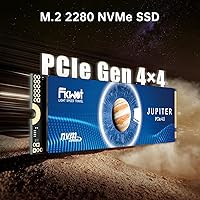
  • Interface: It connects via PCIe Gen 4x4 using the NVMe protocol, requiring a compatible M.2 slot to reach peak performance.
  • Form Factor: The drive uses the M.2 2280 standard, measuring 80mm in length and fitting the most common M.2 slot found in modern laptops, desktops, and the PS5.
  • Sequential Read: Maximum sequential read speed is rated at up to 7100MB/s under ideal PCIe 4.0 conditions.
  • Sequential Write: Maximum sequential write speed reaches up to 6100MB/s during burst operation with SLC cache active.
  • NAND Type: The drive uses 3D QLC (Quad-Level Cell) NAND flash memory, which enables a lower cost per gigabyte at the trade-off of reduced write endurance versus TLC alternatives.
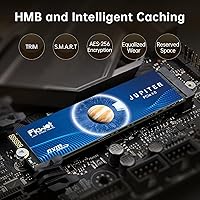
  • Cache Architecture: Performance is managed through a combination of Host Memory Buffer (HMB) technology and a dynamic SLC write cache layer; no dedicated onboard DRAM is present.
  • Endurance: The drive is rated at 600TBW (terabytes written), providing sufficient headroom for typical home and office workloads over its intended lifespan.
  • Encryption: AES-256 hardware-level encryption is supported natively, allowing compatible systems to secure stored data without software overhead.
  • Health Monitoring: TRIM and S.M.A.R.T. technologies are supported, enabling standard system tools to monitor drive health, performance, and remaining lifespan.
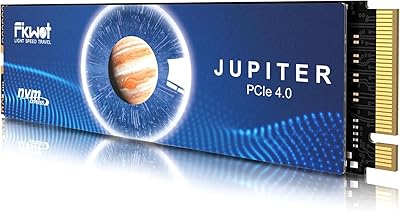
  • Thermal Solution: A graphite heatsink is factory-included on the drive to provide passive thermal dissipation during normal and moderate workloads.
  • Power Management: Auto-adaptive power efficiency management is built in, designed to reduce power draw during light workloads and help preserve laptop battery life.
  • Warranty: Fikwot provides a 5-year limited warranty covering manufacturing defects, subject to the 600TBW endurance threshold not being exceeded.
  • Dimensions: The drive measures 3.15 x 0.87 x 0.09 inches (approximately 80 x 22 x 2.3mm), consistent with the M.2 2280 specification.
  • Weight: The drive weighs 1.13 ounces (approximately 32 grams), typical for a heatsink-equipped M.2 SSD.
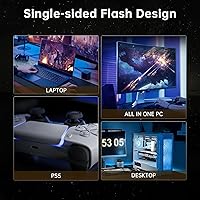
  • Compatibility: The FX991 is compatible with PCIe 4.0 and 3.0 desktops, laptops with M.2 2280 slots, and the PlayStation 5 expanded storage bay.
  • Color: The drive is finished in black, with a factory-applied graphite heatsink strip on the component side.
  • Availability: The drive was first listed for sale in May 2024, making it a relatively recent release with an actively growing user review base.

Related Reviews
Fikwot FX991 2TB M.2 NVMe SSD
88%
94%
Performance
96%
Read Speed
92%
Write Speed
89%
Thermal Management
90%
Ease of Installation
More
Fikwot FN970 1TB M.2 NVMe SSD
87%
93%
Performance
88%
Ease of Installation
91%
Compatibility with PS5
85%
Thermal Management (Heatsink)
86%
Write Speed
More
Vansuny 1TB NVMe M.2 SSD
87%
94%
Performance (Speed)
88%
Reliability
72%
Compatibility
91%
Value for Money
85%
Build Quality
More
GAMERKING 1TB M.2 NVMe SSD
87%
89%
Performance
92%
Speed (Read/Write)
80%
Durability (MTTF)
91%
Compatibility
94%
Ease of Installation
More
Fikwot FX660 1TB M.2 SSD
87%
92%
Performance
91%
Speed (Read/Write)
88%
Installation Ease
87%
Cooling Efficiency
89%
Durability
More
WD_BLACK SN850P 1TB NVMe M.2 SSD
90%
94%
Performance
89%
Ease of Installation
95%
Read Speed
92%
Thermal Management
90%
Storage Capacity
More
SanDisk 1TB Extreme M.2 NVMe SSD
89%
94%
Performance
96%
Read Speed
89%
Installation Ease
85%
Compatibility
90%
Build Quality
More
fanxiang S770 1TB NVMe M.2 SSD
87%
93%
Performance
88%
Ease of Installation
85%
Cooling Efficiency
90%
Compatibility
92%
Value for Money
More
PNY CS1030 1TB M.2 NVMe SSD
88%
91%
Performance
95%
Ease of Installation
89%
Compatibility
90%
Power Efficiency
87%
Reliability
More
iDsonix D7450 1TB M.2 NVMe SSD
85%
94%
Performance
89%
Thermal Management
92%
Read/Write Speed
85%
Compatibility with PS5
88%
Build Quality
More

FAQ

Yes, the FX991 ships with a graphite heatsink already attached, which satisfies Sony's recommendation for heatsink coverage on PS5 expanded storage drives. You can install it directly into the PS5 M.2 bay without purchasing anything extra. Just make sure to follow Sony's formatting steps after installation, as the PS5 will prompt you to initialize the drive on first detection.

You can, but you will not get anywhere near the advertised 7100MB/s read speed. PCIe Gen 3 x4 slots cap out at roughly 3500MB/s, so the drive will operate within that ceiling. It will still outperform a SATA SSD significantly, but if your system is Gen 3 only, a less expensive Gen 3 drive might offer better value for money.

Host Memory Buffer (HMB) lets the drive borrow a small portion of your system's RAM to use as a working cache, which helps with everyday random read and write tasks. It is not the same as having dedicated DRAM soldered onto the drive itself — true DRAM cache is faster and more consistent under heavy mixed workloads. For typical home use, gaming, and web browsing, HMB works well enough that most users will not notice the difference.

For most everyday users, no. The 600TBW endurance rating means you could write roughly 300GB per day for five years before hitting the limit — that is far more than most home users, students, or gamers will ever write. Where QLC does matter is for heavy professional workloads like continuous video editing or large database writes. If that describes your use case, a TLC-based drive would be a safer long-term choice.

No, Fikwot does not bundle any cloning or migration software with the drive. You will need to use a free third-party tool like Macrium Reflect Free or Clonezilla if you want to copy your existing system to the new drive. It is a minor inconvenience that is worth planning for before you start the upgrade process.

Under typical desktop and gaming workloads, the graphite heatsink keeps temperatures in a manageable range. Under prolonged sustained sequential writes — like a multi-hour large file transfer or repeated full-drive benchmark runs — some users have reported thermal throttling, where the drive temporarily reduces speed to protect itself. For most real-world tasks this is not an issue, but the passive heatsink does have limits in a poorly ventilated case.

Yes, the drive supports S.M.A.R.T., which means any standard disk monitoring tool can read health data from it. Free utilities like CrystalDiskInfo on Windows or smartmontools on Linux will show you temperature, total bytes written, power-on hours, and overall health status. Fikwot does not have its own proprietary software dashboard, so these third-party tools are what you will rely on.

Yes, as long as your motherboard has an M.2 2280 slot — which virtually all modern boards do — the drive will install and function. If the slot is PCIe Gen 3 rather than Gen 4, speeds will be lower than the maximum rating, but the drive is fully backward compatible. Check your motherboard manual to confirm which generation your M.2 slots support.

AES-256 hardware encryption on NVMe drives typically works through the TCG Opal standard and requires either a compatible host controller or BitLocker activation in Windows with the right settings. For most home users, you will not need to configure it manually — it operates transparently in the background when the feature is enabled at the OS or BIOS level. If you specifically need full-drive encryption for compliance or security reasons, confirm your motherboard and OS setup support it before relying on it.

First, make sure the drive is fully seated in the M.2 slot and the screw is secured — a loose connection is the most common culprit. If the PS5 still does not detect it, restart the console; in some cases the system prompts you to format the drive on next boot rather than immediately. If problems persist, check Sony's official expanded storage support page, as the troubleshooting steps there cover most edge cases regardless of which compatible drive you have installed.