Overview

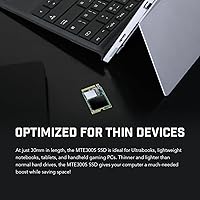
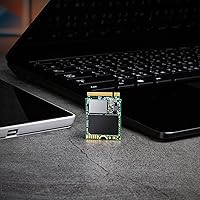
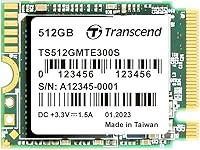
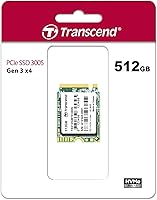
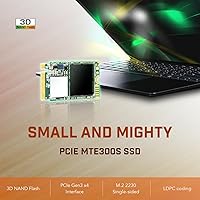
The Transcend MTE300S 512GB M.2 2230 SSD is a compact, no-nonsense upgrade drive built around the PCIe Gen3x4 NVMe interface — a meaningful jump over aging SATA options without the premium price tag of Gen4 flagships. Transcend has been quietly manufacturing reliable storage for embedded and consumer markets for decades, and this drive reflects that steady pedigree. What sets it apart in a crowded 2230 field is its single-sided PCB design, which is essential for fitting into tight chassis like the Steam Deck or Surface tablets. At just 30mm long and barely a third of an ounce, this Transcend upgrade SSD occupies a practical mid-range position where performance and real-world value actually line up.
Features & Benefits

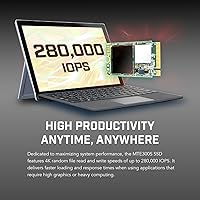
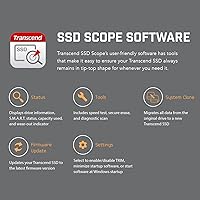
The MTE300S reaches 2,000 MB/s sequential read and 1,100 MB/s sequential write under ideal conditions — solid numbers for a Gen3 drive, even if newer Gen4 options will outpace it on paper. Day-to-day, the SLC caching setup earns its keep by accelerating burst writes during large game installs and file transfers. LDPC error correction works quietly in the background, protecting data integrity without requiring anything from the user. Random 4K performance tops out at 220,000 IOPS, which translates to snappier app launches and more responsive multitasking. Transcend also includes SSD Scope software — a genuinely useful utility for monitoring drive health, pushing firmware updates, and cloning your existing storage before making the swap.

Best For

This 2230 NVMe drive was clearly designed with handheld gaming upgrades in mind. Steam Deck owners hitting their storage ceiling will find the installation process refreshingly approachable — a Philips screwdriver and a bit of patience is all it takes. ROG Ally and Microsoft Surface users benefit directly from the verified single-sided layout, which eliminates fitment uncertainty entirely. It also makes strong sense for ultrabook owners whose chassis accepts a 2230 slot but won't accommodate a full-length M.2 drive. If you have been leaning on a microSD card and want a proper NVMe step up without stretching your budget toward premium-tier options, the MTE300S strikes the right balance of brand credibility and practical pricing.

User Feedback

Across 238 ratings and a 4.4-star average, buyers of this Transcend upgrade SSD report mostly positive experiences, with installation ease and tangible speed gains in the Steam Deck cited most often. Reviewers frequently highlight faster boot and load times versus stock storage, and several noted the drive holds its own against pricier competitors in the same 2230 class. On the critical side, some users raised legitimate questions about sustained write speeds once the SLC cache is exhausted — worth keeping in mind for anyone doing large continuous transfers regularly. Thermal performance under prolonged heavy loads has also come up, though typical handheld gaming sessions rarely push drives that hard. Long-term reliability data remains limited given the product's relatively recent market entry.

Pros

  • Single-sided PCB is physically compatible with the Steam Deck, ROG Ally, and Surface without any fitment guesswork.
  • PCIe Gen3x4 NVMe speeds are a substantial real-world upgrade over SATA and microSD storage options.
  • SLC caching keeps burst write performance snappy during typical game installs and everyday file operations.
  • At just 30mm and 0.32 oz, the MTE300S adds zero meaningful weight or bulk to slim handheld devices.
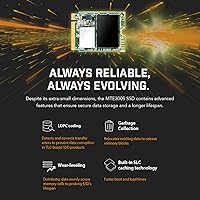
  • LDPC error correction works passively to protect data integrity throughout the drive's lifespan.
  • Transcend SSD Scope software makes health monitoring, firmware updates, and drive cloning genuinely accessible.
  • 4K random IOPS performance at up to 220,000 translates to noticeably faster app launches and system responsiveness.
  • Transcend has a long track record in storage reliability, giving buyers more confidence than lesser-known brands.
  • Competitive pricing for a verified 2230 drive from a recognized manufacturer in a niche but demanding market segment.

Cons

  • Once the SLC cache is saturated, sustained write speeds drop — a real concern for large continuous file transfers.
  • Gen3 interface means this 2230 NVMe drive will be outpaced on benchmarks by newer Gen4 options in compatible devices.
  • 512 GB may feel tight quickly on a gaming device; no user-expandable option once installed without reopening the chassis.
  • Thermal performance under prolonged heavy workloads has drawn some concern from buyers in real-world use.
  • Long-term reliability data is still relatively limited given the product launched in early 2023.
  • No included cloning cable or adapter — users need separate hardware to migrate data before swapping drives.
  • Warranty terms and regional support coverage vary and are not prominently communicated at point of purchase.
  • Rating sample size of 238 reviews is modest, making it harder to draw firm conclusions about durability over time.

Ratings

Our AI rating system analyzed verified global buyer reviews for the Transcend MTE300S 512GB M.2 2230 SSD, actively filtering out incentivized, bot-generated, and spam submissions to surface what real users actually experienced. The scores below reflect both the genuine strengths that earned this drive its loyal following and the friction points that kept it from a perfect reception. Nothing has been softened — if buyers ran into a wall, it shows up here.

Device Compatibility
94%
The single-sided 2230 form factor is the defining reason most people choose this drive, and buyers consistently confirm it slots cleanly into the Steam Deck, ROG Ally, and Surface devices without clearance issues. For a niche size requirement where a wrong purchase means returning hardware, that verified fitment is worth a lot.
A small number of buyers purchased without confirming their specific Surface model supports a user-accessible 2230 slot and were disappointed — that is a research failure more than a product flaw, but it does contribute to occasional negative feedback around compatibility.
Sequential Read Speed
83%
In handheld gaming use, the up-to-2,000 MB/s read ceiling translates into noticeably faster game load times and snappier OS boot sequences compared to the base storage in most devices it replaces. Users upgrading from microSD consistently describe the difference as immediately obvious.
Informed buyers who benchmark carefully will note that Gen4 drives in the same 2230 form factor can push significantly higher read figures. The MTE300S is not the fastest 2230 option available — it is simply a well-priced, reliable one, and buyers expecting flagship-tier throughput will be mildly underwhelmed.
Sustained Write Performance
61%
39%
For typical burst workloads — installing a game, moving a folder of screenshots, writing save data — the SLC cache keeps write performance feeling responsive and consistent. Most handheld gaming sessions will never push the drive hard enough to expose the cache ceiling.
When the SLC cache fills during a large continuous write, speeds fall back to native 3D NAND rates, which are considerably lower than the rated 1,100 MB/s. Users who regularly transfer large video files or install multiple massive titles back-to-back in one session will notice the slowdown and find it frustrating.
Installation Experience
91%
Buyers with no prior hardware experience repeatedly mention that swapping the drive in a Steam Deck took under 15 minutes with just a small Philips screwdriver. The drive seats firmly, requires no adapters or brackets, and the process is well-documented across community guides.
Transcend does not include a torque-spec recommendation or a screwdriver in the package, and a small subset of less experienced buyers reported anxiety around the disassembly process. An included quick-start card for the most common devices would meaningfully reduce this friction.
Value for Money
86%
For a verified single-sided 2230 NVMe drive from a recognized storage brand, the MTE300S sits at a price point that undercuts several competing options without sacrificing build quality or the assurance of real brand support. Buyers repeatedly describe it as the sensible choice that does not force you to gamble on an unknown manufacturer.
Occasionally, competing 2230 drives go on sale and close the price gap meaningfully, which softens the value argument. At those moments, buyers who did not shop around feel like they paid a modest brand premium they did not need to.
Random I/O Performance
79%
21%
The 220,000 IOPS random read rating gives the MTE300S a genuine edge in real-world application responsiveness — OS snappiness, quick-resume features in gaming handhelds, and opening multiple apps simultaneously all benefit in ways that raw sequential numbers do not capture.
Random write IOPS under sustained mixed workloads can be inconsistent due to cache management behavior, which shows up in more detailed benchmark runs. For pure gaming this is irrelevant, but users running lighter productivity workloads on a Surface device may occasionally notice brief hesitations.
Thermal Management
67%
33%
Under the intermittent read/write patterns typical of gaming sessions, the drive stays within acceptable temperature ranges and buyers rarely report thermal throttling during normal play. The compact form factor and low idle power draw help keep things manageable in passively cooled enclosures.
A recurring thread in critical reviews involves elevated temperatures during sustained workloads in thermally constrained devices. The drive lacks an onboard heatspreader, and in enclosed handheld chassis with poor airflow, some buyers have observed throttling that affects performance during extended sessions.
Long-Term Reliability
72%
28%
LDPC error correction and Transcend's established firmware engineering give reasonable confidence in data integrity over the drive's lifespan. The brand also has a multi-decade track record in flash storage, which carries weight in a category where no-name alternatives are common.
The product has only been on the market since early 2023, so multi-year reliability data from real users is still limited. A handful of early failure reports exist in the review pool, and while the sample size is too small to draw firm conclusions, the absence of long-term evidence is a genuine unknown.
Software & Tooling
74%
26%
Transcend SSD Scope is a legitimately useful utility — health monitoring, S.M.A.R.T. diagnostics, firmware updates, and drive cloning are all present and functional. For Windows users performing a pre-swap clone, it removes the need to source a third-party tool.
SSD Scope is Windows-only, which means Steam Deck and SteamOS users get no direct software benefit. There is also no companion mobile app or web dashboard, so health monitoring on devices that run Linux full-time requires a separate tool entirely.
Build & Physical Quality
88%
The drive feels solid and well-manufactured — contacts are clean, the PCB shows no flex under handling, and the single-sided layout is tidy. Buyers handling it alongside budget alternatives immediately notice the quality difference in finish and component placement.
There is no label-side protective coating or thermal pad included, which is standard for this price class but worth noting if the device's chassis puts the NAND chips in direct contact with a metal bracket. A few buyers would have appreciated even a basic sticker label for identification after installation.
Packaging & Accessories
58%
42%
The packaging is clean and protective — the drive arrives safely secured and undamaged in virtually all reported cases. For buyers who just need the drive itself and nothing else, the no-frills presentation is fine.
There are no accessories whatsoever in the box — no mounting screw, no USB enclosure adapter for cloning, and no installation guide. Given that the primary buyers are upgrading compact devices for the first time, even a small setup card or a bundled screw would have been a meaningful touch.
Brand Trust & Support
81%
19%
Transcend has genuine name recognition in the storage space, and buyers feel more comfortable selecting this Transcend upgrade SSD over lesser-known alternatives precisely because warranty claims and regional support are a realistic option. That peace of mind factors into purchase satisfaction.
Warranty terms and support quality vary noticeably by region, and several international buyers found the claims process slower or less responsive than expected. The lack of prominent warranty documentation in the product listing also leaves some buyers uncertain about what coverage they actually have.
Power Efficiency
82%
18%
As a Gen3 NVMe drive, the MTE300S draws less power than Gen4 equivalents under load, which is a genuine practical benefit in battery-powered devices. Steam Deck and ROG Ally users report that the drive does not feel like a measurable battery drain compared to base storage options.
Idle power draw figures are not officially published by Transcend, making direct comparisons with competitors difficult. A small number of users running advanced battery profiling on their handhelds flagged slightly higher-than-expected consumption during light read operations, though the impact on session length appears minimal.

Suitable for:

The Transcend MTE300S 512GB M.2 2230 SSD is the right call for anyone upgrading a Steam Deck, ROG Ally, or Microsoft Surface device where only a single-sided 2230 drive will physically fit. If you have been limping along on the base internal storage or patching the gap with a microSD card, this 2230 NVMe drive offers a genuine, meaningful performance bump without requiring you to spend flagship money. Casual to moderate gamers who mostly install titles and occasionally move large files will stay well within the SLC cache window, so the drive will feel consistently fast in everyday use. Ultrabook owners with a 2230 slot — a detail worth confirming before purchasing — will also find the MTE300S a capable and space-efficient replacement or secondary drive. Buyers who value a recognizable brand with accessible support and a real software utility for monitoring and cloning will feel more confident here than with a no-name alternative at a similar price.
Not suitable for:

The Transcend MTE300S 512GB M.2 2230 SSD is not the right fit for power users who regularly push large sequential workloads — video editors moving multi-gigabyte project files, or anyone doing sustained high-speed transfers will eventually hit the limits of the SLC cache and see write speeds drop noticeably. If your system accepts a full-length M.2 2280 drive, you have access to faster Gen4 NVMe options at comparable or even lower prices, making this Transcend upgrade SSD unnecessary for that use case. Anyone who needs more than 512 GB of internal storage out of the box should look at the 1 TB variant before committing, since re-opening a Steam Deck or Surface for a second upgrade is not trivial. Users who run their devices in thermally constrained, high-ambient-temperature environments should also note that some buyers have flagged heat concerns under prolonged heavy use. Professionals requiring enterprise-grade endurance ratings or a longer warranty will need to look at a different product category entirely.
Specifications

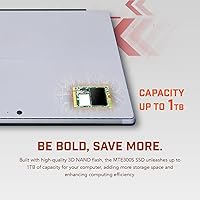
  • Capacity: This drive offers 512 GB of usable flash storage, suitable for a primary OS drive or a large game library expansion.
  • Form Factor: M.2 2230 format, measuring 30mm in length — purpose-built for compact devices where a standard 2280 drive will not physically fit.
  • Interface: PCIe Gen3x4 NVMe, delivering significantly higher throughput than SATA-based M.2 drives in the same physical footprint.
  • Sequential Read: Rated up to 2,000 MB/s sequential read speed under optimal conditions.
  • Sequential Write: Rated up to 1,100 MB/s sequential write speed, with SLC caching supporting burst performance during intensive operations.
  • Random IOPS: 4K random read and write performance reaches up to 220,000 IOPS, benefiting application responsiveness and multitasking.
  • NAND Type: Uses 3D NAND flash memory, which offers improved density, endurance, and power efficiency versus older planar NAND designs.
  • Cache Tech: SLC caching is implemented in firmware to accelerate burst write operations, most noticeably during large game installs or file copies.
  • Error Correction: LDPC (Low-Density Parity-Check) ECC is built into the controller to detect and correct data errors, supporting long-term data integrity.
  • PCB Design: Single-sided component layout ensures physical compatibility with tight chassis that cannot accommodate double-sided M.2 modules.
  • Key Type: M Key edge connector, the standard keying required for NVMe PCIe slots in modern laptops, tablets, and handheld gaming PCs.
  • Dimensions: Physical dimensions are 1.18 x 0.87 x 0.09 inches (approximately 30 x 22 x 2.3 mm), consistent with the M.2 2230 standard.
  • Weight: The drive weighs just 0.32 oz (approximately 9 g), adding negligible mass to any portable device.
  • Software: Compatible with Transcend SSD Scope, a Windows utility for drive health monitoring, S.M.A.R.T. data review, firmware updates, and storage cloning.
  • Compatible Devices: Verified compatible with Steam Deck, ASUS ROG Ally, Microsoft Surface tablets, and slim ultrabooks or laptops with an M.2 2230 slot.
  • Operating System: Full feature support under Windows; basic NVMe drive functionality is also supported under SteamOS (Linux) on compatible handheld devices.
  • Color: The PCB and NAND packaging are black, which is standard for this drive class and has no functional significance.
  • Manufacturer: Made by Transcend Information, a Taiwanese company founded in 1988 with a long history in consumer and industrial flash storage products.

Related Reviews
KingSpec XF-2230 512GB M.2 2230 SSD PCIe 4.0
87%
92%
Performance
89%
Cooling Efficiency
74%
Installation Ease
88%
Value for Money
90%
Build Quality
More
DATO DP330 512GB M.2 2230 NVMe SSD
79%
78%
Read/Write Speed
94%
Form Factor Fit
88%
Installation Ease
83%
Value for Money
53%
Thermal Management
More
Kioxia BG4 512GB M.2 2230 NVMe SSD
87%
91%
Performance Speed
87%
Compatibility with Devices
88%
Build Quality & Durability
85%
Ease of Installation
93%
Size & Form Factor
More
Transcend MTS830S 512GB M.2 SSD
79%
82%
Real-World Speed
88%
Value for Money
79%
Compatibility
91%
Installation Experience
89%
Boot & Load Times
More
Samsung PM9C1A 512GB M.2 2230 NVMe SSD
87%
94%
Performance
92%
Speed
89%
Value for Money
88%
Ease of Installation
90%
Compatibility
More
Transcend MTS430S 512GB M.2 SSD
85%
94%
Form Factor Compatibility
76%
Read & Write Speed
83%
Real-World Responsiveness
91%
Installation Ease
89%
Long-Term Reliability
More
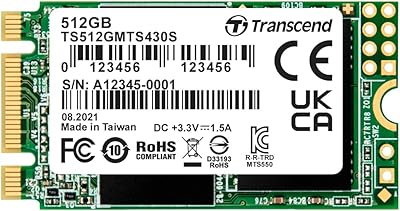
Transcend TS512GMTE220S 512GB M.2 NVMe PCIe Gen3x4 SSD
88%
91%
Performance
95%
Read Speed
88%
Write Speed
72%
Thermal Management
89%
Build Quality
More
Western Digital SN530 512GB 2230 NVMe SSD
81%
96%
Form Factor Compatibility
93%
Installation Ease
71%
Read/Write Performance
78%
Real-World Speed Consistency
88%
Boot & App Load Times
More
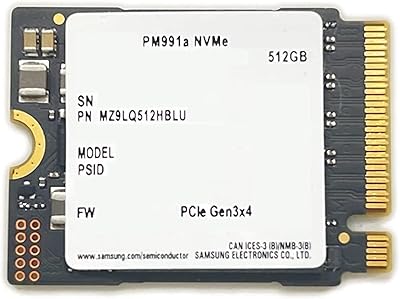
KINGDATA M.2 2230 NVMe PCIe 4.0 512GB SSD
89%
95%
Read Speed
92%
Write Speed
89%
Installation Ease
87%
Durability
86%
Temperature Management
More
Samsung PM991a 512GB M.2 2230 NVMe SSD
84%
88%
Read Performance
79%
Write Performance
96%
Form Factor Fit
93%
Installation Ease
71%
Thermal Management
More

FAQ

Yes, it will. The Steam Deck requires a single-sided M.2 2230 drive, and the MTE300S meets both of those requirements exactly. You will need a small Philips screwdriver to remove the back panel and the original drive, but no modifications to the device itself are necessary.

It is. The ROG Ally also uses an M.2 2230 slot, and the single-sided PCB design of this 2230 NVMe drive ensures a clean fit without clearance issues. Several buyers have confirmed compatibility in real-world use.

In practical gaming terms — loading screens, boot times, and in-game asset streaming — the difference between Gen3 and Gen4 is mostly invisible to the average user. Gen4 drives benchmark faster on paper, but real-world gaming workloads rarely saturate even Gen3 bandwidth. If you are doing heavy video editing or large file transfers frequently, Gen4 starts to matter more, but for handheld gaming use the MTE300S is more than adequate.

Once the SLC cache is exhausted during a sustained write operation, speeds will drop to the native 3D NAND write rate, which is considerably lower than the rated 1,100 MB/s. For typical use — installing games, saving files, moving moderate-sized folders — you will rarely saturate the cache. It only becomes noticeable if you are copying tens of gigabytes in one continuous session.

Transcend includes SSD Scope software with cloning functionality, but you will need to connect the new drive to a Windows PC via an M.2 USB enclosure to run it. On the Steam Deck specifically, most users find it easier to do a clean SteamOS reinstall from a USB drive after swapping, as Valve provides a straightforward recovery image for exactly this purpose.

Yes, Surface devices that use an M.2 2230 slot — including several Surface Pro and Surface Laptop models — are compatible with this drive. Always verify your specific Surface model's slot size before purchasing, as not all Surface devices have user-accessible storage.

The drive itself functions perfectly under SteamOS and Linux — it is standard NVMe hardware and the operating system handles it natively. The SSD Scope management software is Windows-only, but that does not affect the drive's core performance or reliability on Linux-based systems.

It depends on your game selection. Modern AAA titles can run anywhere from 30 GB to over 100 GB each, so 512 GB gives you comfortable room for roughly 8 to 15 large games alongside the OS. For players focused on indie titles or older games, 512 GB goes considerably further. If you expect to maintain a large rotating library, the 1 TB variant of this Transcend upgrade SSD is worth considering.

Transcend typically backs its consumer SSDs with a five-year limited warranty, though terms can vary by region and retailer. It is worth confirming warranty coverage with the seller at the time of purchase, particularly if you are buying through a third-party marketplace listing.

A small number of buyers have raised questions about thermals during extended heavy use, which is worth acknowledging. That said, handheld gaming sessions involve intermittent rather than sustained drive activity, and throttling under those conditions is uncommon. If you are in a high-ambient-temperature environment or plan to run storage-intensive workloads continuously, monitoring temperatures with a tool like CrystalDiskInfo on a Windows system is a reasonable precaution.

Where to Buy