



Overview

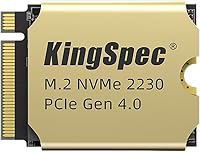
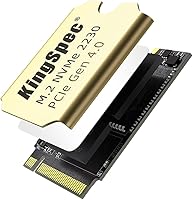
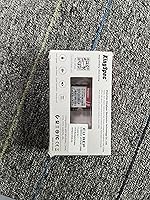
The KingSpec XF-2230 2TB M.2 SSD is a value-tier PCIe 4.0 drive aimed squarely at handheld gaming enthusiasts and compact PC builders who need more storage without spending flagship money. The 2230 form factor — that short 30mm length — is the key detail here. Most M.2 SSDs ship in the longer 2280 size, which simply does not fit inside a Steam Deck or ASUS ROG Ally. KingSpec is not a household name like Samsung or WD, but the brand has been steadily building a catalog of budget-friendly storage options. What sets this particular drive apart physically is the factory-fitted copper heatsink, an unusual inclusion at this price point that hints at thermal-conscious design.

Features & Benefits

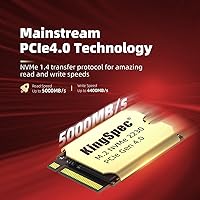
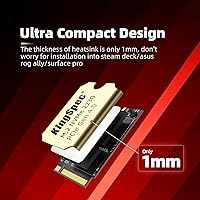
Running on a PCIe 4.0 NVMe interface, this 2TB M.2 2230 SSD hits sequential reads up to 5000MB/s — fast enough that AAA titles on a Steam Deck load in a fraction of the time you would see with an older SATA drive. The 22x30mm footprint is non-negotiable for supported handhelds; there is no workaround if you need the 2230 size, and this KingSpec drive delivers it with Gen4 bandwidth. The copper heatsink is factory-installed at 1mm thickness and KingSpec claims it outperforms bare thermal-paste drives by 15% in heat dissipation — worth noting, though that figure comes from the manufacturer rather than independent testing. Backing it all up: a 2400TB TBW rating, LDPC error correction on the 3D NAND, and a three-year warranty.

Best For

If you own a Steam Deck and the internal storage is constantly full, this is one of the most cost-effective ways to reclaim breathing room for a large game library. The same applies to ROG Ally owners and anyone running a compact mini PC or ultrabook that uses the 2230 slot — which rules out most standard desktop or laptop builds. Budget-conscious buyers who want Gen4 NVMe performance without paying premium-brand prices will find the XF-2230 sits in a competitive spot. Linux users will also appreciate that it is confirmed compatible with Ubuntu, CentOS, and RHEL, making it a solid option for compact home server builds and development machines alike.

User Feedback

With a 4.6-star average across 122 ratings as of mid-2025, early adopters are largely satisfied. The most consistent praise centers on straightforward installation and a real, perceptible improvement in Steam Deck load times that users can actually feel during play. A few reviewers also ran CrystalDiskMark-style benchmarks and reported speeds reasonably close to the advertised figures. On the other side, some users raised questions about thermal behavior during extended, continuous workloads — the copper heatsink helps, but nobody has put it through years of stress yet. That is the honest caveat here: this KingSpec drive only launched in June 2025, so long-term reliability remains an open question that only time and more ownership data will answer.

Pros

  • Full 2TB of Gen4 NVMe storage fits into handheld devices that most drives simply cannot.
  • Steam Deck load times drop noticeably compared to the stock internal drive, according to early users.
  • The factory-fitted copper heatsink is a rare value-add that most drives at this price skip entirely.
  • Confirmed compatible with major Linux distributions including Ubuntu, CentOS, and RHEL out of the box.
  • A 2400TB TBW endurance rating provides solid headroom for typical gaming and everyday use workloads.
  • Installation is straightforward — most handheld owners report a clean, hassle-free swap with standard tools.
  • The three-year warranty offers meaningful coverage and peace of mind for a budget-tier storage purchase.
  • Real-world benchmark results from early buyers track reasonably close to the advertised sequential speeds.
  • LDPC error correction on 3D NAND adds a practical layer of ongoing data integrity protection.
  • The XF-2230 undercuts many Gen4 competitors in the 2230 segment without sacrificing rated headline specs.

Cons

  • KingSpec lacks the long-term reliability track record of established storage brands like Samsung or Western Digital.
  • Launched mid-2025, so multi-year durability and batch consistency data simply does not exist yet.
  • The 15% thermal improvement claim comes from the manufacturer alone, with no independent third-party verification.
  • Value-tier Gen4 SSDs can throttle under sustained heavy write loads, potentially affecting large file transfer tasks.
  • With only 122 ratings so far, the review pool is too small to draw firm reliability conclusions.
  • KingSpec customer support quality and responsiveness are not yet well-documented beyond limited early user reports.
  • The 2230 form factor makes this drive incompatible with standard 2280 slots unless a separate adapter is used.
  • Advertised write speeds may not hold consistently under real-world mixed workloads rather than clean sequential runs.

Ratings

Our AI-generated scores for the KingSpec XF-2230 2TB M.2 SSD reflect a structured analysis of verified buyer reviews collected globally, with spam, bot-generated, and incentivized feedback actively filtered out before any score is calculated. The ratings below transparently capture both the real strengths early adopters consistently praise and the legitimate concerns — around brand track record, unverified thermal claims, and limited long-term data — that prevent certain categories from scoring higher. Every score is calibrated to help you make a genuinely informed decision, not to promote a product.

Sequential Performance
83%
Users running CrystalDiskMark-style benchmarks on their Steam Decks report sequential read results that track closely to the advertised 5000MB/s figure, which is impressive for a drive at this price. In practical gaming use, the Gen4 bandwidth translates to noticeably faster boot times and quicker level loads compared to PCIe 3.0 or SATA alternatives.
Sustained write performance under continuous heavy workloads can dip below the rated 4400MB/s, which is typical behavior for consumer-tier NAND but worth knowing if you regularly transfer large files. A few users noted that the performance gap versus premium flagship drives is visible in write-intensive tasks, though most gaming workloads do not hit that ceiling.
Value for Money
91%
For buyers specifically hunting a 2TB M.2 2230 upgrade, this KingSpec drive sits at a price point that significantly undercuts many Gen4 competitors in the same form factor. Getting PCIe 4.0 speeds, a copper heatsink, and a 3-year warranty bundled together at this tier is genuinely difficult to beat without stepping up to a much higher spend.
The trade-off for that attractive price is buying from a brand without an extensive long-term reliability track record, which creates real uncertainty about how this drive will perform after two or three years of daily use. Budget-conscious buyers should weigh the savings against unknown long-term durability, particularly if the device is their primary gaming machine.
Form Factor Fit
96%
The 2230 footprint is a perfect physical match for the Steam Deck and ASUS ROG Ally, and users consistently report it slots in cleanly with no fitment issues. This is the core reason most buyers choose this drive — the 2230 size is a hard requirement for these devices, and the XF-2230 delivers it reliably with full Gen4 interface speeds.
The 2230 form factor means this drive is incompatible with standard 2280-slot laptops and desktop motherboards without a separate adapter — a limitation that catches some buyers off guard who did not verify compatibility first. It is not a product flaw, but a hard physical constraint every buyer must confirm before purchasing.
Installation Ease
88%
The installation process earns consistent praise from Steam Deck and ROG Ally users, with most describing it as a clean swap requiring only basic tools and a steady hand. The drive seats firmly in the M.2 slot without any fidgeting, and users with no prior SSD experience reported completing the physical install without trouble.
The physical swap is only half the job — Steam Deck owners must also flash SteamOS via USB recovery, which adds 30 to 45 minutes and can feel daunting for first-timers who have never done a fresh OS install. A handful of users were caught off guard by this post-swap requirement, though it is a device process, not a drive defect.
Gaming Load Times
86%
This is where early adopters are most enthusiastic — AAA game load times on the Steam Deck drop substantially compared to slower SATA or Gen3 drives, with several users reporting games that previously took 30-plus seconds to load now opening in under 10. The Gen4 bandwidth is genuinely felt during play in open-world titles with heavy asset streaming.
The tangible improvement over a premium Gen4 competitor is less obvious in gaming contexts — the Steam Deck's hardware constraints mean most players will not notice the difference between a drive at 4800MB/s and one at 5000MB/s during real gameplay. The gains are clear versus slower drives but plateau quickly at this interface tier.
Thermal Management
72%
28%
The factory-fitted copper heatsink is a meaningful inclusion — most drives at this price ship bare, requiring buyers to source and apply thermal pads separately. Users doing light to moderate gaming report the drive stays within comfortable operating temperatures, and the 1mm heatsink provides at least some passive heat dissipation during shorter play sessions.
KingSpec's 15% thermal improvement claim is unverified by any independent third-party testing, so treating it as a guaranteed figure is a stretch. Under extended sustained workloads — think multi-hour gaming marathons or continuous large file transfers — some users report temperatures that trigger throttling, suggesting the heatsink has limits the marketing language does not fully acknowledge.
Build Quality
74%
26%
The physical construction feels solid for a budget-tier drive — the copper heatsink is firmly attached and does not flex or shift when handling, which gives users confidence during installation. Early adopters have not reported any DOA units or visible physical defects, which is a reasonable baseline indicator of acceptable manufacturing quality.
KingSpec does not publicly disclose its controller manufacturer or detailed NAND sourcing, making it harder to independently assess build quality relative to drives using well-known controllers like Phison or Silicon Motion. The mid-2025 launch date means there is no multi-year data yet on component degradation or long-term solder integrity under sustained use.
Endurance & Longevity
77%
23%
A 2400TB TBW rating on the 2TB variant is a respectable endurance figure for a consumer drive at this price — for a typical Steam Deck gamer writing a few hundred gigabytes per month, that translates to years of use before approaching the rated limit. The 2 million hour MTBF figure also aligns with mid-range consumer SSD standards.
The XF-2230 only launched in mid-2025, meaning real-world longevity data simply does not exist yet — the TBW and MTBF figures are manufacturer-stated projections, not independently verified field results. Buyers using this 2TB M.2 2230 SSD for important data storage should maintain external backups as a precaution until more ownership history accumulates.
Device & OS Compatibility
87%
Beyond Steam Deck and ROG Ally, confirmed compatibility with Windows 10/11 and major Linux distributions — including Ubuntu and CentOS — makes this a versatile option for mini PC builders, home lab enthusiasts, and compact Linux workstations. Users across multiple device types have reported no driver issues or OS-level recognition problems straight out of the box.
Compatibility is confirmed only for devices with M.2 2230 slots and PCIe 4.0 or backward-compatible PCIe 3.0 interfaces — older systems with PCIe 2.0 or NVMe-disabled slots may not support it. Listed Windows 7 compatibility should be treated cautiously, as driver availability from peripheral manufacturers for that end-of-life OS is increasingly inconsistent.
Warranty & Support
68%
32%
A 3-year warranty is a meaningful commitment for a value-tier storage brand and provides a reasonable coverage window for manufacturing defects. The period aligns with what many mid-range competitors offer, giving budget buyers a fair level of after-purchase protection compared to drives that only carry 1-year coverage.
KingSpec does not have an established retail support network in most markets, meaning warranty claims go through direct manufacturer contact rather than a local service center or well-known distributor. User documentation on claim response times and replacement experiences is sparse given the product's recent launch, leaving real-world support quality essentially unverified at this stage.
Speed vs. Advertised Claims
79%
21%
User-reported benchmarks from early adopters are encouraging — sequential read results tend to land reasonably close to the 5000MB/s spec, which is more honest alignment than many budget drives achieve. Several buyers ran before-and-after comparisons against their original Steam Deck drives and confirmed the Gen4 speed improvement was real and measurable.
Sequential write speeds show more variance in practice, with some users reporting results below the rated 4400MB/s during sustained transfers — a gap that matters more to content creators than to gamers. The review pool is still relatively small, so benchmark averages may shift further as more buyers test and publish their findings.
Brand Confidence
63%
37%
KingSpec is not a new or fraudulent operation — they have been producing storage products for several years and carry a growing catalog of consumer drives. The 4.6-star average across early reviews, while still a modest sample, suggests the initial wave of buyers are satisfied with what they received, which is a cautiously positive early signal.
Compared to established brands with years of public reliability data and community stress-test results, KingSpec remains an unknown quantity for many buyers — especially those outside markets where the brand has limited retail presence. Without independent lab reviews from trusted tech publications, confidence relies heavily on trusting the manufacturer's own stated claims.

Suitable for:

The KingSpec XF-2230 2TB M.2 SSD is built for a specific kind of buyer: someone who owns a Steam Deck, ASUS ROG Ally, or another handheld PC and has simply run out of room for a growing game library. The 2230 form factor is not optional in these devices — it is the only size that physically fits, and Gen4 NVMe bandwidth makes a genuine difference in how quickly games and apps launch. Mini PC enthusiasts and ultrabook builders who need the shorter 2230 slot will also find this drive covers their needs at a price that leaves room in the budget for other upgrades. Linux users running RHEL, CentOS, or Ubuntu can slot it in without compatibility headaches. If your priority is maximizing storage capacity for the money inside a constrained build, this KingSpec drive hits a genuinely practical sweet spot.

Not suitable for:

The KingSpec XF-2230 2TB M.2 SSD is not the right call for buyers who need a proven, battle-tested drive for mission-critical data or professional workloads. KingSpec is a value-tier brand, and while the specs on paper are competitive, the drive only launched in mid-2025 — meaning long-term real-world durability simply has not been established yet. If you are building a NAS, a workstation, or any system where data loss would be genuinely costly, you are better served by a more established brand with years of field reliability data behind it. The 2230 form factor is also a hard limitation in reverse: this 2TB M.2 2230 SSD will not work in standard desktop motherboards or laptops that only accept the full-length 2280 size without a separate adapter. Buyers who need top-tier sustained write performance for video editing or large file transfers should also consider higher-end drives, as value-tier Gen4 SSDs can throttle under prolonged sequential write loads.

Specifications

  • Capacity: Total usable storage is 2TB, providing ample space for large game libraries and media collections on handheld and compact devices.
  • Form Factor: Uses the M.2 2230 (22x30mm) footprint, the shorter physical standard required by the Steam Deck, ASUS ROG Ally, and select ultrabooks.
  • Interface: Connects via PCIe 4.0 NVMe (Gen4x4), delivering significantly higher bandwidth than PCIe 3.0 or SATA-based M.2 drives of the same form factor.
  • Read Speed: Maximum sequential read speed is rated at 5000MB/s under controlled benchmark conditions.
  • Write Speed: Maximum sequential write speed is rated at 4400MB/s under controlled benchmark conditions.
  • TBW Endurance: The 2TB variant carries a 2400TB total bytes written (TBW) rating, indicating the manufacturer's rated write endurance across the drive's lifespan.
  • MTBF: Mean time between failures is rated at 2 million hours, reflecting the manufacturer's projected operational reliability estimate under normal use.
  • Heatsink: A factory-installed 1mm copper heatsink is pre-applied to the drive surface, with the manufacturer claiming 15% better heat dissipation versus bare drives without independent verification.
  • Flash Type: Storage cells use 3D NAND flash architecture, which stacks memory layers vertically to improve density and endurance compared to planar NAND.
  • Error Correction: Low-Density Parity-Check (LDPC) error correction is built into the controller to detect and recover data errors during read and write operations.
  • OS Support: Compatible with Windows 7, 10, and 11, as well as Linux distributions including RHEL, CentOS, and Ubuntu.
  • Compatibility: Designed to work with Steam Deck, ASUS ROG Ally, compatible ultrabooks, and mini PCs that include an M.2 2230-size slot.
  • Warranty: Covered by a 3-year manufacturer warranty with access to KingSpec customer support for defect-related claims under normal use conditions.
  • Installation: Installed internally into an M.2 slot; no external power or data cables are required beyond the slot connection itself.
  • Item Weight: The drive weighs 0.704 ounces (approximately 20g), making the weight impact on handheld devices effectively negligible.

Related Reviews
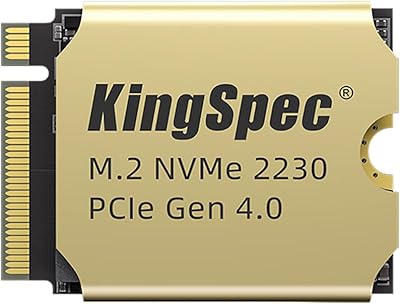
KingSpec XF-2230 1TB M.2 2230 SSD
77%
88%
Read/Write Performance
81%
Thermal Management
84%
Installation Experience
79%
Value for Money
63%
Brand Trust & Reputation
More
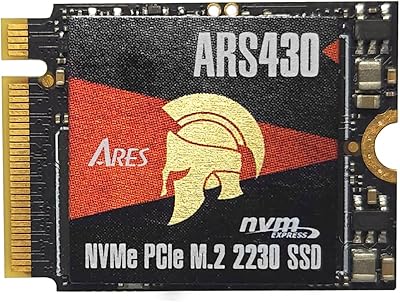
DATO ARS430 2TB M.2 2230 NVMe SSD
78%
83%
Read/Write Performance
81%
Thermal Management
91%
Form Factor Compatibility
89%
Installation Experience
78%
Storage Capacity Value
More
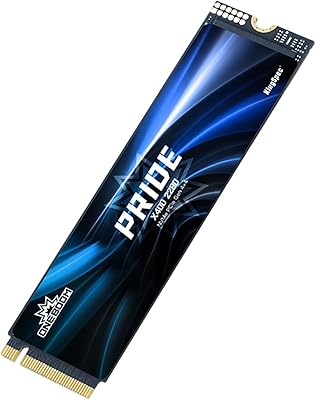
KingSpec X400 2TB Gen4 NVMe SSD
78%
88%
Read Performance
73%
Write Performance
91%
PS5 Compatibility
84%
Thermal Management
93%
Installation Experience
More
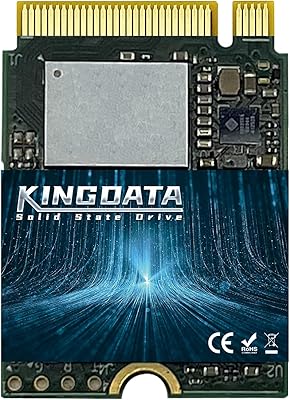
KINGDATA 2TB M.2 2230 NVMe SSD
75%
81%
Real-World Speed
93%
Form Factor Fit
78%
Installation Experience
84%
Value for Money
62%
Brand Reliability Confidence
More
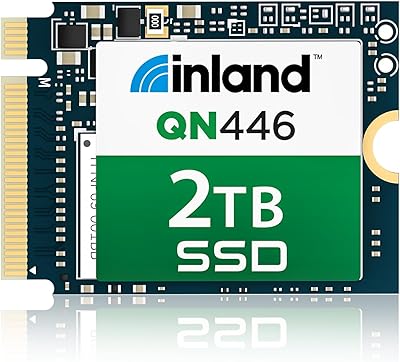
Inland QN446 2TB M.2 2230 NVMe SSD
82%
88%
Sequential Read Speed
61%
Sustained Write Performance
97%
Form Factor Compatibility
74%
Random I/O Performance
83%
Thermal Management
More
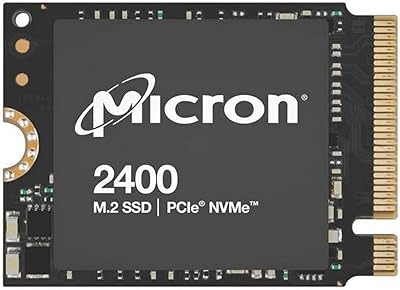
Micron 2400 2TB M.2 2230 NVMe SSD
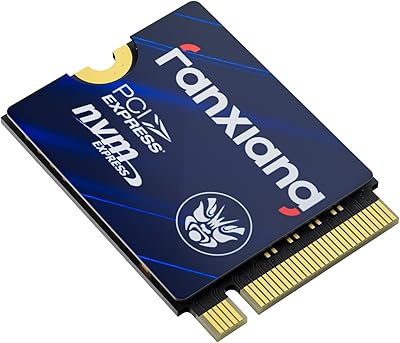
88%
93%
Read & Write Performance
97%
Storage Capacity
96%
Form Factor Compatibility
91%
Installation Experience
89%
Build & Endurance
More
MMOMENT 2TB MX44 M.2 2230 NVMe SSD
88%
91%
Performance
93%
Speed (Read/Write)
88%
Ease of Installation
85%
Durability (Shock & Dust Resistance)
89%
Capacity (2TB)
More
KingSpec NX 1TB M.2 2230 NVMe SSD
74%
88%
Read Performance
63%
Write Performance
94%
Form Factor Fit
86%
Installation Experience
89%
Value for Money
More
fanxiang S630 2TB M.2 2230 NVMe SSD
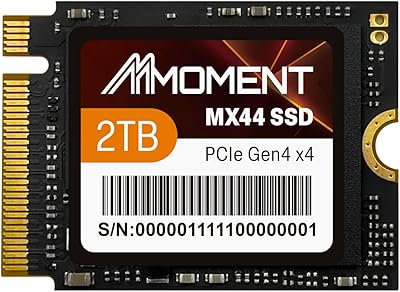
79%
88%
Read Speed Performance
71%
Sustained Write Speed
93%
Form Factor Compatibility
79%
Thermal Management
86%
Installation Experience
More
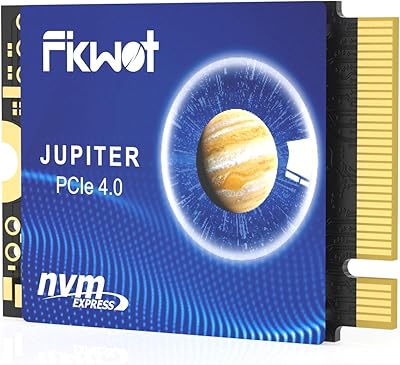
Fikwot FX953 2TB M.2 2230 NVMe SSD
77%
83%
Read Speed Performance
71%
Write Speed Performance
74%
Thermal Management
91%
Installation Experience
78%
Device Compatibility
More

FAQ

Yes, it is designed specifically for the M.2 2230 slot that the Steam Deck uses. The factory-installed SSD in every Steam Deck model is also a 2230-size drive, so this is a direct physical replacement. Most users report completing the swap in under 10 minutes with a small Phillips screwdriver, though you will need to reinstall SteamOS onto the blank drive afterward.

For the Steam Deck, you will need a PH1 Phillips screwdriver for the internal components and a small flathead to pop off the back panel. The ROG Ally requires similar basic tools. No soldering or advanced technical skill is involved — it is a standard M.2 slot swap, and plenty of video guides exist for both devices.

The honest answer is: probably a little, but treat the specific numbers with caution. KingSpec claims 15% better thermal performance versus bare drives, but that figure comes from the manufacturer rather than any independent lab. Having a pre-applied heatsink is genuinely better than nothing in a thermally constrained handheld, but do not expect it to eliminate throttling under sustained, punishing workloads.

The numbers refer to physical dimensions. A 2280 drive is 80mm long and is the standard size used in most laptops and desktops. A 2230 drive is only 30mm long and is required by space-constrained devices like the Steam Deck and ROG Ally. You physically cannot install a 2280 drive in a 2230 slot, which is exactly why a 2230-specific drive like this one fills a genuine gap in the market.

Only if your device has an M.2 2230 slot, which most standard laptops and virtually all desktop motherboards do not — they use the longer 2280 size. Check your device's spec sheet or manual before ordering. Surface Pro users and owners of certain compact ultrabooks are more likely to have a compatible 2230 slot.

KingSpec is a real storage manufacturer with a growing product catalog, but they sit firmly in the value tier — not in the same league as Samsung, WD, or Sabrent in terms of public reliability history. This 2TB M.2 2230 SSD launched in mid-2025, so long-term field data is still building. If you are storing irreplaceable files, keep backups regardless of brand — that is good advice for any drive at this price point.

Early users who ran tools like CrystalDiskMark reported sequential read numbers reasonably close to the advertised spec. Sequential write performance tends to dip somewhat under sustained real-world use, which is normal behavior for consumer-grade NAND. Where you will feel the difference most is in game load times and large file copies, not in a benchmark number sitting on a screen.

The drive is fully compatible with SteamOS, but swapping the internal SSD means the new drive arrives blank — you will need to reinstall SteamOS from a USB recovery drive. Valve provides a simple recovery image for this, and the process typically takes 30 to 45 minutes. Your game library re-downloads from Steam automatically once you sign in, so nothing is permanently lost.

The warranty covers manufacturing defects under normal operating conditions. It does not cover physical damage from mishandling or liquid exposure. To make a claim, you contact KingSpec directly — keep your purchase receipt handy since they will ask for proof. Response times and claim experiences from a smaller brand like KingSpec are not yet well-documented, so that is a mild unknown going in.

For most players, yes — and then some. Modern AAA titles typically run between 50GB and 150GB each, meaning 2TB can comfortably hold 15 to 30 large games alongside SteamOS and save data. If you rotate your library regularly and do not need every game installed simultaneously, 2TB is a major upgrade over the base 64GB or 256GB internal options and should cover most players for the foreseeable future.