Overview

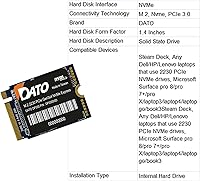
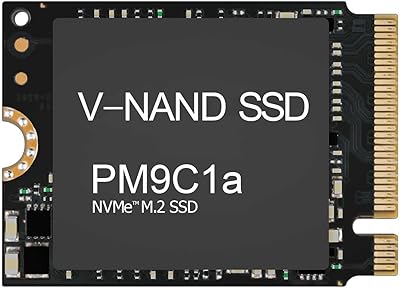
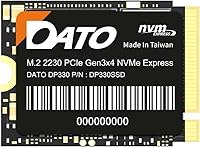
The DATO DP330 512GB M.2 2230 NVMe SSD enters a fairly crowded storage market, but it has one clear advantage: its form factor. Most consumer SSDs ship in the longer 2280 size, which simply does not fit in devices like the Steam Deck or Microsoft Surface. The 2230 designation means this drive is noticeably shorter, and that physical difference is what makes it relevant. DATO is manufactured by DATOTEK, a brand without the name recognition of Samsung or WD, but it backs this compact NVMe drive with a 5-year limited warranty — generous for this price tier. One thing to set straight upfront: this runs on PCIe Gen3, not Gen4, so manage expectations accordingly.
Features & Benefits

Running on a PCIe Gen3x4 NVMe 1.3 interface, the DATO DP330 hits sequential read speeds up to 2500 MB/s and write speeds up to 1700 MB/s — numbers that will feel like a significant jump if you are coming from a SATA drive or an aging HDD. At 1.18 x 0.87 x 0.09 inches and just 0.353 ounces, it is genuinely compact. It is also shock-resistant and draws low power, both practical traits for portable and handheld devices. One limitation worth flagging: there is no heatsink included, so passive cooling is all you get. Push this drive with sustained heavy workloads and you may see thermal throttling over extended sessions.

Best For

This M.2 2230 SSD is purpose-built for a specific kind of buyer. If you own a Steam Deck and want more storage without relying on a microSD card, this compact NVMe drive slots right in as a compatible internal upgrade. The same applies to Surface users hunting for a direct 2230-size replacement. Beyond those use cases, it works well for anyone swapping out a factory drive in a compact laptop or mini PC. Everyday tasks, light gaming, and general productivity are well within its comfort zone. Where it falls short is demanding creative workloads — prolonged sequential writes will stress any Gen3 drive at this capacity, so heavy video editors should look elsewhere.

User Feedback

With a 4.4 out of 5 rating across more than 300 verified buyers, the DATO DP330 earns its marks honestly. The most common thread in positive reviews is straightforward: installation is easy, and the speed improvement over older drives is immediately noticeable. Steam Deck owners in particular report solid compatibility and a clean fit. On the flip side, some buyers note that real-world speeds do not always match advertised peaks, especially under sustained read/write loads where the drive can slow down. Skepticism about the DATO brand name also surfaces occasionally, which is fair. The long warranty helps offset that uncertainty, but it is worth keeping in mind.

Pros

  • The 2230 form factor makes this compact NVMe drive one of the few compatible options for Steam Deck internal upgrades.
  • PCIe Gen3x4 NVMe speeds are a dramatic step up from SATA SSDs and a leap beyond any spinning hard drive.
  • At under half an ounce, it adds virtually no weight to portable or handheld devices.
  • Shock-resistant construction is genuinely useful for devices that get moved, dropped, or carried daily.
  • Low power draw helps preserve battery life in laptops and handheld gaming consoles.
  • The 5-year limited warranty is unusually strong for a budget-tier storage brand.
  • Installation is straightforward — most buyers report a clean, hassle-free experience with no special tools required.
  • Backward compatibility with 2242 and 2280 M.2 slots via adapter adds flexibility beyond 2230-only devices.
  • 512GB hits a practical sweet spot for gaming libraries and everyday file storage without overpaying for capacity.

Cons

  • Real-world sequential speeds under sustained load often fall short of the advertised 2500/1700 MB/s peaks.
  • No heatsink is included, which limits thermal headroom during extended or intensive workloads.
  • DATO is not a widely recognized brand, which makes some buyers uncomfortable despite the warranty.
  • PCIe Gen3 means you are leaving performance on the table if your device supports Gen4.
  • 512GB may feel limiting quickly for users with large game libraries or media collections.
  • Thermal throttling is a real risk during long write-heavy sessions without active cooling.
  • Limited independent benchmark data makes it harder to verify manufacturer speed claims before buying.
  • No adapter included in the box for buyers who want to use it in a standard 2280 slot.

Ratings

The DATO DP330 512GB M.2 2230 NVMe SSD has been evaluated by our AI system after analyzing verified buyer reviews from global markets, with spam, bot activity, and incentivized feedback actively filtered out to ensure the scores reflect genuine ownership experiences. Across categories ranging from raw performance to brand trust, both the strengths and the real frustrations surfaced by everyday users are transparently reflected in the scorecards below.

Read/Write Speed
78%
22%
For Gen3 NVMe, the sequential read performance is genuinely strong — Steam Deck users report faster game load times compared to the factory drive, and booting into a fresh SteamOS install feels snappy. Day-to-day tasks like file transfers and app launches hold up well.
Sustained write speeds under heavy load are where the gap between the spec sheet and reality shows up most clearly. Users running extended file copies or game installs report noticeable slowdowns once the drive's cache fills, a known limitation of Gen3 drives at this capacity tier.
Form Factor Fit
94%
The 2230 form factor is the single most important reason buyers choose this drive, and it delivers exactly what it promises. Steam Deck and Surface users consistently report a perfect physical fit with no modifications required, and the drive seats cleanly into the M.2 slot.
The 2230 length makes this drive a poor choice for anyone with a standard desktop or laptop slot without a physical adapter, which is not included in the box. Buyers who did not verify compatibility beforehand have occasionally ordered the wrong size for their device.
Installation Ease
88%
Most buyers describe installation as refreshingly uncomplicated — slide it into the slot, secure the screw, and you are done. Even first-time SSD upgraders report completing a Steam Deck swap successfully with a basic screwdriver set and a tutorial video.
The drive itself installs easily, but the surrounding process — disassembling a Steam Deck or Surface, reinstalling the OS, and restoring a backup — trips up less experienced users. The drive does not come with any installation guide or software, which would have helped new builders.
Value for Money
83%
For a 2230-specific drive with NVMe speeds and a 5-year warranty, the pricing sits in a competitive range where few alternatives offer comparable terms. Budget-conscious buyers upgrading from SATA or HDD setups consistently describe feeling like they got solid performance per dollar.
A handful of reviewers note that Gen4 2230 options have become available at only a modest price premium, making the Gen3 value argument slightly less clear-cut than it was at launch. Buyers who plan to hold the drive for the full warranty period may wish they had stretched the budget.
Thermal Management
53%
47%
For light gaming sessions, everyday browsing, and general productivity, passive cooling handles the drive's heat output without any obvious throttling or system instability. In handheld devices with limited internal airflow, it tends to behave reasonably under moderate workloads.
The absence of a heatsink is a meaningful limitation for anyone pushing the drive hard. Extended gaming sessions or large sequential write tasks can cause the drive to throttle noticeably, and there is no included thermal pad or pad slot to easily remedy this without sourcing aftermarket solutions.
Build & Durability
76%
24%
The shock-resistant construction is a practical benefit for portable devices that get carried in bags or suffer the occasional knock. Users who have been running the DATO DP330 in Steam Decks for extended periods report no reliability issues under normal use conditions.
As a lesser-known brand, there is limited long-term durability data compared to established players like Samsung or SK Hynix. Early failure anecdotes are rare but exist, and the drive has not yet accumulated the multi-year track record that would make reliability claims truly verifiable.
Warranty Coverage
86%
A 5-year limited warranty from a budget-tier storage brand is a meaningful differentiator and one of the most frequently cited reasons buyers felt comfortable choosing DATO over cheaper alternatives. It signals at least some confidence in the product's longevity from the manufacturer's side.
DATOTEK is not a large consumer brand, which raises reasonable questions about how warranty claims are handled in practice and whether the company will be as accessible in year four or five as it is today. There is limited public documentation of real warranty claim experiences from buyers.
Brand Credibility
61%
39%
The 4.4 out of 5 rating across more than 300 verified buyers provides genuine social proof that the drive works as described for the majority of purchasers. Buyers who research DATOTEK find a manufacturer that has been operating in the storage space with a focused product line.
DATO simply does not carry the name recognition of Samsung, WD, or even Sabrent in the 2230 market, and that uncertainty is a real psychological hurdle for some buyers. Without widespread independent benchmark reviews, it is harder to fully validate the brand's performance claims against real test data.
Device Compatibility
81%
19%
Beyond the Steam Deck and Surface sweet spot, the drive is confirmed to work in a range of compact laptops and mini PCs that use the 2230 slot. The ability to use it in 2242 and 2280 slots via adapter also gives it flexibility that strictly 2230-only drives lack.
Compatibility verification falls entirely on the buyer — DATO does not ship a compatibility guide, and the product listing, while helpful, does not enumerate every supported device. A small number of reviewers have reported unexpected incompatibilities with certain laptop models that nominally support M.2 NVMe.
Power Efficiency
82%
18%
Running at 3.15V with a low overall power profile, this compact NVMe drive is well-suited to battery-dependent devices. Steam Deck users in particular note that the drive does not appear to meaningfully impact battery life compared to the factory-installed option.
Power efficiency data is largely self-reported by buyers rather than backed by independent measurements, making exact comparisons against competing drives difficult. Under sustained workloads, power draw increases, which can offset some of the efficiency advantage in real-world usage.
Noise & Vibration
91%
As a solid state drive with no moving parts, this M.2 2230 SSD operates in complete silence under all workloads, which is an obvious but genuinely appreciated trait for handheld gaming and quiet work environments. Zero vibration also means no interference with gyroscopic sensors in devices like the Steam Deck.
There is nothing meaningful to criticize here for an SSD — silence is a given, not a differentiator. This category is included for completeness, as buyers comparing to older mechanical drives will notice the difference immediately, but there is no real downside to report.
Packaging & Unboxing
63%
37%
The drive arrives in simple, protective packaging that gets the job done. It is secure enough to prevent damage in transit, and the no-frills approach is consistent with the value-focused positioning of the product overall.
There is no installation guide, no adapter, no screwdriver, and no data migration software included. For buyers who are first-time upgraders, that bare-bones experience can feel like a gap, especially compared to competitors who bundle at least a basic toolkit or QR code to setup documentation.
Sequential Read Performance
79%
21%
The up-to-2500 MB/s sequential read rating translates into fast OS boot times, quick game level loads, and responsive app launches in everyday use. For a Steam Deck internal upgrade, the read performance is where users feel the most immediate, tangible improvement.
The gap between peak and sustained sequential read speeds becomes visible when transferring large files or loading heavily asset-rich games back to back. Gen3 ceiling limitations mean this drive will never compete with Gen4 alternatives that have become increasingly affordable.
Weight & Portability
93%
At just 0.353 ounces, the physical drive contributes essentially nothing to device weight, which matters in handheld and ultraportable contexts where every gram is considered. For the Steam Deck specifically, the swap adds zero noticeable heft compared to the factory drive.
Weight is effectively a non-issue for this product category, and there is very little to critique. The only marginal note is that the small physical size makes the drive easy to misplace on a workbench during installation, which a few buyers have mentioned as a minor nuisance.

Suitable for:

The DATO DP330 512GB M.2 2230 NVMe SSD was built with a very specific hardware reality in mind: some devices simply cannot accept a standard-length 2280 drive, and buyers in that situation have far fewer options to choose from. Steam Deck owners are the most obvious fit — the 2230 form factor drops right in, and 512GB gives you meaningful room for a library of games without relying on slower microSD expansion. Microsoft Surface users looking to replace or upgrade their internal storage will find this compact NVMe drive equally well matched. Beyond those flagship use cases, it also serves DIY upgraders who are swapping out undersized factory drives in compact laptops, mini PCs, or other small form factor machines. Budget-conscious buyers who want a genuine NVMe speed upgrade from an older SATA or HDD setup — without spending extra for Gen4 headroom they will not fully use — will find the value proposition here reasonable and the 5-year warranty a welcome safety net.

Not suitable for:

The DATO DP330 512GB M.2 2230 NVMe SSD is not the right call for buyers who need sustained, heavy-duty write performance. This is a PCIe Gen3 drive, and like most drives in this class and capacity range, it can throttle when pushed hard over extended periods — something that matters a lot to video editors, content creators working with large raw files, or anyone running intensive server-style workloads. There is also no heatsink in the box, so thermal management under load is entirely passive, which compounds the issue for demanding tasks. If you are building or upgrading a desktop workstation where a full-size 2280 slot is available and performance headroom is the priority, there are Gen4 options at comparable prices worth considering instead. Finally, buyers who are brand-loyal or uncomfortable with lesser-known manufacturers may find the DATO name harder to trust, even with the warranty backing it up.

Specifications

  • Brand: Manufactured by DATOTEK under the DATO brand name.
  • Model: This drive belongs to the DATO DP330 series of M.2 NVMe solid state drives.
  • Capacity: Offers 512GB of usable flash storage for games, applications, and files.
  • Form Factor: Uses the M.2 2230 format, measuring 1.18 x 0.87 x 0.09 inches — significantly shorter than a standard 2280 drive.
  • Interface: Connects via PCIe Gen3x4 using the NVMe 1.3 protocol for high-throughput data transfer.
  • Read Speed: Rated for sequential read speeds of up to 2500 MB/s under optimal conditions.
  • Write Speed: Rated for sequential write speeds of up to 1700 MB/s under optimal conditions.
  • Weight: Weighs just 0.353 ounces, making it negligible in terms of device weight impact.
  • Voltage: Operates at 3.15V, which falls within the standard low-voltage range for NVMe M.2 drives.
  • Heatsink: No heatsink is included; the drive relies entirely on passive cooling during operation.
  • Shock Resistance: Built with shock-resistant internals suitable for portable, handheld, and mobile device installations.
  • Power Draw: Designed for low power consumption, helping preserve battery life in laptops and gaming handhelds.
  • Compatible Devices: Officially compatible with desktops, laptops, gaming consoles, and tablets that support M.2 2230 slots.
  • Slot Compatibility: Can also be used in M.2 2242 and 2280 slots with an appropriate adapter (not included).
  • Installation Type: Designed for internal installation and is not intended or supported as an external drive.
  • Warranty: Backed by a 5-year limited warranty from DATOTEK, covering manufacturing defects.
  • Release Date: First made available for purchase in October 2023.

Related Reviews
Kioxia BG4 512GB M.2 2230 NVMe SSD
87%
91%
Performance Speed
87%
Compatibility with Devices
88%
Build Quality & Durability
85%
Ease of Installation
93%
Size & Form Factor
More
DATO DP800 Pro 512GB M.2 NVMe SSD
90%
94%
Performance
95%
Speed/Read-Write Performance
87%
Installation Ease
90%
Power Efficiency
88%
Durability (Shock Resistance)
More
DATO DP700Pro 512GB M.2 NVMe SSD
77%
83%
Read/Write Performance
91%
Value for Money
94%
Installation Ease
61%
Thermal Management
67%
Brand Trust & Reliability
More
Samsung PM9C1A 512GB M.2 2230 NVMe SSD
87%
94%
Performance
92%
Speed
89%
Value for Money
88%
Ease of Installation
90%
Compatibility
More
Western Digital SN530 512GB 2230 NVMe SSD
81%
96%
Form Factor Compatibility
93%
Installation Ease
71%
Read/Write Performance
78%
Real-World Speed Consistency
88%
Boot & App Load Times
More
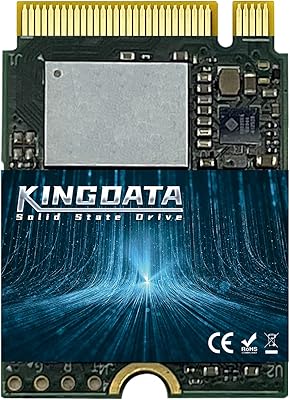
KINGDATA M.2 2230 NVMe PCIe 4.0 512GB SSD
89%
95%
Read Speed
92%
Write Speed
89%
Installation Ease
87%
Durability
86%
Temperature Management
More
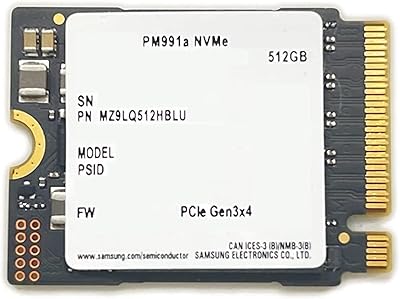
Samsung PM991a 512GB M.2 2230 NVMe SSD
84%
88%
Read Performance
79%
Write Performance
96%
Form Factor Fit
93%
Installation Ease
71%
Thermal Management
More
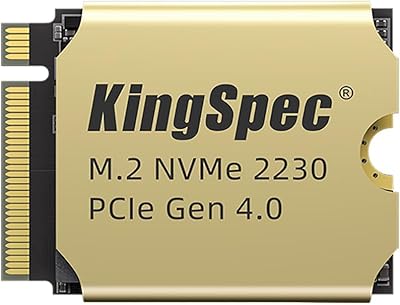
KingSpec XF-2230 512GB M.2 2230 SSD PCIe 4.0
87%
92%
Performance
89%
Cooling Efficiency
74%
Installation Ease
88%
Value for Money
90%
Build Quality
More
DATO ARS430 2TB M.2 2230 SSD
86%
94%
Performance
92%
Value for Money
88%
Thermal Management
70%
Ease of Installation
82%
Compatibility with Steam Deck
More
KINGDATA M.2 2230 2TB NVMe SSD
88%
91%
Performance
93%
Read Speed
89%
Write Speed
85%
Durability
88%
Temperature Management
More

FAQ

Yes, the Steam Deck uses an M.2 2230 slot, and this compact NVMe drive is designed for exactly that form factor. Multiple buyers have confirmed a clean fit and successful installation. Just be sure to back up your data and reinstall SteamOS afterward, as replacing the internal drive will wipe the existing system.

Most Microsoft Surface models that use an M.2 SSD require the 2230 form factor, so this drive is a natural fit for those devices. That said, Surface models vary, so it is worth confirming your specific model uses a 2230 slot before purchasing. DATOTEK also offers compatibility consultation if you are unsure.

You can, but you will need a 2230-to-2280 adapter bracket since the drive is physically shorter than a standard slot expects. Many M.2 motherboard slots have mounting holes at multiple positions, so some boards may support it natively. Check your motherboard or laptop manual to confirm the available standoff positions.

The advertised 2500/1700 MB/s figures are sequential peak speeds under ideal conditions. In everyday use — loading games, transferring files, booting an OS — you will see strong performance that noticeably outpaces any SATA drive. Under sustained heavy writes, however, speeds can drop as the drive heats up and the cache fills, which is typical behavior for Gen3 drives at this capacity.

No, neither a heatsink nor a thermal pad is included in the box. For most use cases like gaming, web browsing, and general file transfers, passive cooling is sufficient. If you plan to run sustained, write-heavy workloads for extended periods, you may want to factor that in or source a small thermal solution separately.

PCIe Gen4 drives can offer roughly double the peak sequential speeds of Gen3, but in real-world gaming and everyday productivity tasks, the practical difference is often hard to notice. For Steam Deck or Surface upgrades, Gen3 speeds are more than adequate. If you are building a high-end workstation or doing sustained large file transfers, Gen4 may be worth the extra cost.

DATO, made by DATOTEK, is not as established as brands like Samsung or Western Digital, and that is a fair concern. What does work in their favor is the 5-year limited warranty on the DP330 series — that is a meaningful commitment from a smaller manufacturer. The drive also holds a 4.4 out of 5 rating across over 300 verified buyers, which suggests the quality holds up in practice for most users.

For most users, installation is straightforward. You will need a small Phillips-head screwdriver, and for devices like the Steam Deck, a Torx T8 screwdriver is also required to open the back panel. The drive itself just slides into the M.2 slot and seats with a single screw. Most buyers describe the process as easy, even without prior SSD installation experience.

DATOTEK offers a 5-year limited warranty on this SSD series, which covers manufacturing defects. You would need to contact DATOTEK directly through their official channels to initiate a claim. Keep your proof of purchase handy, as that is typically required for any warranty process. The warranty does not cover physical damage or data recovery.

It depends on the size and number of games you want to keep installed at once. Modern AAA titles can run anywhere from 30GB to over 100GB each, so 512GB gives you room for a solid rotating library. Many Steam Deck owners pair internal storage with a high-speed microSD card for less frequently played titles, which is still a viable and cost-effective strategy alongside this upgrade.

Where to Buy