Overview

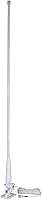
The Tram 1607-HC VHF Marine Fiberglass Antenna is a solid mid-range option aimed at recreational boaters and small vessel operators who want dependable VHF communication without diving into professional-grade complexity. It comes pretuned from the factory, so there is no SWR meter required and no calibration headaches before you hit the water. The 46-inch fiberglass body paired with stainless steel hardware signals genuine build quality for an antenna in this price tier. It has earned a 4.4-star average from over 1,400 buyers on Amazon, ranking #19 in Marine Antennas. One honest caveat worth noting upfront: Tram-Browning has discontinued this model, which could matter if you ever need warranty support or replacement parts down the road.
Features & Benefits

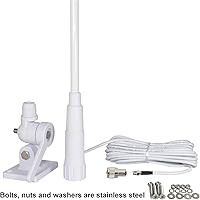
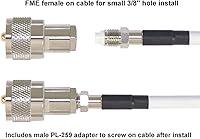
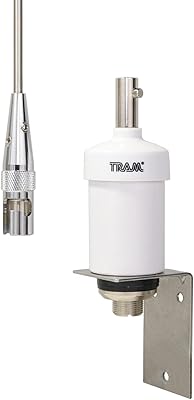
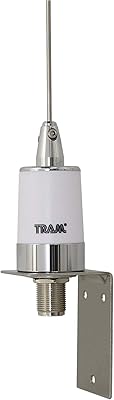
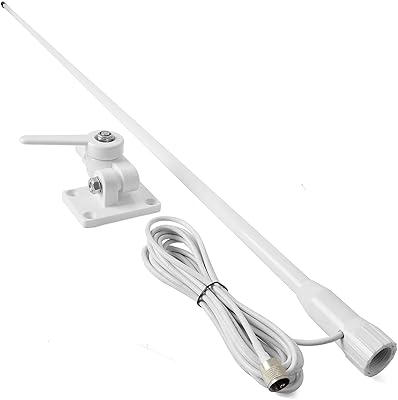
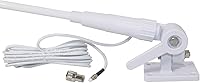
The 3 dBd gain is worth understanding in practical terms: it is a modest but real improvement over a standard unity-gain antenna, translating to slightly stronger signal transmission and reception — especially useful when you are a few miles offshore or communicating across a busy harbor. The nylon ratchet mount is genuinely convenient for anyone who trailers their boat or regularly passes under low bridges. The package includes a 20-foot RG58 cable with an FME-female connector and a screw-off PL-259 adapter, which makes routing through tight spaces far less of a headache. Fiberglass resists corrosion and UV breakdown, and the 50-ohm impedance is a direct match for virtually every standard marine VHF radio on the market.

Best For

This marine VHF antenna hits a sweet spot for recreational boaters who want a reliable, no-fuss upgrade without overthinking the specs. It is particularly well-suited to anglers, weekend sailors, and anyone who trailers their rig regularly — the lay-down ratchet mount makes stowing genuinely painless. Center consoles and smaller powerboats are natural fits given the proportional 46-inch height. If you are replacing a dead antenna and just need something that works out of the box with your existing VHF radio, this fiberglass boat antenna covers that scenario well. It is less ideal for serious offshore cruisers or commercial operators who may want higher gain or a currently manufactured, warrantied model from an active brand.

User Feedback

Across a broad base of reviews, buyers consistently highlight easy installation and a noticeable improvement in signal clarity as the top strengths. Many users found it worked immediately with their existing Garmin, Standard Horizon, or Uniden radios without any fiddling. On the critical side, a portion of reviewers felt the included cable was thinner than expected, and a few reported connector fit issues at the PL-259 junction. Long-term saltwater performance earns mostly positive marks, though isolated reports mention oxidation around the base after a couple of seasons. The discontinued status draws occasional concern, particularly from buyers wondering about warranty coverage — a fair consideration worth factoring into your decision before purchasing.

Pros

  • Arrives pretuned — no SWR meter or calibration required before installation
  • The ratchet mount makes trailering and low-bridge navigation genuinely stress-free
  • Compatible out of the box with standard 50-ohm marine VHF radios from most major brands
  • Fiberglass construction holds up well against UV exposure and general marine conditions
  • Stainless steel hardware at the mount points adds durability where it counts most
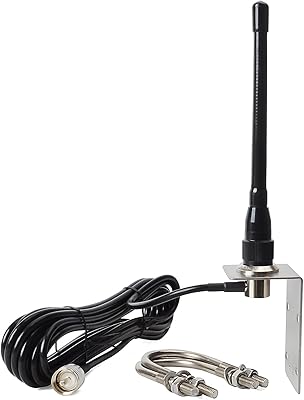
  • Includes everything needed to connect: 20-foot RG58 cable, FME-female connector, and PL-259 adapter
  • 4.4-star average across 1,400-plus real buyer reviews is a credible signal of consistent satisfaction
  • At 1.9 pounds and 46 inches, it fits proportionally on smaller powerboats and center consoles
  • The 3 dBd gain provides a tangible improvement over factory or entry-level unity-gain antennas
  • Strong user reports of improved signal clarity in harbors and nearshore coastal zones

Cons

  • Discontinued by the manufacturer, meaning warranty claims and parts sourcing are uncertain going forward
  • Some buyers report the included coax cable feels thinner and less robust than expected
  • Connector fit at the PL-259 junction has caused issues for a subset of users, requiring re-seating or tape
  • A 20-foot cable run may fall short for larger vessels or complex routing situations
  • Isolated long-term reviews note oxidation around the antenna base after extended saltwater seasons
  • Not a practical choice for offshore or blue-water use where higher gain and full manufacturer support matter
  • No option for a factory replacement or warranty repair given the discontinued product status
  • Ratchet mount performance under sustained high winds or rough water conditions gets mixed feedback from users

Ratings

The scores below reflect an AI-driven analysis of verified buyer reviews for the Tram 1607-HC VHF Marine Fiberglass Antenna, drawn from thousands of real-world submissions across global marketplaces, with spam, incentivized, and bot-generated feedback actively filtered out. Each category is scored to reflect what genuine users consistently praised or struggled with — nothing is softened to protect the product's reputation. Strengths and shortcomings are weighted equally so you can make a fully informed call before buying.

Ease of Installation
91%
The pretuned design means most boaters have this antenna up and running in under an hour without any special tools or radio knowledge. Users consistently praised the screw-off FME connector for making cable routing through tight spaces far less frustrating than competing designs.
A small number of buyers found the adapter connection at the PL-259 junction required extra tightening or sealing tape to sit flush, which added an unexpected step to an otherwise clean installation process.
Signal Performance
83%
For nearshore cruising, inland lake use, and harbor communication, most buyers reported a clear and noticeable improvement over their previous or stock antennas. The 3 dBd gain translates to more stable audio and fewer dropped transmissions during routine Channel 16 monitoring.
Buyers expecting extended offshore range were occasionally disappointed — the gain advantage narrows considerably at distance, and a handful of users in open-water environments felt the performance did not justify upgrading from a higher-gain alternative.
Build Quality
78%
22%
The fiberglass element feels solid and the stainless steel mounting hardware resists early corrosion well, which gave most users confidence that this antenna could handle a typical recreational boating season without babying. The overall construction felt appropriately robust for the price tier.
The included coax cable drew repeated criticism for feeling thin and somewhat cheap relative to the antenna body itself, and a subset of long-term users noted the nylon ratchet mount showed wear faster than expected under consistent UV and vibration exposure.
Durability in Saltwater
72%
28%
The fiberglass radiator holds up well in moderately demanding saltwater conditions, and the majority of buyers who rinse their hardware after each outing report no significant degradation after one or two full seasons on the water.
Users who skip routine rinsing or leave the antenna fully exposed in harsh coastal environments have reported oxidation forming around the base and connector area within a couple of seasons, suggesting this antenna rewards basic maintenance rather than a truly set-and-forget approach.
Ratchet Mount Reliability
74%
26%
For calm to moderate conditions, the nylon ratchet mount functions exactly as intended — laying the antenna down for trailering or low-bridge clearance is quick and requires no tools, which is genuinely useful for weekend boaters who move their vessels frequently.
At higher speeds or in sustained wind and chop, some users found the mount less confidence-inspiring, noting that the antenna wobbled more than expected. Periodic tension checks and a secure base installation help, but the mount is not engineered for aggressive offshore use.
Cable Quality
58%
42%
The 20-foot RG58 cable is adequate for most small vessel installations and covers enough distance to handle typical helm-to-gunwale routing on center consoles and smaller powerboats without needing an extension right out of the box.
The cable is widely considered the weakest component in the package — multiple reviewers described it as feeling flimsy, and some experienced signal loss or connector issues they traced back to cable quality rather than the antenna element itself. Upgrading to a better coax is a common user recommendation.
Connector Compatibility
81%
19%
The included FME-to-PL-259 adapter covers the vast majority of consumer marine VHF radios from brands like Garmin, Standard Horizon, Icom, and Uniden, making this a genuinely plug-and-play upgrade for most boat owners without a trip to a marine electronics shop.
A small portion of users ran into fitment looseness at the adapter junction, and because the antenna is discontinued, sourcing an official replacement adapter requires going through third-party channels, which adds minor inconvenience if the original part is lost or damaged.
Value for Money
86%
Given the complete package — antenna, cable, mount hardware, and adapters — most buyers felt the pricing was fair for what they received, especially compared to purchasing each component separately. The 4.4-star average across well over a thousand reviews supports the perception of solid overall value.
The discontinued status slightly undermines the long-term value equation, since buyers cannot rely on warranty coverage or official replacement parts if something fails outside the return window. For the same outlay, a currently manufactured alternative may offer better peace of mind.
Manufacturer Support
39%
61%
At the time of its active production run, Tram-Browning offered a one-year limited warranty, and buyers who purchased during that period reported reasonable responsiveness for a brand in this segment.
With the product now officially discontinued, manufacturer support is effectively nonexistent for new buyers. There is no warranty path, no replacement parts program, and no route back to the original maker if something fails — a genuine and underappreciated risk that several recent reviewers flagged explicitly.
Mounting Versatility
76%
24%
The ratchet mount base accommodates standard rail and flat-surface mounting configurations found on most small powerboats and center consoles, and the lay-down capability genuinely expands where this antenna can be practically used compared to a fixed-position mount.
The mount design is less adaptable for sailboats or vessels with non-standard superstructure layouts, and users who needed a more adjustable or specialized mounting solution found themselves sourcing a third-party base separately.
Weight and Proportions
88%
At 1.9 pounds and 46 inches tall, this fiberglass boat antenna sits comfortably on smaller hulls without creating noticeable topside imbalance or looking visually oversized, which matters more than people expect on compact center consoles and fishing boats.
For larger vessels where a taller, heavier antenna would actually be more effective, the relatively modest dimensions mean this antenna is somewhat undersized — not a flaw in itself, but worth factoring in if your boat has room for a more capable option.
Frequency Coverage
93%
The antenna covers the full marine VHF band without gaps, meaning Channel 16 emergency monitoring, working channels, and NOAA weather broadcasts all come through clearly without any frequency-specific tuning or adjustment required.
There is no support for AIS or other non-VHF marine communication bands, which is expected at this product tier but worth noting for buyers who assumed broader coverage based on the general-purpose packaging language.
Packaging and Included Accessories
77%
23%
Everything needed for a basic installation arrives together — antenna, cable, mount, and both connector types — which means most buyers can complete the install in a single session without a hardware store run, a convenience that newer boaters especially appreciated.
The packaging itself was reported as minimal by some buyers, with a few receiving units where the cable had minor kinking from compressed storage. While this did not affect function in most cases, it added a small note of concern about component care during shipping.

Suitable for:

The Tram 1607-HC VHF Marine Fiberglass Antenna is purpose-built for recreational boaters who want a reliable, ready-to-use VHF upgrade without the complexity of professional-grade installation. It is an especially strong fit for anglers, weekend sailors, and powerboat owners who trailer their vessels regularly, since the nylon ratchet mount makes laying the antenna down for transport quick and painless. Boaters operating on inland lakes, coastal bays, or nearshore waters will find the 3 dBd gain more than adequate for day-to-day channel monitoring and marina communication. If you are replacing a worn-out or damaged antenna and simply need something that plugs in and works with your existing VHF radio, this fiberglass boat antenna handles that scenario without demanding extra tools or expertise. The included cable and adapters also make it a genuinely complete package for smaller center consoles and similar vessels where keeping things simple matters.
Not suitable for:

The Tram 1607-HC VHF Marine Fiberglass Antenna carries a meaningful limitation that serious buyers should weigh carefully: Tram-Browning has discontinued this model, which means no manufacturer support, no future warranty service, and no guarantee of replacement parts if something fails down the line. Offshore cruisers, blue-water sailors, or anyone running extended passages where communication reliability is a safety-critical concern would be better served by a currently manufactured antenna from an actively supported product line. The 3 dBd gain, while useful for coastal and inland use, falls short of what higher-gain antennas offer when you need to reach a marina or Coast Guard station from a meaningful distance offshore. Buyers who plan to mount this in a heavily exposed, full-time saltwater environment and expect several seasons of worry-free performance should also note that some users have reported oxidation and connector issues over time. And if you need a longer cable run than 20 feet, you will need to source an upgrade separately, as extending coax runs with lower-quality connectors can introduce signal loss.
Specifications

  • Antenna Gain: This marine VHF antenna delivers 3 dBd of gain, providing a measurable improvement in signal strength over standard unity-gain antennas.
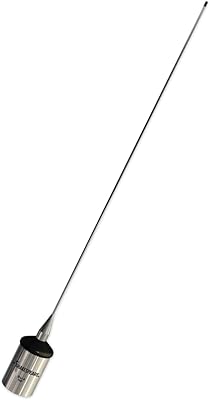
  • Height: The antenna stands 46 inches tall, a proportional fit for smaller powerboats, center consoles, and trailerable vessels.
  • Construction: The radiating element is built from fiberglass, which resists UV degradation and corrosion in both freshwater and saltwater marine environments.
  • Hardware Material: Mounting hardware is stainless steel, chosen for its resistance to rust and structural reliability under repeated exposure to moisture and salt air.
  • Mount Type: A nylon ratchet mount is included, allowing the antenna to be laid down flat for trailering, low-bridge clearance, or compact storage.
  • Cable Length: A 20-foot RG58 coaxial cable is included in the package, suitable for routing through most small to mid-size vessel installations.
  • Connector Type: The antenna ships with an FME-female connector and a screw-off FME-male to PL-259 adapter, compatible with standard marine VHF radio inputs.
  • Impedance: The antenna is rated at 50 ohms, matching the input impedance of virtually all consumer and commercial marine VHF radios without requiring additional tuning components.
  • Frequency Coverage: Designed to cover all marine VHF band frequencies, making it compatible with Channel 16 (distress), working channels, and weather broadcasts.
  • Maximum Range: Manufacturer-rated maximum range is up to approximately 25 miles (132,000 feet) under ideal line-of-sight conditions.
  • Weight: The complete antenna assembly weighs 1.9 pounds, keeping topside weight minimal on smaller hulls.
  • Dimensions: Packaged dimensions measure 46.75″ x 5.25″ x 2.7″, reflecting the full length and compact footprint of the antenna body.
  • Color: The antenna is finished in white, a standard color for marine antennas that blends with most vessel superstructures and hardware.
  • Channels: Operates across a single wideband channel configuration, covering the full marine VHF frequency spectrum rather than discrete individual channels.
  • Warranty: Tram-Browning provided a 1-year limited warranty at time of sale, though the product has since been discontinued by the manufacturer.
  • Manufacturer Status: This product has been officially discontinued by Tram-Browning, meaning it is no longer in active production and manufacturer support is limited.
  • Brand: Manufactured by Tram-Browning, a US-based antenna brand with a history of producing marine, CB, and amateur radio antennas.
  • Model Number: The official model number is 1607-HC, used to identify this specific variant within the Tram marine antenna lineup.

Related Reviews

Tram 1600-HC 35-Inch VHF Marine Antenna
84%
88%
Signal Performance
91%
Build Quality
86%
Ease of Installation
93%
Corrosion Resistance
84%
Value for Money
More
Tram 1602 VHF Marine Antenna
82%
91%
Build Quality
78%
Signal Performance
93%
Ease of Installation
94%
Quick-Disconnect Usability
62%
Cable Length & Quality
More
Tram 1604 VHF/AIS Marine Antenna
82%
86%
Build Quality
79%
Signal Performance
77%
AIS Reception
91%
Ease of Installation
84%
Corrosion Resistance
More
HYS VHF Marine Antenna
77%
74%
Signal Performance
91%
Ease of Installation
78%
Build Quality
72%
Cable Quality
63%
Connector Fit
More
Shakespeare 5241-R 3-Foot VHF Marine Antenna
82%
88%
Ease of Installation
83%
Build Quality
71%
Signal Performance
86%
Corrosion Resistance
74%
Value for Money
More
UAYESOK VHF Marine Base Antenna 48 Inch
87%
87%
Performance at Sea
92%
Durability in Harsh Conditions
91%
Installation Ease
89%
Signal Range and Clarity
85%
Compatibility with Marine Radios
More
Tram 1480 Dual-Band Fiberglass Base Antenna
76%
88%
Signal Performance
83%
Build Quality
86%
Weather Resistance
91%
Ease of Installation
89%
Connector Compatibility
More
Uniden UM435BK Fixed Mount VHF Marine Radio
80%
93%
Waterproofing & Weather Resistance
88%
Audio Clarity & Reception
84%
Ease of Installation
91%
Channel Coverage & Compatibility
82%
Value for Money
More
Uniden UM725G Marine VHF Radio
79%
93%
Display Clarity
91%
Built-in GPS
88%
DSC Functionality
86%
Audio Quality
84%
Ease of Installation
More
Uniden MHS75 VHF Marine Radio
89%
94%
Waterproof Performance
85%
Range & Signal Strength
88%
Battery Life
90%
Ease of Use
91%
Build Quality
More

FAQ

No, and that is one of the more practical aspects of this antenna. It comes pretuned from the factory to cover all marine VHF frequencies, so you can install it and start using it without needing an SWR meter or any additional calibration steps.

Almost certainly yes. The antenna is rated at 50-ohm impedance, which is the standard for virtually all consumer marine VHF radios, including popular brands like Garmin, Standard Horizon, Uniden, and Icom. The included PL-259 adapter handles the connector compatibility for most installs.

Discontinued models can still be purchased through third-party sellers and marketplace listings while stock lasts. The Tram 1607-HC VHF Marine Fiberglass Antenna performs the same as it did when it was in active production, so the antenna itself is not the concern. The real consideration is that if something fails — whether the mount, the connector, or the element — you will not be able to go through the manufacturer for warranty support or official replacement parts.
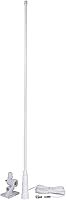
Most boaters handle this themselves without any special skills. You mount the ratchet base to a rail or flat surface, run the coax cable to your VHF radio, and connect using the included adapter. Routing the cable through tighter spaces is where some patience helps, but the screw-off FME connector is specifically designed to pass through small holes more easily.

For most small powerboats and center consoles, 20 feet is sufficient to run from a gunwale or hardtop mount down to a helm-mounted VHF radio. If your vessel is larger or your radio is mounted below deck at any distance, you may need to extend the run — just make sure to use a quality PL-259 barrel connector and low-loss coax to avoid signal degradation.

For typical recreational boating conditions, the nylon ratchet mount holds the antenna securely upright. Some users in rougher coastal or offshore conditions have reported the mount feeling less confidence-inspiring at high speeds or in sustained wind, so if you regularly run in choppy water, it is worth checking the mount tension periodically and making sure the base is secured solidly.

Think of it as a moderate, practical improvement over a basic antenna rather than a dramatic range extension. In normal harbor and nearshore use, you will likely notice cleaner audio and slightly more consistent connections compared to a unity-gain or worn-out stock antenna. It is not going to bridge massive offshore distances, but for coastal cruising and inland lake use it does the job well.

The fiberglass element and stainless steel hardware were chosen specifically with marine use in mind, and most users report solid performance across multiple seasons. That said, a handful of long-term reviewers have noted some oxidation developing around the base area after a couple of years in full saltwater exposure. Rinsing the mount and connectors with fresh water after saltwater use goes a long way toward extending the life of any marine antenna.

The antenna cable terminates in an FME-female connector, which is a compact connector designed to pass through small holes during installation. The included adapter converts that FME connection to a standard PL-259 plug, which is what most marine VHF radios accept. In practice, you will almost always end up using the PL-259 adapter side to connect to your radio.

There is no technical reason it cannot be installed on a sailboat, but the 46-inch height and ratchet mount design are more naturally suited to powerboats and trailerable vessels. On a sailboat, antenna placement, mast height, and cable routing considerations tend to matter more, and many sailors prefer a dedicated masthead or rail-mount antenna designed specifically for that rigging context. This fiberglass boat antenna is not a poor choice for a small daysailer, but it is not optimized for that application either.

Where to Buy