Overview

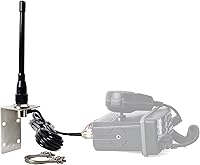
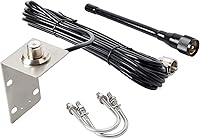
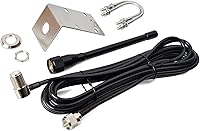
The HYS VHF Marine Antenna is a compact, low-profile rubber antenna built for recreational boaters who want a straightforward upgrade from whatever came stock with their radio setup. It covers the standard 156–163 MHz marine band, so it works with virtually any handheld or fixed-mount VHF radio you're likely to have on board. The kit arrives ready to install — a 16.4ft RG58 coaxial cable with a PL259 connector is already attached, and stainless steel L-bracket hardware is included for pole or rail mounting. If you're outfitting a small boat on a tight budget, this marine VHF antenna gets you sorted without a lot of fuss.

Features & Benefits

At 2 dBi gain with vertical polarization, this rubber duck marine antenna won't outperform a tall fiberglass whip on an offshore passage, but for nearshore and inland lake use it delivers solid, dependable coverage. The 50-ohm impedance and a VSWR under 1.8 mean it plays nicely with standard VHF radios without wasting power. It handles up to 50W input, which covers the output of most fixed-mount units. The included RG58 cable keeps signal loss manageable over the 5-meter run, and the rubber body holds up well against saltwater spray, UV exposure, and constant vibration. Direct-ground lightning protection is a welcome inclusion at this price point.

Best For

The HYS antenna kit is a natural fit for owners of small to mid-size vessels — think fishing boats, pontoons, kayaks, or day cruisers where rail or pole mounting is already in place. Boaters who want a working solution straight out of the box will appreciate that cables and connectors aren't a separate purchase. For coastal cruising, marina communication, or lake navigation, the performance is entirely appropriate. Where it's less suited is on larger boats where a 16.4ft cable run simply won't reach from the mounting point to the radio. Serious offshore sailors will want a higher-gain fiberglass antenna instead.

User Feedback

Across more than 270 ratings, this marine VHF antenna holds a 4.5-out-of-5 score, and the feedback paints a consistent picture. Most buyers highlight ease of installation and the completeness of the mounting hardware — nothing missing, nothing improvised. Noticeable signal improvements over factory or built-in antennas come up repeatedly. On the critical side, the 16.4ft cable draws complaints from owners of larger boats who needed a longer run, and a handful of reviewers noted that the PL259 connector fit felt slightly loose on their radio. Neither issue is a dealbreaker for the typical buyer, but both are worth knowing before you commit.

Pros

  • Ships as a complete kit — cable, connector, and mounting hardware are all included
  • Noticeable signal improvement over factory or built-in antennas reported by most buyers
  • Rubber body holds up well against saltwater spray, UV, and constant marine vibration
  • Compatible with virtually any standard VHF radio operating in the 156–163 MHz range
  • Direct-ground lightning protection is a practical safety feature rarely seen at this price tier
  • VSWR under 1.8 keeps signal efficiency solid without requiring radio-side adjustments
  • Stainless steel L-bracket and U-bolts feel appropriately sturdy for rail and pole mounting
  • Installation is straightforward enough that no professional help is needed
  • Strong customer satisfaction across a meaningful number of verified ratings
  • 50W power handling covers the output of most fixed-mount marine radios without issue

Cons

  • The 16.4ft cable run is too short for many mid-size and larger vessel installations
  • At 2 dBi gain, range is noticeably limited compared to taller fiberglass whip antennas
  • A handful of buyers reported the PL259 connector fit was slightly loose on their radio jack
  • No mast pole is included, which can catch first-time buyers off guard
  • Rubber construction, while durable, is more susceptible to long-term UV degradation than fiberglass
  • Not a practical choice if you need a cable run longer than 5 meters without purchasing an extension
  • The low-profile form factor limits performance in hilly or obstructed coastal terrain
  • No documentation on connector compatibility beyond standard PL259 — adapters sold separately if needed

Ratings

Our AI rating engine analyzed verified buyer reviews for the HYS VHF Marine Antenna from multiple global marketplaces, filtering out incentivized and bot-generated submissions to surface only authentic user experiences. The scores below reflect a balanced synthesis of what real boaters praised and where they ran into frustration — nothing is glossed over. Both the clear strengths and the genuine limitations of this marine VHF antenna are transparently factored into every category score.

Signal Performance
74%
26%
Most buyers report a clear, immediate improvement over stock or built-in antennas, particularly on coastal and inland waterways. Casual boaters using it for marina communication, bridge calls, and weather monitoring consistently describe reliable reception without dropout issues at typical recreational ranges.
The 2 dBi gain is a real ceiling — users who pushed further offshore or operated in areas with terrain interference noticed the range limitations compared to taller fiberglass antennas. It performs well within its intended use case but leaves little headroom for demanding conditions.
Ease of Installation
91%
This is one of the most praised aspects across all buyer feedback. The pre-attached cable, included PL259 connector, and stainless hardware mean most boaters complete the installation in under 30 minutes with basic hand tools. The kit format eliminates the usual frustration of sourcing compatible components separately.
A small number of buyers noted the included instructions are minimal, which can slow down first-timers who are unfamiliar with antenna mounting conventions. Those installing on non-standard rail profiles occasionally had to improvise with the U-bolt hardware.
Build Quality
78%
22%
The rubber antenna body holds up surprisingly well against saltwater spray, UV exposure, and vibration — conditions that crack or degrade cheaper materials within a single season. The stainless steel bracket and U-bolts feel appropriately robust for the price tier and show minimal corrosion after extended use.
A handful of buyers flagged that the connector junction between the antenna body and the cable feels less refined than on pricier units. The rubber material, while practical, will gradually degrade under prolonged UV exposure in tropical or high-sun climates faster than fiberglass alternatives.
Cable Quality
72%
28%
The included RG58 coaxial cable performs well for the 5-meter run, keeping signal loss manageable between the antenna and the radio. Buyers appreciate that it arrives already terminated with a proper PL259 plug rather than requiring field assembly.
RG58 is a competent but modest cable choice — it introduces more signal attenuation per foot than RG8X or LMR-240, which matters if an extension is added later. A few buyers also noted the cable jacket feels thinner than they expected for permanent outdoor marine use.
Connector Fit
63%
37%
The PL259 connector mates correctly with the SO-239 socket found on the vast majority of consumer VHF marine radios, and most buyers report a solid, functional connection straight out of the box.
This is one of the more consistent pain points in user reviews — a noticeable subset of buyers reported a slightly loose or wobbly fit on their specific radio model. Tolerance variation between manufacturers means this is not universal, but it is frequent enough to mention.
Cable Length Adequacy
58%
42%
For small boats, kayaks, and compact day cruisers where the mounting point and helm radio are in close proximity, 16.4ft is entirely workable and covers the installation without any need for extensions.
Owners of mid-size and larger vessels frequently cite the 5-meter cable as the single most limiting aspect of this kit. On sailboats, larger powerboats, or any setup where the antenna mounts away from the helm, buyers routinely need to purchase an extension — which adds cost and potential signal loss.
Value for Money
88%
For the price, the combination of a functional antenna, pre-terminated coaxial cable, and stainless mounting hardware represents genuinely good value. Buyers upgrading from a stock rubber duck or a broken factory antenna consistently feel the performance improvement justifies the outlay several times over.
The value proposition weakens if you need a longer cable or end up buying additional hardware to make the installation work on a larger vessel. At that point, the apparent savings can erode quickly compared to purchasing a more complete solution upfront.
Weather Resistance
76%
24%
The rubber jacket and stainless hardware combination handles typical marine weather well — rain, spray, and humidity are not issues for most buyers, even those who leave the antenna permanently mounted through the season.
Long-term UV resistance is the main durability question mark. Users in high-sun climates report the rubber showing surface oxidation and slight brittleness after two or three seasons of continuous outdoor exposure, sooner than fiberglass options tend to.
Mounting Hardware
81%
19%
The included stainless L-bracket and U-bolt set is consistently praised for being genuinely usable rather than an afterthought. It works well on standard rail diameters and the two-bolt design keeps the antenna from rotating or shifting underway.
The hardware works well on round rails but is less adaptable to flat or irregular mounting surfaces. Some buyers with non-standard mast profiles found the U-bolts either too large or too small, requiring a trip to the hardware store.
Compatibility
83%
The 156–163 MHz coverage aligns perfectly with the full commercial marine VHF band, and the PL259 connector works with the overwhelming majority of handheld and fixed-mount marine radios on the market. Buyers rarely report a compatibility mismatch.
It is strictly a marine VHF antenna and will not serve dual-band or non-marine radio applications. Buyers who misread the frequency range hoping for broader coverage occasionally report disappointment, though this is an expectation issue rather than a product flaw.
Package Completeness
86%
The kit format is one of its strongest selling points — antenna, cable, connector, and mounting hardware arrive together in a single package. For buyers new to antenna installation, this reduces research time and avoids the common frustration of missing components.
The absence of a mounting pole is a notable gap for buyers who assumed one was included, and the product listing language around this has caused confusion. A cable extension is also missing, which would have made the kit feel truly complete for a broader range of installations.
Lightning Protection
77%
23%
The direct-ground lightning protection design is a meaningful safety inclusion for a value-tier product. Open-water boaters in storm-prone areas appreciate having at least a baseline level of protection for their radio equipment built into the antenna.
Direct-ground protection is a basic implementation — it offers a degree of transceiver protection but is not equivalent to a dedicated lightning arrestor or the more advanced isolation designs found in premium marine antenna systems.
Profile & Aesthetics
80%
20%
The low-profile rubber duck design keeps wind resistance minimal and avoids the visual bulk of taller whip antennas, which suits smaller vessels where a discrete, snag-free profile is preferred. Most buyers find it looks appropriately tidy once mounted.
The black and silver color scheme shows weathering and salt residue more visibly than some alternatives over time. Buyers who care about the appearance of their boat's antenna setup may prefer the cleaner look of a white fiberglass whip.

Suitable for:

The HYS VHF Marine Antenna is the right call for recreational boaters who want a meaningful upgrade from a stock or built-in antenna without overcomplicating the purchase. It's particularly well-suited to owners of small to mid-size vessels — kayaks, fishing boats, pontoons, and day cruisers — where a compact, pole-mounted antenna fits the setup and the radio use-case is practical rather than demanding. Because the kit ships with a pre-attached 16.4ft coaxial cable, PL259 connector, and stainless steel mounting hardware, it's a genuine plug-and-play solution for anyone who doesn't want to shop for components separately. Boaters operating in coastal waters, bays, or inland lakes will find the 2 dBi gain more than adequate for marina communication, bridge calls, and monitoring weather channels. If your priority is reliable day-to-day VHF performance on a sensible budget, this marine VHF antenna delivers exactly what it promises.

Not suitable for:

The HYS VHF Marine Antenna is not the right tool for every boater, and it's worth being clear about where it falls short. Offshore sailors, long-range cruisers, or anyone who needs maximum transmission distance should look at a dedicated fiberglass antenna with higher gain — the 2 dBi rubber construction simply can't match the range a 6 dBi or 9 dBi whip provides. Owners of larger vessels will likely find the 16.4ft cable run too short to reach from a suitable mounting point down to the helm-mounted radio, requiring an extension or a different product entirely. If your boat already has a quality fixed antenna installed, there's little practical reason to swap it for this antenna kit. Those who need a mast-top installation or a permanently rigged offshore safety setup should invest in a purpose-built fiberglass solution with a longer, heavier-duty cable.

Specifications

  • Frequency Range: This antenna operates across the standard marine VHF band from 156 to 163 MHz, covering all standard working, calling, and distress channels.
  • Gain: The antenna provides 2 dBi of gain with vertical polarization, suitable for coastal and inland waterway communication ranges.
  • Max Power: The antenna supports a maximum input power of 50W, which matches or exceeds the output of most consumer fixed-mount marine VHF radios.
  • Impedance: Input impedance is rated at 50 ohms, the standard for marine and amateur radio coaxial systems.
  • VSWR: The voltage standing wave ratio is rated at less than 1.8, indicating efficient power transfer with minimal signal reflection.
  • Cable Type: The included cable is RG58 low-loss coaxial, chosen for its balance of flexibility and signal integrity in marine installations.
  • Cable Length: The pre-attached coaxial cable measures 16.4ft (5m), providing enough reach for most small to mid-size vessel helm installations.
  • Connector: The cable terminates in a PL259 (UHF) male connector, the most widely used connector type on consumer and semi-professional VHF marine radios.
  • Antenna Body: The radiating element is enclosed in a rubber jacket that resists moisture, UV exposure, and the constant vibration typical in marine environments.
  • Mounting Hardware: The kit includes a stainless steel L-bracket and two U-bolts designed for pole or rail mounting on standard round mast sections.
  • Lightning Protection: The antenna incorporates a direct-ground lightning protection design to reduce the risk of transceiver damage from nearby electrical strikes.
  • Polarization: Signal polarization is vertical, which is the required standard for marine VHF communication and ensures compatibility with coast guard and marina base stations.
  • Package Weight: The complete package, including antenna, cable, and hardware, weighs 13.1 oz, making it easy to handle and transport.
  • Package Dimensions: The retail packaging measures 9.21 x 8.82 x 1.65 inches, compact enough to store in a gear locker until installation.
  • Antenna Profile: The antenna is a low-profile rubber duck style, keeping wind resistance and snagging risk minimal compared to taller fiberglass whip designs.
  • Compatible Devices: The antenna is designed for use with any VHF radio receiver or transceiver operating in the 156–163 MHz frequency range.
  • Manufacturer: This antenna is produced by Quanzhou Truest Communication Co., Limited, a Chinese OEM that also markets antenna products under the HYS brand name.
  • Mast Pole: No mast or mounting pole is included in the package; the hardware provided is designed to attach to an existing pole or rail structure.

Related Reviews
Shakespeare 5241-R 3-Foot VHF Marine Antenna
82%
88%
Ease of Installation
83%
Build Quality
71%
Signal Performance
86%
Corrosion Resistance
74%
Value for Money
More
Tram 1607-HC VHF Marine Fiberglass Antenna
77%
91%
Ease of Installation
83%
Signal Performance
78%
Build Quality
72%
Durability in Saltwater
74%
Ratchet Mount Reliability
More
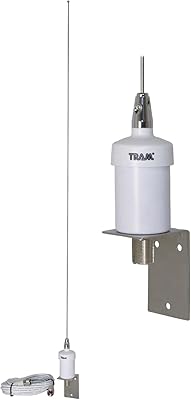
UAYESOK VHF Marine Base Antenna 48 Inch
87%
87%
Performance at Sea
92%
Durability in Harsh Conditions
91%
Installation Ease
89%
Signal Range and Clarity
85%
Compatibility with Marine Radios
More
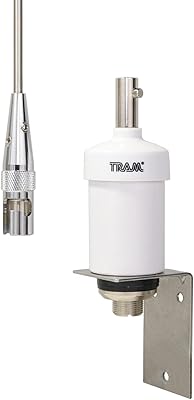
Tram 1600-HC 35-Inch VHF Marine Antenna
84%
88%
Signal Performance
91%
Build Quality
86%
Ease of Installation
93%
Corrosion Resistance
84%
Value for Money
More
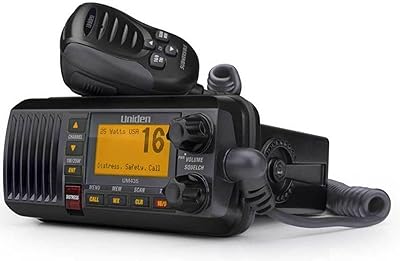
Tram 1602 VHF Marine Antenna
82%
91%
Build Quality
78%
Signal Performance
93%
Ease of Installation
94%
Quick-Disconnect Usability
62%
Cable Length & Quality
More
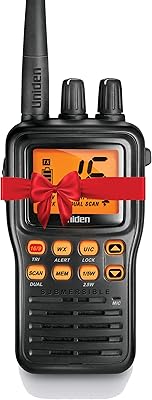
Uniden UM435BK Fixed Mount VHF Marine Radio
80%
93%
Waterproofing & Weather Resistance
88%
Audio Clarity & Reception
84%
Ease of Installation
91%
Channel Coverage & Compatibility
82%
Value for Money
More
Tram 1604 VHF/AIS Marine Antenna
82%
86%
Build Quality
79%
Signal Performance
77%
AIS Reception
91%
Ease of Installation
84%
Corrosion Resistance
More
Uniden UM725G Marine VHF Radio
79%
93%
Display Clarity
91%
Built-in GPS
88%
DSC Functionality
86%
Audio Quality
84%
Ease of Installation
More
Uniden MHS75 VHF Marine Radio
89%
94%
Waterproof Performance
85%
Range & Signal Strength
88%
Battery Life
90%
Ease of Use
91%
Build Quality
More
Shakespeare 5101 8ft Classic VHF Antenna
80%
83%
Signal Performance
81%
Build Quality
91%
Ease of Installation
54%
Cable Length
88%
Mount Compatibility
More

FAQ

It works with both. As long as your radio operates in the 156–163 MHz marine VHF band and has a standard SO-239 socket to accept the PL259 connector, this marine VHF antenna will connect directly. Just verify your radio's connector type before ordering.

For small to mid-size boats — fishing boats, pontoons, day cruisers, and kayak setups — 16.4ft is usually adequate to run from a rail or stern mount down to the helm radio. On larger vessels like sailboats or trawlers with longer cable runs, you may find yourself needing an extension or a replacement cable.

Yes, and it's actually a solid choice for that use case. The rubber body is lightweight and flexible, which matters when gear takes a knock, and the mounting hardware works well on small-diameter tubes or rails. Just make sure you have a suitable mounting point for the L-bracket.

In practical terms, a 2 dBi antenna gives you reliable communication at shorter ranges — typically adequate for marina traffic, coastal cruising, and bridge calls within a few miles. A 6 dBi or 9 dBi fiberglass antenna can extend that range considerably, which matters if you're offshore or in open water. For recreational nearshore use, the difference is unlikely to affect your day-to-day experience.

The U-bolts included are designed for round pole or rail mounting and can accommodate typical boat rail diameters. The L-bracket sits flush and the U-bolts clamp it securely. Just note that no mounting pole is included — you need an existing rail or mast section to attach it to.

The rubber body and construction are built for marine environments, so it handles spray, rain, and humidity without issue. The antenna itself is water-resistant by design, though the connector junction is worth protecting with self-amalgamating tape or a weatherproof boot if the antenna is permanently exposed to heavy weather.

A small number of buyers have reported a slightly loose fit with certain radio models. PL259 tolerances can vary between manufacturers, and some radios have tighter or looser SO-239 sockets than others. If it feels wobbly, a small wrap of plumber's PTFE tape around the connector threads can improve the fit and also helps weatherproof the connection.

Yes, you can use an RG58 or RG8X extension cable with matching PL259 connectors to extend the run. Keep in mind that every additional connection point and cable length introduces a small amount of signal loss, so keep the extension as short as practically possible and use quality connectors.

It is a full transceiver antenna — it handles both transmitting and receiving. It supports up to 50W input power, which covers the output of standard fixed-mount marine radios. It is not receive-only.

The bracket and U-bolts are stainless steel, which holds up well against corrosion in coastal and saltwater conditions. That said, no hardware is entirely immune to marine environment wear over many seasons. Rinsing the hardware with fresh water after heavy saltwater exposure and checking for any surface oxidation annually is good practice for any stainless fittings on a boat.