Overview

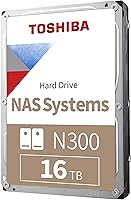
The Toshiba N300 16TB NAS Hard Drive sits squarely in the SOHO storage market, designed for people running always-on NAS enclosures at home or in a small office. At 16TB, you get enough headroom for serious media libraries, multi-user file sharing, or layered backup schemes without jumping to enterprise hardware. Toshiba has been in the storage game for decades, and the N300 line represents their NAS-specific answer to the CMR versus SMR debate. Unlike SMR drives, which can struggle under sustained write loads, this drive uses conventional magnetic recording — a deliberate, reliability-first choice. It is not built for data centers, but for people who need dependable, round-the-clock NAS storage without overpaying for overkill specs.
Features & Benefits

The N300 16TB spins at 7200 RPM with a 512 MB cache, which translates to responsive read and write performance during simultaneous multi-user access — exactly the kind of load a busy home lab or small office NAS puts on a drive. The CMR recording method keeps write behavior predictable, which matters when running long backup jobs or continuous data streams. Integrated RV sensors compensate for vibration from neighboring drives in a multi-bay enclosure, helping maintain data integrity without manual intervention. The SATA 6 Gb/s interface pairs with virtually every mainstream NAS unit on the market, and with support for up to 8 drive bays, there is real room to build a capable RAID array around these drives.

Best For

This Toshiba NAS drive makes the most sense for home media server users — especially those running Plex or Jellyfin on a Synology or QNAP box who need capacity above all else. Small office teams using NAS for centralized file storage or nightly backups will also find the always-on design well-suited to their needs. NAS builders putting together a RAID 5 or RAID 6 array will appreciate the CMR foundation, which handles the repeated partial writes those configurations demand. It is a less obvious fit for pure speed-focused workloads or anyone needing enterprise-grade durability — the 180 TB/year workload rating is solid for SOHO use but does not compete with higher-tier drives built for data center environments.

User Feedback

Buyers running this drive long-term mostly report quiet, stable operation — a notable point for home environments where noise matters. Compatibility with Synology and QNAP units comes up frequently as a positive, with most users confirming smooth integration out of the box. On the critical side, a small but notable number of reviews mention early failures or DOA units, which is worth factoring in, though this pattern is not unusual for high-volume mechanical drives at this capacity tier. Compared to the WD Red Pro and Seagate IronWolf at 16TB, buyers generally see this Toshiba NAS drive as competitively positioned on reliability, though some prefer the longer warranty coverage that certain competitors offer.

Pros

  • CMR recording ensures consistent, predictable write performance — especially important for RAID arrays and backup-heavy workloads.
  • Integrated RV sensors actively compensate for vibration in multi-drive enclosures, helping protect data integrity over time.
  • The 7200 RPM spindle speed keeps read and write response times competitive for a NAS-class mechanical drive.
  • Broad SATA 6 Gb/s compatibility means this drive slots into virtually any mainstream NAS enclosure without hassle.
  • Buyers consistently report quiet operation and stable running temperatures, even in always-on multi-bay setups.
  • At 16TB, the N300 offers a meaningful capacity jump for users consolidating storage or expanding a home media library.
  • Confirmed compatibility with Synology and QNAP systems comes up repeatedly in long-term owner feedback.
  • The 180 TB/year workload rating is well-suited to typical SOHO NAS demands, supporting continuous operation without stress.
  • Toshiba’s long track record in storage gives this drive a credibility advantage over newer or lesser-known brands.

Cons

  • A small but notable share of buyers report early failures or DOA units, so purchasing with a clear return window matters.
  • The warranty period is shorter than what some competing drives at this capacity offer, which is a real consideration for long-term deployments.
  • The 180 TB/year workload ceiling means this drive is not suitable for high-throughput or multi-user enterprise environments.
  • At this capacity tier, the price per terabyte is higher than smaller drives, which adds up quickly when populating a full array.
  • Some buyers feel competing options like the WD Red Pro or Seagate IronWolf offer stronger post-purchase support ecosystems.
  • There is no SMR option for those who would prefer it for archival-only use cases where cost efficiency matters more than write speed.
  • Mechanical drives at this size carry more shipping and handling risk than smaller-capacity alternatives, raising the DOA probability slightly.

Ratings

The Toshiba N300 16TB NAS Hard Drive has been scored by our AI system after analyzing verified global buyer reviews, with spam, bot-generated, and incentivized feedback actively filtered out. Scores reflect the full picture — where this Toshiba NAS drive genuinely earns its reputation and where real-world users have run into friction. Both strengths and recurring pain points are transparently factored into every category below.

Reliability & Longevity
83%
Long-term owners consistently report stable operation over extended periods, with many users logging well over a year of continuous NAS use without issues. The CMR recording method plays a meaningful role here — it avoids the write-performance degradation that SMR drives can exhibit under sustained loads, which NAS environments regularly produce.
A notable minority of buyers report early drive failures or DOA units, which is a real concern at this capacity tier and price point. While the failure rate is not unusually high for mechanical drives, it is frequent enough in the reviews to warrant buying from a retailer with a clear replacement policy.
NAS Compatibility
91%
Buyers running Synology and QNAP enclosures report near-universal plug-and-play compatibility, with the drive recognized immediately by both DSM and QTS without any firmware workarounds. The standard SATA 6 Gb/s interface and 3.5-inch form factor mean it fits virtually every mainstream NAS on the market.
A small number of users report that certain older or budget NAS enclosures flagged the drive with compatibility warnings, even when it functioned correctly. Toshiba’s official compatibility list is less exhaustive than those maintained by WD or Seagate, which can create uncertainty for buyers with less common NAS hardware.
Read/Write Performance
78%
22%
The 7200 RPM spindle speed and 512 MB cache deliver responsive throughput for typical SOHO workloads — simultaneous file access, backup jobs, and media streaming all run smoothly in multi-user NAS setups. Users running Plex libraries report snappy library scans and reliable stream handling without buffering under normal household loads.
This is not a speed-focused drive, and buyers who pushed it with high-bitrate direct video editing off the NAS noticed it hitting throughput ceilings. Compared to enterprise-class NAS drives at similar capacities, sequential write speeds are adequate but not exceptional.
Noise & Vibration
82%
18%
Most users describe day-to-day operation as acceptably quiet, particularly when the drive is housed inside an enclosed NAS cabinet. The integrated RV sensors do their job well in multi-bay enclosures, reducing the resonant buzz that uncompensated drives can produce when several spinning platters share the same chassis.
At 7200 RPM, this is not a silent drive — users who keep their NAS in a bedroom or quiet home office do mention a low but persistent hum during active periods. A handful of buyers noted a clicking or seeking noise during intensive write cycles that they found distracting in open-shelf setups.
Thermal Management
81%
19%
Operating temperatures reported by buyers in well-ventilated NAS enclosures are consistently within safe ranges, even during prolonged write sessions. Several users running the drive in always-on home server configurations noted it ran cooler than older drives of similar capacity they had replaced.
In compact NAS units with limited airflow, a few users reported the drive running warmer than expected during heavy sustained workloads. Adequate enclosure ventilation is important — passive-cooled or fanless NAS setups may need monitoring to keep temperatures in check.
RAID Compatibility
86%
The N300 16TB performs reliably in RAID 5 and RAID 6 configurations, where the CMR foundation handles the repeated partial writes these setups demand without the performance hiccups associated with SMR alternatives. Multiple users building out SOHO RAID arrays report clean rebuild processes after simulated failures.
Support tops out at 8-bay enclosures per Toshiba’s official specs, which limits its use in larger array builds where 12 or 16-bay enclosures are involved. Buyers populating high-bay enclosures should verify whether Toshiba’s support parameters align with their build before committing.
Value for Money
74%
26%
At 16TB, the N300 offers a reasonable cost-per-terabyte ratio compared to enterprise NAS drives, making it an accessible option for SOHO users who need serious capacity without crossing into data-center pricing. Buyers upgrading from older 8TB or 10TB drives frequently comment that the jump in usable space justifies the investment.
Competing drives from WD and Seagate at the same capacity often bundle longer warranties or additional software tools at comparable prices, which makes the value calculation less clear-cut. For budget-conscious buyers, the price gap between this drive and lower-capacity alternatives can be harder to justify if the full 16TB is not immediately necessary.
Installation Experience
88%
Physical installation is as straightforward as any standard 3.5-inch drive — most buyers report it seated cleanly in their NAS bays with no fitting issues, and NAS operating systems like DSM and QTS recognized it without manual intervention during initial setup. First-time NAS builders found the process non-intimidating.
A few buyers noted that their NAS ran an extended initialization process with a drive this size, which can take several hours and temporarily limits NAS availability. This is expected behavior, but it caught some users off guard who expected the drive to be immediately ready after physical installation.
Workload Capacity
77%
23%
The 180 TB/year workload rating comfortably covers typical SOHO NAS scenarios — nightly backups, media streaming, and file sharing across a small team will not come close to pushing that ceiling in most real-world setups. Buyers in home office environments running standard backup routines have no reason to worry about overloading this drive.
For small businesses with heavier-than-average NAS utilization — think continuous surveillance recording, large-scale file sync, or multi-shift access from many users — 180 TB/year can start to feel tight, and drives rated at 300 TB/year or more would be a safer long-term investment.
Packaging & Out-of-Box Condition
72%
28%
The majority of buyers report receiving the drive in good condition, with adequate protective packaging for standard shipping conditions. For most purchasers ordering through major retailers, unboxing experience is unremarkable in a positive way — the drive arrives ready to install without visible damage.
A recurring concern in negative reviews involves drives arriving with physical damage or showing immediate SMART errors on first diagnostic scans, suggesting that packaging protection may be marginal for rough handling during transit. Buyers ordering during high-volume shipping periods seem more likely to encounter this issue.
Brand Trustworthiness
84%
Toshiba’s decades-long track record in storage hardware gives many buyers confidence when choosing the N300 line, particularly those who have used Toshiba drives in previous NAS builds without issue. The brand’s consistency in the NAS segment contributes meaningfully to buyer peace of mind.
Toshiba’s post-purchase support infrastructure — including warranty claim processes and direct customer service — is perceived by some buyers as less responsive than WD or Seagate’s equivalents. A few users described slow resolution times when attempting to file warranty claims on failed units.
Warranty & Support
67%
33%
The drive comes with a standard manufacturer warranty that covers defects and premature failure, which is the baseline expectation for a drive at this price point. Buyers who purchased through authorized retailers report that valid warranty claims were eventually honored without major disputes.
The warranty term is shorter than what some competing 16TB NAS drives offer, and several buyers flagged this as a deciding factor that pushed them toward alternatives. The warranty claim process itself drew criticism for being slower and less streamlined than those offered by Toshiba’s main competitors in this segment.
Long-Term Consistency
79%
21%
Users who have run the N300 16TB in always-on NAS environments for 18 months or more generally report stable, consistent performance with no significant degradation in read or write speeds over time. This reliability over extended use is a recurring theme among verified long-term buyers.
The subset of users who experienced early failures tends to report them within the first few months of operation, suggesting a quality-control variance rather than a systematic longevity issue. Still, the unpredictability of early-life failure rates is a legitimate concern that buyers should account for with proper redundancy.

Suitable for:

The Toshiba N300 16TB NAS Hard Drive is a strong match for home lab enthusiasts and small office teams who need a high-capacity, always-on drive without crossing into enterprise-grade pricing territory. If you are running a Synology or QNAP enclosure for Plex, Jellyfin, or a home media archive, the 16TB capacity gives you meaningful room to grow without immediately daisy-chaining multiple units. Small business teams using NAS for centralized file sharing, versioned backups, or collaborative storage will benefit from the 24/7 operational design and the predictable write behavior that CMR recording provides. NAS builders assembling a RAID 5 or RAID 6 array will particularly appreciate the CMR foundation, since those configurations rely on consistent partial-write handling that SMR drives often struggle to deliver cleanly. This drive also suits users who are making a meaningful capacity jump from older, smaller drives and want a single reliable unit to anchor an upgraded storage setup.

Not suitable for:

The Toshiba N300 16TB NAS Hard Drive is not the right tool for everyone, and being clear about that saves real money and frustration. Its 180 TB/year workload rating, while generous for SOHO use, falls well short of what enterprise or high-throughput data center workloads demand — if your NAS is handling continuous high-volume writes from multiple simultaneous heavy users all day, every day, you will want to look at drives rated for 300 TB/year or more. Buyers prioritizing warranty length should also compare carefully, as some competing drives at this capacity tier offer longer coverage periods than this Toshiba NAS drive provides. If raw sequential speed is your primary concern — for example, editing high-bitrate video directly off the NAS — a drive optimized purely for throughput may serve you better. And for those running more than eight drive bays, this drive sits outside its officially supported configuration range, which is a practical ceiling worth knowing before committing to a large array build.

Specifications

  • Capacity: This drive offers 16 TB of raw storage, making it one of the higher-capacity options in the consumer and SOHO NAS segment.
  • Recording Technology: It uses CMR (Conventional Magnetic Recording), which delivers consistent write performance and is the preferred method for NAS and RAID environments.
  • Spindle Speed: The drive spins at 7200 RPM, placing it at the faster end of the NAS HDD spectrum for improved read and write responsiveness.
  • Cache Size: A 512 MB buffer cache helps smooth out data transfer bursts and supports more efficient handling of simultaneous read/write operations.
  • Interface: It connects via SATA 6 Gb/s, ensuring compatibility with the vast majority of modern NAS enclosures and desktop motherboards.
  • Form Factor: The standard 3.5-inch form factor fits all full-size NAS enclosures and desktop drive bays without adapters.
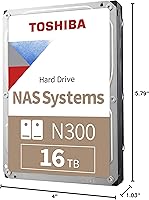
  • Dimensions: Physical dimensions measure 5.79 x 4 x 1.03 inches, consistent with standard 3.5-inch internal hard drive sizing.
  • Weight: The drive weighs 1.59 pounds, which is typical for a high-capacity 3.5-inch mechanical hard disk.
  • Workload Rating: Rated for up to 180 TB/year of data throughput, this drive is engineered to handle continuous SOHO NAS workloads without reliability degradation.
  • Drive Bay Support: Toshiba officially supports use of this drive in enclosures with up to 8 drive bays, covering most SOHO and prosumer NAS configurations.
  • 24/7 Operation: The drive is designed and rated for continuous 24-hour, 7-day-a-week operation, which is a baseline requirement for any always-on NAS environment.
  • RV Sensors: Integrated rotational vibration (RV) sensors detect and compensate for mechanical vibrations generated by neighboring drives in multi-bay enclosures.
  • Command Queuing: Native Command Queuing (NCQ) allows the drive to reorder incoming read/write requests for more efficient execution under multi-tasking conditions.
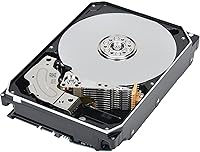
  • Hard Disk Type: This is a traditional mechanical hard disk drive (HDD), using spinning platters and a read/write head rather than flash-based storage.
  • Target Use: Toshiba designed this drive specifically for small office and home office NAS deployments, not for enterprise servers or direct-attached desktop use.

Related Reviews

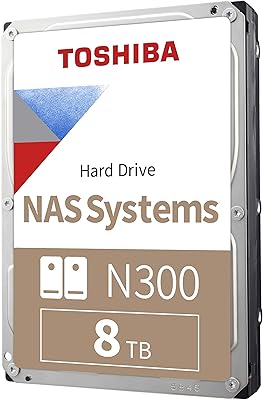
Toshiba N300 8TB NAS Hard Drive
80%
78%
Long-Term Reliability
81%
Noise & Vibration
93%
NAS Compatibility
83%
Read/Write Performance
86%
Value for Money
More
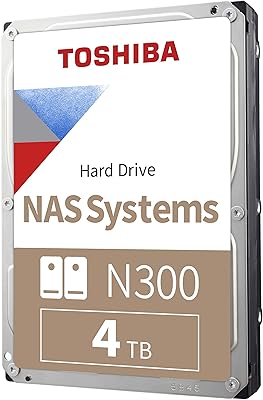
Toshiba N300 4TB NAS Internal Hard Drive
79%
83%
Reliability & Longevity
91%
RAID Compatibility
88%
NAS Compatibility
79%
Sequential Performance
71%
Noise & Vibration
More
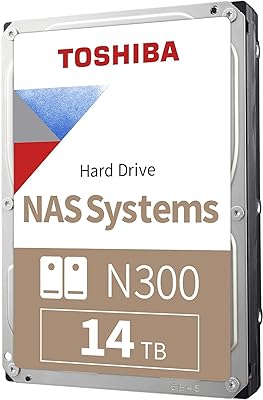
Toshiba N300 14TB NAS Internal Hard Drive
83%
96%
Storage Capacity
91%
Performance in NAS Systems
89%
Reliability for 24/7 Use
67%
Ease of Setup
84%
Vibration Resistance
More
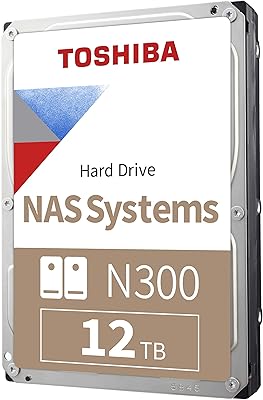
Toshiba N300 12TB NAS Internal Hard Drive
86%
89%
Performance
91%
Reliability
80%
Setup and Installation
87%
Noise Level
88%
Build Quality
More
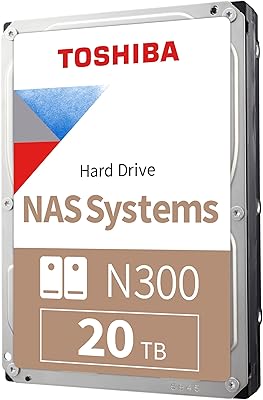
Toshiba N300 20TB NAS Internal Hard Drive
87%
91%
Performance
94%
Reliability for 24/7 Operation
85%
Ease of Setup
68%
Noise Levels
96%
Storage Capacity
More
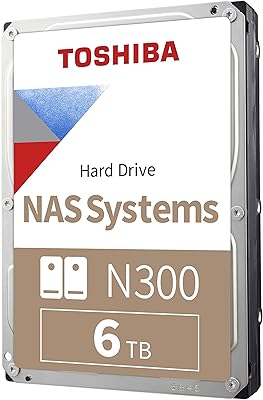
Toshiba N300 6TB NAS Internal Hard Drive
86%
88%
Performance
91%
Reliability
72%
Noise Levels
86%
Data Transfer Speed
85%
Ease of Installation
More
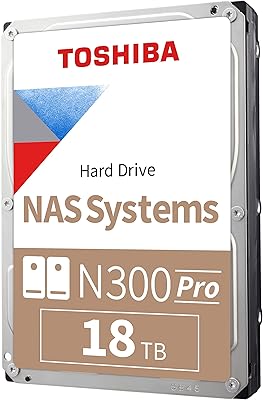
Toshiba N300 PRO 18TB NAS Internal Hard Drive
87%
94%
Performance
92%
Reliability
88%
Data Transfer Speed
72%
Noise Levels
89%
Build Quality
More
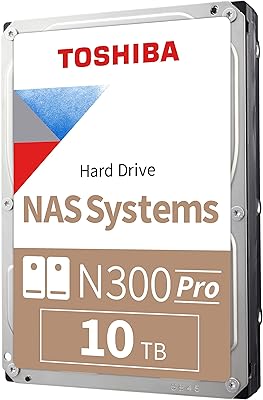
Toshiba N300 PRO 10TB Internal Hard Drive
87%
92%
Reliability for 24/7 NAS Use
89%
Performance in RAID Setups
91%
Workload Capacity (300 TB/year)
85%
Data Transfer Speed
88%
Vibration Control with RV Sensors
More
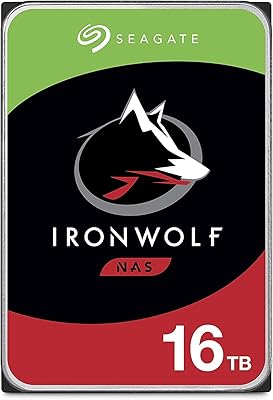
Seagate IronWolf 16TB NAS Hard Drive
80%
91%
RAID Compatibility
88%
NAS Enclosure Compatibility
83%
Sustained Read/Write Performance
74%
Long-Term Reliability
86%
Noise & Vibration
More
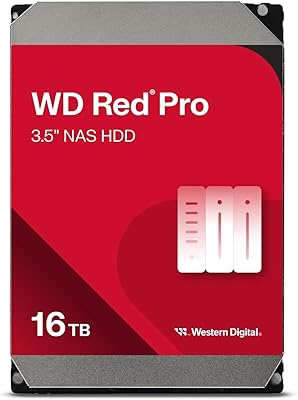
Western Digital WD Red Pro 16TB NAS Hard Drive
81%
88%
Long-Term Reliability
91%
RAID Performance
86%
Multi-User Throughput
67%
Value for Money
61%
Heat Management
More

FAQ

In most cases, yes. The N300 16TB uses a standard SATA 6 Gb/s interface and a 3.5-inch form factor, both of which are universally supported by Synology enclosures. That said, it is always worth checking Synology’s official compatibility list for your specific model before purchasing, as some enclosures have firmware-level restrictions on drives they will formally recognize.

CMR (Conventional Magnetic Recording) writes data in non-overlapping tracks, while SMR (Shingled Magnetic Recording) overlaps tracks to squeeze in more data, which can slow down write performance significantly under sustained loads. For NAS use — especially in RAID configurations — CMR is the preferred choice because it handles continuous and partial writes more predictably. SMR drives can work in archival NAS setups where writes are infrequent, but CMR is the safer pick for any active, always-on environment.

Technically yes — the SATA interface means it will connect to any standard desktop motherboard. However, this drive is tuned for the vibration tolerance and 24/7 thermal profile of a NAS environment, so you are paying for features you may not need in a desktop. It will work fine, but a standard desktop HDD would likely be more cost-effective for that use case.

Most long-term users report it is relatively quiet during typical NAS operation, with the usual low hum of a 7200 RPM mechanical drive. It is not silent — no spinning HDD at this speed is — but it does not stand out as unusually noisy compared to competitors. In an enclosed NAS cabinet, operational noise is rarely noticeable from a few feet away.

Yes, the Toshiba N300 16TB NAS Hard Drive is widely reported to be compatible with QNAP enclosures, and many users have confirmed smooth installation and operation. As with Synology, it is worth a quick cross-check against QNAP’s compatibility database for your specific enclosure model, but the standard 3.5-inch SATA spec means broad support across the QNAP lineup.
Exceeding the rated workload does not cause immediate failure, but it does mean the drive is operating outside the conditions Toshiba designed and tested it for, which can accelerate wear over time. If your NAS regularly pushes well beyond that threshold, you would be better served by a drive with a higher workload rating, such as enterprise-class options rated at 300 TB/year or more.

All three are NAS-focused CMR drives at 7200 RPM, so they are close competitors. The key differences tend to be in workload rating, warranty terms, and ecosystem features — for example, Seagate bundles IronWolf Health Management software, and WD offers its own drive health tools. The N300 16TB is generally priced competitively and performs comparably in day-to-day NAS workloads, but if long warranty coverage or bundled software matter to you, compare those specifics directly before deciding.

Most NAS operating systems — including DSM on Synology and QTS on QNAP — will handle the initialization and formatting process automatically when you add a new drive through their setup wizard. You typically do not need to pre-format the drive beforehand; just install it physically and let the NAS software guide you through the rest.

Yes, this is actually one of the stronger use cases for this drive. A Plex library with large video files benefits from the 16TB capacity and the always-on design means the drive can handle Plex’s continuous read demands without issue. The 7200 RPM speed also helps with responsive library scanning and simultaneous streams.

A small percentage of buyers in any high-volume mechanical drive category will experience early failures, and the N300 is no exception. The key precautions are to buy from a reputable retailer with a clear return and replacement policy, check the drive with a diagnostic tool like CrystalDiskInfo right after installation, and always run your NAS with some form of RAID redundancy so a single drive failure does not mean data loss.

Where to Buy