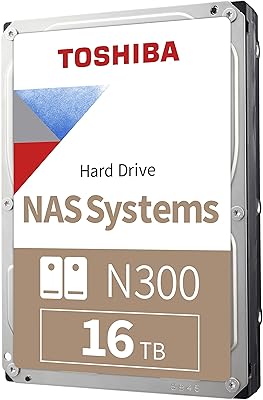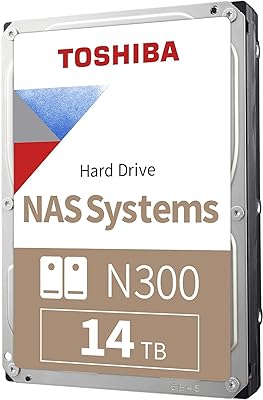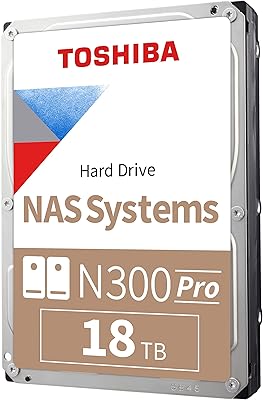


Overview

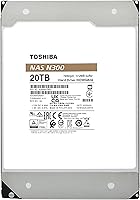
The Toshiba N300 20TB NAS Hard Drive is Toshiba's high-capacity answer for small office and home office storage, arriving in early 2024 as one of the more accessible ways to land 20TB in a single 3.5-inch drive. For anyone consolidating a sprawling media library or centralizing backups across multiple machines, that raw capacity alone is a compelling reason to look here. Unlike SMR drives, which rewrite data in overlapping bands and can throttle dramatically under sustained writes, this NAS hard drive uses CMR recording technology, writing each track independently for more predictable and consistent performance. It is purpose-built for always-on NAS enclosures — not desktop use, not direct-attach storage — and that distinction shapes everything from its firmware to its power management.

Features & Benefits

Spin it up and the N300 20TB runs at 7200 RPM with a 512 MB cache, which translates to solid sequential read and write speeds for a mechanical drive — the kind of throughput that keeps a multi-user NAS feeling responsive rather than bottlenecked. The 180 TB/year workload rating is meaningful here: it comfortably covers the continuous reading and writing that happens when multiple users or backup jobs hit the same drive around the clock, though it sits below enterprise-class thresholds, so expectations should stay calibrated accordingly. Built-in RV sensors actively counteract the vibrations generated when multiple drives spin simultaneously in the same enclosure, something that matters far more in a 4- or 8-bay setup than most buyers initially anticipate.

Best For

This NAS hard drive hits a practical sweet spot for a specific type of buyer. Home lab builders running Plex or Jellyfin on a Synology or QNAP box will appreciate the single-drive density — fewer drives to manage, less power draw, and a simpler RAID rebuild if something goes wrong. Small business owners who need centralized shared storage without committing to enterprise-grade hardware will find the value proposition here compelling. It also works well as a high-capacity backup target for scheduled jobs that write large volumes overnight. Where it is less ideal: power users pushing high-bay enterprise enclosures or anyone who needs the higher endurance ceiling that enterprise-class drives provide.

User Feedback

Across over 400 ratings, the N300 20TB holds a solid 4.4 out of 5 stars, which for a mechanical storage drive at this capacity is genuinely encouraging. Buyers consistently point to plug-and-play compatibility with popular NAS platforms and steady, predictable throughput over weeks of continuous use. The more candid feedback surfaces around acoustics and heat: in dense enclosures, some users report it runs warmer than expected and produces a noticeable hum under heavy load. A handful of buyers who compared it against Seagate IronWolf drives noted similar reliability at a comparable price point. Long-term failure reports appear infrequent at this stage, though the drive is still relatively new to market.

Pros

  • 20TB of CMR storage in a single drive keeps bay usage low and RAID management straightforward.
  • CMR recording ensures consistent write speeds without the slowdowns that plague SMR drives under sustained load.
  • Rated for 24/7 continuous operation with firmware tuned specifically for always-on NAS enclosures.
  • Built-in RV sensors actively compensate for vibration in multi-drive enclosures, protecting data integrity.
  • Compatible with virtually every modern NAS platform via the standard SATA 6 Gbit/s interface.
  • A 180 TB/year workload rating handles the demands of multi-user small office environments comfortably.
  • Strong community-verified compatibility with Synology and QNAP NAS units out of the box.
  • Holds a 4.4 out of 5 star rating across hundreds of real buyer reviews, signaling broad reliability.
  • Supports up to 8-bay enclosures, giving it room to grow alongside expanding storage needs.

Cons

  • Runs noticeably warm in dense enclosures, which may require active airflow planning in tightly packed builds.
  • Audible hum and vibration under heavy load can be disruptive in quiet home office or living room setups.
  • The 180 TB/year workload ceiling, while solid for SOHO use, falls short of enterprise-class drive endurance ratings.
  • Not appropriate for desktop or direct-attach use — firmware behavior can cause issues outside a NAS enclosure.
  • At 20TB, rebuild times after a drive failure in RAID configurations can run very long, increasing vulnerability windows.
  • Relatively new to market, so long-term failure rate data is still limited compared to older, more established drives.
  • The 512 MB cache, while functional, lags behind the larger cache sizes found on some competing NAS drives at similar capacities.
  • Price per terabyte may not be the most competitive option for buyers who only need 8–12TB and do not require the full 20TB.

Ratings

The scores below reflect an AI-driven synthesis of verified global buyer reviews for the Toshiba N300 20TB NAS Hard Drive, with spam, incentivized, and bot-flagged submissions actively filtered out before analysis. Ratings are drawn from real-world usage patterns spanning home lab builds, small office deployments, and prosumer NAS setups across multiple platforms. Both the strengths that keep buyers coming back and the friction points that generate complaints are transparently represented in every category.

Storage Capacity
94%
Twenty terabytes in a single 3.5-inch drive is a genuine convenience multiplier for buyers consolidating Plex libraries, surveillance archives, or multi-machine backups. Users consistently report that fitting their entire media collection onto one drive simplified their RAID layout and freed up bays they had previously chained together with smaller drives.
A small segment of buyers found the jump to 20TB premature for their current needs, effectively paying for headroom they will not use for years. At this density, a single drive failure also means a larger volume of data is at risk during what can be a lengthy RAID rebuild window.
Reliability & Endurance
86%
For a drive that lives inside an always-on NAS enclosure, the N300 20TB earns consistent praise for staying stable over months of continuous operation. Users running nightly backup jobs and multi-user file sharing report no unexpected dropouts or error logs, even after extended uptime periods pushing past six months.
The 180 TB/year workload ceiling, while sufficient for most home and small office use cases, draws cautious notes from buyers who push heavier workloads. A handful of users coming from enterprise-grade drives flagged that this ceiling felt tighter than expected once multi-user demand and automated backup schedules were layered together.
NAS Compatibility
91%
The drive slots cleanly into Synology and QNAP enclosures with virtually no configuration friction — buyers describe it as a true plug-and-play experience across popular 4- and 8-bay units. The standard SATA 6 Gbit/s interface means there are no proprietary gotchas, and most users saw their NAS recognize the drive and begin initialization immediately.
Compatibility lists from NAS manufacturers do not always include every N300 capacity variant, which causes unnecessary anxiety for buyers who check those lists before purchasing. A small number of users reported needing a firmware update on older NAS units before the full 20TB was correctly reported.
Read & Write Performance
83%
Sequential read and write speeds hold steady under multi-user load, which is exactly what matters most in a shared NAS environment. Users streaming 4K video to multiple clients simultaneously reported smooth playback without buffering pauses, and backup jobs running overnight consistently completed within expected time windows.
Random read/write performance is, predictably, where mechanical limitations show — buyers accustomed to SSD caching noticed a real difference when accessing large numbers of small files. This is not a design flaw specific to this drive, but buyers who have not used a spinning disk in a NAS before sometimes express surprise at the latency profile.
Vibration Management
88%
The integrated RV sensors are a meaningful differentiator in populated enclosures, and users with 6- and 8-bay setups specifically called them out as a reason they chose this drive over non-NAS alternatives. In dense builds where all bays are occupied, buyers noted that data integrity remained solid with no CRC errors appearing in drive health logs over extended periods.
Despite the RV compensation, some users in 8-bay enclosures with thin aluminum chassis still reported perceptible vibration transferring to surrounding surfaces, particularly on wooden desks. The sensors manage inter-drive vibration well, but they cannot fully counter enclosure-level resonance in lighter or cheaper NAS hardware.
Noise Level
67%
33%
During idle periods and light reads, the drive is reasonably quiet for a 7200 RPM mechanical disk — buyers whose NAS units live in utility closets or server rooms report it is essentially a non-issue. The acoustic profile at rest is comparable to other high-capacity NAS drives in this RPM class.
Under sustained sequential writes, such as large backup jobs or multi-stream video ingestion, the drive produces a noticeable low-frequency hum that carries in open home environments. Users whose NAS sits on a desk or in a living room setup consistently flagged this as a quality-of-life complaint, especially in quiet nighttime hours.
Thermal Performance
71%
29%
In well-ventilated enclosures with active cooling, the drive maintains stable operating temperatures that stay within Toshiba's recommended thermal range without throttling or error events. Buyers who invested in NAS units with dedicated fan management reported clean temperature curves even during extended sequential transfers.
In compact or passively cooled enclosures, the drive runs noticeably warm — some users reported idle temperatures above 45 degrees Celsius in densely packed 8-bay units without adequate airflow. A few buyers had to add supplemental fan solutions or reposition drives within their enclosure to bring temperatures down to comfortable levels.
Power Consumption
74%
26%
Power draw during active operation is in line with expectations for a 7200 RPM drive at this capacity, and the firmware's idle power management does a reasonable job of stepping down consumption during quiet periods. For home NAS users whose units run around the clock, the idle efficiency helps keep electricity costs from escalating noticeably.
Compared to lower-RPM or SMR-based alternatives, the active power draw is higher — buyers running multiple N300 drives in one enclosure noted that total system wattage added up faster than anticipated. This is a relevant consideration for home users on efficiency-conscious power plans or those using smaller UPS units.
Value for Money
79%
21%
At the 20TB tier, the price-per-terabyte lands in a competitive range that buyers consistently describe as fair given the CMR technology, NAS-specific firmware, and Toshiba's brand reliability. Users who had previously populated arrays with multiple smaller drives found the consolidation economics genuinely compelling when comparing total cost of ownership.
Some buyers feel the premium over SMR-based high-capacity drives requires a clearer understanding of why CMR matters to justify — buyers who do not know the difference may gravitate toward cheaper SMR alternatives. Competing NAS drives from Seagate at similar capacities occasionally surface at slightly lower price points during promotional windows, which draws unfavorable comparisons.
Long-Term Durability
77%
23%
Early reliability data from buyers who have been running the drive since its early 2024 launch is encouraging, with very few failure reports surfacing in the reviewed period. The combination of CMR recording and RV sensors suggests a design philosophy oriented toward longevity rather than cutting corners on density.
Because the drive is still relatively new to market, long-term durability data beyond 18 months of real-world use is simply not available yet. Buyers who prioritize drives with established multi-year failure rate histories may feel more confident with older, more seasoned models from competing brands.
Setup & Installation
89%
The physical installation process is as straightforward as any standard 3.5-inch drive — slide it in, secure the mounting screws, and the NAS handles the rest. Even first-time NAS builders reported having the drive recognized and formatted within minutes of powering on their enclosure.
A handful of users on older NAS firmware versions encountered the full 20TB not being reported accurately until a system update was applied, which required some troubleshooting. This is more of a NAS firmware issue than a drive defect, but it created frustration for buyers who were not expecting any initial hiccups.
RAID Rebuild Speed
62%
38%
Sequential read speeds during RAID rebuild are consistent and do not degrade dramatically under concurrent read load, which is better behavior than some SMR drives that slow considerably when accessed during a rebuild. Buyers appreciated that the array remained accessible — albeit slower — throughout the rebuild process rather than locking out user access entirely.
At 20TB, a RAID 1 or RAID 5 rebuild can stretch from 24 hours to well over 48 hours in typical home NAS hardware, leaving the array in a degraded and vulnerable state for an extended window. Users who had not accounted for this vulnerability period expressed concern, particularly those without a separate offsite backup running in parallel.
Firmware & Software Support
73%
27%
The drive benefits from firmware tuning specifically designed for NAS environments, including power management behaviors and error recovery settings calibrated for always-on operation rather than desktop use. Buyers running Synology DSM or QNAP QTS reported that drive health monitoring tools picked up the N300 cleanly and displayed full SMART data without any manual configuration.
Toshiba does not offer a consumer-facing drive management utility of its own, so buyers are entirely dependent on their NAS platform for health monitoring and diagnostics. Users running the drive in a custom Linux-based NAS build outside of a branded enclosure occasionally reported less granular SMART reporting compared to what they saw with competing brands.

Suitable for:

The Toshiba N300 20TB NAS Hard Drive is built squarely for anyone who needs serious storage capacity in an always-on network environment without crossing into enterprise hardware budgets. Home lab enthusiasts running Plex, Jellyfin, or similar media server setups will find that a single 20TB drive dramatically simplifies their array — fewer bays occupied, cleaner RAID configurations, and less to manage when a rebuild is eventually needed. Prosumers with Synology or QNAP units in the 4- to 8-bay range are arguably the core audience here, as the drive's RV sensors and 24/7 firmware tuning are designed precisely for that kind of multi-drive, always-spinning environment. Small business owners consolidating shared file storage or running nightly backup jobs across multiple workstations will also get solid, dependable value from this NAS hard drive. If your primary goal is maximizing usable storage per drive bay without paying for workload ratings you will never realistically hit, this is a well-matched choice.

Not suitable for:

The Toshiba N300 20TB NAS Hard Drive is not the right tool if your environment pushes sustained, heavy workloads that approach or exceed 180 TB per year per drive — that ceiling exists, and exceeding it regularly will shorten the drive's lifespan faster than the specs suggest. Enterprise NAS deployments with 12 or more bays, or setups running round-the-clock transactional workloads, should be looking at enterprise-class drives with higher endurance ratings instead. This is also a poor fit for desktop or direct-attach use — the firmware is tuned for NAS enclosures, and using it as a standalone internal drive in a PC may result in unexpected behavior like delayed spin-up or aggressive power management that interrupts typical desktop tasks. Buyers who prioritize near-silent operation should know that a 7200 RPM mechanical drive at this capacity produces audible vibration and hum, particularly in quieter home environments. Finally, anyone expecting the data transfer characteristics of an SSD will be disappointed — this is a spinning disk, and it performs accordingly.

Specifications

  • Capacity: The drive offers 20 TB of formatted storage, making it one of the highest single-drive capacities available in the consumer NAS segment.
  • Recording Tech: Uses Conventional Magnetic Recording (CMR), which writes each track independently for consistent and predictable performance under sustained workloads.
  • Interface: Connects via SATA 6 Gbit/s, ensuring broad compatibility with virtually all modern NAS enclosures and motherboards that support standard SATA.
  • Form Factor: Standard 3.5-inch internal hard drive format, fitting the vast majority of desktop NAS enclosures on the market today.
  • Rotational Speed: Spins at 7200 RPM, providing stronger sequential throughput compared to lower-RPM NAS drives in the same class.
  • Cache Size: Equipped with a 512 MB buffer cache, which helps smooth out read and write bursts during multi-user or multi-application access.
  • Workload Rating: Rated for up to 180 TB of data transferred per year, suitable for continuous small office or home office NAS workloads.
  • Operation: Designed and firmware-tuned for 24/7 continuous operation, including power management optimized for always-on NAS environments.
  • RV Sensor: Integrated rotational vibration sensors detect and compensate for vibration caused by adjacent spinning drives in multi-bay enclosures.
  • Bay Support: Officially supports deployment in NAS enclosures with up to 8 drive bays, covering most prosumer and small business setups.
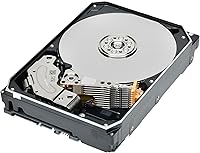
  • Drive Type: Mechanical hard disk drive (HDD) using a spinning platter design, optimized for high-capacity sequential storage rather than low-latency random access.
  • Installation: Internal drive requiring installation inside a compatible NAS enclosure or desktop chassis; not designed for external or direct-attach USB use.
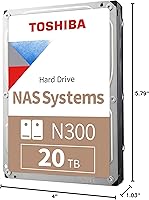
  • Dimensions: Measures 5.79 x 4 x 1.03 inches, conforming to the standard 3.5-inch drive bay specification used across consumer and prosumer NAS hardware.
  • Weight: Weighs 1.59 pounds, which is typical for a high-capacity 3.5-inch mechanical hard drive of this density.
  • User Rating: Holds a 4.4 out of 5 star average across more than 437 verified ratings on Amazon, reflecting broad buyer satisfaction with reliability and compatibility.

Related Reviews
Toshiba N300 4TB NAS Internal Hard Drive
79%
83%
Reliability & Longevity
91%
RAID Compatibility
88%
NAS Compatibility
79%
Sequential Performance
71%
Noise & Vibration
More
Toshiba N300 16TB NAS Hard Drive
80%
83%
Reliability & Longevity
91%
NAS Compatibility
78%
Read/Write Performance
82%
Noise & Vibration
81%
Thermal Management
More
Toshiba N300 8TB NAS Hard Drive
80%
78%
Long-Term Reliability
81%
Noise & Vibration
93%
NAS Compatibility
83%
Read/Write Performance
86%
Value for Money
More
Toshiba N300 14TB NAS Internal Hard Drive
81%
93%
Recording Technology
91%
NAS Compatibility
77%
Reliability & Longevity
86%
Value for Money
74%
Noise & Acoustics
More
Toshiba N300 12TB NAS Internal Hard Drive
76%
83%
Reliability & Longevity
81%
Performance Consistency
89%
NAS Compatibility
88%
CMR Recording Quality
62%
Noise & Vibration
More
Toshiba N300 6TB NAS Internal Hard Drive
86%
88%
Performance
91%
Reliability
72%
Noise Levels
86%
Data Transfer Speed
85%
Ease of Installation
More
Toshiba N300 PRO 18TB NAS Hard Drive
81%
88%
Read/Write Performance
84%
Reliability & Durability
91%
Vibration Control
93%
Workload Capacity
89%
RAID Suitability
More
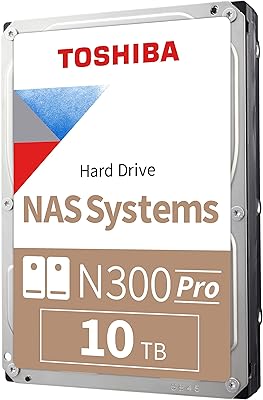
Toshiba N300 PRO 10TB Internal Hard Drive
87%
92%
Reliability for 24/7 NAS Use
89%
Performance in RAID Setups
91%
Workload Capacity (300 TB/year)
85%
Data Transfer Speed
88%
Vibration Control with RV Sensors
More
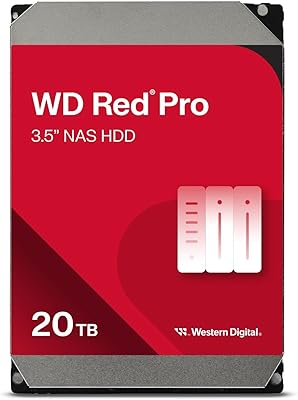
WD Red Pro 20TB NAS Hard Drive
83%
88%
Long-Term Reliability
91%
RAID Performance
86%
Sustained Throughput
93%
NAS Compatibility
63%
Thermal Management
More
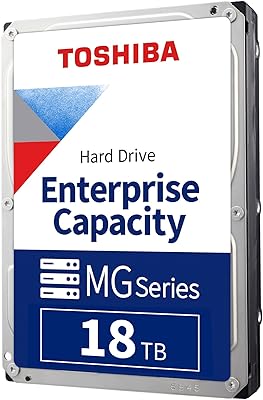
Toshiba MG09 18TB Hard Drive
87%
98%
Storage Capacity
92%
Reliability & Durability
89%
Power Efficiency
87%
Transfer Speed
91%
Noise Levels
More

FAQ

In most cases, yes. The N300 20TB uses a standard SATA 6 Gbit/s interface and is specifically designed for NAS enclosures, so it works with the vast majority of Synology and QNAP units. That said, it is always worth checking your specific NAS model against Toshiba's or the manufacturer's official compatibility list before purchasing, especially for older enclosures.

CMR stands for Conventional Magnetic Recording, which writes each data track individually without overlapping adjacent tracks. The alternative, SMR (Shingled Magnetic Recording), stacks tracks on top of each other to increase density, but this causes significant slowdowns when data needs to be rewritten — something that happens constantly in a NAS environment. For a drive that will be reading and writing around the clock, CMR is the more reliable and consistent choice.

Technically it will work, but it is not recommended. The firmware is tuned for NAS operation, which includes spin-up behavior and power management that can feel sluggish or erratic in a standard desktop environment. You will get better results and fewer surprises using a drive specifically designed for desktop use.

At 7200 RPM and 20TB of platter density, it produces a noticeable hum and occasional seek noise under active load. It is not unusually loud for a mechanical NAS drive of this class, but if your NAS lives in a quiet room or open living space, you will hear it — especially in a multi-drive enclosure where vibration can amplify through the chassis.

Yes, Toshiba covers the N300 series with a three-year limited warranty. As always, keeping your proof of purchase and registering the drive with Toshiba is the simplest way to ensure a smooth warranty claim process if you ever need it.

It means the drive is rated to transfer up to 180 terabytes of data per year before operating outside its designed stress envelope. For a home or small office NAS handling backups, media streaming, and shared file access, you are very unlikely to hit that ceiling. If you are running heavy surveillance recording or high-frequency database writes around the clock, you may want to look at drives with a higher annual workload rating.

That depends on your RAID type, the number of drives, and your NAS hardware, but rebuilding a 20TB drive can take anywhere from 24 hours to several days in a typical home or small office setup. During that window, your array is more vulnerable, so it is worth planning rebuilds during low-activity periods and ensuring you have a good backup before initiating one.

It can run warmer than lower-capacity or lower-RPM drives, particularly in 4- to 8-bay enclosures where airflow is shared across multiple spinning disks. Good chassis airflow and at least one active fan near the drive bays will keep temperatures in a safe range. Monitoring drive temps through your NAS management software is a smart habit regardless of which drive you use.

Both are solid CMR NAS drives with comparable reliability track records at the 20TB tier. The IronWolf line tends to have a slight edge in workload rating at higher capacities and includes Seagate's IronWolf Health Management feature for compatible NAS units. The N300 20TB is a strong alternative, particularly if you prefer Toshiba's ecosystem or find it at a more favorable price point. Either drive is a reasonable choice for a SOHO NAS build.

It is not officially positioned or optimized for surveillance use — Toshiba has a dedicated S300 Pro series for that workload. Surveillance systems involve continuous sequential writes from multiple camera streams, which is a different stress pattern than typical NAS file access. Using a purpose-built surveillance drive in those setups will generally give you better long-term reliability.