
Overview

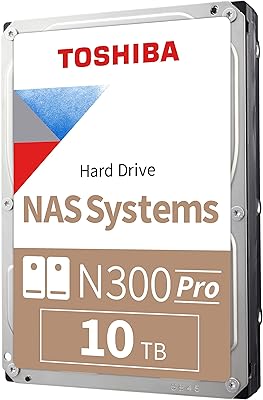
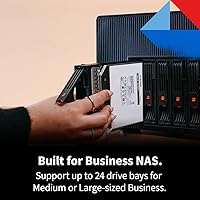
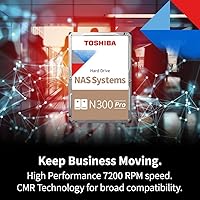
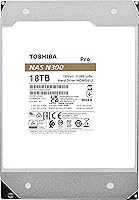
The Toshiba N300 PRO 18TB NAS Hard Drive is squarely aimed at the professional end of the NAS storage market — built for businesses running eight to twenty-four bay enclosures, not a home hobbyist with a two-bay box. At 18TB per drive, it offers a practical density sweet spot for medium-to-large teams where every available bay counts. Unlike SMR alternatives that can stumble under continuous write pressure, this NAS drive relies on CMR recording technology for far more predictable behavior under load. The N300 PRO line steps up from Toshiba's standard N300 with a higher workload ceiling, making it suited for more demanding environments. Worth noting upfront: it is a bare internal drive requiring a compatible NAS enclosure to function.

Features & Benefits

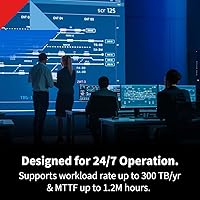
Running at 7200 RPM with up to 512 MB of cache, this NAS drive delivers the consistent throughput that RAID arrays depend on — especially when multiple drives are reading and writing simultaneously. The 300 TB/year workload rating is the detail that truly separates it from consumer or entry-level NAS options; that figure means the drive is rated to sustain relentless data movement typical of continuous backup jobs, live surveillance feeds, or busy database environments. The MTTF of up to 1.2 million hours is a manufacturer estimate, not a guarantee, but it reflects a design built for long-haul continuous operation. Integrated RV sensors actively compensate for vibration from neighboring drives — a real concern in any dense multi-bay enclosure. SATA 6 Gb/s ensures broad compatibility across Linux, Mac, and Windows.

Best For

Toshiba's business-grade spinner makes the most sense for IT managers or business owners running an eight-bay or larger NAS who need always-on, high-capacity storage without compromising on sustained write performance. Teams handling large media archives, daily database backups, or virtualization workloads will find the combination of workload rating and cache genuinely useful rather than just a spec-sheet number. It also makes a strong case for anyone upgrading from consumer NAS drives that have started showing their limits under heavier use. In RAID 5 or RAID 6 configurations especially, RV sensor support is not a nice-to-have — it is practical insurance against data errors caused by drive vibration. That said, this is the wrong choice for a home user with a two-bay NAS or a single desktop setup.

User Feedback

With a 4.4-star average across over 400 ratings, the N300 PRO 18TB earns its score primarily from buyers who actually put it through their paces in professional environments — not casual home users leaving first impressions after a week. Consistently praised aspects include reliable multi-bay operation, quick recognition across Synology, QNAP, and other major NAS platforms, and stable speeds over extended periods. On the critical side, some buyers flag that the 7200 RPM motor runs noticeably warm in tightly packed enclosures, and a small number reported initial compatibility hiccups with older NAS firmware. Reviewers who report on drives used for a year or more tend to be notably more positive, which is a meaningful signal. One reminder: no mechanical drive is failure-proof, and RAID is no substitute for a real backup strategy.

Pros

  • CMR recording technology means far more predictable write behavior than SMR alternatives under sustained, continuous workloads.
  • The 300 TB/year workload rating handles relentless, around-the-clock data movement that would overwhelm consumer-grade NAS drives.
  • Integrated RV sensors protect data integrity in dense multi-bay arrays where drive-to-drive vibration is a genuine operational risk.
  • Rated for 24/7 continuous operation — unlike desktop drives that are not engineered for always-on NAS environments.
  • Up to 512 MB of cache paired with 7200 RPM delivers consistently fast throughput that RAID arrays depend on.
  • MTTF of up to 1.2 million hours reflects a build quality oriented toward long-haul reliability in demanding production settings.
  • Broad compatibility across Linux, Mac, and PC platforms means fewer friction points in mixed-OS business environments.
  • At 18TB per drive, it maximizes storage density per bay — reducing how often you need to expand your enclosure footprint.
  • Strong reception from IT professionals and prosumer NAS builders who have run it in real production environments lends real credibility.
  • Supports NAS enclosures with up to 24 bays, giving it headroom for large-scale storage buildouts over time.

Cons

  • The 7200 RPM motor runs noticeably warm in tightly packed enclosures — adequate airflow planning is not optional.
  • Some buyers report initial compatibility hiccups with older NAS firmware requiring a manual update before the drive is recognized.
  • You are paying a meaningful premium over consumer NAS drives — costs that are hard to justify for light workloads.
  • No standout raw spec advantage over WD Gold or Seagate Exos alternatives; the decision may come down to brand preference.
  • Acoustic output is higher than lower-RPM NAS drives — a real factor in noise-sensitive server room or office environments.
  • Like all mechanical drives, it will eventually fail; the MTTF figure is a statistical estimate, not a lifespan guarantee.
  • Deploying several drives simultaneously at this capacity tier represents a considerable upfront capital commitment for smaller organizations.
  • It ships as a bare internal component — you must have a compatible NAS enclosure ready before it is usable at all.
  • Long-term real-world reliability data beyond 12 to 18 months of continuous use remains relatively limited given its release date.

Ratings

The Toshiba N300 PRO 18TB NAS Hard Drive holds a 4.4-star average across hundreds of verified purchases, and the detailed scores below were generated by AI after systematically analyzing that global buyer feedback — filtering out spam, bot-generated reviews, and incentivized submissions to surface what real users in production environments actually experience. Both the categories where this NAS drive genuinely excels and the recurring pain points buyers encounter are reflected transparently in the breakdown. The scores are calibrated against real-world deployment context, not manufacturer specifications.

Read/Write Performance
88%
In multi-drive RAID arrays, the combination of 7200 RPM and up to 512 MB of cache delivers stable, consistent throughput under concurrent load. IT managers running continuous database backups or active media pipelines report that transfer speeds hold steady without the throttling issues common in SMR-based alternatives.
Users who push the drive to its absolute ceiling with simultaneous large-file transfers across many active clients occasionally note that response times dip during peak saturation. Compared to enterprise SAS drives or PCIe-based NAS solutions, the SATA interface does impose a ceiling on raw maximum throughput that matters in the most data-intensive environments.
Reliability & Durability
84%
The 1.2 million hour MTTF rating and 24/7 operation design give IT teams meaningful confidence when deploying in always-on environments. Buyers who have run this NAS drive for a year or more — including through RAID rebuilds, which stress drives significantly — report consistent behavior without early failures catching them off guard.
No mechanical drive is immune to failure, and a small percentage of buyers do report early or premature drive deaths, which is a reality across all HDD brands at scale. The MTTF figure is a population statistic, not a per-unit guarantee, and buyers should plan accordingly with genuine redundancy and proper backups in place.
Vibration Control
91%
The integrated RV sensors are one of this NAS drive's most practically valuable features, particularly in enclosures with eight or more populated bays. Buyers running dense arrays report noticeably fewer error events and more stable RAID parity checks compared to drives without vibration compensation — a real operational benefit, not just a spec-sheet differentiator.
In very lightly loaded enclosures with only two or three drives installed, the RV sensor advantage becomes less perceptible day-to-day, which can make the premium over standard NAS drives harder to justify for smaller deployments. The feature addresses a specific multi-drive problem well, but buyers running compact arrays may not see any meaningful difference in practice.
Workload Capacity
93%
A 300 TB/year workload rating means this drive can sustain the kind of relentless, round-the-clock data movement that breaks consumer and mid-range NAS drives over time. Teams running always-on surveillance feeds, hourly database snapshots, or continuous backup jobs consistently report that it handles sustained pressure without the throttling or error behavior seen in lower-rated alternatives.
The 300 TB/year ceiling, while high, is not unlimited — organizations running extraordinarily write-intensive virtualization platforms with very high write amplification may still approach the limit in certain configurations. In practice this is an edge case, but buyers in those extreme environments should verify their actual annual write totals before assuming the drive covers every scenario.
RAID Suitability
89%
Built with RAID deployments clearly in mind, the N300 PRO 18TB combines CMR recording, RV sensor compensation, and a high workload ceiling that handles RAID 5 and RAID 6 parity operations and rebuilds without strain. IT administrators report fewer stress-related error events compared to consumer NAS drives running identical array configurations under the same continuous load.
In very large arrays with twelve or more drives, RAID rebuild times can stretch over many hours given the 18TB per-drive capacity — a standard characteristic of high-density mechanical drives rather than a specific flaw. Buyers running mixed-brand arrays should also verify consistent firmware behavior across all drives to avoid compatibility friction during rebuilds.
Heat Management
67%
33%
In well-ventilated NAS enclosures with active cooling, operating temperatures stay within acceptable ranges even under sustained 24/7 load. Users with properly configured airflow in their server rooms report stable temperature readings over extended periods without needing additional cooling interventions.
The 7200 RPM spindle speed and high-density platter design generate more heat than lower-RPM NAS drives, and buyers running tightly packed enclosures without adequate airflow report elevated temperatures that can affect neighboring drive performance. In passive or semi-passive enclosures, heat buildup under heavy load is a recurring complaint, particularly in warm ambient environments.
Noise Level
62%
38%
In enclosed server rooms or dedicated equipment closets, the operational noise from these drives is entirely manageable and rarely flagged as a concern by IT professionals accustomed to working in active server environments. The sound profile is consistent and predictable rather than erratic or intermittent.
At 7200 RPM, the spindle hum and seek chatter are noticeably louder than what you would get from a 5400 RPM NAS drive, and in a quiet office setting a multi-drive array can become a persistent audible presence. Buyers who placed their NAS under a desk or near an open workspace have specifically flagged noise as an ongoing daily annoyance.
Compatibility
82%
18%
Across Synology, QNAP, and other major NAS platforms, the N300 PRO 18TB is widely recognized without needing manual workarounds. Buyers report clean detection in RAID configurations on both Linux and Windows NAS environments, and the standard SATA 6 Gb/s interface keeps cross-platform friction to a minimum.
A recurring frustration involves older NAS enclosures running outdated firmware that fails to recognize the 18TB capacity correctly, requiring an update before the drive appears properly. This is not unique to this drive, but first-time buyers who skip firmware checks have logged avoidable confusion and wasted initial setup time as a result.
Value for Money
73%
27%
For IT teams that genuinely need sustained 300 TB/year workload capacity and RV sensor support in multi-bay deployments, the cost per terabyte is competitive relative to comparable enterprise-tier drives from WD Gold or Seagate Exos. Buyers who replace prematurely worn consumer NAS drives often cite the step up as cost-effective when measured over a realistic deployment horizon.
For home users or small offices with modest storage demands, the price premium over consumer NAS drives is difficult to justify — you are paying for engineering headroom that low-intensity workloads will never reach. Buyers deploying multiple drives simultaneously face a considerable upfront capital outlay that strains the value case if actual workloads do not demand the higher specification.
Installation & Setup
79%
21%
For buyers with basic NAS administration experience, installation is straightforward — the drive slots into standard 3.5-inch bays without adapters or tools beyond a screwdriver. Most NAS platforms running current firmware detect and initialize the drive cleanly, with setup times in line with any other NAS drive in this capacity class.
First-time NAS builders occasionally hit a wall when their enclosure firmware is not current, causing the drive to appear unrecognized or display incorrect capacity. The bare internal format also means no setup guide or documentation is included, and buyers new to NAS builds may need to lean on community forums to navigate initial configuration.
Long-Term Stability
81%
19%
Buyers who have logged 12 to 18 months or more of continuous operation — including through multiple RAID rebuilds and heavy backup cycles — report that performance remains consistent without the gradual degradation some other drives exhibit over time. The CMR recording technology appears to hold up well under the kind of sustained use that progressively stresses SMR alternatives.
Long-term reliability data is still somewhat limited given the drive's relatively recent market availability, and buyers making multi-drive investments over a three-to-five year horizon are placing confidence in performance that only sustained use will fully validate. As with any mechanical drive, a subset of buyers will encounter early failures that statistical averages simply cannot predict for individual units.
Build Quality
86%
The physical construction is consistent with a professional-grade storage component — the drive chassis feels solid, and unit-to-unit consistency in the N300 PRO line is well-regarded among buyers who have deployed multiple drives from the same order. Complaints about rattling, poor bay seating, or cosmetic defects are notably absent from the majority of reviews.
As an internal mechanical hard drive, it is inherently more sensitive to physical shock and vibration damage during handling than solid-state alternatives, and shipping damage is occasionally reported when drives arrive via third-party logistics. There is no protective casing included, so careful handling during installation is entirely the buyer's responsibility.
Drive Recognition
77%
23%
On current-firmware NAS platforms from the major manufacturers, the drive is recognized correctly out of the box without any manual configuration steps. Buyers running Synology, QNAP, and comparable platforms on up-to-date software report clean initialization and accurate capacity reporting from the first power-on.
Older NAS enclosures — particularly units more than four or five years old — sometimes fail to recognize the full 18TB capacity without a firmware update, and a subset of buyers has logged frustrating initial setup experiences as a result. This is a known challenge with any high-capacity drive in aging hardware, but the N300 PRO line is not exempt from it.

Suitable for:

The Toshiba N300 PRO 18TB NAS Hard Drive is the right call for IT managers, system administrators, and business owners who run medium-to-large NAS enclosures — think eight bays or more — and need high-capacity, always-on storage that can sustain serious workloads around the clock. Teams managing continuous data movement such as live database backups, media production archives, or always-on surveillance storage will get genuine value from the 300 TB/year workload ceiling, which separates this drive from consumer options that buckle under sustained pressure. Organizations building or expanding RAID 5 or RAID 6 arrays will particularly benefit from the integrated RV sensors, which actively counter vibration crosstalk between neighboring drives in dense enclosures — a real-world reliability factor that often gets overlooked until something goes wrong. It also makes strong sense for anyone who has been running standard N300 or equivalent consumer NAS drives and has started hitting throughput ceilings or workload limitations under heavier use. At 18TB per drive, it gives IT teams a practical way to maximize bay utilization without constantly adding hardware to the mix.

Not suitable for:

The Toshiba N300 PRO 18TB NAS Hard Drive is genuinely overkill — and a likely overspend — for home users running a small two-bay or four-bay NAS for personal media streaming, photo backups, or light household file sharing. The workload headroom and engineering baked into this drive simply do not translate into tangible day-to-day benefits for low-intensity home environments, and more affordable consumer-grade NAS drives will handle those jobs just as comfortably at a lower cost. Desktop users looking for additional internal storage in a single PC should also look elsewhere entirely — this is an always-on NAS drive with specifications and a price point calibrated for multi-drive professional enclosures, not a desktop chassis. Budget-conscious buyers who cannot justify a higher-tier investment based on their actual workload demands will likely find more sensible value in lower-rated alternatives from Toshiba's own N300 line or comparable options. Finally, anyone expecting a plug-and-play experience without a compatible multi-bay NAS enclosure should know that the drive simply cannot function in that context — it is a bare internal component, nothing more.

Specifications

  • Capacity: This drive provides 18TB of raw storage capacity, designed for dense deployment across multi-bay business NAS enclosures.
  • Form Factor: The drive uses a standard 3.5-inch internal form factor, fitting the drive bays found in most desktop NAS enclosures.
  • Interface: Data connectivity runs over a SATA 6 Gb/s interface, ensuring broad compatibility with contemporary NAS hardware controllers.
  • Recording Type: CMR (Conventional Magnetic Recording) technology is used, delivering more consistent and predictable write performance than SMR-based alternatives.
  • Rotational Speed: The spindle operates at 7200 RPM, providing fast data access speeds well-suited to RAID arrays and multi-user read/write workloads.
  • Cache Size: On-board cache reaches up to 512 MB, buffering read and write operations to sustain throughput during continuous, heavy-duty workloads.
  • Workload Rate: The drive is rated for up to 300 TB of data transfer per year, reflecting its suitability for sustained, business-grade NAS operation.
  • MTTF Rating: Mean Time to Failure is rated at up to 1.2 million hours — a manufacturer statistical reliability estimate, not a guaranteed individual lifespan.
  • Drive Bays: Designed for NAS enclosures supporting up to 24 drive bays, covering medium-to-large scale business storage deployments.
  • Operation Rating: Rated for 24/7 continuous operation, distinguishing it from desktop drives built only for intermittent on/off duty cycles.
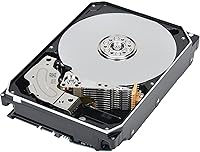
  • RV Sensors: Integrated Rotational Vibration (RV) sensors actively detect and compensate for mechanical vibration generated by neighboring drives in a shared enclosure.
  • OS Compatibility: The drive is compatible with Linux, Mac, and PC (Windows) platforms without the need for additional proprietary drivers.
  • Weight: The drive weighs 1.59 pounds (approximately 721 g), consistent with a standard 3.5-inch high-capacity mechanical NAS drive.
  • Dimensions: Physical dimensions measure 5.79 x 4 x 1.03 inches (L x W x H), fitting any standard 3.5-inch drive bay.
  • Drive Type: This is a mechanical hard disk drive (HDD) using spinning magnetic platters, not solid-state or hybrid flash storage.

Related Reviews
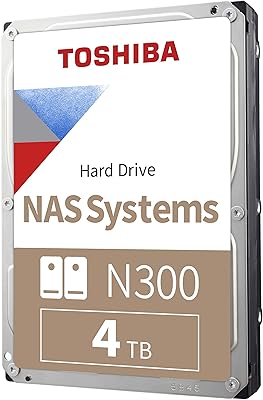
Toshiba N300 4TB NAS Internal Hard Drive
79%
83%
Reliability & Longevity
91%
RAID Compatibility
88%
NAS Compatibility
79%
Sequential Performance
71%
Noise & Vibration
More
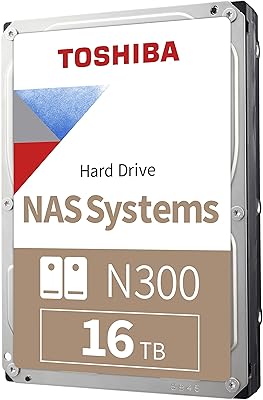
Toshiba N300 16TB NAS Hard Drive
80%
83%
Reliability & Longevity
91%
NAS Compatibility
78%
Read/Write Performance
82%
Noise & Vibration
81%
Thermal Management
More
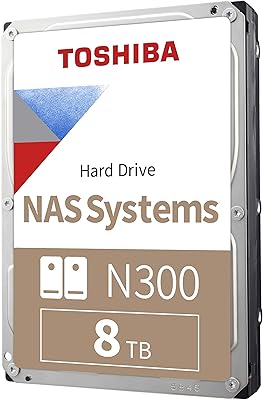
Toshiba N300 8TB NAS Hard Drive
80%
78%
Long-Term Reliability
81%
Noise & Vibration
93%
NAS Compatibility
83%
Read/Write Performance
86%
Value for Money
More
Toshiba N300 6TB NAS Internal Hard Drive
86%
88%
Performance
91%
Reliability
72%
Noise Levels
86%
Data Transfer Speed
85%
Ease of Installation
More
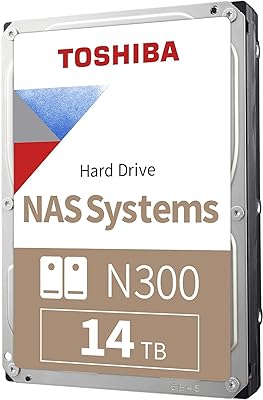
Toshiba N300 14TB NAS Internal Hard Drive
81%
93%
Recording Technology
91%
NAS Compatibility
77%
Reliability & Longevity
86%
Value for Money
74%
Noise & Acoustics
More
Toshiba N300 20TB NAS Internal Hard Drive
87%
91%
Performance
94%
Reliability for 24/7 Operation
85%
Ease of Setup
68%
Noise Levels
96%
Storage Capacity
More
Toshiba N300 PRO 10TB Internal Hard Drive
87%
92%
Reliability for 24/7 NAS Use
89%
Performance in RAID Setups
91%
Workload Capacity (300 TB/year)
85%
Data Transfer Speed
88%
Vibration Control with RV Sensors
More
Toshiba N300 12TB NAS Internal Hard Drive
76%
83%
Reliability & Longevity
81%
Performance Consistency
89%
NAS Compatibility
88%
CMR Recording Quality
62%
Noise & Vibration
More
Western Digital 18TB WD Red Pro NAS Internal Hard Drive
87%
92%
Performance
90%
Reliability
88%
RAID Compatibility
89%
Build Quality
70%
Noise Level Under Load
More
Toshiba MG09 18TB Hard Drive
87%
98%
Storage Capacity
92%
Reliability & Durability
89%
Power Efficiency
87%
Transfer Speed
91%
Noise Levels
More

FAQ

In most cases, yes — the N300 PRO 18TB is widely used across Synology and QNAP enclosures and tends to be recognized without issue. That said, a small number of buyers have reported needing a firmware update on their NAS before the drive appeared correctly. It is always worth checking your NAS manufacturer's official compatibility list and ensuring your enclosure is running the latest firmware before installing any new high-capacity drive.

The core distinction comes down to workload capacity and enclosure scale. The N300 PRO supports a 300 TB/year workload rate compared to 180 TB/year on the standard N300, and it is certified for NAS enclosures with up to 24 bays versus 8 on the standard model. For a small home NAS with light use, the standard N300 is likely sufficient. For business deployments running continuous backups, surveillance feeds, or database workflows, the PRO variant is the more sensible choice.

Technically it will work, but it is a poor fit for that use case. This NAS drive is engineered for always-on, multi-drive enclosures — features like the RV sensors and high workload rating are irrelevant in a single-drive desktop setup. You would essentially be paying a significant premium for capabilities you will never use, and a standard desktop hard drive would serve the same purpose at a fraction of the cost.

Generally well, but thermal management matters. At 7200 RPM and 18TB of platter density, the drive does generate meaningful heat under sustained load, and some users in tightly packed enclosures report elevated temperatures. Most NAS enclosures with active cooling handle this comfortably, but passive or low-airflow setups should plan for adequate ventilation. Monitoring drive temperatures during initial deployment is a sensible precaution.

It is genuinely well-suited to exactly those configurations. The integrated RV sensors are particularly valuable in RAID setups because vibration from neighboring spinning drives can cause read errors in drives that lack this compensation. Beyond that, the 300 TB/year workload rating means the drive handles the ongoing read/write demands of RAID parity operations and periodic rebuilds without being pushed beyond its design envelope.

On paper, all three are competitive business-class NAS drives with comparable workload ratings and reliability specifications. WD Gold carries a strong enterprise reputation and Seagate Exos is often favored for high sequential throughput in dense arrays. In practice, real-world performance differences are marginal in typical NAS environments, and compatibility with your specific enclosure combined with pricing at the time of purchase will often be the deciding factor.

For a NAS under sustained write load, SMR can be genuinely problematic. SMR drives rewrite overlapping magnetic tracks during updates, which causes write throttling when the drive's cache fills — and in a NAS handling continuous backups or active file transfers, that throttling can trigger RAID timeouts or rebuild failures. CMR avoids that behavior entirely, which is why most NAS manufacturers explicitly recommend CMR drives and why this drive uses it.

At 7200 RPM, it is audibly louder than lower-RPM NAS drives. In a dedicated server room or equipment closet, the noise is typically a non-issue. In a quiet open office environment, a multi-drive array running these will be noticeable — especially during seek-heavy operations. If acoustic noise is a significant concern for your setup, it is worth factoring that in before committing.

Toshiba typically covers the N300 PRO series with a 3-year limited warranty, though coverage terms and service conditions can vary by region and retailer, so it is worth confirming specifics at the time of purchase. Regardless of warranty, no mechanical drive is failure-proof, and maintaining a genuine off-site or separate backup strategy is essential — RAID redundancy protects against drive failure but is not a substitute for proper backups.

Honestly, probably not. Toshiba's business-grade spinner is designed and priced for demanding multi-bay business deployments where its higher workload rating and RV sensor technology provide real operational value. For a four-bay home setup handling personal backups or media streaming, a less expensive consumer NAS drive will perform virtually identically in day-to-day use and leave room in the budget for other priorities.

Where to Buy