Overview

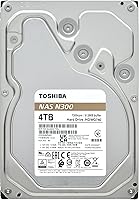
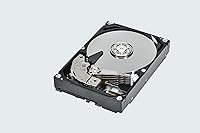
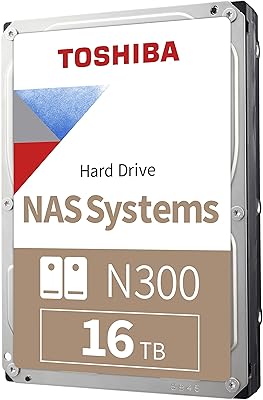
The Toshiba N300 4TB NAS Internal Hard Drive sits squarely in Toshiba's lineup as a purpose-built NAS option for home lab enthusiasts and small office setups — not a drive chasing enterprise workloads. Four terabytes is a practical capacity for most NAS builds: enough to handle a family media library, offsite backup targets, or shared file storage without breaking the bank. Launched in early 2024, this NAS drive has already earned a strong BSR ranking among internal hard drives, suggesting real buyers are finding it worth recommending. Just keep expectations grounded — it is a mechanical spinning drive, and no amount of fast cache changes that fundamental reality.
Features & Benefits

What separates the N300 4TB from a generic desktop drive is how deliberately its specs address NAS-specific headaches. CMR recording technology is the headline here — unlike SMR drives that struggle with RAID rebuilds and sustained writes, CMR handles those scenarios reliably, which matters enormously when irreplaceable data is on the line. The 7200 RPM spindle and 512 MB cache combine to deliver snappy throughput for a mechanical drive, and the 180 TB/year workload rating means it can handle a busy household or a small team accessing shared folders simultaneously. Integrated RV sensors actively counteract vibration from neighboring drives in multi-bay enclosures — a detail that pays real dividends in a fully loaded NAS chassis.

Best For

This NAS drive fits naturally into a handful of specific use cases. If you are building or expanding a 2- to 8-bay NAS — think Synology DS923+ or QNAP TS-464 — and need drives that will not cause headaches during RAID 5 rebuilds, this is a strong candidate. It is equally well-suited for photographers and videographers who keep large raw file archives on a home server running around the clock. Anyone who has previously dealt with the frustration of SMR drives — unexpected slowdowns, failed rebuilds — will find the N300 4TB a much calmer experience. Small offices sharing documents and running light backups across a few users will also find it capable without needing to spend up for enterprise-class hardware.

User Feedback

Across over 400 buyer ratings, Toshiba's SOHO hard drive holds a 4.4-star average — solid, though far from unanimous. Most owners highlight quiet operation and reliable detection across popular NAS enclosures, along with consistent speeds over extended use. The complaints worth noting: a handful of users report drives arriving with shipping damage, and there are occasional early-failure accounts, which is not unusual for mechanical drives at any brand. A few buyers in vibration-sensitive chassis mention audible noise under sustained load. Compared to the WD Red Plus and Seagate IronWolf, sentiment is broadly comparable with no glaring reliability gaps. Long-term owners past the six-month mark generally report steady performance, though no spinning drive replaces a proper, redundant backup strategy.

Pros

  • CMR recording technology ensures RAID rebuilds complete reliably without the write-throttling issues common in SMR drives.
  • The 7200 RPM spindle speed delivers noticeably snappier file transfers compared to slower 5400 RPM NAS drives.
  • Integrated RV sensors actively reduce vibration interference, which matters in fully loaded multi-bay enclosures.
  • Rated for 24/7 continuous operation, so leaving it running indefinitely is exactly what it was designed for.
  • The 180 TB/year workload rating comfortably handles multi-user small office access without stress on the drive.
  • Broadly compatible with major NAS brands including Synology and QNAP right out of the box.
  • Buyers consistently praise quiet operation — this NAS drive runs without drawing attention in a home office environment.
  • At 4TB, the N300 hits a practical capacity sweet spot: enough for most SOHO use cases without overpaying for unused space.
  • Long-term owners past six months generally report stable, consistent performance with no dramatic degradation.

Cons

  • Some buyers report units arriving with physical damage, pointing to packaging that may not adequately protect against rough handling.
  • Early failure reports, while not dominant, appear often enough to make an extended warranty worth considering.
  • The 512 MB cache, while decent, falls behind higher-capacity N300 variants that ship with up to 1 GB.
  • Vibration noise has been noted by a subset of users in certain chassis under sustained sequential workloads.
  • At 4TB, this drive will feel undersized faster than expected for users ingesting large video files regularly.
  • No SSD-like random access speed — applications requiring high IOPS will expose the limits of any spinning drive.
  • The 180 TB/year workload cap means heavy multi-user environments may push this drive harder than intended over time.
  • Competing options like the WD Red Plus and Seagate IronWolf offer comparable reliability, giving buyers little brand-specific reason to stay loyal if pricing shifts.
  • Mechanical drives carry inherent long-term failure risk; no workload rating eliminates the need for a proper backup strategy.

Ratings

The Toshiba N300 4TB NAS Internal Hard Drive was evaluated by our AI rating system after processing hundreds of verified global buyer reviews, with spam, bot activity, and incentivized feedback actively filtered out. Scores reflect a balanced picture of what real owners experienced over days, months, and in some cases over a year of continuous NAS operation. Both the strengths that earned this drive its loyal following and the pain points that caused frustration are transparently represented below.

Reliability & Longevity
83%
Long-term owners consistently report that the N300 4TB keeps running without drama well past the six-month mark, which is exactly the baseline NAS buyers worry about most. The CMR design appears to hold up under the kind of sustained, low-intensity workloads a home or small office NAS typically generates.
Early-failure accounts appear with enough frequency to raise an eyebrow — not alarmingly common, but notable. A small segment of buyers received drives that failed within weeks, and mechanical drives of any brand carry an inherent reliability ceiling that no spec sheet fully captures.
RAID Compatibility
91%
CMR recording technology is the real differentiator here, and buyers who had previously dealt with SMR drives in RAID arrays notice the difference immediately. Rebuilds complete without write-throttling, parity operations behave predictably, and the drive plays well in both RAID 1 and RAID 5 configurations across popular enclosures.
There is little to criticize on paper, but a handful of users note that the drive occasionally required a NAS firmware update to be fully recognized in certain configurations. This is an edge case, but worth researching against your specific enclosure model before committing.
NAS Compatibility
88%
The N300 4TB is recognized out of the box by the major NAS platforms — Synology and QNAP in particular — and most buyers reported clean detection on first boot without any tinkering. The SATA 6 Gb/s interface means there are essentially no compatibility dead-ends for modern enclosures.
Toshiba's compatibility documentation lags slightly behind WD and Seagate, whose hard drive compatibility lists tend to be more granular and regularly updated. Buyers with less common NAS brands may need to do additional research before purchasing with full confidence.
Sequential Performance
79%
21%
The 7200 RPM spindle combined with the 512 MB cache delivers throughput that feels meaningfully faster than 5400 RPM alternatives for sequential tasks — streaming large video files, bulk copying backups, or transferring raw photo libraries across a local network all proceed without frustrating bottlenecks.
Random read/write performance is where any spinning drive exposes its ceiling, and the N300 4TB is no exception. Users running applications that demand high IOPS — like active databases or virtualization workloads — will feel the mechanical limits in ways that a NAS-optimized SSD simply would not produce.
Noise & Vibration
71%
29%
The majority of owners describe day-to-day operation as quiet enough for a home office or living room NAS setup — ambient seek noise is present but unobtrusive during routine file access and background backup jobs.
A notable minority of buyers report audible vibration noise during sustained sequential workloads, particularly in chassis that lack rubber-dampened drive trays. In an enclosure with tightly packed drives running simultaneously, resonance can become an issue that no amount of firmware can fully resolve.
Value for Money
82%
18%
Relative to its direct competitors in the NAS drive category, the N300 4TB sits at a price point that buyers generally find fair given the CMR recording, 24/7 rating, and workload spec. Buyers upgrading from SMR drives view it as a worthwhile investment in predictability rather than a premium splurge.
Competing options like the WD Red Plus and Seagate IronWolf regularly trade price positions with the N300 4TB, and at any given moment one of them may undercut it. There is no strong brand-loyalty argument here — the value equation depends heavily on current pricing at time of purchase.
Workload Headroom
76%
24%
The 180 TB/year workload rating covers the realistic demands of most home users and small offices with several concurrent users accessing shared folders, running scheduled backups, and streaming media simultaneously without the drive being pushed into a stress zone.
Power users or small teams that run heavier-than-average data pipelines may approach the workload ceiling faster than anticipated, particularly if the NAS doubles as a media transcoding or surveillance storage target. The N300 PRO's 550 TB/year rating exists for a reason, and some buyers eventually discover they needed it from the start.
Vibration Compensation
77%
23%
The integrated RV sensors are a genuine engineering feature, not a marketing checkbox — in multi-drive bays, where neighboring drives create competing vibration patterns, buyers with four or more drives installed report that performance remains stable in ways that budget NAS drives without RV compensation do not always match.
RV sensors compensate rather than eliminate, and in chassis with poor vibration isolation the sensors can only do so much. A small number of users in older or budget NAS enclosures still experienced performance variability they attributed to mechanical resonance despite the sensor hardware being present.
Packaging & Shipping Protection
58%
42%
The drive itself is well-constructed internally, and buyers who received units in good condition report no concerns with physical build quality fresh out of the box.
Packaging-related damage is one of the more consistent complaint themes across verified reviews — enough so that it stands out as a real pattern rather than isolated bad luck. Mechanical drives are uniquely vulnerable to transit shock, and some buyers received units that were visibly or functionally compromised before they ever installed them.
24/7 Operation Suitability
86%
Buyers running always-on home servers — personal cloud, Plex media servers, automated backup targets — find that this NAS drive handles continuous power-on without thermal complaints or performance drift over extended periods. It genuinely earns its 24/7 rating in typical SOHO deployments.
In environments where the NAS also handles intermittent high-temperature conditions or poor airflow, continuous operation adds cumulative stress that any mechanical drive will eventually reflect in SMART error data. Adequate ventilation is not optional for drives running without pause.
Installation Experience
84%
Physical installation is straightforward for anyone who has handled a 3.5-inch drive before — standard mounting points, a familiar SATA connector, and the correct form factor for all major NAS bays. First-time NAS builders generally report no issues getting the drive seated and recognized.
The drive ships without mounting screws or cables, which experienced builders expect but first-time buyers occasionally find surprising. It is not a flaw in the drive itself, but the unboxing experience can catch newcomers off-guard if they have not sourced the necessary accessories in advance.
Long-Term Consistency
81%
19%
Owners who have used this NAS drive for six months or longer generally report that throughput and detection reliability remain stable over time, with no gradual degradation in everyday NAS tasks like scheduled backups and media serving.
A smaller subset of long-term owners have reported incremental SMART attribute changes — reallocated sectors and seek error rates — emerging after the first year of heavy use, which is not unusual for mechanical drives but is worth monitoring actively rather than ignoring.
Thermal Management
74%
26%
Under typical NAS workloads in a ventilated enclosure, the drive runs at temperatures that most NAS operating systems report as comfortably within normal range, and buyers in well-cooled setups have no thermal complaints to speak of.
In poorly ventilated or compact enclosures without active airflow, sustained workloads push temperatures higher than ideal. This is partly a chassis issue rather than a drive flaw, but buyers in passively cooled NAS units should monitor temperature readings and not assume the drive will self-regulate without adequate airflow.

Suitable for:

The Toshiba N300 4TB NAS Internal Hard Drive was built with a clear audience in mind: home users and small office teams who need dependable, always-on storage without paying for enterprise-grade hardware they will never fully use. If you are setting up or expanding a Synology, QNAP, or similar NAS enclosure with two to eight bays, this drive fits naturally into that ecosystem and is confirmed compatible across major platforms. It is particularly well-matched for photographers, videographers, and content creators who accumulate large files quickly and need a local archive that stays online around the clock. Anyone currently running SMR-based drives who has experienced painfully slow RAID rebuilds or write throttling will find the CMR design here a meaningful step up. Small office environments sharing documents, running light backups, or hosting a personal cloud for a handful of users will also find the workload rating more than adequate for day-to-day demands.

Not suitable for:

The Toshiba N300 4TB NAS Internal Hard Drive is not the right tool for every storage problem, and being honest about that saves buyers real frustration. If your NAS hosts more than eight drives or operates under heavy concurrent workloads from a larger team, you will quickly hit the ceiling of what this drive's workload rating comfortably supports — the N300 PRO or an enterprise-class alternative would serve you better. Pure speed seekers should also look elsewhere: no 7200 RPM mechanical drive competes with even a mid-range SSD for random read/write performance, so if your NAS doubles as a high-IOPS application server or a 4K editing scratch disk, this is the wrong category entirely. Buyers in regions with inconsistent shipping infrastructure should be aware that some units have arrived with physical damage, which is a mechanical drive vulnerability in general. Finally, anyone who treats a NAS as their sole backup destination is taking a risk no drive brand can fully mitigate — redundancy and an offsite copy remain essential regardless of drive quality.

Specifications

  • Capacity: This NAS drive offers 4 TB of formatted storage capacity, suitable for large media libraries and multi-user shared folders.
  • Interface: It connects via SATA 6 Gb/s, ensuring compatibility with virtually all modern NAS enclosures and desktop motherboards.
  • Rotational Speed: The drive spins at 7200 RPM, placing it at the faster end of the mechanical hard drive spectrum for improved sequential throughput.
  • Cache Size: A 512 MB buffer helps smooth out bursts of read and write activity during typical NAS workloads.
  • Recording Tech: CMR (Conventional Magnetic Recording) is used, which supports stable RAID array performance and reliable long-term data integrity.
  • Form Factor: The standard 3.5-inch form factor fits all desktop NAS enclosures and full-size internal drive bays without adapters.
  • Workload Rating: Toshiba rates this drive for up to 180 TB of data transferred per year, covering moderate multi-user small office demands comfortably.
  • Operation: The drive is rated for 24/7 continuous operation, meaning it is designed to stay powered on indefinitely without performance degradation.
  • RV Sensors: Integrated rotational vibration sensors detect and compensate for mechanical interference from neighboring drives in multi-bay NAS chassis.
  • Drive Bays: The N300 4TB is validated for use in NAS enclosures supporting up to 8 drive bays.
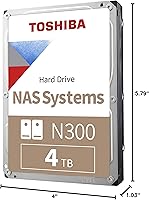
  • Dimensions: Physical dimensions measure 5.79 x 4 x 1.03 inches, consistent with the standard 3.5-inch internal hard drive footprint.
  • Weight: The drive weighs 1.52 pounds, which is typical for a 3.5-inch mechanical hard drive of this capacity.
  • Compatible Devices: Primary compatibility targets include NAS enclosures from brands such as Synology and QNAP, as well as standard desktop computers.
  • Installation Type: This is an internal hard drive requiring installation inside a compatible NAS enclosure or desktop chassis — it is not an external or portable device.
  • Model Number: The official model identifier is HDWG740XZSTC, which can be used to verify compatibility with specific NAS vendor hard drive lists.
  • Availability Date: The drive became available in March 2024, making it a relatively recent addition to Toshiba's NAS storage lineup.
  • ASIN: The Amazon Standard Identification Number for this drive is B0CYQKM11S, useful for cross-referencing listings and verified purchase reviews.

Related Reviews
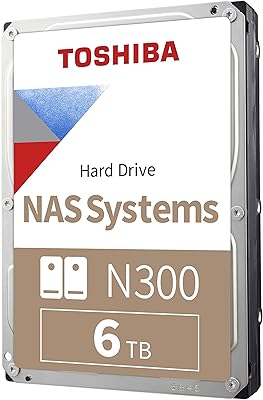
Toshiba N300 20TB NAS Internal Hard Drive
87%
91%
Performance
94%
Reliability for 24/7 Operation
85%
Ease of Setup
68%
Noise Levels
96%
Storage Capacity
More
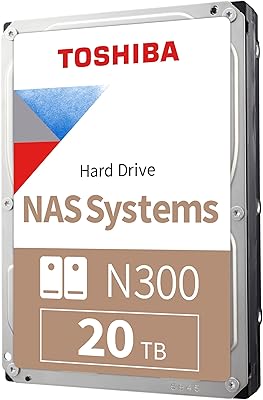
Toshiba N300 6TB NAS Internal Hard Drive
86%
88%
Performance
91%
Reliability
72%
Noise Levels
86%
Data Transfer Speed
85%
Ease of Installation
More
Toshiba N300 12TB NAS Internal Hard Drive
86%
89%
Performance
91%
Reliability
80%
Setup and Installation
87%
Noise Level
88%
Build Quality
More
Toshiba N300 14TB NAS Internal Hard Drive
83%
96%
Storage Capacity
91%
Performance in NAS Systems
89%
Reliability for 24/7 Use
67%
Ease of Setup
84%
Vibration Resistance
More
Toshiba N300 PRO 18TB NAS Internal Hard Drive
87%
94%
Performance
92%
Reliability
88%
Data Transfer Speed
72%
Noise Levels
89%
Build Quality
More
Toshiba N300 16TB NAS Hard Drive
80%
83%
Reliability & Longevity
91%
NAS Compatibility
78%
Read/Write Performance
82%
Noise & Vibration
81%
Thermal Management
More
Toshiba N300 8TB NAS Hard Drive
80%
78%
Long-Term Reliability
81%
Noise & Vibration
93%
NAS Compatibility
83%
Read/Write Performance
86%
Value for Money
More
Toshiba N300 PRO 10TB Internal Hard Drive
87%
92%
Reliability for 24/7 NAS Use
89%
Performance in RAID Setups
91%
Workload Capacity (300 TB/year)
85%
Data Transfer Speed
88%
Vibration Control with RV Sensors
More
Toshiba X300 PRO 4TB Internal Hard Drive
87%
94%
Performance
92%
Reliability under Heavy Workloads
88%
Ease of Installation
77%
Noise Levels
91%
Value for Money
More
Western Digital 4TB WD Red Plus NAS Internal Hard Drive
89%
91%
Performance
94%
Reliability
88%
Energy Efficiency
85%
Noise Levels
89%
Workload Handling
More

FAQ

You are safe here. The N300 4TB uses CMR recording, which handles RAID rebuilds the way drives always used to — without the write-throttling issues that plague SMR drives under sustained load. If RAID reliability matters to you, CMR is a hard requirement, and this drive meets it.

In most cases, yes. Toshiba's N300 series is widely recognized by major NAS vendors, and many Synology and QNAP models list it explicitly on their hard drive compatibility pages. It is always worth double-checking the specific compatibility list for your enclosure model before purchasing, just to be certain.

Most owners describe it as quiet enough to forget it is running in a home office environment. There are occasional reports of vibration noise in certain chassis under heavy sequential workloads, but day-to-day operation — browsing files, streaming, light backups — is generally unobtrusive.

It works fine in a desktop PC. The SATA interface and 3.5-inch form factor are standard, so installation is straightforward. That said, the drive is engineered and priced for NAS use cases, so if you just need a secondary desktop storage drive, there are less expensive options without the NAS-specific engineering overhead.

Exceeding the rated workload does not cause instant failure, but it does push the drive beyond the conditions Toshiba optimized and warranted it for. Over time, running significantly above that threshold can accelerate wear and increase the likelihood of early failure. If your environment consistently pushes heavy multi-user traffic, consider stepping up to the N300 PRO, which is rated for much higher annual workloads.

That depends on what you are storing. For a family photo and video library, personal cloud, or small office document server, 4TB goes further than most people expect. If you are shooting 4K video regularly or ingesting raw files from multiple cameras, you may find yourself wanting more within a year or two. Buying a larger drive upfront is usually more cost-effective than upgrading sooner than planned.

All three are solid CMR NAS drives with comparable reliability track records, and buyer sentiment across platforms does not reveal a dramatic winner. The WD Red Plus and IronWolf both have longer market histories and slightly broader NAS vendor compatibility documentation, but the N300 4TB holds its own in real-world performance and long-term owner feedback. Price fluctuations often end up being the deciding factor between them.

No single drive, regardless of brand or spec, is a substitute for a proper backup strategy. At minimum, run a RAID configuration for redundancy, but understand that RAID is not a backup — it protects against drive failure, not accidental deletion or ransomware. Follow the 3-2-1 rule: three copies of your data, on two different media types, with one stored offsite or in the cloud.

It comes up often enough to be worth acknowledging, but it does not appear to be the norm. Mechanical hard drives are sensitive to physical shock, and shipping can be rough. If your drive arrives and sounds unusual during the first boot — clicking, grinding, or failing to spin up — contact the seller immediately and do not attempt to use it. Running a quick SMART check after installation is a good habit regardless of how the drive looks externally.

No. Like most bare internal hard drives, the N300 4TB ships without mounting screws, SATA cables, or accessories. Your NAS enclosure typically includes the necessary mounting hardware, but you may need a SATA data cable if you are installing it into a desktop PC that does not already have a spare.