Overview

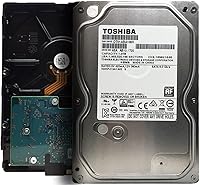
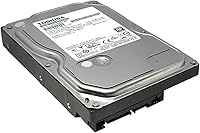
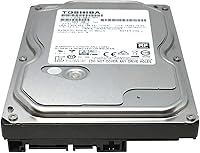
The Toshiba DT01ABA100V 1TB Surveillance Internal Hard Drive is built with a specific job in mind: keeping security footage flowing around the clock without missing a beat. Unlike standard desktop drives, surveillance workloads are demanding — constant sequential writes, zero downtime, and firmware that needs to handle video streams gracefully rather than random file access. Toshiba has a long track record in the storage industry, and this drive reflects that experience. It uses a 3.5-inch internal form factor with a SATA interface, fitting into virtually any DVR or NVR enclosure you'll encounter. At its price point, it's an honest entry-level option — practical and unpretentious about what it delivers.
Features & Benefits

The 1TB capacity supports roughly 30 days of continuous footage at 720p and 30 frames per second on a single camera — comfortable for solo-channel setups, but tight the moment you add cameras or raise resolution. The 5700 RPM spin speed is a deliberate design choice: slower than a typical desktop drive, generating less heat and wear during the relentless sequential writes that surveillance demands. A 32MB cache buffers the incoming data stream, keeping recording smooth during peak hours. The SATA 6.0 Gb/s interface handles throughput without complaint, and the video-tuned firmware prioritizes stream stability over the random read-write patterns that general-purpose drives are optimized for.

Best For

This surveillance HDD makes the most sense for home CCTV setups running one to four cameras at standard definition, where 1TB provides a solid recording window before footage loops. Small business owners who need reliable always-on storage without overbuilding their budget will find it a practical fit. It's also a dependable drop-in replacement when an existing DVR drive fails and you want the system back online without rethinking capacity. Installers handling straightforward client builds will appreciate that it works without configuration headaches. That said, if you're running multiple high-definition feeds or need extended retention, stepping up to a higher capacity is the smarter call.

User Feedback

Across roughly 126 ratings, the Toshiba DT01ABA100V holds a 4.3-star average — solid, though not a standout. Buyers frequently praise its quiet, unobtrusive operation and how cleanly it integrates with common DVR systems right out of the box. The criticism, when it surfaces, typically centers on capacity: users who started with one camera and later expanded found 1TB filling up faster than anticipated. A handful of early-failure reports exist, but the sample size makes firm reliability conclusions difficult to draw. Compared to WD Purple or Seagate SkyHawk at the same capacity, some reviewers note those alternatives offer slightly more refined firmware, though often at a higher price.

Pros

  • Purpose-built for 24/7 operation, reducing the wear risk that plagues general-purpose drives in always-on setups.
  • The 5700 RPM speed lowers heat output and power draw during continuous recording sessions.
  • Fits virtually any standard DVR or NVR enclosure thanks to the universal 3.5-inch SATA form factor.
  • Video-optimized firmware keeps the data stream stable, minimizing dropped frames during recording.
  • Quiet operation — users consistently note it runs without noticeable noise inside enclosed DVR units.
  • 32MB cache smooths out write bursts, keeping recording consistent even during motion-triggered spikes.
  • RAID-compatible design gives installers flexibility to pair drives in multi-bay surveillance appliances.
  • Straightforward drop-in replacement for failed DVR drives with no configuration required.
  • Toshiba's established presence in the storage market provides reasonable confidence in build quality at this tier.

Cons

  • 1TB fills up fast in multi-camera setups — four cameras at 1080p can exhaust capacity in under a week.
  • No published MTBF or annualized failure rate data makes it harder to evaluate long-term reliability objectively.
  • The review pool of roughly 126 ratings is too small to draw confident conclusions about failure patterns.
  • Competing options like WD Purple and Seagate SkyHawk offer more refined surveillance firmware at comparable capacity.
  • Not appropriate for general desktop or NAS use — the video-tuned firmware hurts performance in mixed workloads.
  • No bundled software, mounting hardware, or installation accessories included in the package.
  • Warranty terms are not prominently communicated, which can be frustrating when assessing long-term value.
  • Higher-resolution IP camera systems will outgrow this drive faster than buyers typically anticipate.

Ratings

Our AI rating engine analyzed verified global user reviews for the Toshiba DT01ABA100V 1TB Surveillance Internal Hard Drive, actively filtering out incentivized, duplicate, and bot-generated feedback to surface what real buyers actually experience. The scores below reflect a balanced picture — genuine strengths and documented pain points weighted equally — so you can make a confident buying decision without wading through noise.

DVR Compatibility
91%
Buyers installing this dedicated DVR drive into Hikvision, Dahua, Swann, and generic Chinese-branded DVR units consistently report zero compatibility issues straight out of the box. The standard SATA interface and 3.5-inch footprint mean it slots in cleanly without adapters, jumper settings, or firmware headaches.
A small number of users with older, low-end DVR models from discontinued brands reported the unit not being recognized on first boot, requiring a manual format through the DVR menu. This is largely a DVR firmware issue rather than a drive defect, but it caught some first-time buyers off guard.
24/7 Endurance
83%
The surveillance-tuned firmware and 5700 RPM spin speed make this drive genuinely better suited to always-on environments than a repurposed desktop drive. Users running home CCTV systems report months of continuous operation without recording interruptions or drive errors appearing in DVR logs.
The review sample of roughly 126 ratings is too small to draw confident long-term conclusions, and a handful of buyers did report early failures within the first six months. Whether those represent a systemic issue or typical statistical variance in mechanical drives is impossible to say with certainty at this sample size.
Recording Capacity
62%
38%
For a single-camera setup recording at 720p, 1TB delivers a comfortable 30-day rolling window before footage begins overwriting — which is genuinely sufficient for most home security use cases where the goal is incident review rather than long-term archiving.
The moment you add a second or third camera, or push resolution to 1080p, capacity becomes a real constraint fast. Several buyers expressed frustration that the 30-day estimate is only achievable under very specific, low-demand conditions that don't reflect how most multi-camera systems are actually used.
Noise & Vibration
88%
Quiet operation is one of the most consistently praised traits of the Toshiba DT01ABA100V. Users with DVR units placed in living spaces or home offices note that the drive is essentially inaudible during normal recording, especially compared to louder 7200 RPM drives they had previously used.
A few buyers noticed a faint periodic clicking or ticking sound during sustained write activity, particularly in very quiet rooms. This appears infrequent and within normal mechanical tolerances, but it is worth noting for anyone installing the drive in a bedroom or noise-sensitive environment.
Value for Money
74%
26%
For buyers who need a straightforward 1TB surveillance drive and do not want to overpay for features their simple DVR will never use, the price-to-function ratio is reasonable. It reliably does what a basic surveillance drive should, and installers treating it as an OEM-grade consumable generally consider it fair value.
At its price point, WD Purple and Seagate SkyHawk offer comparable or slightly better firmware refinement for similar money, which makes the value case for this surveillance HDD less clear-cut than it would be if it had a more obvious price advantage over those alternatives.
Heat Management
81%
19%
The 5700 RPM design keeps operating temperatures noticeably lower than faster desktop drives under the same sustained workload. Users who monitor drive temperatures via DVR diagnostics report stable readings well within safe ranges during extended summer months.
Drives installed in compact, poorly ventilated DVR enclosures with no active cooling did show higher idle temperatures in some user reports. In tight enclosures, ambient heat from other components can compound the issue, though this is largely an enclosure design problem rather than a fault of the drive itself.
Installation Experience
89%
The physical installation process is about as simple as it gets — mount it, connect the SATA data and power cables, and let the DVR handle the rest. First-time DIY installers with no prior hardware experience consistently report having the drive up and recording within minutes of unboxing.
The drive ships as a bare unit with no mounting screws, SATA cable, or installation guide included. While experienced users expect this, complete beginners have occasionally been caught off guard needing to source hardware separately before they can finish the installation.
Write Performance
79%
21%
Sequential write performance is well-matched to the demands of continuous video recording. The 32MB cache keeps the data pipeline running smoothly during motion-triggered recording spikes, and users report no frame-dropping or recording gaps attributable to drive throughput limitations.
For anything beyond sequential surveillance writes — occasional file access, DVR-side playback of multiple channels simultaneously, or use as a general storage volume — the drive's performance feels sluggish. It is clearly optimized for one job and does not pretend to be a versatile performer.
Build Quality
77%
23%
The physical construction feels solid and consistent with what you would expect from a Toshiba internal drive. The chassis shows no flex or rattling when handled, and the connection points are clean and well-aligned for easy cabling during installation.
There is nothing visibly premium about the enclosure — it is a functional, utilitarian build. A small number of users reported cosmetic scuffs or minor scratches on arrival, suggesting packaging could be more protective for a component that buyers expect to arrive in pristine condition.
RAID Reliability
72%
28%
Users who deployed two drives in a mirrored RAID 1 configuration within multi-bay DVR units reported stable performance, with both drives recognized correctly and no sync errors during the monitoring period. For installations where uptime is critical, RAID pairing worked as intended.
RAID performance data comes from a very small subset of reviewers, so confidence in this use case is limited. Buyers considering RAID deployments for commercial or higher-stakes applications would be better served by drives with formally documented RAID reliability specifications.
Packaging & Delivery
68%
32%
The drive typically arrives well within the expected delivery window, and most buyers report receiving a unit that is clean, properly sealed, and shows no signs of transit damage under standard shipping conditions.
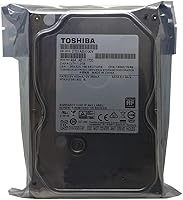
The retail packaging is minimal — essentially an anti-static bag inside a plain cardboard box — which offers limited cushioning against rough handling. A handful of buyers reported receiving units with dented corners or loose internal movement, suggesting the packaging does not always hold up to aggressive carrier handling.
Firmware Intelligence
71%
29%
The video-optimized firmware handles the predictable, sequential nature of surveillance recording well, avoiding the error-recovery timeout behaviors that general-purpose drives can exhibit when connected to DVR systems expecting near-instant responses.
Compared to WD Purple’s AllFrame technology or Seagate SkyHawk’s ImagePerfect firmware, the Toshiba’s firmware feels less sophisticated in handling simultaneous multi-stream recording. For basic setups this gap is invisible, but it surfaces under heavier workloads.
Long-Term Reliability
69%
31%
The majority of buyers who reviewed after extended use — six months to a year or more — reported drives still functioning without errors, which is an encouraging sign for a component running in a demanding always-on environment.
Early failure reports, while not dominant, appear with enough frequency in the review pool to warrant caution. Without published MTBF data or a transparent failure rate from the manufacturer, buyers have to rely on anecdotal evidence, which is an uncomfortable position for a mission-critical recording component.

Suitable for:

The Toshiba DT01ABA100V 1TB Surveillance Internal Hard Drive is a well-matched choice for homeowners setting up a basic CCTV system with one to four cameras recording at standard definition. If you're running a single-channel DVR and want approximately 30 days of looping footage without managing multiple drives, this dedicated DVR drive covers that use case cleanly. Small business owners — think a retail shop, a small office, or a storage unit facility — who need always-on recording but aren't archiving high-resolution footage will find the capacity and endurance spec appropriate for daily operations. It also works well as a straightforward replacement drive when an existing DVR unit fails and you simply need the system running again without rearchitecting anything. Security installers handling entry-level residential or light commercial builds will appreciate that it drops into most SATA-based enclosures without compatibility headaches.
Not suitable for:

Buyers running four or more cameras, recording at 1080p or higher, or expecting extended retention beyond a few weeks should look elsewhere — the Toshiba DT01ABA100V 1TB Surveillance Internal Hard Drive will fill up quickly and force more frequent overwrites than most users are comfortable with. If your setup is scaling toward an NVR system with multiple high-definition IP cameras, a 2TB, 4TB, or larger option from WD Purple or Seagate SkyHawk will serve you far better in the long run. This dedicated DVR drive is also not a substitute for a general-purpose desktop hard drive — its firmware is tuned for sequential video writes, not the random read-write patterns that an operating system or application workload demands. Anyone building a NAS for mixed media storage and surveillance simultaneously should treat this as the wrong tool for that job. Finally, buyers who need enterprise-grade reliability guarantees or documented MTBF specifications for compliance purposes will find the available data on this drive insufficient.
Specifications

  • Storage Capacity: The drive offers 1TB of raw storage, sufficient for approximately 30 days of looping footage from a single camera at 720p and 30 frames per second.
  • Form Factor: Standard 3.5-inch internal design fits the vast majority of desktop DVR and NVR enclosures without adapters.
  • Interface: Uses a SATA 6.0 Gb/s connection, ensuring fast and stable data transfer in any compatible surveillance or desktop enclosure.
  • Rotational Speed: Spins at 5700 RPM, a deliberate choice that reduces heat generation and mechanical wear during continuous 24/7 recording.
  • Cache Buffer: Equipped with a 32MB cache to help maintain a smooth, uninterrupted data stream from connected cameras.
  • Operation Mode: Engineered for 24/7 continuous operation, unlike general-purpose drives that are designed primarily for intermittent desktop workloads.
  • Firmware Type: Surveillance-optimized firmware prioritizes stable sequential video writes over the random read/write patterns typical of desktop or NAS use.
  • RAID Support: RAID-compatible, allowing the drive to be deployed in multi-bay DVR or NVR appliances that use hardware or software RAID configurations.
  • Dimensions: Measures 5.79 x 4 x 1.03 inches, conforming to the standard 3.5-inch HDD footprint used across the industry.
  • Weight: Weighs 1.21 pounds, consistent with standard full-size 3.5-inch mechanical hard drives.
  • Compatibility: Compatible with CCTV DVR systems, standalone NVR appliances, and RAID-capable enclosures that accept 3.5-inch SATA drives.
  • Installation Type: Internal installation only — this drive is not designed for use in external USB enclosures as a primary surveillance drive.
  • Manufacturer: Made by Toshiba, a well-established storage and electronics manufacturer with decades of hard drive production experience.
  • Model Number: The official model designation is DT01ABA100V, which identifies it as a surveillance-class variant within Toshiba's DT01 drive family.
  • Color: Ships in a standard silver metallic finish typical of bare 3.5-inch internal hard drives.
  • Availability: Listed as not discontinued by the manufacturer as of the product listing date, indicating active production status.

Related Reviews

Toshiba MQ01ABD100 1TB 2.5″ Internal Hard Drive
81%
88%
Value for Money
91%
Noise Level
93%
Installation Ease
52%
Read/Write Speed
67%
Long-Term Reliability
More
Seagate Exos 1TB Internal Hard Drive
85%
91%
Performance
94%
Reliability
89%
Durability
87%
Workload Handling
80%
Installation Ease
More
Seagate BarraCuda ST1000DM010 1TB Internal Hard Drive
77%
91%
Value for Money
74%
Reliability & Longevity
79%
Read & Write Performance
93%
Installation Ease
68%
Noise & Vibration
More
WD Purple 1TB Surveillance Hard Drive
75%
91%
Recording Reliability
88%
DVR Compatibility
57%
Storage Capacity
84%
Long-Term Durability
79%
Value for Money
More
Toshiba N300 14TB NAS Internal Hard Drive
83%
96%
Storage Capacity
91%
Performance in NAS Systems
89%
Reliability for 24/7 Use
67%
Ease of Setup
84%
Vibration Resistance
More
Toshiba X300 PRO 12TB Internal Hard Drive
87%
89%
Performance
96%
Storage Capacity
87%
Build Quality
90%
Durability
92%
Reliability Under Heavy Use
More
Western Digital WD1003FBYX 1TB Internal Hard Drive
87%
91%
Performance
88%
Reliability
85%
Ease of Installation
67%
Noise Level
93%
Compatibility with Desktop Systems
More
Toshiba X300 PRO 22TB Internal Hard Drive
86%
92%
Performance
96%
Storage Capacity
88%
Reliability Under Heavy Load
85%
Data Transfer Speed
91%
Build Quality
More
Toshiba N300 12TB NAS Internal Hard Drive
86%
89%
Performance
91%
Reliability
80%
Setup and Installation
87%
Noise Level
88%
Build Quality
More
Toshiba X300 PRO 4TB Internal Hard Drive
87%
94%
Performance
92%
Reliability under Heavy Workloads
88%
Ease of Installation
77%
Noise Levels
91%
Value for Money
More

FAQ

In most cases, yes. The Toshiba DT01ABA100V 1TB Surveillance Internal Hard Drive uses a standard SATA interface and 3.5-inch form factor, so it physically fits and connects to the vast majority of consumer and prosumer DVR units. Most DVRs will detect and format it automatically on first boot. That said, it is always worth checking your DVR manufacturer's compatibility list, particularly for older units.
At 720p and 30 frames per second on a single camera, you can expect roughly 30 days before the drive loops and begins overwriting the oldest footage. Add more cameras or increase resolution, and that window shrinks considerably — four 1080p cameras could fill the drive in under a week. If retention matters to you, plan capacity around your actual camera count and resolution before buying.

Not really. The firmware on this dedicated DVR drive is tuned for sequential video writes, not the random read/write patterns that desktop operating systems and applications rely on. You could physically install it in a PC, but performance would be underwhelming for day-to-day computing tasks, and using it as a system drive is not recommended.

It is RAID-compatible, so it can technically function in certain NAS enclosures, but it is not optimized for NAS workloads. Drives like the WD Red series are specifically engineered for the mixed read/write demands of a NAS environment. For a pure surveillance NAS, it may work acceptably, but for general-purpose network storage, a NAS-specific drive is a better fit.

Not under normal surveillance conditions. The 5700 RPM speed is actually well-suited to the sequential nature of video recording — the drive does not need to seek rapidly across the platter like a desktop drive would. The 32MB cache further helps buffer incoming data, keeping the stream consistent. Dropped frames are far more likely to be caused by a DVR processing bottleneck than by this drive's rotational speed.

All three are purpose-built surveillance drives and will perform similarly in basic single-DVR setups. The WD Purple and Seagate SkyHawk have slightly more documented firmware refinements for multi-camera environments and often come with more clearly published reliability specifications. For a simple home setup, the differences are unlikely to matter much day to day, but for more demanding deployments, those alternatives are worth considering.

Toshiba typically covers their drives with a limited warranty, but the specific terms can vary by region and purchase channel, so it is worth confirming warranty coverage directly with the seller or Toshiba before buying. Warranty documentation is not always prominently included in the retail packaging, which is a known frustration among buyers of this drive.

Yes, the drive is RAID-compatible, so pairing two units in a RAID 1 configuration is a supported use case, provided your DVR or NVR enclosure supports it. This is a practical approach if continuous recording uptime is critical and you want a backup in case one drive fails. Just verify that your enclosure supports RAID 1 natively before purchasing multiple drives.

Users consistently describe this surveillance HDD as quiet during operation. The 5700 RPM speed keeps mechanical noise lower than a typical 7200 RPM desktop drive, and most people report it being inaudible once installed inside a closed DVR enclosure. If your DVR has a noisy cooling fan, you almost certainly will not hear the drive at all.

Two cameras recording continuously at 1080p will eat through 1TB faster than you might expect — depending on compression settings and frame rate, you could be looking at less than two weeks of retention. If you want meaningful footage history for a two-camera 1080p setup, a 2TB or 4TB drive would give you much more breathing room and peace of mind.

Where to Buy