
Overview

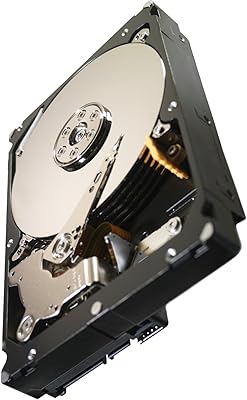
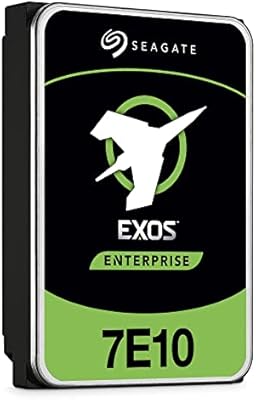
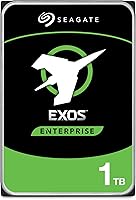
The Seagate Exos 1TB Internal Hard Drive is Seagate's entry point into the Exos enterprise lineup — a family built around continuous, around-the-clock operation rather than the looser demands of desktop or consumer NAS drives. It ships as a bare drive in frustration-free packaging, so don't expect mounting hardware or cables in the box. Within the Exos range, the 1TB sits at the lower capacity end, which shapes its value proposition: you're paying for enterprise-grade endurance in a compact footprint, not raw storage density. Small businesses and IT pros managing on-premise infrastructure will find it a practical, cost-conscious choice for builds where reliability outranks gigabyte-per-dollar math.

Features & Benefits

Spin it up and you're looking at a 7200 RPM drive with a 128MB cache — a pairing that keeps read/write throughput consistent under sustained load. Sequential speeds reach around 194MB/s, which is adequate for backup jobs, database reads, and file-server traffic without much bottleneck. The SATA 6Gb/s interface fits cleanly into most existing server and desktop builds with no adapter headaches. What genuinely stands out is the 500TB/year workload rating and a 2-million-hour MTBF figure. That second number is a manufacturer estimate of statistical reliability across a large drive population — not a guarantee your individual unit lasts that long, but it does reflect a design built for heavy, continuous use.

Best For

This enterprise drive hits its sweet spot in a handful of specific use cases. If you're building or expanding a small business NAS and prioritize drive longevity over squeezing out maximum storage per rack unit, it belongs on your shortlist. IT administrators swapping out aging SATA drives in servers will appreciate the straightforward compatibility and five-year warranty coverage. Home lab users running TrueNAS or Proxmox around the clock will get more out of this than a consumer desktop drive rated for far lighter workloads. It also works well as a secondary backup tier in larger arrays. Where it makes less sense: anyone needing bulk cold storage at the lowest possible cost per terabyte, since 1TB is a modest capacity for the price.

User Feedback

Across more than 1,000 ratings, the Exos 1TB holds a 4.4-star average — and reviews skew heavily toward system builders and IT professionals rather than everyday consumers. Consistent praise centers on quiet operation and steady performance in NAS enclosures, with several owners noting years of continuous uptime without issue. The main gripe is straightforward: 1TB feels tight for an enterprise-labeled drive when consumer alternatives offer more capacity at comparable or lower prices. A small number of buyers reported dead-on-arrival units, though that pattern doesn't appear notably worse than industry norms. Comparisons to WD Gold and Toshiba enterprise drives come up often, and this Seagate HDD tends to hold its own on value and noise levels.

Pros

  • Engineered for 24/7 continuous operation, making it far more durable than typical desktop drives under sustained workloads.
  • The five-year limited warranty is one of the longer coverage periods in the enterprise HDD segment.
  • Quiet operation under load is a consistent standout in real user feedback, especially in NAS enclosures.
  • SATA 6Gb/s interface drops straight into virtually any server, desktop, or NAS build without adapter hassles.
  • A 2-million-hour MTBF rating reflects a drive designed with long-term reliability as a core priority.
  • Sequential throughput around 194MB/s handles backup jobs and database reads without becoming a bottleneck.
  • Compares favorably to WD Gold and Toshiba enterprise alternatives on both noise levels and value.
  • The 500TB/year workload rating offers meaningful headroom for small business file servers running daily operations.
  • Frustration-free packaging keeps costs lean and avoids unnecessary waste for buyers who just need the bare drive.

Cons

  • At 1TB, the capacity feels limited for the price when consumer drives offer much more storage for less money.
  • Not a viable option for anyone needing SSD-level read/write speeds for latency-sensitive applications.
  • Ships as a bare drive with no mounting hardware, cables, or accessories included — budget for those separately.
  • A small but notable number of buyers have reported dead-on-arrival units, so testing immediately on arrival is wise.
  • The enterprise positioning may mislead casual buyers into overpaying for endurance specs they will never actually use.
  • Higher-capacity Exos models often deliver better cost-per-terabyte value, making the 1TB tier a niche choice.
  • No built-in hardware encryption on this model, which may matter for compliance-sensitive deployments.
  • Heavier than some competing drives at 1.21 pounds, which can add up across a densely packed server chassis.

Ratings

The scores below reflect our AI-driven analysis of verified global buyer reviews for the Seagate Exos 1TB Internal Hard Drive, with spam, incentivized, and bot-flagged submissions actively filtered out before scoring. Ratings are drawn from real-world feedback by system builders, IT administrators, and home lab users who put this enterprise drive through sustained, demanding workloads. Both consistent strengths and recurring frustrations are transparently factored into every score.

Reliability & Uptime
91%
Users running TrueNAS and Proxmox setups report multi-year continuous operation without a single failure, which is exactly the kind of real-world track record that matters when a drive is powering a live server. The enterprise-grade design clearly translates to everyday dependability for small business and home lab environments.
A small but consistent subset of buyers reported dead-on-arrival units or early failures within the first few weeks, which is unsettling even if the rate appears within normal industry ranges. For mission-critical deployments, this reinforces the need for immediate burn-in testing on arrival.
Value for Money
67%
33%
IT professionals replacing aging server drives find the five-year warranty and enterprise endurance specs justify the cost compared to swapping consumer drives every two years. When total cost of ownership is factored in, this Seagate HDD holds its ground against WD Gold and Toshiba alternatives.
At 1TB, the raw gigabyte-per-dollar ratio is hard to defend when consumer desktop drives offer three to four times the capacity at a lower price. Buyers who are primarily focused on storage density, rather than duty-cycle ratings, will feel the sting of that trade-off quickly.
Sequential Performance
78%
22%
The 194MB/s sequential throughput handles nightly backup jobs, file-server transfers, and database reads without becoming a noticeable bottleneck in typical small business or home lab workflows. Users running multi-drive NAS arrays report smooth, predictable transfer rates under sustained load.
Heavy random I/O workloads, such as running virtual machines with frequent small-file reads, expose the mechanical limitations that no 7200 RPM drive fully escapes. Buyers expecting anything close to SSD responsiveness will be disappointed regardless of how well-tuned the system around it is.
Noise Level
88%
Consistently described as one of the quieter enterprise drives in its class, the Exos 1TB sits unobtrusively in open-bench home lab builds where noise is a real quality-of-life concern. Users in small office environments note it blends into background ambient noise far better than older enterprise drives they replaced.
Audible seek noise during heavy random read operations is noticeable in very quiet rooms or open chassis setups, and a handful of users describe a faint periodic clicking that, while not a failure indicator, can feel unsettling. It is quieter than most, but not silent.
Build & Durability
84%
The physical construction feels solid and well-finished, consistent with what enterprise buyers expect from the Exos lineup, and long-term users report no mechanical degradation in drives that have logged tens of thousands of operating hours. The CMR recording method also ensures predictable write behavior that holds up well under RAID rebuild stress.
The bare drive ships without any protective foam padding beyond the frustration-free envelope, and a few buyers noted cosmetic scuffs on arrival, raising mild concerns about shipping resilience for sensitive components. It is worth inspecting the drive immediately upon delivery.
Compatibility
93%
The standard SATA 6Gb/s interface means this enterprise drive drops into virtually any server, NAS enclosure, or desktop build without needing adapters or firmware updates, which IT administrators replacing aging hardware genuinely appreciate. Synology, QNAP, and major rack server platforms all accept it without drama.
A small number of users with older SATA 3Gb/s controllers reported reduced throughput due to backward-compatibility speed negotiation, which is expected but worth flagging for anyone running legacy hardware. No SAS backplane support means it is strictly a SATA-only solution.
Warranty & Support
81%
19%
Five years of coverage is meaningfully longer than the two or three years most consumer drives offer, and users who have gone through Seagate's RMA process describe it as relatively straightforward compared to some competitors. For a drive intended to run continuously, the warranty horizon aligns well with realistic server refresh cycles.
The warranty covers hardware failure but not data recovery, which catches some buyers off guard when they treat the warranty as a safety net for their data rather than just the physical drive. Seagate support response times drew mixed feedback, with some users reporting slower-than-expected turnaround on RMA requests.
Workload Capacity
89%
A 500TB/year workload rating gives small business NAS builds and home lab servers genuine headroom for continuous backup cycles, surveillance storage, and database logging without stressing the drive beyond its design limits. Users running automated nightly backups across multiple client machines report the drive handles the sustained write load without issues.
The workload rating spec appears inconsistently across Seagate's own documentation, listed as either 500TB or 550TB depending on the source, which creates minor confusion for buyers trying to do precise planning for high-write environments. For very high-throughput data centers, even the higher figure may require careful monitoring.
Storage Capacity
54%
46%
For targeted use cases like a dedicated OS drive in a server, a cache or logging volume, or a secondary tier in a larger array, 1TB is a perfectly adequate footprint that keeps costs contained without over-provisioning.
For most buyers considering an enterprise drive in 2024, 1TB is a genuinely tight constraint — file servers fill up faster than expected once versioning, snapshots, and incremental backups accumulate. The capacity gap between this and what consumer drives offer at a lower price is the single most common complaint across all reviewed feedback.
Thermal Management
76%
24%
Operating temperatures stay within acceptable ranges during sustained workloads in properly ventilated enclosures, and users running multi-drive NAS builds report no thermal throttling or unexpected shutdowns attributable to the drive itself. The power management options allow administrators to tune idle draw in less demanding setups.
In tightly packed chassis with poor airflow, a handful of users noted elevated drive temperatures under continuous write loads, which is less a flaw than a reminder that enterprise drives need adequate ventilation to perform as rated. It is not a fanless-enclosure-friendly drive.
Packaging & Unboxing
62%
38%
The frustration-free approach keeps waste minimal and works well for IT buyers ordering in bulk who have no use for retail-style packaging. For experienced system builders, getting a bare drive with no unnecessary extras is straightforward and efficient.
Buyers new to enterprise or bare drives sometimes feel caught off guard by the absence of any accessories, manual, or mounting hardware, and the minimal padding has led to cosmetic damage reports in transit. It is purely functional packaging, not protective packaging.
RAID Compatibility
87%
CMR recording technology makes this Seagate HDD a reliable participant in RAID 5 and RAID 6 arrays, where the predictable write behavior matters enormously during lengthy rebuild operations that can expose fragile drives. Users building redundant NAS arrays consistently report stable RAID performance with no unexpected dropouts.
The drive lacks any built-in RAID-specific error recovery time (ERT) control that some advanced NAS firmware relies on for optimized RAID performance, which is a minor but real limitation compared to drives explicitly marketed for NAS use. Most users will not encounter this, but it is worth noting for specialized configurations.
Setup & Installation
92%
Standard 3.5-inch form factor and universal SATA interface mean installation is genuinely plug-and-play in the vast majority of enclosures and server bays, with no driver installation or configuration required beyond basic BIOS detection. Even less experienced builders find the physical install takes under five minutes.
No documentation or quick-start guide is included in the packaging, so buyers without prior enterprise drive experience may need to look up torque specifications for mounting screws independently to avoid over-tightening. It is a minor inconvenience, but noticeable for first-timers.

Suitable for:

The Seagate Exos 1TB Internal Hard Drive is a strong fit for anyone who needs a drive that can run hard, continuously, without babysitting. IT administrators replacing worn drives in rack-mounted servers will appreciate the SATA 6Gb/s compatibility and the five-year warranty that actually covers the replacement cycle most businesses plan around. Home lab enthusiasts running TrueNAS, Proxmox, or similar platforms around the clock get enterprise-rated endurance without stepping up to a much pricier drive tier. Small business owners building a compact NAS for file sharing or nightly backups will find this enterprise drive delivers the kind of consistent performance that consumer-grade options often can't sustain under prolonged load. It also fits cleanly as a secondary backup or cold-storage layer inside a larger array where uptime matters more than peak throughput.

Not suitable for:

The Seagate Exos 1TB Internal Hard Drive is a harder sell if your main concern is maximizing storage per dollar, because 1TB is a modest capacity at this price point when consumer alternatives offer two to four times the space for similar or less money. Casual home users who just want extra storage for photos, media, or PC games will likely find better value in a standard desktop drive — the enterprise endurance specs simply don't apply to light, intermittent workloads. Anyone building a high-capacity media server or bulk archive setup should look at higher-capacity Exos models or competing enterprise drives where cost-per-terabyte math works in their favor. This Seagate HDD is also not the right call if SSD-level speeds are a requirement, since no mechanical drive at any price closes that gap. Buyers expecting accessories, mounting hardware, or a retail box will be disappointed by the bare, no-frills packaging.

Specifications

  • Capacity: This drive provides 1TB of formatted storage capacity for use in servers, NAS enclosures, and desktop systems.
  • Form Factor: Standard 3.5-inch form factor fits most server bays, desktop cases, and NAS enclosures without adapters.
  • Interface: Uses a SATA 6Gb/s interface, backward compatible with SATA 3Gb/s hosts at reduced throughput.
  • Rotational Speed: Spins at 7200 RPM, delivering consistent mechanical throughput suited to sustained read/write workloads.
  • Cache: Equipped with a 128MB onboard cache to buffer frequent data requests and smooth out transfer performance.
  • Sequential Rate: Achieves up to 194MB/s sustained sequential data transfer, adequate for backup, archival, and database operations.
  • Workload Rating: Rated for up to 550TB of data written per year, reflecting its design for continuous enterprise-level operation.
  • MTBF: Mean time between failures is rated at 2 million hours, a statistical reliability figure based on population-level testing.
  • Drive Type: Conventional magnetic recording (CMR) mechanical hard disk, offering broad compatibility with RAID and NAS firmware.
  • Dimensions: Measures 5.79 x 4.01 x 1.03 inches, conforming to the standard 3.5-inch drive profile.
  • Weight: Weighs 1.21 pounds, consistent with typical enterprise 3.5-inch mechanical drives.
  • Warranty: Covered by a five-year limited product warranty provided directly by Seagate.
  • Packaging: Ships in frustration-free packaging as a bare drive with no cables, brackets, or accessories included.
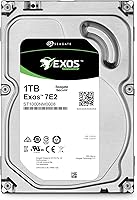
  • Model Number: The official Seagate model identifier for this unit is ST1000NM0008.
  • Compatibility: Compatible with servers, desktop computers, and NAS enclosures that support standard 3.5-inch SATA drives.
  • Power Options: Supports customizable power management settings, allowing administrators to tune idle and operating power consumption.

Related Reviews
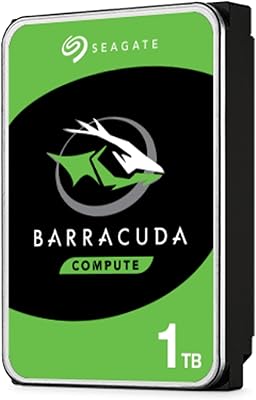
Seagate BarraCuda ST1000DM010 1TB Internal Hard Drive
77%
91%
Value for Money
74%
Reliability & Longevity
79%
Read & Write Performance
93%
Installation Ease
68%
Noise & Vibration
More
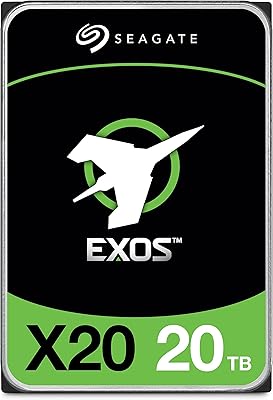
Seagate Exos X20 20TB Recertified Hard Drive
77%
88%
Value for Money
93%
Storage Capacity
79%
Drive Performance
74%
Reliability & Build
51%
Warranty Coverage
More
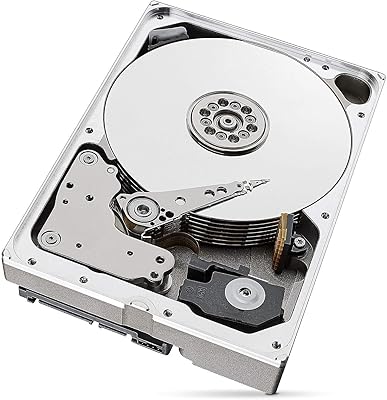
Seagate Exos X10 10TB Internal Hard Drive
85%
88%
Performance
91%
Reliability
82%
Ease of Installation
86%
Data Transfer Speed
65%
Power Consumption
More
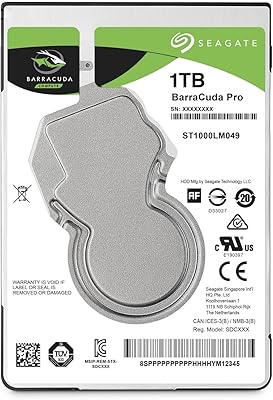
Seagate BarraCuda Pro 1TB 7200RPM Internal Hard Drive
87%
92%
Performance
90%
Speed
88%
Reliability
95%
Ease of Installation
65%
Noise Levels
More
Seagate Constellation ES 1TB Internal Hard Drive
77%
93%
TLER / Error Recovery
91%
Drive Longevity
88%
RAID Compatibility
54%
Refurbished Condition Consistency
79%
Value for Money
More
Seagate 1TB Pipeline HD SATA 6Gb/s Internal Hard Drive
88%
88%
Performance
91%
Reliability for 24/7 Use
93%
Power Efficiency
85%
Noise Level
86%
Ease of Installation
More
Seagate Exos 7E10 4TB Internal Hard Drive
75%
83%
Sustained Reliability
81%
Read/Write Performance
78%
Value for Money
89%
NAS Compatibility
61%
Vibration & Noise
More
Seagate Exos X14 12TB Hard Drive
88%
91%
Performance
94%
Reliability & Durability
88%
Value for Money
89%
Energy Efficiency
92%
Build Quality
More
Seagate BarraCuda ST8000DM004 8TB Internal Hard Drive
73%
93%
Storage Capacity Value
67%
Reliability & Longevity
61%
Read & Write Performance
89%
Installation & Compatibility
63%
Noise & Vibration
More
Seagate BarraCuda 4TB Internal Hard Drive
87%
86%
Performance
90%
Reliability
93%
Setup & Installation
95%
Storage Capacity
72%
Data Transfer Speed
More

FAQ

Most Synology and QNAP enclosures that accept standard 3.5-inch SATA drives will work with this enterprise drive. That said, it is worth checking the official compatibility list on your NAS manufacturer's website before purchasing, since some units have firmware quirks with specific drive models.

It means the drive is designed to handle up to roughly 500TB of data written across a full year without exceeding its rated stress limits. For context, a typical home user might write a few terabytes per month, so this headroom is really aimed at servers and NAS units running continuous backup or database jobs.

MTBF is a population-level statistic, not a promise about your individual drive. It means that across a large batch of these drives, the average time between failures works out to roughly 2 million hours. Think of it as a reliability grade rather than a countdown timer — your actual drive could outlast or fall short of that figure.

No, it ships as a bare drive only. You will need to supply your own SATA data cable, power connector, and any mounting screws or trays required by your enclosure or chassis.

Yes, the CMR recording technology used in this drive is fully compatible with RAID configurations. It works reliably in RAID 0, 1, 5, 6, and 10 setups, and the enterprise workload rating means it handles the sustained write cycles that RAID rebuilds demand.

It is a solid upgrade if your server runs around the clock. Consumer drives are typically rated for much lighter workloads and shorter duty cycles. The Exos 1TB is built to handle continuous operation, which is exactly the condition that tends to shorten consumer drives prematurely.

Real-world users consistently describe it as quiet, especially compared to older enterprise drives. You may hear a faint hum or occasional seek noise during heavy reads, but it is not intrusive in a typical home lab or small office setting.

The ST1000NM0008 model does not include self-encrypting drive (SED) functionality. If data-at-rest encryption is a compliance requirement for your environment, you would need to look at the SED variants within the Exos lineup or handle encryption at the software or controller level.

Seagate's five-year limited warranty covers manufacturing defects and drive failure under normal use. You would initiate a replacement through Seagate's warranty portal with your proof of purchase. It does not cover data recovery, so maintaining a backup strategy independently of the warranty is strongly recommended.

It depends on your data volume and growth rate. For a small team handling documents, spreadsheets, and moderate media files, 1TB can work, but it fills up faster than most people expect once backups and versioned files accumulate. If you anticipate growth, you may be better served by a higher-capacity drive or planning for a multi-drive array from the start.