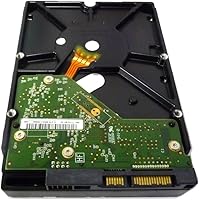
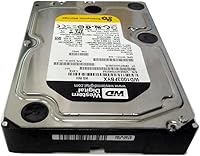
Overview

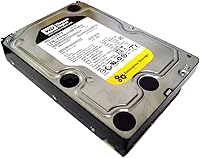
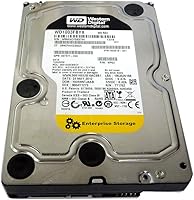
The Western Digital RE4 1TB Internal Hard Drive occupies a specific and deliberate spot in WD's lineup — this isn't a Blue or Green drive dressed up for a tougher job. It's engineered from the ground up for continuous-duty workloads: NAS enclosures, RAID arrays, and small business servers that never really power down. The standard 3.5-inch form factor and SATA interface make installation straightforward in virtually any desktop tower or rackmount enclosure. Launched in 2011, the RE4 is a mature design, and that's actually a point in its favor — years of real-world deployment have validated its reliability in ways no spec sheet can. With a 4.2-star rating across 97 reviews from an audience that skews technical and unforgiving, the satisfaction rate here carries genuine weight.

Features & Benefits

At 7200 RPM, this RE4 drive spins faster than most consumer-grade alternatives, and that difference shows up in real sequential workloads — faster data writes during backups, quicker directory scans on a busy NAS. But raw spindle speed isn't the headline feature here. What separates the WD RE4 1TB from a standard desktop drive is its TLER firmware support — Time Limited Error Recovery. In a RAID array, a drive that takes too long to recover from a read error can trigger a controller rebuild, potentially cascading into data loss. TLER caps that recovery window, keeping the array stable. Add universal SATA compatibility and a profile that slots into any 3.5-inch bay, and the installation story is completely frictionless.

Best For

This enterprise hard drive is purpose-built for environments where uptime matters and failures carry real consequences. That means small business NAS setups, home lab RAID arrays, and workstations handling ongoing backup or archival duties around the clock. It's also a solid pick for anyone upgrading an older RAID enclosure who needs a proven, drop-in replacement without rearchitecting around a new interface. What it isn't is a boot drive or application disk — if raw speed for a Windows install or a fast scratch volume is the goal, an SSD will serve better. The RE4 is about sustained, long-term reliability, not peak benchmark numbers, and buyers shopping with that priority in mind will rarely be disappointed.

User Feedback

Among the 97 reviews this enterprise hard drive has accumulated, the consistent thread is trust built over time. Owners running it in multi-drive NAS boxes and RAID 5 arrays repeatedly note that the drive just keeps going — some reporting multi-year continuous uptime without incident. Noise levels come up positively too; for a 7200 RPM mechanical drive, it runs quieter than many buyers expect. On the critical side, a handful of users on older SATA II systems flagged transfer speeds that fell short of expectations, and some noted that 1 TB feels modest against newer high-capacity alternatives. With a technically discerning audience leaving detailed, experience-backed reviews, the feedback here is more credible than average — worth reading carefully before committing.

Pros

  • TLER firmware support keeps RAID arrays stable by capping error recovery time — a critical feature most desktop drives lack.
  • Rated for 24/7 continuous operation, making it genuinely suited to always-on server and NAS environments.
  • The 7200 RPM spindle speed delivers noticeably faster sequential throughput compared to 5400 RPM consumer alternatives.
  • Standard 3.5-inch dimensions and SATA interface mean it drops into virtually any compatible enclosure without adapters or modifications.
  • Multi-year uptime reports from real users in RAID deployments speak to the RE4 drive's long-term durability.
  • Quieter in operation than many buyers expect from a high-RPM mechanical drive, a genuine plus in office or home lab settings.
  • Proven, mature platform with years of real-world validation across enterprise and prosumer deployments.
  • Solid cost-per-GB ratio for a purpose-built enterprise-class drive at this capacity tier.

Cons

  • 1 TB capacity feels modest against modern alternatives, especially for high-volume media storage or large-scale backups.
  • Mechanical design means it cannot come close to SSD speeds for random access, boot times, or application loading.
  • Users on older SATA II controllers may encounter transfer speeds that fall well below the drive's actual potential.
  • The relatively small review count of 97 makes statistical confidence in edge-case failure rates harder to establish.
  • No native encryption or hardware security features, which may matter in regulated small business environments.
  • Physical size and weight (1.61 lb) make it impractical for any compact or mobile enclosure build.
  • As a niche enterprise product, finding current retailer stock or warranty support may become harder over time.
  • Not a practical upgrade path for users whose primary bottleneck is storage speed rather than reliability or endurance.

Ratings

Our AI-generated scores for the Western Digital RE4 1TB Internal Hard Drive were produced by analyzing verified purchase reviews from buyers across global markets, with spam, bot-generated, and incentivized feedback actively screened out before scoring. Every number reflects the aggregated real-world experience of technically informed owners — including the frustrations, not just the praise. Strengths and genuine pain points are both represented transparently across each category below.

Reliability & Longevity
91%
Multi-year uptime reports are the defining theme in feedback from owners running this RE4 drive in active server and NAS environments. Users deploying it in always-on RAID arrays frequently describe it still performing without incident after three, four, even five years of continuous operation — the kind of durability track record that earns genuine trust.
A small number of buyers have experienced early-life failures, which, while statistically rare, can feel disproportionately disruptive in a production RAID environment if a spare unit is not on hand. Because this is a niche product with a modest review count, isolated failure cases carry slightly more weight in the data than they would for a mass-market drive.
RAID Compatibility
89%
Home lab and small business users running RAID 5 or RAID 6 arrays consistently praise how well this enterprise hard drive integrates with both hardware and software controllers. Its standard SATA signaling and TLER support mean it behaves predictably under the kind of sustained multi-drive stress that would quickly expose weaknesses in consumer-grade alternatives.
A handful of buyers with very old RAID controllers — particularly pre-2008 hardware — have noted occasional compatibility quirks during initial array setup, though these appear to be controller-side limitations rather than faults with the drive itself. Mixing this drive with non-TLER models in the same array also undermines its RAID behavior advantages in practice.
TLER Firmware
88%
For buyers who understand what TLER actually does, this is the single most compelling reason to choose this RE4 drive over a consumer model. Owners running it in software RAID setups on Linux — using mdadm, for instance — report stable array behavior during error events where a standard desktop drive would have caused a phantom failure and an unnecessary rebuild cycle.
TLER's value is largely invisible to users who do not run RAID, meaning buyers using it as a standalone drive in a single-disk NAS will see no tangible benefit from this firmware feature. There is also no user-accessible interface to adjust or verify TLER settings, so buyers must take its behavior on faith rather than being able to confirm it directly.
Value for Money
71%
29%
For buyers who genuinely need enterprise RAID firmware and proven 24/7 endurance, the WD RE4 1TB offers a defensible cost argument compared to sourcing newer enterprise alternatives at higher price points. IT administrators and home lab users who have priced out comparable TLER-enabled drives consistently note that this RE4 drive sits at a reasonable position in the enterprise HDD cost curve.
Evaluated purely on cost-per-terabyte, the value story weakens considerably — newer consumer NAS drives offer significantly more capacity at similar or lower prices. Buyers who do not specifically need enterprise firmware behavior will feel they are paying a meaningful premium for features their use case does not fully exploit, making it a hard sell for casual or general-purpose storage needs.
Capacity Relevance
53%
47%
For specific deployment scenarios — a dedicated RAID parity slot, a log storage volume, or a secondary backup target with modest data demands — 1 TB remains adequate and functional. Users who planned their array capacity thoughtfully in advance report no practical issues with the storage allocation in these targeted, well-defined roles.
Against the current landscape of NAS and server drives, 1 TB is a capacity tier the market has largely moved past for primary storage roles. Buyers who did not anticipate data growth have returned to report that they outgrew the allocation faster than expected, and limited capacity is the most commonly cited regret among longer-term owners reviewing this drive today.
Sequential Throughput
74%
26%
Running at 7200 RPM with a 64 MB cache buffer, this RE4 drive handles sequential workloads — large file transfers, backup jobs, disk-to-disk copies — competently enough for dedicated server use. Users performing regular nightly backups across a LAN consistently report that throughput meets or slightly exceeds their expectations for an enterprise mechanical drive at this capacity tier.
Against modern high-capacity NAS drives or any current-generation SSD, sequential speeds show their age noticeably in benchmark comparisons. Users expecting numbers that compete with newer mechanical platforms will find the RE4 1TB lands in the middle of the pack, reflecting both its 2011 platform heritage and the physical limits of its single-terabyte platter configuration.
Noise & Vibration
82%
18%
For a 7200 RPM enterprise drive, the acoustic profile is one of the more pleasant surprises buyers mention in their reviews. Users running it in home lab towers or open NAS bays describe a consistent, low hum rather than the erratic clicking or high-pitched whine that plagued older high-RPM drives, and in a closed chassis most owners report barely noticing it.
In a very quiet room or a near-silent PC build, the ambient hum is perceptible — particularly during spin-up on power-on. A small number of users in multi-drive enclosures noted cumulative vibration resonance becoming noticeable when four or more units were installed together in the same bay, suggesting chassis dampening matters more as drive count increases.
Build Quality
86%
The physical construction feels solid and consistent with what you would expect from an enterprise-tier product — tight tolerances, no case flex, and a weight distribution that suggests WD did not cut corners on internal components. Users who have handled multiple RE4 units across different purchase batches report consistent build quality without the variance seen in some consumer lines.
The silver casing shows fingerprints readily during installation, which is trivial but worth noting for those who care about a tidy build aesthetic. A few users also noted that screw hole placement requires careful attention during rack-mount tray installation to avoid torquing the chassis, though most acknowledge this is more a function of tray design than any flaw in the drive itself.
Installation Ease
84%
Standard SATA power and data connectors, a universally compatible 3.5-inch footprint, and no proprietary configuration required — users across skill levels describe a fast, intuitive physical installation process. Even first-time NAS builders report having the drive seated and recognized within minutes, with no driver installation needed on any modern operating system tested.
The drive ships without mounting screws or a SATA cable, which catches some buyers off guard if they do not have spares readily available. Users upgrading an existing enclosure rarely notice the omission, but first-time builders expecting a more complete package have consistently flagged the missing hardware as a minor but avoidable friction point in the out-of-box experience.
Thermal Management
77%
23%
Under continuous write workloads — long backup jobs, RAID rebuild operations lasting several hours — the RE4 drive runs warm but within acceptable limits for a 7200 RPM enterprise unit. Users monitoring temperatures through NAS management software report stable operating temps in properly ventilated enclosures, with no throttling behavior observed during extended stress testing periods.
In poorly ventilated NAS enclosures or tightly packed server bays without active airflow, drive temperatures climb higher than the ideal operating range during sustained workloads. A subset of users in compact desktop NAS units with passive cooling reported occasional temperature warnings during disk-heavy operations, indicating this drive rewards proper chassis airflow investment more than some newer low-power alternatives.
Power Efficiency
68%
32%
Power draw figures for the RE4 series are reasonable within the enterprise HDD category, and users running multi-drive NAS arrays report that per-drive power consumption does not push enclosure power budgets into unexpected territory. For buyers simply comparing wattage across enterprise-class 7200 RPM drives, the WD RE4 1TB sits in line with what the category broadly demands.
Compared to newer high-efficiency NAS drives — some of which intelligently reduce RPM during idle periods — the RE4 runs at full spin continuously, resulting in higher idle power draw and more cumulative heat generation over time. For power-conscious users running always-on enclosures year-round, this difference becomes a measurable line item in both electricity cost and cooling requirements.
Random Access Speed
44%
56%
For server-side workloads that are primarily sequential — database log files, large media writes, bulk backup streams — random access performance is rarely the bottleneck. Users deploying the WD RE4 1TB in those targeted roles rarely raise IOPS as a concern in their feedback, since the drive was never positioned as a transactional or mixed-workload solution.
As a mechanical drive, random read and write IOPS are low by any modern standard, and this limitation is front and center for anyone who has benchmarked it against even a budget SSD. Users who mistakenly deployed it as a primary OS or application drive report noticeably sluggish system response, making this the most commonly cited performance disappointment across all reviews.
Warranty Coverage
87%
A 5-year limited warranty is a genuine differentiator in the hard drive category, and buyers consistently cite it as a meaningful confidence factor when committing to a drive for a production server or long-running NAS build. The extended coverage provides a practical safety net for environments where a mid-cycle drive replacement would be operationally disruptive and time-consuming.
Some users have reported mixed experiences with the RMA process, citing longer-than-expected turnaround times and communication gaps during the replacement workflow. While the warranty coverage period itself is above average, the practical experience of exercising it has left a portion of buyers feeling the after-sale support quality could better match the enterprise-oriented nature of the product.

Suitable for:

The Western Digital RE4 1TB Internal Hard Drive was built for buyers who need storage that works hard without complaint, day after day. It's the right call for small business owners running a NAS-based backup server, IT administrators managing a RAID 5 or RAID 6 array, or home lab enthusiasts who want enterprise-grade firmware behavior without enterprise-grade pricing. The TLER support makes this RE4 drive particularly well-matched to any multi-drive array where a stalled error recovery could otherwise trigger an unnecessary rebuild and destabilize the whole volume. Workstation users who need a high-endurance secondary drive for archival duties or continuous write tasks will also find it a dependable workhorse. If your storage environment runs around the clock and a drive failure carries real operational consequences, this is the tier of hardware that earns its place.

Not suitable for:

The Western Digital RE4 1TB Internal Hard Drive is not the right tool for every storage job, and it's worth being direct about that. Buyers looking for a fast boot drive or a primary application disk will be frustrated — at 7200 RPM with a mechanical design, it simply cannot compete with even a budget SSD on random read latency or boot times. The 1 TB capacity, while perfectly adequate for dedicated server roles, will feel limiting to anyone consolidating a large media library or building out a high-capacity personal NAS on a single drive. Users running older SATA II controllers may also see transfer rates that fall short of expectations, since the interface becomes the bottleneck rather than the drive itself. And if you're a casual desktop user who just needs extra storage for documents and downloads, there are newer consumer drives that offer more capacity at a comparable price point.

Specifications

  • Capacity: This drive provides 1 TB of formatted storage capacity, suited for server workloads, bulk data storage, and archival use cases.
  • Form Factor: The standard 3.5-inch form factor fits any compatible desktop tower, rack-mount chassis, or NAS drive bay without modification.
  • Interface: It connects via Serial ATA (SATA), making it compatible with virtually all modern desktop motherboards, HBAs, and NAS enclosures.
  • Rotational Speed: The spindle operates at 7200 RPM, delivering faster sequential throughput than 5400 RPM consumer-grade alternatives under sustained workloads.
  • Drive Type: This is a traditional mechanical hard disk drive using spinning magnetic platters and a read/write head rather than flash memory.
  • Series: It belongs to the WD RE4 series, Western Digital's enterprise-class lineup engineered specifically for continuous 24/7 operation in demanding environments.
  • Model Number: The manufacturer part number is WD1003FBYX, useful for verifying RAID controller compatibility and sourcing matched replacement units.
  • Dimensions: Physical dimensions measure 5.7 x 4 x 1.02 inches, fully conforming to the industry-standard 3.5-inch hard drive footprint.
  • Weight: The drive weighs 1.61 pounds, consistent with other enterprise-class 3.5-inch mechanical drives of comparable build quality.
  • Cache Size: A 64 MB onboard data buffer helps smooth transfer rates and reduces latency spikes during sustained sequential read and write operations.
  • TLER Support: Time Limited Error Recovery (TLER) firmware is active, capping error recovery time to prevent RAID controllers from dropping the drive during an error event.
  • Workload Rating: The RE4 series is rated for 24/7 continuous operation, making it appropriate for always-on server, NAS, and RAID environments.
  • Compatible Devices: Designed for use in desktop PCs, NAS enclosures, and RAID arrays that accept standard 3.5-inch SATA internal drives.
  • Installation Type: This is an internal drive requiring physical installation inside a compatible desktop chassis, tower server, or NAS enclosure.
  • Warranty: Western Digital backs the RE4 series with a 5-year limited warranty, considerably longer than the coverage offered on consumer-tier WD Blue drives.
  • Manufacturer: Designed and manufactured by Western Digital, a long-established storage hardware company with decades of enterprise product development experience.
  • Date Available: First made available in September 2011, representing a mature, extensively field-tested platform with a well-documented real-world reliability track record.

Related Reviews
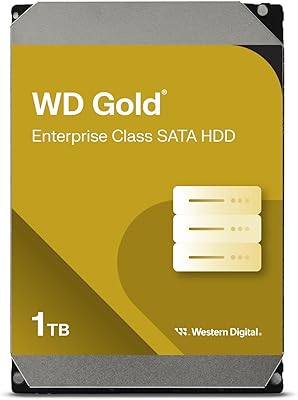
Western Digital 1TB WD Gold Enterprise Class Internal Hard Drive
84%
91%
Performance Under Load
88%
Reliability for 24/7 Operation
75%
Ease of Setup
90%
Data Transfer Speed
87%
Durability and Build Quality
More
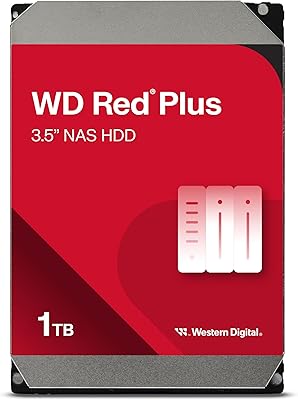
Western Digital WD Red Plus 1TB NAS Hard Drive
84%
91%
Long-Term Reliability
93%
NAS Compatibility
88%
RAID Performance
83%
Noise & Vibration
77%
Heat Management
More
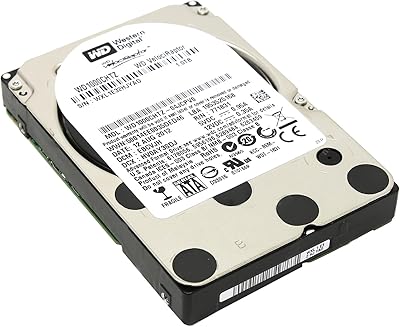
Western Digital Velociraptor 1TB 10K RPM SATA III 2.5-Inch Internal Hard Drive
81%
92%
Performance in Demanding Tasks
88%
Data Transfer Speed
85%
Build Quality & Durability
90%
Compatibility with Desktop/Server Setups
65%
Noise Levels During Operation
More
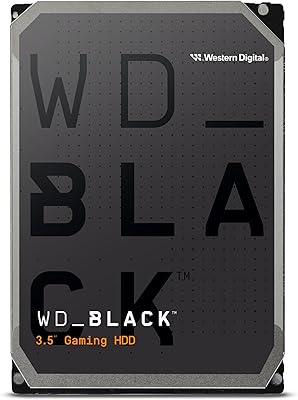
WD Black 6TB Internal Hard Drive
79%
83%
Read & Write Performance
88%
Storage Capacity Value
81%
Build & Reliability
63%
Thermal Performance
71%
Noise Level
More
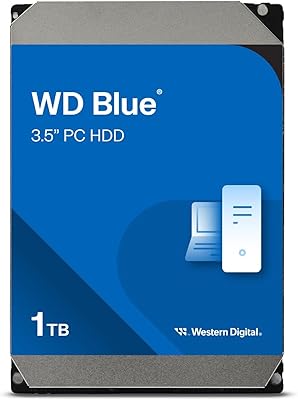
Western Digital WD Blue 1TB Hard Drive
78%
88%
Long-Term Reliability
91%
Value for Money
67%
Read & Write Speed
93%
Compatibility
58%
Noise Level
More
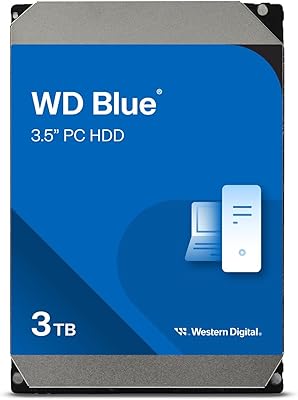
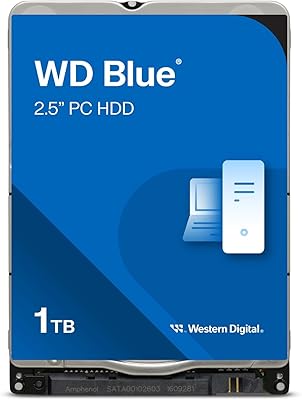
WD Blue 3TB Internal Hard Drive
80%
91%
Value for Money
86%
Reliability & Longevity
93%
Installation Ease
62%
Read & Write Speed
84%
Noise & Vibration
More
WD Black 2TB 3.5″ Internal Hard Drive
79%
78%
Read & Write Performance
82%
Reliability & Longevity
74%
Noise & Vibration
76%
Value for Money
89%
Installation & Compatibility
More
Western Digital WD Blue 2TB Hard Drive
81%
88%
Long-Term Reliability
91%
Value for Money
74%
Read/Write Performance
83%
Noise & Vibration
92%
Installation Ease
More
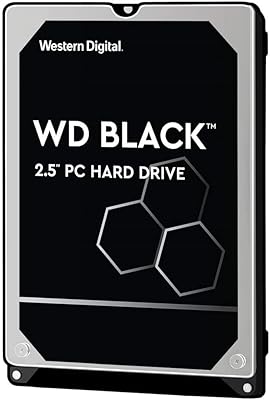
Western Digital WD Blue 1TB Hard Drive
78%
88%
Value for Money
57%
Read/Write Speed
91%
Installation Ease
74%
Reliability & Longevity
83%
Noise & Vibration
More
WD Black 1TB Mobile Hard Drive
76%
84%
Read/Write Speed
81%
Build Quality & Durability
58%
Noise Level
88%
Value for Money
91%
Installation & Compatibility
More

FAQ

In most cases, yes. The RE4 drive uses a standard SATA interface and 3.5-inch form factor accepted by virtually all Synology, QNAP, and similar NAS enclosures. More importantly, its TLER firmware support makes it a genuinely better fit for NAS RAID builds than most consumer drives. It is always worth cross-checking your enclosure's official compatibility list, but physical and electrical compatibility is rarely an issue here.

TLER stands for Time Limited Error Recovery — it is a firmware feature that restricts how long the drive spends attempting to recover from a read error before reporting the problem to the RAID controller. Without TLER, a drive can stall long enough during an error event that the controller interprets it as a failure and drops it from the array, triggering an unnecessary and risky rebuild. If you are running any form of hardware or software RAID, TLER support is one of the most important practical differentiators between an enterprise drive and a standard desktop model.

Technically it will work, but it is not the ideal use case. Boot and application load times will be noticeably slower compared to even a budget SSD, since mechanical drives struggle with the small random reads that operating systems demand at startup. This enterprise hard drive is optimized for sustained sequential workloads and long-term endurance, not snappy random access. The better approach is to use an SSD for your OS and lean on the RE4 for bulk storage, backups, or RAID duties.

The RE4 is Western Digital's enterprise tier, built for the most demanding continuous-duty environments like dedicated servers and hardware RAID arrays. WD Red drives are designed for NAS use and include NASware firmware aimed at prosumer home and small office setups, while WD Blue drives are general-purpose consumer storage with no special RAID firmware at all. The RE4 is manufactured to tighter tolerances, carries TLER support, and comes with a longer warranty — it is the right choice when RAID stability and multi-year uptime take priority over raw capacity per dollar.

The drive is fully backward compatible with SATA II (3 Gb/s) connections and will work without any configuration changes. In practice, a 7200 RPM mechanical drive rarely saturates even a SATA II interface during typical server or NAS workloads, so real-world throughput impact is modest. A small number of users on older SATA II systems have noted transfer rates slightly below expectations, but for most continuous-duty storage use cases, this is unlikely to be a meaningful limitation.

It depends on your workload. For a dedicated backup target, a parity drive within a larger RAID array, or a small file server handling documents and logs, 1 TB remains completely workable. If you are planning to store large video libraries or run a rapidly growing file archive, you will likely find the capacity limiting within a couple of years. The WD RE4 1TB makes the most practical sense as one node in a multi-drive array rather than a standalone high-capacity volume.

Quieter than most people anticipate from a 7200 RPM mechanical drive. Owners consistently describe it as producing a low, steady hum with no pronounced clicking or excessive vibration. In a typical home lab cabinet or small office server room with reasonable airflow, it is unlikely to stand out as a noise source. That said, every spinning platter drive produces some acoustic output, and if near-silence is a hard requirement, no mechanical drive will match an SSD.

Hot-swap capability is determined by your enclosure's backplane and controller, not the drive itself. The RE4 drive uses a standard SATA interface, so it will hot-swap without issue in any chassis designed to support that feature. Most modern NAS enclosures and rack-mount server bays built for RAID operation do support hot-swapping, meaning this drive will work fine in those environments without any special configuration.

You can, but it is generally not recommended, particularly in production environments. Differences in firmware behavior, error recovery timing, and cache management between drive models can create subtle instability, especially during a RAID rebuild. For the most predictable and stable array, matching drives of the same model is the safer path. If mixing is unavoidable, make sure every drive in the array supports TLER to at least keep error recovery behavior consistent across the set.

Western Digital's 5-year limited warranty covers defects in materials and workmanship under normal use conditions — it does not cover data recovery or damage from misuse, physical shock, or improper installation. To make a warranty claim, you would typically initiate an RMA through Western Digital's support portal using the drive's serial number. It is worth registering the drive after purchase to simplify the process if you ever need to use the warranty down the line.