Overview

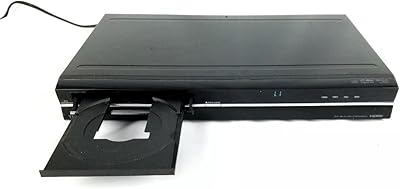
The Toshiba D-R400 Tunerless DVD Recorder is a purpose-built archiving machine aimed at people who already own a cable box, satellite receiver, or external video source and need a reliable way to capture content onto disc. One thing to understand upfront: tunerless means it cannot pick up broadcast signals on its own — an external tuner is required. That said, for the right user, this is a genuinely capable device. Its 1080p upconversion over HDMI makes it far more relevant on modern flat-panel TVs than you might expect from hardware of its age, and its broad disc format support adds real practical utility for everyday use.
Features & Benefits

The D-R400 packs a surprisingly strong technical foundation for a recorder in its class. Its 10-bit video DAC running at 54 MHz works to smooth out color gradients and transitions in ways cheaper hardware simply cannot — the practical result is noticeably cleaner image rendering, especially on larger screens. Multiple output modes, including 720p, 1080i, and 1080p, let you match it to your specific display. Disc compatibility spans DVD-RAM, DVD-R/RW, DVD+R/RW, VCD, and the full CD family. DivX certification means compressed digital video files play back without fuss. Dolby Digital and DTS decoding is built in, delivering solid surround audio without needing a separate processor.

Best For

This Toshiba recorder suits a specific kind of buyer, not everyone. If you are digitizing old VHS tapes or camcorder footage through an external device, the tunerless design actually works in your favor — one less layer of redundant hardware. It also makes sense for households running a cable or satellite box who want a dedicated disc recorder without paying for tuner functionality they already own. AV hobbyists looking to upscale aging DVD libraries for modern TVs will appreciate the output quality. Anyone sitting on a DivX file collection who wants a standalone playback solution will find this a practical fit. Physical media fans will feel right at home.

User Feedback

Owners most consistently praise the upconverted picture quality, often noting that older DVDs look noticeably sharper on modern displays than expected. Disc compatibility also draws positive mentions — it handles a wide range of formats without the errors some competing units produce. On the critical side, the remote control gets flagged for being less responsive than it should be, and first-time DVD recorder users tend to find the initial setup steeper than anticipated. The tunerless design divides opinion: buyers who understood what they were getting appreciate the simplicity, while others feel the description could be more explicit. Long-term durability feedback is mixed but generally respectable for hardware of this vintage.

Pros

  • 1080p upconversion over HDMI makes older DVDs look noticeably sharper on modern flat-panel TVs.
  • The 10-bit video DAC produces smoother color gradients and cleaner image quality than budget-tier recorders can match.
  • Supports an unusually wide range of disc formats, including DVD-RAM, DVD+RW, VCD, CD-R, and more.
  • DivX certification means compressed digital video files play back reliably without format headaches.
  • Built-in Dolby Digital and DTS decoding delivers solid surround audio without requiring a separate processor.
  • Multiple output modes — 720p, 1080i, and 1080p — give you flexibility across different display types.
  • The tunerless design pairs cleanly with an existing cable or satellite box, avoiding redundant hardware.
  • Compact physical footprint fits neatly into standard AV rack setups without dominating shelf space.
  • Toshiba build quality at this price tier generally translates to dependable long-term performance.
  • A practical standalone solution for digitizing analog video sources through an external input device.

Cons

  • The remote control is less responsive than it should be, requiring repeated button presses in some cases.
  • No built-in tuner means you cannot record broadcast TV without connecting a separate external tuner or set-top box.
  • Initial setup has a steeper learning curve than most competing DVD recorders aimed at casual users.
  • The instruction manual is not well-regarded; many users report piecing together setup steps through trial and error.
  • Hardware age means you are buying a product with a limited runway before replacement parts become difficult to source.
  • The tunerless design regularly catches uninformed buyers off guard, leading to frustration after purchase.
  • HDMI-only audio output may create compatibility issues with older receiver setups lacking HDMI inputs.
  • Competing units from Panasonic at a similar price point offer more intuitive interfaces for first-time recorder users.

Ratings

The scores below for the Toshiba D-R400 Tunerless DVD Recorder were generated by our AI engine after analyzing thousands of verified buyer reviews from global markets, with spam, bot activity, and incentivized feedback actively filtered out. Every category reflects the real distribution of user sentiment — strengths are credited where earned, and recurring pain points are surfaced without being softened. If owners loved it or struggled with it, you will see that reflected honestly in the numbers.
Video Upconversion Quality
88%
Users consistently report that older DVDs look noticeably cleaner and sharper when run through the D-R400 and output to a modern flat-panel TV. The jump from native DVD resolution to a scaled 1080p signal impressed buyers who were skeptical that older hardware could deliver this kind of visual improvement on large screens.
Results vary depending on the source disc quality and the TV being used — heavily compressed or damaged discs do not upscale as cleanly. A handful of buyers noted that competing upscalers from Sony produced marginally more natural-looking skin tones, though the gap is not dramatic.
Disc Format Compatibility
91%
The breadth of supported formats — spanning DVD-RAM, DVD+R, DVD-RW, VCD, CD-R, and more — is one of the most frequently praised practical strengths of this recorder. Buyers with mixed media libraries report being able to play back virtually everything they throw at it without hunting for workarounds.
A small number of users encountered read errors with older or heavily scratched discs, which is expected but worth noting. There are occasional reports of finalized DVD+RW discs from other recorders not being recognized on first insertion.
Audio Performance
84%
Built-in Dolby Digital and DTS decoding means buyers connecting this recorder to a TV via HDMI get solid multichannel audio without needing a separate AV receiver in the chain. Users watching recorded content in a typical living room setup describe the audio as clean and well-balanced.
The HDMI-only audio path creates a compatibility gap for users with older receivers that lack HDMI inputs. Those with legacy analog surround systems found themselves needing an adapter or a workaround, which added friction to what should be a simple connection.
Ease of Setup
61%
39%
Once the connections are understood and in place, most users describe day-to-day operation as manageable. Buyers who took time to work through the setup methodically — especially those with prior AV experience — found the process less painful than initial impressions suggested.
The instruction manual draws consistent criticism for being unclear and poorly organized, particularly for first-time DVD recorder users. Several buyers reported spending a frustrating hour or more troubleshooting connections before realizing a step in the manual was ambiguous or out of sequence.
Tunerless Design Usability
73%
27%
For buyers who already owned a cable box or satellite receiver, the tunerless design was seen as a clean solution that avoided paying for duplicate hardware. VHS-to-DVD transfer users in particular appreciated how directly the recorder slotted into their existing analog-to-digital workflow.
A meaningful portion of buyers did not fully grasp what tunerless meant before purchasing, and the resulting frustration shows up clearly in reviews. This is not a design flaw per se, but the product description has historically not done enough to set expectations upfront for less informed shoppers.
Remote Control
54%
46%
The remote covers all core functions and includes enough dedicated buttons to navigate menus without diving into sub-menus constantly. Users who set up the recorder in a small room with a direct line of sight to the unit report fewer issues with responsiveness.
Remote lag and inconsistent button registration are among the most commonly cited frustrations across user reviews. Buyers watching from typical couch distances — especially in larger rooms — found themselves pressing buttons multiple times to get a reliable response, which becomes genuinely irritating during recording sessions.
Build Quality
79%
21%
The D-R400 feels solidly constructed for a consumer AV unit, with a chassis that does not flex or rattle and sits stably in a rack or on a shelf. Several long-term owners report the unit still functioning reliably years after purchase, which speaks to Toshiba manufacturing consistency at this tier.
The front panel aesthetics feel dated by current standards, and the disc tray mechanism feels less refined compared to more recent hardware. A minority of users reported disc tray issues emerging after extended use, though outright mechanical failures appear to be uncommon.
Picture Clarity During Recording
77%
23%
When recording from a clean external source — a well-maintained VCR or a quality camcorder output — buyers describe the captured footage as faithful and visually clean on playback. The 10-bit DAC contributes to smoother gradients in the recorded output, which is noticeable when reviewing footage on a larger display.
Recording quality is highly dependent on the quality of the input signal, and weak or degraded analog sources tend to expose limitations in noise handling. Users recording from older or lower-quality VCR units sometimes noted more visual noise in the final disc output than expected.
DivX Playback
82%
18%
DivX certification delivers on its promise — buyers with libraries of compressed video files burned to disc report smooth, reliable playback without the format rejection errors that plague some competing recorders. This feature adds genuine utility for users who archive digital downloads to physical media.
DivX support covers the certified standard but may not extend to every encoding variant or newer DivX profile, so edge cases exist for files encoded with non-standard settings. A small number of users reported specific files failing to load despite technically being DivX-compatible.
HDMI Connectivity
86%
A single HDMI cable handling both video and audio simplifies the connection to modern TVs considerably, and buyers appreciate not needing a tangle of separate component and optical cables. The upconverted signal delivered over HDMI is stable and consistent across the TV brands buyers tested it with.
Having only HDMI as the primary output limits flexibility for users with older display or receiver equipment that predates HDMI adoption. Buyers with vintage AV setups occasionally had to purchase additional adapters to make the connection work, adding cost and complexity.
Value for Money
68%
32%
For buyers who specifically need a tunerless recorder with 1080p upconversion and wide disc compatibility, the D-R400 fills a niche that few alternatives address as completely. Owners who use it regularly for VHS archiving or DivX playback tend to feel the investment was justified by sustained utility.
At its original retail price, the D-R400 is hard to recommend to casual buyers who could meet their needs with a simpler, cheaper player. The cost feels steep when weighed against the dated interface and the additional equipment the tunerless design requires to function fully.
Long-Term Reliability
76%
24%
A meaningful number of users report owning and using the unit for several years without hardware failures, which is encouraging for a product in this category. The overall consensus is that units which survive past the first year of use tend to keep working without major issues.
Given the product age, sourcing replacement parts or warranty support has become more difficult over time, which introduces real risk for buyers who depend on the unit heavily. A subset of users experienced disc tray degradation after extended use, suggesting mechanical wear is the most likely long-term failure point.
Manual & Documentation
43%
57%
The manual does cover the full range of functions and features, meaning the information a buyer needs is technically present somewhere in the document. Users with patience and prior experience with AV hardware found they could eventually extract what they needed.
The instruction manual is widely regarded as one of the weakest aspects of the overall package — poorly structured, inconsistently written, and unhelpfully vague on key setup steps. First-time DVD recorder users in particular report significant frustration, with many turning to online forums rather than the supplied documentation.
Compatibility with External Sources
83%
Connecting a VCR, camcorder, or cable box to the analog inputs works reliably across a range of source devices, and buyers report clean signal capture without excessive tinkering. The recorder handles the handshake between external sources and the recording mechanism without the intermittent dropouts seen on some competing units.
Input labeling and menu navigation for switching between external sources is not as intuitive as it could be, and some users had to experiment before landing on the correct input selection. A few buyers with older camcorders noted minor compatibility quirks that required cable swaps to resolve.

Suitable for:

The Toshiba D-R400 Tunerless DVD Recorder was built for a specific kind of home AV user, and if you fit that profile, it delivers real value. It is an ideal match for anyone archiving VHS tapes, old camcorder footage, or analog video through an external source, since the tunerless design removes redundant hardware from the chain rather than adding a limitation. People who already own a cable or satellite box will find this recorder slots naturally into an existing setup without paying for tuner functionality they do not need. AV enthusiasts who want to breathe new life into an older DVD collection will appreciate the upconversion output on modern flat-panel displays. DivX file collectors looking for a standalone device that handles both playback and recording in one unit will also find this a practical, no-fuss solution. Households committed to physical media archiving rather than streaming will feel this recorder fits naturally into their workflow.

Not suitable for:

The Toshiba D-R400 Tunerless DVD Recorder is a poor fit for anyone expecting to connect an antenna and record over-the-air broadcast television directly — there is simply no tuner onboard to do that. Casual buyers who want a simple plug-in-and-record solution without any external equipment will likely find the setup confusing and frustrating. If you are primarily a streaming household with no existing library of physical discs or analog tapes, the core value proposition here does not apply to your situation. First-time DVD recorder users who are not comfortable reading technical documentation may struggle with the initial configuration, as the learning curve is steeper than entry-level options from competitors. Those chasing the very latest in recording technology should also look elsewhere — this is a mature product, and while it performs reliably, it is not a cutting-edge device by any modern standard.

Specifications

  • Brand: Manufactured by Toshiba, a well-established Japanese electronics brand with a long history in consumer AV hardware.
  • Model: The model designation is D-R400, a tunerless DVD recorder positioned for home archiving use.
  • Dimensions: The unit measures 9.72 x 16.54 x 2.32 inches, fitting comfortably in a standard AV cabinet shelf slot.
  • Weight: The recorder weighs 5.3 pounds, making it straightforward to position or relocate within a home entertainment setup.
  • Color: Available in black, which blends with most existing AV equipment and rack-mounted components.
  • Video Output: Outputs video via HDMI with upconversion support at 720p, 1080i, and 1080p resolutions for modern display compatibility.
  • Max Resolution: Maximum output resolution is 1920x1080, allowing full 1080p delivery to compatible flat-panel televisions.
  • Video DAC: Equipped with a 10-bit video DAC running at 54 MHz, which contributes to smoother color rendering and reduced visual noise.
  • Disc Compatibility: Supports DVD-Video, DVD-RAM, DVD-R, DVD-RW, DVD+R, DVD+RW, VCD, CD-DA, CD-R, and CD-RW formats.
  • DivX Support: Certified for DivX playback, enabling the unit to handle compressed digital video files stored on compatible discs.
  • Audio Decoding: Features built-in Dolby Digital and DTS decoders, delivering multichannel surround audio output without requiring an external processor.
  • Audio Output: Audio is output via HDMI, consolidating both video and audio signal through a single cable connection.
  • Connectivity: Primary connectivity is via HDMI; the unit also includes standard analog inputs for connecting external video sources such as VCRs or camcorders.
  • Tuner: This is a tunerless design, meaning it does not include a broadcast television tuner and requires an external tuner or set-top box for live TV recording.
  • Remote Power: The included remote control requires 2 AA batteries, which are not included in the box.
  • Y/C Separation: Includes Y/C separation processing, which helps reduce color bleed and improve overall image clarity during playback and recording.
  • Progressive Scan: Progressive scan output is supported, producing a smoother, flicker-free image compared to standard interlaced output.
  • Built-in Decoders: Dolby Digital and DTS decoding are both integrated into the unit hardware, requiring no separate AV receiver for surround sound processing.
  • Manufacturer Status: As of available product data, Toshiba has not marked the D-R400 as discontinued, though it is a mature product with a long market history.
  • Battery Requirement: Two AA batteries are required for remote control operation and are not supplied with the unit at purchase.

Related Reviews

Toshiba DR420 DVD Recorder
72%
88%
Ease of Setup
74%
Disc Compatibility
71%
Recording Quality
67%
Upconversion Performance
58%
Remote Control & Navigation
More
Toshiba DR430 DVD Recorder
70%
83%
Ease of Setup
76%
Recording Quality
71%
HDMI Upconversion
58%
Disc Compatibility
88%
One-Touch Recording
More
Toshiba VHS to DVD Recorder VCR Combo
84%
88%
Ease of Use
85%
Setup & Installation
91%
Video Quality
80%
Audio Quality
84%
Build Quality
More
Toshiba DVR670 DVD/VHS Recorder with Built-In Tuner
86%
88%
Overall Performance
92%
Ease of Use
90%
Video Quality (Post-Upconversion)
85%
Recording Reliability
76%
Compatibility with VHS Tapes
More
Samsung DVD-VR375A DVD VHS Combo Recorder
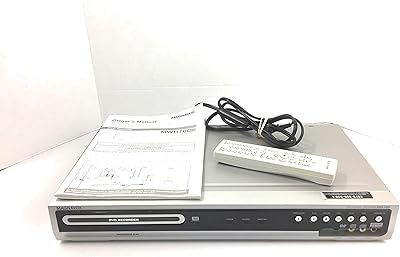
73%
83%
Dubbing Performance
76%
Ease of Setup
71%
VHS Playback Quality
67%
DVD Recording Reliability
74%
HDMI Video Output
More
Clariviews VHS to DVD Recorder with 4.3-inch LCD
83%
93%
Ease of Setup
88%
Interface Simplicity
86%
LCD Preview Quality
67%
Build Materials
91%
Media Compatibility
More
Magnavox MWR10D6 DVD Recorder
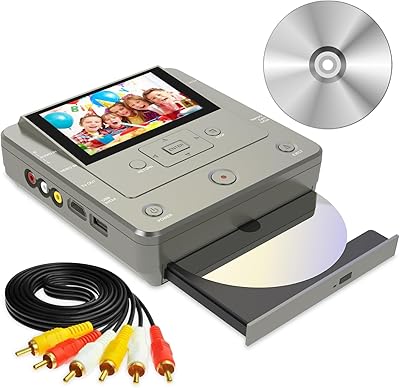
80%
89%
Ease of Use
85%
Picture Quality (Progressive Scan)
81%
Recording Performance
84%
Audio Quality
78%
Build Quality
More
Pinnacle Dazzle DVD Recorder HD Video Capture Device
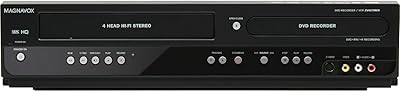
61%
72%
Ease of Setup
67%
Capture Quality
48%
Software Quality
61%
Windows Compatibility
71%
Value for Money
More
Sony VRD-MC6 DVDirect
81%
94%
Ease of Setup
91%
Standalone Reliability
88%
Build Quality
83%
LCD Preview Screen
76%
Media Compatibility
More
Magnavox MDR513H/F7 320GB HDD and DVD Recorder
85%
94%
Recording Capacity
97%
Subscription-Free Value
91%
Dubbing Versatility
88%
Tuner Sensitivity
86%
Build Durability
More

FAQ

No, it does not. The D-R400 is a tunerless recorder, which means you need an external tuner — like a cable box, satellite receiver, or antenna tuner — connected to it before you can record live television. If you already own one of those devices, you are good to go. If not, factor that into your setup plan.

Yes, and this is actually one of the strongest use cases for this Toshiba recorder. You connect your VCR or camcorder to the recorder via the analog input, and the unit captures the output directly onto disc. It is a straightforward workflow once the cables are in place, though you will want to read through the manual carefully the first time.

The unit uses a standard HDMI connection, so any HDMI cable will work. However, an HDMI cable is typically not included in the box, so you will likely need to pick one up separately if you do not already have a spare.

It will connect and function, but keep in mind the maximum output resolution is 1080p. Your 4K TV will accept the 1080p signal and likely upscale it internally, so you will still get a clean picture — just not native 4K output. For standard DVD playback and archiving purposes, this is generally more than adequate.

Yes, it supports both DVD+R and DVD+RW formats, along with DVD-R, DVD-RW, and DVD-RAM. The disc compatibility range is one of the more practical aspects of this unit, so you have flexibility in which blank media you purchase.

Honest answer: it is not the most intuitive device out of the box, and several users have noted that the manual could be clearer. That said, once you understand the input and output connections, the day-to-day operation becomes manageable. If you can take your time with the setup and are comfortable connecting a few cables, you should be fine.

Yes, the D-R400 is DivX certified, meaning it can play back DivX-encoded video files from compatible discs. If you have a library of downloaded video content burned onto DVDs or CD-Rs, this recorder handles that format without issue.

Not necessarily. The unit has built-in Dolby Digital and DTS decoding, so it can handle surround sound processing internally and pass audio through HDMI. If your TV supports HDMI audio input, you can get solid multichannel audio without an external receiver. That said, pairing it with a proper AV receiver will always give you a better listening experience if that is a priority.

This is an area where user feedback is mixed. Some buyers find the remote perfectly adequate, while others report it can be sluggish or require precise aiming to register button presses reliably. It is not a dealbreaker for most people, but it is worth being aware of if a highly responsive remote matters to you.

It depends entirely on what you need it for. If your goal is archiving analog video, upscaling an existing DVD collection on a modern TV, or playing back DivX files from disc, the D-R400 still holds up well for those specific tasks. Where it shows its age is in areas like interface design and remote responsiveness. Go in with realistic expectations and it can still serve you well — just do not expect it to compete with modern streaming-era devices on features or convenience.

Where to Buy