Overview

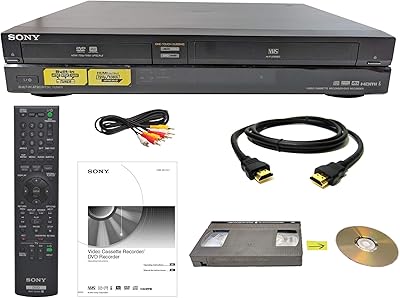
The Samsung DVD-VR375A DVD VHS Combo Recorder is a dual-format machine that bridges two eras of home video in a single, compact unit. It pairs a 4-head Hi-Fi VHS deck with a full DVD recorder, letting you work with both formats without juggling separate devices. One thing worth knowing upfront: this combo recorder has no built-in tuner. That means it cannot pull in broadcast or cable TV on its own — you'll need a set-top box or external source to feed it a signal. It outputs via HDMI upconversion to 1080p, which helps older media look presentable on a modern flat-screen. At 9.7 pounds and just over 13 inches wide, it fits neatly into most entertainment centers.
Features & Benefits

The EZRecord function is probably what most buyers come here for — press one button and the deck starts copying your VHS tape to DVD without navigating through menus. Beyond that core feature, the DVD-VHS deck handles a surprisingly wide range of formats: DVD±R/RW, CD-R/RW, MP3, WMA, JPEG, and DivX, so it doubles as a capable media player. Dolby Digital and DTS decoding means the audio side is handled properly, not just passable. Dubbing works both ways, too — you can move content from DVD back to VHS if needed. Keep in mind the HDMI upconversion improves output resolution to 1920x1080, but it cannot enhance the underlying quality of a worn or low-grade tape.

Best For

This dual-format unit makes the most sense for anyone sitting on a stack of old VHS tapes — home recordings, family events, concerts — who wants to transfer that footage to DVD before the tapes degrade further. It also suits buyers who need to replace both a dead VCR and a DVD player while saving shelf space. Those expecting to record live television should look elsewhere; without a tuner, this recorder depends entirely on an external signal source. It works well in a secondary room setup or for someone who needs occasional access to legacy media without a full home theater investment. Practical preservation use is really where it delivers.

User Feedback

Owners who bought this combo recorder specifically to dub tapes tend to report solid results, praising the straightforward dubbing process and the fact that the machine does what it promises without unnecessary complexity. The tunerless design, though, regularly surfaces in negative reviews — buyers who assumed it could record broadcast TV are disappointed to learn it cannot. There are also occasional notes about disc compatibility, with some DVD±R brands causing write errors or finalization failures, so sticking to quality-name discs seems wise. The VHS transport mechanism gets mixed remarks; some units hold up well over time, while others show wear on heavily used tapes. Remote clarity and menu navigation generally get favorable marks.

Pros

  • One-touch EZRecord dubbing makes VHS-to-DVD transfers genuinely simple for non-technical users.
  • Handles both formats in a single device, freeing up shelf space and reducing cable clutter.
  • HDMI output lets you connect this combo recorder to any modern flat-screen TV without an adapter hunt.
  • Wide media compatibility — DVD±R/RW, DivX, MP3, JPEG — means it pulls double duty as a versatile player.
  • Bidirectional dubbing gives you the option to copy from DVD back to VHS when needed.
  • Dolby Digital and DTS decoding deliver clean, properly processed audio from both tape and disc sources.
  • 4-head Hi-Fi Stereo VCR mechanism does a respectable job preserving audio from older tapes.
  • Compact footprint fits easily into existing entertainment center setups without rearranging everything.
  • On-screen menus and remote navigation are generally reported as clear and easy to follow.

Cons

  • No built-in tuner means live TV recording is impossible without an additional external source device.
  • Discontinued by the manufacturer, so finding warranty support or replacement parts is difficult.
  • DVD±R disc compatibility can be inconsistent — cheap or off-brand discs sometimes cause finalization errors.
  • The 1080p upconversion improves output signal only; it cannot recover detail lost in a degraded original tape.
  • Used units may have worn VHS transport mechanisms that struggle with older or frequently played tapes.
  • No USB or computer output means there is no straightforward path to creating digital files from your tapes.
  • At its price point, the hardware feels dated compared to more modern dubbing solutions on the market.
  • Remote control requires 2 AA batteries not included, a minor but recurring complaint in buyer reviews.

Ratings

Our AI rating system analyzed verified buyer reviews for the Samsung DVD-VR375A DVD VHS Combo Recorder from multiple global markets, actively filtering out incentivized, bot-generated, and unverified feedback to surface what real users actually experienced. The scores below reflect both the genuine strengths that keep this combo recorder in demand years after its release and the friction points that have consistently frustrated buyers. Nothing has been softened or inflated — the ratings reflect the full picture.

Dubbing Performance
83%
Buyers who purchased this unit specifically to transfer VHS tapes to DVD report that the process works reliably and produces watchable results. The EZRecord one-touch function removes the intimidation factor for less tech-savvy users, and most transfers complete without intervention once the disc and tape are loaded.
Recording quality is inherently capped by the condition of the source tape, and users with heavily degraded VHS collections sometimes find the output disappointing. A small but consistent group of reviewers noted occasional dropped frames or audio sync issues on longer recordings.
Ease of Setup
76%
24%
Most buyers get the unit connected and running within 15 to 20 minutes, especially when connecting directly to a TV via HDMI. The on-screen menu walks through initial configuration in a straightforward way, and the remote layout is intuitive enough that most users do not need to consult the manual for basic functions.
The tunerless design creates real setup confusion for buyers who expected plug-and-play TV recording. Those who need to route a cable box or external signal source through the unit face additional cabling complexity that the product packaging does not clearly warn about upfront.
VHS Playback Quality
71%
29%
The 4-head Hi-Fi Stereo VCR mechanism handles well-preserved tapes with noticeably better picture stability and audio clarity than older 2-head decks. Users playing home movies from the 1980s and 1990s in reasonable condition report clean, steady playback that holds up well on a modern HDTV.
Performance drops measurably with worn or older tapes, where tracking issues and picture noise become harder to correct. On used units especially, the VHS transport mechanism has shown signs of mechanical wear that affect how reliably the deck handles tapes, particularly those that have been rewound and played many times.
DVD Recording Reliability
67%
33%
When paired with quality-brand recordable discs, the DVD recording side of this dual-format unit performs consistently. Buyers who use Verbatim or similar trusted media report successful recordings and clean finalization the majority of the time, with finished discs playing back on other players without issue.
Disc compatibility is a recurring sore point. Off-brand DVD±R discs frequently cause finalization failures or produce discs that work in this recorder but not in other players. Some users have also reported that the unit occasionally refuses to recognize blank discs that are well within spec.
HDMI Video Output
74%
26%
Connecting this combo recorder to a modern flat-screen via HDMI is one of the most consistently praised aspects of the setup. The upconverted output looks notably cleaner than composite or S-Video, and users appreciate being able to monitor dubbing sessions on a large screen without signal degradation.
The 1080p figure can create unrealistic expectations. The upconversion smooths and scales the output signal but cannot recover lost detail from a soft or noisy source tape, and some users were disappointed that old home movies did not look substantially sharper on a 4K TV than they expected.
Audio Quality
79%
21%
Dolby Digital and DTS decoding give the audio output a solid foundation, and Hi-Fi VHS tapes in good condition reproduce with warmth and reasonable stereo separation. For home movies with ambient sound or music, the audio quality on playback is often better than users anticipate from aging tapes.
Standard-quality VHS recordings without Hi-Fi audio show a clear step down in fidelity, with more hiss and narrower dynamic range. The audio output is also limited by what the HDMI receiver or TV speakers can do with the signal, so users with basic TV audio will not hear meaningful improvement over older setups.
Build Quality
62%
38%
The unit has a solid, no-nonsense construction that feels appropriate for a dual-mechanism device. The disc tray operates smoothly on units in good condition, and the front panel controls are tactile and responsive, giving a more premium feel than budget-tier combo recorders.
This is aging hardware, and that shows. Buyers purchasing used units report variable condition on the VHS transport, with some experiencing belt slippage or tape handling errors out of the box. Samsung has discontinued this model, meaning there is no manufacturer support and replacement parts are increasingly hard to source.
Remote Usability
78%
22%
The remote control covers all key functions without being overcrowded, and buyers generally find the button layout logical after a short learning period. Switching between VHS and DVD functions from the couch is described as straightforward once you know which buttons handle which side of the machine.
The remote is not backlit, which makes it harder to use in dim home theater setups. A few users also noted that the remote requires fairly direct line-of-sight to register reliably, which can be annoying if the unit is inside an entertainment cabinet with a partially obstructed front panel.
Media Compatibility
81%
19%
Beyond its core VHS and DVD functions, this combo recorder handles CD-R/RW, MP3, WMA, JPEG, and DivX files burned to disc, which genuinely expands its utility as a media player. Users who maintain disc-based media libraries find this breadth of format support a meaningful secondary benefit.
There is no USB port, no SD card slot, and no network connectivity, so media access is strictly disc-based. In a world where most users manage media through streaming or external drives, this limitation feels increasingly restrictive for everyday media playback use cases beyond VHS archiving.
Value for Money
58%
42%
For buyers with a genuine VHS preservation need, the combo recorder delivers a reasonably efficient solution in a single box without requiring separate VCR and DVD recorder purchases. The EZRecord feature alone saves time that would otherwise be spent managing two separate devices and cabling.
At its asking price, this is a steep investment for discontinued hardware with no manufacturer support. Buyers who later discover they cannot record live TV — the single most common complaint — often feel the purchase was not worth it, particularly when capable capture alternatives exist at lower price points.
Disc Finalization
61%
39%
When the finalization process completes successfully, the resulting discs play back reliably on a wide range of standard DVD players, which is the core expectation for an archiving workflow. Users who finalize immediately after each recording session report fewer compatibility issues downstream.
Finalization failures are more common than they should be at this price tier, particularly with certain DVD±R brands. When finalization fails mid-process, the disc is often rendered unusable, which wastes media and forces the user to start the recording over from scratch — a frustrating experience during long VHS transfers.
Space Efficiency
84%
Consolidating a VCR and a DVD recorder into a 13-inch-wide box is a genuine convenience for buyers downsizing their AV setup. Users replacing two aging standalone devices comment that the freed shelf space and reduced cable count alone justify the switch to a combo unit.
At 3.1 inches tall, it is slightly deeper than many modern AV devices and may not fit neatly behind cabinet doors with limited depth. The 9.7-pound weight also makes repositioning the unit less casual than lighter streaming devices or single-format players.

Suitable for:

The Samsung DVD-VR375A DVD VHS Combo Recorder is built for a very specific kind of buyer, and those buyers tend to love it. If you have shelves of old VHS tapes — home movies, family holidays, recorded concerts — and want to preserve them on DVD before the magnetic tape deteriorates further, this is one of the more practical tools available for that job. It works equally well for anyone who needs to replace a broken VCR and a DVD player simultaneously without buying two separate devices. People setting up a secondary TV room or a guest space will also find real value here, since it handles both legacy and current disc formats without fuss. The EZRecord one-touch dubbing makes the transfer process accessible even for users who are not particularly tech-savvy.

Not suitable for:

The Samsung DVD-VR375A DVD VHS Combo Recorder will frustrate buyers who come in with the wrong expectations, and the biggest one is live TV recording. This unit has no built-in tuner, so it cannot capture broadcast, cable, or satellite television on its own — you must route a signal through an external set-top box or similar device, which adds setup complexity many casual buyers are not prepared for. It is also not the right choice for anyone hoping to digitize tapes to a computer or USB drive, since output options are limited to disc-based formats and HDMI display. The VHS transport mechanism, while functional, is aging hardware on used units, and buyers expecting the durability of a brand-new appliance may be disappointed. If your goal is a modern streaming-capable device or a fully digital workflow, this dual-format unit simply is not designed for that.

Specifications

  • Brand: Manufactured by Samsung under model designation DVD-VR375A.
  • Dimensions: The unit measures 13 x 16.9 x 3.1 inches, making it suitable for standard AV shelf configurations.
  • Weight: This combo recorder weighs 9.7 pounds without packaging.
  • Power: Operates on AC 120V at 60Hz with a rated power consumption of 25W.
  • VCR Type: Equipped with a 4-head Hi-Fi Stereo VCR mechanism for improved tape playback quality.
  • DVD Formats: Records and plays DVD±R and DVD±RW discs in addition to standard DVD video.
  • Playback Formats: Supports CD, CD-R/RW, MP3, WMA, JPEG, and DivX media playback beyond standard DVD.
  • Audio Decoding: Onboard Dolby Digital and DTS decoding provides proper multichannel audio processing.
  • Video Output: HDMI output delivers upconverted video at a maximum resolution of 1920x1080 pixels.
  • Upconversion: The 1080p upconversion applies to the output signal only and does not enhance original source quality.
  • Tuner: This unit is tunerless and requires an external signal source such as a cable or satellite box for TV recording.
  • Special Feature: EZRecord one-touch dubbing enables direct VHS-to-DVD or DVD-to-VHS copying with minimal user input.
  • Connectivity: Primary output connection is HDMI; legacy analog connections are also present for older TV compatibility.
  • Color: Available in black with a standard front-loading panel design.
  • Remote Batteries: The included remote control requires 2 AA batteries, which are not included in the box.
  • Dubbing: Bidirectional dubbing is supported, allowing content transfer in either direction between VHS and DVD.
  • Availability: Originally released on March 2, 2009, this model has been discontinued by Samsung but remains available through third-party sellers.
  • BSR Rank: Ranked #61 in DVD-VCR Combos on Amazon, reflecting continued niche demand for legacy media transfer hardware.

Related Reviews
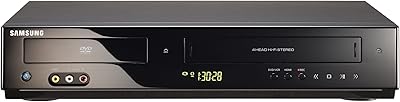
Samsung DVD-V9800 DVD VCR Combo Player
72%
82%
Build Quality
67%
VHS Playback Quality
78%
DVD Upconversion
88%
HDMI Connectivity
54%
Remote Control
More
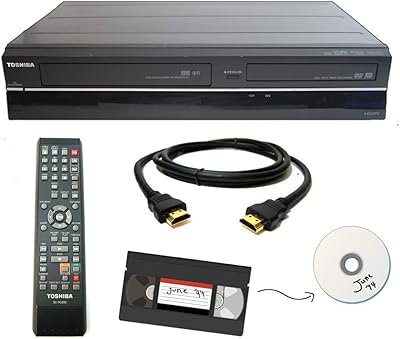
Toshiba VHS to DVD Recorder VCR Combo
84%
88%
Ease of Use
85%
Setup & Installation
91%
Video Quality
80%
Audio Quality
84%
Build Quality
More
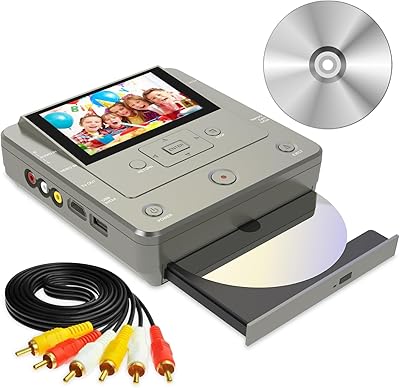
Sony RDR-VX VHS to DVD Recorder Combo
74%
88%
Ease of Use
82%
Dubbing Performance
67%
Video Output Quality
79%
Build Quality
54%
Value for Money
More
Clariviews VHS to DVD Recorder with 4.3-inch LCD
83%
93%
Ease of Setup
88%
Interface Simplicity
86%
LCD Preview Quality
67%
Build Materials
91%
Media Compatibility
More
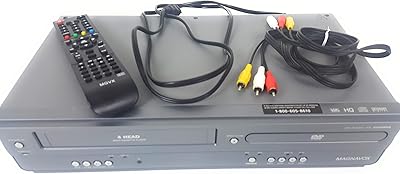
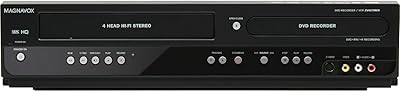
Magnavox DV200MW8 DVD/VHS Combo Player
75%
88%
Value for Money
65%
Ease of Setup
75%
Playback Quality
81%
Design and Build Quality
70%
Sound Quality
More
Magnavox ZV427MG9
Magnavox ZV427MG9
77%
88%
Dubbing Simplicity
83%
Image Upscaling
47%
Broadcast Recording
79%
Initial Setup
81%
DVD Burn Reliability
More
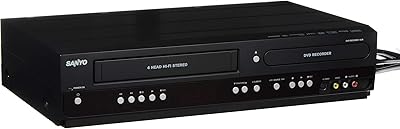
Sanyo RFWZV475F DVD Recorder/VCR Combo
80%
91%
Dubbing Ease
78%
Video Upconversion
84%
Connectivity Options
93%
Space Efficiency
82%
Remote Control Utility
More
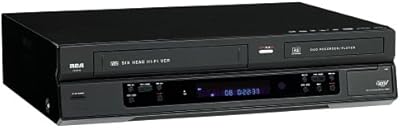
RCA DRC8335 DVD Recorder VCR Combo
65%
81%
Ease of Use
67%
VHS-to-DVD Dubbing Quality
58%
Disc Compatibility
73%
Build Quality
49%
Long-Term Reliability
More
Toshiba DVR670 DVD/VHS Recorder with Built-In Tuner
86%
88%
Overall Performance
92%
Ease of Use
90%
Video Quality (Post-Upconversion)
85%
Recording Reliability
76%
Compatibility with VHS Tapes
More
Panasonic DMR-E75VS DVD Recorder/VCR Combo
84%
88%
Ease of Use
90%
Recording Quality
85%
Build Quality
62%
Compatibility with Media Formats
91%
Time-Slip Feature
More

FAQ

No, it cannot. The Samsung DVD-VR375A DVD VHS Combo Recorder does not have a built-in tuner, so it has no way to receive broadcast, cable, or satellite signals on its own. To record live TV, you would need to connect an external set-top box or cable receiver and route that signal into the recorder.

The EZRecord function handles this with minimal steps. Insert your VHS tape and a blank recordable DVD disc, press the EZRecord button, and the machine begins dubbing automatically. You do not need to navigate through complex menus to get a basic transfer done.

Yes, the DVD-VHS deck outputs via HDMI and upconverts the signal to 1080p, so it connects directly to any HDTV with an HDMI port. Just keep in mind the upconversion improves the output signal presentation, not the actual quality of the original tape or disc content.

The unit supports DVD±R and DVD±RW discs for recording. Based on user experience, sticking with reputable brands like Verbatim or Maxell tends to reduce disc compatibility issues and finalization errors that some buyers have reported with generic or budget discs.

No. Commercial DVD movies include copy protection that prevents this recorder from dubbing them. This unit is intended for transferring personal, unprotected home recordings between formats.

Not directly. This combo recorder does not have USB output or computer connectivity, so it cannot send video files to a PC or Mac. If your goal is a digital file on a hard drive, you would need a separate video capture device in addition to this unit.

It varies. The VCR transport on these units is aging hardware, and condition depends heavily on how much the previous owner used it. Heavily used machines may show wear that affects tape handling. If you are buying secondhand, asking about tape head condition and whether it has been serviced is a reasonable precaution.

Yes, DivX playback is supported. You can burn DivX-encoded video files onto a CD-R or DVD±R disc and this dual-format unit will play them back through the DVD side of the machine.

An unfinalized disc may not play back on other DVD players even if the recording looks complete on this machine. Always use the finalize option in the disc menu before removing a recorded disc. If finalization fails repeatedly, try a different brand of blank media.

For VHS, the tape mechanism handles standard single-sided tapes as normal. For DVD, you would need to manually flip a double-sided disc since the player only reads one side at a time, which is standard behavior across virtually all consumer DVD players.

Where to Buy