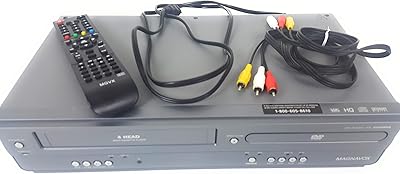
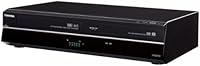
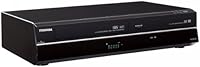
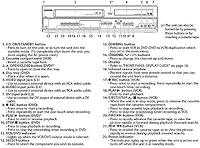
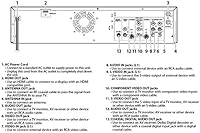
Overview

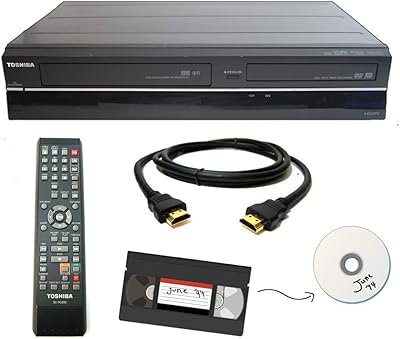
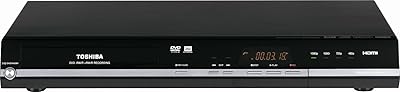
The Toshiba DVR670 DVD VHS Combo Recorder is essentially a bridge between two eras — a single box that lets you play and record both VHS tapes and DVDs without needing separate machines cluttering your entertainment center. Released in 2009, it arrived when VHS was fading but far from gone, and plenty of households still had shelves full of home recordings they weren't ready to abandon. What makes this combo recorder quietly interesting even today is its HDMI output with upconversion — a feature you wouldn't necessarily expect from a device built around legacy formats. It doesn't reinvent the picture, but it means you can connect to a modern flat-panel without hunting for adapter cables.

Features & Benefits

The DVR670 handles one-touch and programmable recording across both DVD and VHS formats, which means you can schedule recordings from the built-in ATSC/NTSC/QAM tuner without needing a cable box at all. The dubbing function is where this unit earns its keep — transferring content from VHS to DVD, or the reverse, is a straightforward process that doesn't require extra equipment or technical know-how. Front-panel DV and RCA inputs let you connect a camcorder directly and record to disc in real time. Dolby Digital and DTS audio passthrough round things out nicely for anyone running it through a home theater receiver.

Best For

This DVD-VHS unit was built for a specific kind of buyer, and it's worth being honest about that. If you've got a cabinet full of old home movies on VHS — birthdays, holidays, footage you simply can't replace — this combo recorder gives you a practical way to archive those tapes to DVD at home, on your own schedule. It also suits antenna TV users who want a basic, no-subscription method for recording over-the-air broadcasts. And if you're tired of managing a stack of separate A/V components, consolidating everything into one machine has real appeal, even if the technology inside is no longer cutting-edge.

User Feedback

Owners who picked up the DVR670 for home movie preservation tend to be genuinely satisfied with how approachable the dubbing process is — most report getting it running without much frustration. The remote and menu system draw more mixed reactions; some find navigation manageable, while others describe it as clunky, particularly those less familiar with older A/V interfaces. A consistent concern is long-term availability — this is a discontinued product, and sourcing a working replacement or spare parts can be genuinely difficult. A handful of users have flagged reliability issues after extended use. Picture quality after upconversion is generally described as acceptable rather than impressive, so expectations should stay realistic.

Pros

  • Dubs VHS tapes to DVD at home without outsourcing or extra equipment.
  • Built-in ATSC/NTSC/QAM tuner removes the need for a separate cable or antenna box.
  • Supports both DVD+R/RW and DVD-R/RW formats, giving you flexibility with disc brands.
  • Front-panel DV and RCA inputs make connecting a camcorder quick and straightforward.
  • HDMI output means this DVD-VHS unit connects to modern TVs without adapter hassles.
  • One-touch recording keeps the process simple for less tech-savvy users.
  • Dolby Digital and DTS audio passthrough works well with home theater receivers.
  • Consolidates VCR, DVD recorder, and tuner into one box, cutting down on cable clutter.
  • Energy Star compliant, so power draw during standby is not a concern.

Cons

  • Discontinued by the manufacturer, making repairs and replacements genuinely hard to find.
  • Menu navigation feels dated and can frustrate users unfamiliar with older A/V interfaces.
  • Upconverted video looks acceptable on a flatscreen but does not approach true HD clarity.
  • VHS source quality limitations mean dubbing results are only as good as the original tape.
  • Secondary market pricing can be unpredictable, with no guarantee of unit condition.
  • No support for modern streaming, Wi-Fi connectivity, or digital file output formats.
  • Remote control layout has drawn repeated criticism for being unintuitive to learn.
  • Long-term reliability concerns have surfaced among users who run the unit frequently.

Ratings

The scores below reflect our AI-powered analysis of verified global buyer reviews for the Toshiba DVR670 DVD VHS Combo Recorder, with spam, bot-generated, and incentivized submissions actively filtered out before scoring. Each category captures both what real owners genuinely appreciated and where frustrations consistently surfaced — nothing is smoothed over. The result is an honest, balanced picture of who this combo recorder works well for, and where it falls short.

VHS-to-DVD Dubbing
83%
For the core task most buyers purchased this unit to perform, the dubbing function delivers reliably. Users who sat down to transfer decades-old home movies reported the process was manageable without technical guidance, and the results were satisfying given the age of the source material.
Dubbing speed is real-time only, so transferring a full tape takes as long as the tape itself. Buyers with large VHS libraries quickly realized archiving an entire collection is a weeks-long project, not an afternoon task.
Ease of Use
61%
39%
Straightforward tasks like one-touch recording and basic playback are accessible even for first-time users. Many older adults who bought this unit specifically to handle VHS tapes reported being able to get started without calling for help.
The menu system shows its age noticeably. Users trying to program scheduled recordings or navigate between modes often described the interface as confusing, and the remote layout drew repeated criticism for not being intuitive to learn quickly.
Build Quality
67%
33%
The physical construction feels solid for a consumer-grade A/V component. The chassis does not flex noticeably, and the disc tray and tape door operate smoothly on units that have been well maintained.
Long-term reliability is a real concern. A meaningful number of reviewers reported mechanical failures — particularly in the VHS transport — after extended use, and with manufacturer support gone, there is no practical repair path for most owners.
Video Output Quality
58%
42%
The HDMI output genuinely solves the compatibility problem of connecting a legacy device to a modern flat-panel TV. Users appreciated not needing an adapter, and the upconverted picture is watchable on a large screen without obvious distortion.
Upconversion improves signal delivery but cannot improve the source material itself. VHS footage still looks like VHS footage — soft, occasionally noisy, and nothing close to HD — and buyers who expected a visible quality improvement came away disappointed.
Remote Control
54%
46%
The remote covers all the essential functions and works at a reasonable range from the unit. Users who took time to read the manual generally found everything they needed was accessible from the remote without getting up.
Button layout and labeling were criticized as cluttered and poorly organized. Several users noted they regularly pressed the wrong button during playback, and the learning curve for less tech-savvy buyers was steeper than expected for a device of this type.
Built-in Tuner
76%
24%
The ATSC/NTSC/QAM tuner is a genuine convenience for antenna TV users and cord-cutters. Being able to record over-the-air channels without a separate box was a frequently praised feature, particularly among buyers who no longer pay for cable.
Channel scanning and tuner setup require navigating the same dated menu system that draws criticism elsewhere. Users in areas with weaker antenna signals also noted the tuner occasionally struggled to lock onto channels that other devices in the same room handled without issue.
DVD Recording
78%
22%
Support for both the plus and minus DVD recordable formats means buyers are not restricted to a single disc type, and compatibility with widely available media was consistently praised. Programmable recording worked reliably for users recording scheduled TV broadcasts.
Recording quality from the built-in tuner is functional rather than exceptional. Users comparing recordings to the original broadcast noted visible compression artifacts at lower recording quality settings, particularly during fast-motion scenes.
Setup & Installation
69%
31%
Connecting the unit to a TV via HDMI is genuinely simple, and the initial channel scan for the tuner runs automatically. Most buyers reported having the unit operational within 15 to 20 minutes of unboxing.
Getting the more advanced features — like programmable recording schedules or dubbing with the correct input selected — required more effort than the basic setup. Several users mentioned needing to consult the manual or online guides before getting these features to work correctly.
Compatibility
74%
26%
The range of supported formats is broad for a device of this class. VHS, S-VHS, DVD+R/RW, DVD-R/RW, CD, and even DivX and MP3 file playback give users flexibility well beyond simple tape-to-disc dubbing.
There is no USB port and no support for external hard drives or flash storage, which feels like a meaningful gap by modern standards. Users who wanted to archive footage to a computer drive rather than physical discs had no direct path to do so.
Audio Performance
77%
23%
Dolby Digital and DTS passthrough via HDMI worked well for users running the DVR670 through a home theater receiver. DVD playback in particular benefited noticeably when routed through a proper surround sound setup.
Audio from VHS playback is limited by the format itself, and users should not expect the audio passthrough features to improve legacy tape recordings. Surround sound benefits apply primarily to DVD content, not VHS.
Availability & Support
31%
69%
Units that surface on secondary markets from reputable resellers have occasionally arrived in excellent condition, and buyers who got a well-maintained example were generally glad they tracked one down.
This is a discontinued product with no manufacturer support remaining, and finding a working unit at a fair price requires patience and some luck. Replacement parts are scarce, warranty coverage on used units is nonexistent, and the risk of receiving a worn or malfunctioning machine is real.
Value for Money
48%
52%
For a buyer who specifically needs VHS-to-DVD dubbing capability and cannot find a comparable alternative, the DVR670 fills a niche that few other devices address as completely. In that narrow context, the value proposition holds up.
Secondary market pricing for this unit can be surprisingly high given its age and discontinuation, and the risk of reliability issues makes the investment feel uncertain. Buyers paying premium resale prices for a device with no support safety net are taking on real financial exposure.
Noise & Heat
71%
29%
The unit runs quietly during DVD playback and basic TV recording, which users in smaller living spaces appreciated. Thermal output during normal operation is unremarkable for a component of this size.
Extended dubbing sessions — particularly with long VHS tapes — can cause the unit to run warm. A small number of users noted fan noise becoming more audible over time as the unit aged, suggesting internal components wear with heavy use.

Suitable for:

The Toshiba DVR670 DVD VHS Combo Recorder was made for a very specific kind of household, and for those buyers, it genuinely delivers. If you have shelves of VHS tapes — home movies, recorded TV shows, family milestones — and you want to transfer them to DVD without shipping your irreplaceable recordings off to a digitization service, this combo recorder handles that job without requiring technical expertise. Family historians and older adults who grew up with VHS will find the dubbing process approachable and self-contained. Antenna TV users and cord-cutters also benefit from the built-in ATSC tuner, which lets them schedule recordings from over-the-air broadcasts without any subscription or external equipment. Anyone who simply wants to consolidate a DVD player, VCR, and basic tuner into a single machine — rather than managing a tangle of separate devices — will appreciate the reduction in clutter alone.

Not suitable for:

The Toshiba DVR670 DVD VHS Combo Recorder is not the right tool if your expectations go beyond basic legacy-format management. If you are looking for sharp, modern video quality, you will be disappointed — upconversion softens the blow of connecting to a flatscreen, but it does not transform VHS-era content into something it was never meant to be. Buyers expecting a simple plug-and-play experience with a polished menu system may find the interface dated and occasionally frustrating to navigate. This is also not a practical choice for anyone wanting long-term manufacturer support, software updates, or readily available spare parts — the unit is discontinued, and sourcing a replacement if something breaks is genuinely difficult. Streaming-first households with no VHS tapes or physical media to manage will find no real use case here whatsoever.

Specifications

  • Brand: Manufactured by Toshiba, a well-established electronics brand with a long history in consumer A/V equipment.
  • Model: The DVR670 is the specific model identifier for this DVD and VHS combination recorder unit.
  • Dimensions: The unit measures 10.6 x 17.1 x 4 inches, making it a standard full-width component that fits most A/V shelving.
  • Weight: At 9.46 pounds, the DVR670 is a solidly built unit that stays stable on a shelf without being difficult to relocate.
  • DVD Formats: Records and plays DVD+R, DVD+RW, DVD-R, and DVD-RW discs, covering the most widely available recordable formats.
  • VHS Support: Plays and records standard VHS and S-VHS cassettes, with full dubbing capability in both directions between tape and disc.
  • Tuner Type: Includes a built-in ATSC, NTSC, and QAM tuner for receiving over-the-air and unencrypted cable broadcasts without an external box.
  • Video Output: Outputs video via HDMI with upconversion support up to 1080p resolution for compatibility with modern flat-panel televisions.
  • Audio Output: Passes through Dolby Digital and DTS surround sound signals, suitable for use with a home theater receiver or soundbar.
  • Front Inputs: Front panel provides both a DV input and an RCA input for direct recording from camcorders and other consumer devices.
  • Rear Inputs: Rear panel includes RCA composite and S-VHS inputs for connecting legacy source devices such as older VCRs or cameras.
  • Connectivity: Primary connectivity options are HDMI for video output and RF coaxial for antenna or cable input.
  • File Support: Reads MP3, WMA, JPEG, and DivX files from compatible discs, adding modest multimedia playback beyond standard DVD and VHS.
  • Power Standard: Meets Energy Star compliance requirements, keeping standby power consumption within accepted efficiency guidelines.
  • Batteries: Requires two AA batteries for the remote control, which are included in the box.
  • Color: Available in black, a neutral finish that blends with most home theater and A/V equipment setups.
  • Warranty: Backed by a 90-day labor warranty and a one-year parts warranty from Toshiba at the time of original sale.
  • Recording Modes: Supports both one-touch immediate recording and programmable timer-based recording from the built-in tuner.

Related Reviews
Toshiba VHS to DVD VCR Combo Recorder
73%
83%
Ease of Use
71%
Transfer Quality
74%
Build Quality
67%
HDMI & Video Output
58%
Value for Money
More
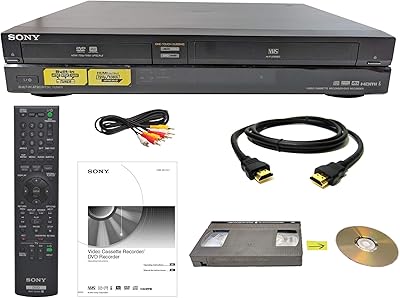
Samsung DVD-VR375A DVD VHS Combo Recorder
73%
83%
Dubbing Performance
76%
Ease of Setup
71%
VHS Playback Quality
67%
DVD Recording Reliability
74%
HDMI Video Output
More
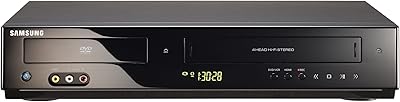
Sony RDR-VX VHS to DVD Recorder Combo
74%
88%
Ease of Use
82%
Dubbing Performance
67%
Video Output Quality
79%
Build Quality
54%
Value for Money
More
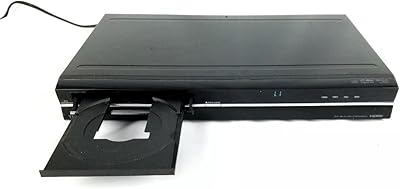
Samsung DVD-V9800 DVD VCR Combo Player
72%
82%
Build Quality
67%
VHS Playback Quality
78%
DVD Upconversion
88%
HDMI Connectivity
54%
Remote Control
More
Toshiba DR420 DVD Recorder
72%
88%
Ease of Setup
74%
Disc Compatibility
71%
Recording Quality
67%
Upconversion Performance
58%
Remote Control & Navigation
More
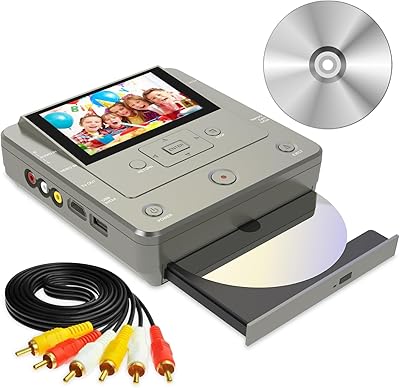
Clariviews VHS to DVD Recorder with 4.3-inch LCD
83%
93%
Ease of Setup
88%
Interface Simplicity
86%
LCD Preview Quality
67%
Build Materials
91%
Media Compatibility
More
Toshiba DR430 DVD Recorder
70%
83%
Ease of Setup
76%
Recording Quality
71%
HDMI Upconversion
58%
Disc Compatibility
88%
One-Touch Recording
More
Toshiba D-R400 Tunerless DVD Recorder
75%
88%
Video Upconversion Quality
91%
Disc Format Compatibility
84%
Audio Performance
61%
Ease of Setup
73%
Tunerless Design Usability
More
Magnavox DV200MW8 DVD/VHS Combo Player
73%
78%
VHS Playback Quality
83%
DVD Playback Reliability
76%
Video Output Clarity
91%
Ease of Setup
69%
Build Quality & Durability
More
RCA DRC8335 DVD Recorder VCR Combo
65%
81%
Ease of Use
67%
VHS-to-DVD Dubbing Quality
58%
Disc Compatibility
73%
Build Quality
49%
Long-Term Reliability
More

FAQ

Yes, that is actually the primary reason most people buy this combo recorder. You load the VHS tape, insert a blank recordable DVD, and use the dubbing function to copy the content across. The process is straightforward enough that you do not need any technical background to get it done.

It will, thanks to the HDMI output. The unit upconverts the video signal up to 1080p so it can display on a modern television. That said, keep expectations realistic — upconversion improves compatibility, but it does not transform old VHS footage into sharp HD video.

No. The Toshiba DVR670 DVD VHS Combo Recorder has a built-in ATSC, NTSC, and QAM tuner, which means it can receive and record over-the-air broadcast channels and some unencrypted cable channels on its own. For encrypted cable or satellite content, you would still need an external box.

The DVR670 works with DVD+R, DVD+RW, DVD-R, and DVD-RW discs. All of these formats are widely available at most retailers, so you are not locked into a hard-to-find disc type.

Yes, the front panel has both a DV input and an RCA input specifically for this purpose. You connect your camcorder, hit record, and the unit captures the footage directly to disc. It is one of the more practical features for anyone looking to archive old family camcorder tapes.

Honestly, it depends on your comfort level with older A/V equipment. Some users find the menus intuitive enough to get started quickly, while others — especially those less familiar with this type of device — find the navigation a bit dated and worth reading the manual for. Taking 20 minutes to go through the setup guide upfront saves frustration later.

Standard commercial DVDs are copy-protected and cannot be duplicated with this device. However, you can freely dub content you recorded yourself, whether from VHS to DVD or DVD back to VHS tape.

No, the DVR670 has been discontinued by Toshiba. Finding a brand-new unit is unlikely, and manufacturer support has effectively ended. If you are buying one, it will almost certainly be through secondary markets such as resellers or refurbishers, and condition can vary significantly.

Yes, the unit passes through Dolby Digital and DTS audio signals via HDMI, so if your receiver supports those formats you will get proper surround sound decoding from compatible DVDs.

Long-term reliability is a genuine concern with this machine. Some users have reported years of trouble-free use, while others have encountered mechanical issues, particularly with the VHS transport mechanism after heavy use. Because replacement parts are increasingly scarce, it is worth treating the unit carefully and not running it continuously for extended periods.