Overview

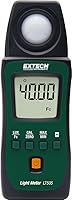
The Extech LT505 Pocket Light Meter is a compact, professional-grade instrument built for anyone who needs reliable ambient light readings without hauling around bulky equipment. What sets it apart right away is its ability to switch between lux and foot-candle units, making it practical whether you're working in photography, facility management, or industrial settings. It ships ready to use with batteries included, and at roughly 3 ounces, it genuinely fits in a shirt pocket. This pocket lux meter sits in a range where you're paying for real measurement accuracy, not just a novelty gadget — and that distinction matters when decisions depend on the numbers.

Features & Benefits

The sensor at the heart of the LT505 uses a precision photodiode with cosine and color correction filtering, which means readings reflect how light actually behaves in a real environment rather than raw intensity alone. Toggling between lux and foot-candle modes takes seconds, and the measurement range is wide enough for most professional applications. The Data Hold and Min/Max functions are genuinely useful in dynamic spaces — think a warehouse floor where lighting shifts throughout the day. A backlit LCD keeps the display legible in low-light conditions, and the auto power-off can be disabled when you need continuous monitoring. The built-in calibration function helps maintain accuracy over repeated field use.

Best For

This light meter earns its place across a surprisingly broad range of professional contexts. Photographers and videographers use it to verify consistent lighting across a set before a shoot — the foot-candle readout translates directly into exposure language they already know. HVAC engineers and building compliance officers rely on it to confirm illumination levels meet code in commercial or industrial spaces. Workplace safety auditors will find it handy for spot-checking areas flagged for inadequate lighting. It is also a solid choice for greenhouse growers tracking daily light integrals, and for lab instructors who want a portable, field-ready tool for applied lighting demonstrations.

User Feedback

Buyers consistently highlight the accuracy and reliability of the LT505, with many noting that readings align closely with far more expensive lab-grade meters. The compact size draws repeated praise — it truly slips into a pocket or tool bag without fuss. That said, some users have raised concerns about long-term durability, particularly around the battery compartment and sensor window after extended field use. A handful of reviewers mention calibration drift over time as something to watch, suggesting periodic re-zeroing in practice. On balance, most buyers consider this pocket lux meter a worthwhile investment for the precision and portability it delivers at its tier.

Pros

  • Readings are highly consistent and align closely with more expensive lab-grade instruments.
  • Switching between lux and foot-candle modes is quick and requires no tools or menus to navigate.
  • At just over 3 ounces, the LT505 slips into a pocket or tool bag without adding bulk.
  • The cosine and color correction filter produces readings that reflect real-world lighting conditions accurately.
  • Min and Max recording functions make it easy to track light variation in dynamic environments.
  • The backlit display remains legible even when working in dimly lit spaces or poorly lit corridors.
  • Ships with batteries included, so it is ready to use immediately out of the box.
  • The calibration function gives users a practical way to maintain accuracy across repeated field sessions.
  • Ranked among the top sellers in its category, reflecting consistent satisfaction from a broad professional user base.

Cons

  • The battery compartment has drawn complaints about fit and durability after extended field use.
  • No data-logging or PC connectivity means you must manually record readings for reporting purposes.
  • Calibration drift has been noted by some long-term users, requiring more frequent re-zeroing over time.
  • The sensor window can be vulnerable to scratches or dust accumulation without a protective case, which is not included.
  • No carrying case or protective pouch is bundled in the box despite the price tier.
  • The display, while backlit, is relatively small and can be difficult to read at a glance in bright outdoor conditions.
  • Limited to visible light measurement only — UV and IR ranges are outside its scope entirely.
  • Auto power-off timing may interrupt workflow during longer assessment sessions if the disable feature is overlooked.

Ratings

Our AI-generated scores for the Extech LT505 Pocket Light Meter are derived from a rigorous analysis of verified global buyer reviews, with spam, incentivized, and bot-flagged submissions actively filtered out before scoring. The ratings below reflect a transparent synthesis of real-world strengths and recurring pain points reported across professional, industrial, and creative use contexts. Both what this pocket lux meter does exceptionally well and where it falls short are honestly represented in every category.

Measurement Accuracy
88%
Users across photography, HVAC, and compliance auditing consistently report that readings hold up well against much more expensive reference instruments. The cosine and color correction filter draws particular praise from professionals who recognize that uncorrected sensors often skew results in mixed or indirect lighting environments.
A subset of long-term users notes gradual calibration drift after months of regular field use, meaning the zero-calibration function needs to be used more diligently over time. This is not a dealbreaker, but it does require a more disciplined workflow than some buyers expect at this tier.
Portability
93%
At just over 3 ounces and barely larger than a thick marker, this pocket lux meter genuinely disappears into a shirt pocket or tool pouch. Inspectors and photographers doing multi-location work specifically call out how much easier it is to carry compared to larger benchtop or panel-style meters.
The compact form factor comes with a smaller display and fewer tactile controls than larger handheld units, which some users with larger hands find slightly fiddly during extended measurement sessions. There is also no belt clip or lanyard loop, which feels like a missed opportunity given the pocket-first design.
Ease of Use
86%
Most buyers report being fully operational within minutes of opening the box, with no instruction manual deep-dive required. The single-button mode switching between lux and foot-candles is particularly appreciated by users who alternate between international and US-standard project documentation.
The Data Hold and Min/Max functions, while useful, are not immediately intuitive to new users and require a quick read of the manual to use confidently in fast-paced environments. A few reviewers mention accidentally triggering auto power-off mid-session before discovering the disable option.
Build Quality
67%
33%
For everyday professional use in controlled or semi-controlled environments, the housing feels adequately solid and the buttons respond consistently. Users who treat it as a precision instrument rather than a rugged field tool generally report no structural complaints over moderate use periods.
The battery compartment is the most frequently cited weak point, with several users reporting looseness or contact issues after extended use. The sensor window is also vulnerable to fine scratches without a protective case, and the overall plastic construction does not inspire confidence for rough industrial job sites.
Display Legibility
74%
26%
The backlit LCD is a genuine practical asset when working in dim warehouses, darkrooms, or poorly lit corridors where most competing pocket meters at lower price points offer no backlight at all. Contrast is adequate for indoor and transitional lighting conditions.
In bright outdoor sunlight, the display can wash out enough to make quick glancing difficult, which is frustrating for photographers scouting locations on a sunny day. The character size is on the smaller side, and users who wear glasses mention needing to bring the unit closer than expected to read it comfortably.
Value for Money
71%
29%
Professionals who use this light meter regularly as part of a paid workflow find the investment easy to justify, especially given how closely its readings track with instruments costing significantly more. For compliance officers or photographers billing client hours, the accuracy-to-cost ratio is strong.
Casual or occasional users may find it difficult to rationalize the price without a clear, recurring professional need. Buyers who later discover the lack of data logging or connectivity feel the value proposition weakens if their workflow requires any kind of automated record-keeping.
Sensor Performance
84%
The photodiode sensor with dual correction filtering produces readings that reflect the actual lighting conditions a human eye or a camera sensor would encounter, rather than raw photon counts. This makes it genuinely useful for nuanced applications like greenhouse light monitoring or display calibration verification.
The sensor is limited to visible light wavelengths, which surprises buyers who assumed a professional-grade meter might cover UV or near-infrared ranges. For specialized photometric work beyond standard illuminance, this limitation means the LT505 alone is not sufficient.
Battery Life
79%
21%
With the auto power-off feature active, the two AAA batteries last a solid stretch for most professional users who pick the meter up and put it down throughout a working day. The fact that batteries are included from day one is a small but appreciated touch that eliminates immediate friction.
Users who regularly disable auto power-off for continuous monitoring sessions report noticeably shorter battery life, and there is no battery level indicator on the display to warn you before the unit dies mid-session. Carrying spare AAA batteries is essentially mandatory for full-day field work.
Data Functions
62%
38%
The Min/Max and Data Hold functions add real practical value when measuring light in environments where levels fluctuate, such as spaces with motion-activated lighting or near windows with changing natural light. For manual spot-checking workflows, these functions cover most bases adequately.
The complete absence of any data output — no USB, no Bluetooth, no memory storage beyond the live Min/Max buffer — is a meaningful limitation for users who need documented records for compliance reports or project logs. Everything must be manually transcribed, which is slow and error-prone in busy environments.
Setup & Calibration
81%
19%
The zero-calibration process is quick and requires no external reference equipment for standard field use, which means users can recalibrate on the fly between measurements without disrupting their workflow. Professionals who build calibration into the start of each session consistently report stable and repeatable results.
There is no indication of when recalibration is needed, so the responsibility falls entirely on the user to build that discipline into their routine. Users who skip regular zeroing — especially after extended storage — are more likely to encounter the drift issues noted in longer-term reviews.
Dual-Unit Flexibility
91%
The ability to toggle between lux and foot-candles in a single, pocket-sized device is a standout practical feature for professionals who work across international projects or hand off reports to colleagues using different measurement conventions. It removes the need for manual conversion entirely.
There is no simultaneous dual-unit display, meaning you have to manually switch modes if you want to reference both values — a minor but occasionally annoying limitation when cross-checking readings against standards written in a different unit system.
Out-of-Box Readiness
94%
Batteries included, no complex setup, no pairing process, and a straightforward interface mean the LT505 is genuinely ready to take a first reading within about 30 seconds of opening the packaging. For professionals who order tools and need to deploy them quickly, this is a meaningful practical advantage.
The included documentation is minimal, which is fine for experienced users but can leave newcomers uncertain about how to use the Min/Max functions correctly or how aggressively to apply the calibration routine. A more thorough quick-start card would go a long way.
Durability Over Time
58%
42%
For users who handle the meter carefully and store it properly, the unit can remain functional and accurate for years of moderate professional use. Several long-term owners report no mechanical failures when the meter is treated with reasonable care.
The pattern of battery compartment degradation and sensor window wear reported in negative reviews suggests the materials used are not rated for the kind of daily punishment a truly field-hardened instrument would withstand. Users in industrial or outdoor-heavy roles should plan for a shorter service life than they might expect.
Brand Reliability
83%
Extech has a well-established reputation in the professional test and measurement space, and the LT505 benefits from that credibility — buyers express more confidence in the readings precisely because they trust the brand's calibration heritage and quality control standards.
Warranty support experiences appear inconsistent in user reports, with some buyers finding the resolution process slower than expected for a brand positioned in the professional tier. For users who depend on the meter for billable work, downtime during a warranty claim can be a real cost.

Suitable for:

The Extech LT505 Pocket Light Meter is an excellent fit for professionals who need accurate, portable light measurement as part of their regular workflow rather than as an occasional curiosity. Photographers and videographers will find it particularly practical for verifying consistent lighting across a set or scouting location conditions before committing to a shoot. HVAC engineers and building managers can use it to confirm that illumination levels in commercial or industrial spaces meet regulatory standards — a task where precision matters and a rough estimate simply won't do. Workplace safety officers benefit from its portability when conducting walkthroughs of large facilities, and greenhouse growers monitoring daily light integrals will appreciate how quickly it delivers actionable readings. Educators running applied science or optics labs will also find it a reliable, no-fuss tool that holds up across repeated classroom use.

Not suitable for:

The Extech LT505 Pocket Light Meter is not the right choice for casual or infrequent users who only occasionally wonder about light levels at home — the investment is difficult to justify without a clear, recurring professional need. Buyers expecting rugged field durability over years of harsh industrial use may find the build quality falls short of truly heavy-duty instruments designed for rough environments. It lacks wireless connectivity or data-logging software integration, which rules it out for setups requiring automated record-keeping or remote monitoring over time. Those working in highly specialized photometric applications — such as color-critical display calibration or UV measurement — will need instruments with purpose-built sensors that go beyond what this pocket lux meter offers. If your work demands traceable calibration certificates out of the box, you will likely need to budget for a separately certified unit or a professional calibration service.

Specifications

  • Model Number: This unit is manufactured by Extech under the model designation LT505.
  • Dimensions: The meter measures 1.9 x 1 x 5.3 inches, making it genuinely pocket-sized for field use.
  • Weight: At 3.2 ounces, this light meter adds virtually no burden to a tool bag or jacket pocket.
  • Display: A backlit LCD screen provides clear readout visibility even in poorly lit or variable lighting environments.
  • Measurement Units: The meter supports both lux and foot-candle (Fc) units, switchable depending on the user's workflow or regional standard.
  • Sensor Type: Readings are captured via a precision photodiode engineered for stable and repeatable light level detection.
  • Correction Filter: The sensor includes both cosine and color correction filtering to reflect how light is actually perceived in real-world conditions.
  • Key Functions: Onboard functions include Data Hold, Minimum recording, Maximum recording, and a Zero/Calibration adjustment for sustained accuracy.
  • Auto Power-Off: The meter powers down automatically to conserve battery life, with a manual disable option available for continuous monitoring sessions.
  • Power Source: Two AAA batteries power the device and are included in the box, so the meter is ready to use immediately.
  • Battery Included: Yes, two AAA batteries are bundled with the unit at purchase, requiring no additional accessories to begin measuring.
  • Availability: The LT505 has not been discontinued by the manufacturer and remains an active product in the Extech lineup.
  • Market Rank: This pocket lux meter holds a top-15 ranking in the Photographic Light Meters category on a major retail platform.
  • First Released: The product was first made available to consumers in June 2018, giving it a track record of several years in the field.
  • Connectivity: The meter has no wireless or wired data output; all readings must be recorded manually or noted from the display.

Related Reviews
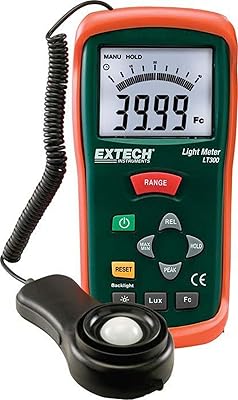
Extech LT300 Light Meter
75%
88%
Measurement Accuracy
91%
Sensor Design
86%
Display Readability
83%
Build Quality
74%
Ease of Use
More
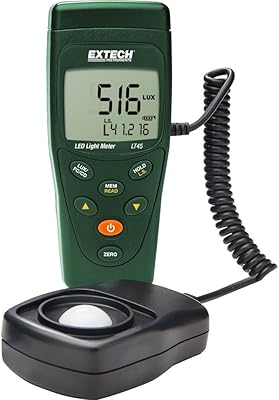
Extech LT45 LED Light Meter
82%
93%
Measurement Accuracy
96%
Source Compatibility
91%
Remote Sensor Design
88%
Build Quality
74%
Data Logging & Recall
More
Extech 407026 Light Meter
78%
88%
Measurement Accuracy
86%
Sensor Performance
59%
PC Connectivity
83%
Build Quality
84%
Ease of Use
More
Extech 401025 Lux Light Meter
80%
93%
Display Readability
74%
Measurement Accuracy
91%
Ease of Use
78%
Build Quality
88%
Dual-Unit Display
More
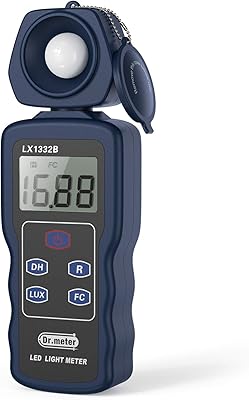
Dr.meter 1332B Digital Light Meter
81%
91%
Ease of Use
78%
Measurement Accuracy
93%
Rotating Sensor
89%
Measuring Range
67%
Build Quality
More
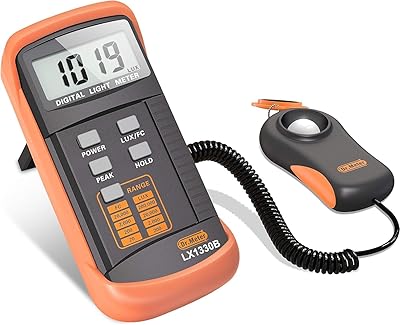
Dr.meter LX1330B Digital Lux Meter
82%
83%
Measurement Accuracy
91%
Ease of Use
67%
Build Quality
74%
Display Readability
92%
Measurement Range
More
URCERI SMT912 Digital Lux Light Meter
77%
82%
Measurement Accuracy
91%
Value for Money
88%
Display & Readability
67%
Build Quality
93%
Ease of Use
More
LATNEX LM-50KL Digital Lux Light Meter
77%
78%
Measurement Accuracy
72%
Build Quality
88%
Sensor Cable Utility
69%
Display Readability
91%
Battery Life
More
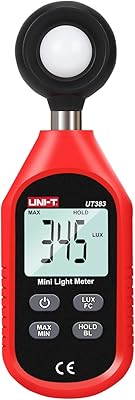
UNI-T UT383 Digital Lux Light Meter
80%
83%
Measurement Accuracy
92%
Ease of Use
74%
Build Quality
91%
Value for Money
86%
Display Readability
More
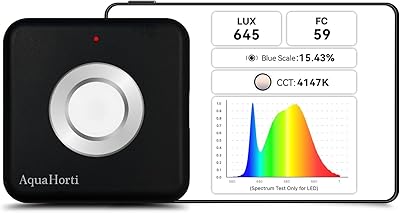
AquaHorti AH-300 Light Meter
75%
76%
Measurement Accuracy
68%
App Experience
83%
LUX Range & Versatility
58%
Spectrum Test Capability
79%
CSV Export & Data Logging
More

FAQ

It comes with two AAA batteries already included in the box, so you can start taking measurements right away without a separate purchase.

Yes, the LT505 is well-suited for compliance checks in commercial and industrial spaces. It reads in both lux and foot-candles, which are the units referenced in most occupational lighting standards. Just make sure to zero-calibrate before a formal walkthrough for the most reliable results.

Many professional users report that readings from this pocket lux meter track closely with costlier lab-grade instruments. The cosine and color correction filter plays a significant role here, as it adjusts for the angle and spectral composition of incoming light rather than just raw intensity.

It can, if you forget to disable it. The good news is there is a manual disable option specifically for situations where you need the meter running continuously over an extended period, such as monitoring light levels in a greenhouse throughout the day.

Lux is the metric unit for illuminance, while foot-candles are the imperial equivalent — one foot-candle equals roughly 10.76 lux. If you are in the United States working in photography or facilities management, foot-candles may be more familiar. For international or scientific applications, lux is the standard. The Extech LT505 Pocket Light Meter handles both, so you can switch depending on context.

No, the LT505 does not have a USB port, Bluetooth, or any other data output connection. If you need to keep records, you will have to note readings manually or photograph the display. For automated logging needs, you would need a meter with built-in connectivity features.

The meter has a built-in Zero/Calibration function that you can trigger before a session. It is a straightforward process and does not require external equipment for basic zeroing. Some long-term users recommend calibrating at the start of each session if you are relying on the readings for compliance or documentation purposes.

It is built to professional standards and handles everyday field use well, but it is not ruggedized for harsh industrial environments. The plastic housing and sensor window can show wear over time, especially without a protective case, which is not included. If your work involves rough conditions, consider pairing it with a fitted pouch.

No, this pocket lux meter is designed to measure visible light only. It is not capable of detecting ultraviolet or infrared wavelengths. If you need UV or IR measurement, you would need a purpose-built sensor for those spectral ranges.

It sits in a price and performance range that leans toward serious hobbyists and working professionals. A casual user who only occasionally wants to check a lighting setup might find it more than they need. But for a photography student who is serious about understanding exposure and light measurement, it is a genuinely educational and durable tool that will last through years of coursework and beyond.

Where to Buy

Cole-Parmer
In stock $130.90
instrumentation2000.com
In stock $138.99
Test Equipment Depot
In stock $142.18
Southern Electronics
In stock $142.99
Calright Instruments
In stock $144.00