Overview

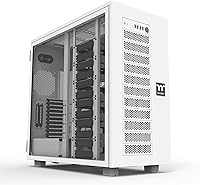
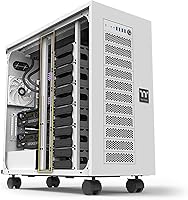
The Thermaltake AX700 Super Tower PC Case arrived in May 2025 as one of the few chassis willing to serve both workstation-class server boards and enthusiast gaming builds under the same roof. This super-tower chassis is not a modest footprint — at roughly 31 inches tall and weighing nearly 57 pounds boxed, it demands dedicated floor space and a clear plan before you commit. The Snow colorway with its tempered glass panel gives it a clean, modern look that stands apart from the sea of black towers at this price tier, putting it in direct competition with options like the Lian Li O11 XL and Corsair 7000D.

Features & Benefits

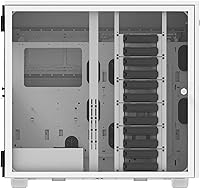
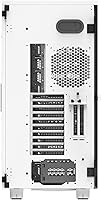
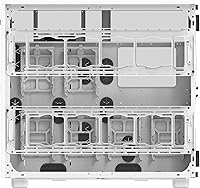
What makes the AX700 Snow genuinely interesting is how much it accommodates without forcing compromises. The dual-platform motherboard support spans everything from SSI-EEB server boards down to Mini-ITX, so you are not locked into a single ecosystem. Cooling headroom is exceptional — 18 fan positions across 140mm and 120mm mounts, with radiator support reaching 560mm on a DIY loop, means thermal constraints will not be the bottleneck in any serious build. GPU clearance extends to 630mm when the HDD rack is removed, and the included four-point GPU brace is a practical touch that saves you from buying aftermarket support hardware. Ten PCIe slots and 18 drive bays round out a spec sheet that genuinely earns the super-tower label.

Best For

This Thermaltake tower is clearly designed with a specific kind of builder in mind. If you are running a Threadripper Pro, Xeon W, or similar HEDT platform on an SSI-form-factor board and still want your machine to look like something other than a rackmount server, this chassis solves a real problem. Content creators and 3D rendering workstations will appreciate the combination of massive storage capacity and cooling room for simultaneous CPU and GPU workloads. Custom water-cooling builders — especially those running thick 420mm radiators with dense tube routing — will find the interior genuinely accommodating. That said, if you move your rig regularly or floor space is limited, this is probably not the right fit.

User Feedback

With 468 ratings averaging 4.3 stars, the AX700 Snow has earned a broadly positive reception, though the picture is not without some friction. Buyers consistently praise the cable management room and the overall build quality — the steel feels substantial, and the glass panel sits flush without the rattle issues that plague cheaper cases. Where the feedback gets honest is around physicality: at nearly 60 pounds shipped, solo assembly is a genuine challenge, and more than a few reviewers noted that managing the large panels alone is cumbersome. The omission of the AX100 Pedestal from the base package has also caught some buyers off guard, so factor that into your budget if expansion is part of the plan from day one.

Pros

  • One of the only consumer cases with native SSI-EEB and SSI-CEB support, opening the door for true workstation builds.
  • 18 drive bays across two zones gives this Thermaltake tower NAS-level storage density in a desktop form factor.
  • Cooling headroom is exceptional — 18 fan positions and radiator support up to 560mm means thermals are rarely a constraint.
  • GPU clearance stretches to 630mm with the HDD rack removed, accommodating even the longest triple-slot cards available today.
  • The included 4-point adjustable GPU brace is a practical, cost-saving addition that most cases at this tier leave out.
  • Ten PCIe expansion slots make multi-GPU or heavy PCIe card configurations genuinely viable without awkward bracket workarounds.
  • The Snow colorway and tempered glass panel offer a clean, professional aesthetic that stands out in an otherwise all-black category.
  • Cable management space behind the motherboard tray is reported by buyers as generous, making clean builds less of a chore.
  • AX100 Pedestal compatibility means the chassis can scale upward in storage, cooling, or power capacity without being replaced.
  • Released in May 2025, the AX700 Snow reflects current-generation design choices rather than a refreshed legacy platform.

Cons

  • The AX100 Pedestal expansion module is sold separately, which feels like an omission given the premium price of the base chassis.
  • At nearly 60 pounds shipped, solo assembly is a real physical challenge — plan to have a second person present.
  • The sheer footprint demands significant dedicated floor or desk space that many home setups simply cannot spare.
  • Buyers running standard ATX or smaller boards are paying a steep premium for motherboard compatibility they will never use.
  • Large-format cases like this carry a higher shipping risk, and a small number of buyers have flagged packaging concerns on arrival.
  • The tempered glass panel, while attractive, adds fragility to an already heavy and difficult-to-maneuver chassis during transport.
  • No USB4 or Thunderbolt front-panel connectivity has been noted as a gap for users building cutting-edge creative workstations.
  • Competitors like the Lian Li O11 XL offer a more refined interior layout at a comparable or lower price for standard ATX builds.

Ratings

The scores below were generated by our AI review engine after analyzing verified buyer feedback for the Thermaltake AX700 Super Tower PC Case from multiple global sources, with spam, incentivized reviews, and bot activity actively filtered out before scoring. Each category reflects the honest consensus of real builders — from HEDT workstation builders to custom water-cooling enthusiasts — and both the genuine strengths and the recurring frustrations are weighted transparently into every number you see here.

Motherboard Compatibility
96%
This is where the AX700 Snow has almost no peer at the consumer level. Builders who have struggled to find a presentable enclosure for SSI-EEB or Threadripper Pro boards consistently call this out as the primary reason they bought it — the breadth of supported form factors is genuinely rare in a chassis aimed at home and studio users.
For anyone already on a standard ATX or E-ATX platform, that compatibility range provides zero practical advantage, and they end up paying a premium for a feature set they will never use. It is a category-defining strength only for the specific audience it was built for.
Cooling Headroom
94%
Custom loop builders and heavy-AIO users report that cooling flexibility here is about as unconstrained as a consumer chassis gets. The ability to mount a 560mm DIY radiator without contorting the build, combined with 18 fan positions, means thermal management is determined by your hardware choices rather than the case.
With so many mounting zones available, planning a cohesive airflow layout takes real effort and forethought — less experienced builders have reported feeling overwhelmed by the options. The case ships without any fans included, so a full fan array adds meaningful cost on top of the base price.
Storage Capacity
91%
Eighteen drive bays across two dedicated zones is the kind of capacity that normally requires a NAS enclosure or a rackmount server, and builders running video editing archives or multi-drive render scratch setups have praised this heavily. The split between main chamber cages and behind-tray positions keeps the interior from feeling cluttered even with dense storage.
Managing 18 individual SATA or SAS data and power cables in a clean build is a serious cable management challenge that demands planning, quality sleeved cables, and patience. Buyers who populate fewer than six drives may find the unused cage space aesthetically awkward inside the otherwise open interior.
Build Quality
88%
The steel panels feel solid and the overall rigidity of the chassis is regularly praised by buyers who have handled competing cases at similar price points. The tempered glass side panel sits flush with minimal flex, and buyers consistently note that the fit-and-finish meets expectations for a premium super-tower product.
A subset of buyers have noted that some plastic accent pieces feel slightly inconsistent with the quality of the steel chassis — small tolerance gaps and minor panel alignment issues have been flagged, particularly around door hinges and front bezels. For a product at this tier, those details matter more than they would on a budget build.
GPU Accommodation
89%
A 630mm clearance ceiling with the HDD rack removed means virtually no current consumer GPU is out of reach, and the included 4-point adjustable GPU brace is a practical addition that saves buyers from hunting down aftermarket anti-sag solutions. Builders running triple-slot flagship cards in multi-GPU configurations have specifically called this out as a purchase driver.
Dropping to 360mm clearance with the HDD rack installed creates a real trade-off for builders who want both maximum storage density and the longest graphics cards — you cannot have both simultaneously. That constraint requires a deliberate build decision upfront rather than flexibility after the fact.
Cable Management
83%
The behind-tray depth is generously sized and buyers with complex multi-GPU and multi-drive setups report having enough room to route cables cleanly without resorting to zip-tie compression tricks. The overall interior volume means routing paths feel considered rather than compromised.
Fully populating the drive bays and PCIe slots creates a cable count that can overwhelm even experienced builders, and the case does not include any cable management accessories like velcro straps or rubber grommets beyond basic routing cutouts. Some buyers noted that the motherboard tray cutout placement felt less intuitive than competing platforms.
Expansion & Upgradability
79%
21%
The AX100 Pedestal compatibility gives this Thermaltake tower a long-term growth path that most competitors simply cannot match — home lab users and creators who plan to expand their setup over several years without swapping chassis have highlighted this as a meaningful differentiator.
The AX100 Pedestal being sold separately is a recurring frustration in buyer feedback, particularly given the premium price of the base unit — many buyers expected it to be bundled or at minimum discounted. Without the pedestal, the expansion capability is a future promise rather than a day-one reality.
Aesthetics & Design
81%
19%
The Snow colorway is a genuine rarity at the super-tower level, and buyers who wanted a white workstation-class build without resorting to custom paint jobs have appreciated the option. The tempered glass panel frames the interior cleanly and the overall silhouette looks professional rather than aggressively gamer-styled.
At this scale, fingerprints and dust accumulation on the white exterior and glass panel require more frequent cleaning than a dark chassis would. A handful of buyers noted that the front panel design looks somewhat dated compared to the more architectural styling found on the Lian Li O11 XL.
Assembly Experience
58%
42%
The interior layout is logical once you understand the build zones, and experienced builders familiar with large-format cases report that the actual component installation steps are straightforward. Standoffs, brackets, and mounting hardware are well-labeled and organized in the accessory box.
Solo assembly is genuinely difficult — at nearly 60 pounds before any components are installed, repositioning the case mid-build or lifting it to seat components is a physical challenge. Multiple buyers have flagged that handling the large tempered glass panel alone while also managing case orientation is frustrating enough that they wish they had asked for help.
Portability & Handling
31%
69%
If the system lives permanently in one location — a studio, a dedicated workstation corner, or a server room adjacent area — the weight is rarely an issue in day-to-day use. The bottom-mounted PSU keeps the center of gravity low, which provides stability on hard floors.
This is among the heaviest consumer desktop cases on the market, and buyers who have attempted to move a populated system even short distances have described it as a two-person job at minimum. LAN party use or any scenario involving regular relocation is completely impractical — this case is a permanent fixture by design.
Value for Money
74%
26%
For the specific buyer who needs SSI-EEB support combined with custom cooling capacity and dense storage in one chassis, there are very few alternatives at any price, which makes the value proposition considerably stronger than the raw number might suggest. The included GPU brace and broad compatibility list do add tangible utility relative to competitors.
For a standard ATX or E-ATX builder, the pricing is difficult to justify when alternatives like the Corsair 7000D or Lian Li O11 XL offer a more refined build experience at a lower cost. The AX100 Pedestal being an additional purchase also erodes the value case for buyers who expected full expandability out of the box.
Front Panel I/O
67%
33%
The front panel provides functional connectivity for standard builds and covers the USB requirements of most current workstation configurations without forcing adapter workarounds. Placement is accessible and cable routing to the panel header is reported as clean.
Buyers building cutting-edge creative workstations in 2025 have noted the absence of USB4 or Thunderbolt connectivity on the front panel as a gap that competitors at this price tier are beginning to address. For a chassis released in May 2025, the I/O spec feels one product cycle behind.
Shipping & Packaging
69%
31%
Most buyers report receiving the chassis in good condition, and the packaging does use reinforced foam inserts designed for the weight and dimensions of a super-tower product. Thermaltake's experience with large-format cases shows in the structural approach to the outer carton.
A notable minority of buyers have documented transit damage — dented corners, cracked plastic accents, or scratches on the tempered glass — suggesting the packaging is adequate under normal shipping conditions but not robust enough to absorb rough handling. Buyers are advised to inspect the outer carton before signing for delivery and document any damage immediately.

Suitable for:

The Thermaltake AX700 Super Tower PC Case is purpose-built for a narrow but passionate segment of builders who have outgrown conventional full-tower options. If you are working with a Threadripper Pro, Xeon W, or any other HEDT platform that demands an SSI-EEB or SSI-CEB motherboard, this is one of the very few consumer-market chassis that will actually fit your board while still looking presentable on a desk or studio floor. Content creators juggling heavy local storage — video editors with multiple NAS-grade drives, 3D artists who need fast scratch disks alongside project archives — will find the 18-bay capacity genuinely useful rather than just a spec-sheet novelty. Enthusiast water-cooling builders who want to run dual 360mm or a single oversized 560mm DIY radiator without compromising GPU clearance will also feel right at home here. Home lab users who plan to expand their setup incrementally over several years, adding drives, PCIe cards, or even a stacked AX100 Pedestal module, will appreciate that this chassis is designed to grow with a build rather than forcing a swap down the road.

Not suitable for:

The Thermaltake AX700 Super Tower PC Case is a poor fit for anyone building a standard gaming or productivity desktop that does not require server-grade motherboard support or extreme component density. At nearly 60 pounds boxed and with a footprint that rivals a small filing cabinet, this is not a chassis you move, transport to LAN parties, or tuck under a desk in a compact office setup. Buyers on a tighter budget should also think carefully — the AX100 Pedestal expansion module that makes this chassis truly future-proof is sold separately, meaning the total investment can climb well beyond the base price if expansion is part of the plan. Solo builders should be warned that assembling something this large and heavy without a second set of hands is genuinely awkward, particularly when handling the tempered glass panel. If your motherboard is a standard ATX or smaller and your cooling setup is a single AIO, this super-tower chassis is simply more case than you need, and competing options from Lian Li or Corsair will serve you better at a lower cost.

Specifications

  • Form Factor: Super Tower chassis designed to house SSI-CEB, SSI-EEB, XL-ATX, E-ATX, ATX, mATX, and mITX motherboards in a single enclosure.
  • Dimensions: Packaged dimensions measure 31 x 30.2 x 16.8 inches, reflecting one of the largest consumer-market desktop chassis currently available.
  • Weight: Ships at approximately 57.4 lbs, making solo transport and assembly physically demanding without a second person present.
  • Drive Bays: Supports up to 18 drives in 3.5″ or 2.5″ format, with 12 bays located in the main chamber and 6 positioned behind the motherboard tray.
  • Fan Support: Accommodates up to 18 fans in 140mm or 120mm sizes distributed across multiple mounting zones throughout the chassis interior.
  • Radiator Support: Supports AIO radiators up to 420mm and custom DIY loop radiators up to 560mm, covering virtually all enthusiast liquid cooling configurations.
  • GPU Clearance: Graphics card length clearance ranges from 360mm with the HDD rack installed to 630mm with the rack removed, and a 4-point adjustable GPU brace is included.
  • PCIe Slots: Provides 8 standard plus 2 additional PCIe expansion slots, totaling 10 slots to support multi-GPU or heavily expanded PCIe card configurations.
  • 5.25″ Bays: Includes 2 external 5.25″ bays for optical drives or compatible bay accessories, a feature increasingly rare in modern cases.
  • Air Cooler Height: Clears air coolers up to 190mm tall, which is sufficient for virtually all high-performance tower air coolers on the market.
  • PSU Mounting: Power supply mounts at the bottom of the chassis, keeping the center of gravity low and isolating PSU heat from the main cooling zones.
  • Side Panel: Features a tempered glass side panel for interior visibility, offering a clean view of installed components and custom lighting.
  • Color: Available in Snow, a white finish that contrasts against the predominantly black options at this super-tower price tier.
  • Primary Material: Chassis body is constructed from steel with plastic accents, contributing to both its structural rigidity and its considerable shipped weight.
  • Expansion System: Compatible with the Thermaltake AX100 Pedestal, a stackable accessory module that adds storage, cooling, or power capacity and is sold separately.
  • Availability: First listed for sale in May 2025, positioning this as a current-generation chassis rather than a carry-over from a prior product cycle.

Related Reviews
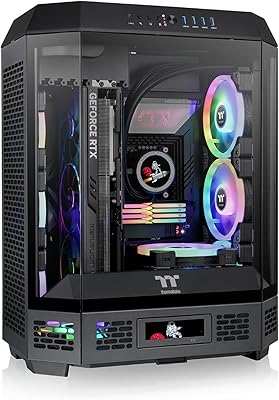
Thermaltake Tower 600 Mid-Tower ATX Case
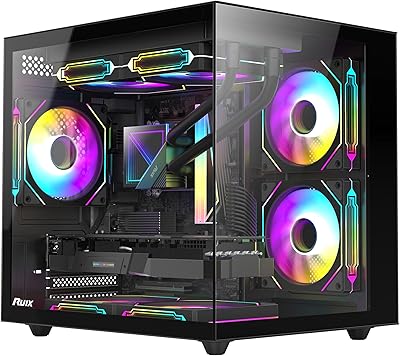
79%
91%
Build Quality
93%
Aesthetic Design
88%
Cable Management
94%
Cooling Capacity
71%
Installation Experience
More
SAMA V60 Mid Tower PC Case
80%
93%
Out-of-Box Cooling Value
78%
Airflow Performance
91%
AIO & Radiator Flexibility
88%
Tempered Glass & Aesthetics
71%
Build Quality & Materials
More
RUIX OV502 mATX Mini-Tower PC Case
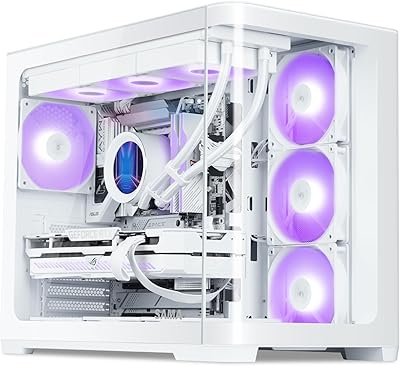
68%
83%
Value for Money
86%
Aesthetic Design
79%
Glass Panel Quality
84%
Component Compatibility
71%
Airflow & Cooling
More
darkFlash DS900 ATX Mid-Tower PC Case
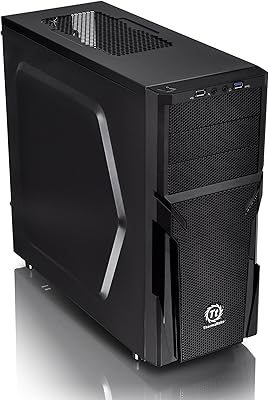
75%
76%
Build Quality
83%
Cooling Potential
91%
Aesthetics & Visibility
88%
Value for Money
74%
Cable Management
More
AMANSON H9 Mid-Tower ATX Gaming PC Case
76%
88%
Value for Money
81%
Airflow Performance
67%
Pre-Installed Fan Quality
63%
Build Quality
79%
Tempered Glass Panels
More
Vetroo AL800 Mid Tower ATX PC Case
76%
78%
Build Quality
84%
Tempered Glass Panel
76%
Airflow Performance
61%
Fan Included & Expandability
69%
Cable Management
More
Corsair FRAME 4000D RS Mid-Tower Case
82%
91%
Airflow Performance
88%
Build Quality
86%
Modularity & Upgradability
83%
Fan Mounting System
78%
GPU Compatibility
More
ANSAITE W9 Mid-Tower ATX PC Case
77%
88%
Value for Money
91%
RGB & Lighting Performance
74%
Airflow & Cooling Capacity
63%
Build Quality & Materials
84%
Cable Management
More
SAMA V Mesh Mid Tower PC Case
79%
91%
Airflow Performance
88%
Included Fans
86%
Value for Money
67%
Build Quality
83%
Ease of Assembly
More
Zalman S2 ATX Mid-Tower PC Case
76%
88%
Airflow Performance
63%
Build Quality
91%
Value for Money
86%
Ease of Assembly
84%
Cooling Expandability
More

FAQ

Yes, the AX700 Snow is one of the few consumer-market cases with genuine SSI-EEB and SSI-CEB support, which covers the full-size server-grade boards used by Threadripper Pro and many Xeon W platforms. Just confirm your specific board's dimensions against the supported form factors before ordering, since SSI boards vary slightly between manufacturers.

It is genuinely heavy — the chassis ships at around 57 pounds, and once populated with drives, a PSU, and a custom loop it will be heavier still. Solo assembly is possible but awkward, especially when seating the tempered glass panel or positioning the case upright. Most buyers who have commented on this recommend having a second person available, particularly for the initial build.

No, the AX100 Pedestal is sold separately. The base package includes the chassis, the GPU brace, and standard mounting hardware, but the pedestal expansion system is an add-on purchase. Factor that into your total budget upfront if modular expansion is part of your build plan.

With the HDD rack removed, GPU clearance extends to 630mm, which comfortably accommodates every consumer graphics card currently on the market. If you keep the HDD rack installed, clearance drops to 360mm, which is still enough for most standard triple-slot cards but would exclude some ultra-long flagship models.

Yes, and this is one of the strongest use cases for this chassis. The Thermaltake AX700 Super Tower PC Case supports radiators up to 560mm on a custom DIY loop, with 18 total fan positions giving you plenty of mounting flexibility for intake and exhaust across multiple zones. Hardline and soft-tube routing both work well given the generous interior volume.

Standard ATX, mATX, and even Mini-ITX boards are all supported, so you can technically build a conventional gaming PC in here. That said, the footprint and price make it a poor value proposition for a standard ATX build — the chassis is designed around the needs of HEDT and server-board users, and a conventional build will feel like it has a lot of unused space.

Cable management is one of the more consistently praised aspects of this Thermaltake tower among buyers. The space behind the motherboard tray is reported as generous, and the overall interior volume means you are not fighting for routing paths the way you would in a mid-tower. That said, with 18 possible drive connections, keeping a fully populated storage build tidy still takes planning.

The panel uses a standard tool-assisted mounting system common to cases in this tier, so removal and reattachment is straightforward once you are familiar with the mechanism. The main caution is weight — the panel is large and heavy given the size of the chassis, so handle it with both hands and ideally have someone steady the case while you work.

The core differentiator is SSI motherboard support, which neither the O11 XL nor the 7000D offer. If you are on a standard ATX or E-ATX platform, both competitors are strong alternatives with equally refined interiors and in some cases better front-panel connectivity or more polished build-quality details. The AX700 Snow earns its place specifically for builders whose motherboard or storage density requirements push beyond what those cases can handle.

Large-format cases carry a statistically higher shipping risk than compact products, and a small number of buyers have flagged packaging or transit damage on arrival. Thermaltake ships the AX700 Snow in reinforced packaging, but it is worth inspecting the outer box before signing for delivery and documenting any damage before opening. If you notice impact damage to the box, photograph it immediately and contact the retailer before proceeding.

Where to Buy