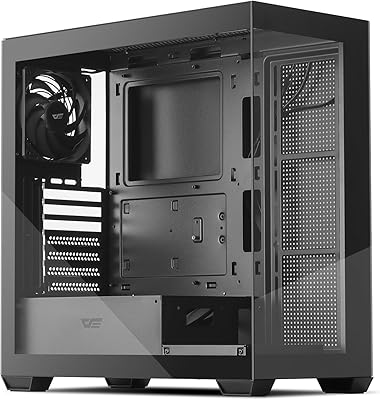
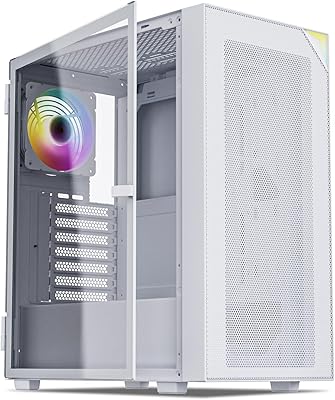
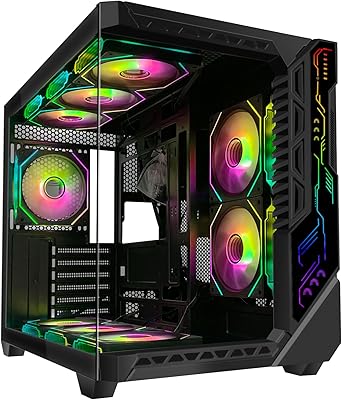
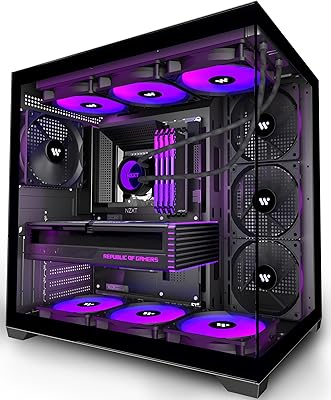
Overview

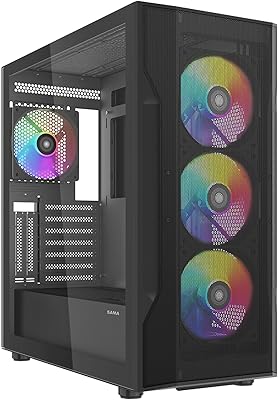
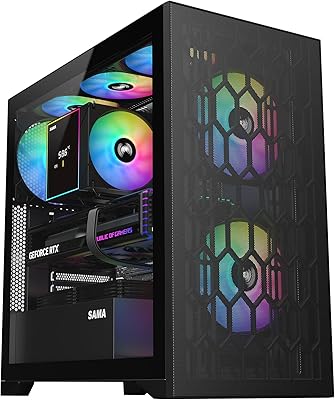
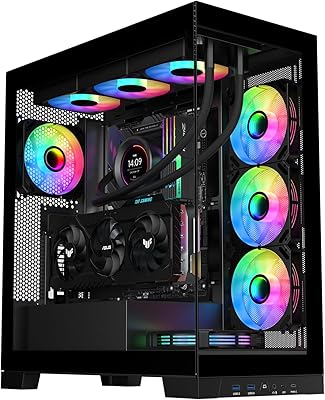
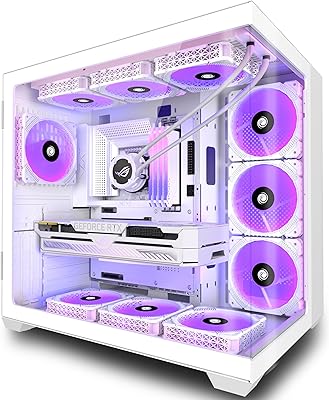
The SAMA V60 Mid Tower PC Case arrives at a time when builders are increasingly reluctant to pay separately for cooling hardware, and it makes a compelling argument for the bundled approach. Seven ARGB fans come pre-installed right out of the box — a rare offering at this price tier. Dual curved tempered glass panels give the build a high-end showcase feel without the premium price tag. What makes the V60 genuinely interesting is its back-connect motherboard support, a forward-looking feature that most competing cases ignore entirely at this segment. That said, bundled fans always raise questions about noise and long-term quality, and those are worth examining honestly before buying.
Features & Benefits

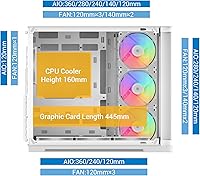
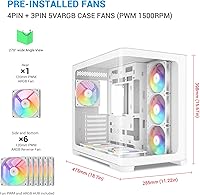
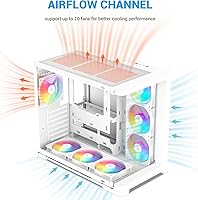
Where the V60 really distinguishes itself is in the cooling setup. Three fans pull air in from the bottom, three more draw from the side, and one exhausts at the rear — all synchronized through an included fan hub so you don't have to hunt for spare motherboard headers. The radiator support is unusually generous: 360mm mounts are available on the top, bottom, and side simultaneously, giving AIO builders real flexibility in how they configure liquid cooling. GPU clearance stretches to 445mm and CPU cooler height to 160mm. Up front, USB Type-C 3.1 and magnetic dust filters round out a thoughtfully equipped package.

Best For

This mid-tower case is a natural fit for first-time builders who want their system to look great and stay cool without spending extra on fans. If you're planning a 360mm AIO build, the V60 gives you three mounting positions to work with — that kind of flexibility is uncommon at this price. Builders exploring back-connect platforms like ASUS BTF or MSI Project Zero will appreciate that this SAMA chassis already supports the format without adapters or workarounds. And if you're dropping a high-end GPU into the build, 445mm of clearance means even the largest cards from current-gen lineups won't cause fitment headaches.

User Feedback

Sitting at 4.6 stars across 126 ratings, the V60 has earned solid early praise — though it's worth noting the review pool is still relatively limited for a product that only launched in late 2024. Buyers consistently applaud the glass aesthetics and how straightforward the assembly process turns out to be. The bundled fan count gets particular appreciation from newcomers who hadn't budgeted for extra cooling. On the flip side, some users flag fan noise at higher speeds as a genuine concern, and a few mention that cable routing space behind the motherboard tray feels tighter than expected. ARGB sync compatibility with third-party software is also a recurring question worth researching for your specific setup.

Pros

  • Seven ARGB PWM fans and a fan hub come pre-installed, so your build is ready to cool and light up from day one.
  • Three 360mm radiator mounting positions give AIO builders genuine flexibility that most competing cases in this segment simply don't offer.
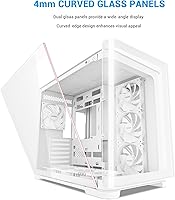
  • Dual curved tempered glass panels create a panoramic interior view that makes mid-range components look far more premium than they cost.
  • GPU clearance reaches 445mm, meaning current-gen triple-fan cards from any major brand fit without measuring twice.
  • Back-connect motherboard support is a forward-thinking inclusion that most cases at this price point still ignore entirely.
  • The front I/O includes USB Type-C 3.1, making it practical for connecting modern external drives and peripherals daily.
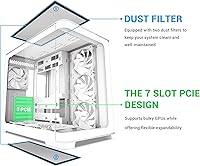
  • Magnetic dust filters on the bottom intake are easy to pull, rinse, and reattach — no tools, no fumbling.
  • Tool-free panel removal and a logical interior layout make the assembly experience noticeably smoother for first-time builders.
  • The dedicated ARGB control button lets you cycle lighting modes without opening any software — a small but genuinely useful convenience.
  • At this price tier, the overall feature density is hard to match without spending significantly more or buying components separately.

Cons

  • All seven fans running simultaneously at full speed produces a combined noise level that will bother anyone in a quiet room.
  • Side intake fans have no dust filtration layer, meaning internal cleaning will be needed more frequently than the marketing implies.
  • Certain trim pieces and front panel sections use plastic that feels noticeably cheaper than the solid steel chassis beneath them.
  • Cable routing space behind the motherboard tray is tighter than expected, especially with a non-modular PSU and multiple RGB connectors.
  • ARGB sync across all seven fans through third-party software can be inconsistent, with individual fans occasionally dropping out of the chosen effect.
  • The review pool, while positive, is still relatively small for a product this new — long-term durability data simply isn't available yet.
  • Bottom 360mm radiator mounting alongside a full ATX board and a standard PSU requires careful pre-planning to avoid fitment conflicts.
  • The curved tempered glass, while striking, collects fingerprints aggressively and feels more delicate to handle during installation than flat panels.
  • PSU support is capped at 210mm, which can catch builders off guard when repurposing longer power supplies from older systems.

Ratings

The SAMA V60 Mid Tower PC Case earns a strong overall standing based on AI-driven analysis of verified buyer reviews worldwide — with spam, incentivized, and bot-flagged submissions actively filtered out before scoring. Across categories ranging from thermal performance to build quality, the scores below reflect what real builders actually experienced, including the friction points that marketing copy tends to gloss over. Both the highs and the honest shortcomings are accounted for here.
Out-of-Box Cooling Value
93%
Getting seven ARGB PWM fans and a fan hub bundled at this price is genuinely rare, and buyers repeatedly call it out as the primary reason they chose this case over competitors. For first-time builders especially, skipping a separate fan shopping trip saves both time and real money.
The bundled fans are functional, but enthusiasts doing side-by-side comparisons note they don't move air as quietly or efficiently as dedicated aftermarket options in the same RPM range. Buyers who already own quality fans may find the pre-installed set redundant rather than additive.
Airflow Performance
78%
22%
The triple-bottom and triple-side intake configuration creates a strong positive pressure environment that keeps dust out and temperatures in check for mid-range builds running modern GPUs. Builders running RTX 4070-class cards report comfortable thermals under sustained gaming loads.
At full fan speed the airflow is decent, but the case geometry — particularly the tempered glass side panel — limits how much ambient air reaches the GPU compared to mesh-front designs. Users doing sustained heavy workloads sometimes see temperatures creep higher than they expected based on the fan count alone.
AIO & Radiator Flexibility
91%
Supporting 360mm radiators on the top, bottom, and side simultaneously is an exceptional spec for a case in this price bracket — most competitors offer one or two positions at best. AIO builders appreciate having genuine options rather than being forced into a single awkward mounting orientation.
While the mounting positions exist, some builders report that fitting a 360mm radiator in the bottom position alongside a full-ATX board and a long PSU requires careful planning and measuring beforehand. The clearance is technically there, but it isn't as spacious as premium cases in higher tiers.
Tempered Glass & Aesthetics
88%
The dual curved tempered glass panels are consistently called out as a genuine visual highlight — the front-and-side viewing angle gives builds a display-case quality that buyers say looks far more expensive than the asking price suggests. ARGB lighting through the glass reads vibrantly in photos and in person.
The curved profile, while striking, makes the glass panels feel slightly more fragile during installation than flat panels, and a few buyers mention minor edge finishing on the frame that mars an otherwise clean look up close. Fingerprints also collect aggressively on the outer surface.
Build Quality & Materials
71%
29%
The SPCC steel frame feels solid and doesn't flex during component installation, which builders notice immediately when mounting heavy GPUs or radiators. The overall rigidity holds up well for a case in this segment.
Some panels — particularly around the front I/O and certain trim pieces — use plastic that feels noticeably lighter and less premium than the steel chassis beneath it. A handful of reviewers specifically mention that this contrast makes the case feel inconsistent in material quality across different parts.
Cable Management
67%
33%
The routing channels and tie-down points are sensibly placed, and builders using back-connect motherboards report that the hidden-cable workflow pairs naturally with the V60's layout, producing genuinely clean finished builds.
The gap behind the motherboard tray is on the tighter side, particularly when bundling thick modular PSU cables and fan hub wiring together. Builders working with non-modular power supplies or lots of RGB accessories report having to force the panel closed in some cases.
Back-Connect Motherboard Support
84%
Supporting back-connect platforms at this price point is a forward-looking feature that builders planning ASUS BTF or MSI Project Zero builds actively searched for. It removes the need to buy into a higher-tier case just to support the format.
Back-connect compatibility is still a niche use case, and the case doesn't include any dedicated rear-panel routing cutouts optimized specifically for those builds. Builders need to plan the layout themselves, which may trip up less experienced users unfamiliar with the platform.
Front I/O & Connectivity
82%
18%
Having USB Type-C 3.1 alongside dual USB 3.0 ports is a practical, modern combination that content creators and gamers alike use daily for external drives, controllers, and peripherals. The dedicated ARGB control button is a small but genuinely appreciated touch for users who want quick lighting adjustments without opening software.
The HD audio jack works reliably but some users note slight interference or channel imbalance with certain headsets — not a widespread complaint, but worth knowing for audiophile-adjacent users. The Type-C port also requires a motherboard header connection that not all budget boards include.
Fan Noise Levels
62%
38%
At moderate PWM speeds — roughly 60 to 70 percent — the seven fans produce a steady background hum that most users find tolerable during casual gaming or everyday tasks. The fan hub makes it easy to dial all of them down simultaneously through a single header.
Running all seven fans at full speed produces a combined noise floor that several reviewers describe as noticeably loud — not ear-damaging, but enough to distract in a quiet room. Buyers sensitive to fan noise should plan to run a custom PWM curve rather than relying on default profiles.
Dust Filtration
76%
24%
The magnetic bottom dust filter is easy to remove and clean without tools, which builders in dusty environments or households with pets genuinely appreciate. Magnets hold it firmly in place without rattling during normal operation.
Coverage is limited to the bottom intake only, leaving the side intake fans without any filtration layer. Over time, builders will likely see dust accumulate on the side fans and inside the glass panels, requiring more frequent internal cleaning than a fully filtered case would need.
GPU Clearance & Component Fit
89%
With 445mm of GPU clearance, even triple-fan flagship cards from current generations slide in without issue — buyers planning high-end builds don't need to measure twice. CPU cooler height allowance of 160mm also covers nearly every tower air cooler on the market today.
PSU support is capped at 210mm, which handles most modular units comfortably but can create tension with some older full-tower power supplies that exceed that length. Builders recycling components from older systems should verify PSU dimensions before committing.
Ease of Assembly
86%
Tool-free panel removal and a logical interior layout make the building process noticeably smoother than more budget-oriented cases where panels require a screwdriver at every step. First-time builders consistently mention how approachable the installation process felt.
The fan hub wiring, while included, adds a layer of cable complexity that beginners sometimes find confusing — particularly when cross-referencing which fans connect to which hub port. Clearer printed documentation inside the box would reduce the learning curve.
ARGB Sync Compatibility
69%
31%
The onboard ARGB control button lets users cycle through lighting effects independently of any software, which is convenient for those who want plug-and-play lighting without installing motherboard utilities. Basic sync with ASUS Aura and MSI Mystic Light works as expected for most users.
Several buyers report inconsistent behavior when trying to sync all seven fans simultaneously through third-party RGB software, with occasional fans falling out of step with the chosen effect. Compatibility across all major motherboard RGB ecosystems isn't guaranteed and may require firmware or software workarounds.
Value for Money
92%
The combination of seven fans, dual tempered glass, 360mm AIO support on three positions, and back-connect compatibility in one package represents an unusually dense feature set for the asking price. Most competing cases require separate fan purchases to match what the V60 ships with.
The value calculation shifts slightly if you're a performance-focused builder who will replace the bundled fans anyway — in that scenario, you're partly paying for fans you won't use. Buyers who want premium acoustics or full mesh airflow may find purpose-built alternatives more cost-efficient in the long run.
Packaging & Shipping Protection
74%
26%
The case arrives double-boxed with foam corner protection adequate enough that most buyers report zero transit damage on delivery. The glass panels are individually wrapped, which is a detail that matters given how many glass-panel cases arrive with chips or cracks from competitors.
A few buyers mention that the accessory bag inside the case — containing screws and ties — isn't well-organized, requiring users to sort through a mixed assortment before starting their build. It's a minor inconvenience but worth noting for builders who value a polished unboxing experience.

Suitable for:

The SAMA V60 Mid Tower PC Case is an excellent fit for first-time and intermediate builders who want a visually polished, well-cooled system without assembling a shopping cart full of accessories. If your build plan includes a 360mm AIO cooler, the V60 gives you three legitimate mounting positions to work with — top, bottom, and side — which is an unusual degree of flexibility at this price point. Builders eyeing back-connect motherboard platforms like ASUS BTF or MSI Project Zero will also find this chassis one of the few mid-range options that supports the format without requiring a case upgrade down the line. Gamers dropping in a high-end current-generation GPU don't need to worry about clearance either, since 445mm of room handles even triple-fan flagship cards comfortably. Anyone building a showcase rig — the kind you want lit up on a desk rather than hidden under it — will appreciate the dual curved tempered glass panels that frame the interior from two angles simultaneously.
Not suitable for:

The SAMA V60 Mid Tower PC Case is a harder sell for builders who prioritize acoustics or already own a set of quality fans they plan to carry over from a previous build. Running all seven bundled fans simultaneously at high speed generates a noise floor that quiet-computing enthusiasts will find uncomfortable, and replacing the included fans to solve that problem partially undermines the value proposition that makes this case appealing in the first place. Airflow purists chasing the lowest possible temperatures should also know that the dual tempered glass panel design restricts ambient intake compared to full mesh-front alternatives — the tradeoff between aesthetics and raw thermal performance is real here. Cable management behind the motherboard tray is workable, but builders with non-modular power supplies or a high cable count will feel the squeeze. And if your PSU is on the longer side — over 210mm — you will need to verify fitment carefully before committing, since that is a hard ceiling in this chassis.
Specifications

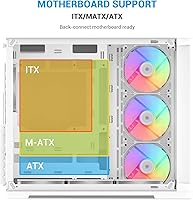
  • Case Type: The V60 is a mid-tower chassis designed to accommodate ATX, Micro-ATX, Mini-ITX, and back-connect motherboard form factors.
  • Dimensions: The case measures 18.7″ long × 11.22″ wide × 15.67″ tall, making it a standard mid-tower footprint suitable for most desktop setups.
  • Weight: The unit ships at approximately 21 lbs, reflecting the dual tempered glass panels and SPCC steel frame construction.
  • Body Material: The main chassis is constructed from SPCC cold-rolled steel, providing structural rigidity without the bulk of thicker-gauge alternatives.
  • Panel Material: Both side and front viewing panels are curved tempered glass, offering panoramic visibility of internal components and RGB lighting.
  • Pre-installed Fans: Seven 120mm ARGB PWM fans come pre-installed — three drawing air from the bottom, three from the side, and one exhausting from the rear.
  • Fan Hub: An included fan hub consolidates all seven fans into a single motherboard header connection, simplifying PWM speed control and reducing header demand.
  • Radiator Support: The case supports 360mm, 280mm, and 240mm radiators on top; 360mm on the bottom; 360mm on the side; and 120mm at the rear.
  • GPU Clearance: Maximum graphics card length is 445mm (17.51″), accommodating triple-fan flagship GPUs from current-generation lineups without modification.
  • CPU Cooler Height: Tower air coolers up to 160mm (6.3″) in height fit within the chassis, covering the vast majority of high-performance air coolers on the market.
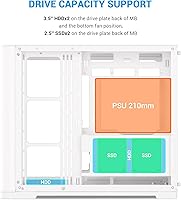
  • PSU Clearance: Power supply units up to 210mm (8.27″) in length are supported in the bottom-mounted PSU bay.
  • Expansion Slots: Seven expansion slots are available along the rear of the case, supporting multi-GPU or multi-card configurations and vertical GPU mounting brackets.
  • Drive Bays: Internal storage support includes two 2.5″ SSD bays and two 3.5″ HDD bays, providing flexibility for mixed storage configurations.
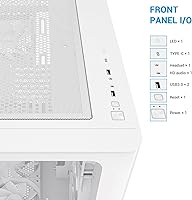
  • Front I/O: The front panel includes one USB Type-C 3.1 port, two USB 3.0 ports, HD audio jacks, and a dedicated ARGB lighting control button.
  • Dust Filtration: A magnetic dust filter is fitted at the bottom intake, allowing tool-free removal and rinsing without dismantling any panels.
  • Motherboard Support: The case is compatible with standard ATX, Micro-ATX, Mini-ITX, and back-connect motherboard layouts including ASUS BTF and MSI Project Zero platforms.
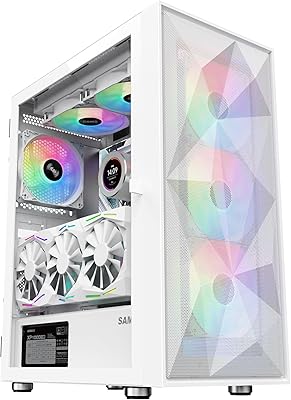
  • Color: The V60 is available in White, featuring a white-painted interior and exterior finish paired with bright ARGB fan illumination.
  • Amazon Rating: The case holds a 4.6 out of 5 star rating based on 126 verified buyer ratings as of its early post-launch review period.

Related Reviews

SAMA NEVIEW 4503 Mid Tower PC Case
76%
91%
Value for Money
78%
Build Quality
83%
Airflow Performance
76%
ARGB Lighting
82%
Hardware Compatibility
More
SAMA V Mesh Mid Tower PC Case
86%
94%
Cooling Performance
88%
Build Quality
91%
Airflow Efficiency
89%
Ease of Maintenance
87%
Compatibility with Components
More
SAMA S40 Mid Tower ATX PC Case
79%
88%
Airflow Performance
83%
Included Fan Quality
79%
Build Quality & Finish
92%
GPU Compatibility
61%
Cable Management
More
SAMA 3509 ATX Mid Tower PC Case
74%
88%
Value for Money
74%
Build Quality
81%
Airflow & Cooling Performance
67%
Pre-installed Fan Quality
86%
Tempered Glass Panel
More
AMANSON H9 Mid-Tower ATX Gaming PC Case
76%
88%
Value for Money
81%
Airflow Performance
67%
Pre-Installed Fan Quality
63%
Build Quality
79%
Tempered Glass Panels
More
Vetroo AL800 Mid Tower ATX PC Case
76%
78%
Build Quality
84%
Tempered Glass Panel
76%
Airflow Performance
61%
Fan Included & Expandability
69%
Cable Management
More
Zalman S4 Mid-Tower ATX PC Case
81%
88%
Airflow and Cooling
80%
Build Quality and Materials
92%
Ease of Installation
60%
Acrylic Panel Durability
70%
Cable Management
More
SZSKYING ATX Mid-Tower PC Gaming Case
85%
92%
Cooling Performance
85%
Build Quality
88%
Aesthetic Design
74%
Cable Management
78%
Ease of Setup
More
Zalman S3 ATX Mid-Tower PC Case
74%
83%
Value for Money
71%
Build Quality
58%
Airflow & Cooling Performance
86%
Ease of Assembly
67%
Acrylic Side Panel
More
ANSAITE W9 Mid-Tower Gaming PC Case
84%
89%
Cooling Performance
92%
Build Quality
85%
Cable Management
90%
Aesthetics
75%
Size/Space
More

FAQ

They come pre-installed at the factory — three in the bottom intake, three along the side, and one at the rear. You will need to connect the fan hub to a motherboard header and a SATA power connector, but the fans themselves are already mounted and wired to the hub before the case even arrives.

Yes, and you actually have three positions to choose from: the top, the bottom, or the side panel. That level of mounting flexibility is genuinely uncommon at this price point. If you are planning a bottom-mount setup with a full ATX board, just measure your PSU length and verify clearances before committing to that configuration.

The SAMA V60 Mid Tower PC Case supports graphics cards up to 445mm in length, which covers virtually every triple-fan GPU currently on the market including the largest RTX 4080 and RX 7900 models. If your card is on that list, you should be fine without any modification.
It does officially support back-connect motherboard formats, which is one of the things that makes this chassis stand out compared to most competitors in this segment. That said, there are no dedicated rear-panel cable cutouts optimized specifically for BTF builds, so you will need to plan your routing layout yourself. It works, but it takes a bit more thought than a case purpose-built for that format.

At moderate speeds — roughly 60 to 70 percent of maximum RPM — the noise level is tolerable for most people and sits in the background without being distracting. At full speed, running all seven fans simultaneously produces a combined noise floor that quiet-computing enthusiasts will find noticeable. Setting a custom PWM curve through your motherboard BIOS is strongly recommended if fan noise is a concern for you.

Basic sync functionality works with most major motherboard RGB ecosystems through a standard 5V ARGB header connection. However, some buyers report that syncing all seven fans simultaneously through third-party software can be inconsistent, with the occasional fan falling out of step with the selected lighting effect. The built-in ARGB button on the front I/O panel is a reliable fallback if software sync proves troublesome.

There is clearance back there, but it is on the tighter side — especially if you are working with a non-modular power supply or bundling a lot of fan hub and RGB wiring together. Modular PSU cables help significantly. If you are coming from a case with a generous cable management channel, this one may feel more constrained by comparison.

Yes, the panels use a tool-free removal system and come off without needing a screwdriver. The curved glass looks great but is worth handling carefully during removal since curved panels are slightly more sensitive to edge stress than flat ones. A microfiber cloth for fingerprints is something you will want nearby from day one — the glass surface attracts smudges readily.

The ceiling for tower air coolers is 160mm, which accommodates nearly every high-performance air cooler available today, including popular options like the Noctua NH-D15 and be quiet! Dark Rock Pro 4. If your cooler falls right at or above that height, double-check the manufacturer spec before buying.

It is genuinely one of the more beginner-friendly options in this price range. The fans are already installed, the panels come off without tools, and the interior layout is logical enough that most people can navigate it without watching a dozen tutorial videos. The one area where newer builders sometimes get tripped up is the fan hub wiring, so take a few minutes to read through the included documentation before powering on for the first time.

Where to Buy