Overview

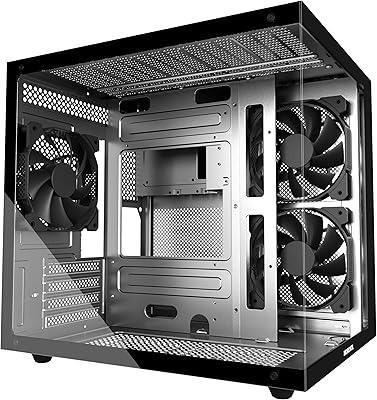
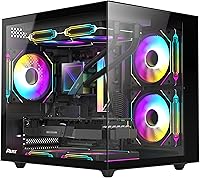
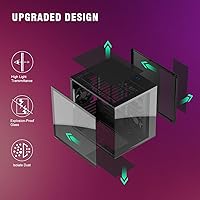
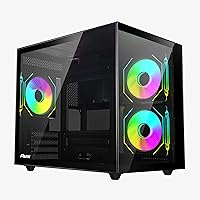
The RUIX OV502 mATX Mini-Tower PC Case arrived in late 2024 as a compact, visually driven option aimed squarely at first-time builders and anyone working with limited desk space. Its standout feature is the dual tempered glass design that wraps around two sides of the chassis, giving you a wide-angle view of your components without cutting a big hole in your budget. RUIX is not a brand with decades of reputation behind it, and that transparency matters — you're taking a modest bet on a newer name. For the price tier it occupies, though, the value proposition is hard to dismiss, especially for builders prioritizing looks alongside a practical, small-footprint build.

Features & Benefits

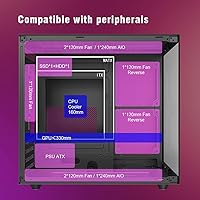
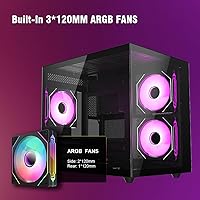
The OV502 ships with three 120mm ARGB PWM fans pre-mounted, which is convenient but worth contextualizing — stock case fans at this price rarely match the performance of aftermarket options, and you'll need a compatible ARGB header or a standalone controller to sync the lighting. Compatibility is a genuine strength: the case handles most popular mid-tier cards without clearance stress, and tower coolers in the 150mm-plus range fit comfortably. Magnetic dust filters on both the top and bottom are a legitimately practical inclusion, not just a checkbox feature. If you plan to upgrade cooling down the line, there's room for a 240mm liquid cooler or up to seven fans total — solid headroom for a compact chassis.

Best For

This compact mATX case is a natural fit for builders who want a lit-up showcase build without paying a premium for brands with longer engineering pedigrees. It works especially well in smaller spaces — dorm rooms, media centers, or desks where every inch matters. Anyone pairing it with a mid-range GPU will find the clearance more than adequate. First-time builders will appreciate skipping the fan-sourcing step entirely. Where the OV502 is a weaker match is in thermally demanding setups — if you're running hardware hard for long stretches, you may outgrow the stock airflow setup faster than expected, and the brand's long-term support remains an open question.

User Feedback

This mini-tower build carries a 4.1-star average across roughly 67 reviews — a reasonable score, but a relatively thin sample size that warrants some caution when drawing firm conclusions. Recurring praise centers on the glass panel aesthetics and the overall value, with buyers frequently noting the panels look sharper in person than in listing photos. On the downside, several users mention that assembly instructions are sparse, and ARGB sync can be tricky without a dedicated header on the motherboard. Packaging has generally been reported as adequate for protecting the glass during shipping. No widespread complaints about structural defects have surfaced, which is encouraging — but the dataset is still early-stage for a brand this new.

Pros

  • Dual tempered glass panels deliver a premium showcase look that punches well above the price point.
  • Three ARGB PWM fans come pre-installed, saving both time and extra cost during the initial build.
  • Supports most popular mid-range GPUs without clearance headaches — a genuinely useful compatibility range.
  • Magnetic dust filters on top and bottom are practical, easy to remove, and not an afterthought at this tier.
  • The compact footprint works well for small desks, dorm setups, or media center builds.
  • Cooling flexibility is real — the chassis can accommodate a 240mm AIO or up to seven fans if you want to upgrade later.
  • Bottom-mounted PSU placement keeps heat away from main components and is a design choice that benefits thermals.
  • Early buyers report that the glass panels look noticeably better in person than the product listing photos suggest.
  • Ranked inside the top 250 in Computer Cases on Amazon, indicating solid early traction for a newer brand.
  • Both 3.5-inch and 2.5-inch drive mounting is supported, giving storage flexibility without requiring adapters.

Cons

  • RUIX has a short brand history, which means long-term reliability and warranty support remain open questions.
  • Stock ARGB fans require a compatible motherboard header or a separate controller — not plug-and-play for every build.
  • Assembly documentation is reported as sparse, which can frustrate less experienced builders during their first install.
  • Cable management space is tight, especially with bulkier or non-modular power supply units.
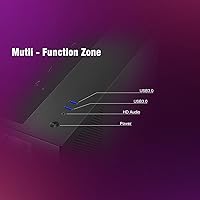
  • Only two front USB 3.0 ports and no USB-C front I/O, which feels limiting on a 2024-release chassis.
  • With roughly 67 reviews at the time of writing, there is not enough long-term feedback to fully assess durability.
  • Stock fans prioritize lighting aesthetics over airflow performance — high-heat builds may need aftermarket replacements sooner.
  • Panel fitment on the rear has drawn some user complaints about alignment requiring extra effort to seat correctly.
  • As a newer brand, community resources, mod guides, and troubleshooting threads are limited compared to established competitors.
  • Buyers sensitive to build material feel may find the chassis finish closer to budget than mid-range in hand.

Ratings

The scores below reflect an AI-assisted analysis of verified global buyer reviews for the RUIX OV502 mATX Mini-Tower PC Case, with spam, incentivized, and bot-flagged submissions actively filtered out to surface what real builders actually experienced. Each category is scored independently, and both the genuine strengths and the recurring frustrations are represented without softening either side. If something consistently disappointed buyers, that is reflected in the number — not buried in fine print.

Value for Money
83%
For builders working within a tight budget, the OV502 delivers a lot of visible hardware — dual glass panels, three pre-installed fans, and magnetic dust filters — without the price tag of more established names. First-time builders in particular consistently report feeling like they got more than they paid for, especially compared to similarly priced bare-bones cases.
The value equation weakens if you end up needing to replace the stock fans for thermal or noise reasons, or if you purchase a separate ARGB controller for lighting sync — those added costs quietly chip away at the initial savings. Buyers who factor in those potential extras rate the overall value more cautiously.
Aesthetic Design
86%
The dual tempered glass panels are the clear reason most buyers choose this case, and the consensus is that the real-life visual impact exceeds what the product photos convey. With ARGB fans running behind glass on two sides, the build looks noticeably more expensive than its price suggests when sitting on a desk.
The all-black exterior finish, while clean, feels somewhat generic, and the chassis lacks the subtle design details — like refined ventilation cutouts or premium-feeling bezels — that give cases from more established brands their distinctive character. It is attractive, but not particularly memorable from the outside.
Glass Panel Quality
79%
21%
The tempered glass is adequately thick for this price tier and arrives protected by a plastic film that prevents scratches in transit — a detail buyers appreciate. Clarity is strong once the film is removed, giving a clean, unobstructed view of the components inside.
Panel alignment — particularly on the rear — has drawn repeated criticism, with some buyers reporting that reinstalling the glass after a component swap requires more effort than expected. The mounting mechanism feels less refined than glass panels on cases that cost meaningfully more.
Component Compatibility
84%
For a compact case, the OV502 handles real-world hardware surprisingly well — popular mid-range GPUs like the RTX 4060 Ti and RX 7700 fit without issue, and most mainstream tower air coolers clear the height limit comfortably. The support for both 3.5-inch and 2.5-inch drives also means buyers are not forced into SSD-only configurations.
The case is strictly limited to Micro ATX and Mini-ITX motherboards, which rules it out for anyone already invested in a full ATX platform. There is also no mention of PCIe riser cable support, so unconventional vertical GPU mounting configurations are not a realistic option here.
Airflow & Cooling
71%
29%
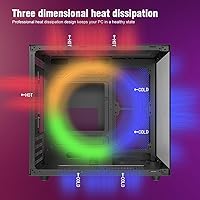
The chassis layout — with bottom PSU placement, front intake fans, and top exhaust options — follows a logical airflow path that should keep thermals reasonable for mid-range gaming builds under typical workloads. The ability to eventually add a 240mm AIO gives buyers a meaningful upgrade route if temperatures become an issue later.
There is no independent thermal benchmark data available for this case, so cooling performance assessments rely on design logic rather than measured results. Builders running higher-wattage GPUs or overclocked CPUs under sustained load should treat the stock cooling configuration as a starting point, not a final solution.
Build Quality
66%
34%
The metal frame feels structurally sound during assembly, and the case does not flex noticeably when handling it with components installed. For the price tier, the chassis rigidity is acceptable and the overall construction does not feel dangerously fragile.
The finish quality on interior surfaces and smaller stamped metal parts reveals the budget positioning up close — edges are not always fully deburred, and the material feel is noticeably thinner than what you get from Fractal, be quiet!, or even mid-range Corsair cases. Long-term wear on the exterior coating is also an open question given the brand's short history.
Fan Performance
63%
37%
Having three fans pre-installed saves buyers the immediate hassle of sourcing and purchasing separate case fans, and the ARGB lighting effect is visually effective at moderate to full PWM speeds. For light gaming loads, they move enough air to keep a mid-tier build stable.
Stock case fans bundled with budget chassis are rarely optimized for either peak airflow or low noise, and the OV502's included fans follow that pattern — they are competent but not impressive. Builders who have used quality aftermarket fans will likely notice the difference, and enthusiasts planning thermally demanding builds should budget for replacements.
Noise Level
68%
32%
With a PWM fan curve configured conservatively through the motherboard, the stock fans stay reasonably quiet during low-demand tasks like browsing or light productivity use. Buyers using this case for a secondary build or a media center setup report the noise is not disruptive in everyday conditions.
Under gaming loads — especially when the fans ramp up to compensate for GPU heat — the noise level becomes more noticeable, and the fans lack the acoustic dampening characteristics of purpose-built quiet-computing products. The open tempered glass design also means there is no insulation to reduce sound transmission.
Cable Management
51%
49%
The case includes routing cutouts and basic tie-down points that are sufficient for a tidy build when paired with a fully modular PSU. Builders who take their time and plan the routing before securing components can achieve a reasonably clean look behind the motherboard tray.
The space behind the motherboard tray is narrow, and non-modular or semi-modular power supplies quickly turn cable management into a frustrating exercise. Several buyers specifically call out this as the most tedious part of the build, with excess cables competing for limited space behind the panel.
Dust Filtration
77%
23%
Magnetic dust filters on both the top and bottom are a practical and well-executed inclusion that removes cleanly without tools, making routine maintenance genuinely convenient. Buyers who keep their rigs for years specifically mention the magnetic attachment as something they appreciate over clip-on filters that warp or break.
The filter mesh density appears moderate rather than fine, which means very small particulate matter — common in carpeted rooms or homes with pets — may still accumulate inside the case over time. There is no front intake filter, which leaves the front fans partially exposed to ambient dust.
Ease of Assembly
59%
41%
The case is reasonably intuitive for builders with prior experience, and the pre-installed fans eliminate one of the more fiddly steps in a first build. Standard screw positions and familiar layouts mean anyone who has built in a similar form factor before will not feel lost.
The included assembly instructions are widely described as minimal to the point of being unhelpful for true beginners, and the rear panel alignment issue means that even experienced builders occasionally need a second attempt. RUIX does not appear to offer supplementary video guides or a community knowledge base to fill the gap.
Front I/O
54%
46%
The two USB 3.0 ports cover basic peripheral needs — plugging in a flash drive, charging a controller, or connecting a headset — without any awkward adapter requirements. The audio jack placement is accessible and works reliably based on user reports.
The absence of a USB-C front port is a noticeable omission for a case released in late 2024, when USB-C has become standard on most peripherals and phones. Buyers who plug in modern devices frequently will find themselves reaching around to the back of their system more often than they would like.
Brand Reliability
49%
51%
Early buyers have not reported widespread structural failures or dead-on-arrival issues, which is an encouraging baseline for a brand still establishing its reputation. The case appears to ship adequately packaged given the tempered glass panels, with very few accounts of transit damage.
RUIX has a limited track record, and there is simply not enough long-term ownership data — or a robust customer support history — to rate brand reliability with confidence. Buyers who have needed after-sales assistance report inconsistent response times, and the brand's warranty terms are not prominently documented.

Suitable for:

The RUIX OV502 mATX Mini-Tower PC Case is a strong fit for first-time PC builders who want a visually impressive setup without stretching their budget into premium brand territory. If you're working with a smaller desk, a dorm room, or any space where a full-tower would feel imposing, the compact footprint genuinely solves a real problem without sacrificing the ability to run a capable mid-range GPU. Builders pairing this case with something in the RTX 4060 or RX 7600 class will find clearance is a non-issue, and the pre-installed fans mean one fewer thing to source before your first boot. It also suits anyone who wants their build to be seen — the dual glass panels make this a natural choice if the case is sitting on a desk rather than tucked under it. Hobbyists who anticipate upgrading cooling later will appreciate that the chassis supports a 240mm liquid cooler and has room to grow.

Not suitable for:

Builders running thermally demanding hardware — think overclocked CPUs, high-wattage GPUs, or workstation-class components under sustained load — should approach the OV502 with realistic expectations, since stock case fans at this price tier are unlikely to keep up without supplementation. Anyone who values brand longevity, robust after-sales support, or a proven reliability track record should know that RUIX is a newer entrant with a limited history, and that uncertainty is a legitimate factor in a long-term build investment. Cable management inside compact cases like this one can be genuinely frustrating, especially with non-modular or semi-modular power supplies, so builders who prefer a clean interior will need patience and planning. If you need more than two front USB ports or require USB-C front I/O, this mini-tower build will fall short. Finally, those who prioritize established community resources, teardown guides, and mod support would be better served by cases from brands with larger, more active user communities.

Specifications

  • Case Type: The OV502 is a Mini-Tower chassis designed for compact desktop builds using mATX or Mini-ITX motherboards.
  • Dimensions: The case measures 13.4 x 12.4 x 10.9 inches (L x W x H), keeping its footprint practical for smaller desks and tight spaces.
  • Weight: Shipping weight comes in at 11.14 pounds, reflecting a metal-framed build with dual tempered glass panels included.
  • Motherboard Support: Compatible form factors are Micro ATX and Mini-ITX; full ATX and Extended ATX boards are not supported.
  • Pre-installed Fans: Three 120mm ARGB PWM prism fans are factory-mounted and ready to connect on first boot.
  • Max Fan Support: The chassis supports a maximum of seven 120mm fans, or five fans alongside a 240mm AIO liquid cooler.
  • GPU Clearance: Graphics cards up to 330mm in length are supported, accommodating most dual and triple-fan mid-range and high-end AIBs.
  • CPU Cooler Height: Tower air coolers up to 160mm tall fit within the chassis, covering the majority of mainstream aftermarket coolers.
  • Panel Material: Both side panels are tempered glass with a factory-applied plastic film for scratch protection during shipping and handling.
  • Dust Filters: Magnetic dust filters are fitted at the top and bottom of the case for tool-free removal and cleaning.
  • Front I/O: The front panel provides two USB 3.0 Type-A ports along with standard audio and microphone 3.5mm jacks.
  • Drive Support: The case accommodates both 3.5-inch hard drives and 2.5-inch SSDs, with dedicated mounting positions for each.
  • PSU Orientation: The power supply mounts at the bottom of the case with a bottom-intake orientation, which helps isolate PSU heat from other components.
  • Frame Material: The structural chassis is constructed from steel, providing rigidity while keeping the overall build weight reasonable.
  • ARGB Connectivity: The pre-installed fans use standard 5V 3-pin ARGB headers and require either a compatible motherboard header or a dedicated ARGB controller for lighting control.
  • Availability Date: The OV502 was first made available in September 2024, making it a relatively recent release with a still-growing review base.

Related Reviews
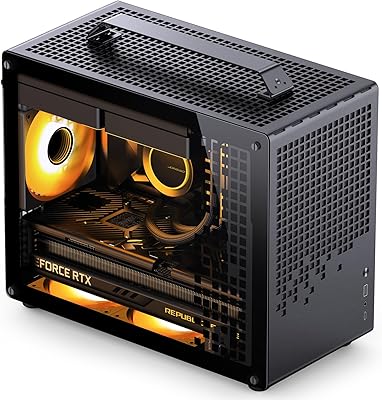
Jonsbo C6 Mini MATX Mesh PC Case
84%
91%
Airflow Performance
95%
Ease of Assembly
87%
Build Quality
88%
Cooling System Customization
65%
Cable Management
More
Jonsbo Z20 Micro-ATX Mini Tower Case
80%
93%
Build Quality & Materials
91%
Portability & Carrying Handle
78%
Internal Layout & Compatibility
89%
GPU Clearance & Large Component Support
87%
Cooling Support & Thermal Flexibility
More
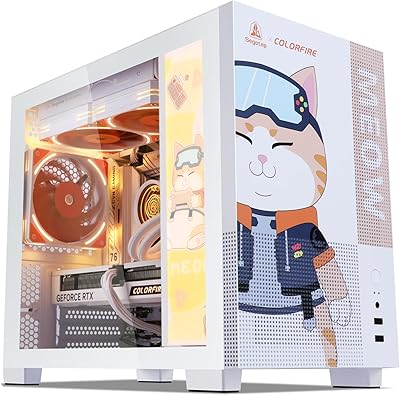
Segotep Memphis Micro-ATX Mini Tower PC Case
76%
83%
Build Quality
89%
Aesthetic Design
77%
Airflow Performance
86%
GPU Compatibility
61%
Cable Management
More
MOROVOL V3 Micro-ATX Tower PC Case
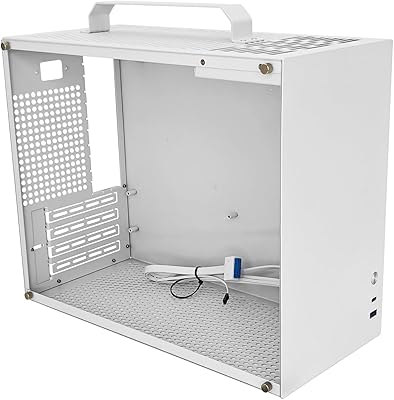
78%
88%
Tempered Glass Quality
76%
Airflow & Thermal Performance
61%
Cable Management
73%
Build Quality & Materials
91%
Value for Money
More
Cooler Master N200 Mini Tower Computer Case
78%
91%
Value for Money
84%
Airflow Performance
73%
Build Quality
88%
Storage Expandability
86%
Cooling Compatibility
More
SAMA V60 Mid Tower PC Case
80%
93%
Out-of-Box Cooling Value
78%
Airflow Performance
91%
AIO & Radiator Flexibility
88%
Tempered Glass & Aesthetics
71%
Build Quality & Materials
More
MINISFORUM DeskMini UM690L Slim Mini PC
79%
91%
Processing Performance
88%
Multi-Monitor Support
58%
RAM Adequacy & Upgradeability
89%
Storage Speed & Expansion
73%
Integrated Graphics (Radeon 680M)
More
ALAMENGDA V500 Mini-Tower mATX PC Case
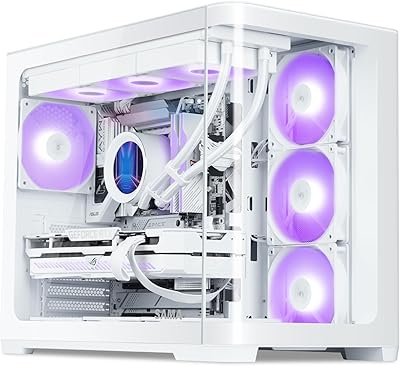
66%
78%
Value for Money
84%
Aesthetics
43%
PSU Compatibility
57%
Thermal Performance
76%
Hardware Compatibility
More
Fractal Design Ridge Mini-ITX PC Case
74%
93%
Aesthetic Design
88%
Build Quality
91%
Included Accessories
58%
Build Experience
67%
Thermal Performance
More
Corsair FRAME 4000D RS Mid-Tower Case
82%
91%
Airflow Performance
88%
Build Quality
86%
Modularity & Upgradability
83%
Fan Mounting System
78%
GPU Compatibility
More

FAQ

In most cases, yes. The OV502 supports graphics cards up to 330mm long, which covers the majority of current dual and triple-fan AIB cards in that performance tier. That said, always double-check your specific card's length against your manufacturer's spec sheet before buying, since some triple-fan models from certain brands run slightly longer.

The fans use a standard 5V 3-pin ARGB connector for lighting. If your motherboard has a 5V ARGB header, you can control the lighting directly through your motherboard software. If it does not, you will need a separate ARGB controller — which is a small extra expense but widely available. The fans will still spin and move air regardless; it is only the RGB sync that requires the header.

Yes, the chassis is designed to support a 240mm AIO, though doing so reduces your available fan slots. It is a reasonable upgrade path if the stock air cooling ever feels insufficient for your CPU, and it works well with the bottom-mounted PSU layout that keeps heat zones separated.

Generally, yes. The panels are designed for tool-accessible removal, though some users have noted that the rear panel in particular can require a little patience to align properly when reinstalling. Remove the plastic protective film before your first boot — it is there to prevent scratches during shipping, not meant to stay on permanently.

There is no published independent noise measurement for the stock fans, so take any claims with appropriate skepticism. As PWM fans, their speed — and therefore noise — scales with system load and your motherboard fan curve settings. At lower PWM percentages they should be reasonably quiet; at full speed, budget-tier case fans tend to be audible. If low noise is a priority, plan to replace or supplement them with higher-quality aftermarket options.

No. The front I/O on this mini-tower build includes two USB 3.0 Type-A ports and audio jacks, but no USB-C. For builders who rely on USB-C for fast peripheral connections or device charging from the front panel, this is a genuine limitation worth factoring into your decision.

Cable management inside compact cases is always a challenge, and the OV502 is no exception. The space behind the motherboard tray is workable but not generous, and users who pair it with a non-modular PSU often find it harder to keep things tidy. A fully modular power supply and some planning before assembly will go a long way toward achieving a clean result.

No. This case is built for Micro ATX and Mini-ITX motherboards only. Standard ATX and Extended ATX boards will not physically fit. If you are planning a build around a full ATX board, you will need to look at a mid-tower or larger chassis instead.

RUIX is a newer brand in the PC case market, and that is worth being upfront about. The RUIX OV502 mATX Mini-Tower PC Case has accumulated a reasonable early rating, but with roughly 67 reviews at the time of writing, there is not yet a long track record to draw firm conclusions about long-term durability or customer support responsiveness. It is a calculated risk that many budget-tier buyers accept, but if brand reputation and after-sales peace of mind are priorities for you, more established names will carry less uncertainty.

Yes, standard PC case hardware including motherboard standoffs and screws is included in the box. The assembly instructions have been described by some buyers as minimal, so if you are new to building, keeping a general PC assembly guide open on a second screen during the process is a practical recommendation.

Where to Buy