Overview

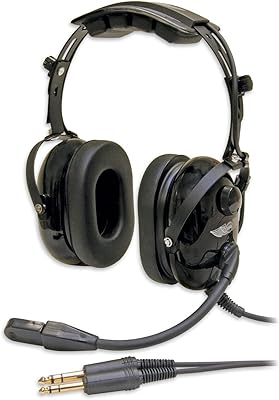
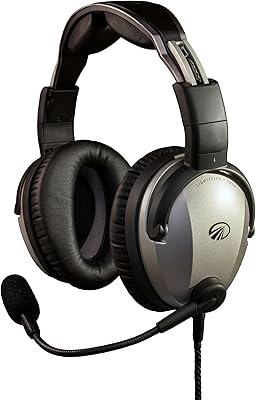
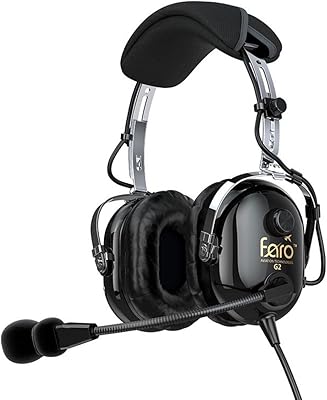
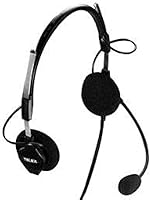
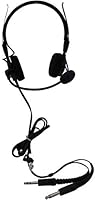
The Telex Airman 750 Aviation Headset occupies a clear, well-earned spot in the GA market — not a luxury ANR model, just a dependable workhorse built by a company with serious avionics credentials. Telex has been in cockpit audio for decades, and that background matters when evaluating what you actually get here. The dual-plug wired connection works with virtually every standard GA audio panel without adapters. Passive noise isolation handles the job for most piston aircraft environments. The stainless steel frame signals durability over aesthetics, which is the right call for a headset that may spend years bouncing around flight bags.

Features & Benefits

The passive over-ear design does meaningful work in moderately noisy piston cockpits — think Cessna 172 or Piper Cherokee rather than a turboprop. It won't eliminate engine noise the way a quality ANR headset will, but for shorter flights or training environments, the attenuation is genuinely adequate. The removable boom microphone delivers clean, clear transmissions in normal GA conditions, though high-noise environments may push its limits slightly. Speaker response is tuned to the voice frequency range, so ATC audio comes through crisp and intelligible. The retractable cable and broad impedance compatibility make setup across different aircraft refreshingly straightforward.

Best For

The Airman 750 makes the most sense for student pilots and flight instructors who prioritize ruggedness and consistency over premium comfort. Flight school environments are hard on gear — headsets get shared, stuffed into bags, and used back-to-back — and this one holds up to that reality well. Pilots flying shorter legs in piston singles will find the passive isolation perfectly workable. Those comparing it to David Clark's classic lineup or Faro options at similar pricing will find comparable durability DNA. It's not the right call for long cross-country hauls where ANR fatigue-reduction becomes worth the extra spend, but for local flying and training, it earns its place.

User Feedback

Owners of this aviation headset consistently praise its long-term durability — multiple reviewers note years of regular use with no significant degradation in build or audio quality. The most common criticism centers on noise isolation: pilots flying louder aircraft or longer trips feel the absence of active noise reduction more acutely over time. Comfort draws mixed responses; the clamping force works fine for an hour in the pattern, but extended flights beyond three hours can become tiring. Microphone performance in high-noise cockpits occasionally draws complaints about transmission clarity. That said, for the intended use case, ownership longevity wins out for the majority of buyers.

Pros

  • Stainless steel construction holds up to years of daily use without the frame warping or cheapening over time.
  • Wired dual-plug connection works with virtually every standard GA audio panel right out of the box.
  • The removable boom microphone delivers clean transmissions in typical piston GA cockpit conditions.
  • No batteries required — passive design means one less thing to manage or fail during a flight.
  • Broad impedance compatibility makes the Airman 750 easy to move between different aircraft without audio panel headaches.
  • Voice-optimized speaker tuning makes ATC audio crisp and easy to parse without straining to hear.
  • Long-term owners consistently report it holds its performance and structural integrity after years of regular use.
  • Retractable cable reduces cockpit clutter and helps avoid the wear that fixed cables suffer near the connector.
  • A genuinely practical choice for flight schools needing shared headsets that can absorb abuse without constant replacement.

Cons

  • Passive noise isolation falls noticeably short in louder aircraft compared to active noise-reduction alternatives at similar price points.
  • Clamping pressure becomes uncomfortable on longer flights, typically past the two-to-three-hour mark.
  • Ear cushion quality is adequate but not plush — extended wear makes this more apparent than specs suggest.
  • Microphone performance can struggle in unusually high-noise cockpit environments, occasionally affecting transmission clarity.
  • At two pounds, it is not the lightest option available, and that weight adds up during longer sessions.
  • No active noise reduction means pilots in turboprops or louder twins will notice real fatigue that ANR headsets would reduce.
  • Speaker tuning is purely utilitarian — do not expect satisfying audio for music or media playback outside the cockpit.
  • The overall design language feels dated compared to newer competing models at comparable price points.
  • Resale value is modest, so buying with the expectation of upgrading later recaptures less of your initial spend.

Ratings

The scores below reflect an AI-driven analysis of verified global user reviews for the Telex Airman 750 Aviation Headset, with spam, bot-generated, and incentivized submissions actively filtered out before scoring. Each category captures both what real pilots consistently praised and where genuine frustrations surfaced — nothing has been smoothed over to favor a tidy narrative. The result is an honest, balanced picture of how this headset actually performs across different flying environments and ownership timelines.

Build Quality
88%
The stainless steel frame is the most consistently praised aspect across long-term owners — pilots who have used this aviation headset for three or more years report no meaningful structural degradation, warping, or hinge failure. Flight school environments, where headsets get handed between students daily, are where this durability advantage shows up most clearly.
A small but recurring group of reviewers noted that the plastic components on the earphone housings feel less premium than the frame suggests, and a few reported minor cracking around those areas after extended heavy use. It is not a widespread issue, but it does temper an otherwise strong durability story.
Noise Isolation
67%
33%
For piston singles in the Cessna 172 and Piper Cherokee class, the passive over-ear seal does a legitimate job of bringing cockpit noise down to a manageable level for communications and situational awareness. Pilots flying shorter local flights or training circuits rarely flag noise isolation as a serious problem in this aircraft category.
The moment you put this headset in a louder aircraft — older high-performance pistons, light twins, or anything turboprop-adjacent — the passive-only approach becomes a clear liability. Long-haul pilots flying three-plus-hour legs in noisier environments consistently rate noise fatigue as a significant issue that ANR alternatives at similar price points handle meaningfully better.
Microphone Clarity
74%
26%
In typical GA training aircraft at cruise power, the removable boom microphone delivers clean, intelligible transmissions that ATC and fellow crew members rarely flag. The flexible boom positioning allows pilots to find the right placement quickly, and the microphone sensitivity handles normal cockpit conditions without noticeable distortion.
In high-ambient-noise environments, a pattern of complaints emerges around transmission quality dropping enough that ATC occasionally asks for repeats. The microphone sensitivity is adequate for standard conditions but does not have the headroom that more sensitive aviation microphones offer when background noise spikes unexpectedly.
Comfort & Fit
61%
39%
For flights under ninety minutes, the over-ear fit and clamping force are genuinely unremarkable in a good way — most pilots simply forget they are wearing it during pattern work or short cross-countries. The rounded earpiece shape accommodates a wide range of head sizes without requiring significant adjustment.
Past the two-hour mark, clamping pressure becomes the dominant complaint in user feedback, particularly around the temples. Without the cushioning effect that quality ANR ear cups provide, extended wear fatigue accumulates faster than with competing models, and several instructors who fly back-to-back lessons all day describe it as noticeably tiring by the afternoon.
Audio Clarity
79%
21%
The voice-optimized frequency response from 100 Hz to 3 kHz means ATC transmissions come through with real clarity and definition — pilots consistently note that busy frequency environments are easy to parse without straining. For its intended purpose, the audio performance is well-matched to the task.
That same narrow tuning makes the headset entirely unsuitable for music or media outside the cockpit, which is a minor but real limitation for pilots who double-use their headsets on the ground. The dynamic driver also lacks the detail resolution that higher-end audio components offer for anything beyond voice.
Cockpit Compatibility
93%
The standard dual-plug aviation connector works immediately in virtually every GA aircraft without adapters or workarounds, which long-term rental pilots and flight school instructors cite as a genuine operational convenience. Broad impedance compatibility across the 150-600 ohm range means audio panel matching is rarely an issue.
The wired-only design is not a problem for most GA pilots, but those who have transitioned to Bluetooth-enabled panels or want wireless flexibility in newer aircraft will find Telex's passive headset does not offer any path to that capability.
Value for Money
72%
28%
For student pilots and flight schools, the price-to-durability ratio makes a compelling case — you are getting a headset built to last years in shared environments without paying for ANR technology you may not yet need. Long-term owners frequently note that the total cost of ownership feels fair given how little has needed replacing.
At this price tier, buyers inevitably compare the Airman 750 against David Clark's classic lineup and Faro options, and the value equation becomes less clear-cut. Some pilots feel they are paying near-ANR prices for passive performance, and a few extra dollars could land them in entry-level active noise reduction territory that meaningfully improves long-haul comfort.
Ease of Use
91%
No batteries, no pairing, no settings — plug in and fly. Pilots who swap between multiple aircraft or share the headset between students praise how completely frictionless the setup process is. The removable boom takes seconds to reposition, which matters in busy training environments.
There is essentially nothing to configure, which is a strength for most users but does mean pilots who want any level of audio customization — volume control, noise gate adjustment, or intercom isolation — will find nothing to work with here.
Cable & Connectivity
76%
24%
The retractable cable is a genuinely practical design choice that reduces cockpit clutter and avoids the connector stress that fixed coiled cables develop near the plug over time. Pilots who frequently move between aircraft appreciate not having loose cable to manage during preflight.
A handful of longer-term owners have reported that the retraction mechanism loses tension gradually with heavy use, eventually leaving the cable slack rather than neatly retracted. It is not a failure mode that affects audio performance, but it is a minor ergonomic annoyance that surfaces after extended ownership.
Ear Cushion Quality
63%
37%
The included ear cushions create a reasonable passive seal for the majority of adult head sizes, and replacement cushions are readily available through avionics suppliers — a practical advantage that extends the usable life of the headset significantly without requiring full replacement.
The stock cushion material wears noticeably faster than the frame itself, and several pilots flagged that the cushions begin to lose their sealing effectiveness within a year of heavy daily use. For shared headsets in flight schools, cushion replacement cycles add a recurring maintenance cost that is worth factoring in.
Durability Over Time
86%
Long-term ownership reviews are strikingly consistent on one point: the headset holds together. Pilots reporting five or more years of regular use describe it as functionally unchanged from new, which is not something the GA headset market can universally claim at this price point.
The wear points that do emerge over time — ear cushion compression, minor plastic housing stress marks — are cosmetic and functional rather than structural. They do not cause failure, but they do signal that some components age faster than the stainless steel frame that anchors the build.
Microphone Flexibility
81%
19%
The fully removable and repositionable boom is a feature that instructors particularly appreciate, since left-seat and right-seat flying creates different ergonomic preferences for mic placement. The flexible gooseneck holds position reliably once set and does not drift during flight.
A few users noted that the boom connection point can loosen slightly after many removal and reattachment cycles, introducing minor wobble. It remains functional but is a reminder that the removable design has a mechanical wear component that fixed-boom headsets avoid entirely.
Brand Reliability
84%
Telex's presence in professional avionics over decades carries genuine weight for pilots who value knowing that replacement parts and service pathways actually exist. That institutional credibility is a real differentiator from lesser-known brands at similar price points.
Telex is less visible in pilot communities compared to David Clark, whose brand loyalty runs deep in GA culture. Some buyers feel the Telex name carries less resale assurance, which marginally affects the headset's secondhand value compared to equivalent David Clark models.

Suitable for:

The Telex Airman 750 Aviation Headset is a strong match for student pilots working through their training hours, where reliability and straightforward operation matter far more than premium noise-canceling technology. Flight schools will appreciate how well it holds up under daily shared use — this is a headset built to survive being tossed into rental aircraft and borrowed repeatedly without falling apart. Instructors who want a dependable backup or primary headset without worrying about battery life or complex electronics will find the passive wired design genuinely freeing. Pilots flying piston singles on shorter local flights — pattern work, cross-countries under two hours — will find the passive isolation more than adequate for comfortable, intelligible communications. Anyone stepping up from a bare-bones entry-level headset and not yet ready to commit to the premium ANR tier will get a meaningful improvement in build quality and audio clarity at a reasonable step-up price.

Not suitable for:

The Telex Airman 750 Aviation Headset is not the right tool for pilots who regularly fly noisy aircraft — turboprops, older twins, or high-performance pistons — where active noise reduction makes a real physiological difference over a long flight. If you routinely log three-plus-hour legs, the clamping pressure and absence of ANR will likely become fatiguing in a way that a David Clark H10-13.4 or a Bose A20 simply would not. Pilots who have already used quality ANR headsets will find stepping down to passive isolation noticeably uncomfortable in loud cockpit environments. This aviation headset also won't satisfy anyone who wants to use their headset for music or media outside the cockpit — the frequency response is deliberately voice-optimized and sounds flat for anything else. If long-term ear fatigue reduction is a genuine health or safety priority for you, the passive design is a meaningful compromise worth taking seriously.

Specifications

  • Brand: Manufactured by Telex, a long-established name in professional avionics and cockpit audio equipment.
  • Model: Airman 750, item model number 64300-200, part of Telex's general aviation headset lineup.
  • Noise Control: Passive noise cancellation achieved through a sealed over-ear design rather than active electronic noise reduction.
  • Connector Type: Standard dual-plug aviation connector (one PJ-055 and one PJ-068) compatible with the vast majority of GA aircraft audio panels.
  • Impedance: Speaker impedance rated at 150 to 600 ohms (+/-20%), providing broad compatibility across standard GA audio panels.
  • Mic Sensitivity: Microphone sensitivity is -51 dB re 1 V/μbar at 1 kHz with 12 VDC bias, suited for standard aircraft intercom systems.
  • Speaker Response: Frequency response spans 100 Hz to 3 kHz, tuned specifically for voice intelligibility and ATC audio clarity rather than wide-range music playback.
  • Speaker Sensitivity: Speaker sensitivity is rated at 90 dB SPL/mW at 1 kHz, providing adequate volume for cockpit monitoring without requiring high amplification.
  • Audio Driver: Dynamic driver type, a reliable and proven transducer design well-suited to the voice frequency demands of aviation communication.
  • Microphone Boom: Flexible boom microphone is fully removable, allowing repositioning to either side and replacement if damaged over time.
  • Connectivity: Wired connection only via retractable cable, with no wireless or Bluetooth capability included.
  • Cable: Retractable cable design reduces cockpit clutter and minimizes stress on the connector from repeated coiling and uncoiling.
  • Frame Material: Primary headset frame is constructed from stainless steel, contributing to long-term structural durability under regular use.
  • Item Weight: Complete headset weighs 2 pounds, which is typical for passive GA headsets in this class.
  • Dimensions: Overall packaged dimensions measure 9 x 4 x 6 inches, compact enough to store in a standard flight bag.
  • Ear Placement: Over-ear (circumaural) fit with rounded earpiece housings and included ear cushions for a sealed passive isolation fit.
  • Included Items: Package includes the headset, ear cushions, earphone housings, flexible boom, and removable microphone boom.
  • Target User: Designed for adult general aviation pilots, with no rated water resistance and not intended for outdoor or wet-environment use.

Related Reviews
Telex Airman 850 ANR Aviation Headset
77%
74%
Noise Reduction Performance
83%
Microphone Clarity
78%
Wearing Comfort
61%
Build Quality
79%
Audio Fidelity
More
Telex Airman 8 ANR Aviation Headset
74%
74%
ANR Performance
61%
Microphone Clarity
52%
Comfort & Fit
81%
Build Quality
67%
Value for Money
More
Kore Aviation P1 Aviation Pilot Headset
76%
93%
Value for Money
71%
Noise Reduction
88%
Microphone Clarity
67%
Comfort & Fit
84%
AUX Connectivity
More
Bose A30 Aviation Headset (Dual Plug)
85%
94%
Long-Term Comfort
91%
Active Noise Reduction
89%
Audio Clarity & Intelligibility
84%
Build Quality & Durability
87%
Bluetooth Connectivity
More
Faro G2 ANR Pilot Aviation Headset
78%
83%
Active Noise Reduction
78%
Microphone Clarity
91%
Battery Life
74%
Comfort & Fit
67%
Build Quality
More
Lightspeed Zulu 3 Aviation Headset
83%
93%
Active Noise Reduction
89%
Comfort & Fit
91%
Build Quality
78%
Bluetooth Performance
88%
ComPriority System
More
ASA HS-1 Aviation Headset
78%
71%
Noise Reduction
78%
Microphone Clarity
66%
Comfort & Fit
82%
Build Quality
74%
Audio Clarity
More
UFQ A7 ANR Aviation Headset
79%
91%
Wearing Comfort
74%
ANR Performance
83%
Microphone Quality
77%
Build Quality
89%
Battery Life
More
Kore Aviation KA-1 Aviation Headset
79%
86%
Comfort & Fit
74%
Noise Reduction
83%
Microphone Quality
81%
Audio Clarity
71%
Build Quality
More
Lightspeed Aviation Sierra ANR Aviation Headset
77%
84%
ANR Performance
76%
Comfort & Fit
71%
Bluetooth Reliability
83%
Build Quality
81%
Microphone Quality
More

FAQ

Yes, the Airman 750 uses a standard dual-plug aviation connector — the same PJ-055 and PJ-068 plugs found in virtually every GA training aircraft. You will not need an adapter for most piston singles commonly used in flight training.

For typical piston singles at cruise power, the passive over-ear seal does a reasonable job of reducing engine noise to a manageable level. It won't match what a quality ANR headset delivers, but for shorter flights and pattern work, most pilots find it perfectly workable. Where it starts to feel limiting is on longer flights in louder aircraft, where the absence of active cancellation adds up as fatigue over time.

Yes. The boom is removable and can be repositioned to either the left or right side, which is useful if you have a preference or if cockpit layout makes one side more practical.

They occupy similar territory — both are passive, wired GA headsets built to last. David Clark has a slight edge in brand recognition among instructors and a long track record of comfort-focused clamping design. The Airman 750 competes solidly on build quality and audio clarity. Ultimately, trying both on is worthwhile if you have access, since fit and clamping feel are personal.

This is one of the more common concerns among long-term owners. For flights under two hours, most pilots report no significant discomfort. Beyond the two-to-three-hour mark, the clamping force becomes more noticeable, particularly without the cushioning effect that ANR ear cups often provide. It's worth being realistic about this if you regularly fly legs of three hours or more.

No. The passive design requires no batteries whatsoever. The microphone does use aircraft intercom bias voltage (12 VDC) supplied through the audio panel, which is standard in virtually all GA aircraft — you don't need to supply that yourself.

Yes. Replacement ear cushions are available for the Airman 750 and can be sourced through avionics suppliers. This is worth factoring in positively — being able to refresh the cushions extends the usable life of the headset considerably.

It's a solid choice for someone starting flight training who wants a reliable, no-fuss headset without paying for ANR they may not yet need. The wired dual-plug design works in any training aircraft, the build quality holds up to shared and rental environments, and there are no batteries or Bluetooth pairing steps to deal with. It won't spoil you for noise isolation, but it won't hold you back either.

The ear cushions can be wiped down with a lightly dampened cloth or a gentle disinfectant wipe — important in shared or rental environments. Avoid soaking the cushions or getting moisture into the speaker housings. The stainless steel frame can be wiped clean with a dry or slightly damp cloth. The headset carries no water resistance rating, so keep it away from rain and humidity.

In a typical piston single at cruise, the microphone performs well and transmissions come through clearly. In unusually noisy environments — older engines, open-window flying, or turboprop-class noise levels — a small number of users have reported that transmission clarity can drop slightly. For the majority of GA flying, it handles the job without issue.

Where to Buy

Marv Golden Pilot Supplies
In stock $269.95
Sporty's Pilot Shop
In stock $309.95
Aircraft Spruce and Specialty
In stock $318.00