Overview

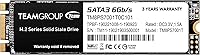
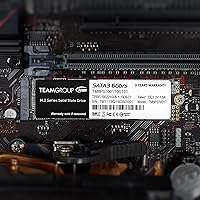
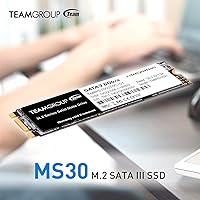
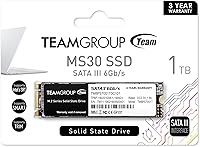
The TEAMGROUP MS30 1TB M.2 SATA SSD is a no-frills, value-focused storage drive built for everyday users who want to breathe new life into an aging laptop or desktop. TEAMGROUP is a Taiwanese manufacturer that has been quietly producing reliable storage hardware for over two decades — not a household name in every market, but well-regarded among budget-conscious builders. One thing worth clarifying upfront: the M.2 form factor does not automatically mean NVMe. This drive uses the SATA III interface, which limits peak throughput compared to NVMe options but ensures broad compatibility with older systems. With nearly 4,000 ratings and a top-100 ranking in its category, it has earned a reputation as a solid value pick — just don't expect flagship performance.

Features & Benefits

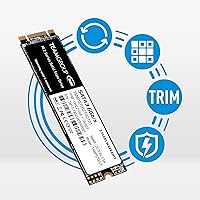
The MS30 1TB uses 3D NAND TLC flash paired with an SLC cache layer, which helps it handle everyday read and write bursts more responsively than its price might suggest. Sequential reads reach up to 530 MB/s and writes up to 480 MB/s — numbers that translate to noticeably snappier boot times, faster app launches, and quicker file opens compared to any mechanical hard drive. The standard M.2 2280 footprint means it slots into most laptop and desktop motherboards without needing an adapter or bracket. At roughly 10 grams, weight is essentially a non-issue. That said, be aware that sustained write speed drops once the SLC cache fills, so moving very large files repeatedly will expose the drive's TLC ceiling.

Best For

This M.2 SATA drive is the right call for a fairly specific set of situations. If your older laptop or desktop has an M.2 slot that only supports SATA — not NVMe — this budget SSD fits without any workaround. It's equally well-suited for HDD replacement in machines that are still serviceable but feel painfully sluggish. Students, remote workers, and light home users will find 1TB of fast, quiet storage more than adequate for documents, photos, browser sessions, and installed applications. It also works as a secondary data drive in a desktop that already boots from an NVMe. If raw speed is your top priority, look at NVMe options — but if capacity per dollar matters more, this hits the mark.

User Feedback

Across close to 4,000 ratings, the MS30 1TB holds a 4.5-star average — a score that reflects genuine satisfaction rather than enthusiasm. Buyers consistently highlight easy installation and the immediate, tangible speed difference after swapping out an old hard drive, with value-for-capacity cited often as the deciding factor. On the flip side, a recurring complaint involves write speed inconsistency during large transfers, which is expected behavior for TLC drives with SLC caching but catches some users off guard. A handful of reviewers mention multi-year reliability without issues, while a smaller number report early failures — worth considering if you're storing irreplaceable data without a backup. Overall, non-power users come away satisfied; heavy workload users considerably less so.

Pros

  • Delivers a dramatic real-world speed improvement over any mechanical hard drive for everyday tasks.
  • 1TB of storage capacity offers serious room for applications, documents, and media at a wallet-friendly price point.
  • The M.2 2280 form factor slots directly into most laptops and desktops without extra adapters.
  • SLC caching keeps burst read and write performance snappy for typical workloads like app launches and file copies.
  • Broad SATA III compatibility makes this budget SSD a reliable choice for older systems that lack NVMe support.
  • Installation is straightforward — most users report getting up and running without any technical hurdles.
  • Nearly 4,000 customer ratings give a reliable picture of real-world performance and long-term satisfaction.
  • Weighing under 10 grams, the MS30 1TB adds virtually nothing to a laptop's overall weight.
  • A top-100 ranking in its Amazon category reflects consistent demand and buyer confidence over several years.

Cons

  • Sustained write speeds drop noticeably once the SLC cache is exhausted during large file transfers.
  • SATA III bandwidth is a hard ceiling — systems with NVMe slots will always be leaving performance on the table with this drive.
  • TLC NAND has lower write endurance than MLC or SLC alternatives, which matters for write-intensive workflows.
  • TEAMGROUP carries less brand recognition than Samsung or Crucial, which may concern buyers focused on long-term warranty support.
  • No included cloning software or migration tools, so first-time upgraders need to source their own OS transfer solution.
  • Cache exhaustion behavior is not always disclosed clearly in product listings, which can lead to surprise performance dips.
  • Not well-suited as a primary drive for anyone running virtual machines or working with large database files regularly.
  • Some users report inconsistent long-term reliability, making a backup strategy more important rather than optional.

Ratings

The TEAMGROUP MS30 1TB M.2 SATA SSD has been scored by our AI after analyzing thousands of verified global buyer reviews, with spam, bot-generated feedback, and incentivized posts actively filtered out. The scores below reflect a balanced picture — where this budget SATA drive genuinely delivers and where real buyers have hit frustrating walls. Both the highlights and the limitations are represented transparently so you can make an informed call.

Value for Money
91%
Buyers consistently call this one of the best-value storage upgrades available at its price tier. Getting a full terabyte of solid-state performance in an M.2 form factor — without paying NVMe premiums — is exactly what most upgraders need, and the MS30 1TB delivers that without compromise on capacity.
A small number of reviewers note that similarly priced competitors occasionally offer slightly better sustained write endurance, so the value case weakens a little for users doing heavy, repeated large-file work rather than light daily use.
Read Performance
83%
Sequential reads up to 530 MB/s translate into tangible, everyday improvements — Windows boots in seconds rather than minutes, and applications snap open without the spinning-cursor wait that plagues hard drive systems. Users upgrading from mechanical drives are almost universally impressed by this alone.
Buyers coming from NVMe drives or expecting NVMe-class throughput will find the SATA ceiling underwhelming. The gap is not noticeable for office tasks, but users doing frequent large sequential reads — such as loading high-resolution video timelines — will feel it.
Sustained Write Speed
58%
42%
For typical consumer workloads — saving documents, installing software, copying a folder of photos — the SLC cache keeps write speeds feeling responsive and fast. Most everyday users will never push the drive hard enough to notice any slowdown during normal use.
Once the SLC write cache is exhausted, speeds drop noticeably during large sustained transfers, such as copying a 50GB video archive or backing up a full system image. Several reviewers flagged this as a surprise, particularly those who assumed the rated 480 MB/s figure applied across all workloads.
Installation Ease
93%
The M.2 2280 form factor is practically universal, and buyers report that physically installing the drive is one of the smoothest hardware swaps they have done. No adapters, no bracket hunting — just slide it in, secure the screw, and the system detects it immediately on first boot.
The drive ships without any cloning or migration software, which catches first-time upgraders off guard. Users who have never migrated an operating system before have to research and download third-party tools independently, adding an unexpected step to what is otherwise a clean process.
Compatibility
88%
The SATA III interface and standard M.2 2280 dimensions mean this budget SSD works across a wide range of laptops and desktops, including machines from 2013 onwards that lack NVMe support. Buyers with older ThinkPads, budget HP and Dell laptops, and entry-level desktops report clean, zero-fuss compatibility.
The SATA-only protocol is a hard limitation — users who purchase this assuming M.2 means NVMe find themselves with a drive that underperforms their system's potential. Confusion between M.2 form factor and NVMe protocol is the single most common source of negative reviews for this drive.
Long-Term Reliability
72%
28%
A meaningful portion of reviewers report using the MS30 1TB for two or more years without any performance degradation or failure, which is reassuring for a value-tier drive. The 3D NAND construction is generally considered more durable than older planar NAND at comparable price points.
A scattered but non-trivial number of reviews mention early drive failures within the first year, and some users note that warranty claim experiences with TEAMGROUP can be slower than with larger brands. For anyone storing irreplaceable data, this makes a solid backup routine non-negotiable rather than optional.
Brand Trust
74%
26%
TEAMGROUP has been manufacturing memory and storage products since 1997, giving them legitimate credibility among buyers who research storage brands. The sheer volume of ratings this drive has accumulated over several years acts as a meaningful real-world endorsement of its consistency.
In Western markets, TEAMGROUP lacks the brand recognition and retail presence of Samsung, Crucial, or WD, which creates hesitation among first-time buyers. Customer support and warranty processing have received mixed feedback, with some users reporting slow response times compared to tier-one storage brands.
Build & Form Factor
86%
The drive is precisely manufactured to M.2 2280 spec, with no reported fit issues across a wide variety of tested systems. At roughly 10 grams, it adds nothing perceptible to a laptop's weight, which matters for users upgrading thin-and-light machines.
There is no heatspreader or thermal pad included, which is standard at this price tier but worth noting. The bare PCB design is not a functional problem for SATA drives, but buyers used to premium-branded drives with aluminum shells may find the no-frills aesthetic underwhelming.
Noise & Heat
94%
Like all solid-state drives, the MS30 1TB produces zero audible noise and runs noticeably cooler than a mechanical hard drive under typical workloads. Users who previously dealt with hard drive whirring, clicking, or vibration are particularly appreciative of the completely silent operation.
Under extended heavy read workloads, some users have noted the drive running warmer than expected for a SATA-class device, though this rarely reaches temperatures that trigger thermal throttling in normal laptop environments. It is not a consistent complaint, but worth monitoring in poorly ventilated systems.
Burst Write Responsiveness
79%
21%
The SLC cache layer means that short, frequent writes — the kind that dominate office use, web browsing, and app installation — feel fast and responsive. Users who switched from older SATA SSDs without caching notice a meaningful improvement in the snappiness of everyday write tasks.
The cache size is not publicly documented by TEAMGROUP, which makes it difficult to predict exactly when performance will step down during larger operations. Buyers who like knowing the technical limits of their hardware find this lack of transparency frustrating.
Packaging & Unboxing
67%
33%
The drive arrives well-protected and correctly labeled, and buyers generally confirm the unit is undamaged on arrival even through standard shipping. For a no-frills internal component, the packaging does its job adequately.
The box contains only the bare drive — no mounting screw, no installation guide, and no software. While experienced builders expect this, first-time upgraders frequently mention being surprised by how minimal the package contents are, particularly when the mounting screw is not already installed in their system.
Storage Capacity
89%
One terabyte is genuinely sufficient for the majority of everyday users — a full Windows installation, a complete suite of productivity software, thousands of photos, and a reasonable media library all fit comfortably with room left over. Buyers upgrading from 256GB or 512GB drives feel the difference immediately.
Gamers installing multiple modern AAA titles or video editors working with 4K footage will find 1TB fills faster than expected. For these use cases, the drive works better as a secondary storage volume than a sole system drive.

Suitable for:

The TEAMGROUP MS30 1TB M.2 SATA SSD is a strong fit for anyone upgrading an older laptop or budget desktop that has an M.2 slot running on the SATA protocol rather than NVMe. Students who need reliable, fast storage for schoolwork, light creative projects, and application installs will find 1TB more than sufficient without overpaying. It also makes practical sense for office workers whose machines are bottlenecked by a slow mechanical hard drive — the jump in boot times and application load speeds is immediate and significant. Systems with only a SATA-based M.2 port are exactly the hardware this drive was designed for, and it slots in without any adapter or bracket. For desktop builders who already have a fast NVMe drive as their primary boot disk, the MS30 1TB works well as a secondary data volume for media, backups, or game installations.

Not suitable for:

The TEAMGROUP MS30 1TB M.2 SATA SSD is not the right tool for users whose systems support NVMe and who want the best performance their hardware can deliver. Power users who regularly move large batches of files — video editors, photographers ingesting RAW shoots, or anyone doing frequent large backups — will run into the TLC write speed floor once the SLC cache is saturated, which can make sustained transfers feel disappointingly slow. Gamers chasing fast level load times on modern titles would be better served by an NVMe drive, where the speed gap is genuinely meaningful. Anyone building a high-performance workstation from scratch should treat this drive as a secondary option at best. And if your motherboard only has a standard 2.5-inch SATA bay and no M.2 slot at all, this drive simply will not fit.

Specifications

  • Brand: Manufactured by TEAMGROUP, a Taiwanese storage hardware company with over two decades of industry experience.
  • Capacity: Offers 1TB of total flash storage, with usable capacity slightly less after formatting and system reservation.
  • Form Factor: Follows the M.2 2280 standard, measuring 3.15 x 0.87 x 0.14 inches to fit most modern laptop and desktop M.2 slots.
  • Interface: Uses the SATA III 6Gb/s protocol, which is distinct from NVMe and compatible with both older and current SATA-based M.2 slots.
  • Read Speed: Rated for sequential read speeds of up to 530 MB/s under optimal, burst-load conditions.
  • Write Speed: Rated for sequential write speeds of up to 480 MB/s, achievable during cached burst writes rather than sustained transfers.
  • NAND Type: Built on 3D NAND TLC (Triple-Level Cell) flash memory, which offers a practical balance of cost, density, and consumer-grade endurance.
  • Cache Type: Implements SLC (Single-Level Cell) caching to accelerate burst read and write performance for everyday workloads.
  • Weight: Weighs approximately 0.353 oz (roughly 10g), making it one of the lightest internal storage upgrades available.
  • Compatibility: Designed for installation in laptops and desktop PCs that feature an M.2 slot operating on the SATA protocol.
  • Installation: Installed internally as a bare drive; no external enclosure, adapter bracket, or screwdriver set is included in the package.
  • Power Draw: Operates at 3.3V, consistent with the low-power profile expected of M.2 SATA solid-state drives in mobile and desktop systems.
  • Category Rank: Holds a top-100 ranking in the Internal Solid State Drives category on Amazon, reflecting sustained long-term sales volume.
  • Rating: Carries a 4.5 out of 5 star average rating based on approximately 3,845 verified customer reviews.
  • Release Date: First made available for purchase in August 2018, indicating a mature, well-iterated product rather than an untested new release.
  • Discontinued: Confirmed by the manufacturer as an active product that has not been discontinued as of the available listing data.

Related Reviews
Ediloca EN206 256GB M.2 SATA SSD
74%
88%
Value for Money
74%
Read/Write Performance
69%
Compatibility
91%
Installation Ease
77%
Build Quality
More
ORICO Y20M 1TB M.2 SATA SSD
80%
71%
Compatibility Clarity
78%
Read/Write Performance
91%
Installation Ease
83%
Value for Money
74%
Drive Longevity & Health Features
More
Fikwot FN203 2TB M.2 SATA SSD
73%
91%
Value for Money
78%
Read Performance
63%
Write Performance
69%
Compatibility
86%
Installation Ease
More
Transcend MTS830S 1TB M.2 SATA SSD
82%
83%
Read Performance
71%
Write Performance
78%
DRAM Cache Effectiveness
91%
Compatibility
93%
Installation Experience
More
Silicon Power A55 1TB M.2 SATA SSD
76%
91%
Value for Money
74%
Read/Write Performance
68%
Compatibility
78%
Long-Term Reliability
86%
Ease of Installation
More
TEAMGROUP MP33 1TB M.2 PCIe NVMe SSD
84%
86%
Performance
88%
Read Speed
85%
Write Speed
91%
Ease of Installation
79%
Reliability
More
Transcend MTS425S 1TB M.2 2242 SSD
84%
93%
Compatibility & Fit
74%
Read & Write Speed
88%
Value for Money
91%
Installation Ease
86%
Build Quality & Durability
More
TEAMGROUP QX 1TB 2.5 Inch SATA III SSD
84%
90%
Read/Write Speed
87%
Installation Ease
85%
Reliability
71%
Durability (QLC NAND)
92%
Price-to-Performance Ratio
More
KingSpec NT 1TB M.2 2280 SATA SSD
76%
88%
Value for Money
76%
Sequential Performance
52%
Compatibility Clarity
91%
Installation Experience
87%
Everyday Reliability
More
KingSpec NT Series 1TB M.2 2242 SATA SSD
86%
89%
Performance Boost Over HDDs
93%
Ease of Installation
85%
Compatibility with Devices
88%
Speed (Read/Write)
92%
Value for Money
More
Timetec 1TB M.2 2280 Internal SSD
77%
91%
Value for Money
78%
Read/Write Performance
89%
Boot & Load Times
88%
Installation Ease
73%
Reliability & Longevity
More

FAQ

The easiest way is to check your laptop or motherboard manual, or look up the model number on the manufacturer's support page. Many older and mid-range systems from 2015 to 2019 only support M.2 SATA, while newer machines typically support NVMe. If your system only supports SATA, this budget SSD will work perfectly; if it supports NVMe, you have faster options available.

Yes, the MS30 1TB can absolutely be used as a primary boot drive for Windows. For macOS, it depends on your Mac model — most modern Macs use proprietary storage connectors and are not compatible with standard M.2 drives, so check your specific Mac before purchasing.

No, the drive ships without any bundled migration or cloning utility. You will need to source your own solution, but there are several free options available such as Macrium Reflect or Clonezilla that handle OS and data migration reliably.

Not at all — it is expected behavior for TLC drives with SLC caching. The drive uses a portion of its flash as a fast cache buffer, and once that buffer fills up during a sustained large write, speeds fall back to the native TLC rate. For everyday tasks like saving documents, loading applications, or copying moderate-sized files, you will never notice it.

Yes, and it is actually one of the better use cases for this M.2 SATA drive. You boot from the fast NVMe drive and use the MS30 1TB for storing games, media, or backups — giving you extra capacity without paying NVMe prices for storage that does not need to be blazing fast.

TEAMGROUP is a legitimate, established Taiwanese manufacturer that has been making memory and storage products since 1997. They are not as prominent in Western markets as Samsung or Crucial, but they have a solid track record and this particular drive has accumulated nearly 4,000 ratings over several years, which provides a meaningful window into real-world reliability.

No. M.2 SATA drives run cooler than NVMe drives under load because the SATA interface is less bandwidth-intensive. Under typical everyday use, this drive generates minimal heat and does not require a heatsink or any additional cooling solution.

For most students and office users, 1TB is more than enough. A typical installation of Windows, a full suite of productivity and communication apps, a library of documents, and several thousand photos will comfortably fit with room to spare. Unless you are storing large video projects or an extensive game library, you are unlikely to run out of space anytime soon.

TEAMGROUP typically offers a three-year limited warranty on their MS30 series drives, though it is worth verifying the specific terms on their official website or the retailer listing at time of purchase, as warranty coverage can vary by region.

Absolutely, and the difference is hard to overstate. A mechanical hard drive typically reads data at 80 to 120 MB/s with significant latency; this M.2 SATA drive reads at up to 530 MB/s with nearly zero seek delay. In everyday terms, that means Windows booting in under 15 seconds instead of a minute, apps opening almost instantly, and the overall feeling that you have a much newer machine.