Overview

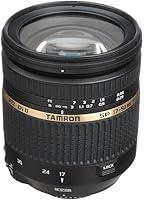
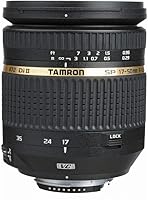
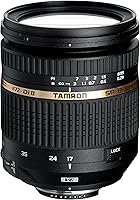
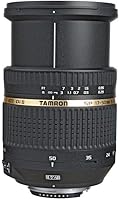
The Tamron SP 17-50mm F/2.8 VC Zoom Lens has been a quiet staple of the Nikon crop-sensor world since 2009, and the fact that it remains relevant says a lot. If you shoot on a DX-format Nikon body, this is a direct — and considerably more wallet-friendly — alternative to Nikon's own 17-55mm f/2.8G. One important point upfront: this lens is designed exclusively for APS-C cameras, so full-frame Nikon shooters should look elsewhere before reading further. For everyone else, you get a fast zoom with built-in Vibration Compensation that genuinely helps when shooting handheld in dim conditions. It won't outperform a dedicated prime, but as an all-day zoom it's hard to fault.
Features & Benefits

The constant f/2.8 aperture is the headline feature here, and it earns its keep. Whether you're at 17mm capturing a wide interior or zoomed to 50mm for a tighter frame, exposure stays consistent — no chasing settings mid-shoot. On Nikon APS-C bodies, that range translates to roughly 25.5-75mm equivalent, covering the majority of everyday shooting situations comfortably. The VC system is noticeably effective for stills, buying you extra stops of handheld stability. Internal focusing is a practical bonus: the barrel doesn't extend, so attached filters stay aligned and the lens balances well on smaller bodies. Aspherical and LD glass elements keep chromatic aberration and barrel distortion well-controlled for a zoom of this maximum aperture.

Best For

This crop-sensor workhorse earns its place in a few specific bags. Indoor event and wedding photographers will appreciate having a fast, stabilized zoom that doesn't demand constant flash use. Travelers who dislike swapping glass mid-scene will find the focal range hits a sweet spot between wide and portrait-length reach. Street and casual portrait shooters get genuine background separation at f/2.8, which kit lenses simply can't match. Handheld video shooters also benefit — VC noticeably smooths out subtle camera drift without a gimbal. If you're stepping up from a kit lens and want something that actually rewards good technique, the 17-50mm f/2.8 VC deserves serious consideration as your next and possibly only walk-around option.

User Feedback

Owners of this Tamron standard zoom consistently single out center sharpness at f/2.8 as a genuine strong point — a claim that holds up across years of forum posts and long-term ownership reports. VC earns solid marks for stills, though a handful of users note it feels less consistent when shooting wide open at the extreme ends of the zoom range. Autofocus is a recurring discussion point: capable enough for portraits and travel, but not the right call if you regularly chase fast-moving subjects. The build feels appropriately solid for the price tier, though no weather sealing means dusty or damp environments carry real risk. Some long-term owners have also flagged occasional focus calibration drift — worth factoring in, especially when buying used.

Pros

  • Center sharpness at f/2.8 is genuinely impressive for a third-party zoom at this price tier.
  • The constant f/2.8 aperture keeps exposure consistent across the entire zoom range, simplifying settings in fast-changing conditions.
  • Built-in VC delivers real, usable stabilization for handheld low-light stills and casual video work.
  • Internal focusing keeps the barrel length fixed, so attached filters stay aligned and the lens balances well on smaller bodies.
  • The 17-50mm focal range maps to a practical 25.5-75mm equivalent on APS-C, covering most everyday shooting scenarios in a single lens.
  • A six-year USA warranty is rare for a third-party optic and signals meaningful confidence in long-term reliability.
  • At 1.26 pounds, this Tamron standard zoom is comfortable enough for full-day carry without fatigue.
  • An 11.4-inch minimum focus distance enables tighter framing on subjects than most competing zooms in this range allow.
  • Aspherical and LD elements keep chromatic aberration noticeably controlled for an f/2.8 zoom, especially in center-frame use.

Cons

  • Autofocus is competent for portraits and travel but noticeably slower than first-party Nikon glass when tracking moving subjects.
  • No weather sealing whatsoever makes this a real gamble in rain, dust, or humid shooting environments.
  • VC performance can become inconsistent at the extreme wide and telephoto ends of the zoom range, according to multiple long-term users.
  • Some owners report autofocus calibration drift over time, which may require periodic micro-adjustment on compatible camera bodies.
  • Corner sharpness at f/2.8 lags behind center performance — stopping down to around f/5.6 is often needed for edge-to-edge consistency.
  • APS-C-only compatibility means the lens offers no upgrade path if you eventually move to a full-frame Nikon system.
  • The underlying optical design dates to 2009, and newer competing lenses from Sigma and Tamron itself have since raised the bar.
  • Bokeh at f/2.8 can render backgrounds with a slightly busy quality compared to dedicated fast primes at similar aperture values.

Ratings

The Tamron SP 17-50mm F/2.8 VC Zoom Lens has been evaluated across all key performance categories using AI-driven analysis of verified buyer feedback from major global marketplaces, with spam, bot activity, and incentivized reviews actively filtered out before scoring. Every rating below is a calibrated synthesis of thousands of real ownership experiences — from first-week impressions to multi-year use reports — giving equal weight to genuine strengths and recurring pain points. Nothing has been softened: the scores reflect what actual shooters encounter in the field, not what the spec sheet promises.
Center Sharpness
84%
Center sharpness at f/2.8 is one of the most consistently praised qualities across long-term ownership reports, with indoor portrait and event shooters regularly noting crisp, detailed results straight out of camera. The performance at the center frame holds up well across the full focal range, making it a reliable daily shooter for controlled environments.
Sharpness is clearly strongest at the center and softens noticeably toward the corners, particularly at wider apertures. Users who need edge-to-edge clarity wide open — especially for architectural or landscape work — will find this a recurring frustration that stopping down to f/5.6 only partially resolves.
Aperture Performance
91%
The constant f/2.8 maximum aperture is the single most impactful real-world feature for event and travel shooters. Wedding photographers working dimly lit reception halls consistently highlight how having a stable aperture across the entire zoom range removes one critical variable from an already unpredictable workflow.
While f/2.8 is fast for a zoom, it cannot match the subject isolation or low-light headroom of dedicated primes at f/1.8 or f/1.4. Photographers who regularly shoot in near-darkness or demand dramatically shallow depth-of-field will find this aperture reaches its practical ceiling sooner than they might expect.
Autofocus Speed
67%
33%
For portraits, street photography, indoor events, and travel — the primary use cases this lens is built for — autofocus accuracy is dependable and locking speed is entirely adequate. False locks are uncommon in good light, and most users report confident, repeatable focus on stationary and slowly moving subjects.
The AF motor shows its age when subjects move quickly or unpredictably. Sports photographers and those shooting active children or wildlife have flagged noticeably slower tracking than first-party Nikon glass offers, and in dim conditions the autofocus can hunt visibly before committing to a lock.
Vibration Compensation
78%
22%
The built-in VC system earns consistent praise from travel and event shooters who frequently work without a tripod. Users broadly report gaining two to three usable stops of handheld stability in available-light interiors, which translates to meaningfully sharper results in conditions where a kit lens would demand a much higher ISO.
A recurring thread in long-term ownership reports is that VC feels less reliable at the extreme focal lengths — particularly at 17mm and 50mm — compared to the middle of the range. Some video shooters also report that the VC mechanism produces a faint audible hum that sensitive on-camera microphones can detect.
Build Quality
73%
27%
The physical construction feels solid and well-assembled for a third-party lens at this price point, with a dense, well-damped zoom ring and a barrel that does not flex or rattle under sustained use. Photographers who have put this crop-sensor workhorse through years of regular event work often describe it as holding up better than expected.
The complete absence of weather sealing is the most significant build limitation, becoming a genuine liability for outdoor shooters working in rain, mist, or dusty environments. Several long-term owners also note that the exterior finish develops wear marks faster than comparable first-party Nikon lenses do under similar conditions.
Value for Money
88%
Against alternatives in the constant f/2.8 zoom category for Nikon DX, the 17-50mm f/2.8 VC delivers a compelling combination of optical quality and practical features at a significant cost saving versus first-party equivalents. The inclusion of built-in stabilization — absent on some pricier competitors — adds measurable utility that enthusiasts and semi-professionals consistently identify as punching well above its cost.
The value equation weakens for buyers who later discover they need faster autofocus or weather sealing, since neither gap can be closed without moving to a substantially more expensive lens. Used market pricing has also occasionally crept close enough to new-condition pricing to make secondhand deals less clear-cut than they once appeared.
Low-Light Performance
83%
The combination of a constant f/2.8 aperture and effective VC creates a practically strong low-light package for a zoom in this focal range. Wedding photographers shooting candid reception moments and street shooters working at dusk regularly praise the 17-50mm f/2.8 VC for yielding usable, sharp results in conditions that would render a kit lens nearly helpless.
At the higher ISOs that low-light shooting demands, residual chromatic aberration toward the frame edges becomes more visible and requires correction. Users who shoot primarily in very dim environments will eventually hit the ceiling — the lens cannot compete with a dedicated f/1.8 prime on raw light-gathering capability.
Chromatic Aberration
76%
24%
Aspherical and Low Dispersion glass elements keep lateral chromatic aberration well-managed for an f/2.8 zoom, and most portrait or event shooters find results require minimal correction in post-processing. Color fringing on high-contrast edges — a common weakness for fast zooms — is present but remains noticeably better controlled than older third-party designs.
Chromatic aberration becomes more visible toward the corners, particularly at wider focal lengths when photographing high-contrast scenes like backlit subjects against open skies. Photographers who deliver unprocessed files to clients or print at large sizes will find it a minor but consistent irritant requiring deliberate correction.
Distortion Control
72%
28%
Barrel distortion at the wide end falls within what most portrait, event, and travel photographers consider manageable territory — it is present but rarely impacts practical results for the subjects this lens is primarily used to capture. Major RAW processors carry correction profiles that resolve the distortion with a single click.
Barrel distortion at 17mm is clearly visible without correction and becomes problematic when photographing architectural lines, straight edges, or interior spaces. Users who frequently shoot buildings or structured environments wide open find this a regularly encountered limitation that demands consistent correction as part of their editing workflow.
Bokeh Quality
69%
31%
At f/2.8 toward the telephoto end of the range, the lens produces reasonably smooth background blur that clearly outperforms kit lenses for casual portrait work. Shooters stepping up from a variable-aperture zoom for the first time typically find the subject separation at 50mm noticeably more pleasing for close-range portraits.
Bokeh at the wide end can appear slightly busy, with background elements rendering in an outlined fashion that some photographers find distracting in demanding portrait contexts. Compared to dedicated portrait primes, the out-of-focus rendering lacks the creamy consistency that more exacting portrait photographers expect from an f/2.8 optic.
Handling & Balance
81%
19%
The fixed-length barrel and internal focusing design keep the lens compact and well-balanced on mid-range DX bodies like the D7500 or D5600 during extended sessions. The zoom ring is smooth and well-damped, making focal length adjustments feel deliberate — a quality photographers who shoot for several hours at a stretch consistently appreciate.
On smaller entry-level Nikon DX bodies, the lens sits front-heavy enough to cause fatigue during very long handheld sessions without a strap or grip support. The manual focus ring, while functional, offers less tactile precision than photographers accustomed to higher-end optics tend to expect for critical manual adjustments.
Video Performance
74%
26%
The built-in VC makes this Tamron standard zoom a practical handheld video option for shooters without access to a gimbal, smoothing out the subtle camera movements that would otherwise require stabilized hardware to control. Consistent exposure across the zoom range also removes a common headache for videographers who adjust focal length during a clip.
Continuous subject-tracking autofocus during video is clearly limited — users relying on modern AF tracking for documentary or event video will find hunting and missed locks a recurring problem. Some users also report that the VC mechanism produces an audible hum that sensitive on-camera microphones can detect during quieter recording environments.
Long-Term Reliability
71%
29%
Many owners have used this lens through years of regular event and travel work without significant mechanical failures, and the six-year Tamron USA warranty provides an unusually strong safety net for a third-party optic. Remaining in active use and genuine demand since 2009 is itself a quiet endorsement of its durability that newer designs have not yet earned.
A meaningful number of long-term owners report autofocus calibration drift over time, requiring periodic fine-tuning through the camera body's AF fine-tune menu — an option not available on all entry-level Nikon bodies. The absence of weather sealing also means that real-world longevity depends heavily on how carefully the lens is managed in variable outdoor conditions.
Corner Sharpness
62%
38%
Stopped down to f/5.6 or f/8, corner sharpness improves considerably and becomes adequate for most practical shooting scenarios including landscapes and casual architecture work. Photographers who compose primarily in the center of the frame — as most portrait, street, and event shooters naturally do — rarely encounter this limitation during day-to-day use.
Wide open at f/2.8, the corners are noticeably softer than the center across most of the focal range, with the widest end at 17mm showing the most obvious fall-off. For photographers who need sharp edge-to-edge rendering at fast apertures — nightscapes, interiors, or wide architectural shots — this is a consistent and meaningful weakness.

Suitable for:

The Tamron SP 17-50mm F/2.8 VC Zoom Lens is purpose-built for Nikon DX shooters who want a fast, versatile zoom without the sticker shock of the Nikon first-party equivalent. It's a natural fit for indoor event and wedding photographers who need consistent exposure across a wide focal range without relying on flash. Travel photographers who prefer a single walkaround lens will find the 17-50mm range covers most situations — from tight street scenes to broader environmental shots — while the built-in VC adds a meaningful safety net when light gets scarce. Portrait and street photographers will appreciate the f/2.8 aperture's ability to separate subjects from backgrounds in a way that kit lenses simply cannot replicate. Hobbyists stepping up from their first kit lens, and handheld videographers looking to reduce camera shake without investing in stabilization rigs, are also squarely in the target audience for this crop-sensor workhorse.
Not suitable for:

The Tamron SP 17-50mm F/2.8 VC Zoom Lens is strictly an APS-C design, so anyone currently shooting — or planning to shoot — on a full-frame Nikon body should stop here, as it won't cover the larger sensor and is simply not a compatible option. Photographers who regularly chase fast-moving subjects, such as sports or wildlife, may find the autofocus response underwhelming compared to faster-focusing alternatives available in the Nikon F mount. If your work takes you frequently into challenging outdoor conditions — dusty festivals, rainy ceremonies, beach sessions — the complete absence of weather sealing is a genuine liability worth weighing seriously before committing. Buyers who place corner-to-corner sharpness at wide apertures above all else will likely find a dedicated prime in the 24mm or 35mm range more satisfying. Finally, if a full-frame Nikon upgrade is on your roadmap in the near term, putting money into a lens that won't make that transition with you deserves careful reconsideration.
Specifications

  • Focal Length: This lens covers a 17-50mm zoom range, which translates to approximately 25.5-75mm full-frame equivalent when mounted on a Nikon APS-C body.
  • Max Aperture: The maximum aperture is a constant f/2.8 across the entire zoom range, meaning exposure and depth-of-field character remain consistent whether you are shooting at 17mm or 50mm.
  • Lens Mount: The lens uses a Nikon F mount and is designed specifically for DX-format (APS-C) Nikon digital SLR bodies.
  • Format Compatibility: This is an APS-C-only optical design and will produce heavy vignetting if mounted on a full-frame Nikon FX body, making it incompatible with that format for practical use.
  • Stabilization: Built-in Vibration Compensation (VC) reduces the visual effect of camera shake during handheld shooting, providing meaningful assistance in low-light stills and casual handheld video work.
  • Focus System: Internal focusing keeps the physical length of the barrel constant during autofocus operation, which prevents front-element rotation and maintains balance on the camera body.
  • Min Focus Distance: The minimum focusing distance is 11.4 inches (approximately 29 cm), enabling closer subject framing than most standard kit lenses offer at comparable focal lengths.
  • Max Magnification: The maximum magnification ratio is 1:4.8, which allows moderately close framing of subjects without requiring a dedicated macro lens.
  • Optical Design: The lens incorporates aspherical and Low Dispersion (LD) glass elements to suppress barrel distortion and reduce chromatic aberration, particularly in high-contrast scenes.
  • Dimensions: The lens measures 3.74 × 3.15 × 3.15 inches, a compact footprint that balances well on mid-sized Nikon DX bodies during extended shoots.
  • Weight: At 1.26 pounds (approximately 572 g), the lens is substantial enough to feel well-built without becoming fatiguing during all-day carry.
  • Weather Sealing: This lens has no weather sealing of any kind, so use in rain, heavy dust, or high-humidity conditions without additional protection carries a genuine risk of damage.
  • Warranty: Covered by a 6-year Tamron Limited USA warranty, which provides substantially longer manufacturer protection than most competing third-party lenses in this category.
  • Model Number: The official Tamron model number is AFB005NII-700, which can be used to verify compatibility listings and register the product directly through Tamron USA.

Related Reviews

Tamron 17-70mm F/2.8 Di III-A Zoom Lens
81%
88%
Optical Sharpness
93%
Aperture Performance
84%
Autofocus Speed & Accuracy
87%
Image Stabilization
71%
Video Usability
More
Tamron 17-70mm f/2.8 Di III-A Zoom Lens
82%
91%
Optical Sharpness
93%
Aperture Versatility
84%
Autofocus Performance
86%
Image Stabilization
82%
Build Quality & Durability
More
Tamron SP 70-200mm F/2.8 G2 Telephoto Lens
82%
86%
Autofocus Performance
91%
Image Sharpness
84%
Image Stabilization
88%
Value for Money
79%
Build Quality
More
Tamron SP 24-70mm F/2.8 G2 Camera Lens
85%
91%
Image Sharpness
88%
Autofocus Performance
84%
Vibration Compensation
93%
Build Quality
82%
Weather Sealing
More
Tamron 35mm f/2.8 Di III OSD M1:2 Lens for Sony E-Mount
85%
94%
Image Quality
75%
Autofocus Speed
90%
Macro Performance
88%
Build Quality
91%
Portability
More
Tamron 35-150mm F/2-2.8 Di III VXD Lens
84%
92%
Optical Sharpness
89%
Autofocus Performance
94%
Aperture Versatility
87%
Build Quality
78%
Value for Money
More
Tamron 24mm F/2.8 Di III OSD Lens
79%
91%
Image Sharpness
93%
Value for Money
74%
Build Quality & Durability
71%
Autofocus Performance
88%
Macro Capability
More
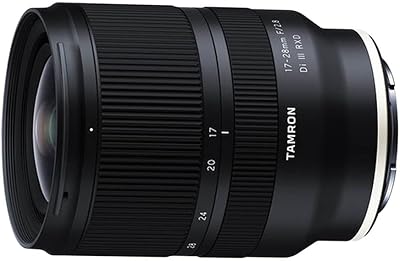
Tamron 17-28mm f/2.8 Di III RXD Lens
80%
88%
Image Sharpness
91%
Autofocus Performance
79%
Build Quality
93%
Portability & Size
86%
Low-Light Performance
More
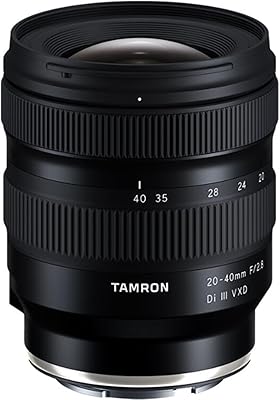
Tamron 20-40mm f/2.8 Di III VXD Lens
80%
91%
Image Sharpness
89%
Autofocus Performance
83%
Build Quality & Durability
94%
Size & Portability
67%
Zoom Range Versatility
More
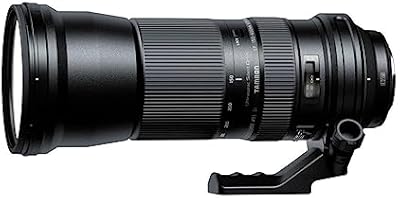
Tamron SP 150-600mm F/5-6.3 Di VC USD Lens for Nikon DSLR
86%
90%
Optical Performance
88%
Autofocus Speed
85%
Build Quality
92%
Vibration Compensation (VC)
68%
Weight & Ergonomics
More

FAQ

No — it is built exclusively for APS-C sensors and will produce heavy vignetting on full-frame Nikon FX bodies like the D750 or D800, rendering images unusable at most focal lengths. It is designed for DX-format bodies such as the D3500, D5600, D7200, and D7500. If you are on full-frame or planning to upgrade to one, this lens is not a sound investment.

For handheld stills in dim light, the VC system is genuinely useful — most users describe gaining roughly two to three stops of effective stability, which can be the difference between a sharp and a blurry indoor shot. It also smooths out subtle camera drift during casual handheld video. A fair caveat: some owners report the VC feels slightly less consistent at the very widest and longest ends of the zoom range compared to the middle of the range.

Not really. The autofocus is reliable for portraits, travel, and events where subjects are relatively still or moving predictably, but it is not built to track fast, erratic motion the way dedicated sports lenses are. If chasing athletes or wildlife is a priority, a lens with a faster, more responsive AF motor would serve you better. Think of this crop-sensor workhorse as a lens for deliberate, controlled shooting rather than reactive burst work.

The Nikon 17-55mm f/2.8G does edge ahead in autofocus speed, corner sharpness, and overall optical consistency, but it carries a significantly higher price tag. The Tamron SP 17-50mm F/2.8 VC Zoom Lens closes much of that gap in real-world shooting — particularly for center-frame sharpness and low-light versatility — and adds built-in stabilization that the Nikon version lacks. For most enthusiasts and hobbyists, the Tamron makes considerably more practical sense unless every last increment of optical performance is a professional requirement.
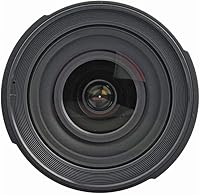
Yes, and this is actually one of the practical advantages of the internal focusing design — the front element does not rotate during autofocus, so a circular polarizing filter stays exactly where you set it after locking focus. You won't need to re-adjust the filter orientation between shots, which is a genuine convenience compared to lenses where the front element spins.

For most hobbyists, yes. Moving from a standard 18-55mm kit lens to the 17-50mm f/2.8 VC opens up noticeably different creative possibilities — particularly indoors, in the evening, and anywhere you want to separate a subject from its background. The jump from a variable f/3.5-5.6 aperture to a constant f/2.8 is felt immediately in low-light situations, and the VC adds an extra layer of confidence when shooting without a tripod.

It fits any Nikon F-mount APS-C (DX) DSLR, including the D90, D3500, D5600, D7100, D7200, and D7500, among others. It will physically attach to full-frame Nikon F-mount cameras but is not suitable for that use due to vignetting. It is not natively compatible with Nikon Z-mount mirrorless cameras, and even with an FTZ adapter, autofocus behavior may not be fully consistent.

It is worth being aware of, especially if you are a long-term buyer. A number of owners have reported that autofocus accuracy can shift slightly over time and may benefit from fine-tuning through the AF fine-tune setting available on mid-range and higher-tier Nikon bodies such as the D7000 series. This is not unique to this lens — many third-party optics occasionally need calibration — but if your camera body lacks AF fine-tune, it could become a frustration if drift occurs.

It is genuinely well-suited for it. The constant f/2.8 aperture combined with VC gives you a real advantage in reception halls, ceremony venues, and any space where flash is restricted or unwelcome. Center sharpness wide open is one of the lens's most consistently praised traits, and the zoom range covers wide room establishing shots through to tighter candid portraits without needing to change glass mid-event.

It depends entirely on where you shoot. For studio work, indoor events, and fair-weather outdoor sessions, the absence of weather sealing is rarely a practical issue. But if you regularly shoot outdoors in unpredictable conditions — beach locations, festivals, autumn and winter weddings — it is a real vulnerability that could shorten the lens's lifespan without careful handling. A UV filter on the front and a rain sleeve for the body-and-lens combination are inexpensive ways to add a basic layer of protection.

Where to Buy