Overview

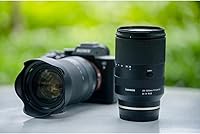
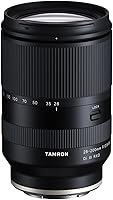
The Tamron 28-200mm F/2.8-5.6 Mirrorless Zoom Lens arrived at a moment when Sony E-mount shooters were tired of choosing between a wide prime and a telephoto zoom every time they packed a bag. This all-in-one zoom was the first of its kind to open at F2.8 on full-frame mirrorless — a meaningful distinction when most competing options start at F3.5 or slower. Tamron built it for travelers, hybrid shooters, and anyone who would rather carry one capable lens than juggle two. That said, honest expectations matter: the versatility comes with real compromises at the longer end of the range, and anyone expecting prime-level performance throughout will need to recalibrate.
Features & Benefits

Starting at F2.8 on the wide end is where this all-in-one zoom earns its place in a serious kit. At 28mm, that aperture gives you genuine subject separation and usable low-light performance — something a typical kit zoom simply cannot match. Pull focus close and you will notice another strength: close-focus capability gets you within 7.5 inches of a subject at the wide end, opening up detail shots most zoom lenses miss entirely. It is not true macro, but it is far more useful than you would expect. The RXD stepping motor runs so quietly it disappears in video work. At under 1.3 lbs, the weight savings over a two-lens setup is real and felt on a long shooting day. One caveat: Tamron has not officially rated this lens for weather resistance.

Best For

The Tamron 28-200 is purpose-built for photographers who want to travel light without thinking twice about what to leave behind. It is the right tool for a week-long trip where you need wide architecture shots in the morning and compressed street scenes in the afternoon — all from one mount. Video creators will appreciate the quiet autofocus on a busy street or in a quiet venue where a noisy AF motor would stand out. Sony APS-C users benefit too, getting a 42–300mm equivalent reach. Where it starts to make less sense is in sports or wildlife work, where F5.6 at 200mm in dim light is simply not enough. If maximum telephoto speed is a priority, this travel lens is the wrong starting point.

User Feedback

Owner sentiment around this all-in-one zoom skews positive, but the community is refreshingly candid about its limits. Wide-end sharpness and the convenience of a single-lens kit draw the most consistent praise — people genuinely stop reaching for a second body. Autofocus gets highlighted as a strength too, particularly by video shooters who expected compromise and did not find one. The criticism lands squarely at 200mm: wide-open softness and vignetting are noticeable, and experienced users recommend stopping down for the best results at the long end. A smaller group flags the build quality as feeling slightly below expectations at this price point. The broader takeaway from real-world owners: manage expectations around the telephoto end and overall satisfaction tends to be high.

Pros

  • Opens at F2.8 at the wide end — a genuine advantage over slower all-in-one alternatives for low-light shooting.
  • At under 1.3 lbs, this travel lens weighs less than most two-lens combinations it effectively replaces.
  • Close-focus performance of 7.5 inches at the wide end adds creative versatility most zoom shooters do not expect.
  • RXD autofocus motor is remarkably quiet, making it a reliable choice for video work in sound-sensitive environments.
  • Covers full-frame and APS-C sensors, giving it broad compatibility across the Sony E-mount lineup.
  • Distortion and chromatic aberration are well-controlled for a lens spanning this focal range.
  • Wide-end sharpness consistently earns praise from real-world owners across a range of shooting conditions.
  • A single 67mm filter thread covers the entire zoom range, keeping accessory costs and bag weight down.
  • The compact 4.6-inch barrel makes it far less conspicuous on the street than a multi-lens setup.

Cons

  • Noticeable softness and vignetting wide open at 200mm require stopping down for reliable image quality.
  • No official weather sealing means shooting in rain or dusty environments carries real risk.
  • Build quality feels slightly underwhelming at this price point compared to some competing lenses in the category.
  • Minimum focus distance increases significantly at the tele end, limiting close-up work beyond the wide focal lengths.
  • The aperture drop from F2.8 to F5.6 across the zoom range can catch shooters off guard in changing light.
  • Not a true macro lens — close-focus capability is useful but falls short for dedicated detail or product photography.
  • At 200mm, background separation is noticeably weaker than what a dedicated telephoto prime would deliver.
  • Autofocus tracking speed, while quiet, can lag behind faster native Sony lenses in demanding action scenarios.

Ratings

The scores below reflect an AI-driven analysis of verified global user reviews for the Tamron 28-200mm F/2.8-5.6 Mirrorless Zoom Lens, with spam, bot-generated, and incentivized feedback actively filtered out before scoring. Each category is rated independently to give you a clear, unvarnished picture of where this all-in-one zoom genuinely delivers and where real buyers have run into frustration. Strengths and pain points are weighted equally — nothing is glossed over.

Versatility
93%
Few lenses come close to covering this focal range in a single mount, and buyers who travel frequently consistently describe the freedom of leaving their second lens at home as a genuine lifestyle shift. The 28–200mm range handles architecture, portraits, street, and compressed backgrounds without switching glass.
Versatility always involves compromise, and this travel lens is no exception — at the extremes of the zoom range, particularly at 200mm, image quality takes a step back compared to what a dedicated prime or telephoto would deliver in the same scenario.
Image Sharpness
74%
26%
At the wide end, sharpness consistently earns praise from real-world users shooting everything from street scenes to indoor events. Stopped down to F8 or F11 across most of the zoom range, results are genuinely impressive for a lens covering this much focal ground.
Wide open at 200mm, softness and vignetting are noticeable enough that users regularly flag it in reviews. It is not a dealbreaker for casual shooters, but photographers pixel-peeping at the long end will feel the limitation acutely.
Autofocus Performance
88%
The RXD stepping motor is one of the most praised aspects of this all-in-one zoom across user feedback globally. Video shooters especially appreciate how quiet it runs — it simply does not intrude on audio recordings the way older AF systems do, making it a reliable companion for run-and-gun content creation.
While quiet and accurate for everyday subjects, AF tracking speed under demanding conditions — fast-moving athletes, birds in flight, unpredictable wildlife — reveals its limits. Users who shoot action regularly note it lags behind Sony's native G Master lenses in sustained tracking reliability.
Build Quality
63%
37%
The overall construction is solid enough for everyday use, and the barrel feels secure when zooming. Most users handling it casually report no rattles, no loose tolerances, and a smooth zoom ring that does not creep on its own.
A meaningful minority of buyers feel the build quality falls short of what the price tag implies, particularly when comparing it side-by-side with Sony's native lens lineup. The plastic-forward feel and absence of any official weather sealing rating both contribute to a perception of fragility that undercuts confidence.
Weather Resistance
41%
59%
Some users report using this all-in-one zoom in light drizzle without immediate damage, and Tamron's construction does not feel entirely unprotected. For occasional accidental exposure to moisture, many buyers have gotten away with it without incident.
Tamron has not issued an official weather or dust resistance rating for this lens — a fact that many competing reviews skip over entirely but real outdoor shooters notice quickly. For anyone shooting coastal landscapes, hiking in variable conditions, or working dusty event venues regularly, this is a genuine gap.
Low-Light Performance
78%
22%
F2.8 at 28mm gives this travel lens a meaningful edge over typical kit zooms in dim environments — shooting interiors, evening street photography, or indoor events without flash is noticeably more workable than with slower alternatives. Users stepping up from a 28-70mm F3.5-5.6 kit lens feel the difference immediately.
As you zoom toward 200mm, the maximum aperture drops to F5.6, and without optical stabilization built into the lens itself, handheld shots in low light at longer focal lengths require either high ISO tolerance or reliance on your camera body's IBIS system.
Portability
91%
At 1.27 lbs and 4.6 inches long, this all-in-one zoom is remarkably compact for what it covers. Buyers who have switched from carrying a two-lens kit frequently describe it as one of the most noticeable quality-of-life improvements in their setup, especially on long travel days.
Compared to a single prime lens, it is still a moderately sized piece of glass that adds tangible weight to a small mirrorless body. Shooters pairing it with an entry-level APS-C body may find the size balance slightly front-heavy over long periods.
Close-Focus Capability
79%
21%
Getting within 7.5 inches of a subject at the wide end is a genuinely useful capability that opens up detail shots, food photography, and environmental close-ups that most zoom lenses in this class simply cannot achieve. Users are consistently surprised by how much creative range this adds on a single-lens trip.
It is important to be clear: this is close-focus performance, not true macro. The 1:3.1 maximum magnification ratio will disappoint anyone expecting 1:1 reproduction for detailed product or insect photography. For serious close-up work, a dedicated macro lens remains the right tool.
Video Usability
86%
Beyond the quiet AF motor, the smooth zoom ring and consistent focal plane behavior make this a practical choice for video shooters who need a flexible range without drawing attention. Hybrid creators using Sony bodies with strong IBIS have reported very usable handheld footage across the zoom range.
The lack of a dedicated aperture de-click mechanism and the aperture shift during zoom can create exposure inconsistencies in video — something shooters pulling from wide to tele mid-clip will notice and need to manage in post or through careful exposure settings.
Distortion & Aberration Control
82%
18%
For a lens spanning 28–200mm, distortion and chromatic aberration are notably well-managed, particularly in the mid-range focal lengths where most shooting happens. Users who post-process with Sony's built-in lens correction profiles find results clean without heavy manual correction work.
Barrel distortion at 28mm and some chromatic fringing at the long end are present and visible when correction profiles are disabled. Shooters who prefer unprocessed raw files or minimal in-camera correction will see these artifacts more clearly than JPEG shooters.
Value for Money
76%
24%
For a photographer who would otherwise need to invest in two separate lenses to cover a similar range, the single-purchase convenience of the Tamron 28-200 makes the math work favorably. The wide-end aperture advantage over similarly priced all-in-one zooms adds to the value proposition.
The absence of weather sealing, the noticeable quality drop at 200mm, and build quality concerns relative to Sony's native G-series lenses make some buyers question whether the pricing is fully justified — particularly when used primarily at longer focal lengths where the trade-offs are most apparent.
Compatibility & Integration
89%
Native Sony E-mount communication means full EXIF data, in-body stabilization cooperation, and seamless firmware update support via Tamron's USB dock accessory. Users report smooth integration across a wide range of Sony alpha bodies from the a6000 series through the full-frame a7 lineup.
There is no adapter path here — it is Sony E-mount only, which is exactly right for its target audience but worth stating clearly. Photographers shooting other systems or considering a future mount switch would need to replace this lens entirely.
Zoom Range Coverage
87%
The jump from 28mm to 200mm in a single lens is the core proposition of this all-in-one zoom, and in practice it covers the vast majority of real-world shooting scenarios a traveler or everyday photographer encounters. The ability to capture a wide street scene and then pull in a detail from across the room without moving is practically valuable.
The zoom range creates inherent optical compromises that no lens design fully solves — the wide end and tele end simply cannot both be optimized simultaneously. Shooters who spend most of their time at one focal length may find a dedicated lens more rewarding despite the reduced flexibility.

Suitable for:

The Tamron 28-200mm F/2.8-5.6 Mirrorless Zoom Lens is built for photographers and videographers who prioritize flexibility and mobility above all else. If you are the kind of traveler who refuses to check a bag and still wants to come home with sharp wide-angle landscapes, compressed street portraits, and close-up detail shots, this all-in-one zoom covers that entire range from a single mount. Hybrid shooters who split their time between stills and video will find the near-silent RXD autofocus motor a genuine asset — it simply does not intrude on recorded audio the way older AF systems do. Sony mirrorless users on both full-frame and APS-C bodies benefit equally, making it a smart step-up for anyone outgrowing a kit lens. Street and event photographers who value keeping a low profile will also appreciate how unobtrusive this travel lens feels compared to hauling a two-lens kit.
Not suitable for:

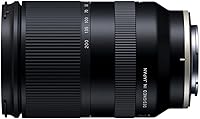
The Tamron 28-200mm F/2.8-5.6 Mirrorless Zoom Lens is the wrong choice if a fast telephoto aperture is non-negotiable for your shooting style. Sports photographers tracking fast-moving subjects in mixed or low light will quickly find F5.6 at 200mm limiting, particularly indoors or at dusk. Wildlife photographers who depend on subject-isolating backgrounds at long focal lengths will also feel the constraint — the narrow maximum aperture at the tele end simply cannot replicate what a dedicated 70-200mm F2.8 delivers. Outdoor shooters who regularly work in rain or dusty conditions should proceed carefully too, since this all-in-one zoom carries no official weather sealing rating, a detail many competing reviews quietly skip over. Finally, buyers expecting prime-level corner-to-corner sharpness wide open across the full zoom range will likely be disappointed — the Tamron 28-200 is an exercise in trade-offs, and that trade-off is most visible at 200mm.

Specifications

  • Focal Length: Covers a 28–200mm zoom range, handling wide-angle through telephoto on full-frame sensors.
  • Max Aperture: Opens at F2.8 at the wide end and narrows to F5.6 at 200mm as the zoom extends.
  • Min Aperture: Minimum aperture is F16 at the wide end and F32 at the telephoto end.
  • Lens Mount: Designed exclusively for Sony E-mount bodies, covering both full-frame and APS-C sensor formats.
  • Autofocus: Uses Tamron's RXD (Rapid eXtra-silent stepping Drive) motor for fast, near-silent autofocus operation.
  • Close Focus: Minimum focus distance is 7.5 in (19 cm) at the wide end and 31.5 in (80 cm) at the tele end.
  • Magnification: Achieves a maximum magnification ratio of 1:3.1 at the wide end and 1:3.8 at the telephoto end.
  • Optical Design: Built around 18 elements arranged in 14 groups to balance sharpness, distortion control, and compactness.
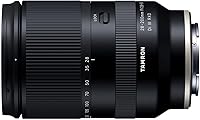
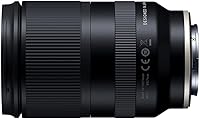
  • Dimensions: Measures 4.6 × 2.91 in (117 × 74 mm), keeping the barrel notably compact for its zoom range.
  • Weight: Weighs 1.27 lbs (575 g), which is light enough to shoot comfortably for extended periods.
  • Filter Thread: Uses a 67mm filter thread diameter, consistent across the full zoom range for convenient accessory use.
  • Weather Sealing: Tamron has not issued an official weather-resistance or dust-sealing rating for this lens.
  • Model Number: Official Tamron model identifier is AFA071S700, which can be used to verify compatibility and firmware.
  • Sensor Compatibility: Works on full-frame Sony E-mount bodies and provides a 42–300mm equivalent range on APS-C bodies.
  • Image Stabilization: The lens itself does not include optical stabilization; it relies on in-body stabilization from compatible Sony bodies.

Related Reviews

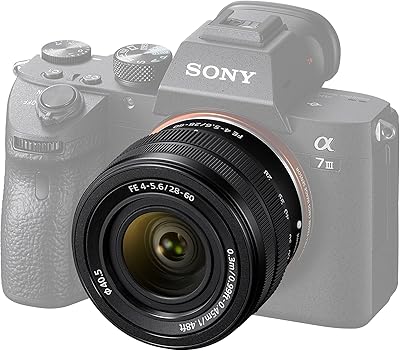
Sony FE 28-60mm f/4-5.6 Full-Frame Compact Zoom Lens
85%
92%
Portability & Weight
88%
Autofocus Performance
86%
Build Quality
84%
Image Stabilization
72%
Low-Light Performance
More
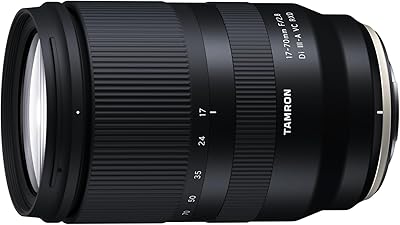
Tamron 17-70mm F/2.8 Di III-A VC RXD Zoom Lens for Fujifilm X
86%
91%
Image Quality
88%
Vibration Compensation (VC) Effectiveness
84%
Autofocus Performance
90%
Build Quality and Durability
85%
Low Light Performance
More
Tamron 11-20mm F/2.8 Di III-A Wide-Angle Lens
84%
91%
Image Sharpness
88%
Autofocus Performance
86%
Build Quality & Weather Sealing
74%
Value for Money
67%
Distortion & Optical Corrections
More
Tamron 17-70mm f/2.8 Di III-A Zoom Lens
82%
91%
Optical Sharpness
93%
Aperture Versatility
84%
Autofocus Performance
86%
Image Stabilization
82%
Build Quality & Durability
More
Canon EF 100-300mm f/4.5-5.6 Telephoto Zoom Lens
75%
88%
Autofocus Speed
91%
Autofocus Noise
67%
Image Sharpness
43%
Image Stabilization
78%
Build Quality
More
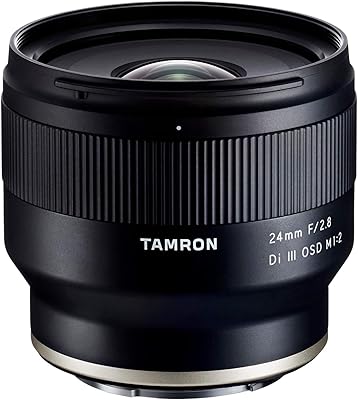
Tamron 24mm F/2.8 Di III OSD Lens
79%
91%
Image Sharpness
93%
Value for Money
74%
Build Quality & Durability
71%
Autofocus Performance
88%
Macro Capability
More
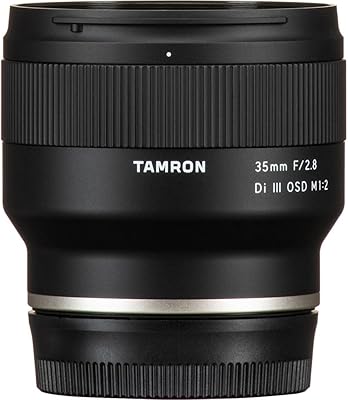
Tamron 35mm f/2.8 Di III OSD M1:2 Lens for Sony E-Mount
85%
94%
Image Quality
75%
Autofocus Speed
90%
Macro Performance
88%
Build Quality
91%
Portability
More
Tamron 35-150mm F/2-2.8 Di III VXD Lens
84%
92%
Optical Sharpness
89%
Autofocus Performance
94%
Aperture Versatility
87%
Build Quality
78%
Value for Money
More
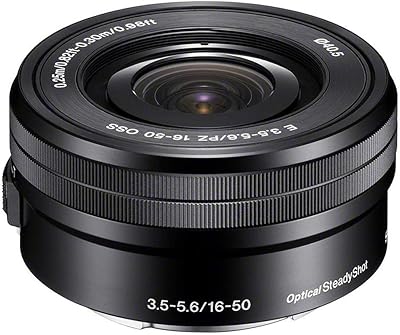
Sony 16-50mm f/3.5-5.6 OSS Alpha E-Mount Retractable Zoom Lens
85%
91%
Value for Money
87%
Image Quality
93%
Portability/Size
88%
Ease of Use
82%
Build Quality
More
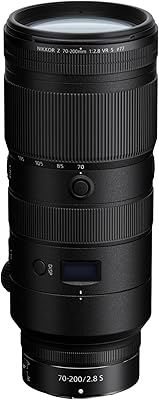
Nikon NIKKOR Z 70-200mm f/2.8 S Telephoto Zoom Lens
84%
96%
Optical Sharpness
93%
Autofocus Performance
91%
Image Stabilization
94%
Build Quality
89%
AF Motor Noise
More

FAQ

Yes, it mounts and functions correctly on any Sony E-mount body, APS-C included. On a crop-sensor camera the effective focal range becomes roughly 42–300mm equivalent, which actually gives you even more reach on the tele end.

For everyday moving subjects — kids playing, pets indoors, casual street scenes — the RXD motor handles it well and tracks reliably. Where it starts to show limits is in demanding fast-action scenarios like sports or wildlife in low light, where a dedicated telephoto with a wider aperture would outperform it.

Tamron has not given the Tamron 28-200mm F/2.8-5.6 Mirrorless Zoom Lens an official weather or dust resistance rating, so shooting in rain or sandy conditions is genuinely at your own risk. If you regularly work outdoors in tough conditions, factor that into your decision — it is a gap that some competing lenses in this category do address.
At the wide end, you can get as close as 7.5 inches from your subject, which opens up some nice detail-oriented shooting. That said, it is not a true macro lens — the maximum magnification is 1:3.1, so for professional product or food photography where 1:1 reproduction matters, a dedicated macro lens would serve you better.

No, there is no optical stabilization built into this all-in-one zoom. It leans entirely on the in-body image stabilization (IBIS) of your Sony camera body. On bodies with strong IBIS like the a7 IV or a7C, that combination works well in practice.

Wide-end sharpness is genuinely good and one of the things real-world users consistently praise. At 200mm, though, you will notice some softness and vignetting if you shoot wide open at F5.6 — stopping down to F8 makes a noticeable difference. It is a trade-off that comes with the zoom range, and being realistic about it will save frustration.

The filter thread is 67mm and stays the same throughout the entire zoom range, which makes it practical to use with polarizers or ND filters without needing step-up rings or constantly swapping gear.

For most people, yes — you get a noticeably wider aperture at the short end and significantly more reach at the long end, all in a package that is not much heavier. The Tamron 28-200 is the kind of upgrade that makes you immediately wonder why you waited.

Video shooters tend to be pleasantly surprised by this travel lens. The RXD stepping motor is designed to run quietly, and in practice it does — on-camera microphones generally do not pick it up. It is one of the more video-friendly options in the all-in-one zoom category.

Yes, Tamron includes a lens hood in the box along with front and rear lens caps. It is a petal-style hood suited to the wide-angle end of the zoom range, and using it is recommended since it also provides a small degree of physical protection for the front element.

Where to Buy