Overview

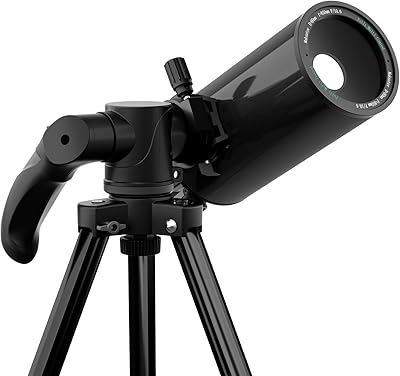
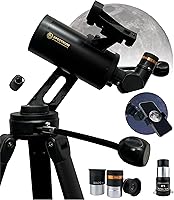
The SpectrumOI TourStar Pro 70 AZ Maksutov Telescope sits in an interesting spot in the market — compact enough to carry to a dark field, yet optically serious enough to show you Jupiter's cloud bands on a steady night. Unlike the flimsy refractors cluttering toy store shelves, this Maksutov telescope uses a catadioptric design that folds a 750mm focal length into a short, manageable tube. The 70mm aperture won't pull in faint nebulae, but for the Moon and brighter planets, it punches well above its price class. Add a 3-year warranty from a California-based manufacturer and you've got a first scope that doesn't feel like a gamble.
Features & Benefits

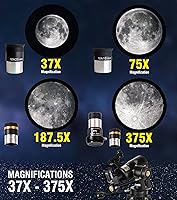
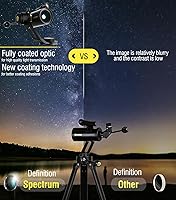
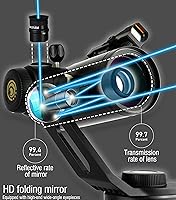
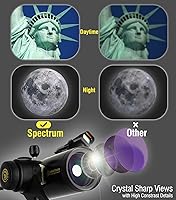
What sets the TourStar Pro 70 apart from similarly priced refractors is the optical quality baked into its design. The glass carries fully multi-coated optics with Magnesium Difluoride coatings, which meaningfully improves contrast compared to single-coated alternatives. You get three eyepieces — a 4mm aspherical, 10mm, and 20mm — giving you real flexibility from wide-field lunar sweeping to tighter planetary detail. The included 2x Barlow doubles your options, though the practical ceiling on most nights hovers far below the theoretical 375x maximum; atmosphere rarely cooperates at those levels. The alt-az mount with brass worm gears on both axes moves more smoothly than the plastic-tabbed mounts you find on budget scopes. A smartphone adapter and reflex finderscope round out an accessory kit that actually earns its place in the box.

Best For

This compact Mak scope is a strong match for adults and older teens who've outgrown the idea of a toy telescope but aren't ready to commit to a large, expensive instrument. It's especially rewarding for Moon and planet observing — the long focal length is well-suited to the high magnification those objects need, and suburban light pollution matters less when your target is already bright. STEM educators and astronomy club leaders will appreciate how manageable it is to transport and set up with a group. It also makes a thoughtful, well-packaged gift; the kit is complete and it fits in the trunk of most cars. Deep-sky observers, however, should look elsewhere — a 70mm aperture simply isn't built for galaxies or dim nebulae.

User Feedback

With a 4.2-star rating across nearly 300 reviews, the TourStar Pro 70 has earned its reputation honestly. Buyers consistently highlight the sharpness of lunar views, and many note it outperforms similarly priced refractors on planetary targets. The criticism isn't buried: the aluminum tripod, while better than plastic alternatives, can introduce wobble at higher magnifications — something to know before pushing past 150x on a breezy night. The smartphone adapter gets a split verdict; Moon photography is doable, but aligning it takes patience. Setup gets consistent praise, and Spectrum's customer support team appears responsive and accessible. A few buyers flag the 375x maximum magnification figure with skepticism, which is fair — real-world conditions rarely get you anywhere near that number. Overall satisfaction is solid for this price tier.

Pros

  • Multi-coated optics with Magnesium Difluoride deliver noticeably crisper lunar and planetary contrast than budget refractors.
  • The Maksutov-Cassegrain design folds a long focal length into a short, portable tube that is easy to transport.
  • Three included glass eyepieces cover a genuinely useful range from wide-field views to tighter planetary magnifications.
  • Brass worm gears on both axes of the alt-az mount provide smoother, more controlled tracking than typical plastic mounts.
  • A 3-year warranty from a responsive California-based support team adds real peace of mind.
  • The included 2x Barlow effectively doubles the eyepiece lineup without any extra purchase.
  • Setup is approachable for newcomers, supported by clear video guides and accessible customer service.
  • At its price point, the TourStar Pro 70 consistently outperforms entry-level refractors on planetary targets according to real buyer feedback.
  • The complete accessory kit — finderscope, smartphone adapter, Barlow, and eyepieces — means no immediate additional spending.
  • Compact and lightweight enough at 12 pounds to fit in a car trunk for spontaneous dark-sky outings.

Cons

  • A 70mm aperture puts strict limits on deep-sky viewing; faint nebulae and distant galaxies will be largely invisible.
  • Tripod wobble at high magnifications is a recurring complaint and can disrupt steady planetary views on breezy nights.
  • The smartphone adapter requires careful, fiddly alignment and delivers inconsistent results beyond basic Moon photography.
  • The 375x maximum magnification figure is misleading — atmospheric turbulence almost always prevents useful viewing above roughly 140x to 150x.
  • The altazimuth mount lacks the motorized tracking that makes extended planetary observation much more comfortable.
  • Collimation adjustments, if ever needed, can be trickier on a Maksutov design than on a simple refractor for a first-time owner.
  • No carry case is included, so protecting and transporting the optical tube requires a separate purchase or improvisation.
  • Focusing at the highest magnifications demands very fine, patient adjustments — this can frustrate beginners expecting instant sharp views.

Ratings

Our AI-generated scores for the SpectrumOI TourStar Pro 70 AZ Maksutov Telescope are derived from analyzing verified global buyer reviews, with spam, bot-submitted, and incentivized feedback actively filtered out before scoring. Each category reflects the honest balance of what real owners praise and what genuinely frustrates them — no category has been softened to protect the product's image. The result is a transparent snapshot of where this compact Mak scope earns its reputation and where it falls short.

Optical Clarity
86%
Buyers consistently single out lunar and planetary views as the standout strength of this scope. On a steady night, Saturn's rings and Jupiter's equatorial bands come through with crisp, high-contrast detail that surprises first-time owners accustomed to budget refractors. The fully multi-coated optics with Magnesium Difluoride treatment make a tangible difference in image sharpness.
The 70mm aperture imposes a hard ceiling on what the optics can reveal, regardless of coating quality. Faint deep-sky targets like distant galaxies or faint nebulae remain poorly resolved, and the scope struggles when atmospheric seeing conditions are even slightly unstable at higher magnifications.
Value for Money
83%
At its mid-range price point, this compact Mak scope delivers optical and mechanical quality that visibly outclasses similarly priced refractors. The complete accessory kit — three eyepieces, Barlow lens, smartphone adapter, and finderscope — means buyers rarely need to spend more to start observing immediately.
Buyers who discover the 70mm aperture limits deep-sky performance sometimes feel the price would have been better spent toward a larger-aperture reflector. A small number of reviewers note that the tripod quality does not quite match the optical quality, creating a slight sense of imbalance in the overall package value.
Mount & Tracking
74%
26%
The brass worm gears on both altazimuth axes are a genuine step up from the plastic friction controls found on most competitors at this price. Users tracking the Moon or a planet across the field of view notice smoother, more controlled adjustments, which makes extended observing sessions noticeably more comfortable.
The single-arm altazimuth mount has no motorized tracking, meaning the observer must manually nudge the scope every minute or so to keep a planet centered — this becomes tiring over long sessions. At magnifications above roughly 150x, any touch to the mount or tube transmits vibration that can take several seconds to settle.
Tripod Stability
67%
33%
The aluminum tripod is meaningfully sturdier than the plastic-legged alternatives bundled with entry-level refractors, and most users report it holds the scope solidly during casual low-to-mid magnification viewing. For typical backyard Moon sessions at 75x to 100x, vibration is rarely a problem.
At higher magnifications, minor wobble becomes a recurring frustration — wind gusts or an accidental brush against the legs can cause the image to bounce for several seconds. Several buyers specifically mention that the tripod is the weakest link in an otherwise well-assembled package.
Portability
89%
The short Maksutov tube design is a genuine advantage here: the entire setup weighs around 12 pounds and the optical tube is compact enough to fit in the back seat or trunk of most cars without disassembly. Astronomy club leaders and educators who transport equipment to multiple sites praise how quickly it packs up and reassembles.
While the scope itself is light, the assembled tripod footprint is fairly wide, which can be awkward when navigating through doorways or squeezing into a crowded observation area. There is no dedicated carry bag included, so owners transporting it frequently need to improvise or purchase separate protection.
Ease of Setup
84%
Most new owners report being fully operational within 20 to 30 minutes on their first attempt, with no complex polar alignment or collimation required out of the box. Spectrum's setup video guides are frequently cited as helpful and clear, and the company's support team is described as responsive when questions arise.
The focuser requires a fairly gentle touch at high magnifications, and beginners sometimes overshoot sharp focus without realizing it. A few buyers found the instructions included in the box less thorough than the online videos, which means the setup experience is better for those who seek out the supplementary content.
Eyepiece Quality
78%
22%
The three included glass eyepieces perform well above expectations for a bundled set. The 4mm aspherical eyepiece in particular receives praise for delivering sharp planetary detail, and the 20mm provides a comfortable wide-field view for sweeping the lunar surface.
The 10mm and 20mm MA eyepieces offer a relatively narrow apparent field of view compared to premium alternatives, which can feel limiting when trying to take in wider star fields. Eye relief on the shorter focal length eyepieces is modest, making them slightly less comfortable for observers who wear glasses.
Smartphone Astrophotography
58%
42%
For Moon photography specifically, the included adapter does the job — users regularly share sharp full-disk lunar shots taken with mid-range smartphones. The fact that no additional purchase is needed to attempt basic astrophotography is a legitimate convenience for casual photographers.
Aligning the adapter precisely over the eyepiece is described as fiddly and time-consuming, particularly in the dark. Planetary photography is much harder to achieve because the vibration introduced by tapping the shutter, combined with atmospheric turbulence, makes consistently sharp results difficult without a remote shutter or timer.
Magnification Range
72%
28%
The three-eyepiece set combined with the 2x Barlow gives owners six effective magnification options without any extra spending, covering a genuinely practical range from wide lunar views to tighter planetary detail. Most users find the 75x to 150x range the sweet spot for regular observing sessions.
The advertised 375x maximum magnification is a theoretical figure that the atmosphere almost never cooperates with in practice. Buyers who purchase expecting to regularly use extreme magnifications are consistently disappointed, and the marketing around this number sets unrealistic expectations that the optics themselves cannot overcome under typical conditions.
Build Quality
77%
23%
The all-aluminum cast mount body and the sealed Maksutov tube feel solid and well-machined compared to most competing products at this price. The telescope does not feel fragile, and the optical tube in particular inspires confidence during transport and handling.
Some plastic components appear in the finderscope bracket and secondary hardware, which creates a slightly uneven tactile impression relative to the high-quality mount casting. A small number of buyers report minor quality-control inconsistencies in these secondary fittings, though the core optical and mount components appear consistently well-made.
Deep-Sky Performance
41%
59%
Bright showpiece objects like the Orion Nebula core, the Beehive Cluster, and the Pleiades are perfectly visible and make for a satisfying introductory experience with the wider eyepieces. For a first look at what the night sky holds beyond planets, the scope provides an accessible starting point.
A 70mm aperture is simply insufficient for meaningful deep-sky work. Faint galaxies and planetary nebulae are barely detectable under suburban skies, and even under darker conditions they lack the structural detail that makes deep-sky observing genuinely rewarding. Buyers who prioritize this type of observing will need to look at larger instruments.
Accessories Completeness
82%
18%
The box contains everything needed to start observing the same night it arrives, which is not a given at this price tier. Three eyepieces, a Barlow, smartphone adapter, finderscope, and battery are all present, eliminating the frustrating accessory gap that plagues many similarly priced competitors.
The absence of a carry or storage bag is a notable omission for a portable scope marketed partly on its convenience. A basic dust cap for the smartphone adapter and a more robust eyepiece case would also improve the overall accessory experience without significantly affecting the product's cost.
Warranty & Support
91%
A three-year warranty is genuinely generous in this product category, where one-year coverage is the norm. Buyers report that Spectrum's California-based support team responds within 24 hours and resolves issues without the runaround that is common with overseas-only brands.
Some buyers outside the United States note that arranging warranty service involves international shipping logistics that can be slow and inconvenient. The warranty terms, while generous in duration, do not explicitly cover accidental damage, which a handful of users discovered after dropping or mishandling their unit.
Beginner Friendliness
81%
19%
The alt-az mount requires no polar alignment, the reflex finderscope is intuitive, and the overall learning curve is gentle enough that most adults and older teens are finding and focusing on the Moon within their first observing session. The supplementary video guides genuinely accelerate that process.
The long focal length means the field of view is narrow, which makes star-hopping to targets harder for true beginners who lack experience estimating angular distances in the sky. Learning to use the fine focuser at high magnification also takes practice, and early frustration with blurry views is a recurring theme among new owners.

Suitable for:

The SpectrumOI TourStar Pro 70 AZ Maksutov Telescope is built for curious adults and older teens who are ready to move past department-store telescopes but aren't yet committed to spending several hundred dollars on a dedicated astronomy rig. If your primary targets are the Moon, Saturn's rings, or Jupiter's cloud belts on a clear suburban night, this compact Mak scope delivers genuinely satisfying views at a price that doesn't sting. It's a natural fit for STEM educators and astronomy club leaders who need a portable, easy-to-demonstrate instrument that can survive the hands of enthusiastic students. Buyers hunting for a thoughtful gift will appreciate that the kit arrives complete — eyepieces, Barlow, smartphone adapter, and tripod included — so the recipient can actually start observing the same evening. Anyone who values portability will also be happy: at 12 pounds with a short optical tube, this telescope fits in a car trunk without drama and sets up in minutes at a dark-sky site.
Not suitable for:

The SpectrumOI TourStar Pro 70 AZ Maksutov Telescope is not the right tool for observers whose hearts are set on deep-sky targets like galaxies, nebulae, or star clusters. A 70mm aperture simply cannot gather enough light to resolve those faint objects with any real detail, regardless of how good the coatings are. Experienced amateur astronomers who already own a refractor or Dobsonian will likely find the optical step-up modest at best. The tripod, while sturdier than plastic budget alternatives, still introduces noticeable vibration at very high magnifications, which will frustrate anyone expecting rock-solid planetary views. The smartphone adapter works, but it requires patience to align properly, so buyers expecting plug-and-play astrophotography may come away disappointed. Finally, the advertised maximum magnification is a theoretical figure — real atmospheric conditions rarely allow you to use it productively, so anyone expecting consistently sharp 375x views will be let down.
Specifications

  • Optical Design: The telescope uses a Maksutov-Cassegrain catadioptric design, which folds a long focal path into a compact optical tube.
  • Aperture: The primary mirror has a 70mm aperture, which determines the telescope's light-gathering ability and resolving power.
  • Focal Length: The optical system has a 750mm focal length, making it well-suited for high-magnification views of the Moon and bright planets.
  • Eyepieces: Three glass eyepieces are included: a 4mm aspherical, a 10mm MA, and a 20mm MA, covering a practical range of magnifications.
  • Max Magnification: Using the included 2x Barlow lens with the 4mm eyepiece, the theoretical maximum magnification reaches 375x, though useful atmospheric limits are typically much lower.
  • Optical Coatings: All optical elements feature fully multi-coated glass with Magnesium Difluoride coatings to maximize light transmission and contrast.
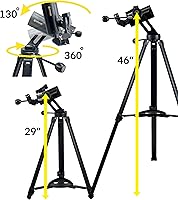
  • Mount Type: The telescope ships with an all-aluminum cast altazimuth single-arm mount featuring brass worm gears on both axes for smooth manual movement.
  • Tripod Material: The supporting tripod is constructed from aluminum, offering a balance of light weight and structural rigidity.
  • Tube Length: The optical tube measures 300mm in length, keeping the overall assembly compact and easy to transport.
  • Finderscope: A reflex-style finderscope (red-dot type) is included to help users quickly locate and center celestial targets.
  • Smartphone Adapter: An included smartphone adapter allows users to attach a phone to the eyepiece for afocal photography of the Moon and bright planets.
  • Barlow Lens: A 2x Barlow lens is included, effectively doubling the magnification of each eyepiece without any additional purchase.
  • Product Weight: The complete assembled unit weighs approximately 12 pounds, making it manageable for one person to carry and set up.
  • Assembled Dimensions: The assembled telescope measures approximately 40″ deep by 40″ wide by 48″ tall when the tripod is fully extended.
  • Power Source: The reflex finderscope requires one CR2032 coin cell battery, which is included in the box.
  • Warranty: Spectrum Optical Instruments provides a 3-year manufacturer warranty and California-based technical support for all purchasers.
  • Brand Origin: The telescope is designed and supported by Spectrum Optical Instruments, a California-based company.
  • Focus Type: Focusing is achieved manually via a focuser mechanism on the optical tube, with no motorized or electronic focusing system included.

Related Reviews
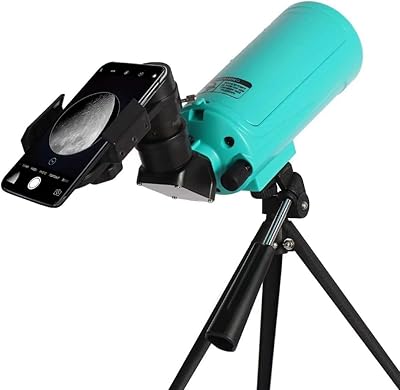
Sarblue Mak60 Maksutov-Cassegrain Telescope
78%
83%
Optical Clarity
93%
Portability & Compactness
81%
Planetary & Lunar Performance
74%
Build Quality & Durability
58%
Tabletop Tripod Stability
More
Sky-Watcher Skymax 180mm Maksutov-Cassegrain Telescope
84%
94%
Optical Performance
88%
Ease of Use
76%
Portability
91%
Build Quality
85%
Setup and Installation
More
Sky-Watcher S11550 190mm Maksutov-Newtonian Telescope
83%
94%
Optical Quality
86%
Ease of Use
91%
Build Quality
90%
Focusing Precision
60%
Portability
More
ALLDOCUBE iPlay 70 mini Pro 16GB + 256GB
83%
88%
Performance
84%
Battery Life
86%
Display Quality
91%
Storage Capacity
82%
Connectivity (Wi-Fi/4G/Bluetooth)
More
Celestron Travel Scope 70
79%
83%
Optical Clarity
91%
Portability & Weight
67%
Build Quality
93%
Ease of Setup
54%
Tripod Stability
More
Celestron AstroFi 102 Wi-Fi Maksutov Telescope
85%
88%
Ease of Setup
91%
Wi-Fi Control
85%
Image Clarity
90%
Portability
70%
Manual Focus Adjustment
More
Sky-Watcher Skymax 102mm Maksutov-Cassegrain Telescope
76%
93%
Optical Sharpness
88%
Build Quality
91%
Portability
82%
Value for Money
94%
Planetary Performance
More
Sky-Watcher Skymax 127mm Maksutov-Cassegrain Telescope
76%
93%
Optical Clarity
91%
Planetary Performance
84%
Build & Tube Quality
52%
Thermal Equilibration
82%
Portability
More
Sky-Watcher Skymax 150 Maksutov-Cassegrain Telescope
77%
93%
Optical Performance
88%
Build Quality
91%
Out-of-Box Collimation
79%
Value for Money
54%
Thermal Stabilization
More
HOROX RM 80mm Maksutov-Cassegrain Telescope
72%
83%
Optical Clarity
91%
Portability
74%
Build Quality
62%
Tripod Stability
78%
Ease of Setup
More

FAQ

Yes, this is honestly where the TourStar Pro 70 shines brightest. On a steady night, you can clearly make out Saturn's rings and Jupiter's main cloud bands without much effort. A couple of Jupiter's Galilean moons will also be visible as small pinpoints of light flanking the planet.

Most people can get it up and running within 20 to 30 minutes on their first attempt. Spectrum provides setup video guides, and the alt-az mount requires no alignment or polar-pointing procedure. The trickiest part for most beginners is learning to use the focuser smoothly at higher magnifications.

You can spot the brightest deep-sky objects, like the Orion Nebula or the Pleiades, but don't expect dramatic detail. A 70mm aperture limits how much light the scope collects, so faint galaxies and nebulae will appear as dim, featureless smudges rather than the colorful images you see in photographs. If deep-sky observing is your main goal, you would be better served by a larger-aperture reflector.

Technically achievable, but practically rarely useful. The Earth's atmosphere introduces turbulence that blurs fine detail at very high magnifications, so most experienced observers find that 100x to 150x produces the sharpest planetary views on an average night. Think of 375x as a ceiling you can reach on an exceptionally steady night, not a typical operating magnification.

It works with most current smartphones, but the alignment process takes some patience. It is best suited for Moon photography, where the target is bright and easy to center. For fainter planetary targets, slight vibrations from tapping the shutter can blur the image, so using a Bluetooth remote shutter or your phone's timer is a good workaround.

With adult supervision and guidance, yes. The controls are intuitive, and the views of the Moon are immediately rewarding for kids. That said, the fine focuser and alt-az slow-motion controls may frustrate very young children without a patient adult nearby to help. It is a much better fit for teens or curious kids aged 10 and up.

The brass worm gears on both axes make a noticeable difference in feel compared to the plastic friction mounts common on budget refractors. Movement is smoother and more controlled, which helps a lot when trying to track a planet as it drifts across the field of view. The tripod is aluminum and reasonably solid, though at very high magnifications you may still notice some vibration if you nudge the scope.

Most units arrive in collimation and are ready to use immediately. Maksutov-Cassegrain designs are generally more resistant to losing collimation than Newtonian reflectors because the optical elements are fixed inside a sealed tube. If you ever suspect something is off, Spectrum's support team can walk you through the process.

Yes, the alt-az mount and manageable focal length make it reasonably practical for terrestrial viewing. Keep in mind that the image through a Maksutov will appear inverted — upside down and flipped — which can make tracking moving subjects awkward. It works better as a stationary spotting tool than as a birding or wildlife scope.

The package includes the Maksutov optical tube, the aluminum alt-az tripod and mount, three eyepieces (4mm aspherical, 10mm, and 20mm), a 2x Barlow lens, a reflex finderscope with battery, a smartphone adapter, and documentation including access to setup video guides.