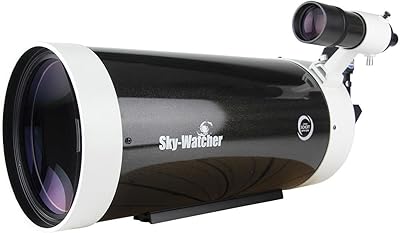
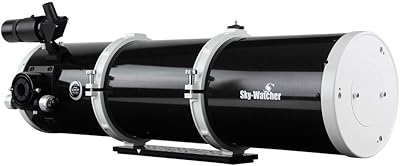
Overview

The Sky-Watcher Skymax 102mm Maksutov-Cassegrain Telescope sits at an interesting spot in the amateur astronomy market — serious enough to satisfy an intermediate observer, yet compact enough to carry in a backpack. The Maksutov-Cassegrain optical design has a well-earned reputation for delivering crisp planetary detail and razor-sharp lunar views, trading wide-field performance for contrast and magnification. It belongs to Sky-Watcher's Skymax family, which ranges from a 90mm entry model up to a 180mm flagship, so there is clear room to grow if you later want more aperture. One important note before purchase: this is an optical tube assembly only — a compatible mount is sold separately and should be factored into your budget.
Features & Benefits

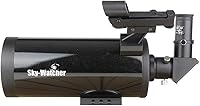
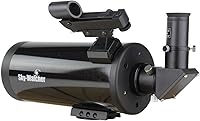
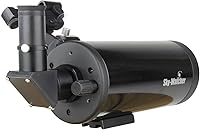
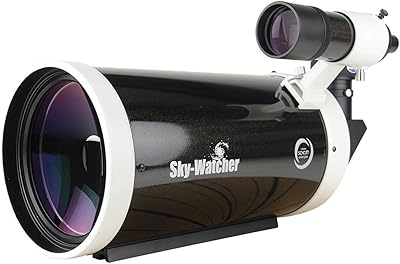
The optical heart of this Maksutov-Cassegrain is its matched primary and secondary mirror system paired with a coated corrector plate. Matched optics mean you are not fighting mismatches that rob contrast — the result is noticeably darker background skies and crisper edge definition, which matters most when splitting double stars or tracing Saturn's rings. The 94% reflectivity mirror coating, built on a borosilicate blank with an aluminum layer and quartz overcoat, keeps light loss to a minimum. A fully baffled tube further blocks stray light, a real advantage for suburban observers. At 12.25 inches long and under 5 pounds, the Skymax 102 pairs with virtually any Vixen-compatible mount and even standard photographic tripods via its 1/4-20 thread.

Best For

This compact optical tube is genuinely well-suited to a specific kind of observer. If you are stepping up from a department-store refractor and want your first real look at Jupiter's cloud bands or the craters of the Moon with actual sharpness, this is where the Skymax 102 earns its place. Urban and suburban astronomers benefit especially — the narrow field of view and high-contrast design naturally suppress the washed-out look that plagues wide-field scopes under light-polluted skies. It also travels well, making it a strong pick for anyone who observes from balconies or remote sites. Keep in mind: it is a dedicated planetary and lunar scope, not a deep-sky workhorse.

User Feedback

With a 4.5-star average across nearly 200 reviews, the Skymax 102 has built a solid reputation among hobbyist astronomers. Praise clusters around optical sharpness and the surprisingly solid build quality for the price point, with many owners highlighting how well it performs on the Moon and planets. The criticism that comes up most consistently is cool-down time — Maksutov designs need 30 to 60 minutes to thermally stabilize before views fully settle, which catches first-time owners off guard. The included eyepieces are considered functional but most reviewers treat them as a starting point only, suggesting an early upgrade to quality 1.25-inch oculars. Several buyers also noted they needed to invest in a better mount to unlock the tube's full potential.

Pros

  • Exceptionally sharp planetary and lunar views that clearly outperform typical beginner refractors in the same price range.
  • The high-contrast Maksutov-Cassegrain design produces noticeably dark background skies, making detail pop even from light-polluted suburbs.
  • At just over 12 inches long and under 5 pounds, the Skymax 102 is genuinely portable and easy to store between sessions.
  • Vixen-style dovetail plus a standard 1/4-20 tripod thread means it pairs with a wide range of existing mounts and photographic tripods.
  • Borosilicate mirrors with a 94% reflectivity coating transmit light efficiently, keeping views bright without needing a large aperture.
  • The fully baffled tube design actively suppresses stray light, which is a real advantage during suburban or urban observing sessions.
  • Comes with a padded carry bag, star diagonal, red-dot finder, and two eyepieces — enough to get started on the first night.
  • Build quality is consistently praised by owners as solid and well-finished for a mid-range optical tube.
  • Collimation is essentially maintenance-free in normal use, which is a significant convenience advantage over open-truss Newtonians.
  • Fits naturally into the Skymax lineup, making it easy to upgrade to a larger aperture model later without changing your mount.

Cons

  • Requires a separate mount purchase, which adds meaningful cost that first-time buyers can easily underestimate.
  • Needs 30 to 60 minutes of thermal cool-down before views fully stabilize — a real patience test on cold or unpredictable nights.
  • The narrow true field of view makes it poorly suited to wide-field targets like large nebulae, open clusters, or the Milky Way.
  • Included eyepieces are functional but modest; most serious observers will want to budget for better 1.25-inch oculars fairly quickly.
  • At f/12.7, finding and tracking targets manually can be fiddly without a driven mount, especially at higher magnifications.
  • The long focal length limits how far you can push low-power, wide-angle viewing even with a premium wide-field eyepiece.
  • No motor drive or tracking is included, so extended planetary observation requires frequent manual nudging to keep objects centered.
  • Casual or occasional observers may find the cool-down requirement and mount dependency more overhead than they want to manage.

Ratings

The Sky-Watcher Skymax 102mm Maksutov-Cassegrain Telescope earns a strong overall standing across hundreds of verified global reviews, and the scores below reflect an AI-assisted analysis that filtered out incentivized, duplicate, and bot-generated feedback to surface what real observers actually experience. Strengths in optical performance and portability come through clearly, but genuine pain points around accessories, mount requirements, and thermal behavior are represented just as transparently.
Optical Sharpness
93%
Owners consistently single out planetary contrast as the Skymax 102's defining strength. On steady nights, Saturn's Cassini Division is cleanly resolved and Jupiter's equatorial belts show genuine texture — results that genuinely surprise observers upgrading from entry-level refractors.
A small number of reviewers noted that achieving peak sharpness depends heavily on atmospheric seeing conditions and full thermal cool-down, meaning the best views are not always available on demand. Impatient observers can be disappointed on turbulent or humid nights.
Build Quality
88%
The tube feels solid and well-finished for a mid-range optical instrument. Owners appreciate the tight tolerances around the focuser and corrector plate housing, and several noted it held up well through repeated transport without any misalignment.
A few buyers flagged that the focuser drawtube lacks the smoothness of more expensive units, and the plastic components on the finder bracket feel noticeably cheaper than the rest of the build. It does not feel fragile, but it does not feel premium either.
Portability
91%
At under 5 pounds and barely a foot long, this compact optical tube genuinely fits in a backpack alongside a lightweight mount. Balcony astronomers and observers who travel frequently rate it among the most convenient 100mm-class scopes they have used.
Portability praise almost always comes with the caveat that a compatible mount adds bulk and weight. The tube itself is compact, but the total packaged setup is only as grab-and-go as the mount you pair it with, which varies widely among owners.
Value for Money
82%
18%
Buyers who already own a Vixen-compatible mount consistently rate value highly — the optical performance delivered at this price tier is difficult to match with other designs. The included accessories mean you can observe on the first night without any additional spending.
Buyers who did not budget for a separate mount often feel the effective total cost is higher than expected, which affects perceived value. A meaningful portion of disappointed reviews trace back to this setup cost rather than anything wrong with the optics themselves.
Planetary Performance
94%
For its intended purpose — the Moon, planets, and double stars — this Maksutov-Cassegrain punches well above what its aperture alone would suggest. The high focal ratio produces tight, high-contrast images that urban observers find particularly rewarding given the limited targets available from city skies.
The narrow true field of view means locating planets manually requires patience, especially without a motorized mount. At maximum magnification, even slight atmospheric turbulence becomes immediately visible, which can make those peak sessions feel fleeting and hard to replicate.
Deep-Sky Performance
41%
59%
Bright showpiece objects like the Orion Nebula and the Pleiades are visible and recognizable through the Skymax 102, giving occasional variety beyond planetary targets during observing sessions.
Extended deep-sky nebulae, faint galaxies, and large open clusters are genuinely poorly served by the narrow field and long focal ratio. Observers who prioritize this type of observing regularly report frustration, and most astronomy forums would redirect them toward a faster, wider-field instrument.
Thermal Cool-Down
53%
47%
Borosilicate glass in the primary mirror does reduce thermal expansion compared to standard glass, meaning the scope eventually settles into sharp focus reliably once equilibrated with the surrounding air temperature.
The enclosed Maksutov tube design traps warm air and takes 30 to 60 minutes — sometimes longer in cold weather — before views stop shimmering. This is the most frequently cited frustration in negative reviews, particularly among observers with limited time windows on school or work nights.
Included Accessories
67%
33%
The bundled package is genuinely functional for a first night out. The 90-degree star diagonal is comfortable for extended sessions, the red-dot finder is easy to align, and the padded carry bag protects the tube during transport without any extra investment.
The two included eyepieces are widely described as entry-level; the 10mm in particular shows noticeable edge softness at higher magnifications. Most owners plan an accessory upgrade within a few months, and the practical eyepiece budget should be factored into the total purchase decision.
Mount Compatibility
86%
The Vixen dovetail standard is genuinely ubiquitous, and the 1/4-20 tripod thread backup is a thoughtful addition that gives owners real flexibility. Most mid-range EQ and alt-azimuth mounts accept this tube without adapters.
The absence of any mount in the package still catches some buyers off guard despite product listings making it clear. On lighter alt-azimuth mounts, vibration at high magnification is a recurring complaint, and owners often find they need a more stable platform than expected.
Ease of Use
74%
26%
Once set up on a stable mount, the Skymax 102 is straightforward to operate. Manual focusing is smooth enough for casual use, and the lack of collimation requirements removes a major maintenance headache that plagues comparable Newtonian designs.
First-time telescope users may find the combination of long focal length, narrow field of view, and no tracking motor makes initial target acquisition genuinely frustrating. Without some basic familiarity with the night sky or a motorized mount, locating planets can feel more difficult than expected.
Astrophotography Suitability
69%
31%
Lunar and planetary imaging with a smartphone adapter or a basic planetary camera produces genuinely impressive results through this compact optical tube. The long focal length is an asset for this specific type of high-magnification imaging.
Long-exposure deep-sky imaging is largely impractical without a motorized tracking mount, and even with tracking, the focal ratio makes exposure times lengthy. Reviewers attempting serious astrophotography tend to view the tube as a stepping stone rather than an endpoint.
Collimation Stability
89%
The sealed Maksutov-Cassegrain design holds collimation well under normal transport and storage conditions. Owners who move their setup between locations regularly appreciate not having to re-align mirrors before every session.
While routine collimation is not required, a hard impact during transport can knock the optics out of alignment permanently in a way that is not user-serviceable without specialist tools. The sealed design is a double-edged trait in this respect.
Light Pollution Resistance
84%
The fully baffled tube and high-contrast optical design work together effectively under suburban and urban skies. Owners in light-polluted areas consistently report that the Skymax 102 outperforms wider-field scopes in their conditions by delivering darker background skies.
No telescope fully overcomes severe light pollution, and observers in city centers with heavily orange-tinted skies still find faint targets washed out. The narrow field advantage helps, but it does not compensate for genuinely poor sky transparency.
Focuser Quality
62%
38%
The rear-cell focuser achieves focus reliably across the included eyepieces and most standard 1.25-inch accessories, and it holds position without significant slippage under the weight of a diagonal and eyepiece.
The focuser mechanism lacks the fine-touch smoothness found on higher-end tubes, and several owners reported that precise focus at high magnification requires small, careful adjustments that can be fiddly. An aftermarket dual-speed focuser upgrade is commonly recommended in user forums.
Instruction Clarity
71%
29%
The included documentation covers the basics of assembly and initial alignment, which is sufficient for observers with some prior experience who just need to orient themselves to this specific tube.
Complete beginners often find the manual thin on practical observing guidance — particularly around thermal cool-down expectations and eyepiece selection. Several reviewers recommended supplementing with online community resources before the first session.

Suitable for:

The Sky-Watcher Skymax 102mm Maksutov-Cassegrain Telescope is a strong match for intermediate hobbyists who have outgrown their first scope and are ready for genuinely sharp views of the Moon, planets, and double stars. If you already own a Vixen-compatible equatorial or alt-azimuth mount — or even a sturdy photographic tripod — this optical tube slots right in without forcing you to replace your existing setup. Urban and suburban observers in particular will appreciate the high-contrast design, which punches well above its weight when skies are washed out by city glow. Its compact dimensions and sub-5-pound weight also make it an excellent grab-and-go option for balcony sessions, weekend trips, or anyone who simply does not want to haul a large instrument every time they observe. If your primary targets are Saturn's rings, Jupiter's moons, lunar craters, or tight double stars, this Maksutov-Cassegrain is genuinely hard to beat at its price point.
Not suitable for:

The Sky-Watcher Skymax 102mm Maksutov-Cassegrain Telescope is not the right tool for observers whose main interest lies in large, faint deep-sky objects like nebulae or galaxies. The long focal ratio and narrow true field of view that make it so sharp on planets work directly against wide-field, low-power sweeping of the night sky. Complete beginners should also go in with eyes open: this is an optical tube assembly only, and the cost of a quality mount is a real additional consideration that can significantly affect the total investment. The Maksutov design also requires a 30-to-60-minute cool-down period before the optics thermally stabilize, which can frustrate observers who want to step outside for a quick, spontaneous session. Finally, if you are hoping for an all-in-one kit with a motorized goto mount, this scope is not that — it is a specialist optical tube that rewards patient, focused observers rather than casual users expecting plug-and-play convenience.
Specifications

  • Optical Design: The Skymax 102 uses a Maksutov-Cassegrain configuration, combining a spherical primary mirror with a thick meniscus corrector lens for high-contrast, aberration-controlled views.
  • Aperture: The primary mirror measures 102mm in diameter, gathering enough light to resolve fine planetary detail and stars down to approximately magnitude 12.5.
  • Focal Length: The optical system delivers a 1300mm focal length, producing high magnification views well-suited to planetary and lunar observation.
  • Focal Ratio: At f/12.7, this is a slow optical system optimized for high-power, narrow-field targets rather than wide-field deep-sky sweeping.
  • Max Magnification: The practical upper magnification limit is 201x, achievable under steady atmospheric conditions with a quality short-focal-length eyepiece.
  • Mirror Coating: Primary and secondary mirrors use an aluminum coating with a quartz overcoat, rated at 94% reflectivity for efficient light transmission.
  • Mirror Material: The primary mirror is made from borosilicate glass, which offers better thermal stability than standard glass and reduces cool-down distortion.
  • Tube Length: The optical tube assembly measures 12.25 inches in length, making it one of the more compact 100mm-class telescope tubes available.
  • OTA Weight: The tube weighs 4.6 pounds, light enough for most mid-range alt-azimuth and equatorial mounts without requiring a heavy-duty counterweight.
  • Dovetail Mount: A Vixen-style dovetail bar is fitted as standard, and a 1/4-20 threaded socket underneath allows direct mounting to photographic tripods.
  • Included Eyepieces: Two 1.25-inch barrel eyepieces are included — a 25mm for lower-power orientation and a 10mm for closer planetary views.
  • Star Diagonal: A 90-degree star diagonal with a 1.25-inch barrel is included, making extended viewing sessions more comfortable at the eyepiece.
  • Finderscope: A red-dot reflex finder is included for quick target acquisition without requiring a magnified finder that would need separate alignment.
  • Carrying Case: A padded soft carry bag is included with the tube, offering basic protection during transport and storage.
  • Focus System: Focusing is achieved via a manual rear-cell focuser; there is no motorized or dual-speed focuser included in the standard package.
  • Tube Baffling: The interior of the tube is fully baffled to prevent stray light from reaching the eyepiece, which is particularly beneficial under light-polluted skies.
  • Limiting Magnitude: Under good conditions, the 102mm aperture is capable of reaching stars and objects down to approximately magnitude 12.5.
  • Mount Compatibility: The tube is sold without a mount and is compatible with any Vixen-style saddle plate system, including most EQ2-class and larger equatorial mounts.

Related Reviews

Sky-Watcher Skymax 127mm Maksutov-Cassegrain Telescope
76%
93%
Optical Clarity
91%
Planetary Performance
84%
Build & Tube Quality
52%
Thermal Equilibration
82%
Portability
More
Sky-Watcher Skymax 180mm Maksutov-Cassegrain Telescope
84%
94%
Optical Performance
88%
Ease of Use
76%
Portability
91%
Build Quality
85%
Setup and Installation
More
Sky-Watcher Skymax 150 Maksutov-Cassegrain Telescope
77%
93%
Optical Performance
88%
Build Quality
91%
Out-of-Box Collimation
79%
Value for Money
54%
Thermal Stabilization
More
Sky-Watcher S11550 190mm Maksutov-Newtonian Telescope
83%
94%
Optical Quality
86%
Ease of Use
91%
Build Quality
90%
Focusing Precision
60%
Portability
More
Sarblue Mak60 Maksutov-Cassegrain Telescope
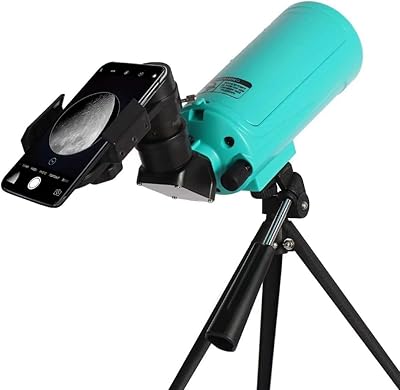
78%
83%
Optical Clarity
93%
Portability & Compactness
81%
Planetary & Lunar Performance
74%
Build Quality & Durability
58%
Tabletop Tripod Stability
More
Sky-Watcher Heritage 130mm Tabletop Dobsonian Telescope
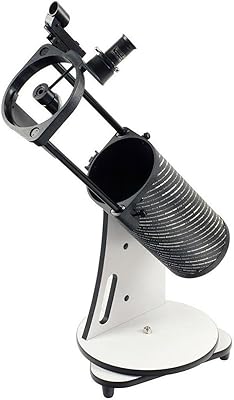
82%
88%
Optical Performance
91%
Value for Money
89%
Ease of Use
86%
Portability & Storage
79%
Build Quality
More
Sky-Watcher HEQ5 Computerized Equatorial Telescope Mount
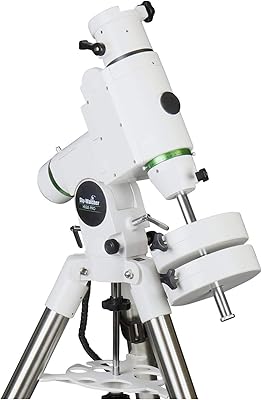
85%
94%
Tracking Precision
91%
Build Quality
87%
Ease of Setup
65%
Portability
89%
Payload Capacity
More
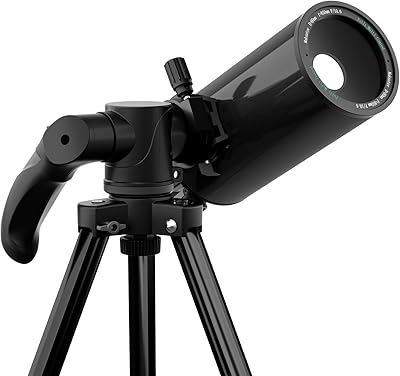
HOROX RM 80mm Maksutov-Cassegrain Telescope
72%
83%
Optical Clarity
91%
Portability
74%
Build Quality
62%
Tripod Stability
78%
Ease of Setup
More
Sky-Watcher EQ6-R German Equatorial Mount
76%
88%
Tracking Accuracy
84%
Build Quality
91%
Motor & Drive System
79%
GoTo Accuracy
62%
SynScan Hand Controller
More
Sky-Watcher Flextube 250 10-inch Dobsonian Telescope
70%
91%
Optical Performance
74%
GoTo Accuracy
77%
Portability & Transport
83%
Build Quality
66%
SynScan Software & Interface
More

FAQ

It comes as an optical tube assembly only — no mount is included. You will need to pair it with a compatible Vixen-style mount separately, which is an important cost to factor in before purchasing.

Maksutov-Cassegrain designs generally need 30 to 60 minutes to thermally equilibrate with the outdoor temperature before the views fully stabilize. On cold nights that window can stretch longer, so plan to set it up early and let it breathe before you start observing seriously.

It can show bright objects like the Orion Nebula or the Andromeda Galaxy, but it is genuinely not designed for that purpose. The long focal ratio and narrow field of view favor high-magnification planetary targets, and wide-field deep-sky observers will likely find it limiting.

The bundled 25mm and 10mm eyepieces are decent starters that will get you observing on night one, but most experienced users consider them a beginning point. A quality wide-field eyepiece and perhaps a mid-range planetary eyepiece would make a noticeable difference once you are comfortable with the scope.

Yes, there is a 1/4-20 threaded socket under the dovetail bar specifically for this purpose. That said, a lightweight or flimsy tripod will introduce vibration at higher magnifications, so a sturdy photographic tripod works much better than a basic consumer model.

One of the practical advantages of the Maksutov-Cassegrain design is that it holds collimation extremely well under normal use. Unlike a Newtonian reflector, you are unlikely to need any collimation adjustment unless the scope takes a hard knock during transport.

On the Moon you can resolve craters, mountain ranges, and fine surface texture in impressive detail. On Saturn, the ring system and Cassini Division are clearly visible on steady nights, and Jupiter's main cloud bands and the four Galilean moons are easy targets. Mars shows surface markings and polar caps during favorable oppositions.

It sits more comfortably in intermediate territory. A complete beginner can certainly learn on it, but the manual mount requirement, cool-down time, and narrower field of view add a small learning curve. If someone has never used a telescope before, they may find a simpler refractor on an alt-azimuth mount a more forgiving starting point.

At under 5 pounds and 12.25 inches long, the tube itself travels very easily and fits in the included padded bag. The real portability question is what mount you pair it with — a compact alt-azimuth mount turns it into a genuinely convenient grab-and-go setup.

Yes, lunar and planetary imaging is where this scope is most capable photographically. With a smartphone adapter or a dedicated planetary camera at the eyepiece, you can capture surprisingly detailed images of the Moon and bright planets. Long-exposure deep-sky imaging would require a motorized tracking mount and is beyond the natural scope of this tube.

Where to Buy