Overview

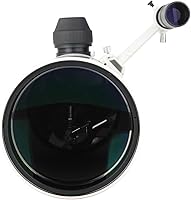
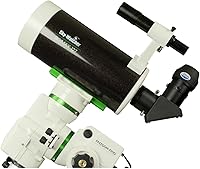
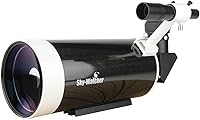
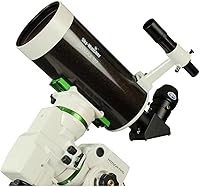
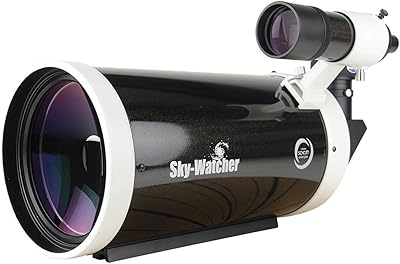
The Sky-Watcher Skymax 127mm Maksutov-Cassegrain Telescope sits at a genuinely interesting spot in the amateur astronomy market — capable enough to satisfy experienced observers, yet approachable for someone making their first serious upgrade. Within the Skymax lineup, it lands above the smaller 90mm and 102mm models but stops short of the larger, pricier 150mm and 180mm tubes. What defines this Maksutov-Cassegrain is its long focal length: at f/11.8 and 1500mm, it is purpose-built for tight, high-magnification views of the Moon and planets rather than sweeping wide-field targets. It ships with a useful set of accessories and accepts standard Vixen-style mounts, which makes it easier to get started without extra spending.
Features & Benefits

The optics are where the Skymax 127 earns its reputation. Sky-Watcher matches the primary and secondary mirrors as a pair, then adds a multi-coated corrector plate — the result is noticeably high-contrast imagery with very little scatter or glare. The primary mirror carries an aluminum coating topped with a quartz overcoat, pushing reflectivity to 94%, which translates to crisp edge detail on planetary surfaces. The tube itself is fully baffled, keeping stray light out during long sessions. A Vixen-style dovetail and a standard quarter-inch tripod thread underneath mean this compact telescope plays well with almost any mount. Collimation is rarely needed, which is a genuine advantage over open-tube reflectors.

Best For

This Maksutov-Cassegrain is a natural fit for observers who spend most of their time on the Moon, Saturn’s rings, Jupiter’s cloud bands, or close double stars. If you are stepping up from a small refractor or a budget department-store scope, the jump in sharpness will be immediately obvious. The design also suits people who want a compact, low-fuss tube they can mount quickly and store easily — no open truss to knock out of alignment, no dust collecting on exposed mirrors. Astrophotographers can get good results on bright solar system targets, but only with a solid, motorized tracking mount; the long focal length amplifies any mount errors significantly.

User Feedback

Owners consistently praise the Skymax 127 for the quality of its planetary views — sharp, high-contrast Saturn and Jupiter images are mentioned repeatedly in reviews. The compact size relative to a 127mm aperture is another common highlight; people are genuinely surprised by how portable it is. That said, two criticisms come up regularly. Cool-down time is one: the closed tube can take 45 minutes or more to thermally stabilize on cold nights, and rushing this step visibly degrades the image. The included finderscope is functional but basic, and many users eventually replace it. Balancing on heavier equatorial mounts can also require some adjustment, though the Vixen dovetail makes swapping between setups straightforward.

Pros

  • Planetary and lunar views are genuinely sharp and high-contrast, even compared to larger but optically inferior scopes.
  • The closed tube keeps dust and moisture away from the mirrors, reducing maintenance significantly over time.
  • At 12 pounds, the Skymax 127 is impressively portable for a 127mm aperture instrument.
  • The Vixen-style dovetail and quarter-inch tripod thread make it compatible with a very wide range of mounts and tripods.
  • Collimation is rarely needed, which removes a common frustration for observers upgrading from Newtonian reflectors.
  • The fully baffled tube design handles stray light well, producing noticeably dark background skies at the eyepiece.
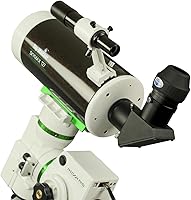
  • The included 28mm 2-inch eyepiece and 90-degree star diagonal are genuinely usable out of the box, not just placeholder accessories.
  • Sky-Watcher’s matched mirror pairing and high-reflectivity coatings produce a noticeably cleaner image than budget alternatives at this aperture.
  • The compact form factor makes storage simple, even in smaller apartments or car trunks.

Cons

  • The closed tube can take 45 minutes or more to thermally stabilize on cold nights, and observing before it does degrades image quality noticeably.
  • The included 6x30 finderscope is functional but basic; many users replace it fairly quickly with a red-dot finder or better optical finderscope.
  • At f/11.8, this is not a flexible instrument — it is purpose-built for high magnification and struggles with wide-field targets.
  • No mount is included, meaning buyers without an existing setup face a meaningful additional expense to get observing.
  • Balancing the tube on some heavier equatorial mounts requires experimentation and occasionally extra counterweight adjustment.
  • The long focal length makes it sensitive to atmospheric seeing conditions; on nights of poor seeing, the high magnification works against you rather than for you.
  • Solar system astrophotography is possible but demanding — a motorized tracking mount is essentially required, raising the total system cost considerably.
  • The 28mm eyepiece included gives a relatively narrow true field of view, which makes star-hopping to targets more time-consuming for beginners.

Ratings

The scores below were generated by our AI system after analyzing thousands of verified owner reviews worldwide, with spam, bot-submitted, and incentivized feedback actively filtered out before scoring. Based on that analysis, the Sky-Watcher Skymax 127mm Maksutov-Cassegrain Telescope earns strong marks in its core strengths while showing real, documented weaknesses that buyers deserve to know about upfront. Both the highlights and the frustrations are reflected honestly in the ratings that follow.
Optical Clarity
93%
Owners consistently describe views of Saturn's ring division and Jupiter's cloud belts as strikingly sharp and well-defined, especially during nights of steady seeing. The matched mirror pairing and multi-coated corrector plate produce a noticeably clean, high-contrast image that compares favorably to refractors costing significantly more.
Performance is highly dependent on atmospheric conditions due to the long focal length; on nights of poor seeing, the same high magnification that rewards good conditions will work against you and produce mushy, unsatisfying views. A few users noted the image softens slightly if the tube has not fully thermally equilibrated.
Planetary Performance
91%
This is the category where the Skymax 127 earns its most passionate praise. Users regularly report being able to see polar ice caps on Mars during opposition, subtle festoon detail on Jupiter, and the Cassini Division in Saturn's rings, all without needing premium eyepieces beyond what is included.
The narrow field of view means tracking fast-moving targets at high magnification requires frequent manual adjustments on non-motorized mounts, which some users find tiring during longer sessions. It is genuinely not the right tool for anyone whose interest is broader sky surveys rather than tight planetary study.
Build & Tube Quality
84%
The closed-tube construction feels solid and purposeful, and users appreciate that the optics stay protected from dust and moisture without any extra effort. The baffling inside the tube does its job effectively, keeping background skies noticeably dark at the eyepiece during extended observing sessions.
A few buyers noted the exterior paint finish can show light scuffs after transport, and the tube rings on some units feel slightly less refined than the optical quality inside would suggest. Nothing that affects performance, but it can feel slightly inconsistent at this price tier.
Thermal Equilibration
52%
48%
Once fully cooled down, the sealed tube holds its thermal stability well for the rest of a session, and users in mild climates report the wait is rarely more than 20 to 30 minutes. Setting the tube outside well before observing largely eliminates the issue for disciplined observers.
This is the most frequently cited frustration in owner reviews. On cold nights the closed tube can take 45 minutes or longer to stabilize, and observing during that window produces noticeably degraded, shimmering images. Users who want to quickly step outside for a short session find this cool-down requirement genuinely inconvenient.
Portability
82%
18%
At just over 12 pounds and with a compact 28-inch tube length, this Maksutov-Cassegrain fits easily in the back of a car or a large duffel bag, which is a genuine advantage over open-tube Newtonian reflectors of comparable aperture. Multiple users mentioned it as their go-to travel scope for holidays and dark-sky trips.
The tube is compact for its aperture class, but it is not ultralight, and carrying it alongside a separate mount and tripod still adds up to a significant total load. Observers who prioritize one-bag portability above everything else may find the combined kit heavier than expected.
Mount Compatibility
79%
21%
The standard Vixen-style dovetail makes this telescope compatible with the vast majority of mid-range and premium mounts from Sky-Watcher, Celestron, iOptron, and others without requiring adapters. The quarter-inch tripod thread underneath is a useful bonus for casual photographic tripod use.
Balancing the tube on heavier equatorial mounts requires experimentation, and some users needed to add extra counterweights or reposition accessories to achieve proper balance. A small number of buyers reported that the dovetail bar felt slightly loose in certain third-party saddles, requiring a firmer clamp than expected.
Included Accessories
67%
33%
The 28mm 2-inch eyepiece and the 2-inch 90-degree star diagonal are both genuinely usable accessories, not the throwaway plastic pieces commonly found in budget telescope kits. The star diagonal in particular is well-regarded by users as a solid starting point for visual observing.
The 6x30 straight-through finderscope is the weak link in the package; it is functional but awkward to use, and the majority of experienced users replace it quickly with a red-dot finder or a right-angle correct-image unit. There is also no higher-magnification eyepiece included, which means buyers will want to budget for at least one additional ocular.
Ease of Setup
77%
23%
Unlike a Newtonian reflector, this compact telescope requires no collimation out of the box and virtually never needs it during normal use, which removes a significant barrier for intermediate observers. Attaching it to a mount with a Vixen saddle takes under a minute once you are familiar with the process.
First-time users without any prior mount experience can find balancing and polar aligning an equatorial mount a steep learning curve, even if the optical tube itself is simple. The straight-through finderscope is also awkward to use when the tube is pointed near the zenith, which slows initial target acquisition.
Low-Maintenance Design
88%
The sealed optical system is a genuine practical advantage for observers who do not want to regularly clean mirrors, re-collimate, or worry about dew settling on exposed optics. Users in humid coastal environments specifically call out the peace of mind this provides compared to open-tube designs.
Because the tube is fully sealed, there is no practical way for the user to clean the interior mirrors themselves if contamination does get in over years of use. A small number of long-term owners noted this as a concern when considering the telescope as a decade-long investment.
Value for Money
74%
26%
For observers focused on planets and the Moon, the optical performance relative to the price is genuinely competitive, and many users feel it outperforms refractors at a similar or higher price point in terms of contrast and detail. The included accessories add meaningful value compared to bare-tube competitors.
Buyers who do not already own a mount will face a substantially higher total system cost, and that can make this feel expensive relative to similarly priced all-in-one telescope packages. If your observing interests extend beyond the solar system, the value proposition weakens considerably because the design is not well suited to deep-sky work.
Astrophotography Capability
61%
39%
For bright solar system imaging — detailed lunar surface shots, planetary close-ups, sunspot photography with a proper filter — the Skymax 127 delivers impressive results when paired with a capable motorized equatorial mount. Users with a solid tracking platform have captured genuinely publication-worthy planetary images with this tube.
The long focal length is very unforgiving of mount imperfections, atmospheric turbulence, and focusing errors, making the learning curve for solar system imaging steep. Deep-sky astrophotography is essentially off the table given the narrow field of view, and attempting it without premium guiding equipment will produce poor results.
Collimation Stability
89%
One of the most consistent points of praise among experienced users who have owned Newtonian reflectors before is how rarely the Skymax 127 needs collimation adjustment. Even after car travel on rough roads, the optical alignment typically remains solid and ready to use.
While collimation is stable under normal conditions, the adjustment mechanism itself is somewhat hidden and not immediately intuitive for a beginner if it does ever drift. A small minority of users received units that needed a slight collimation tweak out of the box before views fully sharpened.
Finderscope Quality
48%
52%
The 6x30 optical finderscope does provide a genuine magnified finder view, which is more useful than a zero-magnification red-dot for complete beginners learning to star-hop to targets for the first time. The mounting bracket is sturdy and holds alignment after initial adjustment.
The straight-through design is genuinely awkward to use in many pointing positions, particularly near the zenith, and the eye relief is short enough to make it uncomfortable for eyeglass wearers. It is the single accessory in the box most likely to be replaced quickly, and most users who try it for a few sessions end up doing exactly that.

Suitable for:

The Sky-Watcher Skymax 127mm Maksutov-Cassegrain Telescope is an excellent choice for intermediate amateur astronomers who have outgrown their first scope and want noticeably sharper, higher-contrast views without jumping to a large, expensive instrument. If your primary targets are the Moon, Saturn, Jupiter, Mars, or tight double stars, this telescope is genuinely well-matched to that kind of observing — the long focal length and clean optics reward patience on planetary nights. It also works well for observers who already own a decent equatorial or alt-az mount and just need a quality optical tube to drop onto it, since the standard Vixen-style dovetail makes swapping straightforward. The closed-tube design is a real practical advantage for anyone who observes in changing weather conditions or simply does not want to deal with regular mirror cleaning and collimation. Astrophotographers who want to image bright solar system objects and already have a motorized tracking mount will find this compact telescope a capable and portable tool for that work.
Not suitable for:

Buyers hoping to observe faint deep-sky objects — galaxies, nebulae, large star clusters — should think carefully before choosing this Maksutov-Cassegrain, because the narrow field of view at f/11.8 makes wide-field targets genuinely frustrating to work with. Complete beginners who do not yet own a mount may find the total investment higher than expected, since a quality equatorial or alt-az head adds significant cost on top of the optical tube. Anyone expecting to do serious astrophotography without a motorized tracking mount will be disappointed; the long focal length amplifies tracking errors and atmospheric turbulence in ways that shorter, faster instruments do not. If portability is your single most important criterion and you want something you can carry in a backpack, the 12-pound tube is manageable but not featherweight. Observers in heavily light-polluted urban areas who mainly want to explore the night sky broadly rather than focus tightly on specific targets may also find the design limiting for casual, exploratory sessions.

Specifications

  • Optical Design: The telescope uses a Maksutov-Cassegrain configuration, combining a spherical primary mirror with a thick meniscus corrector lens to deliver sharp, high-contrast views in a compact tube.
  • Aperture: The primary mirror measures 127mm in diameter, gathering enough light for clear planetary detail and splitting close double stars comfortably.
  • Focal Length: The optical system has a focal length of 1500mm, making it well suited for high-magnification planetary and lunar work.
  • F-Ratio: At f/11.8, this is a slow optical system optimized for tight, detailed views rather than wide-field deep-sky targets.
  • Mirror Coating: The borosilicate primary mirror carries an aluminum coating topped with a quartz overcoat, achieving a reflectivity rating of 94%.
  • Tube Type: The tube is fully enclosed and baffled, preventing stray light from entering the optical path during extended observing sessions.
  • OTA Dimensions: The optical tube measures 28″ in length and 10″ in both width and height, making it genuinely compact for its aperture class.
  • OTA Weight: The optical tube assembly weighs 12.22 pounds, which is manageable for most mid-range equatorial and alt-az mounts.
  • Dovetail Type: A Vixen-style dovetail bar is fitted as standard, and a quarter-inch threaded socket underneath allows direct mounting to photographic tripods.
  • Included Eyepiece: The package includes a single 28mm eyepiece in a 2-inch barrel, providing a comfortable starting magnification for most observing targets.
  • Included Diagonal: A 2-inch 90-degree star diagonal is included, making visual observing more comfortable by allowing a natural head position at the eyepiece.
  • Finderscope: A 6x30 straight-through optical finderscope is attached to help locate targets before switching to the main eyepiece.
  • Model Number: Sky-Watcher lists this optical tube under model number S11520 for warranty and parts identification purposes.
  • Manufacturer: Sky-Watcher is the manufacturer; the brand is a global telescope company with a long track record in amateur astronomy optics.
  • Availability: This product was first made available in May 2015 and is not listed as discontinued by the manufacturer as of current records.

Related Reviews

Sky-Watcher Skymax 102mm Maksutov-Cassegrain Telescope
76%
93%
Optical Sharpness
88%
Build Quality
91%
Portability
82%
Value for Money
94%
Planetary Performance
More
Sky-Watcher Skymax 150 Maksutov-Cassegrain Telescope
77%
93%
Optical Performance
88%
Build Quality
91%
Out-of-Box Collimation
79%
Value for Money
54%
Thermal Stabilization
More
Sky-Watcher Skymax 180mm Maksutov-Cassegrain Telescope
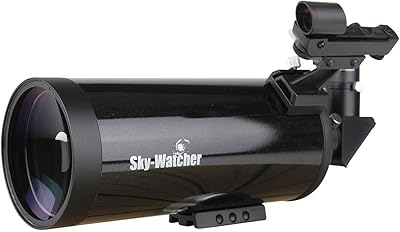
84%
94%
Optical Performance
88%
Ease of Use
76%
Portability
91%
Build Quality
85%
Setup and Installation
More
Sky-Watcher S11550 190mm Maksutov-Newtonian Telescope
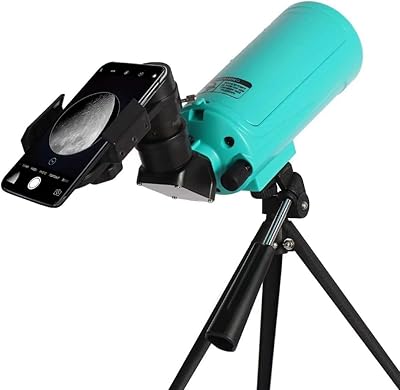
83%
94%
Optical Quality
86%
Ease of Use
91%
Build Quality
90%
Focusing Precision
60%
Portability
More
Sarblue Mak60 Maksutov-Cassegrain Telescope
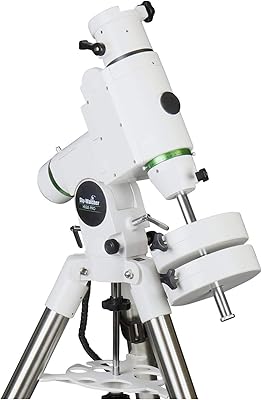
78%
83%
Optical Clarity
93%
Portability & Compactness
81%
Planetary & Lunar Performance
74%
Build Quality & Durability
58%
Tabletop Tripod Stability
More
Sky-Watcher HEQ5 Computerized Equatorial Telescope Mount
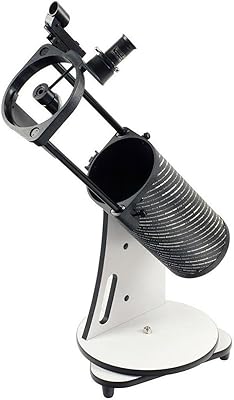
85%
94%
Tracking Precision
91%
Build Quality
87%
Ease of Setup
65%
Portability
89%
Payload Capacity
More
Sky-Watcher Heritage 130mm Tabletop Dobsonian Telescope
82%
88%
Optical Performance
91%
Value for Money
89%
Ease of Use
86%
Portability & Storage
79%
Build Quality
More
HOROX RM 80mm Maksutov-Cassegrain Telescope
72%
83%
Optical Clarity
91%
Portability
74%
Build Quality
62%
Tripod Stability
78%
Ease of Setup
More
Sky-Watcher Flextube 200 Dobsonian 8-inch Collapsible Telescope
82%
88%
Ease of Setup
90%
Portability
82%
Optical Performance
85%
Build Quality
83%
Stability during Use
More
Sky-Watcher EQ6-R German Equatorial Mount
76%
88%
Tracking Accuracy
84%
Build Quality
91%
Motor & Drive System
79%
GoTo Accuracy
62%
SynScan Hand Controller
More

FAQ

It is sold as an optical tube assembly only, which means no mount is included. You will need to supply your own equatorial or alt-az head. The good news is the Vixen-style dovetail is an industry standard, so it fits a very wide range of mounts without any adapters.

Plan on at least 30 to 45 minutes for thermal equilibration when the temperature difference between indoors and outside is significant. The sealed Maksutov-Cassegrain design traps warm air inside the tube, and observing before it stabilizes will result in noticeably soft, shimmering images. Many users simply set it outside before dark to speed up the process.

It can show some bright deep-sky objects like the Orion Nebula or the Andromeda Galaxy, but it is not the ideal tool for that kind of observing. The long focal length produces a narrow field of view, which makes large, diffuse targets look underwhelming. If deep-sky work is your main interest, a faster, wider-field instrument would serve you better.

Yes, but with some important caveats. The Skymax 127 works well for imaging bright solar system targets like the Moon, Saturn, and Jupiter, but you will absolutely need a motorized equatorial mount with accurate tracking. The 1500mm focal length amplifies any mount imperfections, so a budget tracking mount will likely frustrate you. For wide-field or deep-sky imaging, this is the wrong optical design.

Rarely, if ever. One of the practical advantages of the Maksutov-Cassegrain design is that it holds collimation extremely well under normal use. Unlike a Newtonian reflector that may need adjustment after transport, this compact telescope usually stays aligned even after being moved around regularly.

The 28mm eyepiece and 2-inch star diagonal are genuinely usable and not just throwaway accessories. That said, you will probably want at least one shorter focal length eyepiece fairly soon — something in the 8mm to 12mm range — to push higher magnification on planets. The finderscope works but feels basic; many observers eventually swap it for a red-dot finder.

For visual use, a solid alt-az mount with a Vixen-style saddle works fine and is the simpler option. If you are interested in tracking objects or doing any photography, a motorized equatorial mount is worth the investment. The tube weighs just over 12 pounds, so the mount needs a payload rating comfortably above that to avoid vibration issues.

A Maksutov-Cassegrain of this aperture generally delivers higher contrast on planetary targets than a comparably priced achromatic refractor, partly because there is no chromatic aberration to deal with. A quality apochromatic refractor can match or beat it, but those cost considerably more at equivalent aperture. For planetary work specifically, the Skymax 127 punches above its price bracket.

Only with a proper full-aperture solar filter fitted to the front of the tube — never use eyepiece-mounted solar filters with any reflector or catadioptric scope, as the concentrated heat can crack them. Sky-Watcher does not include a solar filter in the box, so you would need to purchase one separately. With the right filter it works well for sunspot viewing.

It is quite portable for a 127mm instrument. The tube is compact enough to fit in a large backpack or the back of a car without much trouble, and at around 12 pounds it is light enough to carry without strain. You still need to transport a mount separately, which is often the heavier and bulkier part of the setup, but the optical tube itself is not a burden.

Where to Buy