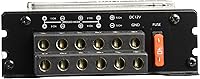
Overview

The Soundstream PN5.640D 5-Channel Car Amplifier is Soundstream's answer to a question a lot of builders ask: why run two amps when one can handle the whole system? Part of the Picasso Nano line, it fits into a surprisingly compact chassis — 4.75″ wide and just over 10″ long — making it a natural candidate for under-seat installs or tight trunk corners. At its price point, it sits squarely in value-oriented territory without feeling cheap. A dash-mount bass knob comes included, which is a small but appreciated touch for daily drivers who want quick control without fishing behind panels every time.

Features & Benefits

Class D design is the real practical win here. Unlike older A/B amplifiers that shed a significant portion of power as heat, Class D efficiency means the Picasso Nano amplifier runs noticeably cooler and draws less from your electrical system. Power output is flexible: at 4 ohms you get 60 watts across four channels plus 200 watts on the sub channel; drop to 2-ohm loads and the four channels climb to 80 watts each, with 350 watts available for bass. You can also bridge the stereo pairs to 160 watts each if your setup calls for it. The 9–16V operating range covers virtually any standard vehicle.

Best For

This compact multichannel amp is a strong fit for anyone building out a complete system — front stage, rear fill, and subwoofer — without the wiring complexity of running two separate units. It's especially well-suited to space-limited installs: the slim profile slides under most bench seats or sits flush against a trunk wall without eating into cargo room. Budget-conscious enthusiasts who want genuine Class D performance will find a lot to like here. If you already have a processor managing bass EQ, the included knob is a bonus; if not, it fills that role simply and effectively without requiring additional hardware.

User Feedback

Buyers tend to highlight two things immediately: how straightforward the install is and how little space the unit actually takes up. The remote bass knob earns consistently positive mentions for real-world daily usability. Where opinions diverge is on sustained high-volume use — a portion of users report the unit running noticeably warm during extended sessions, worth considering if you plan to push it hard on long drives. Ratings on power accuracy are mixed; some feel the figures hold up, others find them slightly optimistic at lower impedance loads. Long-term reliability appears reasonable in most accounts, though occasional noise floor concerns surface among users with more resolving source equipment.

Pros

  • Fits under most rear bench seats, freeing up trunk space entirely for daily use.
  • Replaces two separate amplifiers with one clean, consolidated install.
  • Class D efficiency means the Picasso Nano amplifier runs cooler and draws less from your electrical system.
  • Included remote bass knob works well in real-world daily driving without any extra hardware needed.
  • Flexible power configurations — 4-ohm, 2-ohm, and bridged — suit a variety of speaker setups.
  • Straightforward terminal layout and logical wiring make installation accessible for intermediate builders.
  • 9–16V operating range covers virtually any standard 12V vehicle without compatibility concerns.
  • At moderate listening levels, sound quality across the four full-range channels is clean and noticeably better than factory power.
  • Strong value proposition for anyone consolidating a full 5-channel system on a realistic budget.

Cons

  • Thermal protection can trigger during extended high-volume sessions, cutting playback mid-drive.
  • Sub channel output may underdeliver on demanding woofers when real-world RMS is compared against advertised figures.
  • The included manual is too basic to guide less experienced installers through proper gain staging.
  • Noise floor on the sub channel becomes noticeable at higher gain settings, especially with sensitive equipment.
  • Remote bass knob cable length may be insufficient for certain vehicle dash routing distances.
  • Long-term reliability reports become more variable among users who consistently push the amp near its limits.
  • Build materials feel modest compared to competitors in higher price brackets, particularly the end caps.
  • No center detent on the bass knob makes it difficult to return to a neutral position by feel alone.
  • Tight or unventilated mounting locations accelerate heat buildup, narrowing the range of safe install spots.

Ratings

The Soundstream PN5.640D 5-Channel Car Amplifier was evaluated by our AI system after processing verified buyer reviews from multiple global markets, with spam, bot-generated, and incentivized submissions actively filtered out before scoring. The result is a balanced picture that captures what real installers and daily drivers genuinely experienced — including the strengths that make this amp a popular compact choice and the friction points that kept some buyers from being fully satisfied.

Ease of Installation
88%
A recurring theme across buyer feedback is how straightforward the wiring process is, even for first-time installers. The terminal layout is logical, labeling is clear, and the compact chassis means fewer contortions when mounting under a seat or in a small trunk corner.
A handful of users noted the included hardware and manual leave some gaps for less experienced builders, particularly around gain-setting guidance. Without a proper understanding of input sensitivity, new installers risk misconfiguring the amp from day one.
Compact Form Factor
91%
The slim profile is genuinely one of the most praised aspects of the Picasso Nano amplifier. Buyers consistently report successfully fitting it under rear bench seats in sedans and crossovers where full-size amps simply would not go, freeing up trunk space entirely.
The compact chassis does limit thermal mass, which becomes relevant when the amp is enclosed in tight spaces with poor airflow. A small number of users found the mounting footprint awkward in certain vehicle-specific locations where the screw positions conflicted with existing structure.
Thermal Management
61%
39%
Under normal listening conditions — moderate volume, mixed urban and highway driving — most buyers report the unit staying reasonably cool. Class D efficiency does provide a meaningful advantage over older A/B designs in everyday use scenarios.
Sustained high-volume listening, especially in hot climates or enclosed mounting locations, draws consistent complaints about the unit running hot. A portion of reviewers noted thermal protection triggering during longer drives, which interrupts playback and points to real limits in the cooling design.
Power Output Accuracy
67%
33%
At 4-ohm loads with moderate gain settings, a good number of buyers feel the amp delivers respectable output that holds up in practice. For full-range channels driving efficient speakers, the rated figures feel close enough to be usable as a planning baseline.
The sub channel output draws the most skepticism — users running demanding woofers at 2 ohms sometimes feel the amp undershoots the advertised headroom. Multichannel amp specs are notoriously easy to misread, and this unit is no exception when peak figures are confused with continuous RMS delivery.
Sound Quality
74%
26%
For the price tier, this compact multichannel amp produces clean, pleasant audio across the four full-range channels. Buyers upgrading from factory head unit speaker outputs consistently notice a clear improvement in dynamics and detail, particularly in the midrange.
Audiophile-leaning users with higher-resolution source material occasionally flag a modest noise floor, especially on the sub channel at higher gain settings. It is not a dealbreaker for most, but buyers pairing this with sensitive tweeters or high-efficiency components may notice a faint hiss at idle.
Remote Bass Knob
83%
The included dash-mount bass control is well-received by daily drivers who want quick, tactile adjustment without pulling over or diving into head unit menus. The knob feels solid and the range of adjustment covers typical bass preferences without being too coarse or too sensitive.
Some users report the knob's cable being slightly short depending on routing distance from the amp to the dash, requiring extension in certain vehicles. A small group also noted the knob lacks center detent feedback, making it harder to reliably return to a neutral position by feel.
Value for Money
86%
Replacing two separate amplifiers with a single unit saves real money and installation time, and at this price point that consolidation feels genuinely worthwhile. Buyers consistently frame this as one of the better-value 5-channel options available in its tier.
Buyers who push the amp hard and encounter thermal throttling start questioning whether the value proposition holds long-term. If the amp requires careful volume management to stay stable, some feel they are paying for headroom they cannot reliably access.
Build Quality
69%
31%
The chassis feels sturdy enough for vehicle use, and the heatsink construction is adequate for casual listening loads. Terminal connections are acceptably tight and the overall fit of the unit inspires reasonable confidence during installation.
Compared to amplifiers from more premium brands at a higher price point, the Picasso Nano amplifier shows some compromise in materials — particularly the end caps and terminal covers. A minority of buyers noted cosmetic inconsistencies out of the box, though functional issues were less commonly reported.
Channel Flexibility
78%
22%
The ability to bridge stereo pairs or run all five channels independently gives installers genuine configuration options. Users doing staged builds appreciate being able to start with a basic 4-plus-sub setup and reconfigure later without buying new hardware.
Bridging instructions in the manual are somewhat terse, and users unfamiliar with bridged operation occasionally misconfigure the amp. The power gains from bridging are also limited by the thermal ceiling, which means the flexibility is more useful in theory than at full tilt in practice.
Electrical Compatibility
84%
The 9–16V operating window covers virtually every standard 12V vehicle system without issue. Buyers with upgraded alternators or slightly elevated charging voltages report no compatibility problems, which gives the unit broad real-world applicability.
Users with older vehicles running slightly lower sustained voltage — particularly those with aging batteries or high accessory loads — occasionally report behavior changes under heavy draw. It is an edge case, but worth noting for anyone with a marginal electrical system.
Long-Term Reliability
63%
37%
A meaningful portion of buyers who use this 5-channel amp at moderate output levels over extended periods report consistent, trouble-free performance. For everyday commuters who are not pushing limits, the unit holds up reasonably well across months of use.
Long-term reliability feedback is more variable than initial impressions suggest. Users who regularly listen at high volumes report a higher rate of issues over time, and a subset of reviewers mention failures occurring after several months — enough to introduce some uncertainty about multi-year durability.
Signal-to-Noise Ratio
66%
34%
In typical listening environments with a clean RCA signal from a modern head unit, background noise stays below the threshold of distraction for most buyers. At conservative gain settings the amp is quiet enough to satisfy casual listeners and daily commuters.
Users feeding the amp from lower-quality source units or running long RCA cable runs report picking up interference. The sub channel is particularly sensitive to noise at higher gain settings, and buyers with high-efficiency speakers sometimes encounter audible hiss that requires careful gain staging to minimize.
Package Contents
71%
29%
The inclusion of the remote bass knob in the retail package is a genuine add rather than an afterthought — it would cost extra with some competing units. Hardware for mounting is also included, which keeps the out-of-box experience reasonably complete for a straightforward install.
The manual is fairly basic and assumes a working knowledge of amplifier installation. Users hoping for detailed tuning guidance or crossover configuration examples will need to supplement with outside resources, which adds friction for less experienced builders.

Suitable for:

The Soundstream PN5.640D 5-Channel Car Amplifier is an excellent fit for builders who want to run a complete system — four full-range speakers plus a subwoofer — without the complexity and cost of wiring two separate amplifiers. It is particularly well-matched to drivers working with tight installation spaces, such as compact sedans, hatchbacks, or crossovers where under-seat mounting is the only realistic option. Enthusiasts on a practical budget who understand Class D efficiency and are not chasing extreme output levels will get strong value here. Daily commuters who want noticeably better sound than factory head unit power can deliver, with a dash-accessible bass knob for quick adjustments, will find the overall package genuinely convenient. It also suits staged builders who want a single-unit foundation they can tune and grow into over time without replacing core hardware.

Not suitable for:

The Soundstream PN5.640D 5-Channel Car Amplifier is not the right call for anyone who regularly listens at high volumes for extended periods, particularly in warm climates or enclosed mounting locations with poor airflow — thermal management is a real limitation that surfaces under sustained demand. Serious bass enthusiasts running power-hungry subwoofers at low impedance loads may find the sub channel output falls short of expectations in practice, especially if peak figures are being confused with continuous RMS delivery. Audiophiles pairing high-efficiency tweeters or premium component sets with a resolving source unit may notice noise floor issues that would be unacceptable at this level of signal chain investment. Users without prior amplifier installation experience may also find the manual too thin to navigate gain staging and crossover configuration confidently without supplemental research. If long-term, high-stress reliability is a non-negotiable requirement, the mixed feedback from users who push this compact multichannel amp hard over multiple years should give pause.

Specifications

  • Channels: This amplifier operates across 5 channels, powering four full-range speakers and one dedicated subwoofer channel from a single unit.
  • Peak Power: Total peak power output is rated at 640W across all five channels combined.
  • RMS at 4 Ohms: Continuous RMS output is 60W x 4 channels for full-range plus 200W on the subwoofer channel when running 4-ohm loads.
  • RMS at 2 Ohms: At 2-ohm loads, the four full-range channels deliver 80W each, with the subwoofer channel rated at 350W continuous.
  • Bridged Mode: The stereo channel pairs can be bridged to deliver 160W x 2, with the subwoofer channel remaining at 350W into 4 ohms.
  • Amplifier Class: Class D digital topology is used throughout, prioritizing power efficiency and reduced heat output compared to traditional Class A/B designs.
  • Dimensions: The unit measures 4.75″ wide, 10.3″ long, and 2″ tall, making it one of the more compact 5-channel amplifiers in its class.
  • Mounting Type: Surface mount installation is supported, allowing placement under seats, against trunk walls, or on flat panels without recessed brackets.
  • Voltage Range: The amplifier operates between 9V and 16V DC, making it fully compatible with standard 12V automotive electrical systems.
  • Bass Control: A dash-mount remote bass level control knob is included in the package for convenient subwoofer output adjustment from the driver position.
  • Color: The unit is finished in black with a heatsink-style chassis designed for both heat dissipation and a clean visual profile.
  • Model Number: The official model designation is PN5.640D, part of Soundstream's Picasso Nano product family.
  • Certification: This amplifier carries FCC certification, confirming it meets applicable electromagnetic interference standards for use in the United States.
  • In-Box Contents: The retail package includes the amplifier unit, mounting hardware, and a basic installation and operation manual.
  • Manufacturer: The amplifier is designed and sold by Soundstream, a car audio brand with a long history in the aftermarket audio segment.
  • Item Weight: The unit weighs approximately 0.634 ounces per the listed shipping specification, reflecting its lightweight compact construction.

Related Reviews
Recoil RED1800.5 5-Channel Car Amplifier
77%
91%
Value for Money
88%
Mono Channel Power
86%
Installation Experience
63%
Gain Calibration Ease
74%
Full-Range Channel Performance
More
Kenwood X802-5 eXcelon 5 Channel Car Audio Amplifier
88%
92%
Sound Quality
85%
Installation Ease
88%
Build Quality
90%
Performance at High Volume
87%
Bass Enhancement
More
Stinger MT-1000.5 5-Channel Car Amplifier
75%
81%
Value for Money
84%
Ease of Installation
58%
Real-World Power Output
63%
Thermal Management
88%
Built-in Crossover Filters
More
Soundstream T5.2500DL 5-Channel Amplifier
82%
91%
Power Output
88%
Speaker Compatibility
85%
Build Quality
62%
Thermal Performance
90%
Audio Clarity
More
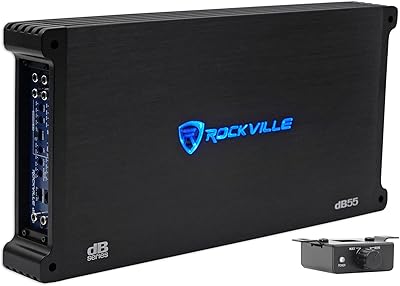
Rockville dB55 5-Channel Car Amplifier
75%
91%
Value for Money
83%
Sound Quality at Moderate Volumes
78%
Bass Output & Subwoofer Performance
62%
Power Accuracy & Transparency
58%
Thermal Management & Heat
More
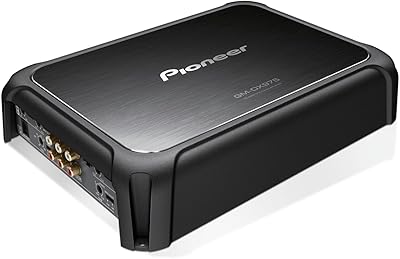
Pioneer GM-DX975 5-Channel Car Amplifier
81%
88%
Sound Quality
83%
Power Delivery
81%
Build Quality
71%
Thermal Management
74%
Ease of Installation
More
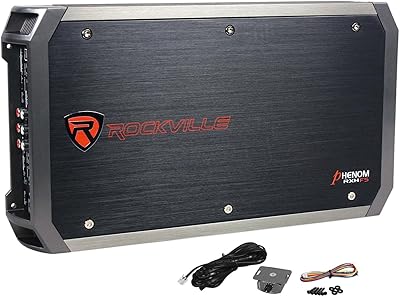
Rockville RXH-F5 5-Channel Car Amplifier
74%
88%
Value for Money
74%
Power Accuracy
83%
Installation Ease
79%
Sound Quality
68%
Subwoofer Performance
More
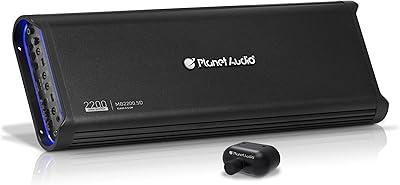
Planet Audio MB2200.5D 5-Channel Car Amplifier
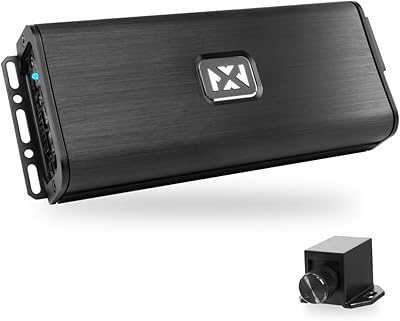
71%
83%
Value for Money
81%
Ease of Installation
86%
Channel Configuration
54%
Power Output (Real-World)
77%
Thermal Management
More
NVX VADM5 v2 5-Channel Car Amplifier
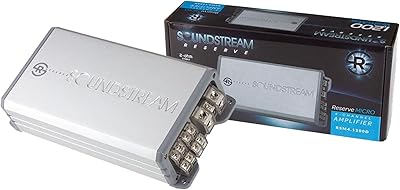
79%
93%
Compact Form Factor
88%
Installation Ease
67%
Power Output (RMS)
81%
Sound Clarity
62%
Thermal Management
More
Soundstream RSM4.1200D 4-Channel Car Amplifier
71%
91%
Ease of Installation
83%
Value for Money
71%
Sound Quality
67%
Build Quality
58%
Thermal Management
More

FAQ

Yes, that is exactly what this unit is designed for. The Soundstream PN5.640D 5-Channel Car Amplifier provides four full-range channels for your speakers and a dedicated fifth channel for your subwoofer, so you can run a complete system without needing a second amplifier or additional wiring runs.

In most cases, yes — the chassis is only 2″ tall and just under 10.5″ long, which clears the floor clearance under rear bench seats in the majority of sedans, crossovers, and small SUVs. That said, it is worth measuring your specific vehicle before committing, since some low-profile bench seats or floor-mounted brackets can reduce available clearance.

The sub channel is rated at 200W into 4 ohms and 350W into 2 ohms, so a single 2-ohm subwoofer or a pair of 4-ohm subs wired in parallel will get you closer to the rated output ceiling. Running a single 4-ohm sub is perfectly fine and the safer choice if heat is a concern.

This is worth taking seriously. The Picasso Nano amplifier runs comfortably at moderate listening levels, but sustained high-volume use in a poorly ventilated location does cause heat buildup, and thermal protection can engage in those situations. If your mounting location has limited airflow, try to leave at least a couple of inches of clearance around the heatsink fins and avoid fully enclosing the unit.

Most buyers find it genuinely useful for day-to-day driving. Being able to dial back or boost the sub from the dash without reaching behind a panel is a real practical convenience, especially if you listen to varied music genres. The knob itself feels solid and the range of adjustment is sensible — not so sensitive that small movements cause big swings in bass output.

Gain setting is probably the most misunderstood part of installing any amplifier. The goal is to match the amp's input sensitivity to the maximum clean output of your head unit, not to use the gain knob as a volume control. The included manual covers the basics, but if you are new to this, looking up a proper gain-setting guide using a multimeter or a tone generator will save you a lot of frustration and protect your speakers.

Yes, the stereo pairs can be bridged to deliver 160W per bridged pair into 4 ohms, which is useful for bi-amping component speakers or running a high-power front stage. Just be aware that bridged operation increases the load on the amp's thermal management, so ventilation becomes even more important if you go this route.

It depends on whether your factory head unit has preamp RCA outputs. Most factory radios do not, so you would need either a line output converter to adapt the speaker-level signal to RCA, or a head unit with built-in preamp outputs. The amp itself accepts standard RCA inputs and does not include a speaker-level input adapter.

The exact fuse and wire gauge requirements depend on your total power draw, but for a 5-channel amp in this output class, 4-gauge power wire is typically appropriate, with a fuse rated for the amp's current draw located close to the battery. Check the manual for the manufacturer's specific fuse recommendation, and always fuse at the battery end of the power cable, not just at the amp.

It sits somewhere in between, honestly. For a daily driver who listens at reasonable volumes and installs it in a well-ventilated spot, this compact multichannel amp can hold up well over time. If you expect to regularly push it near maximum output or if you plan to upgrade to a more power-hungry subwoofer down the line, you may eventually outgrow it — but as a value-oriented starting point for a full 5-channel system, it delivers solid performance relative to what you pay.

Where to Buy