Overview

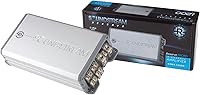
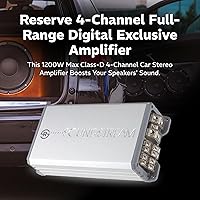
The Soundstream RSM4.1200D 4-Channel Car Amplifier is a compact, budget-friendly option aimed squarely at the mid-range car audio market — without demanding premium space or premium cash. Measuring just 7 x 3.75 x 1.75 inches and weighing under three pounds, it fits where many full-size amps simply cannot. Soundstream has been in the car audio space for decades — not a boutique audiophile name, but a brand with a consistent track record of delivering functional, affordable hardware. This compact 4-channel amp is built to work with both factory and aftermarket head units, making it accessible to a wider range of install scenarios than some competitors at this price point.
Features & Benefits

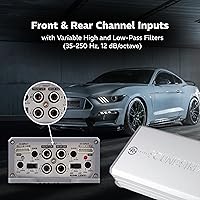
What stands out most about the RSM4.1200D is its Hi-Level Signal Sensing — the ability to auto-detect audio input and power on without needing a dedicated remote wire. For anyone working with a factory head unit, that single feature saves real installation hassle. The amp runs Class D circuitry, which means lower heat output and less strain on your vehicle's electrical system compared to older topologies. Crossover filters are variable between 35 and 250 Hz at a 12 dB/octave slope, offering genuine control over each channel's frequency handling. A hybrid aluminum heatsink assists thermal management in tighter spaces, and built-in short, thermal, and overload protections add the kind of reliability you reasonably expect at this price tier.

Best For

This Soundstream amplifier makes the most sense for someone upgrading factory speakers without touching their OEM head unit — exactly the scenario where auto signal sensing pays off most. It also suits budget-conscious builds where you need four channels of amplification without surrendering serious trunk space to a larger amp. Under-seat installs are genuinely feasible given the slim profile. First-time amp buyers will appreciate how approachable the setup is, with fewer wiring decisions than conventional amplifiers require. That said, if your goal is audiophile-grade output or serious SPL work, this compact 4-channel amp is not the right choice — it is built for everyday listening, not for pushing hard limits.

User Feedback

Across verified reviews, the RSM4.1200D holds a 4.4 out of 5 rating, with most positive sentiment clustering around two things: easy installation and the convenience of the auto-sensing turn-on. Buyers who upgraded factory speaker setups report noticeably better volume and clarity without complicated wiring. On the critical side, power expectations come up repeatedly — the 1200W figure is peak, not RMS, and real continuous output is considerably lower. A handful of users flagged heat buildup when the amp is mounted in poorly ventilated enclosed spaces. Build quality earns middling marks; most describe it as solid for the price without feeling premium. Buyers who go in with realistic expectations tend to walk away satisfied.

Pros

  • Auto Hi-Level Signal Sensing eliminates the need for a remote turn-on wire, simplifying factory radio installs significantly.
  • The slim 7 x 3.75 x 1.75 inch body fits under seats and in tight spaces where larger amps cannot go.
  • Class D operation keeps heat output and current draw low, reducing strain on your vehicle electrical system.
  • Variable crossover filters covering 35–250 Hz give meaningful control over how each channel reproduces sound.
  • Dual input options — RCA and speaker-level — make it compatible with a wide range of head unit types.
  • Built-in short, thermal, and overload protections provide a reasonable safety net for daily driving use.
  • At its price point, the RSM4.1200D delivers a tangible volume and clarity upgrade over passive factory speakers.
  • Weighing just 2.4 pounds, it is easy to handle and reposition during installation without extra help.

Cons

  • The 1200W power rating is peak only — real continuous RMS output is much lower and should not be taken at face value.
  • Heat buildup has been flagged by multiple users when the amp is installed in enclosed or poorly ventilated spots.
  • Build quality feels functional rather than robust; internal components reflect the budget price tier.
  • No dedicated subwoofer or mono bridged output limits flexibility for buyers who also want amplified bass.
  • Channel separation and signal clarity do not match what mid-range or higher-end amplifiers can produce.
  • The Soundstream brand carries limited warranty and support infrastructure compared to more established audio names.
  • Some users report inconsistent auto signal sensing behavior depending on the factory head unit brand.
  • Long-term durability data is limited given the product only entered the market in mid-2023.

Ratings

Our AI-generated scores for the Soundstream RSM4.1200D 4-Channel Car Amplifier are derived from systematic analysis of verified global buyer reviews, with spam, bot activity, and incentivized feedback actively filtered out before scoring. Each category reflects the honest distribution of real user sentiment — strengths and frustrations weighted equally — so you get a transparent picture of where this compact amp delivers and where it falls short.
Ease of Installation
91%
Buyers consistently call this one of the easiest amps they have ever installed, largely thanks to the auto Hi-Level Signal Sensing that eliminates the remote wire hunt. DIYers working with factory radios in daily commuter vehicles especially appreciate being up and running without needing professional help.
A minority of users ran into confusion matching speaker-level wiring on certain vehicle makes, and the included documentation is thin — first-timers occasionally needed to consult third-party guides to finish the job confidently.
Value for Money
83%
For the price tier, the RSM4.1200D punches reasonably well — buyers upgrading tired factory speakers on a tight budget report a clear and satisfying improvement in volume and presence without spending significantly more. The dual input options add practical flexibility that rivals at the same price often omit.
Once buyers start comparing continuous RMS output against similarly priced competitors, the value proposition softens. The 1200W peak figure looks compelling on a product page, but the real-world power delivery is considerably more modest, which leaves some buyers feeling the marketing overpromised.
Sound Quality
71%
29%
For casual daily listening — music during a morning commute, background audio on road trips — this Soundstream amplifier delivers a clean, warm improvement over an unamplified factory setup. The variable crossover filters give users enough tuning flexibility to tighten up the sound without needing external processors.
Audiophiles and anyone pushing higher-quality speaker pairs will notice the ceiling fairly quickly. Channel separation is adequate but not impressive, and at higher volumes some users detect a slight muddiness that more refined Class D designs at higher price points avoid.
Build Quality
67%
33%
The chassis feels solid enough for typical under-seat or trunk mounting, and the hybrid aluminum heatsink gives a reassuring sense of considered thermal design. Most buyers handling it during a weekend install describe it as feeling competent for its price class.
It does not feel premium — the housing flexes slightly under hand pressure, and some users note that the terminal connections feel less robust than those on competing units they have owned. Long-term durability beyond one to two years remains an open question given how recently this model launched.
Thermal Management
58%
42%
Under moderate listening conditions in reasonably ventilated installs, the compact 4-channel amp handles heat without issue. The Class D design inherently runs cooler than older AB-class alternatives, and buyers using it for typical daily driving rarely report any thermal shutdowns.
Mount it in a sealed enclosure or push it hard in summer heat, and thermal protection trips become a recurring annoyance based on multiple user reports. Several buyers specifically flag enclosed under-seat installs in warmer climates as problematic, requiring them to relocate the amp to a better-ventilated spot.
Power Output Accuracy
44%
56%
The amp does deliver measurable power gains over a passive factory speaker setup, and for users with modest expectations — simply wanting louder, cleaner audio — that real-world output is genuinely sufficient for a compact daily driver build.
The gap between the advertised 1200W peak and actual continuous RMS output is significant, and this is the most common source of buyer disappointment in reviews. Users expecting near-1200W performance are consistently let down, and some feel the power rating is misleading relative to competitors who publish honest RMS figures.
Compact Form Factor
86%
The sub-8-inch length and under-2-inch height make this one of the more space-efficient options at this output class, and buyers in smaller vehicles — hatchbacks, sedans, and SUVs with crowded cargo areas — frequently cite the footprint as the deciding factor in choosing it.
Compact design is not exclusive to this model; several similarly priced alternatives match or beat its dimensions, so it is not a standout differentiator. A few users also note that the compact size means tighter terminal spacing, which can be fiddly when running thicker gauge power wire.
Hi-Level Signal Sensing
79%
21%
When it works as intended, this feature is genuinely useful — buyers with factory Bose, JBL, or base-level OEM systems report clean automatic power-on behavior without any additional wiring effort, making the whole install notably simpler than traditional remote wire setups.
Sensing sensitivity is not adjustable on this unit, and some users report false triggers or delayed turn-on with certain head unit brands, particularly lower-output OEM systems. In a handful of cases buyers ultimately reverted to running a remote wire to get reliable behavior.
Crossover Flexibility
77%
23%
Having variable high- and low-pass filters covering 35 to 250 Hz means buyers can meaningfully tune each channel to the speaker it is driving, which is more than some budget amps offer. Users pairing this with component sets especially appreciate the ability to roll off low frequencies from tweeters.
The filter controls are small and unlabeled beyond the printed range, making precise adjustment by feel somewhat unreliable without a measurement tool. There is no subsonic filter, which limits utility in any future build that incorporates a ported subwoofer enclosure.
Input Connectivity
82%
18%
Supporting both RCA and speaker-level inputs in a single unit at this price is a practical strength — buyers switching between vehicles or sourcing from different head unit configurations do not need adapters or workarounds to get a clean connection.
RCA input sensitivity adjustment is limited, and a few users working with high-output aftermarket head units report having to carefully manage gain staging to avoid introducing noise. The RCA jacks themselves feel adequate but not confidence-inspiring under repeated connect-disconnect cycles.
Protection Circuitry
74%
26%
The built-in short, thermal, and overload protection circuits have saved more than a few installs — buyers who accidentally miswired during DIY setups report the amp shutting down safely rather than failing outright, which is exactly what these safeguards are meant to do.
The thermal protection threshold appears conservative, triggering shutdowns at volume levels that experienced installers would not consider extreme. This is partly a byproduct of the compact chassis having limited heatsink mass, but it does interrupt listening sessions in warm-weather driving scenarios.
Documentation & Support
51%
49%
The included wiring diagrams cover the basic install scenarios adequately, and Soundstream's brand familiarity means community guides and forum threads exist for common setup questions, providing a reasonable supplementary resource for buyers who seek them out.
The printed manual is sparse and does not cover edge cases or advanced configurations like bridged operation. Reaching Soundstream customer support directly draws mixed reports — response times and resolution quality are inconsistent, which matters when buyers encounter a defective unit.
Noise Floor
63%
37%
Under clean install conditions with proper grounding and tidy wiring, this compact 4-channel amp operates quietly enough for typical listening. Buyers who take time with their ground connection and keep power and signal cables separated tend to report a satisfying, hiss-free result.
Grounding sensitivity is notably high — a marginal ground point introduces audible alternator whine that many users struggled to eliminate. For buyers unfamiliar with proper grounding technique, this can be a frustrating and difficult-to-diagnose issue that takes multiple troubleshooting sessions to resolve.

Suitable for:

The Soundstream RSM4.1200D 4-Channel Car Amplifier is a strong fit for drivers who want noticeably better sound from their existing speakers without ripping out a factory head unit. Because of the built-in Hi-Level Signal Sensing, it works cleanly with OEM radios that lack a dedicated remote turn-on wire — a genuine convenience that removes one of the most common installation headaches for casual DIYers. Its slim, lightweight body makes it a practical choice for vehicles where trunk real estate is limited or under-seat mounting is the only realistic option. Budget-minded buyers building a straightforward four-speaker setup will find the feature set more than adequate for everyday listening at a fair price point. First-time amp installers who want a relatively forgiving entry point into amplified car audio will also get good value here.

Not suitable for:

Anyone chasing serious output numbers should look elsewhere before committing to the Soundstream RSM4.1200D 4-Channel Car Amplifier — the 1200W headline figure is peak power, and the real continuous RMS output is considerably more modest. Enthusiasts building a competition-level or SPL-focused system will quickly outgrow what this amp can realistically deliver. If you plan to mount the unit in a sealed, poorly ventilated enclosure, the thermal management may struggle under prolonged high-volume use, based on consistent user reports. Audiophiles prioritizing sound quality above all else should also temper expectations — Soundstream operates in the value tier, and the signal-to-noise performance and channel separation reflect that positioning. Buyers who need a subwoofer-dedicated channel or a bridged mono output for a serious bass setup will need a different amplifier altogether.
Specifications

  • Peak Power: The amplifier is rated at 1200W peak power total across all four channels — note this is a peak figure, not continuous RMS output.
  • Channels: This is a 4-channel amplifier designed to power up to four full-range speakers simultaneously.
  • Amplifier Class: Class D topology is used, which prioritizes efficiency by minimizing heat generation and reducing draw on the vehicle's electrical system.
  • Dimensions: The unit measures 7 x 3.75 x 1.75 inches, making it one of the more compact options available in its power class.
  • Weight: At 2.4 pounds, the amplifier is lightweight enough for straightforward single-person installation.
  • Input Types: Both RCA (line-level) and Hi-Level speaker-level inputs are supported, allowing connection to aftermarket or factory head units alike.
  • Crossover Filters: Variable high-pass and low-pass crossover filters are included, adjustable between 35 and 250 Hz at a 12 dB/octave slope.
  • Turn-On Method: The amplifier supports automatic turn-on via Hi-Level Signal Sensing, as well as conventional remote wire connection.
  • Heatsink: A hybrid aluminum alloy heatsink is integrated into the chassis to assist with thermal dissipation during operation.
  • Mounting Type: The amp uses surface mounting and can be installed under seats, in trunk areas, or in other flat-surface locations.
  • Protections: Built-in safeguards include direct short circuit, thermal overload, and general overload protection to reduce the risk of damage under stress.
  • Operating Voltage: The amplifier is designed to operate at 8 volts, consistent with standard 12V automotive electrical systems under load.
  • Model Number: The official model number is RSM4-1200D, as designated by Soundstream.
  • Brand: Soundstream is a value-oriented car audio brand with a long history of producing budget-to-mid-range amplifiers and audio components.
  • Availability: This model first became available in May 2023, making long-term reliability data still relatively limited.

Related Reviews
Power Acoustik RZ4-1200D 4-Channel Car Audio Amplifier
82%
88%
Sound Quality
91%
Power Output
84%
Build Quality
75%
Installation Ease
90%
Efficiency (Class D Technology)
More
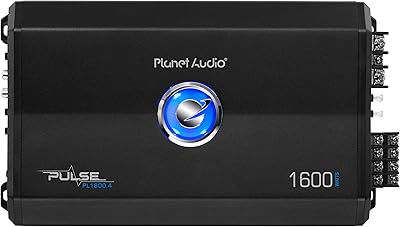
Planet Audio PL1600.4 4-Channel Car Amplifier
72%
88%
Value for Money
84%
Ease of Installation
74%
Sound Quality
58%
Power Output (Real-World)
61%
Build Quality
More
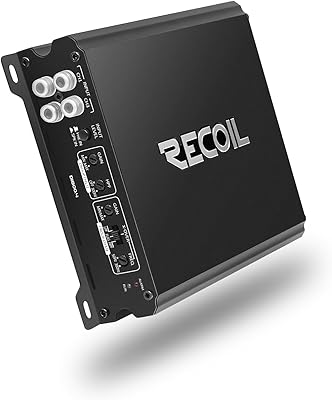
Recoil DI800.4 4-Channel Car Audio Amplifier
83%
88%
Sound Quality
92%
Power Output
65%
Thermal Management
84%
Build Quality
91%
Ease of Installation
More
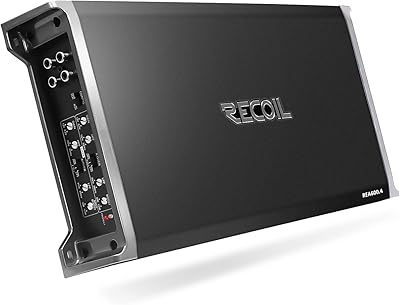
Recoil REA600.4 4-Channel Car Audio Amplifier
84%
89%
Audio Performance
91%
Ease of Installation
85%
Sound Quality at High Volumes
62%
Heat Management
90%
Power Output
More
Recoil DI550.4 4-Channel Car Audio Amplifier
74%
91%
Value for Money
78%
Power Output
86%
Ease of Installation
74%
Sound Quality
67%
Build Quality
More
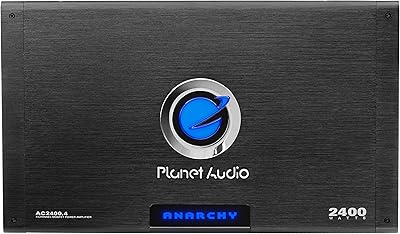
Planet Audio AC2400.4 4-Channel Car Amplifier
84%
95%
Power Output
89%
Sound Clarity
87%
Bass Performance
82%
Ease of Installation
65%
Thermals/Heat Management
More
Planet Audio AC1600.4 Anarchy Series 4-Channel Car Amplifier
82%
94%
Power Output
88%
Sound Quality
70%
Ease of Installation
92%
Value for Money
85%
Build Quality
More
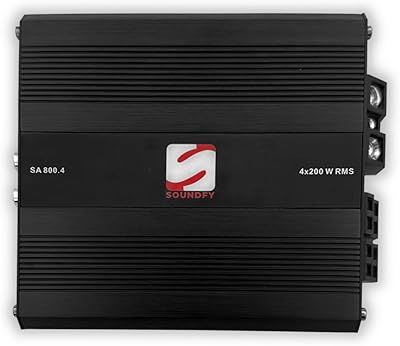
Soundfy SA 400.4 4-Channel Car Amplifier
71%
78%
Value for Money
72%
Sound Quality
63%
Power Output
58%
Build Quality
81%
Thermal Management
More
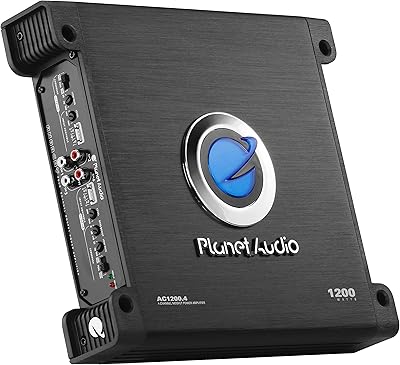
Planet Audio AC1200.4 4-Channel Car Amplifier
73%
88%
Value for Money
67%
Power Output
83%
Installation Ease
74%
Sound Quality
61%
Build Quality
More
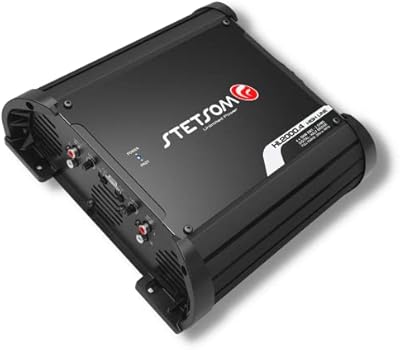
Stetsom HL 2000.4 2-Ohm 4-Channel Car Audio Amplifier
87%
93%
Power Output
85%
Cooling System Efficiency
88%
Sound Quality
91%
Ease of Installation
82%
Durability
More

FAQ

Yes, that is actually one of the more practical features of this unit. The Hi-Level Signal Sensing circuit detects audio signal coming through the speaker wires and powers the amp on automatically. You do not need to tap into a remote wire from the head unit, which makes factory radio installs significantly cleaner.

No, and this is worth understanding before you buy. The 1200W figure is peak power — the maximum the amp can theoretically handle in very short bursts. Real-world continuous RMS output across all four channels is considerably lower. For accurate speaker matching, look up the RMS spec in the full Soundstream documentation rather than relying on the peak number.

It very likely will, depending on your vehicle. At 7 x 3.75 x 1.75 inches and 2.4 pounds, this is a genuinely compact unit. Most cars with standard front or rear seats will have enough clearance, though you should measure your available space before purchasing just to be sure.

Absolutely. It accepts standard RCA line-level inputs, so any aftermarket head unit with preamp outputs will connect directly. You can also use the Hi-Level inputs if you prefer to run speaker wire instead.

Not ideally. This compact 4-channel amp does not have a dedicated mono or bridged subwoofer output in the traditional sense. While you could technically bridge two channels for more output to a sub, this is a full-range speaker amp at its core and is not really optimized for that use case. If a subwoofer is part of your plan, a separate mono amplifier would serve you better.

It is worth paying attention to airflow. Class D runs cooler than older amplifier designs, and the aluminum heatsink helps, but several users have noted heat buildup when the amp is sealed inside a very tight, unventilated enclosure. If possible, leave some air gap around the unit and avoid covering the heatsink surface.

Class D 4-channel amps in this category typically support 2-ohm and 4-ohm loads per channel, which covers the vast majority of aftermarket and OEM replacement speakers. However, Soundstream's published specs for this model should be consulted directly to confirm the minimum stable impedance before pairing with specific speakers.

Most buyers with basic car audio knowledge handle this install without professional help. The auto signal sensing removes one of the trickier steps for factory radio setups, and the dual input options reduce guesswork. If you have never done a car audio install before, watching a walkthrough video specific to your vehicle type beforehand will make the process much smoother.

It is competitive for the price tier, but not exceptional. The chassis feels solid enough for everyday use, and the hybrid heatsink construction is a reasonable choice at this cost level. That said, this Soundstream amplifier is not built to the same standard as mid-range or premium brands — buyers who handle and install it with reasonable care should have no issues, but it is not particularly ruggedized.

Soundstream typically offers a limited warranty on their products, though the specific terms and duration can vary by retailer and region. It is worth confirming the warranty details with the seller at the point of purchase, particularly if you are buying from a third-party marketplace listing rather than an authorized dealer.

Where to Buy