Overview

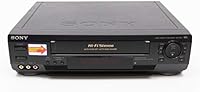
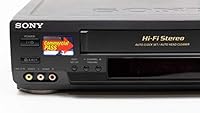
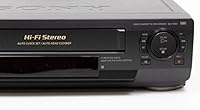
The Sony SLV-N50 Hi-Fi Stereo VHS VCR is one of the last serious consumer decks Sony produced before the format faded entirely. Sony's reputation in video hardware — spanning decades of Trinitron displays and recording equipment — gives this deck a level of credibility that cheaper alternatives simply can't match. Buying a VCR today is, honestly, a niche decision. Most people land here because they found a box of tapes in a closet and need something dependable to play them back or capture them digitally. This Sony VCR won't stream anything or connect to your home network, but that's entirely beside the point — it exists to handle legacy tape media, and it handles that task well.

Features & Benefits

The standout feature here is Hi-Fi stereo audio, which makes a real difference if you have tapes recorded on a Hi-Fi-capable deck. Compared to the thin, flat sound of standard linear stereo or mono recordings, Hi-Fi playback brings noticeably richer depth to music or event footage. The SLV-N50 supports both SP and EP recording speeds, giving you flexibility depending on tape length. The front-panel layout is clean and approachable — no buried menus or confusing button combos. The deck ships with a remote, worth mentioning because some competitors in this category have quietly dropped it. Physically, it's reasonably compact for a VCR, fitting comfortably on most AV shelves without dominating the space.

Best For

This Hi-Fi VHS deck is most useful for digitizing home movies — connecting it to a capture card or DVD recorder to pull decades-old family footage into a format that will actually last. It's also a solid choice for VHS collectors who want a reliable daily player for their library, particularly those who own Hi-Fi-recorded tapes and want accurate audio playback. Educators and archivists working with VHS-format materials will appreciate the consistent, no-fuss operation. If you've recently inherited a box of tapes and have no working player, this is a practical option — especially for anyone who wants a known-brand deck rather than gambling on an obscure no-name unit.

User Feedback

Owners of the SLV-N50 generally praise its consistent playback performance and the noticeably better audio compared to standard-stereo decks. Setup earns positive marks too — most users report connecting it to a TV via RCA without any complications. That said, the most common concern centers on the age of available units. Since this deck is no longer in production, you're almost certainly buying refurbished or old-stock, which introduces variability in head condition and overall wear. A smaller number of long-term owners have flagged tracking issues emerging over time, expected for any aging tape mechanism. The hardware earns genuine respect, but sourcing a well-maintained example is the real challenge.

Pros

  • Hi-Fi stereo audio delivers noticeably richer sound than standard linear stereo decks.
  • SP and EP speed support gives flexibility for tapes recorded at different lengths.
  • Setup is straightforward — RCA connections work with most older and newer TVs alike.
  • The front-panel layout is clean and approachable even for first-time VCR users.
  • Sony build quality provides more confidence than generic or off-brand alternatives.
  • Includes a remote control, a detail some competing units quietly omit.
  • Compact dimensions fit easily on an AV shelf without crowding other equipment.
  • Ranked among the top VCRs still available, reflecting genuine user trust in the model.
  • Solid choice as a digitization source deck when paired with a capture card.

Cons

  • All available units are old stock or refurbished, making condition unpredictable without inspection.
  • Video head wear is a real risk on aged units, and replacements are hard to source.
  • VHS format resolution is soft by any modern standard — no deck can change that.
  • No HDMI output; connecting to newer TVs may require an additional adapter.
  • Manufacturer support is effectively nonexistent for a discontinued legacy product line.
  • Internal rubber belts and mechanical parts can degrade over time, requiring maintenance.
  • Finding a well-maintained example at a fair price takes real effort and some luck.
  • Not suitable as a standalone solution if you also need a DVD or Blu-ray player.

Ratings

Our AI rating system analyzed verified global user reviews for the Sony SLV-N50 Hi-Fi Stereo VHS VCR, actively filtering out incentivized, bot-generated, and duplicate submissions to surface what real buyers consistently experienced. Scores reflect both the genuine strengths that keep this deck among the most trusted VHS options still available, and the recurring frustrations that honest buyers deserve to know before purchasing.

Audio Fidelity
83%
The Hi-Fi stereo system is the single most praised aspect by users who own Hi-Fi-recorded tapes. Buyers digitizing old event footage, concerts, or family gatherings with music in the background consistently note the improved warmth and depth compared to standard-stereo decks they tried previously.
The Hi-Fi advantage only applies when the source tape was recorded in Hi-Fi — users with older or budget-recorded tapes hear little improvement. A small number of units show audio dropout on aging tapes, which owners sometimes misattribute to the deck rather than tape condition.
Playback Reliability
78%
22%
Most owners report stable, consistent playback across a wide variety of tape ages and conditions. Users working through inherited tape collections appreciate that the deck tracks well on tapes they feared might be unplayable, which reflects well on the transport mechanism design.
Units with significant head wear — a real possibility given the age of available stock — produce snowy or rolling images that can be difficult to distinguish from tape damage. There is no reliable way to assess head condition before purchase, which makes this a recurring frustration.
Build Quality
81%
19%
Sony's consumer electronics build standards from this era hold up noticeably better than competing decks from lesser brands. Users who have owned multiple VCRs over the years specifically cite the SLV-N50's mechanical feel as more reassuring — buttons respond firmly and the tape loading mechanism sounds solid.
Internal rubber components such as belts and idler tires age regardless of usage, and some units show signs of deterioration that affects transport performance. Because these are legacy units, owners willing to maintain the hardware will need to source generic replacement parts from specialty suppliers.
Ease of Setup
86%
Setting up the deck for basic playback earns consistently positive feedback, even from buyers who describe themselves as non-technical. Matching RCA cables by color to a TV's input ports is intuitive, and most users report having a tape playing within minutes of unboxing.
Connecting to modern TVs with HDMI-only inputs requires an additional RCA-to-HDMI adapter, which is not included and catches some buyers off guard. Tuner setup for over-the-air recording is more involved and the manual, if included, may be missing from refurbished units.
Video Picture Quality
62%
38%
Within the inherent constraints of the VHS format, the SLV-N50 delivers clean, stable output that users find satisfying for casual viewing and archiving purposes. Buyers comparing it to other decks they tested note that the image holds together better during fast motion, with less smearing.
VHS resolution is soft by any modern standard — this is a format limitation, not a deck deficiency — and buyers expecting crisp output are regularly disappointed. Upscaling via an RCA-to-HDMI adapter does not add detail; it simply makes a soft image appear on a larger screen.
Value for Money
61%
39%
For buyers who genuinely need a working VHS deck, the SLV-N50 represents a reasonable investment relative to competing options in a category with very few reliable choices. Users who successfully digitize a large tape collection with it often describe the purchase as worthwhile in retrospect.
The asking price is high for hardware of this age, particularly when condition cannot be guaranteed. Buyers who receive a unit with worn heads or degraded belts feel the price is unjustifiable, and the limited availability of alternatives means there is little competitive pressure to lower costs.
Remote Control
74%
26%
Owners appreciate that a remote is included at all — several competing decks in this category ship without one. The remote covers all core functions including play, pause, rewind, fast-forward, and record, which is sufficient for most use cases without needing to approach the unit.
The remote design is dated and the button labeling can be difficult to read in low-light conditions. A few users report responsiveness issues with the infrared receiver over time, requiring them to aim more precisely or reduce the operating distance.
Tape Compatibility
79%
21%
Standard T-120 and shorter VHS cassettes load and play without issues across a wide range of tape brands and recording dates. Users archiving collections spanning several decades report very few incompatibility problems, which matters when working through tapes of unknown origin.
S-VHS tapes are not supported, which affects a small but vocal subset of collectors with higher-grade recordings. Some very old or previously jammed tapes can cause transport hesitation, though this is more a reflection of tape condition than a deck shortcoming.
Front Panel Usability
82%
18%
The clearly labeled transport controls make the deck approachable for users who have not operated a VCR in years or ever. Older family members who receive the deck secondhand to play their own tapes tend to navigate it without needing guidance, which is a meaningful practical benefit.
The display lacks some of the counter and programming features found on higher-end decks from the same era. Users wanting to set precise recording timers or program multi-event recordings find the interface limiting compared to more feature-rich Sony models.
Digitization Performance
76%
24%
When connected to a USB capture card, the deck outputs a clean and stable composite signal that capture software handles without difficulty. Users running tape-to-digital projects report smooth captures with consistent sync and minimal dropped frames during normal playback speeds.
The composite output limits capture quality to what the format can provide — there is no S-Video output on this model, which more serious archivists consider a drawback. Achieving the best possible digital copy from VHS still requires a source with S-Video capability.
Noise & Mechanical Sound
71%
29%
During normal playback the deck operates quietly enough that it does not intrude on the viewing or listening experience. Users playing tapes in a living room setting rarely mention the deck's mechanical noise as a distraction, which was not always the case with older or cheaper hardware.
Rewind and fast-forward cycles are audibly mechanical, and units with aging transport components can develop a noticeable whirring or grinding during these operations. Buyers who received units with worn belts describe the sound as immediately concerning and a signal that maintenance is needed.
Longevity & Durability
57%
43%
Units that have been properly stored or professionally refurbished can continue performing reliably for years of occasional use. A subset of long-term owners report running tapes through the deck regularly over several years without significant degradation in performance.
The age factor is unavoidable — every unit available today has years of potential wear behind it, and failure rates increase accordingly. Head replacement and belt servicing are realistic costs that buyers should factor in, particularly if they plan to use the deck frequently rather than occasionally.
Documentation & Support
44%
56%
Some sellers include the original manual or a digital copy, which provides enough guidance for basic operation and tuner programming. Users who do locate documentation find the Sony manual clear and well-organized compared to generic alternatives.
Official Sony support for this model is effectively nonexistent, and tracking down a manual independently requires effort. Buyers encountering technical issues have no manufacturer recourse and must rely on community forums or independent repair technicians, which is a genuine gap for less technically confident users.

Suitable for:

The Sony SLV-N50 Hi-Fi Stereo VHS VCR is a practical choice for anyone with a genuine need to interact with VHS tapes in the modern era. It suits people who have inherited or accumulated a collection of home recordings and want a dependable deck to play them back or route through a capture card for digitization. VHS collectors who care about audio fidelity will find the Hi-Fi stereo capability a meaningful upgrade over budget alternatives. Archivists, educators, and hobbyists working with legacy video material will appreciate the consistent, straightforward operation and Sony's generally reliable build standards. It also works well for those who simply want one trustworthy machine sitting on a shelf, ready when they occasionally pull out an old tape — without needing to troubleshoot obscure hardware.

Not suitable for:

The Sony SLV-N50 Hi-Fi Stereo VHS VCR is not the right purchase for anyone expecting modern convenience or cutting-edge video quality. VHS is a format with real limitations — soft image resolution, occasional tracking noise, and degradation on older tapes are all inherent to the medium, not fixable by the deck itself. Buyers hoping to replace streaming or disc-based media players will find this entirely unsuitable; it does one thing only. Because units available today are old stock or refurbished, buyers unwilling to accept some mechanical uncertainty — worn heads, aging belts — should be cautious. Anyone who needs guaranteed long-term serviceability or manufacturer support will also find this a difficult proposition, since parts and professional repair technicians for VHS hardware are increasingly scarce.

Specifications

  • Brand: Manufactured by Sony, a company with decades of experience in consumer video electronics.
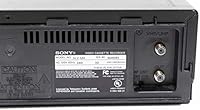
  • Model Number: The official model designation is SLV-N50, also referenced as SLVN50 in Sony documentation.
  • Format: This deck records and plays back standard VHS cassette tapes only; it does not support S-VHS or other tape formats.
  • Audio System: Hi-Fi stereo audio is supported for both recording and playback, delivering significantly improved sound fidelity over linear stereo decks.
  • Recording Speeds: Supports SP (Standard Play) and EP (Extended Play) recording speeds to accommodate different tape lengths and recording durations.
  • Dimensions: The unit measures 14 x 4 x 11 inches, providing a relatively compact footprint for a full-featured VHS deck.
  • Weight: The deck weighs 8.05 pounds, making it manageable to reposition on an AV shelf or entertainment unit.
  • Power Source: Operates on standard AC mains power; no battery operation for the main unit.
  • Remote Batteries: The included remote control requires 2 AAA batteries, which are not included in the box.
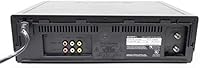
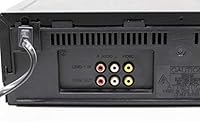
  • Video Output: Connects to a television or capture device via standard composite RCA and coaxial RF outputs, compatible with most older and modern TVs using an adapter.
  • Front Panel: Features clearly labeled front-panel transport controls for play, stop, rewind, fast-forward, record, and eject functions.
  • Remote Control: A wireless remote control is included, allowing operation of core playback and recording functions from a distance.
  • Manufacturer Status: Sony has not officially discontinued this model according to listed product data, though active production of VHS hardware has ceased industry-wide.
  • Date Available: This product was first listed for retail availability on April 15, 2006.
  • Sales Rank: Ranked #20 in the VCRs category on Amazon, reflecting sustained demand relative to remaining available VHS decks.
  • Head System: Uses a rotary drum head assembly typical of consumer VHS decks for reading and writing magnetic tape signals.
  • Tape Compatibility: Compatible with T-120 and other standard VHS cassette formats commonly used for home recording.
  • Channel Tuner: Includes a built-in cable-ready tuner for receiving and recording over-the-air or cable television channels directly.

Related Reviews
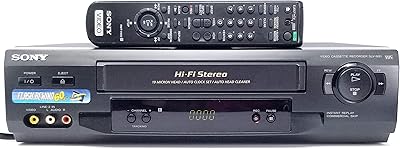
Sony SLV-N51 4-Head Hi-Fi VCR
74%
88%
Picture Stability
91%
Digital Autotracking
86%
Audio Quality
79%
Build Quality
74%
Ease of Setup
More
Sony SLV-N750 Hi-Fi VCR
74%
83%
Picture Quality
88%
Build Quality
86%
Audio Performance
84%
Ease of Setup
61%
Remote Usability
More
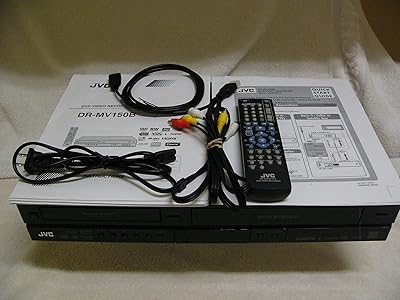
JVC DR-MV150B DVD VHS Combo Recorder
72%
88%
Format Versatility
83%
VHS Archiving Performance
67%
HDMI Upconversion Quality
54%
Ease of Use
71%
Build Quality
More
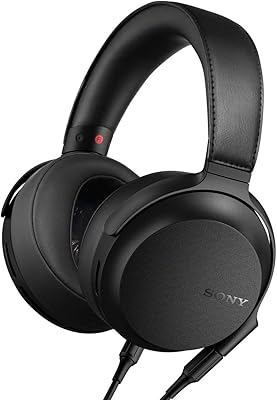
Sony MDR-Z7M2 Over-Ear Headphones
75%
93%
Sound Quality
91%
Soundstage & Imaging
74%
Build Quality
67%
Comfort
88%
Cable Quality
More
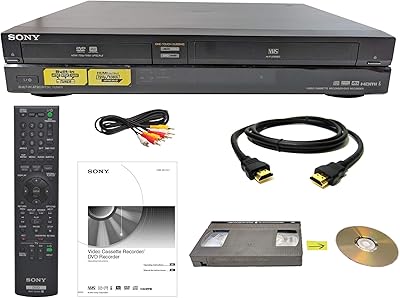
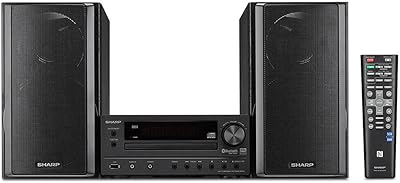
Sony RDR-VX VHS to DVD Recorder Combo
74%
88%
Ease of Use
82%
Dubbing Performance
67%
Video Output Quality
79%
Build Quality
54%
Value for Money
More
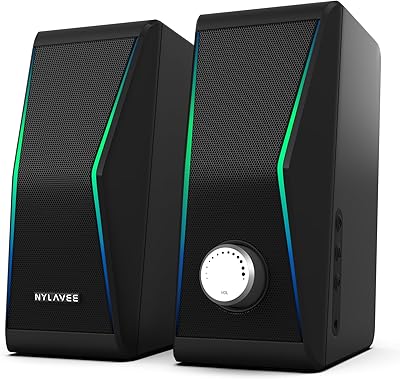
Sharp XL-HF203B Hi-Fi Component Stereo Speaker System
84%
87%
Sound Quality
91%
Setup & Installation
72%
Bass Performance
88%
Connectivity (Bluetooth, NFC)
82%
Build Quality
More
Lepai LP-2020TI Hi-Fi Mini Class D Stereo Amplifier
85%
88%
Sound Quality
84%
Build Quality
91%
Energy Efficiency
90%
Ease of Setup
92%
Portability
More
Nylavee SK600Pro
Nylavee SK600Pro
75%
78%
Bass Performance
61%
Treble & Midrange Clarity
91%
RGB Lighting
73%
Bluetooth Connectivity
86%
Value for Money
More
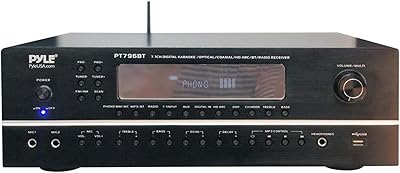
Pyle PT796BT 7.1-Channel AV Receiver
64%
67%
Value for Money
58%
Audio Performance
83%
Connectivity & Inputs
74%
Bluetooth Performance
52%
Build Quality
More
Pyle PT694BT 5.2-Channel Home Theater Receiver
66%
78%
Value for Money
83%
Ease of Setup
63%
Audio Performance
67%
Bluetooth Reliability
54%
Build Quality
More

FAQ

In most cases, yes — but it depends on what inputs your TV has. The deck outputs via composite RCA (yellow, red, white cables) and coaxial RF. Most modern TVs no longer include coaxial video inputs, but many still have RCA composite ports. If yours does not, an inexpensive RCA-to-HDMI converter will bridge the gap.

Absolutely, and this is one of the most practical reasons to buy it today. You connect the RCA video and audio outputs to a USB capture card, run that into your computer, and record the playback using free software like OBS or VirtualDub. The Hi-Fi stereo output means your audio capture will be noticeably cleaner than with a standard-stereo deck.

Hi-Fi stereo on a VCR means the audio is recorded using a depth-multiplexed system on the video heads rather than the slower linear audio track. The result is much wider frequency response and lower noise — closer to CD quality when the source tape was recorded in Hi-Fi. If your tapes were recorded on a Hi-Fi deck, you will hear a real difference. If they were recorded on a basic mono or linear stereo machine, this feature will not retroactively improve them.

This is an important question. Production of VHS hardware effectively ended years ago, so any unit you find today is either old stock that was stored unsold, or a refurbished unit that has been inspected and repaired. Either way, carefully check the seller's condition description and return policy before buying.

The clearest sign of worn heads is a snowy, streaky, or rolling picture during playback. If a tape you know is in good condition plays back with heavy noise or instability, the heads are likely worn. Some sellers will clean and test heads before listing, but there is no way to verify condition without actually playing a tape through it.

No, this is a standard VHS deck and does not support S-VHS format tapes. S-VHS required a dedicated higher-grade transport and heads that were never part of this model line. Standard VHS tapes in SP and EP speeds are what this machine is designed for.

This deck is fully capable of recording, not just playback. It includes a built-in tuner so you can record from cable or antenna, and it will also record from external sources connected to its inputs. That said, most people buying a VCR today are using it to play back existing tapes rather than make new recordings.

You will need a standard composite AV cable — the red, white, and yellow RCA cable — to connect the deck to your TV or capture device. These are inexpensive and widely available. If your TV only has HDMI inputs, you will also need an RCA-to-HDMI upscaler, which costs very little and works reliably for this purpose.

Not really. The front panel has clearly labeled buttons, and the basic operation is straightforward: insert tape, press play. Connecting it to a TV via RCA is a matter of matching cable colors to ports. Tuner setup for recording is slightly more involved, but for simple playback there is very little to configure.

This is the honest concern with any legacy VHS hardware. Authorized Sony service for this model is effectively unavailable, and OEM parts are not actively stocked by most suppliers. Some independent electronics repair technicians still work on VCRs and can source compatible belts and heads from remaining inventories, but it requires searching and is not guaranteed. Treat any unit you buy as needing to last on its own merits rather than relying on future repair.

Where to Buy