Overview

The Pyle PT694BT 5.2-Channel Home Theater Receiver is one of those rare budget AV receivers that punches above its weight in terms of raw connectivity. It covers Bluetooth, three HDMI inputs, USB, RCA, optical, and coaxial — a lineup you would typically expect from a pricier unit. One standout detail is the built-in karaoke support, complete with dual mic inputs, which is genuinely uncommon at this price point. The advertised 1000W figure refers to peak power, not continuous RMS output, so keep that in mind when pairing speakers. Still, for a first home theater setup, this home theater amplifier offers a surprisingly complete starting point.

Features & Benefits

This AV receiver handles 5.2-channel surround sound with speaker impedance support from 4 to 16 ohms, making it compatible with a wide range of passive speakers and dual subwoofers. Bluetooth pairing with phones and tablets works reliably for casual streaming. Three HDMI inputs with 4K UHD, 3D, and Blu-Ray pass-through mean your TV setup stays clean without an external switcher. The two 1/4-inch mic inputs with echo and DSP controls make karaoke nights actually functional rather than an afterthought. Add a front-panel LCD, AM/FM tuner, USB, RCA, optical, and coaxial inputs, and this home theater amplifier covers nearly every source you would realistically connect.

Best For

The Pyle 5.2-channel unit makes the most sense for first-time home theater buyers who are stepping up from a soundbar and want genuine surround sound without an intimidating setup process. It works well in smaller living rooms, casual movie nights, and especially households that lean into karaoke entertainment. If you need 4K video pass-through without spending heavily on a flagship receiver, this fits the bill. Experienced audiophiles or those building a critical listening setup will likely outgrow it quickly. But for someone wanting a versatile, plug-and-play amplifier for everyday use, the value proposition here is hard to dismiss.

User Feedback

Buyers frequently praise ease of initial setup and the sheer number of inputs, noting that getting everything connected is straightforward even without prior AV experience. Bluetooth pairing earns generally positive marks, though a handful of users report occasional dropout with certain devices. The recurring criticism worth noting involves power output — many find real-world volume adequate but not the wall-shaking experience the peak wattage implies. Build quality is described as functional rather than premium, with some noting the remote feels lightweight. Long-term reliability reports are mixed, and reaching customer support has been hit-or-miss based on buyer accounts.

Pros

  • Covers nearly every input type you would realistically need, from HDMI and optical to USB and RCA.
  • Built-in karaoke mic inputs with echo control make it a genuinely fun party centerpiece.
  • 4K UHD and Blu-Ray pass-through keeps your TV setup clean without an external HDMI switcher.
  • Bluetooth pairing with phones and tablets is quick and works reliably in normal room conditions.
  • Front-panel LCD and clearly labeled controls make initial setup approachable for first-time buyers.
  • 5.2-channel configuration supports dual subwoofers, adding real depth to movie soundtracks.
  • AM/FM tuner is a convenient built-in bonus for households that still use over-the-air radio.
  • Integrated overload and short-circuit protection adds a layer of safety for your connected speakers.
  • Wide speaker impedance range of 4 to 16 ohms accommodates a broad mix of passive speakers.

Cons

  • The advertised 1000W is a peak figure — real sustained output is considerably more modest.
  • Remote control feels cheap and becomes unreliable for some buyers within months of regular use.
  • No automatic room correction means getting balanced surround sound requires manual trial and error.
  • Bluetooth connection can drop when obstacles or competing wireless signals interfere.
  • No phono input rules out direct turntable connection without a separate preamp.
  • Long-term durability reports are mixed, with some buyers experiencing faults after 12 to 18 months.
  • Customer support response times are frequently criticized as slow and difficult to navigate.
  • Display has no brightness adjustment, making it hard to read in sunlit rooms.
  • No network streaming or multi-room audio features limit future expandability significantly.

Ratings

The Pyle PT694BT 5.2-Channel Home Theater Receiver was evaluated by our AI system after deep analysis of verified global buyer reviews, with spam, incentivized, and bot-generated feedback actively filtered out. Scores reflect what real users consistently experienced across setup, daily use, and long-term ownership — not what the spec sheet promises. Both the genuine strengths and the frustrating pain points are represented honestly in every category below.
Value for Money
78%
22%
For buyers stepping up from a basic soundbar, the sheer number of features packed into this price range is hard to match. Users frequently note that getting 5.2-channel surround, HDMI switching, Bluetooth, and karaoke capability together at this cost feels like a genuine bargain compared to branded alternatives.
The value perception drops for buyers who expected audiophile-level output. Once they realize the 1000W claim is a peak figure rather than continuous RMS power, some feel the marketing overpromises, which colors their overall satisfaction with the purchase.
Ease of Setup
83%
Most buyers report getting the unit up and running within 30 minutes, even without prior AV receiver experience. The front-panel LCD and clearly labeled inputs reduce the guesswork considerably, and several users mentioned they did not need to consult the manual at all for basic hookup.
Users with more complex setups — multiple HDMI sources, subwoofer calibration, or optical routing — report hitting a wall quickly. The included documentation is thin, and finding reliable third-party guidance for edge-case configurations takes extra effort.
Audio Performance
63%
37%
For casual movie nights and background music in small to medium rooms, the sound output is genuinely enjoyable. Users running modest bookshelf speakers and a single subwoofer report a full, room-filling result that noticeably outperforms any soundbar they had previously used.
Push the volume into the upper third and the audio starts to lose composure — some users describe a thinning or harshness at higher levels. The gap between the advertised peak wattage and real-world sustained output is the most common point of disappointment among buyers with higher expectations.
Bluetooth Reliability
67%
33%
Initial pairing with phones, tablets, and laptops is consistently described as quick and hassle-free. For everyday streaming at moderate distances within the same room, the connection holds steadily and the audio quality is considered more than acceptable for background listening.
A recurring thread in buyer feedback involves dropout when obstacles — walls, furniture, or other wireless devices — come between the source and the receiver. Some users also report that the unit occasionally forgets paired devices after a power cycle, requiring re-pairing more often than expected.
Build Quality
54%
46%
The chassis is solid enough to sit stably in an entertainment unit, and the front-panel buttons respond with reasonable feedback. Users who handle it carefully and treat it as a stationary piece of equipment report no structural complaints over short-term ownership.
The plastic feels notably lightweight for an 18-pound unit, and the overall finish reads as entry-level up close. Several reviewers specifically call out the remote control as feeling flimsy and cheap, with buttons that sometimes require firm, deliberate presses to register a response.
HDMI & Video Pass-Through
74%
26%
Three HDMI inputs with 4K UHD and Blu-Ray pass-through handle the routing duties well for most living room setups. Users who wanted to consolidate their streaming stick, game console, and Blu-Ray player into a single receiver report that the switching works cleanly without signal degradation.
The unit is a pass-through device rather than a true video processor, so buyers expecting upscaling or HDR tone-mapping are out of luck. A small number of users also report handshake delays when switching between HDMI sources, which can be mildly annoying during regular use.
Karaoke Functionality
76%
24%
The dual 1/4-inch mic inputs with independent echo and volume controls make this genuinely functional for home karaoke parties, which is rare at this price tier. Users hosting casual gatherings consistently highlight this as the feature that sold them on choosing this receiver over competitors.
The DSP echo effect has a limited range of adjustment, and at higher echo settings some users describe the result as sounding processed or hollow. Serious karaoke enthusiasts will likely want a dedicated mixer, but for occasional use the built-in controls are more than adequate.
Connectivity Range
81%
19%
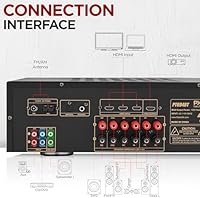
The breadth of inputs — USB, RCA, optical, coaxial, and three HDMI ports alongside Bluetooth — means this home theater amplifier can accommodate nearly every source device a typical household owns, including older components that rely on analog connections.
There is no phono input for turntables, which matters to the growing vinyl audience. Users who want to integrate a network streamer or use multi-room audio features will also find those capabilities completely absent, reflecting the unit's entry-level positioning.
Remote Control
49%
51%
The remote covers all primary functions and means users rarely need to leave the couch for routine adjustments like volume, input switching, or tuner navigation. The button layout is logical enough that most buyers learn it without referencing the manual.
Build quality of the remote is the single most criticized accessory detail across buyer reviews. Buttons feel mushy and imprecise, the range is shorter than expected, and several users report the remote becoming unreliable within a few months of regular use.
AM/FM Tuner
61%
39%
For households that still use over-the-air radio — morning news, local sports, or background music — the built-in tuner is a convenient inclusion that saves an extra device. Reception quality in areas with strong signal is described as clean and clear.
In suburban or semi-rural areas with weaker broadcast signals, users report noticeable static and difficulty locking onto stations. The tuner interface also feels dated compared to modern streaming options, limiting its appeal to buyers who actively seek radio functionality.
Surround Sound Configuration
68%
32%
Running a full 5.2 speaker layout in a properly sized room produces an immersive experience that buyers upgrading from two-channel setups find immediately impressive. The 4-to-16-ohm impedance range gives flexibility when mixing different speaker brands.
Without automatic room correction or any speaker calibration system, achieving a well-balanced surround mix requires manual adjustment and some trial and error. Users who are unfamiliar with speaker placement principles may end up with a less satisfying result than the hardware is capable of delivering.
Long-Term Durability
52%
48%
Units used in light-duty conditions — occasional movie nights, moderate volume levels, stable temperature environments — are reported to perform consistently over the first year of ownership without notable degradation.
Several buyers report issues emerging between the 12- and 18-month mark, including channel dropout, Bluetooth instability, and unresponsive controls. The pattern across negative long-term reviews suggests the unit performs better as a temporary or secondary system than as a daily-driver primary receiver.
Customer Support
46%
54%
A subset of buyers report resolving basic setup questions through Pyle's online resources and that warranty replacement requests were honored without excessive friction when the issue was clear-cut and well-documented.
The dominant feedback pattern around support is slow response times and difficulty reaching a knowledgeable representative. Users dealing with technical faults post-warranty describe the experience as frustrating, with multiple buyers ultimately resolving issues independently rather than through official channels.
Display & Interface
71%
29%
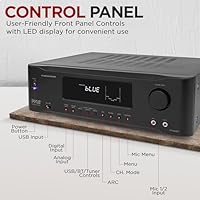
The front-panel LCD is easy to read from a normal viewing distance and clearly communicates the active input, volume level, and tuner frequency. Combined with the tactile front-panel controls, navigating basic functions feels intuitive from day one.
The display lacks brightness adjustment, which can make it difficult to read in bright, sunlit rooms. There is no on-screen display output to the TV for menu navigation, so all setup adjustments are made through the small front panel alone.

Suitable for:

The Pyle PT694BT 5.2-Channel Home Theater Receiver is built for the kind of buyer who wants a genuine surround sound upgrade without spending months researching audio gear or blowing a significant budget doing it. If you are setting up your first real home theater in a living room or den, this home theater amplifier gives you a practical, all-in-one starting point that covers modern needs like 4K HDMI switching and Bluetooth streaming alongside older connection types like RCA and coaxial. Households that host regular get-togethers — movie nights, game days, or casual karaoke sessions — will find the dual mic inputs and DSP echo controls genuinely useful rather than gimmicky. It also suits renters or buyers who move between spaces and want a versatile receiver that can adapt to different room layouts and speaker combinations without requiring a specialized setup. Budget-conscious shoppers replacing a soundbar with a proper multi-speaker configuration will notice an immediate and satisfying difference in audio depth, even at modest volume levels.
Not suitable for:

Buyers with serious audio expectations should look elsewhere before considering this AV receiver. The 1000W figure on the box is a peak measurement, not a continuous RMS rating, and the real-world output reflects a unit positioned at the entry level — it will not pressurize a large room or satisfy listeners who want clean, powerful audio at high volume. Dedicated audiophiles, home cinema enthusiasts running premium speaker systems, or anyone who wants automatic room correction and precise acoustic calibration will find this home theater amplifier frustratingly limited in its tuning options. The build quality, while functional, is not designed for heavy daily use over many years, and the customer support experience adds a layer of risk if something goes wrong outside the return window. Anyone investing in a long-term, high-performance audio system should treat this unit as a temporary or secondary solution at best, and budget accordingly for a more capable receiver down the line.

Specifications

  • Channels: This unit supports a 5.2-channel surround sound configuration, meaning it can power five speakers and two subwoofers simultaneously.
  • Peak Power: The receiver is rated at 1000W peak power, which reflects maximum instantaneous output rather than continuous RMS operating wattage.
  • Impedance: Compatible speaker impedance ranges from 4 to 16 ohms, accommodating a wide variety of passive bookshelf, floor-standing, and surround speakers.
  • HDMI Inputs: Three HDMI input ports are included, each supporting 4K UHD, 3D, and Blu-Ray video pass-through to a connected display.
  • Video Encoding: Supported video codec formats include H.264 and H.265/HEVC, relevant for compatible media sources passed through the HDMI ports.
  • Bluetooth: Built-in Bluetooth allows wireless audio streaming from smartphones, tablets, and computers without requiring a separate adapter or dongle.
  • Mic Inputs: Two 1/4-inch microphone inputs are located on the front panel, each with independent echo and volume adjustment via DSP processing controls.
  • Audio Connections: Analog and digital audio connectivity includes RCA stereo inputs, a dedicated RCA subwoofer output, optical (TOSLINK), and coaxial digital audio inputs.
  • USB Input: A USB port allows direct playback of audio files from compatible flash drives and external storage devices.
  • Tuner: A built-in AM/FM radio tuner is included, with station information and playback status shown on the front-panel LCD display.
  • Display: A front-facing LCD screen provides real-time feedback on active input source, volume level, and tuner frequency during operation.
  • Remote Control: A full-function infrared remote control is included in the box for operating all primary receiver functions from a seated position.
  • Dimensions: The unit measures 21.14 x 18.8 x 11 inches, sized to fit standard AV furniture shelves with adequate ventilation space recommended around the chassis.
  • Weight: The receiver weighs 18.56 pounds, making it a substantial desktop unit that is not intended for frequent relocation.
  • Protection: Integrated electronic protection circuits guard against over-current, short-circuit, and over-voltage conditions to help protect both the unit and connected speakers.
  • Model Number: The official Pyle model identifier for this unit is PT694BT.6, useful when searching for firmware updates, accessories, or replacement parts.
  • Availability Date: This receiver was first made available for purchase in late December 2023, making it a relatively recent addition to the Pyle product lineup.

Related Reviews

Pyle PT589BT
Pyle PT589BT
66%
74%
Value for Money
61%
Sound Quality
72%
Subwoofer Performance
83%
Ease of Setup
53%
Build Quality
More
Pyle PD3000BT.5 Home Theater Bluetooth Amplifier Receiver
82%
88%
Audio Performance
91%
Bluetooth Connectivity
85%
Ease of Setup
78%
Build Quality
80%
Microphone Inputs for Karaoke
More
Denon AVR-S670H 5.2 Ch Home Theater Receiver
84%
88%
Value for Money
90%
Video Quality
87%
Ease of Setup
85%
Audio Quality
89%
Connectivity
More
Pyle PT888BTWM.5
Pyle PT888BTWM.5
68%
78%
Value for Money
82%
Karaoke Performance
47%
Build Quality
81%
Bluetooth Connectivity
63%
Sound Quality
More
Monoprice Premium 5.1.2 Channel Immersive Home Theater System
82%
88%
Sound Quality
91%
Bass Performance
84%
Ease of Setup
79%
Build Quality
90%
Compatibility with Devices
More
Sony STR-DH190
Sony STR-DH190
81%
83%
Sound Quality
88%
Value for Money
86%
Phono Input & Turntable Performance
71%
Bluetooth Connectivity
92%
Ease of Setup
More
Yamaha RX-V4A
Yamaha RX-V4A
80%
91%
Setup & Onboarding
79%
Sound Quality
83%
HDMI & Video Connectivity
88%
Streaming & Smart Features
74%
Build Quality & Design
More
Onkyo TX-SR393
Onkyo TX-SR393
71%
81%
Audio Performance
78%
Dolby Atmos & DTS:X Decoding
67%
Height Virtualization
84%
Setup & Calibration
86%
HDMI Connectivity
More
Onkyo TX-SR3100
Onkyo TX-SR3100
74%
83%
Audio Performance
91%
HDMI & Video Handling
74%
Room Calibration (AccuEQ)
86%
Setup & Ease of Use
51%
Streaming & Connectivity
More
Sony STR-DH590
Sony STR-DH590
74%
91%
Value for Money
88%
Ease of Setup
82%
Sound Quality
86%
Connectivity & Inputs
74%
Bluetooth Performance
More

FAQ

The 1000W figure is a peak power rating, not a continuous RMS measurement, so it reflects the maximum the amplifier can produce in very short bursts rather than sustained output. In practice, the real-world continuous wattage is considerably lower. For small to medium rooms with moderately efficient speakers, the actual output is plenty, but go in with calibrated expectations if you are planning a large room installation.

The Pyle PT694BT 5.2-Channel Home Theater Receiver has three HDMI inputs, so you can have three source devices — such as a streaming stick, a game console, and a Blu-Ray player — connected simultaneously and switch between them as needed. There is one HDMI output that connects to your TV or projector.
Not without an external phono preamp. This home theater amplifier does not have a built-in phono stage, which means a standard moving-magnet turntable will produce extremely low volume and poor sound if plugged straight into the RCA inputs. You would need an inexpensive phono preamp between the turntable and the receiver.

It is genuinely functional for casual home use. The two front-panel mic inputs accept standard 1/4-inch microphone connectors, and the independent echo and volume controls let you dial in a reasonable karaoke effect. It is not a professional-grade mixer, but for a family night or casual party it works well enough that buyers specifically call it out as a favorite feature.

Potentially yes. Several buyers report stable connections within the same room, but the signal can struggle through walls or when competing wireless devices are active nearby. For best results, keep your source device in the same room as the receiver rather than relying on it as a whole-home audio solution.

Any passive speakers rated between 4 and 16 ohms will work with this unit. Entry-level to mid-range bookshelf and floor-standing speakers are the most natural fit given the receiver's output tier. Pairing it with very high-impedance or extremely demanding speakers may limit the volume ceiling you can achieve.

No, this home theater amplifier does not support Dolby Atmos, DTS:X, or other object-based surround formats. It handles conventional 5.2-channel surround decoding suited for standard Dolby Digital and DTS content, which is adequate for most casual home theater viewing but falls short of premium immersive audio standards.

Most buyers describe it as straightforward, particularly for basic configurations. Connecting a TV via HDMI, plugging in five speakers and a subwoofer, and pairing a phone via Bluetooth can typically be done in under an hour. Where things get more complicated is if you want to fine-tune speaker levels or configure more exotic input combinations — the manual is thin on detail for those scenarios.

It covers all the functions you would use most often — volume, input selection, and tuner navigation — so you generally do not need to approach the unit for routine operation. That said, multiple buyers flag the remote as feeling flimsy, and some report it becoming less responsive after several months. Keeping a spare set of batteries fresh tends to help with responsiveness.

This is probably the most honest concern to flag. Reports from buyers beyond 12 to 18 months of ownership are more mixed than early feedback, with some noting issues like channel dropout or intermittent Bluetooth problems developing over time. It performs solidly as a short-to-medium-term solution, but buyers wanting a receiver that will anchor their system for five or more years should weigh that pattern carefully before committing.