Overview

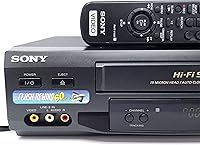
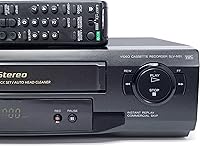
The Sony SLV-N51 4-Head Hi-Fi VCR is a late-era Sony deck that represents the brand's commitment to solid, dependable VHS performance for home users. Sony built a strong reputation in the VCR market, and this model sits comfortably within that legacy — not as a flagship, but as a practical, well-specced machine. Today, this Sony VCR finds its audience among people archiving deteriorating home tapes, rewatching VHS collections, or keeping older AV setups alive. It is a legacy format device, plain and simple. If you're expecting wireless connectivity or smart features, look elsewhere — but if reliable VHS playback and hi-fi audio matter to you, it still delivers.

Features & Benefits

Where the SLV-N51 earns its keep is in the practical specs. The 4-head drum configuration makes a real difference during still-frame pauses and slow-motion playback — you get a cleaner, more stable image than a basic 2-head unit can produce. Hi-fi stereo audio recording is another genuine upgrade; dialogue and music on well-recorded tapes come through with surprising clarity. Digital autotracking is arguably the most useful feature for anyone playing aged or heavily used tapes, automatically compensating for the tracking drift that plagues old recordings. There is also a front AV input for quick camcorder hookups, commercial skip to reduce tape wear, and a programmable timer for scheduled recording sessions.

Best For

This 4-head deck is most valuable to people who have a box of VHS tapes in storage and want to digitize them before they degrade further — think decades-old wedding footage, childhood birthday recordings, or taped broadcasts never got around to watching. It is also a solid choice for collectors who want dependable VHS playback without fussing over manual tracking adjustments. Users upgrading from a worn-out basic 2-head machine will notice an immediate improvement in picture and sound. It connects cleanly to older CRT televisions and AV receivers via composite cables. Retro enthusiasts who simply enjoy the analog VHS experience will find it a capable, unfussy deck.

User Feedback

Owners of this Sony VCR consistently praise the picture stability, particularly how well digital autotracking handles tapes that other decks struggle with. Build quality gets favorable mentions too — it feels more solid than the budget alternatives many people tried first. That said, a few recurring concerns are worth knowing. Mechanical longevity is a genuine worry for any VCR of this age; replacement belts and rubber components are not always easy to source, and units may eventually need servicing. Some users connecting to modern flat-panel TVs report needing an upscaler or adapter for a usable picture. Timer reliability has drawn occasional complaints, though these issues appear intermittent rather than widespread.

Pros

  • Digital autotracking handles aged and worn tapes reliably, eliminating constant manual adjustments.
  • The 4-head drum delivers noticeably cleaner still-frame and slow-motion playback than basic 2-head decks.
  • Hi-fi stereo audio makes a real difference on well-recorded tapes — dialogue and music come through clearly.
  • Commercial skip and 60-second flash rewind reduce unnecessary mechanical stress on valuable tapes.
  • Front AV jacks make camcorder connections quick and convenient without reaching around the back.
  • Build quality feels solid and durable compared to budget-tier VCR alternatives.
  • The 8-event programmable timer is genuinely useful for anyone still doing scheduled VHS recording.
  • MTS stereo broadcast reception means the deck captures stereo audio properly from broadcast sources.
  • Setup is straightforward for users connecting to older AV receivers or CRT televisions via composite cables.

Cons

  • No HDMI output means modern TV users must buy a separate upscaler or converter to get a usable picture.
  • Mechanical components like drive belts will eventually wear out, and sourcing replacements is increasingly difficult.
  • Units of this age may require servicing before they perform reliably, adding to the real cost of ownership.
  • The remote control has drawn occasional complaints about inconsistent responsiveness over time.
  • Timer programming can be fiddly, and a small number of users have reported reliability issues with scheduled recordings.
  • Composite-only output limits picture quality on modern displays even with a proper adapter in place.
  • VHS format resolution is inherently soft — the SLV-N51 performs well within those limits, but cannot overcome them.
  • Finding a unit in genuinely good working condition requires patience, as new stock is effectively nonexistent.
  • Heavier and bulkier than many buyers expect at 8.25 pounds and a 14-inch footprint.

Ratings

The scores below for the Sony SLV-N51 4-Head Hi-Fi VCR were determined by our AI system after analyzing verified purchase reviews from buyers worldwide, with spam, bot-generated, and incentivized feedback actively filtered out. The ratings reflect the honest consensus of real users — enthusiasts digitizing family archives, collectors maintaining VHS libraries, and upgraders stepping away from worn-out 2-head machines. Both the genuine strengths and the recurring frustrations are represented transparently.

Picture Stability
88%
Users consistently praise how steady the image remains during playback, even on tapes that have been stored for decades. The 4-head drum makes a tangible difference when pausing on a frame or playing back in slow motion — something owners who previously used budget decks notice almost immediately.
A small number of reviewers note occasional horizontal noise lines on heavily degraded tapes that even this deck cannot fully resolve. The SLV-N51 performs well within the limits of the VHS format, but it cannot compensate for physical tape damage or severe oxide shedding.
Digital Autotracking
91%
This is one of the most praised features among users digitizing old home recordings. The automatic adjustment kicks in quickly and holds steady through tapes that drift noticeably on other decks, making it possible to capture an entire 2-hour recording without stopping to fiddle with tracking.
On the most severely warped or physically damaged cassettes, autotracking can occasionally hunt back and forth without fully settling. These edge cases are rare, but users dealing with very old or poorly stored tapes should be aware that autotracking has its ceiling.
Audio Quality
86%
The hi-fi stereo system is a genuine step up from the linear audio found on cheaper decks — music recordings and movie soundtracks come through with noticeably more depth and range. Owners connecting the SLV-N51 to a stereo receiver consistently report that recorded audio sounds far cleaner than they expected from VHS.
Hi-fi audio performance is ultimately dependent on how the tape was originally recorded — content recorded in standard linear audio will play back through the linear track only. A handful of users were surprised to find that not all of their tape collection took advantage of hi-fi recording.
Build Quality
79%
21%
Compared to budget VCRs from the same era, the SLV-N51 feels more substantial and purposefully assembled. Users who have owned multiple brands frequently comment that Sony decks hold up better mechanically over extended use, and the chassis has a solidity that inspires confidence during regular operation.
Like all VCRs of this generation, internal rubber components — particularly the drive belt — are aging and may need replacement in units that have not been recently serviced. Build quality is good for the era, but buyers should not expect the deck to perform like new without potential mechanical attention.
Ease of Setup
74%
26%
For users connecting to older CRT televisions or AV receivers with composite inputs, setup is genuinely plug-and-play. The deck powers up, detects the signal, and is ready to use in minutes — a point appreciated by buyers who are not technically inclined and simply want to watch their tapes.
Users connecting to modern flat-panel TVs encounter an extra hurdle: composite inputs have largely disappeared from current displays, requiring a converter. Several reviewers mention that this requirement was not something they anticipated, and the added adapter does introduce occasional signal quality variability.
Commercial Skip
83%
Owners who regularly watch recorded broadcast content appreciate commercial skip as a practical, tape-friendly alternative to fast-forwarding. It advances the tape cleanly in fixed increments, reducing the repetitive mechanical stress that wears out heads and pinch rollers faster than normal playback.
The skip increment is fixed, so it works better for some commercial block lengths than others — occasionally you land a few seconds into the next segment or still within a break. It is a convenience feature rather than a precision tool, and users should approach it with that expectation.
Timer Reliability
61%
39%
When the clock is set correctly and the unit is in good working order, the 8-event programmable timer functions as intended and is appreciated by users who still record scheduled broadcasts or want to automate tape management over extended periods.
Timer-related issues appear more frequently in reviews than almost any other feature. Power interruptions reset the clock and cancel scheduled recordings, and some units exhibit inconsistent timer behavior that reviewers attribute to aging internal components. It is worth testing thoroughly before depending on it.
Remote Control
63%
37%
The remote covers all essential functions and gives users full control over playback, recording, and timer programming without needing to touch the deck directly. For users who keep the VCR in a media cabinet or at a distance, the remote is a practical necessity.
Responsiveness complaints appear with moderate regularity, particularly on older units where the infrared receiver may have drifted in sensitivity. Some users report needing to point the remote more precisely or at closer range than expected, which becomes frustrating during extended viewing sessions.
Connectivity Options
71%
29%
Having both front AV jacks and rear composite inputs and outputs gives this deck more hookup flexibility than many single-connection alternatives. The front input in particular is praised by users who connect camcorders for tape dubbing, as it eliminates the awkward process of routing cables behind the unit.
The absence of any S-Video output is a limitation for users who want a small step up in picture quality when connecting to older displays that support it. Connectivity is entirely composite-based, which is period-correct but represents a ceiling that more demanding users will bump against.
Value for Money
67%
33%
For buyers with a specific use case — digitizing a collection, maintaining an active VHS library, or upgrading from an inferior deck — the SLV-N51 delivers a feature set that justifies its position in the market. The combination of 4-head playback, hi-fi audio, and digital autotracking is hard to match at the same level.
The value proposition is tightly conditional on having a genuine need for VHS playback. Units of this age often command prices that reflect scarcity rather than new-product value, and buyers who end up needing servicing after purchase can find the total cost of ownership climbs quickly.
Tape Compatibility
84%
The SLV-N51 handles SP and EP speed tapes reliably, and users find that its autotracking copes well with tapes recorded on different machines — a common real-world scenario when playing back a mix of tapes from various sources over the years.
EP-speed recordings show the expected picture quality reduction inherent to the format, and this deck does not make EP look better than it is. Users archiving EP-recorded tapes should manage expectations around output quality regardless of the deck's capabilities.
Long-Term Parts Availability
38%
62%
Some aftermarket suppliers and specialist VCR repair technicians still stock compatible belts and rubber components for Sony decks of this era, meaning a skilled technician can often restore a worn unit to working condition without needing original Sony parts.
This is the most significant long-term concern across all buyer feedback. Sony no longer manufactures or supports this model, official replacement parts are essentially unavailable, and finding a qualified repair technician is increasingly difficult depending on location. Buyers should treat any purchase as potentially requiring future maintenance investment.
Noise & Mechanism Sound
72%
28%
In good working condition, the deck operates quietly enough for typical living room or home office use without the motor and transport noise becoming distracting during playback. Users who have compared it to older or lower-end decks generally find the mechanism noticeably smoother.
Units that have not been recently serviced may produce louder-than-expected mechanical noise from aging bearings or a slipping belt. A few reviewers mention increased transport noise as an early warning sign of mechanical wear, something worth monitoring on any secondhand purchase.

Suitable for:

The Sony SLV-N51 4-Head Hi-Fi VCR is the right choice for anyone with a genuine, practical reason to be playing or recording VHS tapes today. It is particularly well-suited to people who have boxes of old home recordings — weddings, family holidays, childhood moments — sitting in storage and want to play them back reliably or run them through a capture card before the tapes deteriorate beyond saving. VHS enthusiasts and collectors who do regular playback will appreciate the 4-head design and hi-fi audio over cheaper, lower-spec decks. It also works well for users with older AV setups, CRT televisions, or receivers that accept composite signals and have no need to adapt to modern display technology. Anyone stepping up from a worn-out 2-head machine will notice an immediate, tangible improvement in picture stability and sound quality.

Not suitable for:

The Sony SLV-N51 4-Head Hi-Fi VCR is not the right fit for buyers expecting modern connectivity or convenience. It has no HDMI output, no upscaling capability, and no way to connect directly to a contemporary flat-panel television without an additional adapter or converter — something first-time buyers sometimes overlook. Anyone hoping to use this as a primary media player for everyday entertainment will find VHS format limitations — soft picture resolution, tape wear, and signal noise — frustrating regardless of how capable the deck itself is. It is also a poor match for buyers who are not prepared to eventually service or repair aging mechanical components, since rubber belts and other internal parts will degrade over time and are not always straightforward to replace. If you have no existing VHS tape collection and no specific archiving goal, this is a hard purchase to justify.

Specifications

  • Brand: Manufactured by Sony, a brand with a long-standing reputation in consumer VHS deck production.
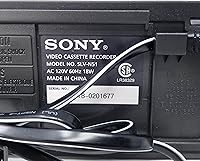
  • Model Number: The official model identifier for this unit is SLVN51.
  • Format: This deck operates exclusively with the VHS tape format.
  • Head Configuration: Features a 4-head drum design, which improves still-frame, slow-motion, and overall playback clarity compared to standard 2-head units.
  • Audio System: Records and plays back in hi-fi stereo, with MTS stereo broadcast reception for capturing stereo audio from compatible TV signals.
  • Autotracking: Digital automatic tracking adjusts playback alignment without manual intervention, which is particularly useful for aged or worn tapes.
  • Special Functions: Includes commercial skip, 60-second flash rewind, and instant replay for convenient tape navigation and reduced mechanical wear.
  • Timer: Programmable 8-event, 1-month timer allows scheduling of up to eight separate recording sessions within a one-month window.
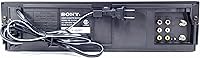
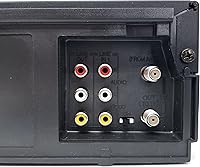
  • Rear Connections: Rear panel provides composite video input and output jacks for connection to televisions, AV receivers, or capture devices.
  • Front Connections: Front-mounted AV input jacks allow quick and convenient hookup of camcorders or other external video sources.
  • Dimensions: The unit measures 14 x 9 x 3.5 inches, a standard full-width VCR footprint.
  • Weight: The deck weighs 8.25 pounds without packaging.
  • Color: Available in black.
  • Remote Power: The included remote control requires 2 AA batteries, which are not included in the box.
  • Setup Type: Designed for plug-and-play installation, requiring no complex configuration for basic operation.

Related Reviews
Sony SLV-N750 Hi-Fi VCR
74%
83%
Picture Quality
88%
Build Quality
86%
Audio Performance
84%
Ease of Setup
61%
Remote Usability
More
Sony SLV-N50 Hi-Fi Stereo VHS VCR
72%
83%
Audio Fidelity
78%
Playback Reliability
81%
Build Quality
86%
Ease of Setup
62%
Video Picture Quality
More
Sony XMGS4 GS Series 4-Channel Hi-Res Amplifier
85%
93%
Sound Clarity
89%
Power Output
87%
Ease of Installation
75%
Thermal Performance
88%
Build Quality
More
Sony SS-CS3M2 2025 Floorstanding Speaker
80%
88%
Sound Quality
86%
Soundstage & Imaging
71%
Bass Performance
83%
Hi-Res Audio Performance
74%
Build Quality
More
RIVA Arena
RIVA Arena
76%
84%
Sound Quality
68%
Bass Performance
89%
Multiroom & Ecosystem Integration
61%
Setup & App Experience
91%
Streaming Platform Support
More
RIVA Concert Wi-Fi Bluetooth Smart Hi-Fi Speaker
85%
93%
Sound Quality
85%
Alexa Integration
88%
Connectivity Options
90%
Ease of Setup
87%
Multiroom Audio Compatibility
More
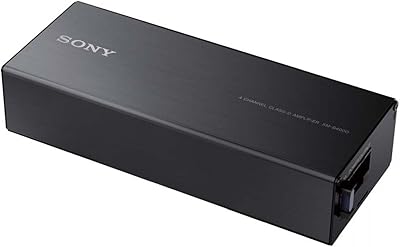
Sony XMS400D 4-Channel Micro Car Amplifier
75%
88%
Installation Ease
79%
Sound Clarity
63%
Power Output
93%
Compact Form Factor
67%
Thermal Management
More
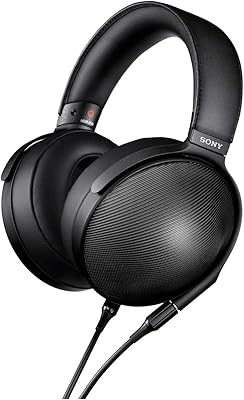
Sony MDR-Z1R Over-Ear Headphones
77%
94%
Sound Quality
93%
Build Quality
71%
Comfort
88%
Cable & Connectivity
58%
Amplifier Dependency
More
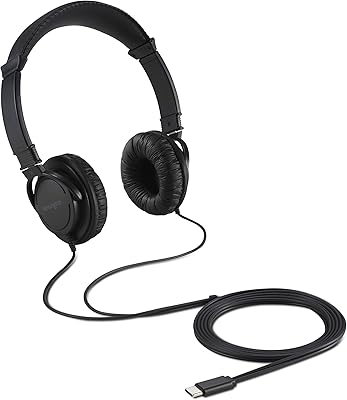
Kensington USB-C Hi-Fi Headphones K97456WW
86%
87%
Sound Quality
90%
Comfort for Long Listening
92%
Value for Money
91%
Compatibility with Devices
88%
Ease of Use
More
Sony FE 35mm F1.4 GM Prime Lens
86%
96%
Optical Sharpness
93%
Autofocus Performance
91%
Bokeh Quality
88%
Build Quality
67%
Vignetting Control
More

FAQ

It will, but not directly out of the box on most current televisions. The SLV-N51 outputs a composite video signal, and the majority of modern flat-panel TVs no longer include composite inputs. You will need a composite-to-HDMI converter or upscaler, which are widely available as third-party accessories. Just be aware that no adapter will make VHS footage look like HD — the format has inherent resolution limits regardless of how you connect it.

Yes, and it is actually one of the better choices for doing exactly that. The 4-head design and digital autotracking help stabilize playback on deteriorating tapes, which reduces the dropouts and glitches that make digitizing frustrating. You would connect the composite output to a USB capture card, then record the signal on your computer using software like OBS or VirtualDub. For best results, let the deck warm up for a few minutes before capturing.

Better than manual tracking on most decks. The automatic adjustment compensates for the tape tension and head alignment drift that affects older cassettes, and most users report noticeably steadier playback compared to basic VCRs. That said, tapes with severe physical damage — mold, broken splices, or heavy oxide shedding — are beyond what any tracking system can fully fix.

Standard VCR audio uses a linear track recorded along the edge of the tape, which produces relatively flat, noisy sound. Hi-fi stereo records the audio signal into the video track using the spinning heads, which results in a much wider frequency range and lower noise floor. On a well-recorded hi-fi tape, music and dialogue sound noticeably fuller and cleaner — it is a genuine difference, not a subtle one.

Commercial skip advances the tape forward in a fixed increment — typically around 30 seconds — with a single button press, letting you jump past commercial breaks without fast-forwarding and then rewinding to find your place. It is a straightforward convenience feature that also reduces wear on the tape and the deck's mechanical components compared to repeated fast-forward and reverse cycles.

No, Sony discontinued VCR production years ago and no longer provides official service or parts support for this model. Units available today are pre-owned, refurbished, or old stock. If you purchase one, factor in the possibility that internal rubber components — particularly the drive belt — may need replacement at some point. Independent repair technicians who specialize in VCRs can still service these decks, but it is worth knowing before you buy.

Yes, that is exactly what the front AV input is designed for. It accepts a standard composite video and audio signal, so most older camcorders with RCA outputs will connect directly. It is much more convenient than routing cables around the back of the unit, especially if you are dubbing tapes or doing occasional one-off connections.

Yes, like most full-featured VCRs of its generation, this 4-head deck supports SP (standard play) and EP (extended play, also called SLP) recording and playback speeds. EP mode fits up to six hours on a standard T-120 tape but produces noticeably softer picture quality compared to SP. For archiving purposes, SP is always the better choice if tape length allows.

For most users it works as expected, but a small number of reviews mention occasional inconsistencies with the timer function, particularly on older units. If you plan to rely on it regularly, it is worth running a few test recordings when you first set the deck up to confirm it is behaving correctly. Keeping the clock accurately set is also essential — a power interruption that resets the clock will throw off any scheduled recordings.

For most people with a real tape collection, yes. The jump from a 2-head to a 4-head deck is most noticeable during pause and slow-motion playback, where 2-head units tend to show noisy, unstable images. The addition of hi-fi audio is equally impactful if your existing deck only has standard linear audio. If you mainly just press play and watch, the upgrade is still worthwhile but less dramatic than it will be for anyone who uses the deck's full range of playback modes.

Where to Buy