Overview

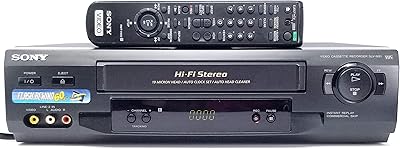
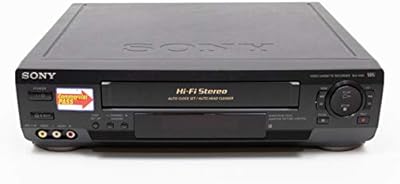
The Sony SLV-N750 Hi-Fi VCR sits comfortably in the upper tier of consumer VCR decks — a full-chassis unit built with the kind of solidity you rarely find in budget players. The silver casing and overall construction feel deliberate, not flimsy. If you have a shelf of old VHS tapes you actually want to watch or archive properly, this deck is worth considering seriously. It isn't a relic you'd pick up out of curiosity; it's a purpose-built playback machine from a brand that understood the format well before it faded from store shelves.

Features & Benefits

The 4-head Hi-Fi configuration is the foundation here. Most budget decks struggle in EP mode — the picture gets muddy and audio artifacts creep in. The N750's 19-micron heads address that directly, producing noticeably cleaner results at extended play speeds. There's also Quasi S-VHS playback, which lets you insert an S-VHS cassette and watch it at standard VHS resolution. It's not true S-VHS, so don't expect full detail, but it's genuinely useful if you have a mixed tape collection. Flash Rewind and the Commercial Skip button round things out practically — small features, but they matter during longer viewing sessions.

Best For

This VCR deck makes the most sense for home archiving projects — specifically, people who have boxes of VHS tapes and want to either watch them or run them through a capture card to preserve them digitally. Families with old camcorder recordings will appreciate the front-panel A/V inputs, which make connecting a camcorder quick and painless. If you occasionally come across S-VHS tapes, the Quasi S-VHS support means you won't need a separate deck entirely. It's also a reasonable choice as a secondary room setup where reliability from a trusted brand matters more than cutting-edge specs.

User Feedback

Owners of this Hi-Fi VCR frequently highlight EP-mode picture clarity as the standout quality, especially when stacked against cheaper decks they've owned previously. The transport mechanism earns consistent praise for feeling solid and holding up through years of regular use. On the downside, the age of the hardware is a legitimate concern — internal parts and replacement heads are increasingly difficult to source, and that's worth factoring in before purchasing. Some buyers find the remote functional but fairly basic. A handful compare it favorably against Panasonic decks from the same era, though opinions vary. Initial setup is generally described as straightforward and hassle-free.

Pros

  • 4-head Hi-Fi stereo configuration delivers noticeably cleaner audio and video than most budget VCR decks.
  • EP-mode picture quality is a real strength, thanks to purpose-built 19-micron heads.
  • Quasi S-VHS support lets you play S-VHS cassettes without needing a second dedicated deck.
  • Flash Rewind handles a full T-120 tape in about 60 seconds, cutting down waiting time significantly.
  • Front-panel A/V inputs make camcorder and external device hookups quick and convenient.
  • Full-chassis construction gives this VCR deck a solid, durable feel that cheaper players lack.
  • Sony brand reliability means the transport mechanism tends to hold up well over years of regular use.
  • Commercial Skip is a small but practical feature that makes navigating longer tapes less tedious.
  • Setup is consistently described as straightforward, even for users unfamiliar with older AV equipment.
  • Fits cleanly into a secondary room setup where a dependable legacy deck is needed without complexity.

Cons

  • Replacement parts and compatible heads are increasingly scarce, making repairs difficult if the unit fails.
  • No HDMI or digital output means an adapter or AV receiver is required for use with modern TVs.
  • Quasi S-VHS is not true S-VHS — buyers expecting full S-VHS resolution quality will be disappointed.
  • The remote control is functional but basic, with little comfort or intuitive layout to speak of.
  • At 8.6 pounds with a full-chassis body, it occupies meaningful shelf space compared to compact alternatives.
  • Hardware of this age carries inherent risk; there is no guarantee of how many operational hours remain.
  • Finding a qualified technician to service or clean the transport mechanism is harder than it once was.
  • No auto-clock or smart programming features, which limits usefulness for anyone hoping to schedule recordings.

Ratings

The Sony SLV-N750 Hi-Fi VCR has been scored by our AI system after analyzing verified buyer reviews from around the world, with spam, bot-generated, and incentivized feedback actively filtered out before any scoring was applied. The result is a balanced picture that reflects both the genuine strengths this VCR deck delivers for its target audience and the real frustrations owners have encountered. Scores are intentionally honest — where this Hi-Fi VCR earns praise, the numbers reflect it, and where it falls short, that is reflected too.

Picture Quality
83%
Users consistently single out EP-mode playback as the clearest they have seen from a consumer VCR at this level, with the 19-micron heads making a tangible difference when playing older extended-play recordings. SP-mode playback is crisp and stable, which matters when digitizing tapes where every bit of preserved detail counts.
Quasi S-VHS playback is a limitation that catches some buyers off guard — S-VHS cassettes play back at standard VHS resolution, not the higher quality the format is capable of. Side-by-side with a true S-VHS deck, the difference is obvious and disappointing for anyone with a significant S-VHS library.
Build Quality
88%
The full-chassis construction sets this VCR deck apart from the flimsy plastic shells common in budget units from the same era. Owners frequently comment that the transport mechanism feels robust and handles regular tape cycling without the jitter or misalignment issues that plague lighter decks.
Despite the solid foundation, units of this age are beginning to show their years — internal belts and idler tires can harden or slip over time, and this affects transport reliability. It is not a design flaw so much as an inevitability of aging hardware that buyers should factor in before purchasing.
Audio Performance
86%
Hi-Fi stereo audio reproduction is one of the strongest attributes here, with users noting that soundtrack clarity and stereo separation hold up well compared to linear-track-only players. For home movies with music or broadcast recordings where audio fidelity matters, the difference is clearly audible through a decent AV receiver.
The Hi-Fi audio performance is only as good as the condition of the tape being played and the cleanliness of the heads. Users who skipped regular head cleaning reported audio dropout and intermittent channel loss, which can frustrate anyone in the middle of a digitizing session.
Ease of Setup
84%
Most buyers describe the initial hookup as refreshingly uncomplicated — composite AV connections are familiar to anyone who used electronics in the 1990s or 2000s, and the front-panel inputs make camcorder connections a one-minute job rather than a cable hunt behind the unit.
Connecting to a modern flat-screen TV requires an adapter or AV receiver since there is no HDMI output, and this trips up buyers who assumed the process would be plug-and-play with current hardware. The step is not difficult, but it is an extra cost and complication that is not obvious until the box is open.
Remote Usability
61%
39%
The remote covers all essential functions and works reliably within a reasonable range, which is all most users actually need for basic tape playback and navigation. Commercial Skip and rewind are easily accessible without hunting through layers of menus.
The remote itself is dated by any current standard — the layout is cramped, button labeling is small, and there is no backlight, making it frustrating to use in dim viewing environments. Several buyers also noted that replacement remotes are increasingly difficult to find at a fair price.
Tape Transport Speed
81%
19%
Flash Rewind is a genuinely useful feature for anyone who cycles through tapes frequently, rewinding a full T-120 in around 60 seconds and removing one of the more tedious parts of working with physical tape media. Users running digitizing workflows especially appreciate not waiting several minutes between takes.
Fast-forward speed is more ordinary and does not benefit from the same engineering attention as rewind. For users who need to scan forward through long tapes to find specific content, the process is slower than expected and requires patience.
Compatibility
74%
26%
Support for both SP and EP playback, combined with Quasi S-VHS capability, gives this VCR deck broader tape compatibility than most single-speed consumer decks. Buyers with mixed tape collections — some recorded in SP, others in EP, and a few on S-VHS cassettes — can use one machine for all of them.
True S-VHS playback is absent, which is a meaningful gap for dedicated S-VHS collectors. There is also no support for 8mm or Hi8 formats, so users with camcorder tapes in those formats will still need a separate playback device alongside this one.
Digitizing Performance
82%
18%
For users pairing this deck with a USB capture card, the clean and stable output signal makes it one of the better choices among consumer VCRs for analog-to-digital workflows. The 4-head configuration reduces dropout artifacts that commonly plague budget decks during capture sessions.
Without a built-in time-base corrector, the output signal can occasionally show minor sync instability on worn tapes, which some capture software handles better than others. Users with heavily degraded tapes may still encounter tracking issues that no adjustment fully resolves.
Value for Money
67%
33%
For a buyer who specifically needs a reliable, above-average VCR from a trusted brand and has a real use case for it, the Sony N750 represents a defensible purchase. The feature set — Hi-Fi audio, improved EP heads, Quasi S-VHS — is meaningfully better than what a budget deck offers.
The price point is difficult to fully justify given the hardware's age and the real risk of mechanical failure without accessible replacement parts. Buyers who only need to play a small number of tapes might find a cheaper, well-maintained used deck serves their needs just as well for far less money.
Long-Term Reliability
58%
42%
Units that have been regularly serviced and stored properly tend to perform consistently, and buyers who inherited or purchased well-maintained examples report years of additional trouble-free use. The full-chassis design does give it a mechanical advantage over cheaper builds in terms of baseline durability.
At this point in the product's life, aging internal components — particularly rubber belts, idler tires, and capacitors — represent a real failure risk that no amount of brand reputation can fully offset. Sourcing replacement parts is genuinely difficult, and professional repair costs can approach or exceed the deck's purchase price.
Front-Panel Inputs
87%
The front-panel composite A/V inputs are one of the most practically useful features for anyone connecting a camcorder or second device regularly, eliminating the need to route cables behind the unit every time. Users running mixed setups — VCR plus camcorder playback — found this alone worth factoring into their buying decision.
The inputs are composite only, which limits signal quality compared to S-Video connections available on higher-end decks. For users trying to extract the cleanest possible signal from a camcorder during digitizing, the absence of a front-panel S-Video input is a minor but real shortcoming.
Design & Aesthetics
73%
27%
The silver finish and clean front panel give this VCR deck a tidy, understated appearance that fits well in a classic AV rack setup. It does not look out of place alongside other late-era Sony components, and the build conveys a sense of quality that budget decks rarely achieve.
The design is firmly of its era — controls and display styling will feel dated to anyone accustomed to modern equipment. The unit is also bulkier than many buyers expect, and at 8.6 pounds it takes up meaningful shelf space that lighter modern devices would not.
Parts Availability
38%
62%
Some specialty electronics suppliers and online marketplaces still carry salvaged or new-old-stock components for this model, and experienced technicians familiar with Sony VCR mechanisms can often source what they need with some effort. For buyers with connections to the repair community, the situation is manageable.
For the average buyer, finding replacement belts, idler assemblies, or video heads specifically matched to this unit is a genuine challenge that is only getting harder with time. This is the single most cited long-term concern among owners, and it is a serious practical limitation for anyone planning heavy or indefinite use.

Suitable for:

The Sony SLV-N750 Hi-Fi VCR is the right choice for anyone with a serious investment in VHS media who wants dependable, above-average playback quality from a brand with a proven track record. It fits particularly well with home archivists — people running their tapes through a capture card to create digital backups before the cassettes degrade further. Families who recorded years of life events on VHS or camcorder tapes will find the front-panel A/V inputs genuinely practical, making it easy to connect directly without rerouting cables behind the unit. Buyers who have a few S-VHS tapes mixed into their collection will also benefit, since Quasi S-VHS support means those cassettes are at least viewable, even if not at full S-VHS resolution. For anyone setting up a secondary viewing room or a workshop space where a reliable legacy deck is needed, this VCR deck handles that role well without requiring much fuss.

Not suitable for:

The Sony SLV-N750 Hi-Fi VCR is not the right purchase for buyers hoping to use it as a true S-VHS deck — Quasi S-VHS playback is a meaningful limitation, and anyone with a large collection of S-VHS recordings will want a dedicated S-VHS unit instead. Casual buyers who just want to watch a handful of tapes once or twice might find the investment difficult to justify given the product's age and the increasingly real risk of hardware failure without available replacement parts. This deck is also not suited for anyone expecting modern connectivity options — there is no HDMI output, no digital upscaling, and no way to connect it natively to a current-generation television without an adapter or AV receiver. Buyers in regions where servicing older Sony VCR mechanisms is difficult should think carefully, as finding qualified repair technicians for hardware of this vintage is not straightforward. If long-term reliability and serviceability are top priorities, the age of this product class is a genuine obstacle.

Specifications

  • Brand: Manufactured by Sony, a brand with decades of experience in consumer electronics and home video equipment.
  • Model Number: The exact model designation is SLV-N750, part of Sony's late-era full-chassis VCR lineup.
  • Head Configuration: Uses a 4-head Hi-Fi stereo configuration designed to deliver clean playback across both SP and EP recording speeds.
  • EP-Mode Heads: 19-micron heads are fitted specifically to improve picture sharpness and reduce noise during extended-play recordings.
  • S-VHS Support: Offers Quasi S-VHS playback, allowing S-VHS cassettes to be viewed at standard VHS resolution rather than full S-VHS quality.
  • Rewind Speed: Flash Rewind technology rewinds a standard T-120 cassette in approximately 60 seconds.
  • Commercial Skip: Each press of the Commercial Skip button advances the tape forward by 30 seconds.
  • A/V Inputs: Front-panel composite audio and video inputs support direct connection to camcorders, game consoles, or a secondary VCR.
  • Recording Speeds: Supports both SP (standard play) and EP (extended play) recording and playback speeds.
  • Dimensions: The unit measures 17 x 3.88 x 10.5 inches (W x H x D), sized for standard AV shelf placement.
  • Weight: The deck weighs 8.6 pounds, reflecting its full-chassis construction rather than a lightweight budget build.
  • Color: Finished in silver, consistent with Sony's consumer electronics aesthetic from this product era.
  • Power Source: Operates on standard AC power; no battery operation is supported for the main unit.
  • Remote Battery: The included remote control requires 2 AAA batteries, which are not included in the box.
  • Chassis Type: Built on a full-chassis platform, which contributes to mechanical stability and a more durable tape transport mechanism.

Related Reviews
Sony SLV-N51 4-Head Hi-Fi VCR
74%
88%
Picture Stability
91%
Digital Autotracking
86%
Audio Quality
79%
Build Quality
74%
Ease of Setup
More
Sony SLV-N50 Hi-Fi Stereo VHS VCR
72%
83%
Audio Fidelity
78%
Playback Reliability
81%
Build Quality
86%
Ease of Setup
62%
Video Picture Quality
More
RIVA Arena
RIVA Arena
76%
84%
Sound Quality
68%
Bass Performance
89%
Multiroom & Ecosystem Integration
61%
Setup & App Experience
91%
Streaming Platform Support
More
RIVA Concert Wi-Fi Bluetooth Smart Hi-Fi Speaker
85%
93%
Sound Quality
85%
Alexa Integration
88%
Connectivity Options
90%
Ease of Setup
87%
Multiroom Audio Compatibility
More
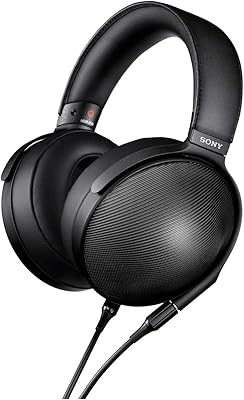
Sony MDR-Z1R Over-Ear Headphones
77%
94%
Sound Quality
93%
Build Quality
71%
Comfort
88%
Cable & Connectivity
58%
Amplifier Dependency
More
Kensington USB-C Hi-Fi Headphones K97456WW
86%
87%
Sound Quality
90%
Comfort for Long Listening
92%
Value for Money
91%
Compatibility with Devices
88%
Ease of Use
More
Creative T100
Creative T100
80%
88%
Audio Clarity & Midrange
71%
Bass Performance
83%
Connectivity Range
74%
Bluetooth Stability
81%
EQ & Sound Customization
More
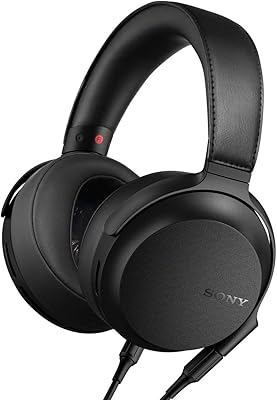
Sony MDR-Z7M2 Over-Ear Headphones
75%
93%
Sound Quality
91%
Soundstage & Imaging
74%
Build Quality
67%
Comfort
88%
Cable Quality
More
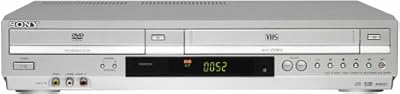
Sony SLVD370P DVD/VCR Progressive Scan Combo Player
82%
85%
Ease of Use
89%
Picture Quality
82%
Sound Quality
70%
Build Quality
91%
Value for Money
More
Sony RDR-VX VHS to DVD Recorder Combo
74%
88%
Ease of Use
82%
Dubbing Performance
67%
Video Output Quality
79%
Build Quality
54%
Value for Money
More

FAQ

It can, but with an important caveat: the Quasi S-VHS feature plays S-VHS cassettes at standard VHS resolution, not true S-VHS quality. If you have a large collection of S-VHS tapes and want full detail, you would need a dedicated S-VHS deck. For occasional S-VHS playback where resolution isn't critical, it works fine.

Not directly via HDMI. This VCR deck uses composite AV outputs, so you will need either a TV with composite inputs, an AV receiver that accepts them, or a composite-to-HDMI adapter. Adapters are widely available and affordable, and most users report they work reliably for this purpose.

Noticeably better, largely due to the 19-micron heads designed specifically for EP-mode use. Budget VCRs often use the same heads for all speeds, which leads to a softer, noisier picture in EP. The Sony N750 addresses this directly, and owners who have compared it to entry-level players consistently mention the difference.

Yes, it is one of the more practical choices for digitizing. The 4-head Hi-Fi configuration and improved EP-mode heads mean you are capturing the best signal the tape can offer. Pair it with a USB capture card and free software like OBS or VirtualDub, and you have a solid analog-to-digital workflow.

The front-panel inputs are composite audio and video jacks, positioned on the face of the unit for convenient access. You can connect a camcorder, a game console, or a second VCR without reaching around to the back. It is a practical feature that makes the Sony SLV-N750 Hi-Fi VCR notably more flexible for multi-device setups.

Sony rates it at roughly 60 seconds for a full T-120 tape, and real-world use backs that up pretty closely. It is a meaningful improvement over standard rewind mechanisms, which can take several minutes on a fully extended tape. If you are doing a lot of tape cycling for digitizing or review purposes, it saves noticeable time.

Each press skips the tape forward by 30 seconds. It is designed for navigating past commercial breaks or unwanted sections without fast-forwarding manually. You can press it multiple times in succession to skip longer stretches, making it more practical than it might sound at first.

This is a real concern and worth being honest about. Internal parts, particularly the tape transport mechanism and video heads, are increasingly difficult to source new. Some specialty electronics repair shops and online marketplaces carry used or salvaged components, but availability varies by region. If you plan to use this deck heavily, having it professionally cleaned and inspected before regular use is a smart precaution.

Generally, yes. The connections are standard composite AV, which most people are familiar with, and the front-panel inputs make initial hookup less fiddly than rear-only designs. The remote is basic but functional, and the on-screen interface is typical of late-era Sony VCRs — not complex.

Opinions differ among enthusiasts, but both brands produced reliable late-era decks. Sony units like this one tend to be praised for transport build quality and Hi-Fi audio performance, while some Panasonic models are noted for their head drum design. If you find a well-maintained unit from either brand, you are likely in good shape — the key factor at this point is overall condition and service history rather than brand alone.

Where to Buy