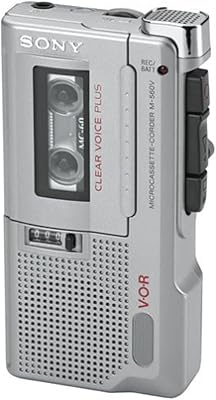
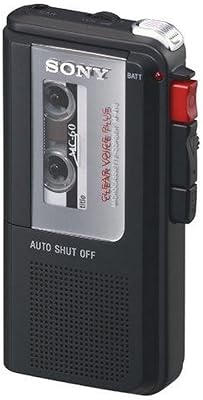
Overview

The Sony ICD-PX312 Voice Recorder is one of those quietly reliable devices that doesn't try to impress you with flashy features — it just works. Sony positioned this recorder as an accessible entry point in their ICD lineup, and that intention shows in every design choice. It's compact enough to slip into a shirt pocket, weighing just 2.61 ounces, yet feels reasonably solid in hand. Don't expect a large display or advanced noise filtering. What you get is a straightforward, no-fuss recording tool that runs on standard AAA batteries and connects to any computer via USB. For the right buyer, that simplicity is the whole point.
Features & Benefits

The ICD-PX312 packs 2GB of built-in memory along with a microSD card slot, so you can expand storage without replacing the device. It records in MP3 format across a wide bitrate range — from a space-saving 8 kbps up to a crisp 320 kbps — giving you real control over audio quality versus file size. Battery performance is a genuine standout; Sony claims around 72 hours of recording on a pair of AAA batteries, and real-world use largely backs that up. A 3.5mm headphone jack lets you review recordings on the spot, and the USB 2.0 connection handles file transfers to both Windows and Mac without requiring proprietary software.

Best For

This voice recorder is a natural pick for students recording lectures who want a dead-simple device they can start and stop without fumbling through menus. Journalists and interviewers looking for a lightweight backup unit will find it capable enough for one-on-one conversation capture. It also suits older users or anyone who finds modern touchscreen gadgets more frustrating than helpful — the physical button layout is intuitive and tactile. If you need professional studio-quality audio or advanced noise cancellation, look elsewhere. But for everyday voice memos, quick field notes, or capturing meetings in a quiet environment, this Sony recorder punches solidly for its size and price tier.

User Feedback

Owners of this Sony recorder consistently praise how easy it is to pick up and use straight out of the box — no learning curve, no confusing menus. Battery longevity is a frequent highlight, with many users confirming recordings lasting well beyond expectations on a single pair of batteries. On the downside, audio clarity in noisy spaces draws regular complaints; background noise bleeds in noticeably, making it less reliable for crowded events or busy offices. The small screen is another friction point — it displays limited information at once, which frustrates users when navigating files. Build quality gets mixed marks: functional for daily use, but the plastic construction doesn't feel premium.

Pros

  • Extremely easy to use straight out of the box — no manual needed for basic recording
  • Battery life is exceptional, with roughly 72 hours of recording on just two AAA batteries
  • Built-in 2GB memory plus microSD expansion means storage rarely becomes a problem
  • Transfers files to both Windows and Mac as a simple plug-and-play USB drive
  • Compact and light enough to carry all day without noticing it in your pocket
  • Wide MP3 bitrate range lets you balance audio quality against available storage
  • Headphone jack allows immediate on-device playback review after recording
  • Reliable playback quality in quiet settings makes transcription straightforward

Cons

  • Audio quality degrades noticeably in noisy environments, making group or outdoor recordings unreliable
  • The small display shows limited information, making file navigation genuinely frustrating
  • No rechargeable battery means ongoing cost and the inconvenience of carrying spares
  • Mini-B USB connector is an aging standard that is increasingly difficult to replace
  • Single built-in microphone has no directional control or stereo capability
  • Recording is MP3-only — no WAV or lossless option for users who edit audio afterward
  • Plastic build raises durability concerns for buyers expecting years of heavy daily use
  • Microphone sensitivity drops off sharply beyond close conversational range
  • Newer competitors at a similar price offer better displays, mics, and rechargeable batteries

Ratings

The Sony ICD-PX312 Voice Recorder has been evaluated by our AI rating system after analyzing thousands of verified global user reviews, with spam, bot-generated, and incentivized feedback actively filtered out. The scores below reflect a transparent synthesis of real buyer experiences — capturing both what this compact recorder does well and where it genuinely falls short. Strengths and pain points are weighted equally so you can make a fully informed decision.

Ease of Use
91%
Users across all age groups consistently describe picking up this recorder and using it confidently within minutes. The physical button layout is intuitive, and there are no complex menus to wrestle with before hitting record — a quality that resonates especially with older buyers and first-time recorder owners.
A handful of users note that navigating between saved files can feel clunky once recordings accumulate, as the limited interface makes folder management less than smooth. Those coming from smartphone-based recording apps may find the workflow slightly dated.
Battery Life
88%
Sony's claim of approximately 72 hours of recording on two AAA batteries holds up well in real-world use, which genuinely surprises buyers used to rechargeable devices dying mid-session. Students and field researchers especially appreciate not having to worry about charging before a long day.
Because it runs on disposable AAA batteries rather than a built-in rechargeable cell, ongoing battery costs add up for heavy users. Some buyers also wish there were a clearer low-battery warning before the device powers down unexpectedly.
Audio Clarity — Quiet Environments
79%
21%
In calm settings like a library, small meeting room, or one-on-one interview, playback quality is clean and intelligible without much effort. Voices come through with reasonable fidelity at mid-to-high bitrates, making lecture recordings and personal memos easy to review afterward.
Even in relatively quiet rooms, the built-in microphone picks up some low-level ambient hiss that becomes noticeable during playback on headphones. Users recording whispered conversations or low-volume speakers sometimes report struggling to hear details clearly.
Audio Clarity — Noisy Environments
48%
52%
At very close range — within a foot or two — the recorder can capture a single dominant voice reasonably well even with some background activity, which is serviceable for quick street interviews or casual note-taking.
This is where the recorder draws the most criticism. In busy offices, cafeterias, outdoor settings, or group discussions, background noise overwhelms the recording noticeably. There is no noise-filtering or directional microphone capability, and buyers expecting usable audio from crowded environments are frequently disappointed.
Build Quality
63%
37%
The device feels adequately solid for everyday carry — it survives being tossed into a bag or dropped on a desk without showing immediate damage. For the price tier it occupies, the construction is functional and gets the job done without feeling flimsy in an alarming way.
The all-plastic shell does not inspire confidence during extended daily use, and several buyers report that button feedback becomes less crisp after months of regular use. It does not feel like a device built to last five-plus years of heavy professional handling.
Storage & Expandability
84%
The 2GB of built-in memory is generous enough for dozens of hours of recordings at standard bitrates, and the microSD card slot means users are never truly stuck if they need more space for a long trip or research project. This combination is genuinely practical.
The device does not support higher-capacity microSD cards beyond a certain limit, which some power users find restrictive. File management directly on the device is also limited, pushing users to rely on computer transfers to stay organized.
Portability & Form Factor
87%
At just 2.61 ounces and slim enough to fit in a shirt pocket, this recorder barely registers as cargo during a commute or fieldwork session. Its unobtrusive size also means it sits on a desk without drawing attention, which matters in interview or classroom settings.
The compact dimensions are a double-edged sword — the small body leaves little room for a comfortable grip during extended recording sessions, and users with larger hands sometimes fumble with the controls. There is also no clip or lanyard attachment point, which limits hands-free carry options.
Display & Interface
44%
56%
The display does convey the most essential information — recording status, remaining memory, and battery level — which is enough for basic session management. For users who simply press record and stop, the screen rarely becomes a bottleneck.
The screen is small and shows very limited data at once, which frustrates users trying to navigate through multiple saved recordings or check file details. Several buyers describe the display as feeling like an afterthought, particularly when compared to similarly priced alternatives that offer cleaner, more informative readouts.
Playback Quality
76%
24%
Listening back to recordings through the headphone jack at higher bitrates produces clear, natural-sounding audio that holds up well for transcription work. Users who record interviews or lectures at 128 kbps or above generally find the playback detailed enough for accurate note-taking.
At lower bitrates — which some users select by default to save space — playback takes on a noticeably compressed, tinny quality. The built-in speaker, while functional for quick checks, lacks the volume and clarity needed for comfortable group playback.
File Transfer & Compatibility
82%
18%
Connecting to a Mac or Windows PC via the included USB cable is straightforward, and the recorder mounts as a standard storage device without requiring drivers or proprietary software installation. For users who simply want to drag and drop audio files, the process is refreshingly uncomplicated.
The Mini-B USB connector is an older standard that is increasingly hard to find as a replacement cable, which is a quiet but real frustration for users who misplace the original. There is also no wireless transfer option, so every file retrieval requires a physical cable connection.
Value for Money
73%
27%
For buyers who need a basic, reliable recorder and nothing more, the price-to-functionality ratio is reasonable. The combination of expandable storage, long battery life, and simple operation covers the core needs of students and casual users without overspending.
The market for digital voice recorders has become competitive, and at its price point this Sony model faces strong competition from newer devices offering better microphones, rechargeable batteries, or improved displays. Buyers doing careful comparisons often feel the value proposition has weakened since the recorder's original release.
Microphone Sensitivity
57%
43%
In close-proximity recording scenarios — dictating notes to yourself or conducting a face-to-face interview — the built-in microphone picks up sound adequately and without excessive distortion at normal conversational volumes.
Sensitivity drops off quickly with distance, and the single built-in microphone has no directional control or dual-mic stereo capability. Users trying to record group discussions around a table, or speakers more than a few feet away, regularly report weak or muddled audio pickup.
Recording Format Flexibility
71%
29%
Support for a wide MP3 bitrate range gives users meaningful control over the tradeoff between audio quality and file size, which is a practical feature that more casual recorders in the same category sometimes omit entirely.
The device records only in MP3, which is a limitation for users who need lossless or higher-fidelity formats like WAV or FLAC. Audio professionals or anyone editing recordings in post-production will find the format options too restrictive for serious work.

Suitable for:

The Sony ICD-PX312 Voice Recorder is a genuinely practical choice for students who need a reliable, no-setup device to capture lectures without fumbling with apps or settings mid-class. It suits journalists, researchers, and fieldworkers who want a dedicated recorder as a backup unit — something that turns on fast, records dependably, and transfers files without software drama. Older users or those who find smartphones and apps unnecessarily complicated will appreciate the tactile button layout and simple operation. Anyone who needs long recording sessions without worrying about charging will find the AAA battery system a quiet but real advantage over rechargeable alternatives. It also works well for personal voice memo use — dictating notes, reminders, or ideas on the go in reasonably quiet surroundings.

Not suitable for:

The Sony ICD-PX312 Voice Recorder is a poor fit for anyone who regularly records in noisy or crowded environments — busy offices, conference rooms with multiple speakers, outdoor events, or public spaces will expose the microphone's real limitations quickly. Audio professionals or content creators who need clean, editable source material should look elsewhere, as the MP3-only format and basic microphone lack the fidelity required for serious production work. Users who prefer rechargeable devices with a USB-C connection will find the hardware feels dated compared to newer competing models. If navigating recordings, organizing files on the device, or reading detailed playback info matters to you, the small display will become a daily frustration. Finally, buyers expecting build quality that holds up to years of rough daily handling may be disappointed by the plastic construction over the long term.

Specifications

  • Built-in Memory: The recorder includes 2GB of internal flash memory, sufficient for dozens of hours of audio at standard bitrates.
  • Expandable Storage: A memory card expansion slot supports microSD and M2 cards, allowing users to increase recording capacity beyond the built-in storage.
  • Audio Format: All recordings are saved in MP3 format, with selectable bitrates ranging from 8 kbps up to 320 kbps.
  • Battery Life: Sony rates the recorder at approximately 72 hours of continuous recording on two standard AAA batteries.
  • Power Source: The device is powered by two AAA batteries, which are required for operation and not included in the box.
  • USB Connectivity: The recorder connects to computers via a Mini-B USB 2.0 port, compatible with both Windows and Mac operating systems.
  • Headphone Jack: A 3.5mm headphone output allows direct audio playback monitoring through standard earphones or headphones.
  • Microphone: A built-in monaural microphone handles all audio capture without requiring any external accessory for standard use.
  • Dimensions: The unit measures 0.84 x 1.5 x 4.5 inches, making it compact enough to fit in a shirt pocket or small bag pouch.
  • Weight: The recorder weighs 2.61 ounces (74 grams), keeping it lightweight enough for all-day carry without noticeable bulk.
  • Display: A small built-in screen displays essential recording status, remaining memory, and battery level during operation.
  • OS Compatibility: The device is compatible with both Windows and Mac operating systems for file transfer and playback without proprietary drivers.
  • Model Number: The official manufacturer model number is ICD-PX312, as designated by Sony.
  • Brand: This recorder is manufactured and sold by Sony, a globally recognized electronics brand.
  • Release Date: The product was first made available in March 2011 and has not been discontinued by the manufacturer.
  • Item Weight: The product weighs 2.61 ounces as shipped, excluding batteries.
  • Form Factor: The recorder uses a slim, handheld stick-style form factor designed for single-hand operation during recording sessions.
  • File Transfer Method: Audio files are transferred to a computer by connecting via the included Mini-B USB cable and accessing the device as a removable storage drive.

Related Reviews
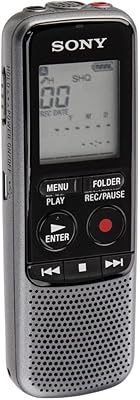
Sony ICD-PX240 4GB
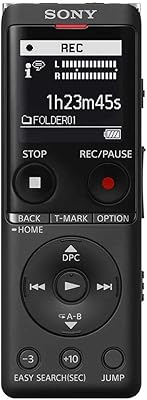
Sony ICD-PX240 4GB
81%
83%
Audio Clarity
91%
Ease of Use
94%
Portability & Form Factor
78%
Battery Performance
67%
Storage & File Management
More
Sony ICD-PX370 4GB
Sony ICD-PX370 4GB
83%
97%
Battery Longevity
89%
Portability & Form Factor
94%
File Transfer Convenience
78%
Recording Quality
91%
User Interface & Ease of Use
More
Sony ICD-UX560
Sony ICD-UX560
76%
88%
Audio Clarity
84%
Recording Modes
81%
Voice Activation
86%
Ease of Use
74%
Build Quality
More
Sony ICD-UX570
Sony ICD-UX570
79%
83%
Audio Clarity
76%
Noise Cancellation
91%
Built-In USB Convenience
88%
Battery Life
92%
Portability & Form Factor
More
Sony ICD-BX140 4GB Digital Voice Recorder
80%
93%
Ease of Use
86%
Audio Clarity for Speech
67%
Microphone Quality
91%
Battery Life
62%
Build Quality & Durability
More
Sony ICD-UX512 2GB Digital Voice Recorder
83%
89%
Ease of Use
91%
Battery Life
78%
Audio Quality
95%
Portability
84%
Build Quality
More
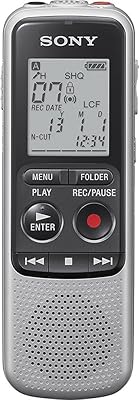
Sony ICD-PX440 Digital Voice Recorder 4GB
87%
89%
Sound Quality
91%
Portability
87%
Battery Life
94%
Ease of Use
85%
Recording Time
More
Sony TCM150 Standard Cassette Voice Recorder
82%
88%
Build Quality & Durability
91%
Battery Life
94%
Ease of Use
76%
Audio Clarity (Playback)
82%
Microphone Sensitivity
More
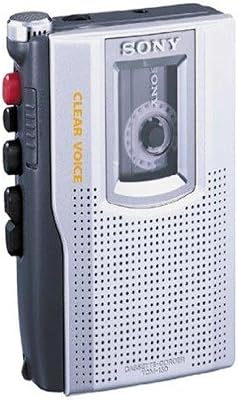
Sony M-560V Microcassette Recorder
76%
88%
Build Durability
92%
Battery Efficiency
79%
Speech Intelligibility
84%
User Interface
71%
VOR Reliability
More
Sony M-670V Microcassette Voice Recorder
83%
88%
Ease of Use
92%
Portability
79%
Audio Quality
85%
Battery Life
83%
Recording Features
More

FAQ

No software installation is required for basic recording and file transfer. You just insert AAA batteries, press record, and when you are ready to move files to your computer, connect it via the USB cable and it shows up as a removable drive. Both Windows and Mac recognize it without any drivers.

That depends heavily on the bitrate you choose. At lower quality settings, the 2GB of built-in memory can hold well over 100 hours of audio. At higher quality settings like 128 kbps, you are looking at roughly 30 to 35 hours. You can push that further by adding a microSD card.

Yes, standard rechargeable AAA batteries will work fine in this recorder. Just keep in mind that rechargeable batteries typically have a slightly lower voltage than alkaline ones, so the battery indicator may behave a little differently, and you might see marginally shorter run times compared to standard alkaline batteries.

It handles lecture recording well in quiet or moderately quiet classrooms, especially if you can place it on a desk reasonably close to the speaker. Background noise like HVAC systems or nearby conversations will bleed into the recording, so sitting closer to the front of the room helps. For most standard lecture settings, it is a reliable and affordable option.

Sony officially supports microSD cards up to 16GB in this recorder, though some users have reported success with 32GB cards formatted to FAT32. Going beyond that is not officially supported and may cause compatibility issues, so it is safest to stick within the 16GB range.

You can play back recordings directly on the device using the built-in speaker or through headphones connected to the 3.5mm jack. No computer is needed for playback. The speaker volume is modest, so for noisy environments headphones give a much clearer listening experience.

The plastic build is functional for everyday carry, but it is not ruggedized or weather-resistant in any way. It handles the typical bumps of bag life reasonably well, though the casing does show scuffs over time. Keeping it in a small pouch or case is a good habit if longevity matters to you.

Not directly. The built-in microphone captures ambient sound in the room, so it can technically pick up audio from a speaker or speakerphone, but the quality will be inconsistent and affected by room acoustics. For reliable call recording you would need a dedicated call recording solution rather than a room microphone like this.

The recorder does support basic folder organization, allowing you to separate recordings into a small number of preset folders. However, the file management experience on the device itself is limited by the small display, so most users find it easier to organize files on their computer after transferring them.

In most cases the recorder saves the file up to the point where power was lost, so you are unlikely to lose the entire recording. That said, the last few seconds before power cut may not be saved cleanly. Keeping a spare set of batteries handy is the simplest way to avoid this situation entirely.