
Overview

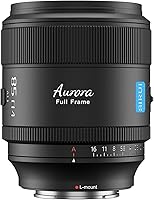
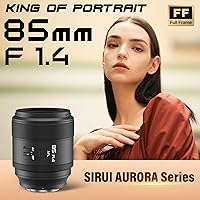
The SIRUI Aurora 85mm F1.4 Portrait Lens arrived in early 2025 as SIRUI's push into serious L-mount autofocus territory — a market previously dominated by heavier, pricier options from Sigma and Panasonic. This 85mm portrait lens sits at a mid-to-premium price point, targeting portrait, event, and travel photographers shooting on Lumix S, Leica SL, or Sigma fp bodies. It does not try to unseat the Sigma 85mm Art on raw optical prestige, but it makes a real case based on size, weight, and value. With a relatively small but growing user base, impressions are still forming — but what is out there is largely encouraging.

Features & Benefits

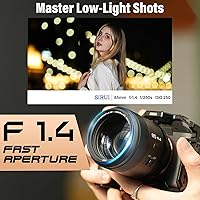
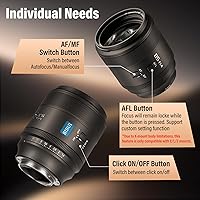
The Aurora 85mm F1.4 packs a 15-blade diaphragm, which produces exceptionally smooth, circular bokeh even when shooting wide open — not something every F1.4 lens can claim without fringing or nervous rendering in the out-of-focus areas. The optical formula combines aspherical elements, ED and HRI glass to keep chromatic aberration controlled and colors accurate across the frame. Autofocus runs on a step motor with eye-AF and subject tracking; in practice it handles well for portraits and moderate-speed subjects. At 540g, this L-mount prime is noticeably lighter than comparable fast primes, reducing fatigue during long shoots. SIRUI actively maintains the lens with firmware updates, currently at VER2.2.

Best For

This 85mm portrait lens is a natural fit for portrait and headshot photographers who need reliable eye-AF and clean, true-to-life rendering at wide apertures. Wedding and event shooters will appreciate how it holds up in dimly lit venues without the bulk that comes with heavier fast primes. Videographers on L-mount bodies — particularly the Lumix S5 II or Sigma fp — will find the step motor's quiet operation a real asset for gimbal or run-and-gun work. It also makes sense for travel photographers who want a capable fast prime without packing extra weight. For anyone newly building an L-mount kit, it offers a practical entry into serious portrait glass.

User Feedback

Buyer impressions for the Aurora 85mm F1.4 are still accumulating — it only launched in early 2025 — but the early signal is positive. Most shooters highlight the wide-open rendering quality, noting that center sharpness at F1.4 is strong and bokeh looks refined rather than swirly or busy. Build quality draws consistent praise given the price tier. That said, a handful of users report mild vignetting wide open and occasional AF hesitation in very low contrast scenes — neither unusual for this aperture class, but worth knowing. SIRUI has been responsive with firmware updates, and several early AF tracking complaints appear to have been addressed. Ranking #61 in SLR lenses suggests the lens is gaining real traction.

Pros

  • Wide-open sharpness at F1.4 is strong at center, producing detailed, professional-quality portraits straight out of the camera.
  • The 15-blade diaphragm delivers smooth, circular bokeh with minimal nervous or busy edges in out-of-focus areas.
  • At 540g, this L-mount prime is meaningfully lighter than most competing F1.4 options, reducing strain on long shoot days.
  • Eye-AF and subject tracking work reliably for portraits and slower-moving subjects in good to moderate light.
  • Aspherical, ED, and HRI glass elements keep chromatic aberration well controlled for a lens at this price level.
  • SIRUI actively supports the lens with firmware updates, showing genuine post-sale commitment to improvement.
  • The Aurora 85mm F1.4 is priced below the Sigma 85mm Art and Panasonic S 85mm, offering real savings for comparable use cases.
  • Quiet step motor makes it practical for video work where lens noise would otherwise bleed into on-camera audio.
  • Build quality feels solid and above-average for the price tier, according to early adopters.
  • BSR rank of #61 in SLR lenses, achieved so quickly after launch, suggests strong initial market confidence.

Cons

  • Vignetting at F1.4 is noticeable and will require correction in post for photographers who need clean edges wide open.
  • AF can hunt or hesitate in low-contrast scenes, which is a real concern for available-light event shooting.
  • User review volume is still limited given the March 2025 launch date, making long-term reliability hard to assess.
  • Edge and corner sharpness wide open does not match what top-tier 85mm alternatives offer at similar apertures.
  • Exclusive to L-mount with no autofocus adapter support, locking out a large portion of the mirrorless market entirely.
  • No confirmed weather sealing specification, which is a practical gap for outdoor and event photographers.
  • Some early users reported AF tracking inconsistencies that required firmware updates to partially resolve.
  • The square-ish cubic dimensions may feel less ergonomically balanced on smaller L-mount bodies like the Sigma fp.

Ratings

Our AI rating engine analyzed verified global buyer reviews for the SIRUI Aurora 85mm F1.4 Portrait Lens, actively filtering out incentivized, duplicate, and bot-generated submissions to surface what real photographers actually experienced. The scores below reflect a balanced picture — genuine strengths are credited, and recurring pain points are called out without softening. If a category scores lower, there is a real reason behind it.

Image Sharpness
86%
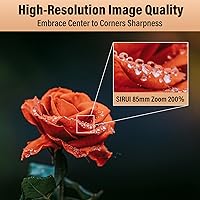
Center sharpness at F1.4 consistently impressed portrait shooters — faces and eyes render with crisp, flattering detail even in available-light conditions. Stopping down to F2.8 or beyond brings the entire frame to a level of clarity that holds up well when cropping or printing large.
Corner and edge sharpness wide open is a known weak point, with some users noting softness in the frame periphery that requires stopping down to correct. For photographers shooting group shots or full-body portraits where edge subjects matter, this is a practical limitation.
Bokeh Quality
89%
The 15-blade diaphragm earns its keep — out-of-focus backgrounds render with a smooth, organic quality that flatters portrait subjects without busy or onion-ring artifacts. Wedding and event photographers in particular praised the way the Aurora 85mm F1.4 separates subjects from cluttered backgrounds at receptions and outdoor sessions.
A small number of users reported slight bokeh fringing or color outlining around high-contrast edges at F1.4, particularly in backlit scenes. It is not a widespread complaint, but photographers shooting against bright windows or specular highlights may notice it occasionally.
Autofocus Speed
74%
26%
For standard portrait sessions — studio setups, headshots, and casual outdoor shoots — the step motor AF is adequately quick and locks onto faces without obvious lag. Eye-AF integration works well on supported bodies like the Lumix S5 II, with a solid hit rate during slower-paced shooting.
In low-contrast conditions or under poor lighting, the AF can hunt noticeably before locking, which creates missed moments during candid or event shooting. It is not a sports lens by any measure, and photographers expecting the responsiveness of premium AF systems will likely find it underwhelming in demanding scenarios.
Eye-AF Reliability
76%
24%
Eye-AF performs well for stationary to slow-moving subjects in reasonable light — headshot photographers reported a reliable lock rate that kept up with their workflow. Firmware updates have meaningfully improved consistency since launch, and current VER2.2 users report noticeably better tracking than earlier builds.
Reliability drops when subjects move unpredictably or when lighting is uneven, leading to occasional focus pulls to the wrong facial feature. Early adopters on pre-VER2.2 firmware experienced more frequent issues, so staying updated is genuinely important rather than optional.
Build Quality
82%
18%
Handling this L-mount prime, most users noted it feels more premium than its price tier would suggest — the barrel is solid, controls are smooth, and there is no perceptible play or wobble in the mount. Travel photographers and event shooters appreciated the sense of durability during regular field use.
Weather sealing is not confirmed, which is a real gap for outdoor photographers who work through light rain or dusty conditions. A few users also noted the near-cubic form factor feels slightly unbalanced on smaller L-mount bodies, though this is a minor ergonomic point rather than a build defect.
Weight & Portability
91%
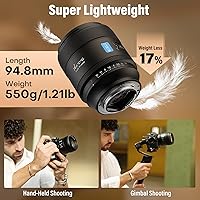
At 540g, this 85mm portrait lens is noticeably lighter than the Sigma 85mm Art or Panasonic S 85mm, and that difference becomes very real after several hours of handheld shooting at a wedding or on a travel day. Gimbal users in particular praised how easy it is to balance without counterweighting adjustments.
The weight savings come with a caveat — some users feel the lighter construction means the lens does not quite have the planted, confidence-inspiring heft of heavier professional alternatives. This is largely a perception issue, but photographers used to flagship glass may find the feel takes adjustment.
Chromatic Aberration
81%
19%
The combination of ED and HRI glass keeps lateral chromatic aberration well-controlled for a lens in this price range — portrait shooters reported clean, accurate color rendering on skin tones without heavy magenta or green fringing in normal shooting conditions.
Some axial chromatic aberration (color bokeh fringing) is visible wide open in high-contrast scenes, which is fairly typical for F1.4 lenses but worth noting for photographers who demand clean rendering without post-processing correction. It is manageable in software but present.
Vignetting
63%
37%
Vignetting at F1.4 can be used creatively to draw attention to portrait subjects — some photographers actually appreciated the natural light falloff toward corners as a subtle framing effect. It corrects cleanly in post-processing with minimal effort in Lightroom or Capture One.
The vignetting is pronounced enough at F1.4 that JPEG shooters or those doing minimal post-processing will notice it in final images. It is one of the more commonly flagged drawbacks in user feedback, particularly for photographers expecting cleaner wide-open performance than this price tier typically delivers.
Low-Light Performance
83%
The F1.4 aperture does what it promises in low-light — indoor event photographers found it capable of pulling clean, well-exposed shots in reception halls and dimly lit studios where F1.8 or slower lenses would demand a significant ISO penalty. Subject separation in low-light portraits is a genuine strength.
AF reliability in very dark scenes is the main limitation on low-light performance — the lens can struggle to acquire focus quickly when ambient light drops significantly, which offsets some of the optical advantage the wide aperture provides in those same conditions.
Video Performance
78%
22%
The step motor is quiet enough for on-camera audio capture, and the focus transition behavior is smooth and cinematic for slow-to-moderate subject movement. Gimbal shooters found it well-suited for travel and portrait video work, with pleasing rendering at F1.4 that gives footage a premium look.
Continuous AF during faster or more erratic subject movement in video can occasionally produce a visible focus hunt or breathing effect, which is distracting in edited footage. Videographers who rely heavily on continuous face-tracking during dynamic movement should test this on their specific body before committing.
Value for Money
84%
Relative to the Sigma 85mm Art and Panasonic S 85mm, this L-mount prime offers meaningful cost savings while delivering portrait-grade optical performance that genuinely holds up in real shooting. For L-mount photographers building a kit without an unlimited budget, the value equation is hard to argue with.
If you compare the absolute optical ceiling — corner sharpness, AF ceiling, build materials — the premium alternatives do justify their higher prices for demanding professionals. The Aurora 85mm F1.4 is excellent value for its tier, but it is not a budget lens masquerading as a flagship.
Firmware & Support
79%
21%
SIRUI has demonstrated genuine post-launch commitment by shipping meaningful firmware updates that have addressed real AF complaints from early buyers. The fact that the lens is now on VER2.2 within months of launch signals that the manufacturer is listening and iterating — which is encouraging for a newer brand in this space.
The update process currently requires emailing SIRUI for instructions, which is less convenient than an automated in-app or in-camera update system that competing manufacturers offer. For less tech-savvy users, the update process may feel like an unnecessary friction point.
Compatibility & Integration
77%
23%
On fully compatible L-mount bodies, native integration is solid — EXIF data passes correctly, in-body image stabilization pairs as expected, and lens correction profiles are increasingly available in major editing software. Lumix S5 II users in particular reported clean, problem-free operation across stills and video modes.
The L-mount exclusivity limits the potential user base considerably, and there is no autofocus-capable adapter path for Sony E or Canon RF users. Photographers who shoot across multiple systems or plan to switch mounts cannot carry this investment with them.

Suitable for:

The SIRUI Aurora 85mm F1.4 Portrait Lens makes the most sense for L-mount photographers who want a capable, fast 85mm without committing to the cost and weight of flagship options from Sigma or Panasonic. Portrait and headshot photographers will find the eye-AF tracking reliable enough for studio and natural-light sessions, and the wide aperture produces the kind of subject separation that flatters faces without heavy post-processing. Wedding and event photographers who already work with Lumix S or Leica SL bodies will appreciate how little fatigue sets in after a full day of handheld shooting at 540g. Videographers running gimbal setups will also benefit — the step motor is quiet, and the rendering at F1.4 gives footage a cinematic quality that is hard to achieve with slower glass. If you are building an L-mount kit from scratch and want a serious portrait prime without stretching your budget to its limit, this lens offers a genuinely practical entry point.

Not suitable for:

Shooters who demand the absolute best optical performance at F1.4 — especially in the corners — may find the SIRUI Aurora 85mm F1.4 Portrait Lens falls short of what more expensive alternatives deliver at wide-open apertures. Sports or wildlife photographers who rely on continuous AF tracking of fast, unpredictable subjects should look elsewhere, as the step motor can hesitate in low-contrast or rapidly changing scenes. Photographers who shoot frequently in extreme conditions will want to verify weather sealing details before committing, since this lens does not prominently tout all-weather construction. Canon RF and Sony E mount users are simply excluded — this is exclusively an L-mount lens with no adapter path that preserves full autofocus. Finally, buyers who prefer a fully mature, heavily reviewed product with years of user data behind it may want to wait; this lens only launched in early 2025, and long-term reliability data is still being established.

Specifications

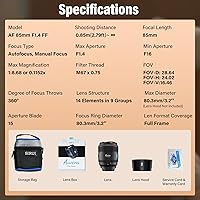
  • Focal Length: Fixed 85mm focal length, a classic telephoto prime range optimized for portrait and close-up photography.
  • Max Aperture: Maximum aperture of F1.4 allows substantial light intake, making it effective in low-light environments and enabling strong background separation.
  • Diaphragm Blades: Features 15 rounded diaphragm blades, which contribute to smooth, circular bokeh in out-of-focus areas even at wider aperture settings.
  • Lens Elements: Optical formula incorporates aspherical elements alongside ED (Extra-low Dispersion) and HRI (High Refractive Index) glass to reduce chromatic aberration and improve color accuracy.
  • Autofocus System: Driven by a step motor supporting eye-AF and subject tracking, providing quiet and relatively smooth focusing suited to both stills and video capture.
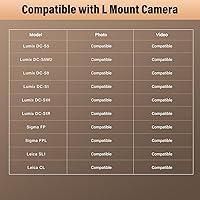
  • Mount Compatibility: Designed exclusively for the Leica L-Mount standard, compatible with Lumix S series, Leica SL series, and Sigma fp bodies.
  • Weight: Weighs approximately 540g (1.2 lbs), which is notably lighter than most competing F1.4 lenses in the same focal length class.
  • Dimensions: Measures 5.12 x 5.12 x 5.12 inches, giving it a compact, near-cubic form factor relative to other fast telephoto primes.
  • Firmware: Supports user-installable firmware updates; the current released version is VER2.2, addressing early autofocus performance feedback from initial buyers.
  • Lens Type: Classified as a telephoto prime lens, intended for portrait, headshot, close-up, and moderate compression shooting scenarios.
  • Brand & Series: Manufactured by SIRUI under their Aurora series, a lineup focused on lightweight autofocus primes for full-frame mirrorless systems.
  • Availability: First made available in March 2025, making it a recently launched product with a still-developing body of long-term user data.
  • Market Rank: Holds an Amazon Best Sellers Rank of #61 in SLR Camera Lenses, indicating solid early sales traction shortly after its market debut.
  • Minimum Aperture: Minimum aperture is not explicitly stated in available product data; buyers should verify with SIRUI directly for stopped-down diffraction limits.
  • Filter Thread: Specific filter thread diameter is not confirmed in available product documentation; consult the official SIRUI spec sheet before purchasing filters.

Related Reviews
BENOISON 85mm f1.8 Portrait Lens for Nikon F
83%
91%
Image Quality
85%
Manual Focus Control
88%
Build Quality
70%
Ease of Use
82%
Low Light Performance
More
TTArtisan 35mm F1.4 APS-C Lens
76%
88%
Build Quality
74%
Optical Performance
91%
Bokeh Quality
82%
Low-Light Usability
71%
Manual Focus Experience
More
Lightdow 85mm f1.8 Portrait Lens for Nikon F-Mount Cameras
83%
92%
Value for Money
88%
Sharpness
65%
Manual Focus Ease
83%
Build Quality
90%
Bokeh/Background Blur
More
Meike 85mm F1.8 Nikon F Portrait Lens
75%
91%
Value for Money
76%
Image Sharpness
83%
Bokeh Quality
61%
Autofocus Speed
72%
Autofocus Accuracy
More
Meike 35mm F1.4 MFT Lens
84%
89%
Sharpness & Image Quality
74%
Manual Focus Usability
91%
Build Quality
87%
Low Light Performance
92%
Value for Money
More
Sony FE 35mm F1.4 GM Prime Lens
86%
96%
Optical Sharpness
93%
Autofocus Performance
91%
Bokeh Quality
88%
Build Quality
67%
Vignetting Control
More
Meike 55mm F1.4 Sony E-Mount Prime Lens
76%
83%
Image Sharpness
88%
Bokeh Quality
76%
Autofocus Speed & Accuracy
81%
Low-Light Performance
63%
Build Quality & Materials
More
Meike 55mm F1.4 Fujifilm X Mount Lens
78%
88%
Image Sharpness
91%
Bokeh Quality
67%
Autofocus Speed
93%
Value for Money
74%
Build Quality & Finish
More
VILTROX 85mm F1.8 Z Portrait Lens
76%
78%
Autofocus Performance
83%
Image Sharpness
81%
Bokeh Quality
76%
Build Quality
86%
Value for Money
More
Sony FE 50mm F1.4 GM Lens
83%
96%
Optical Sharpness
93%
Bokeh Quality
91%
Autofocus Speed
88%
Autofocus Noise
89%
Build Quality
More

FAQ

Yes, the Aurora 85mm F1.4 uses the Leica L-Mount standard, which is fully compatible with the Lumix S5 II and all other Lumix S series bodies. Autofocus functions including eye-AF and subject tracking should operate natively without any adapter.

For moderate low-light conditions, the step motor AF generally performs well on faces and holds eye-AF lock reliably. That said, in very low-contrast or extremely dark scenes, some users have noted occasional hunting before the lens locks focus — something to be aware of if you shoot in near-blackout reception lighting.

Weather sealing is not explicitly confirmed in the official product specifications. If you shoot regularly in rain or dusty outdoor environments, it would be worth contacting SIRUI directly before assuming the lens will hold up to those conditions.

This lens is built for the L-Mount only. While L-to-Sony-E or L-to-Canon-RF adapters do exist, using them will almost certainly result in losing autofocus functionality entirely. If your camera is not an L-Mount body, this 85mm portrait lens is not a practical choice.

SIRUI provides firmware update instructions via email upon request — you can contact their support team directly. The current version is VER2.2, and keeping the firmware current is worthwhile since earlier updates addressed AF consistency issues reported by initial buyers.

Yes, some vignetting at F1.4 is present, as is typical for fast lenses at their maximum aperture. It is correctable in post-processing, and most raw-capable editing software will handle it easily. If you shoot JPEG-only, you may want to check whether your camera body applies automatic lens correction for this lens.

The Aurora 85mm F1.4 produces smooth, appealing bokeh thanks to its 15-blade diaphragm, and for most portrait work the out-of-focus rendering is genuinely attractive. The Sigma 85mm Art is still considered a benchmark in this focal length, but the gap is narrower than the price difference might suggest for typical shooting scenarios.

It works well for video. The step motor is quiet enough to avoid bleeding into on-camera audio, and eye-AF tracking is smooth during slow to moderate subject movement. For gimbal work specifically, the lighter weight is a practical advantage. Fast-moving subjects in video may occasionally challenge the AF system.

The exact filter thread diameter is not confirmed in the currently available product documentation. Before buying filters, check the official SIRUI website or contact their support team to get the correct measurement and avoid purchasing the wrong size.

It is a fair concern. The lens only launched in March 2025, so long-term durability data is not yet available. That said, early user impressions have been largely positive, SIRUI has been proactive with firmware support, and the lens already has strong sales traction. Buying from a retailer with a solid return policy would be a reasonable precaution if you want a safety net.