Overview

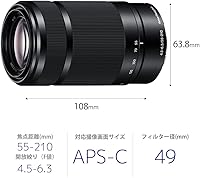
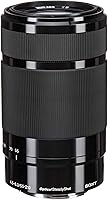
The Sony E 55-210mm F4.5-6.3 Telephoto Zoom Lens is Sony's practical answer for APS-C mirrorless shooters who want meaningful reach beyond their kit lens without committing to a large, heavy telephoto. On an APS-C body, the focal range translates to an 82-315mm equivalent — enough to pull in distant birds, athletes, or mountain ridges that would otherwise be just a smudge in the frame. At 12.2 ounces, it slips into a camera bag without drama. It sits in Sony's lineup as an affordable reach extender, not a professional workhorse, and it doesn't pretend to be otherwise. Over 1,600 buyers have rated it 4.6 out of 5 stars, which says quite a lot about how well it delivers at its price tier.
Features & Benefits

The Optical SteadyShot stabilization is probably the feature buyers notice most in day-to-day use — it keeps handheld video surprisingly steady and gives you an extra stop or two of confidence when shooting in fading afternoon light. Internal focusing means the barrel stays the same length whether you're at 55mm or 210mm, and the front element doesn't rotate, which matters if you use a polarizing filter. The quiet AF motor is genuinely unobtrusive on video — you won't hear it hunting in your audio. One honest caveat: the aperture narrows to f/6.3 at the long end, so bright outdoor light helps considerably. The seven-blade aperture at least keeps out-of-focus backgrounds looking reasonably smooth rather than harsh.

Best For

This E-mount telephoto lens hits a sweet spot for a specific group of shooters. If you own an a6100, a6400, a6600, or ZV-E10 and have been shooting everything with an 18-55mm kit lens, this is the natural next purchase — it picks up right where the kit lens leaves off and pushes you out to a genuinely useful telephoto range. Wildlife photographers working from trails will find 210mm workable for medium-distance subjects. Sports fans shooting from the bleachers can actually isolate athletes in the frame. Traveling light? It fits in a small shoulder bag without the bulk of a 70-200mm. Video creators doing outdoor event coverage benefit from both the reach and stabilization working together.

User Feedback

The consensus across verified buyers is largely positive, with a few recurring themes worth knowing before you buy. Sharpness between 55-135mm gets consistent praise — images look crisp and well-defined through most of the zoom range. At 210mm wide open, softness creeps in; stopping down to f/8 or f/11 tightens things up noticeably, so keep that in mind for critical shots. AF reliability in good daylight is rarely questioned, but several owners note it slows in dim interiors or at dusk. A smaller number of users flag chromatic aberration at the long end, visible on high-contrast edges. Overall, buyer sentiment reflects solid satisfaction relative to what this lens costs — few people feel they got less than they paid for.

Pros

  • The 82-315mm equivalent focal range covers wildlife, sports, and travel telephoto needs in a single lens.
  • Optical SteadyShot stabilization keeps handheld video steady at focal lengths where shake is usually a real problem.
  • Quiet internal AF motor means focus adjustments during video recording stay out of your audio track.
  • The SEL55210 pairs perfectly with Sony a6000-series bodies as a native, fully integrated telephoto option.
  • At 12.2 oz, it is light enough to carry all day without fatigue on a camera strap.
  • Sharpness from 55mm to around 135mm is consistently strong and well above expectations for the price tier.
  • Internal focusing keeps the barrel length fixed and the front element stationary, making polarizing filters practical.
  • Buyers consistently rate it above similarly priced third-party telephoto zooms for AF reliability and stabilization.
  • The seven-blade aperture produces smooth background rendering at longer focal lengths, well beyond what the aperture number alone implies.
  • A snug, native E-mount connection means full EXIF data, in-camera lens corrections, and body-lens OSS coordination work automatically.

Cons

  • Sharpness drops noticeably at 210mm wide open — stopping down to f/8 is often necessary for critical shots.
  • The f/6.3 maximum aperture at the long end forces higher ISO settings in anything less than bright daylight.
  • No weather sealing makes it a risky choice for shooting in rain, mist, or dusty outdoor environments.
  • Chromatic aberration appears at the long end on high-contrast edges and requires post-processing to clean up properly.
  • AF slows and hunts in dim or mixed lighting, which limits its reliability for indoor or twilight shooting scenarios.
  • Plastic construction feels noticeably less substantial than Sony's higher-tier lenses, which may concern buyers thinking long-term.
  • Exposure shifts visibly when zooming during live video recording, requiring manual compensation to avoid brightness changes mid-clip.
  • The short manual focus ring travel makes precise fine-tuning feel rushed, especially at longer focal lengths.

Ratings

The Sony E 55-210mm F4.5-6.3 Telephoto Zoom Lens has been put through its paces by thousands of real-world shooters, and these scores reflect an AI-driven analysis of verified global user reviews — with spam, bot activity, and incentivized feedback actively filtered out. What you see here is an honest picture: the categories where this E-mount telephoto genuinely shines and the areas where it asks you to make compromises. Both sides are accounted for.

Image Sharpness
78%
22%
Through the 55-135mm portion of the zoom range, sharpness is consistently strong — subjects come back with well-defined detail and good center-to-edge consistency. Stopped down to f/8, even the 210mm end produces usable, clean results that satisfy most travel and wildlife shooters.
Wide open at 210mm, softness is noticeable enough that critical shooters will be frustrated. It is not a lens you lean on for pin-sharp distant subjects at maximum aperture — you have to work around it by stopping down, which costs you shutter speed in lower light.
Autofocus Speed & Accuracy
74%
26%
In bright daylight, the AF locks on quickly and confidently — tracking a bird in flight or a runner crossing a finish line feels responsive on bodies like the a6400 and a6600. Subject acquisition from a cold start is snappy, which matters for sports and wildlife where timing is everything.
Shift the scene to a dimly lit indoor event or shoot at dusk, and the AF slows noticeably, occasionally hunting before settling. It is not a dealbreaker for outdoor use, but videographers shooting in mixed or low lighting will want to factor this in.
Optical Stabilization (OSS)
88%
The Optical SteadyShot system is one of the SEL55210's most praised real-world features. Handheld video footage comes back far steadier than you would expect at 200mm, and still photographers gain meaningful confidence shooting in the golden hour without a tripod.
OSS does its job well but is not a substitute for faster glass in genuinely dark conditions. Some users note a faint mechanical sensation when stabilization kicks in during video, which occasionally reads as a subtle lurch in footage on very slow pans.
Build Quality & Durability
67%
33%
The lens feels solid enough for regular use and the barrel construction is consistent with what Sony delivers at this price tier. The fit on E-mount bodies is snug with no wobble, and the zoom ring turns smoothly without any stiff or loose spots out of the box.
The plastic construction is hard to ignore compared to Sony's higher-end glass, and there is no weather sealing — taking this lens out in light rain or dusty trail conditions requires extra care. A few long-term owners report zoom ring loosening after extended use.
Focal Range Versatility
86%
The 55-210mm range (82-315mm equivalent on APS-C) covers a genuinely broad spread of telephoto situations — from moderate portrait compression at the short end to birds-on-a-branch reach at 210mm. It picks up exactly where the 18-55mm kit lens leaves off, making it feel purpose-built as a two-lens travel kit.
There is no overlap with typical kit lenses at 55mm, so switching between the two mid-shoot means a brief gap in coverage. Shooters used to constant-aperture zooms may also find the narrowing aperture across the range limiting when the light drops as you zoom in.
Video Performance
81%
19%
The quiet internal focusing motor is a genuine asset for video shooters — AF adjustments during recording are practically inaudible on-camera, which keeps dialogue and ambient sound clean. Combined with OSS, outdoor event and b-roll footage holds up well without additional stabilization gear.
The variable aperture creates exposure shifts when zooming during a live video take, requiring manual exposure compensation to avoid a visible brightness change mid-clip. AF can also breathe slightly during continuous video tracking, which more demanding videographers will notice.
Aperture & Low-Light Capability
59%
41%
At 55mm, f/4.5 is workable for outdoor shooting in reasonable light, and many users find it sufficient for daytime wildlife or travel photography where fast shutter speeds are the priority anyway. Pairing it with in-body stabilization on the a6600 or ZV-E10 helps recover some low-light usability.
f/6.3 at 210mm is genuinely limiting when the light gets soft — you are often forced to push ISO higher than you would like to maintain shutter speed, and noise becomes a visible tradeoff. This is the lens's most significant functional limitation, and it is one buyers should accept before purchasing.
Bokeh & Background Separation
71%
29%
At longer focal lengths, the background compression and seven-blade aperture combine to produce reasonably smooth out-of-focus backgrounds. Portrait and wildlife shots at 150-210mm show pleasing subject separation that looks far better than the aperture numbers alone might suggest.
The bokeh is pleasant but not rich — it lacks the creamy quality of faster telephoto glass. At the wide end of the zoom around 55-85mm, background separation is modest, and busy backgrounds can still distract from the main subject.
Size & Portability
84%
Weighing just 12.2 oz, the SEL55210 is genuinely light for a telephoto zoom and balances well on compact APS-C bodies without front-heaviness. It slips into a carry-on bag or daypack alongside a body without adding noticeable bulk, which travel photographers repeatedly call out as a practical advantage.
It is longer than it first appears in product photos, extending to about 4.25 inches, which can attract attention in public settings where a more discreet setup is preferable. The size is still very manageable, but buyers expecting a pancake-style compact will be surprised.
Chromatic Aberration Control
62%
38%
In the mid-range of the zoom, lateral chromatic aberration is well-controlled and largely a non-issue for typical shooting. Modern Sony bodies also apply in-camera corrections automatically, which cleans up much of the fringing before the image even reaches your memory card.
At 210mm, particularly against high-contrast edges like branches against a bright sky, purple and green fringing becomes visible enough to require post-processing correction. It is manageable in Lightroom or Capture One, but it is a consistent pattern that more technically minded shooters notice.
Autofocus Noise
87%
The internal focusing design keeps AF operation almost silent during both stills and video shooting. Street photographers and event videographers benefit from this — the lens does not announce itself with a whirring motor, which matters in quiet environments like ceremonies or nature hides.
At very close to minimum focus distance, a faint mechanical hum is occasionally audible in silent environments when using an external microphone placed near the lens. It is not a common complaint, but it is worth noting for audio-critical recording situations.
Manual Focus Experience
69%
31%
The direct manual focus override is a practical feature — you can nudge focus by hand mid-AF without flipping any switches, which is useful for video pulls or precise macro-adjacent work. The focus ring itself is smooth and well-damped, with enough resistance to feel intentional.
The focus ring travel is quite short, making fine adjustments feel rushed and slightly imprecise at longer focal lengths. Users coming from DSLR lenses with longer focus throws may find it takes a shooting session or two to recalibrate their technique.
Value for Money
91%
Relative to what this Sony telephoto zoom actually delivers — OSS, quiet AF, solid mid-range sharpness, and a practical focal range — the price-to-performance ratio is strong. Buyers regularly note that third-party alternatives at similar or even lower prices do not consistently match it on autofocus reliability or stabilization effectiveness.
The value proposition depends heavily on your expectations. Buyers expecting professional-grade sharpness at 210mm or weather resistance will feel the limitations acutely. At this price, you are buying reach and convenience, not optical perfection — and that distinction is worth being clear-eyed about.
Compatibility & Ecosystem Fit
93%
Designed specifically for Sony E-mount APS-C bodies, the SEL55210 integrates cleanly with the a6000 series, a6100, a6400, a6600, and ZV-E10 — full communication with the body means accurate EXIF data, automatic distortion correction, and reliable in-body coordination with OSS. It feels native because it is.
The lens is strictly APS-C — mounting it on a full-frame Sony body like the a7 series will trigger APS-C crop mode automatically, limiting resolution. It is not a flaw so much as a hard boundary to understand before buying if you ever plan to move to full frame.

Suitable for:

The Sony E 55-210mm F4.5-6.3 Telephoto Zoom Lens is a natural fit for Sony APS-C mirrorless shooters who have outgrown their kit lens and want to reach further without buying into heavy, expensive glass. If you own an a6100, a6400, a6600, or ZV-E10 and find yourself frustrated by how close you need to stand to fill the frame with a bird, a deer, or a athlete, this lens solves that problem practically and affordably. Travel photographers who carry everything in a single shoulder bag will appreciate that it adds meaningful reach without demanding a dedicated compartment. Wildlife enthusiasts working trails or nature reserves — where you often cannot close the distance to your subject — will find the 82-315mm equivalent range genuinely useful for frame-filling shots from a respectful distance. Event videographers and content creators shooting outdoor b-roll also benefit from the quiet AF motor and Optical SteadyShot stabilization working together, keeping footage steady and tracking clean without drawing attention.

Not suitable for:

Buyers expecting professional-grade optical performance at every focal length and aperture setting will find the Sony E 55-210mm F4.5-6.3 Telephoto Zoom Lens falls short of those standards. The f/6.3 maximum aperture at 210mm is a real constraint — if you regularly shoot in low light, at indoor sporting events, or under stadium lighting, you will be pushing ISO harder than you would like, and noise will become a visible trade-off. Photographers who demand tack-sharp images at maximum focal length and wide open aperture will need to budget significantly more for Sony's G or GM telephoto options. The lack of weather sealing also rules it out for photographers who routinely shoot in rain, dusty environments, or harsh outdoor conditions without wanting to baby their gear. Full-frame Sony shooters on the a7 series will find the lens forces APS-C crop mode, reducing effective resolution — it is strictly an APS-C tool and should be treated as one.

Specifications

  • Focal Length: Covers 55-210mm, equivalent to 82-315mm on APS-C format bodies due to the 1.5x crop factor.
  • Maximum Aperture: Variable aperture ranges from f/4.5 at the 55mm end to f/6.3 at the 210mm end.
  • Lens Mount: Designed exclusively for Sony E-mount cameras and is not compatible with A-mount or other manufacturer bodies.
  • Format Coverage: Engineered for APS-C sensors; using it on a full-frame Sony body activates automatic APS-C crop mode.
  • Stabilization: Built-in Optical SteadyShot (OSS) image stabilization compensates for camera shake during handheld shooting and video capture.
  • Autofocus System: Internal focusing design keeps the barrel length fixed during AF operation and allows direct manual focus override without a mode switch.
  • Aperture Blades: Seven rounded aperture blades contribute to smoother, more natural-looking out-of-focus backgrounds at longer focal lengths.
  • Min. Focus Distance: The closest focusing distance is 3.28 ft (1.0 m), measured from the focal plane of the camera body.
  • Max. Magnification: Maximum magnification ratio is 0.23x, suitable for moderate close-up work but not true macro photography.
  • Dimensions: The lens measures 4.25 inches in length and 2.52 inches in diameter when set to the 55mm position.
  • Weight: Weighs 12.2 oz (346 g), making it one of the lighter telephoto zoom options available for the E-mount system.
  • Filter Thread: Accepts standard 49mm screw-in filters, including UV, circular polarizer, and neutral density types.
  • Model Number: The official Sony model number is SEL55210/B, with the /B suffix designating the black color variant.
  • Angle of View: Field of view on APS-C ranges from 29 degrees at 55mm to 7 degrees 40 minutes at 210mm.
  • Optical Design: The lens uses an internal focusing mechanism that prevents the front element from rotating, which is particularly useful when using polarizing filters.
  • AF Noise Level: The AF motor operates near-silently during operation, making it suitable for video recording without audible focus noise in the audio track.
  • Color Option: Available in black (SEL55210/B); a silver variant (SEL55210/S) was also produced for pairing with silver-bodied APS-C cameras.
  • Manufacturer: Designed and manufactured by Sony Corporation; first made available in January 2014 and remains in active production.

Related Reviews
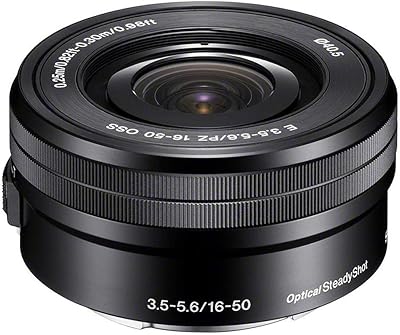
Sony 16-50mm f/3.5-5.6 OSS Alpha E-Mount Retractable Zoom Lens
85%
91%
Value for Money
87%
Image Quality
93%
Portability/Size
88%
Ease of Use
82%
Build Quality
More
Sony SEL200600G 200-600mm Telephoto Zoom Lens
79%
93%
Autofocus Speed
91%
Optical Sharpness
88%
Image Stabilization
89%
Build Quality
74%
Value for Money
More
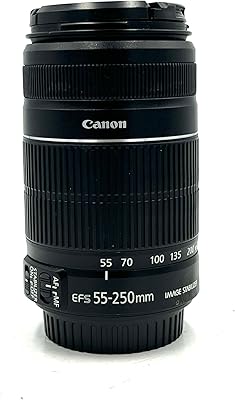
Canon EF-S 55-250mm f/4-5.6 IS II Telephoto Zoom Lens
82%
91%
Value for Money
88%
Image Stabilization Performance
65%
Autofocus Speed in Low Light
93%
Portability & Size
85%
Image Quality & Sharpness
More
Canon RF-S10-18mm F4.5-6.3 IS STM Zoom Lens
83%
91%
Image Sharpness
84%
Autofocus Performance
88%
Image Stabilization
76%
Build Quality & Handling
93%
Vlogging Usability
More
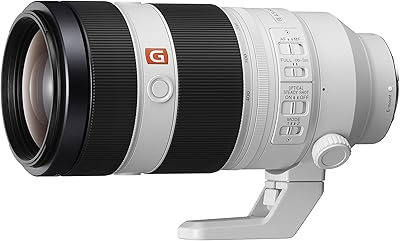
Sony FE 100-400mm GM OSS Telephoto Lens
83%
93%
Autofocus Performance
96%
Image Sharpness
91%
Image Stabilization
94%
Build Quality
89%
Weather Resistance
More
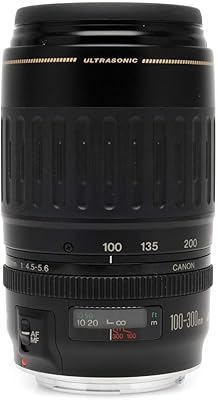
Canon EF 100-300mm f/4.5-5.6 Telephoto Zoom Lens
75%
88%
Autofocus Speed
91%
Autofocus Noise
67%
Image Sharpness
43%
Image Stabilization
78%
Build Quality
More
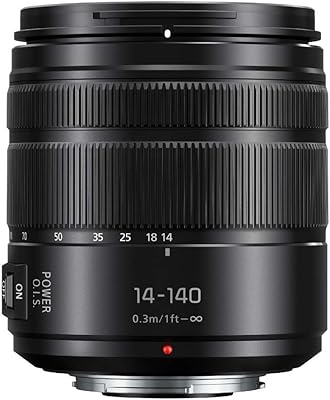
Panasonic Lumix G Vario 14-140mm Zoom Lens
81%
88%
Image Sharpness
93%
Zoom Range Versatility
86%
Optical Image Stabilization
61%
Low-Light Performance
82%
Build Quality & Durability
More
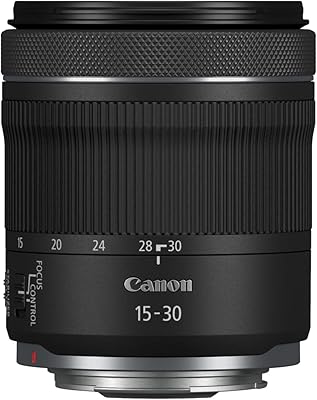
Canon RF15-30mm F4.5-6.3 Wide-Angle Zoom Lens
81%
88%
Image Sharpness
91%
Image Stabilization
84%
Autofocus Performance
76%
Optical Distortion Control
81%
Chromatic Aberration
More
Panasonic LUMIX G II Vario 100-300mm Lens
82%
88%
Autofocus Speed & Tracking
83%
Image Sharpness
91%
Optical Stabilization
79%
Weather Sealing
84%
Build Quality & Durability
More
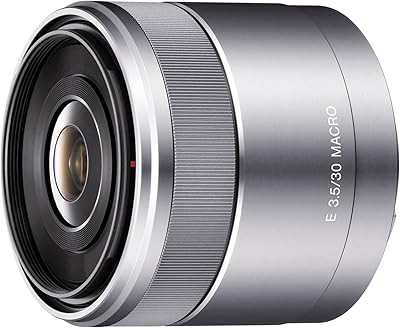
Sony SEL30M35 30mm Macro Lens
79%
88%
Optical Sharpness
91%
Close-Up Performance
67%
Autofocus Speed
79%
Video Autofocus
93%
Portability & Size
More

FAQ

Yes, it is fully compatible with all Sony APS-C E-mount bodies, including the a6100, a6400, a6600, a6000, and ZV-E10. All lens functions — autofocus, Optical SteadyShot, and direct manual focus override — work natively with no adapters required.

Physically it will mount and fire, but the camera will automatically switch to APS-C crop mode, which significantly reduces the effective resolution of the sensor. It is not designed or optimized for full-frame use, so if you are shooting on a full-frame body this is not the right lens for that system.

No, it does not have any weather or dust sealing. If you plan to shoot in rain, mist, or dusty outdoor environments, you will need to protect it with a rain cover or use extra caution. It is built for typical outdoor conditions but is not rated for moisture exposure.

Honest answer: at 210mm and wide open at f/6.3, there is a noticeable softness that many experienced shooters will notice. If you stop down to around f/8, sharpness improves meaningfully and results become much more usable. Through the 55-135mm range, sharpness is genuinely strong and well above what you might expect at this price point.

Yes, the lens barrel physically extends as you zoom from 55mm toward 210mm — this is an external zoom design. However, the autofocus is internal, meaning the front element does not rotate or move during focusing, which keeps your polarizing filter orientation locked in place.

In good daylight conditions, AF is fast and confident enough for sports and wildlife shooting at a reasonable distance. It tracks moving subjects well on bodies with good phase-detect AF like the a6400 or a6600. In lower light or indoors, AF slows noticeably and may hunt briefly before locking, so it is less ideal for fast action in dim environments.

Yes, Sony includes the ALC-SH114 petal-type lens hood in the box along with front and rear lens caps. The hood attaches via a bayonet mount and helps reduce flare and provides a small amount of physical protection for the front element.

The SEL55210 has its own optical stabilization built in, and on bodies like the a6600 the system coordinates between lens OSS and in-body stabilization for improved results. The combined effect is particularly noticeable for handheld video, where footage at longer focal lengths stays considerably steadier than with either system working alone.

It uses a 49mm filter thread, which is a common and affordable size. Standard screw-in filters — circular polarizers, neutral density, UV protection — are widely available at 49mm and are relatively inexpensive compared to larger filter sizes used on bigger telephoto lenses.

It is genuinely the natural companion to the 18-55mm — the focal ranges connect almost perfectly, with the 55mm start of this lens picking up right where the kit lens leaves off. If you find yourself wishing you could reach further for birds, distant subjects, or sports without switching systems, this E-mount telephoto lens is the most practical and cost-effective way to extend your reach on any Sony APS-C body.

Where to Buy