Overview

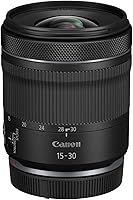
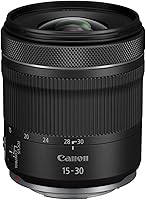
The Canon RF15-30mm F4.5-6.3 Wide-Angle Zoom Lens is Canon's accessible entry into RF ultra-wide zoom territory for full-frame mirrorless shooters. At under a pound and compact enough to slip into a side pocket, this ultra-wide zoom occupies a genuinely useful middle ground — more capable than a budget prime, far more affordable than the RF14-35mm f/4L. The 15–30mm focal range handles everything from dramatic wide landscapes to tight interiors, and on APS-C EOS R bodies it translates to an equivalent 24–48mm, making it useful as an everyday standard zoom rather than a specialty tool. Stills photographers and video creators both have strong reasons to consider it.
Features & Benefits

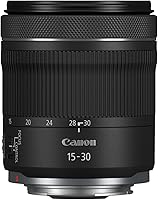
The standout feature here is the optical image stabilization. On its own, it compensates for up to 5.0 stops of camera shake — genuinely useful for handheld shooting at wide angles. Pair it with an IBIS-equipped EOS R body and that figure climbs to 7.0 stops combined, which is impressive for this class of lens. Two UD glass elements and an aspheric element keep chromatic aberration and distortion well-controlled, while Canon's Super Spectra Coating handles flare in backlit situations better than expected. The STM autofocus motor is near-silent and hunts very little during video recording. Close-focus capability is a quiet bonus — down to about 11 inches normally, and even shorter in manual focus at the 15mm position.

Best For

Landscape and architecture photographers are the obvious audience — the ultra-wide perspective does real work in those genres, and skipping L-glass without sacrificing too much quality makes the value case easy to justify. Travel shooters will appreciate the compact footprint; it barely adds bulk to a mirrorless kit. For vloggers and hybrid creators, the quiet STM motor and effective stabilization make it a practical choice for handheld video. Real estate photographers shooting tight rooms will find the 15mm end especially useful. On APS-C bodies, the effective 24–48mm range makes this Canon wide-angle lens a surprisingly versatile everyday zoom, not just a specialty tool pulled out for specific occasions.

User Feedback

The RF15-30mm holds a strong rating across a solid base of reviews, and the common thread in positive feedback is consistent: sharpness surprises people. Buyers frequently mention getting cleaner images than they expected for the price point. Video shooters add that handheld footage stays stable without heavy correction in post, which speaks well of the IS system in real-world use. The recurring criticism centers on the variable aperture — f/6.3 at the long end is a genuine limitation in low light, though most buyers seem aware of this trade-off going in. Some note that the build feels plastic, which is a fair observation at this tier. Overall, the consensus leans positive, with buyers treating it as a capable lens rather than a budget compromise.

Pros

  • Image sharpness consistently impresses buyers, especially at 15mm across the center of the frame.
  • The optical IS system makes steady handheld shooting genuinely achievable in real-world conditions.
  • Paired with an IBIS-equipped EOS R body, coordinated stabilization reaches a level that changes what is possible without a tripod.
  • Silent STM autofocus means video shooters can leave their external audio clean and uncontaminated.
  • At under 14 ounces, this ultra-wide zoom adds almost no fatigue to a full day of shooting.
  • Canon's in-camera distortion correction profiles work automatically, keeping post-processing light for most users.
  • The RF15-30mm delivers image quality that buyers routinely describe as punching above its price class.
  • Close-focus capability at 15mm opens up creative wide-angle compositions most zoom lenses at this range cannot achieve.
  • The 15–30mm range covers everything from immersive landscape foregrounds to tight architectural interiors in a single lens.
  • APS-C users gain a practical 24–48mm equivalent, making it useful as a compact everyday zoom on crop-sensor bodies.

Cons

  • f/6.3 at the 30mm end is a real low-light handicap that forces higher ISO in dim environments.
  • No weather sealing leaves outdoor and event photographers exposed in rain or dusty conditions.
  • The lens hood is not included in the box, which frustrates buyers who expect it as standard.
  • Corner sharpness on full-frame bodies at the widest end can require correction work for precision architectural shots.
  • The plastic build construction feels noticeably less premium than the price tag suggests to some buyers.
  • There is no physical AF/MF switch on the barrel, which disrupts workflow for photographers who toggle focus modes frequently.
  • Slight focus breathing during video focus pulls can be distracting in cinematic or narrative production work.
  • Barrel distortion at 15mm is significant without lens correction applied, requiring reliance on software profiles.
  • The zoom ring feel is looser than some photographers prefer, making precise focal-length control less satisfying.
  • Buyers who later step up to L-series glass sometimes feel in hindsight the gap in build and optics warranted saving longer.

Ratings

The Canon RF15-30mm F4.5-6.3 Wide-Angle Zoom Lens scores below are generated by AI after analyzing verified buyer reviews from multiple global markets, with spam, bot activity, and incentivized feedback actively filtered out. The result is an honest cross-section of real shooter experiences — from landscape photographers and vloggers to travel enthusiasts and real estate content creators. Both the strengths that make this lens worth considering and the trade-offs that give some buyers pause are reflected transparently in every category.

Image Sharpness
88%
Buyers consistently report sharper results than they expected for a non-L lens, particularly across the center of the frame at 15mm. Landscape photographers shooting golden-hour scenes note that fine detail in foliage and stonework holds up well even when pixel-peeping at full resolution.
Corner sharpness at the widest end draws occasional complaints, especially on full-frame bodies at f/4.5. Photographers shooting architecture with straight lines near the frame edges sometimes find they need to apply corrections in post.
Image Stabilization
91%
Handheld shooters — especially vloggers and travel photographers — frequently praise how much usable footage and how many sharp stills they get in situations where a non-stabilized lens would have forced a tripod. Paired with an IBIS body, the coordinated system genuinely changes what is possible at slower shutter speeds.
The IS system, while effective, occasionally produces a subtle jitter during panning video shots that some videographers catch during editing. It is also worth noting that the higher stop figures only fully materialize with compatible EOS R bodies that support coordinated IS.
Autofocus Performance
84%
The STM motor is genuinely quiet — quiet enough that on-camera microphones rarely pick it up during video recording, which matters a great deal to vloggers and interview shooters. Tracking in good light is responsive and accurate for a wide-angle zoom in this class.
In lower-contrast scenes or mixed indoor lighting, the AF can hesitate briefly before confirming focus. Sports or fast-action shooters pushing the lens beyond its intended use case will likely find the STM motor a limiting factor compared to faster, more expensive RF glass.
Optical Distortion Control
76%
24%
For an ultra-wide zoom, distortion is reasonably well-managed, and Canon's in-camera correction profiles handle most of the barrel distortion automatically on EOS R bodies. Architecture photographers shooting with correction enabled report clean, usable straight lines without heavy post-processing work.
Without in-camera or software correction applied, barrel distortion at 15mm is clearly visible and will need addressing for any precision architectural or product work. Users shooting with third-party software not yet supporting the lens profile sometimes find manual correction tedious.
Chromatic Aberration
81%
19%
The two UD glass elements do meaningful work here. Buyers shooting high-contrast scenes — bright skies against dark tree lines, or backlit cityscapes — note that lateral chromatic aberration is well-controlled and rarely requires more than a single correction slider adjustment in Lightroom.
Some fringing can still appear at the extreme corners in very high-contrast conditions, particularly when shooting wide open. It is not a deal-breaker, but photographers who frequently shoot scenes with strong edge contrast at f/4.5 should be prepared for occasional minor correction work.
Flare & Ghosting Resistance
79%
21%
Canon's Super Spectra Coating handles most direct light sources well. Photographers shooting into the sun during golden hour or near streetlights at night report fewer ghost artifacts than they expected, and the coating contributes to maintaining contrast in backlit portraits and landscapes.
Pointing directly into a strong light source at the wider end can still produce noticeable veiling flare that softens contrast across the frame. Using a lens hood helps, but the hood is not included in the box, which annoys a meaningful number of buyers.
Build Quality & Durability
67%
33%
The lens is compact and feels solid enough for regular travel use. Its light weight — under 14 ounces — makes it a practical daily companion, and many buyers report no issues after months of regular shooting in varied conditions including light outdoor use.
The predominantly plastic construction is a recurring point of frustration for buyers accustomed to Canon L-series or higher-tier third-party glass. There is no weather sealing mentioned, which gives outdoor and event photographers pause when shooting in dusty or lightly wet conditions.
Low-Light Performance
62%
38%
At 15mm and f/4.5, the lens is capable enough for low-light architecture interiors and nightscapes when used with IS or a tripod. Some astrophotography enthusiasts on full-frame EOS R bodies find it workable for wide Milky Way compositions.
The f/6.3 maximum aperture at 30mm is a genuine limitation in dim environments. Buyers who frequently shoot events, indoor venues, or nighttime street photography at the longer end of the zoom range often find themselves pushing ISO higher than they would prefer.
Video Quality
86%
Video shooters praise the combination of silent STM focusing and effective IS for producing smooth, professional-looking handheld footage without relying on heavy digital stabilization that crops the frame. The focal range also works naturally for environmental storytelling and vlogging contexts.
Some videographers report slight focus breathing when pulling focus during narrative or cinematic work, which can be distracting in close-up shots. It is not severe, but those producing high-production content may find it worth factoring into their decision.
Value for Money
93%
This is the category where the RF15-30mm earns its strongest praise. Buyers consistently frame it as a smart, practical alternative to the RF14-35mm f/4L, delivering image quality that punches meaningfully above its price bracket for the majority of real-world shooting scenarios.
A small segment of buyers feel the variable aperture and plastic build make the price feel slightly high relative to older EF ultra-wide zooms available used. Those who later upgraded to L-glass occasionally look back and wish they had budgeted for the premium option from the start.
Size & Weight
89%
At just under 14 ounces and a compact cubic form factor, this lens barely registers as extra weight in a travel bag or camera sling. Photographers who have carried heavier ultra-wide zooms on all-day hikes or long city walks appreciate how little fatigue it adds over a full day.
The compact size does mean the front element is slightly more exposed than on larger lenses with deeper barrel designs, and the lens hood sold separately is genuinely worth buying. A few users report the zoom ring feel is a touch loose compared to what they prefer for precise focal-length control.
Close-Focus Capability
77%
23%
The ability to focus down to about 11 inches in standard use opens up creative possibilities beyond pure wide-angle landscape work. At 15mm in manual focus mode, the even shorter minimum focus distance allows for striking environmental close-up compositions that wide primes often cannot achieve.
The closer focusing options require switching to manual focus, which interrupts workflow for shooters who prefer staying in autofocus. The close-focus performance at the 30mm end is more ordinary, limiting versatility for photographers hoping to use the lens for detail or near-macro work.
APS-C Versatility
74%
26%
On EOS R crop-sensor bodies, the effective 24–48mm range transforms this into a compact standard zoom with wide capability, which is a meaningful bonus for photographers who shoot with both full-frame and APS-C bodies and want a single lens that performs across both.
APS-C shooters lose the dramatic ultra-wide character that makes this lens compelling on full-frame, and at the equivalent of 48mm on the long end, the range feels short for a do-everything walkaround. Crop-sensor users specifically seeking an ultra-wide experience may want a different optic.
Ease of Use
85%
The zoom and focus rings are well-placed and move smoothly for most users. Canon's optical profile integration with EOS R cameras means distortion and aberration corrections apply automatically in-camera, reducing the amount of post-processing setup needed for new users to get clean results quickly.
The lens lacks a physical AF/MF switch on the barrel, which some experienced photographers find inconvenient when toggling focus modes quickly in the field. Those coming from Canon DSLR glass sometimes need a brief adjustment period to the RF mount control layout.

Suitable for:

The Canon RF15-30mm F4.5-6.3 Wide-Angle Zoom Lens is a strong fit for EOS R system shooters who want genuine ultra-wide capability without committing to L-series pricing. Landscape and architecture photographers will get the most out of it — the 15mm end delivers the dramatic, expansive perspective these genres demand, and the optical stabilization makes handheld shooting at slower shutter speeds practical in a way that few lenses in this class can match. Travel photographers who are conscious of pack weight will appreciate that this ultra-wide zoom adds barely anything to a mirrorless kit while covering a focal range that handles everything from sweeping vistas to tight alleyways. Vloggers and hybrid video creators are also a natural audience: the silent STM autofocus and effective IS mean handheld footage looks intentional rather than accidental, without requiring a gimbal on every shoot. Real estate and event photographers who regularly work in confined spaces will find the 15mm end solves problems that no standard zoom can. On APS-C EOS R bodies, the effective 24–48mm equivalent also makes this a practical walkaround option for crop-sensor shooters who want one versatile lens to cover most everyday situations.
Not suitable for:

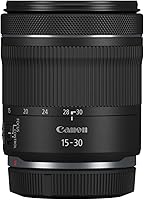
The Canon RF15-30mm F4.5-6.3 Wide-Angle Zoom Lens has real limitations that certain buyers should think carefully about before purchasing. The variable maximum aperture is the most significant one: shooting at the 30mm end means working with f/6.3, which becomes a meaningful constraint in dim venues, indoor events with mixed lighting, or any situation where you need to separate a subject from a background using shallow depth of field. Photographers whose work centers on low-light reportage, indoor sports, or nighttime street photography will likely find themselves constantly fighting the exposure triangle at the long end. Those who prioritize weather sealing — shooting in rain, dusty environments, or demanding outdoor conditions — should also be cautious, as this lens does not offer the environmental protection of higher-tier RF glass. Cinematographers and narrative video producers who need clinically clean focus pulls without any breathing may find the STM motor falls short of dedicated cine lenses or Canon's higher-end RF options. Finally, buyers who have handled premium glass and are sensitive to build quality may find the plastic-forward construction a daily reminder that this is a mid-range tool, even when the images it produces say otherwise.
Specifications

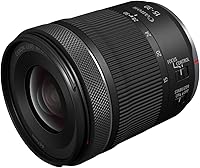
  • Focal Length: This lens covers a 15–30mm ultra-wide zoom range, equivalent to approximately 24–48mm when mounted on an APS-C sensor EOS R body.
  • Maximum Aperture: The maximum aperture is f/4.5 at 15mm and narrows to f/6.3 at the 30mm end due to the variable aperture design.
  • Lens Mount: Designed exclusively for the Canon RF mount, making it compatible with all full-frame and APS-C EOS R series mirrorless cameras.
  • Image Stabilization: Optical IS provides up to 5.0 stops of shake correction standalone, extendable to 7.0 stops when coordinated with compatible IBIS-equipped EOS R bodies.
  • Autofocus Motor: A Stepping Motor (STM) drives autofocus, delivering near-silent and smooth focus transitions well-suited to video recording and quiet environments.
  • Optical Elements: The optical design includes two UD (Ultra-low Dispersion) glass elements and one aspheric element to manage chromatic aberration and distortion across the zoom range.
  • Lens Coating: Canon Super Spectra Coating (SSC) is applied to minimize ghosting and flare when shooting in high-contrast or backlit conditions.
  • Min. Focus Distance: The minimum focus distance is approximately 0.28m (about 11 inches) in autofocus, reducing to 0.13m (about 5.1 inches) in manual focus at the 15mm zoom position.
  • Dimensions: The lens measures 3.5 x 3 x 3 inches, making it a compact and easy-to-pack ultra-wide option compared to larger L-series alternatives.
  • Weight: At 13.8 ounces, this lens adds minimal weight to a mirrorless camera kit, which is a practical advantage for travel and handheld shooting.
  • Filter Thread: The filter thread diameter is not officially specified in Canon's provided product data; buyers should verify compatibility before purchasing filters.
  • Model Number: The official Canon model number is 5775C002, and the Amazon ASIN for this product is B0B69P2LJG.
  • Manufacturer: This lens is manufactured by Canon USA, a subsidiary of Canon Inc., one of the world's leading optical and imaging technology companies.
  • Release Date: The lens was first made available in July 2022, positioning it as a relatively recent addition to Canon's growing RF lens lineup.
  • Format Coverage: The lens provides full-frame image circle coverage and is also fully functional on APS-C sensor EOS R cameras with a cropped field of view.
  • Zoom Type: This is an optical zoom lens with a physical zoom ring; it does not use digital zoom and maintains image quality throughout the focal range.
  • Focus System: The lens supports both autofocus and manual focus operation, with focus mode switching managed through the camera body menu or control ring settings.
  • Aberration Control: Lateral chromatic aberration and barrel distortion can be automatically corrected in-camera on EOS R bodies using Canon's built-in lens correction profiles.

Related Reviews
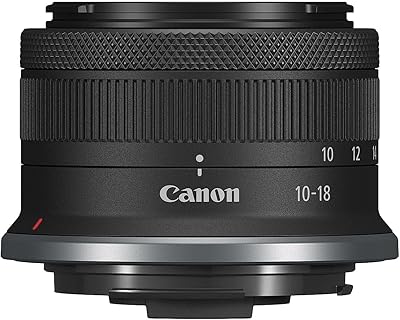
Canon RF-S10-18mm F4.5-6.3 IS STM Zoom Lens
83%
91%
Image Sharpness
84%
Autofocus Performance
88%
Image Stabilization
76%
Build Quality & Handling
93%
Vlogging Usability
More
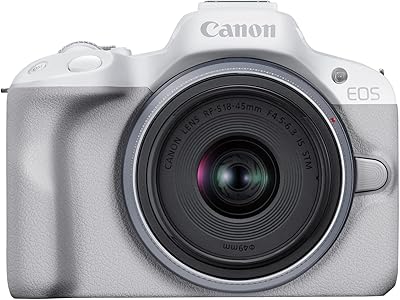
Canon EOS R50
Canon EOS R50
79%
93%
Autofocus Performance
88%
Image Quality
86%
4K Video Quality
57%
Battery Life
91%
Portability & Build
More
Canon EF-S 18-135mm f/3.5-5.6 IS Zoom Lens
77%
91%
Zoom Versatility
88%
Image Stabilization
76%
Sharpness & Clarity
58%
Low-Light Performance
79%
Autofocus Speed
More
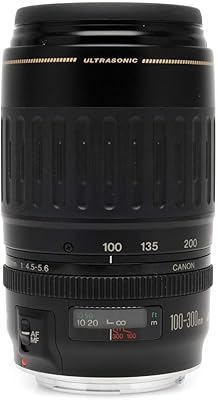
Canon EF 100-300mm f/4.5-5.6 Telephoto Zoom Lens
75%
88%
Autofocus Speed
91%
Autofocus Noise
67%
Image Sharpness
43%
Image Stabilization
78%
Build Quality
More
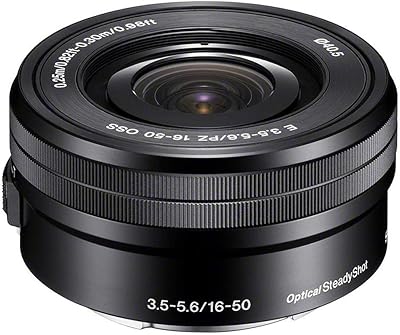
Sony 16-50mm f/3.5-5.6 OSS Alpha E-Mount Retractable Zoom Lens
85%
91%
Value for Money
87%
Image Quality
93%
Portability/Size
88%
Ease of Use
82%
Build Quality
More
Canon EOS 6D DSLR Camera with EF 24-105mm f/3.5-5.6 IS STM Lens Kit
84%
94%
Image Quality
82%
Autofocus Performance
88%
Ease of Use
90%
Low-Light Performance
85%
Build Quality
More
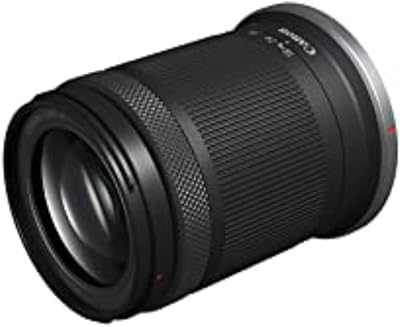
Canon RF-S 18-150mm Mirrorless Zoom Lens
79%
93%
Zoom Versatility
88%
Image Stabilization
76%
Autofocus Performance
84%
Video Quality
67%
Image Sharpness
More
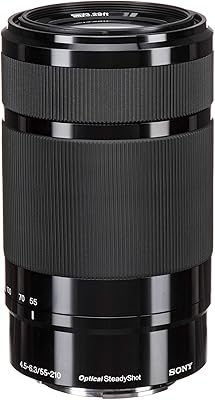
Sony E 55-210mm F4.5-6.3 Telephoto Zoom Lens
78%
78%
Image Sharpness
74%
Autofocus Speed & Accuracy
88%
Optical Stabilization (OSS)
67%
Build Quality & Durability
86%
Focal Range Versatility
More
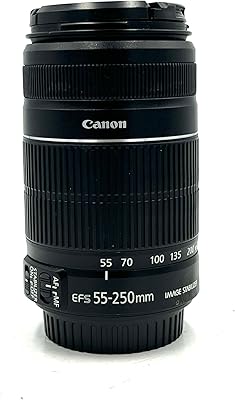
Canon EF-S 55-250mm f/4-5.6 IS II Telephoto Zoom Lens
82%
91%
Value for Money
88%
Image Stabilization Performance
65%
Autofocus Speed in Low Light
93%
Portability & Size
85%
Image Quality & Sharpness
More
Panasonic H-PS45175K 45-175mm Power Zoom Lens
76%
83%
Image Sharpness
91%
Power Zoom Performance
78%
Optical Image Stabilization
76%
Autofocus Speed & Accuracy
62%
Build Quality & Durability
More

FAQ

Yes, it is fully compatible with APS-C EOS R bodies like the R50 and R10. Just keep in mind that on those cameras the effective field of view becomes approximately 24–48mm rather than the full ultra-wide 15–30mm experience you get on full-frame bodies like the R6 or R5.

No, this lens does not have weather sealing or dust and moisture resistance. If you frequently shoot in rain, dusty environments, or demanding outdoor conditions, you should be aware of that limitation and consider additional protective measures or a higher-tier RF lens with environmental sealing.

Absolutely, and this is one of the more compelling aspects of the RF15-30mm. When you pair it with an IBIS-equipped EOS R body like the R5 or R6 Mark II, the optical IS in the lens and the in-body stabilization work together in a coordinated system, pushing real-world correction up to 7.0 stops. That combined performance is meaningfully better than either system working alone.

It can work for astrophotography, particularly at the 15mm end where the wide angle captures a large swath of sky, but the f/4.5 maximum aperture is a limiting factor compared to dedicated wide-angle primes like a 14mm f/1.8. You will need to compensate with higher ISO settings or longer exposures, so a sturdy tripod is essential.

Very quiet — the STM motor is one of the stronger points for video shooters. In most recording situations, including those using an on-camera microphone, the focus motor noise is not audible in the captured audio. It is not perfectly silent under every condition, but it performs well enough for vlogging, interviews, and documentary-style work without needing to rely solely on manual focus.

Canon has not officially published the filter thread diameter in the standard product specifications, so it is important to verify the correct filter size before purchasing circular polarizers, ND filters, or UV filters. Check Canon's official lens documentation or contact Canon support directly to confirm the thread size for your specific unit.

That really depends on your priorities. The RF14-35mm f/4L offers a constant f/4 aperture throughout the zoom range, weather sealing, and a more premium build, all of which matter in professional contexts. The RF15-30mm gives up one stop of light at the wide end and the build quality is noticeably more plastic, but the image quality in good light is closer than the price gap might suggest. For enthusiasts and hybrid shooters who are not regularly working in harsh conditions or low light at the long end, the more affordable option is genuinely hard to argue against.

No, a lens hood is not included in the standard packaging, which is a common frustration among buyers. Given that the front element can be susceptible to flare and the occasional accidental contact when shooting handheld, buying the compatible Canon lens hood separately is genuinely recommended rather than optional.

Yes, it is actually a solid choice for real estate photography. The 15mm end gives you the wide field of view needed to make smaller rooms appear spacious and well-proportioned, and the effective in-camera distortion correction keeps straight lines reasonably clean without heavy editing. Just be mindful that shooting at the edges of the frame in very bright window conditions can produce some corner softness.

There is no dedicated physical AF/MF switch on the lens barrel itself, which some photographers find inconvenient compared to older Canon EF lenses. Focus mode switching is handled through the camera body, either via a menu setting or an assignable button depending on your EOS R model. Once you get used to the workflow it is manageable, but it does require a brief adjustment period if you are accustomed to toggling focus modes quickly with a physical switch.

Where to Buy