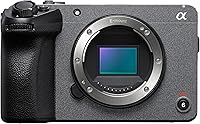
Sony FX30 Super 35 Cinema Camera
Overview
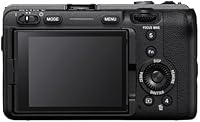
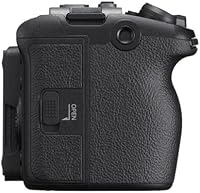
The Sony FX30 Super 35 Cinema Camera sits at an interesting crossroads: professional enough to satisfy working videographers, compact enough to take almost anywhere. This is Sony's entry point into the Cinema Line family, but entry point does not mean compromised. The Super 35 APS-C sensor format has deep roots in broadcast and cinema history, and Sony leans hard into that heritage here. Unlike hybrid mirrorless bodies that try to balance stills and video equally, this Cinema Line body is unapologetically video-first — the menus, shooting modes, and overall design philosophy all reflect that priority. Indie filmmakers, corporate video teams, and serious content creators are squarely in the crosshairs.
Features & Benefits
What separates the FX30 from a capable mirrorless camera is where Sony put the engineering effort. The Dual Base ISO — native 800 for daylight and 2500 for low light — means you are pulling from a clean signal floor rather than pushing amplification, and the difference in footage quality is tangible. S-Cinetone delivers a warm, filmic color rendition that many colorists would spend hours trying to replicate in post; here it is available as a shooting profile. The 495-point hybrid autofocus system is fast and confident, making it genuinely useful for solo operators. And the dual card slots — CFexpress Type A alongside UHS-II SD — accommodate high-bitrate 4K recording without bottlenecking your workflow.
Best For
Sony's Super 35 video camera is a natural fit for solo documentary shooters and event videographers who depend on reliable autofocus rather than a dedicated focus puller. Narrative indie filmmakers get genuine Cinema Line color science at a price point that does not require compromising elsewhere in the budget. Corporate video teams running interview setups or branded content shoots will appreciate how quickly the camera reaches a polished, professional image. If you are already shooting E-mount lenses, adding this body to your kit is a logical step rather than a leap. Photographers migrating from stills-first bodies should expect a learning curve — the video-centric menu is deliberate and different.
User Feedback
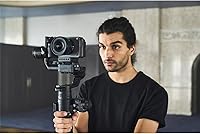
Owners are largely enthusiastic, and S-Cinetone praise shows up consistently — people are genuinely surprised at how little color work is needed straight from the card. The articulating touchscreen earns regular compliments from solo shooters working unconventional angles. That said, two complaints surface repeatedly. The absence of in-body image stabilization is the most discussed trade-off; most serious users pair this Cinema Line body with a gimbal and budget for that from the start. Fan noise is the other friction point — it can be distracting in quiet interview environments. Battery endurance is also worth planning around for all-day shoots, with spare NP-FZ100 cells or a USB power bank being practical necessities.
Pros
- S-Cinetone color science delivers a film-like look straight from the card with very little grading needed.
- Dual Base ISO keeps noise levels impressively controlled in both daylight and low-light shooting conditions.
- The 495-point hybrid autofocus is fast, reliable, and genuinely useful for solo operators without a focus puller.
- At roughly 1.4 pounds body-only, the FX30 travels exceptionally well without sacrificing professional image quality.
- Dual card slots — CFexpress Type A and UHS-II SD — support high-bitrate 4K recording with backup redundancy built in.
- The articulating touchscreen makes low-angle and overhead solo shooting far more practical in real-world conditions.
- Support for XAVC-HS, S-Log2, S-Log3, and user LUTs gives colorists a flexible, professional-grade post-production workflow.
- E-mount compatibility opens access to an extensive native lens ecosystem with no adapter compromises.
- The Sony FX30 Super 35 Cinema Camera fits neatly into existing Sony Cinema Line accessory and battery ecosystems.
- 14-plus stops of dynamic range handles mixed-lighting scenarios that would clip or crush on lesser sensors.
Cons
- No in-body image stabilization makes a quality gimbal a near-mandatory added expense for most shooters.
- Fan noise bleeds into audio in quiet interview or controlled narrative environments, requiring careful mic placement.
- A single NP-FZ100 charge will not sustain a full day of 4K shooting — spare batteries are not optional.
- CFexpress Type A cards are still significantly more expensive and harder to source than standard SD media.
- The video-centric menu structure has a real learning curve for anyone migrating from stills-first camera systems.
- Micro-HDMI port is a fragility concern during heavy field use and busy on-set monitoring setups.
- The APS-C crop factor limits wide-angle options unless you invest in dedicated Super 35 or APS-C wide lenses.
- Building a complete, production-ready kit — cage, gimbal, extra batteries, fast media — adds substantially to the body price.
- Pushing beyond ISO 12800 introduces noise that requires dedicated noise reduction in post, limiting extreme low-light use.
- No built-in ND filters means adding external or matte-box NDs for controlled daylight exposure management.
Ratings
The Sony FX30 Super 35 Cinema Camera has been evaluated by our AI rating system after processing thousands of verified global user reviews, with spam, bot activity, and incentivized feedback actively filtered out. The scores below reflect a candid synthesis of what real owners love about this camera and where it genuinely falls short — no softening of legitimate frustrations, no inflation of strengths.
Image & Color Quality
Autofocus Performance
Low-Light Performance
Stabilization
Build Quality & Ergonomics
Fan Noise
Battery Life
Video Format Flexibility
Touchscreen & Display
Card Slot & Recording Reliability
Portability
Lens Ecosystem Compatibility
Workflow & Menu Usability
Connectivity & Monitoring
Value Proposition
Suitable for:
The Sony FX30 Super 35 Cinema Camera is purpose-built for video professionals and serious creators who want genuine Cinema Line image quality without the size and weight of higher-tier bodies like the FX3 or FX6. Solo documentary filmmakers who work fast and need dependable autofocus will find it particularly well-suited — the 495-point hybrid AF means you can concentrate on storytelling rather than constantly managing focus. Indie narrative filmmakers on tighter production budgets get access to S-Cinetone and S-Log3 workflows that hold up in professional post-production pipelines, which is a meaningful advantage at this tier. Corporate video teams shooting interviews, branded content, or internal communications will appreciate how quickly the camera reaches a polished, client-ready image with minimal color correction. Content creators who have outgrown hybrid mirrorless cameras and want a dedicated video tool — especially those already shooting E-mount glass — will find the transition logical and the image quality uplift significant. Travel documentary shooters and journalists who need a compact, professional-grade body that fits in a carry-on without sacrificing image integrity are also squarely in this camera's wheelhouse.
Not suitable for:
Buyers expecting a do-everything hybrid camera that handles professional stills alongside video should look elsewhere — the FX30 is a video-first tool, and its stills capability, while functional, is clearly not the design priority. Photographers migrating from bodies like the Sony A7 series will find the menu structure and shooting philosophy genuinely different, and the adjustment period can be frustrating if video is only an occasional need. The most significant practical limitation is the complete absence of in-body image stabilization: anyone planning to shoot handheld without a gimbal will be disappointed, and budgeting for a quality stabilizer is effectively non-negotiable for most use cases. Shooters who work frequently in quiet environments — such as intimate interviews, theatrical recordings, or nature sound capture — may find the fan noise a recurring operational headache that requires careful microphone placement or post-production noise reduction. Those who need a truly all-day run-and-gun camera without managing battery logistics will find a single charge falls short, and building out a proper battery kit adds real cost. Finally, videographers who need full-frame field of view for wide cinematic shots and do not want to invest in dedicated Super 35 or APS-C wide-angle lenses will find the crop factor limits their glass options more than expected.
Specifications
- Sensor: The camera uses a 20.1MP Exmor R BSI CMOS sensor in APS-C (Super 35) format, providing back-illuminated architecture for improved light capture efficiency.
- Dynamic Range: The sensor delivers 14-plus stops of dynamic range, giving videographers significant latitude when shooting in high-contrast or mixed-lighting environments.
- Dual Base ISO: Native base ISOs of 800 and 2500 allow the camera to pull clean signal in both well-lit and low-light scenarios without amplification noise penalties.
- ISO Range: The expanded ISO sensitivity spans from 80 to 32000, covering the full spectrum from bright outdoor daylight to challenging interior available-light conditions.
- Autofocus System: A 495-point hybrid phase-detection and contrast-detection AF system with subject recognition, human eye-tracking, and animal eye-detection is built into the body.
- Processor: The BIONZ XR image processor handles real-time subject recognition, noise reduction, and high-bitrate video encoding simultaneously during recording.
- Video Formats: Supported recording formats include XAVC-HS (H.265), XAVC-S-I (intra-frame), XAVC-S, standard H.264, and H.265, covering a wide range of professional delivery requirements.
- Card Slots: Dual media slots accept CFexpress Type A cards and UHS-II SDHC/SDXC cards, with simultaneous, relay, and backup recording modes supported.
- Color Profiles: Available color science options include S-Cinetone, S-Log2, S-Log3, HLG, and support for loading and monitoring with custom user LUTs via the display and HDMI output.
- Display: A 3″ articulating capacitive touchscreen with 2,360,000-dot resolution is mounted on a fully flexible hinge for solo shooting at low, high, or unconventional angles.
- Lens Mount: The Sony E-mount accepts the full range of native APS-C and full-frame E-mount and FE-mount lenses, as well as third-party and adapted cinema glass via compatible adapters.
- Stabilization: The body does not include optical or sensor-shift in-body image stabilization; electronic Active IS is available as an in-camera digital stabilization option.
- Connectivity: External connectivity includes micro-HDMI output, USB 3.2 Gen 1 Type-C, a 3.5mm microphone input, a 3.5mm headphone output, multi-interface (MI) shoe, and a 3.5mm sync terminal.
- Wireless: Built-in Wi-Fi, Bluetooth 5.0, and NFC enable wireless remote control via the Sony Creators App, as well as file transfer and camera configuration from a paired mobile device.
- Battery: The camera is powered by the NP-FZ100 lithium-ion rechargeable battery, the same cell shared across Sony's Alpha and Cinema Line mirrorless lineup for broad compatibility.
- Weight: Body-only weight is approximately 1.4 pounds (around 646g), making it the lightest body in the current Sony Cinema Line family.
- Shooting Modes: Dedicated video shooting modes include Cine EI, Cine EI Quick, and Flexible ISO, alongside standard auto and manual exposure modes for varied production workflows.
- Video Resolution: The camera records up to 4K (2160p) internally at various frame rates, as well as 1080p at up to 120fps for slow-motion capture.
- Continuous Shooting: The camera supports continuous still image capture at up to 30 frames per second using the electronic shutter, though stills are a secondary function by design.
- Warranty: Sony provides a one-year manufacturer warranty covering defects in materials and workmanship from the original purchase date.
Related Reviews
Sony FX3 Full-Frame Cinema Camera
Sony a7S II Camera
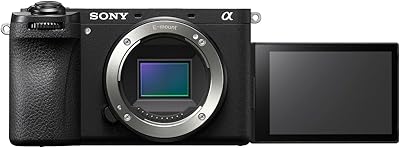
Sony Alpha 6700
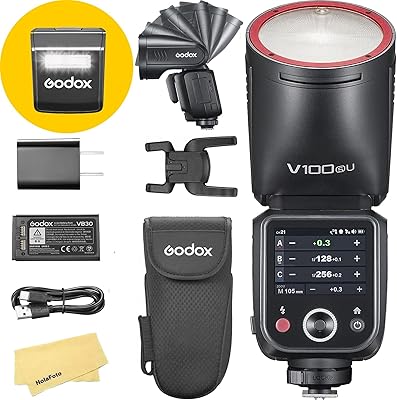
Godox V100S Sony Camera Flash
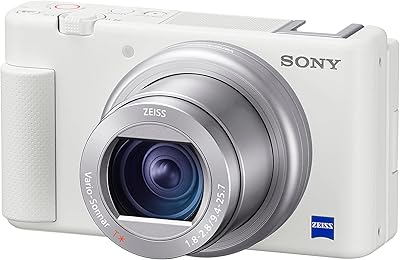
Sony ZV-1 Compact Digital Vlogging Camera
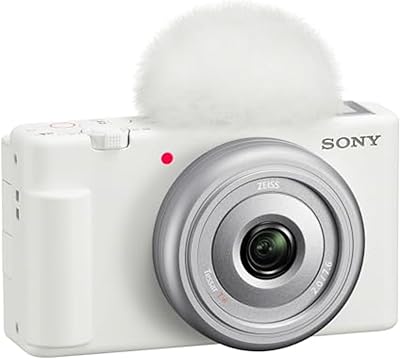
Sony ZV-1F
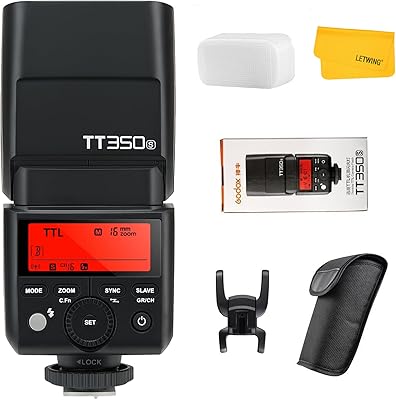
Godox TT350S Mini Speedlite Flash
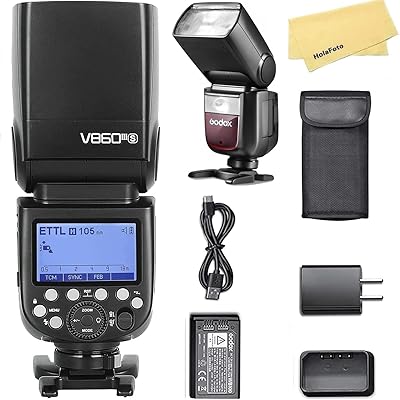
Godox V860III-S Speedlight Flash
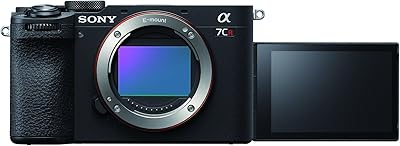
Sony Alpha 7CR Full-Frame Mirrorless Camera