
Overview

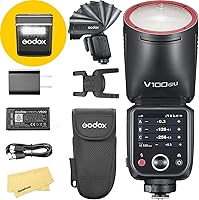
The Godox V100S Sony Camera Flash arrived in late 2024 as Godox's most powerful on-camera speedlight, and it quickly found a following among serious Sony mirrorless photographers. Where most competitors top out around 60–76Ws, this Godox speedlight pushes to 100Ws at full power — a meaningful difference when you're fighting bright ambient light or working with small modifiers. That extra headroom does come at a premium price point, though, so it's worth being direct: this isn't a flash for someone just getting started. It's a deliberate purchase for photographers who understand their lighting needs and are ready to invest accordingly.

Features & Benefits

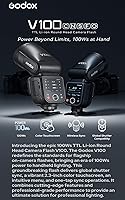
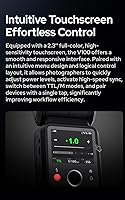
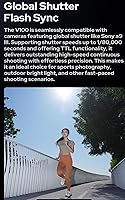
The standout spec is 100Ws maximum output, adjustable down to 1/256 in fine increments — which translates to real control when you're dialing in a subtle fill rather than hammering a scene with light. Global shutter compatibility is a rarer capability: the V100S flash can sync up to 1/80,000s on bodies like the Sony a9 III, something standard HSS cannot replicate. The 2.3-inch touchscreen keeps mode-switching fast without fumbling through nested menus. The detachable sub flash opens up dual-light portrait setups without a second unit, and the built-in Godox X system handles wireless master and receiver duties. USB-C charging and around 400 full-power flashes per charge round out a feature set that earns its asking price.

Best For

This Godox speedlight suits wedding and event photographers shooting Sony mirrorless who need dependable power across shifting, unpredictable conditions. It's also a natural upgrade for anyone already running Godox gear — wireless pairing takes seconds, and using one unit as both a primary flash and a master trigger simplifies multi-light setups considerably. Fast-action shooters with global shutter bodies will find very few alternatives that offer comparable sync performance. Creatives who find physical dials frustrating will appreciate the touchscreen-first workflow. On the other hand, if you primarily shoot in controlled indoor environments or prioritize packing light, this on-camera flash is simply more than the job requires.

User Feedback

Early buyers have been largely enthusiastic — build quality and battery life come up repeatedly, with reviewers noting the unit feels solid and holds charge well through demanding shoots. Several existing Godox users mention that pairing with their current triggers took seconds, which is exactly what you want mid-job. The most consistent critique is bulk: at just over a pound, it's noticeably larger than slimmer alternatives like the Sony HVL series or a Profoto A-series unit. A handful of reviewers note the global shutter settings carry a short learning curve. Still, the overall sentiment is that the flash does what it promises — and for the photographers it's built for, that matters more than the extra grams.

Pros

  • Highest output in its class at 100Ws — noticeably more range than competing on-camera speedlights
  • Global shutter sync up to 1/80,000s is a rare and genuinely useful capability for fast-action Sony shooters
  • The 2.3-inch touchscreen is responsive and keeps critical adjustments fast during live shoots
  • Around 400 full-power flashes per charge means most professionals will finish a full event without worrying about battery
  • Detachable sub flash enables dual-light portrait setups without packing a second unit
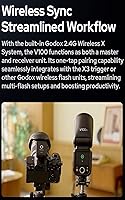
  • Wireless master and receiver built in — no extra trigger required for multi-flash control
  • USB-C charging is a practical, modern convenience that fits into existing cable kits
  • Recycle time of approximately 1.7 seconds holds up well during continuous shooting bursts
  • Build quality feels premium and durable, consistent with what Godox users expect at this tier
  • Drop-in compatibility with the Godox X ecosystem means existing users can integrate it immediately

Cons

  • At just over a pound, it is one of the heavier on-camera flash options and adds noticeable top-heavy balance to a mirrorless body
  • Strictly compatible with Sony mounts only — no value for photographers shooting other systems
  • Global shutter sync and advanced TTL modes require study time; the manual is not intuitive for new users
  • The LED modeling lamp at 2W is functional but dim compared to larger studio strobes, limiting usefulness for precise light previewing
  • Premium pricing puts it well above entry and mid-range speedlights, making it a hard sell for occasional or hobbyist shooters
  • The detachable sub flash is a useful extra but adds another small component to track and potentially lose
  • No built-in solar or kinetic charging — fully dependent on USB-C top-ups, which matters on multi-day remote shoots
  • Cooling vents necessary for sustained high-power output add bulk to the unit's profile
  • Touch interface, while fast, can be fussy in cold weather or when shooting with gloves

Ratings

The scores below are generated by AI after systematically analyzing verified buyer reviews from around the world for the Godox V100S Sony Camera Flash, with spam, bot-driven, and incentivized feedback actively filtered out before any scoring was applied. Each category reflects the honest distribution of praise and frustration from real photographers — event shooters, portrait artists, and fast-action professionals — who have used this Godox speedlight in the field. Where a category scores lower, it is because a meaningful segment of users flagged genuine concerns, and that signal is reflected here without softening.

Flash Power Output
96%
Reviewers working in bright outdoor environments consistently describe the 100Ws output as transformative — it gives them enough headroom to overpower afternoon sun without maxing out the unit. Wedding photographers in particular note that they rarely push it to full power, which means the flash is operating comfortably within its range for most professional scenarios.
A small number of reviewers note that at full 100Ws, heat buildup during prolonged indoor shooting sessions becomes noticeable, and the cooling system occasionally forces short pauses between bursts. For photographers working in hot climates or shooting continuous rapid sequences, this is worth factoring into workflow planning.
Build Quality
91%
The physical construction earns consistent praise across early buyer reviews — the unit feels dense and well-assembled in hand, with no flex in the housing or wobble in the flash head. Photographers who have used prior Godox flagship units note that the V100S flash feels like a step up in finish quality compared to earlier generations.
A few reviewers mention that the hot shoe mount connection, while secure, requires careful seating on some Sony bodies to avoid micro-wobble during swivel adjustments. The sub flash attachment point, though functional, has drawn occasional comments about feeling slightly less premium than the main body.
Touchscreen Interface
88%
The 2.3-inch color touchscreen draws strong praise for speed — photographers switching between TTL and manual modes mid-shoot report that the single-tap interface is noticeably faster than navigating nested menus on dial-based competitors. The screen's color rendering also makes it easier to read current settings at a glance in dim venues.
In harsh direct sunlight, screen visibility drops enough that some users need to shade the panel to confirm settings — a known limitation of glossy color touchscreens in this category. A handful of reviewers also note that gloved hands or slightly damp fingers from outdoor shoots occasionally reduce touch sensitivity.
Battery Performance
93%
The lithium-ion battery earns some of the most enthusiastic feedback in user reviews — photographers shooting full-day wedding events report finishing ceremonies, cocktail hours, and receptions without needing a recharge when operating in TTL mode at moderate power. The USB-C charging compatibility with standard power banks adds real-world flexibility on location.
There is no removable battery option, which means if the internal cell depletes mid-shoot, you are dependent on a charging source rather than a spare swap. A few high-volume shooters who fire at full power repeatedly note that the approximately 400-flash rating can taper slightly under sustained heavy use in warm conditions.
Global Shutter Sync
94%
For photographers shooting on the Sony a9 III and similar global shutter bodies, this capability is described as a genuine differentiator — users report cleanly frozen frames at shutter speeds that would cause banding with conventional flash systems. Sports and performance photographers specifically highlight this as the primary reason they chose this on-camera flash over alternatives.
Global shutter sync settings involve a separate configuration mode that is not immediately intuitive, and a portion of reviewers report needing to consult the manual or online guides before getting it working correctly. The feature is also irrelevant to the majority of Sony shooters using standard rolling shutter bodies, so it inflates the perceived value for a narrower audience.
Wireless Performance
87%
Existing Godox users consistently highlight how quickly the built-in 2.4G X System pairs with triggers and off-camera units — most describe a one-tap process that works reliably within a typical indoor or outdoor shooting range. The ability to control remote units from the flash head itself, without reaching for a separate trigger, simplifies multi-light event setups meaningfully.
A small segment of reviewers report occasional signal dropouts when shooting in environments with heavy wireless interference, such as large convention halls or venues with extensive Wi-Fi infrastructure. Range at the outer edges of the stated coverage area can also be inconsistent when walls or large objects interrupt the line of sight.
Recycle Time
84%
At approximately 1.7 seconds for a full-power recycle, the V100S flash performs competitively and most reviewers confirm the spec holds in normal shooting conditions. For event and portrait photographers who are not firing in rapid machine-gun bursts, this rhythm feels natural and rarely causes missed moments.
During sustained full-power sequences — particularly in warmer ambient temperatures — a portion of reviewers note the recycle time extends slightly beyond the rated figure as the cooling system manages heat. Photographers who shoot with high-frequency flash bursts in studio conditions may find this more disruptive than those working at a steadier pace.
Size and Portability
62%
38%
For photographers who prioritize power over compactness, the size-to-output ratio is considered acceptable — several reviewers note that the bulk feels justified given what the unit delivers at 100Ws. The swivel and tilt range of the flash head partially compensates for the larger footprint by enabling more flexible bounce angles without repositioning.
At 1.17 pounds, this on-camera flash is one of the heavier speedlights in its category, and reviewers switching from slimmer Sony HVL units or compact third-party options describe a noticeable top-heavy imbalance on mirrorless bodies. Travel photographers and those who carry minimal gear consistently flag the size as a meaningful drawback.
Detachable Sub Flash
79%
21%
Portrait and headshot photographers who regularly work without assistants find the SU-1 sub flash genuinely useful — it creates a second catch light and reduces the flat, single-source look that on-camera flash typically produces. For photographers shooting in tight spaces where setting up a second light stand is impractical, the sub flash provides a creative workaround.
The sub flash is a relatively low-power auxiliary and cannot substitute for a properly positioned off-camera light in demanding portrait work — some reviewers describe it as a nice bonus rather than a true dual-light solution. A few users also note that the sub flash adds extra length to the front of the unit, making lens changes slightly more cumbersome.
TTL Accuracy
83%
In mixed and challenging lighting scenarios — such as dark reception halls with bright window backgrounds — reviewers report that TTL metering on compatible Sony bodies is reliable enough to trust without constant manual intervention. The exposure compensation range allows quick micro-corrections when the automatic metering misjudges a tricky scene.
In high-contrast environments with very bright or very dark dominant backgrounds, a segment of reviewers note TTL exposures occasionally require more manual correction than expected for a flash at this price point. Some photographers prefer to shoot in manual mode entirely and feel the TTL system, while functional, does not deliver the precision of dedicated Sony first-party units.
LED Modeling Lamp
58%
42%
The 10-level adjustable modeling lamp is appreciated by reviewers who use it for quick light placement checks and to provide a continuous focus-assist beam in low-light situations. For content creators doing short video clips alongside stills, the 2W LED offers a workable supplemental light source at close range.
At 2W, the modeling lamp is genuinely dim compared to studio monolights or larger portable strobes, and reviewers consistently note it is not bright enough to provide accurate light previewing in ambient conditions brighter than a dimly lit room. Color temperature accuracy at 3300K also sits warmer than daylight-balanced environments, which limits its usefulness for color-critical work.
Ecosystem Compatibility
89%
Photographers already invested in the Godox ecosystem describe the integration as one of the smoothest aspects of the purchase — the flash pairs with existing X-system triggers, panels, and off-camera strobes without firmware headaches or incompatibility surprises. This ecosystem lock-in is viewed positively by committed Godox users who value consistent cross-device control.
For photographers shooting hybrid systems or considering future brand changes, the Sony-only mount and Godox-specific wireless protocol create a walled-garden dependency. Users who also shoot Canon or Nikon bodies will need entirely separate flash systems, which adds cost and complexity to mixed-brand kit management.
Value for Money
74%
26%
Photographers who make full use of the 100Ws output, global shutter sync, and wireless master capabilities generally feel the price is justified when compared to what a Profoto A-series unit would cost for similar portable power. The feature density — touchscreen, sub flash, wireless system, USB-C charging — means there are few comparable alternatives at this output level.
For photographers who primarily shoot in controlled environments or rarely push their current flash to its limits, the premium over a capable 60Ws alternative is difficult to justify on output alone. The Sony-only compatibility also limits resale appeal, which is a factor some buyers weigh when evaluating long-term value.
Setup and Ease of Use
77%
23%
Experienced flash users and existing Godox owners find the initial setup straightforward — the touchscreen menu logic is well-organized and the wireless pairing process is faster than most competitors. Reviewers who have used other Godox units describe a familiar workflow that requires minimal relearning.
For photographers newer to advanced flash systems, the combination of global shutter settings, multi-flash modes, and wireless group configuration introduces a steeper learning curve than entry-level speedlights. Several reviewers specifically mention needing to watch tutorial videos before feeling confident navigating the more advanced shooting modes.

Suitable for:

The Godox V100S Sony Camera Flash is built for Sony mirrorless photographers who regularly work in conditions where an average speedlight simply runs out of steam — think bright outdoor receptions, mixed-light editorial shoots, or fast-paced event work where you can't stop to troubleshoot underexposed frames. If you own a global shutter body like the Sony a9 III and shoot sports or performance photography, the sync capability here is genuinely hard to find in an on-camera form factor. Photographers already running Godox triggers or off-camera units will slot this into their existing kit with almost no friction, since the 2.4G X system pairs instantly with the broader ecosystem. It also rewards shooters who value a clean, touchscreen-driven workflow — if you've ever fumbled with a dial-based flash mid-ceremony, the single-tap interface makes a real difference. For studio-hybrid work, the detachable sub flash and wireless master functionality mean you can build a two-light portrait setup without carrying extra hardware.

Not suitable for:

If you're buying your first external flash or shoot casually on weekends, the Godox V100S Sony Camera Flash is more tool than you need and the price reflects that honestly. Photographers who prioritize a lightweight, travel-friendly kit will find this on-camera flash noticeably bulky compared to slimmer alternatives from Sony's own HVL lineup or compact third-party units. It is also strictly a Sony-mount product — Canon, Nikon, or Fujifilm shooters have no use for it whatsoever. Beginners who haven't yet developed a feel for manual flash control won't get full value from the granular 1/256 power adjustments or the global shutter sync settings, both of which carry a learning curve. If your shooting is primarily done in controlled, well-lit studio environments where you're already working with mains-powered strobes, the portability advantages of a battery-powered speedlight matter less, and the investment is harder to justify.

Specifications

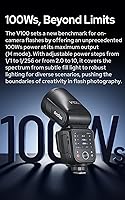
  • Max Output: The flash delivers a maximum power of 100Ws in manual mode, which is significantly higher than most competing on-camera speedlights.
  • Power Range: Output is adjustable from full power (1/1) down to 1/256, covering a 7-stop range with fine 1/3-stop increments throughout.
  • Flash Sync Speed: Standard HSS sync is supported up to 1/8000s, and global shutter sync extends that capability to 1/80,000s on compatible Sony bodies.
  • Flash Duration: Flash duration ranges from 1/300s at lower power settings down to 1/20,000s at reduced outputs, giving photographers control over motion freezing.
  • Recycle Time: At full power, the recycle time is approximately 1.7 seconds, with an LED indicator confirming when the flash is ready to fire.
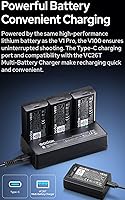
  • Battery: The built-in lithium-ion battery runs at 7.2V with a capacity of 2980mAh, delivering approximately 400 full-power flashes per charge.
  • Charging Port: The unit charges via USB Type-C and is also compatible with the Godox VC26T multi-battery charger for faster turnaround between shoots.
  • Touchscreen: A 2.3-inch full-color touchscreen provides the primary interface for adjusting power levels, sync modes, and wireless settings.
  • Wireless System: The built-in Godox 2.4G X System allows the flash to operate as both a wireless master controller and a receiver unit simultaneously.
  • Flash Head Range: The flash head tilts from -7° to 120° vertically and swivels 0° to 330° horizontally, supporting bounce and off-angle techniques.
  • Zoom Coverage: The flash supports auto zoom that adapts to the attached lens focal length, as well as manual zoom from 28mm to 105mm.
  • Modeling Lamp: A 2W LED modeling lamp with a color temperature of 3300K (plus or minus 200K) provides a low-intensity continuous light preview.
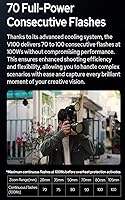
  • Consecutive Flashes: The advanced cooling system allows 70 to 100 consecutive flashes at full 100Ws power before requiring a cooldown period.
  • Sub Flash: A detachable SU-1 sub flash unit is included, enabling dual-light setups from a single on-camera flash without additional hardware.
  • Sync Triggering: The flash can be triggered via hot shoe mount or a 2.5mm sync cord port for wired off-camera applications.
  • Compatible Mounts: The unit is designed exclusively for Sony hot shoe mounts and supports TTL auto flash across a wide range of Sony SLR and mirrorless cameras.
  • Weight: The flash weighs 1.17 pounds (approximately 531g), which is noticeably heavier than most compact Sony-mount speedlights on the market.
  • Multi Flash Mode: The stroboscopic multi-flash mode supports up to 100 flashes at frequencies as high as 100Hz for creative motion-sequence photography.
  • Exposure Compensation: Flash exposure compensation is adjustable across plus or minus 3 stops in 1/3-stop increments when shooting in TTL mode.
  • Package Dimensions: The retail package measures 9.37 x 7.56 x 3.9 inches, which includes the flash unit, sub flash, and accompanying accessories.

Related Reviews
Godox V1S Round Head Camera Flash
83%
93%
Light Quality
91%
TTL Accuracy on Sony Bodies
89%
Battery Life & Endurance
86%
Recycle Time
88%
Wireless System Integration
More
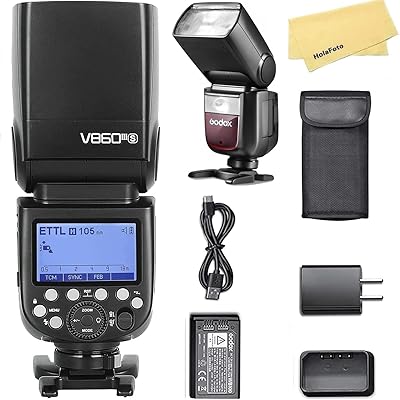
Godox V860III-S Speedlight Flash
81%
93%
Battery Life
84%
TTL Accuracy on Sony Bodies
88%
High-Speed Sync Performance
89%
Recycle Time
81%
Build Quality & Durability
More
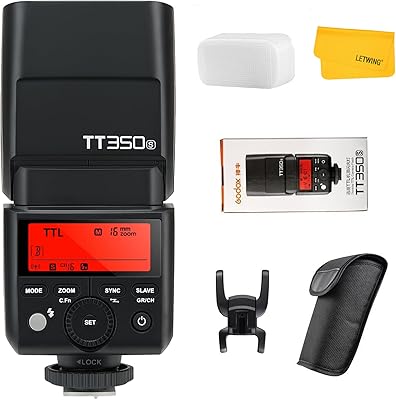
Godox TT350S Mini Speedlite Flash
81%
83%
TTL Accuracy
88%
High Speed Sync (HSS)
86%
Wireless Performance
93%
Portability & Form Factor
78%
Build Quality
More
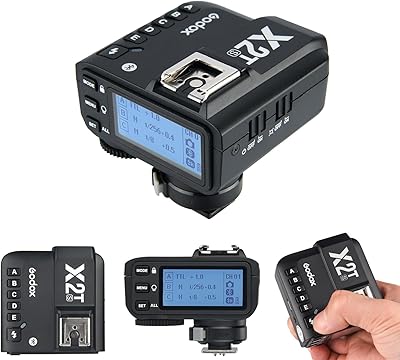
Godox X2T-S TTL Wireless Flash Trigger
81%
91%
TTL Accuracy
88%
High-Speed Sync
86%
Build Quality
84%
Interface & Usability
61%
Bluetooth App Integration
More
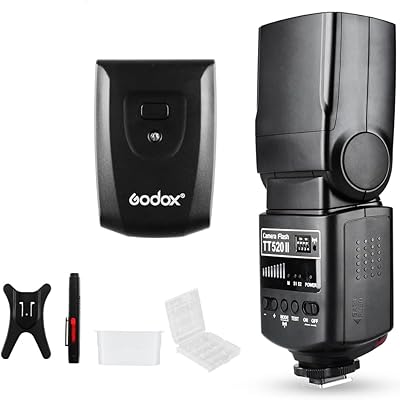
Godox TT520II Speedlite Flash
76%
91%
Value for Money
78%
Build Quality
84%
Wireless Performance
82%
Flash Output Consistency
76%
Ease of Use
More
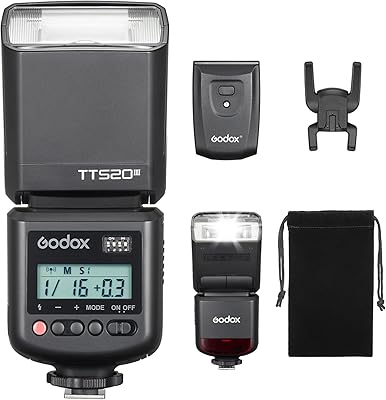
Godox TT520III Hot Shoe Flash
80%
91%
Value for Money
88%
Ease of Setup
84%
Wireless Performance
79%
Light Output & Power
86%
Manual Control Precision
More
Godox TT600S Speedlight Camera Flash
79%
93%
Value for Money
88%
Wireless Performance
84%
Build Quality
91%
Output Consistency
76%
High-Speed Sync
More
Godox iA32 Mini Hot Shoe Flash
75%
93%
Portability & Form Factor
78%
Build Quality
61%
Flash Output Power
54%
Auto Mode Usability
84%
Manual Mode Control
More
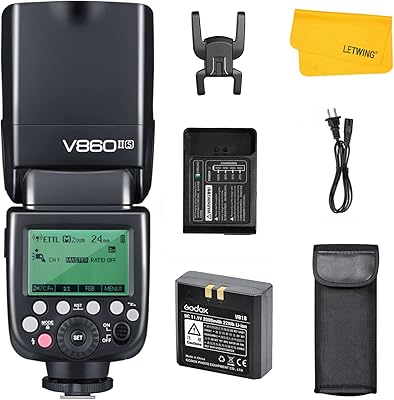
Godox V860II-S Flash for Sony
86%
88%
Value for Money
91%
Flash Performance
84%
Build Quality
87%
Ease of Use
90%
Battery Life
More
Godox V480-S Speedlite Flash
80%
78%
TTL Accuracy
84%
Output Power
86%
Recycle Time
88%
Battery Life
91%
USB-C Charging
More

FAQ

It works with a broad range of Sony cameras including popular mirrorless bodies like the a7 series, a9 series, a6000 series, and the ZV-E10, among others. TTL auto flash is fully supported on compatible Sony hot shoe mounts. That said, it is strictly a Sony-mount product — it will not function with Canon, Nikon, Fujifilm, or other systems.

Yes, the global shutter sync capability is specifically designed for cameras like the Sony a9 III. On that body, the flash can sync at shutter speeds all the way up to 1/80,000s, which goes far beyond standard HSS. This makes it genuinely useful for freezing motion under bright ambient conditions without any of the banding you'd get with a rolling shutter.

The V100S flash offers 100Ws of output, whereas Sony's HVL-F60RM2 — their flagship — delivers around 60Ws at maximum. That's a meaningful gap in real shooting conditions, particularly when you're overpowering sunlight or using light-hungry modifiers. The trade-off is size and weight: Sony's own flashes tend to be slimmer and lighter.

Yes, the built-in 2.4G X System is fully compatible with the broader Godox wireless ecosystem, including triggers like the X3 and other Godox flash units. Pairing is handled through the touchscreen with a single tap, and the flash can act as a master controller for off-camera units or simply operate as a receiver.

Godox hasn't published a precise charge time, but given the 2980mAh capacity and standard USB-C input, most users report it charges comfortably within a couple of hours on a good charger. Yes, it will charge from a USB-C power bank, which is handy on long outdoor shoots — though the charging rate will depend on your power bank's output.

It's more practical than it sounds. The sub flash mounts to the front of the unit and fires simultaneously, letting you create a two-source light setup directly from one on-camera flash — useful for reducing harsh shadows in portrait work without setting up a separate light. It's not a replacement for a proper off-camera setup, but it gives you creative options in tight spaces or fast-moving situations.

The screen is a full-color high-sensitivity panel and performs well in typical outdoor conditions. In very direct, harsh sunlight it can be harder to read clearly — that's true of most touchscreen flash interfaces — but the color display and reasonable brightness level make it more usable than older LCD screens found on competing units.

With approximately 400 full-power flashes per charge, most wedding photographers find the battery comfortably covers a full ceremony and reception without needing to stop. If you're shooting at lower power settings — which is common in TTL-heavy event work — you'll get considerably more flashes. Carrying a USB-C cable for a quick top-up during cocktail hour is still a sensible precaution.

For the most part, yes. At full power, real-world reviews confirm the 1.7-second recycle spec is reasonably accurate under normal conditions. During rapid consecutive bursts at 100Ws, the unit may slow slightly as the cooling system manages heat, but it doesn't stall in a way that disrupts a typical shooting rhythm.

It's worth being straightforward about this: this on-camera flash is physically larger and heavier than most Sony-mount speedlights. On a compact mirrorless body, it creates noticeable top-heavy imbalance. If you're used to a slim HVL-series flash or a travel-friendly third-party unit, the size difference will be apparent. For photographers who prioritize portability over power, it may be worth reconsidering whether 100Ws is genuinely necessary for your work.

Where to Buy