Overview

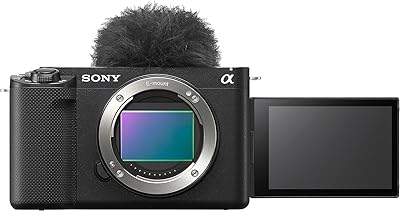
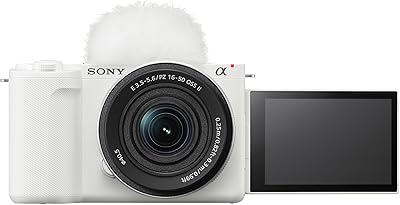
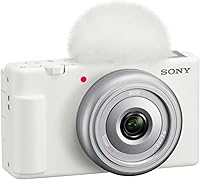
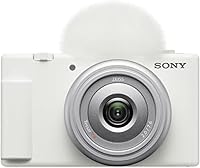
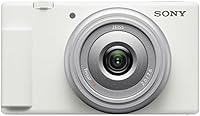
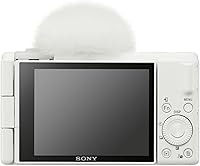
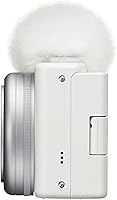
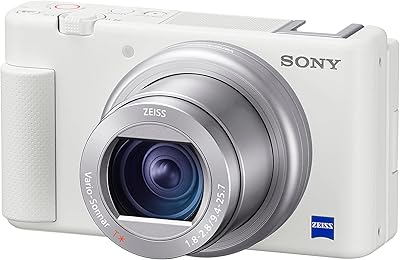
The Sony ZV-1F arrived in late 2022 as Sony's answer to a specific creator problem: how do you shoot yourself, alone, without a crew, and still look polished? Unlike its predecessor, this vlog camera swaps a zoom lens for a fixed 20mm ultra-wide, a deliberate trade that pays off the moment you hold it at arm's length. The side-articulating touchscreen flips out so you can actually see what you're filming — no guesswork, no awkward angles. It sits comfortably between a high-end smartphone and a full mirrorless setup, targeting creators who want a real camera upgrade without the added complexity.

Features & Benefits

The 1-inch CMOS sensor paired with an F2 aperture is where this vlog camera clearly earns its keep. Shooting in a dim café or an indoor setting that would turn a phone into a grainy mess? The ZV-1F handles it with noticeably cleaner results, though this is not a mirrorless replacement. The Eye-AF is fast and sticky — it locks onto your face and rarely loses it mid-sentence. The built-in 3-capsule microphone is surprisingly capable, especially with the windscreen attached outdoors. One-touch background defocus and product showcase mode round out a feature set designed to speed up a solo creator's entire workflow.

Best For

Sony's compact creator cam makes most sense for first-time camera buyers who have outgrown their phone but are not ready to invest in a full interchangeable-lens system. If you are filming yourself for YouTube, TikTok, or short-form content — often solo, often on the move — the wide-angle lens and reliable autofocus remove two of the biggest pain points in self-directed shooting. Travel creators will appreciate how little space it takes up in a bag. That said, if you need zoom flexibility or deep manual control, this vlog camera will feel limiting fairly quickly. It rewards simplicity over versatility.

User Feedback

Across a wide range of buyers, the autofocus and face-tracking earn consistent praise — people are relieved to get sharp, centered shots without fiddling with settings. The ultra-wide framing gets credit for making solo videos look intentional rather than cramped. Where opinions split is on the fixed lens: buyers who previously owned the original ZV-1 miss having zoom, and that is a fair concern worth weighing before buying. Battery life comes up frequently as a weak point, with many creators recommending a spare for longer shoots. A smaller group notes that digital stabilization introduces a visible crop. Overall, reception among newer creators skews strongly positive.

Pros

  • Eye-AF locks onto your face quickly and holds it reliably, even mid-movement or during gestures.
  • The ultra-wide lens captures full-scene context at arm's length without awkward distortion.
  • One-touch background defocus and product showcase mode speed up solo content production significantly.
  • Built-in 3-capsule mic handles outdoor audio well, especially with the included windscreen attached.
  • At under 9 ounces, the ZV-1F is genuinely pocketable for travel and everyday carry.
  • The side-articulating touchscreen makes self-framing effortless without a mirror or second person.
  • Image quality in mixed indoor and outdoor light is a clear step up from modern smartphones.
  • Beginner-friendly interface means creators can start producing decent content within minutes of unboxing.
  • The Sony E mount opens up lens expansion options for creators who eventually want to grow.

Cons

  • No zoom whatsoever — fixed 20mm only, which severely limits versatility outside vlogging.
  • Battery drains quickly during continuous shooting; a spare is practically a required accessory.
  • Digital stabilization crops the frame noticeably, partially defeating the wide-angle advantage.
  • No 4K video recording, which feels like an omission at this price point in the current market.
  • No headphone jack means you cannot monitor audio in real time while recording.
  • High-ISO noise in truly dark environments reveals the sensor's limits against mirrorless alternatives.
  • The plastic body offers no weather sealing, making rain or dusty outdoor shoots a genuine risk.
  • Touchscreen sensitivity drops in cold weather, which is a real issue for outdoor winter creators.

Ratings

Our score for the Sony ZV-1F was calculated by an AI system that analyzed thousands of verified buyer reviews from around the world, actively filtering out incentivized, bot-generated, and low-quality feedback to surface what real creators actually experience. The result is a transparent, category-by-category breakdown that reflects both what this vlog camera genuinely does well and where it falls short — no spin, no omissions.

Autofocus Performance
92%
Face and eye tracking on this vlog camera is one of its most praised traits across the board. Creators filming themselves mid-walk, gesturing at the camera, or switching between subjects report that the lock-on is fast and rarely drifts. For solo shooting without a camera operator, that reliability is a genuine differentiator.
In very low contrast scenes or when the subject moves sharply out of frame, a small number of users report brief hunting before the lens reacquires. It is a minor issue but noticeable during fast-paced content like action or crowded environments.
Lens Quality
88%
The 20mm ultra-wide field of view is purpose-built for arm's-length self-recording, and buyers consistently note it captures the full scene — face, background, context — without the cramped framing common on narrower lenses. Distortion at close range is well controlled for the focal length.
The fixed focal length is the single biggest point of friction for buyers coming from zoom-capable competitors. There is zero flexibility to tighten a shot or frame a distant subject, which limits the ZV-1F's usefulness outside of face-forward vlogging scenarios.
Low-Light Capability
76%
24%
The 1-inch sensor with an F2 aperture produces footage that is noticeably cleaner than a typical smartphone in dim indoor settings. Creators filming in cafés, evening street scenes, or poorly lit rooms report a meaningful jump in image quality compared to their phones.
Expectations need to stay calibrated — this is not a mirrorless camera, and high-ISO noise becomes apparent in truly dark environments. Users who regularly shoot at night or in very low-light conditions may find the performance falls short of their expectations at this price tier.
Built-in Microphone
81%
19%
The 3-capsule directional microphone picks up voice clearly in most outdoor and indoor shooting conditions, and the bundled windscreen makes a real difference when filming outside on breezy days. Many creators report being surprised by how usable the audio is straight out of the camera.
In noisy public environments — busy streets, markets, events — the mic struggles to isolate the speaker's voice cleanly. Background noise bleeds through noticeably, and creators serious about audio quality will want an external mic for anything beyond casual footage.
Ease of Use
93%
The one-button background defocus and product showcase mode are repeatedly called out by beginner buyers as features that made them feel like capable creators immediately. The menu system is straightforward, and the touchscreen interface reduces the friction of navigating settings significantly.
Advanced users and those transitioning from manual-control cameras may find the simplified interface limiting over time. There is less granular control over exposure, shutter, and ISO compared to more enthusiast-oriented Sony bodies, which can feel restrictive as skills improve.
Image Stabilization
67%
33%
Digital stabilization does a reasonable job smoothing out minor hand tremors during walkaround footage and casual handheld shots. For slow-paced travel content or talking-head clips recorded while standing still, it delivers acceptably stable results.
A notable portion of users flag that the digital stabilization introduces a visible crop into the frame, which partially undermines the ultra-wide lens advantage. In fast movement scenarios, the stabilization can also produce a subtle warping effect that is distracting in finished footage.
Battery Life
54%
46%
For quick shooting sessions — a 20 to 30 minute vlog, a short travel clip, or a product review video — the battery gets the job done without interruption. Casual users who shoot in short bursts and charge regularly may not encounter any real frustration.
Extended shooting is where battery life becomes a genuine complaint. Multiple reviewers note the charge depletes faster than expected, especially with the screen active and continuous autofocus running. Buying a spare battery is a near-universal recommendation among frequent users.
Portability & Build
86%
At just 9 ounces and compact enough to slip into a jacket pocket, this vlog camera travels extremely well. Creators who shoot on daily commutes, city walks, or while traveling light consistently praise how unobtrusive it is to carry compared to larger camera systems.
The plastic build, while keeping weight down, does not inspire the same confidence as metal-bodied cameras. A few users mention the body feels slightly hollow under pressure, and there is no weather sealing, which limits use in rain or dusty outdoor environments.
Screen & Framing
84%
The side-articulating touchscreen is one of the more practical design choices on this vlog camera — it flips out to face the shooter without blocking a top-mounted microphone or accessory. Framing solo shots becomes genuinely intuitive from the first use.
The screen size is on the smaller side, which makes precise focus-point selection via touch slightly fiddly. In bright sunlight, visibility drops enough that some users struggle to judge exposure and framing accurately without shading the display.
Video Quality
82%
18%
Footage out of Sony's compact creator cam looks clean and well-exposed in good lighting, with natural color rendering that holds up well for YouTube and social media compression. The 16:9 aspect ratio and MP4 format make files immediately ready for most editing workflows.
The absence of 4K recording is a sticking point for creators future-proofing their content. 1080p output is solid but increasingly feels like a ceiling as platforms and audiences shift toward higher resolution expectations.
Value for Money
73%
27%
For a first-time camera buyer who wants autofocus reliability, good audio, and wide-angle framing in one package, the price represents a reasonable step up from smartphone-only shooting. The combination of vlog-specific features bundled together at this tier is hard to replicate with separate accessories.
Buyers who do their homework often flag that the fixed lens and lack of 4K feel like notable omissions at this price point. Competing options from other brands offer zoom lenses or higher resolution video for a similar or lower cost, making value perception somewhat subjective.
Touchscreen Responsiveness
79%
21%
For the core tasks — tapping to set focus, navigating menus, triggering touch-to-track autofocus — the touchscreen performs reliably and responds well. Users who prefer touch-first interfaces over physical dials will feel at home quickly.
In cold weather, the touchscreen sensitivity drops noticeably, which is a minor but real frustration for outdoor creators in cooler climates. Multi-touch gestures are limited, so the interface feels somewhat basic compared to smartphone touchscreens users are accustomed to.
Audio Versatility
71%
29%
Having both a capable built-in microphone and a standard accessory mount gives creators a reasonable starting point and a clear upgrade path. The windscreen accessory included in the box is a thoughtful addition that adds immediate practical value.
There is no headphone jack for real-time audio monitoring, which is a limitation that professional or semi-professional creators will feel immediately. Relying entirely on the built-in mic for critical audio without playback monitoring is a workflow constraint that is hard to overlook.
Creator-Specific Modes
88%
The product showcase mode — which shifts focus from the shooter's face to an object held up to the lens — is a genuinely useful feature for review creators and lifestyle vloggers. It works quickly and reduces the need for manual focus adjustments during demonstrations.
The creator modes, while practical, are fairly limited in number and customization. Power users will exhaust the preset options relatively quickly and may wish for more granular control over how each mode behaves in different lighting or shooting conditions.

Suitable for:

The Sony ZV-1F was clearly designed with a specific type of creator in mind, and if you match that profile, it delivers remarkably well. This is the right camera for someone who films themselves regularly — solo, without a crew, often on the move — and wants results that look considerably better than a smartphone without the learning curve of a full mirrorless system. YouTube and TikTok creators who shoot talking-head content, travel vlogs, or product reviews will find the wide-angle lens and reliable face-tracking take care of two of the biggest solo-shooting headaches automatically. It also suits creators who prioritize packing light, since the compact body fits in a jacket pocket or the front pouch of a daypack without any real sacrifice. If you are buying your first dedicated camera and your content is mostly you, talking to the lens, in a variety of everyday environments, this vlog camera is a genuinely strong fit.

Not suitable for:

There are some clear scenarios where the ZV-1F will frustrate rather than satisfy, and it is worth being direct about them before buying. The fixed 20mm lens means there is no zoom — none — so if your content regularly involves filming subjects at a distance, tightening a shot of scenery, or anything beyond arm's-length self-recording, this camera will feel immediately limiting. Creators who already own the original ZV-1 and are considering an upgrade should know they would be trading zoom capability for a wider angle, which is a meaningful downgrade depending on how they shoot. The absence of 4K video is also a real concern for anyone planning to future-proof their content library or who edits with heavy cropping in post. Battery life under continuous use is short enough that serious creators will need a backup, which adds cost and planning overhead. And if you have already outgrown beginner-mode shooting and want granular manual control over your footage, Sony's compact creator cam will start to feel like it is working against you rather than with you.

Specifications

  • Lens: Fixed 20mm F2 ultra-wide lens optimized for close-range self-shooting with minimal distortion.
  • Sensor: 1-inch CMOS image sensor providing improved light capture and dynamic range compared to smaller smartphone sensors.
  • Maximum Aperture: F2 aperture enables background defocus and improved low-light performance in mixed indoor and outdoor environments.
  • Focal Length: Maximum focal length of 30mm with no optical zoom; the lens is fixed and cannot be swapped or extended.
  • Autofocus: Eye-AF and real-time subject tracking technology maintain sharp focus on the shooter's face during movement.
  • Video Format: Records video in MP4 format at a 16:9 aspect ratio, compatible with most standard editing software and platforms.
  • Image Stabilization: Digital image stabilization reduces camera shake during handheld use, though it introduces a slight crop to the frame.
  • ISO Range: Expanded ISO minimum of 100, allowing flexible exposure control across a range of lighting conditions.
  • Microphone: 3-capsule directional microphone system captures forward-facing audio with improved voice clarity and wind noise reduction.
  • Screen: Side-articulating touchscreen LCD flips out to face the shooter, enabling accurate self-framing without assistance.
  • Dimensions: Body measures 4.15 x 2.36 x 1.83 inches, making it compact enough to fit in a jacket pocket or small bag.
  • Weight: Camera body weighs 9 ounces, keeping the overall carry load minimal for travel and on-the-go content creation.
  • Battery: Powered by one included AA battery; battery life is limited under continuous shooting conditions and a spare is recommended.
  • Mount: Sony E mount is present, providing compatibility within the broader Sony lens and accessory ecosystem.
  • Metering Modes: Supports Average, Center-Weighted Average, Highlight, Multi, and Spot metering for varied exposure scenarios.
  • File Format: Captures stills and video in standard consumer formats with MP4 video output ready for direct upload or editing.
  • Accessories Included: Windscreen accessory is included in the box to reduce wind interference when recording audio outdoors.
  • Model Number: Official Sony model number is ZV1F/W, with the W designation indicating the White color variant.
  • Release Date: Product was first made available in October 2022 as part of Sony's ZV vlogging camera lineup.
  • Manufacturer: Designed and manufactured by Sony, a Japanese electronics company with an established history in consumer imaging products.

Related Reviews
Sony ZV-1 Digital Camera
85%
94%
Video Quality
92%
Autofocus Performance
88%
Ease of Use
91%
Portability
85%
Build Quality
More
Sony ZV-E1
Sony ZV-E1
78%
94%
Video Quality
92%
Autofocus Reliability
91%
Image Stabilization
89%
Low-Light Performance
78%
Build Quality & Ergonomics
More
Sony Alpha ZV-E10 II Mirrorless Camera with 16-50mm Lens
85%
94%
Autofocus Performance
88%
Ease of Use for Beginners
90%
Video Quality (4K)
85%
Image Quality (26MP)
92%
Portability and Weight
More
Sony BDP-S360
Sony BDP-S360
86%
94%
Video Quality
90%
DVD Upscaling
88%
Audio Performance
91%
Setup & Installation
85%
Build Quality
More
Sony MDRE9LP Earbuds
79%
83%
Sound Quality
78%
Comfort & Fit
80%
Build Quality
75%
Microphone Performance
88%
Portability
More
Sony SRS-XB23
Sony SRS-XB23
87%
94%
Sound Quality
91%
Bass Performance
97%
Portability
89%
Build Durability
93%
Waterproofing
More
Sony VRDMC3 DVDirect
81%
88%
Recording Quality
91%
Ease of Use
85%
Setup & Installation
78%
Connectivity Options
84%
Disc Compatibility
More
Sony WH-CH720NB
Sony WH-CH720NB
88%
94%
Noise Cancellation Effectiveness
91%
Sound Clarity
88%
Bass Performance
95%
Battery Life
90%
Comfort During Extended Use
More
Sony MDR-CD900ST
Sony MDR-CD900ST
89%
96%
Sound Accuracy
91%
Comfort & Fit
94%
Build Quality
92%
Durability
95%
Frequency Response
More
Sony MDRXB600IP Headphones
82%
88%
Bass Performance
85%
Comfort for Extended Use
83%
Noise Isolation
78%
Build Quality
81%
Portability
More

FAQ

Yes, it is genuinely well-suited for that transition. The autofocus handles most of the technical work for you, the menus are straightforward, and features like one-touch background defocus mean you can produce polished-looking footage without studying a manual. Most first-time buyers report feeling comfortable within an hour of use.

No, it does not. Video is captured in 1080p MP4 format, which is perfectly fine for YouTube and social platforms today but is worth knowing if you are planning to future-proof your content or do heavy cropping in post-production. For most beginner and intermediate creators, 1080p output is more than sufficient.

It is visible enough that some users mention it. When stabilization is active, the camera crops into the frame slightly, which reduces the effective field of view of the ultra-wide lens. If you are filming while stationary or seated, you can turn stabilization off to get the full wide-angle benefit.

Yes, the camera has a standard accessory mount and supports external microphone connections. However, there is no headphone jack, so you cannot monitor audio in real time while recording. If audio quality is critical to your workflow, pairing it with an external mic and monitoring on playback is the practical workaround.

Battery life is one of the more common complaints from buyers. Under continuous shooting with the screen active and autofocus running, many users get less than an hour before needing to recharge. Picking up a spare battery before your first serious shoot is strongly recommended, especially for travel days or longer filming sessions.

At arm's length, the 20mm focal length handles facial proportions reasonably well — it was specifically designed for that shooting distance. If you get extremely close to the lens, some natural wide-angle exaggeration will appear, but at the typical vlogging distance of 50 to 70 centimeters, distortion is well controlled.

You can, but the fixed 20mm lens means you have no ability to zoom in on a distant subject. For wide establishing shots of landscapes or street scenes, the field of view is actually quite generous. For anything that requires getting closer to a subject optically — wildlife, sports, a speaker on a stage — this vlog camera is not the right tool.

Better than a smartphone, yes, but do not expect miracles. The 1-inch sensor and F2 aperture give it a real edge in mixed or dim indoor light, and footage will be noticeably cleaner than most phones. In very dark conditions with minimal ambient light, noise becomes visible. A basic ring light or softbox will significantly extend its effective low-light range.

It depends entirely on how you shoot. The ZV-1F has a wider, more flattering lens for self-recording and a slightly larger sensor, which makes it better for close-up solo vlogging. But the original ZV-1 had a zoom lens, which gave it much more flexibility for filming a variety of subjects. If you primarily film yourself talking to the camera, this is a lateral improvement. If you valued the zoom, it is actually a step backward in versatility.

Yes, Sony's compact creator cam supports USB connection and can be used as a webcam via Sony's Imaging Edge Webcam software on a computer. This is a useful bonus feature for video calls or live streaming from a desktop setup, and several users mention it as an underrated secondary use case beyond regular filming.