Overview

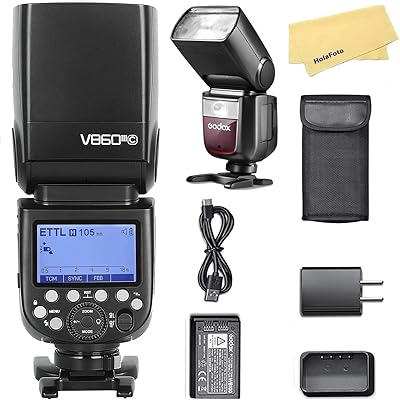
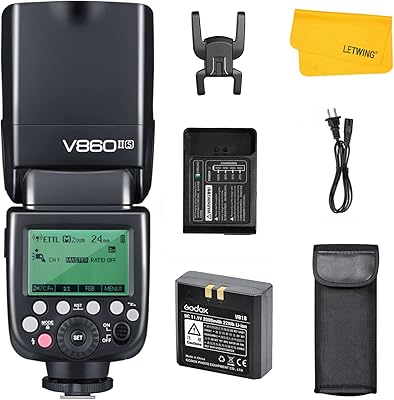
The Godox V860III-S Speedlight Flash sits firmly in the mid-to-premium tier for Sony shooters who need reliable, capable artificial light without spending what a first-party flagship demands. Compared to its predecessor, the V860II, this generation brings a larger 2600mAh Li-ion battery, a faster recycle time, and the addition of a 10-level LED modeling lamp — a meaningful step forward for working photographers. Whether you are covering weddings, shooting environmental portraits, or need a dependable unit for run-and-gun work, this Sony-dedicated flash covers the bases. It ships with a mini stand, protective case, and USB charger, and its #15 ranking in Shoe-Mount Flashes suggests it has earned real-world traction.
Features & Benefits

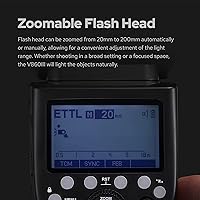
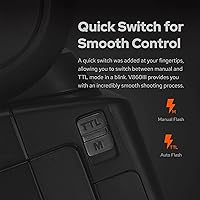
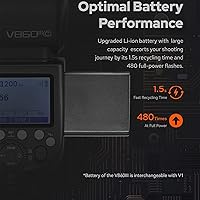
The 2600mAh Li-ion battery is where this Godox speedlight genuinely pulls ahead of AA-powered competitors. At roughly 480 full-power flashes per charge and a 1.5-second recycle time, you can cover an entire wedding reception without hunting for spares. The 76Ws output paired with high-speed sync up to 1/8000s means shooting wide open in harsh midday sun is actually practical — no blown highlights, no compromises on aperture. The zoom head covers 20–200mm and rotates a full 330° horizontally, so bounce angles are rarely a problem. That dedicated quick-switch button between TTL and manual is a small ergonomic touch, but mid-event, one-button mode switching turns out to matter more than you would expect.

Best For

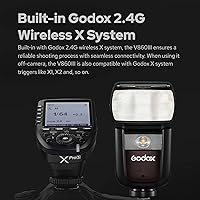
This Sony-dedicated flash is a natural fit for Sony mirrorless users — think A7, A9, or A6000-series bodies — who want reliable TTL and HSS without paying the premium Sony's own HVL-F60RM commands. Wedding and event photographers will particularly value the high shot count and fast turnaround between flashes; it removes battery anxiety from long shooting days entirely. Outdoor portrait photographers working in bright conditions get real, practical utility from the high-speed sync. If you already own other Godox lights, the built-in 2.4G X system slots into your existing wireless setup without any extra triggers required. It also suits intermediate photographers stepping up from entry-level flashes and ready for genuine exposure control.

User Feedback

With roughly 18 ratings at the time of writing, the review pool is modest — treat patterns as directional rather than definitive. That said, battery life and build quality come up consistently as strong points, and Sony owners report TTL performance is solid, which addresses the understandable hesitation many buyers feel about third-party flash reliability on Sony bodies. On the critical side, a handful of users note that the Godox wireless X system has a learning curve for those new to off-camera flash work. A few also mention the unit running noticeably warm during extended rapid-fire sessions. Against Sony's first-party options, buyers tend to view the V860III-S as a stronger value, though the Profoto A10 remains the benchmark for those prioritizing fit and finish above all else.

Pros

  • Nearly 480 full-power flashes per charge means surviving a full wedding day without touching a spare battery.
  • A 1.5-second recycle time keeps up with fast-moving event moments that AA-powered flashes routinely miss.
  • High-speed sync up to 1/8000s lets you shoot wide open outdoors without neutral density filters.
  • TTL performance on Sony mirrorless bodies is consistent and trustworthy for professional event work.
  • The built-in Godox 2.4G X system adds off-camera wireless capability without buying a separate trigger.
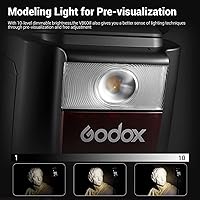
  • A 10-level dimmable modeling lamp genuinely helps preview light placement in controlled indoor environments.
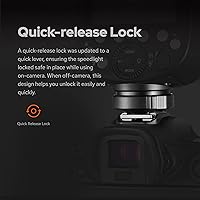
  • The quick-release lever lock and one-button TTL/manual switch make on-the-fly adjustments faster than older designs.
  • Included accessories — protection case, mini stand, and USB charger — add real out-of-box value.
  • The 20–200mm zoom range and 330-degree head rotation cover nearly every bounce and off-camera angle you will need.
  • Buyers consistently rate it as stronger value than Sony's first-party HVL alternatives at a comparable output level.

Cons

  • No weather sealing makes it a risky choice for outdoor shoots in rain or high humidity.
  • Sustained rapid-fire shooting at full power causes noticeable heat buildup and potential output throttling.
  • The Godox X wireless system has a steep learning curve that frustrates photographers new to off-camera flash.
  • Battery capacity degrades after 12 to 18 months of heavy use, adding a recurring replacement cost.
  • TTL accuracy drifts in edge-case lighting situations compared to Sony's own first-party flash options.
  • The instruction manual is dense and poorly structured, pushing most users toward third-party video tutorials.
  • Color temperature shifts slightly at lower power settings, which can complicate mixed-light editing.
  • The physical size feels disproportionate and front-heavy on smaller Sony mirrorless and ZV-series bodies.
  • USB charging is convenient but slow, which creates friction when turnaround time between shooting jobs is short.
  • The rear control panel layout is cramped and takes time to navigate reliably under pressure.

Ratings

The scores below for the Godox V860III-S Speedlight Flash were generated by AI after analyzing verified buyer reviews from multiple global markets, with spam, incentivized, and bot-flagged submissions actively filtered out. Each category reflects a synthesis of real-world usage patterns — from wedding reception halls to bright outdoor portrait sessions — so both the strengths and the genuine frustrations are represented without sugarcoating.
Battery Life
93%
This is where the V860III-S genuinely stands out against the competition. Photographers covering full-day events consistently report finishing an 8-hour wedding without swapping or recharging the included Li-ion pack. Getting close to 480 full-power flashes per charge removes the anxiety of hunting for AAs mid-reception.
A small number of users note that battery capacity does degrade noticeably after 12 to 18 months of heavy use, which is typical for Li-ion cells but worth budgeting for. The USB charging method, while convenient, is slower than some shooters would prefer when turnaround time between jobs is tight.
TTL Accuracy on Sony Bodies
84%
For a third-party flash, TTL performance on Sony mirrorless bodies like the A7 and A9 series is genuinely reliable. Most users report that exposures land consistently in mixed indoor lighting, and the Sony TTL II implementation tracks subject movement well enough for candid and documentary-style shooting.
TTL is not flawless — some photographers note occasional overexposure when the background has strong competing light sources, requiring manual dialing-in of flash exposure compensation. It does not quite match the consistency of Sony's own HVL-series flashes in edge-case lighting conditions, which matters for perfectionists.
High-Speed Sync Performance
88%
The ability to sync up to 1/8000s is a practical game-changer for outdoor portrait work. Shooting wide open at f/1.8 in harsh afternoon sun without neutral density filters becomes genuinely viable, and buyers who shoot in this way consistently call out HSS as one of their main reasons for choosing this unit.
HSS does come at an output cost — effective power drops significantly at higher sync speeds, which means at 1/4000s or above you are working with a fraction of the rated 76Ws. In very bright conditions this can limit how far off-camera you can position the flash and still get adequate fill.
Recycle Time
89%
A 1.5-second recycle time at full power is among the faster ratings in this price bracket, and real-world use confirms it. Event photographers shooting rapid bursts during first dances or ceremonies report far fewer missed moments due to waiting on the flash — a tangible improvement over AA-battery units in the same class.
Recycle time creeps up noticeably as the battery charge drops below roughly 30 percent, which some shooters only discover mid-event. At sustained full power over long continuous sessions, the unit also runs warmer than expected, which appears to slightly affect recycle consistency toward the end of a heavy shoot.
Build Quality & Durability
81%
19%
The overall build inspires reasonable confidence for a mid-range speedlight. The updated quick-release lever lock feels noticeably more secure than the older twist-lock design, and the flash head swivel mechanism has enough resistance to hold its angle without drooping during a shoot.
The body is primarily plastic, and while that keeps the weight down to a manageable 1.17 pounds, a few users report that the hot shoe foot shows wear after extended on-camera use. There is no weather sealing, so shooting in light rain or humid outdoor conditions carries real risk that buyers should be aware of.
Modeling Lamp Usefulness
76%
24%
The 10-level dimmable LED modeling lamp is a genuine workflow addition that the previous generation lacked entirely. In dimly lit reception venues or studio setups, being able to preview how light falls across a subject before firing saves time and reduces the number of test exposures needed to nail a look.
Outdoors or in brightly lit environments, the modeling lamp is too weak to have any visible effect, limiting its utility to controlled indoor settings. At maximum brightness it also draws meaningfully on the battery, so photographers who rely on it heavily will see their shot-per-charge count drop from the rated figure.
Wireless X System Integration
78%
22%
For photographers already using Godox triggers or other V-series flashes, slotting this unit into an existing 2.4G X system setup is straightforward. The 32-channel, 100-meter range works reliably in typical event environments, and having both transmitter and receiver modes built in avoids the need for an additional trigger when working solo.
For newcomers to off-camera flash, the Godox X system menu structure has a real learning curve. Multiple users describe spending considerable time with the manual before feeling comfortable controlling groups and channels, which is worth knowing if you are buying your first off-camera flash setup.
Ergonomics & Controls
82%
18%
The dedicated one-button switch between TTL and manual mode is a small but meaningful addition. During fast-paced event shooting, being able to toggle modes without navigating a menu keeps your attention on the subject rather than the back panel of the flash.
The rear LCD and button layout, while functional, feels dense and somewhat dated compared to more intuitive competitors. Photographers with larger hands occasionally report that accessing certain buttons while the flash is mounted on-camera requires an awkward grip adjustment.
Zoom Range & Head Flexibility
86%
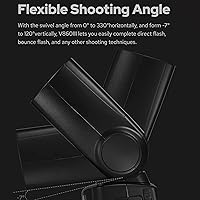
Coverage from 20mm to 200mm with both auto and manual zoom is genuinely broad, and the head rotation — 330 degrees horizontally and 120 degrees vertically — gives bounce options that more restrictive flashes simply cannot match. Bouncing off low ceilings in tight reception spaces is comfortable and predictable.
Auto zoom occasionally lags when switching between significantly different focal lengths in rapid succession, which can cause one or two slightly inconsistent exposures. Manual zoom is the safer choice in unpredictable conditions, but it adds one more thing to manage during high-pressure shooting.
Value for Money
83%
Stacked against Sony's own HVL-F60RM, buyers consistently note they are getting comparable real-world TTL performance and meaningfully better battery life at a lower price point. The included accessories — protection case, mini stand, USB charger — add practical value that other manufacturers in this segment tend to bundle separately.
At this price, the lack of weather sealing is a harder pill to swallow than it would be at a lower tier. Photographers who need durability in unpredictable outdoor conditions may find the value calculation tips toward spending more on a sealed first-party option rather than accepting the risk.
Color Consistency
77%
23%
The 5300K color temperature with a rated tolerance of plus or minus 200K produces warm, skin-friendly tones that work well for portrait and event work without heavy correction in post. Multiple portrait photographers note that skin tones render naturally under this unit without the cooler cast some competing flashes produce.
Color consistency is not perfectly stable across the full power range — some shooters detect a slight shift toward cooler tones at lower power settings, which can be noticeable when blending flash with warm ambient light in mixed-exposure edits. It is a minor issue, but one worth knowing for color-critical work.
Weight & Portability
79%
21%
At 1.17 pounds, this Godox speedlight sits at a reasonable weight for its output class. Run-and-gun photographers report that it does not cause noticeable fatigue or balance issues even on lighter Sony mirrorless bodies across a full shooting day.
It is not compact by any measure — the 7.68-inch height makes it a noticeable presence on a mirrorless camera body, and it does not pair as naturally with smaller Sony ZV-series cameras where a lower-profile flash would look and feel more balanced.
Thermal Management
63%
37%
Under normal shooting conditions — several flashes per minute across a standard event — heat is a non-issue. The unit handles typical portrait and event workloads without any thermal cutout or performance degradation in a majority of reported use cases.
During sustained rapid-fire sequences, such as sports or high-volume shooting at full or near-full power, the flash runs noticeably warm and a few users report that it throttled output to protect itself. This is not unique to this model, but it is worth noting for photographers who frequently push flashes hard.
Setup & Out-of-Box Experience
74%
26%
Mounting the flash, pairing it to a Sony body, and getting a correct TTL exposure in auto mode takes most users under five minutes. The included mini stand and protection case mean you can start shooting and protecting your gear immediately without additional purchases.
The instruction manual, while physically included, is dense and not particularly beginner-friendly. New flash users looking to explore off-camera wireless modes or dial in manual exposure tend to rely heavily on third-party tutorial videos rather than the documentation that ships in the box.

Suitable for:

The Godox V860III-S Speedlight Flash was built with a very specific photographer in mind, and if you fit that profile, it is hard to argue against it. Sony mirrorless shooters — particularly those using A7, A9, or A6000-series bodies — will find the TTL integration reliable enough for real professional work, not just casual experimentation. Wedding and event photographers stand to gain the most: the high shot count per charge and fast recycle time mean you can shoot an entire reception without second-guessing your battery, which is exactly the kind of reliability that matters when moments cannot be re-staged. Outdoor portrait photographers who regularly fight harsh ambient light will appreciate the high-speed sync up to 1/8000s, since it lets you shoot wide open without being forced into neutral density filters. If you already own other Godox lights or triggers, the built-in 2.4G X system makes this unit a natural addition that slots into your existing wireless setup without friction. Intermediate photographers ready to step beyond entry-level flashes will also find this a rewarding upgrade — there is enough control here to grow into over time.
Not suitable for:

The Godox V860III-S Speedlight Flash is not the right tool for every photographer, and it is worth being honest about where it falls short. Anyone shooting regularly in rain, humid outdoor conditions, or dusty environments should look elsewhere — there is no weather sealing here, and at this price that is a real omission that creates genuine risk on unpredictable shoots. Photographers who prioritize the absolute tightest TTL consistency across edge-case lighting situations may find that Sony's own HVL-F60RM or the Profoto A10 deliver a more polished experience, albeit at a higher cost. Complete beginners who have never used off-camera flash before may find the Godox X wireless system more confusing than welcoming — the menus are not intuitive, and the manual is not much help, so expect to spend real time with tutorial videos before feeling confident. Sports photographers or anyone who regularly fires flashes in rapid continuous bursts at full power should be aware that sustained high-volume shooting causes noticeable heat buildup, which can lead to output throttling at the worst possible moments. Finally, photographers shooting on very compact Sony bodies like the ZV series may find the physical size of this unit awkward and unbalanced in daily use.
Specifications

  • Output Power: The flash delivers 76Ws (watt-seconds) of maximum output, placing it firmly in the upper range for hot shoe speedlights.
  • Compatible System: Designed exclusively for Sony cameras, supporting TTL II autoflash for Sony Alpha mirrorless and DSLR bodies.
  • Sync Speed: Supports high-speed sync up to 1/8000s, plus first-curtain and second-curtain sync modes.
  • Flash Duration: Flash duration ranges from 1/300s at minimum power to 1/20000s at reduced power settings for motion-freezing capability.
  • Battery: Powered by a 7.2V, 2600mAh proprietary Li-ion battery that is included in the box and charges via USB.
  • Shot Capacity: Delivers approximately 480 full-power flashes on a single charge under standard operating conditions.
  • Recycle Time: Recycles in approximately 1.5 seconds at full power, with a green LED indicator confirming readiness between shots.
  • Zoom Range: Flash head covers 20mm to 200mm in both automatic and manual zoom modes to match lens focal length and sensor size.
  • Head Movement: The flash head rotates 0° to 330° horizontally and tilts from -7° to 120° vertically for full bounce flexibility.
  • Wireless System: Integrates the Godox 2.4G X system operating between 2413.0MHz and 2465.0MHz, supporting 32 channels, 99 IDs, and up to 100m range.
  • Wireless Modes: Can operate as a transmitter, receiver, or standalone unit, with support for controlling up to five groups (A, B, C, D, E).
  • Modeling Lamp: Built-in LED modeling lamp with 10 dimmable brightness levels for light pre-visualization before firing.
  • Color Temperature: Rated at 5300K with a tolerance of ±200K, producing warm, neutral light suited to portrait and event photography.
  • Exposure Control: Supports TTL II autoflash, manual flash, flash exposure compensation of ±3 stops in 1/3-stop increments, and FE lock.
  • Dimensions: Measures 7.68 × 2.95 × 2.32 inches (approximately 195 × 75 × 59mm) including the flash head in standard position.
  • Weight: Weighs 1.17 pounds (approximately 531g) with the Li-ion battery installed.
  • Mount Type: Attaches via a standard hot shoe foot with an updated quick-release lever lock for fast on and off-camera transitions.
  • Power Saving: Automatically powers off after approximately 90 seconds of idle use, or after 60 minutes when configured as a wireless receiver.
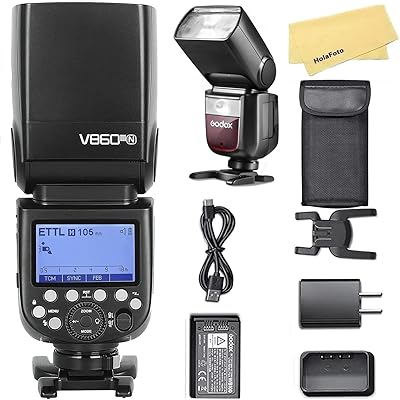
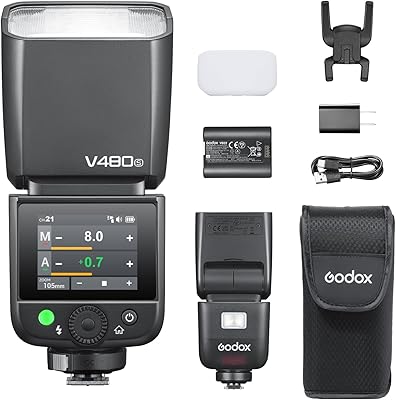
  • In the Box: Includes the flash unit, Li-ion battery, USB battery charger, protective carrying case, mini stand, 2.5mm sync cable, and printed manual.
  • Manufacturer: Designed and manufactured by Godox, with the V860III-S model first made available in October 2021.

Related Reviews
Godox V480-S Flash for Sony
88%
89%
Performance
85%
Build Quality
92%
Ease of Use
88%
Battery Life
90%
Portability
More
Godox V860III-N Nikon Speedlight Flash
84%
93%
Battery Life
91%
Recycle Time
88%
High-Speed Sync Performance
84%
TTL Accuracy
87%
Wireless Reliability
More
Godox V860II-S Flash for Sony
86%
88%
Value for Money
91%
Flash Performance
84%
Build Quality
87%
Ease of Use
90%
Battery Life
More
Godox V860III Canon Speedlite Flash
83%
93%
Battery Life & Endurance
91%
Recycle Time
74%
TTL Accuracy & Consistency
78%
Wireless Reliability
82%
Build Quality & Durability
More
Godox iT30 Pro S Mini Flash
81%
88%
TTL Accuracy
94%
Portability & Size
71%
Build Quality
83%
High-Speed Sync Performance
86%
Touchscreen Usability
More
Godox V1S Round Head Camera Flash
83%
93%
Light Quality
91%
TTL Accuracy on Sony Bodies
89%
Battery Life & Endurance
86%
Recycle Time
88%
Wireless System Integration
More
Godox X2T-S TTL Wireless Flash Trigger Transmitter for Sony Cameras
86%
91%
Wireless Range
88%
Ease of Use
75%
Bluetooth Connectivity
80%
App Control
92%
Flash Sync Speed
More
Godox V850III Flash
Godox V850III Flash
85%
88%
Performance
92%
Battery Life
86%
Ease of Use
84%
Build Quality
89%
Speed and Recycle Time
More
Godox AD200 Pro
Godox AD200 Pro
86%
93%
Output Power & Consistency
91%
Portability & Form Factor
78%
Battery Life & Charging
89%
HSS & Sync Performance
88%
Wireless Ecosystem Integration
More
Godox TT350F Fujifilm TTL Camera Flash
80%
88%
TTL Accuracy
76%
Build Quality
84%
HSS Performance
82%
Wireless Reliability
61%
Recycle Time
More

FAQ

For most shooting situations — indoor events, portrait sessions, candid work — TTL performance on Sony Alpha bodies is genuinely reliable. Exposures land consistently in mixed lighting, and the flash communicates well with Sony bodies during continuous shooting. Where you may notice slight inconsistency is in scenes with very strong competing light sources in the background, which can occasionally cause a stop of overexposure. Dialing in a touch of flash exposure compensation sorts it out quickly, and the dedicated FEC button makes that adjustment fast.

Yes, the V860III-S is compatible with the full Sony Alpha lineup that uses a standard multi-interface hot shoe, which includes the A7 IV, A7R V, and A9 III. TTL II autoflash, HSS, and FE lock all function as expected on current-generation bodies. If you are ever in doubt about a specific body, Godox maintains a compatibility reference on their website.

Charging from fully depleted to full typically takes around 2.5 to 3 hours via the included USB charger. The USB method is convenient — you can charge from a power bank or laptop on location — but it is slower than a dedicated external charger. If fast turnaround between jobs matters to you, it is worth buying a second battery so one is always ready.

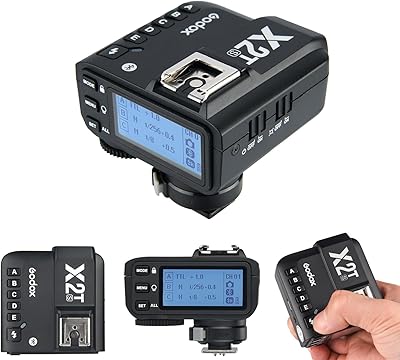
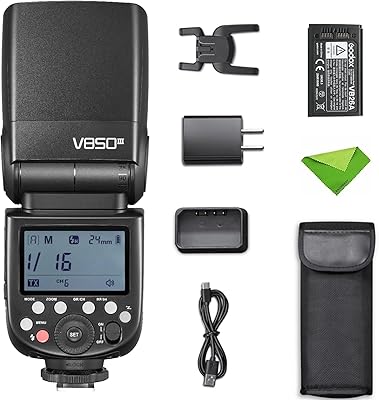
Yes, but with one caveat. The flash has a built-in Godox 2.4G X receiver, meaning it can be controlled wirelessly by any Godox X-series transmitter (like the X2T-S for Sony) that you mount on your camera. However, the flash itself cannot act as a transmitter to fire other flashes when used off-camera — it can only receive. If you want full off-camera TTL control, you will need to add an X-series trigger to your hot shoe.

The rated 480 full-power flashes is a realistic figure for typical event use, not a lab outlier. Most wedding photographers report comfortably covering a ceremony and reception on a single charge when shooting at mid-to-high power rather than always at full blast. That said, carrying a second battery as a backup is still sensible professional practice — it weighs almost nothing and completely eliminates any battery anxiety on a long shoot day.

No, there is no weather sealing on this unit. Shooting in light rain or high humidity carries a real risk of moisture damage, and Godox does not rate this flash for those conditions. If weather resistance is a priority for your work, you would need to look at a different option or use a flash cover accessory as a precaution.

The modeling lamp is a low-power continuous LED light built into the flash head. Before you fire, it shows you roughly where the light will fall and how shadows will form on your subject — it is essentially a preview tool. In a dimly lit reception hall or an indoor portrait setup, it is genuinely useful for checking whether your bounce angle is hitting the right spot before you commit to a test exposure. Outdoors in daylight, it is too weak to be visible, so its value is really limited to controlled or low-ambient environments.

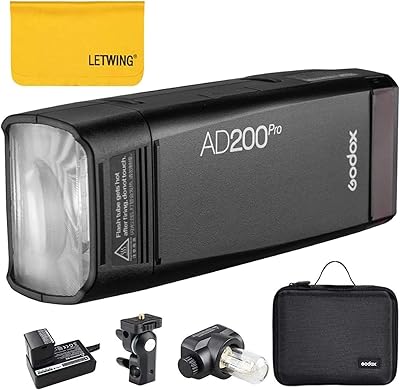
It will integrate cleanly. The V860III-S uses the same Godox 2.4G X wireless protocol as the AD200 and the X2T, so you can control all units from the same trigger, assign them to different groups, and adjust power levels remotely from your camera position. This is one of the strongest practical arguments for staying within the Godox ecosystem — the cross-compatibility is consistent and well-implemented.

Under normal portrait use — firing every few seconds with a mix of power levels — heat is not a meaningful issue. Where it becomes noticeable is during sustained rapid-fire sequences at full or near-full power, such as shooting a continuous burst during a first dance or a high-volume commercial session. In those situations, the unit does run warm and may briefly throttle output to protect itself. It is not a flaw unique to this model — most speedlights behave similarly — but it is worth knowing if your shooting style involves extended high-intensity bursts.

The wireless setup works well once you understand the Godox system, but the initial learning curve is real. You will need to assign each flash to a group (A, B, C, etc.) and match the channel on both the flash and your transmitter. The menu navigation on the flash body is functional but not particularly intuitive, and the printed manual is not the most helpful guide for beginners. Most users get it figured out within an hour by following a YouTube walkthrough rather than the manual — budget that time before your first shoot that depends on it.

Where to Buy

B&H Photo-Video-Audio
In stock $199.00
Microless.com
In stock $216.16
Milford Photo
In stock $199.00
Abt Electronics & Appliances
In stock $199.00
Mike's Camera
In stock $199.00
Bedford Camera & Video
In stock $199.00
acephoto.net
In stock $199.00